By a Biometrica staffer
In 2019, 9.7 million people misused prescription pain relievers, 4.9 million people misused prescription stimulants, and 5.9 million people misused prescription tranquilizers or sedatives. A majority of those misused prescription drugs were obtained from family and friends, often from the home medicine cabinet, the 2019 National Survey on Drug Use and Health found. These alarming numbers are part of a crucial public safety and public health issue, one that several organizations including the Drug Enforcement Administration (DEA), the Food and Drug Administration (FDA), and the Environmental Protection Agency (EPA), along with local law enforcement and pharmacies, strive to address.
Often, unused prescription drugs end up in the wrong hands, and can result in dangerous or tragic situations. The DEA says the good news is thousands of people from across the country are already safely and anonymously turning in a record amount of unused or expired prescription drugs. In this piece, we give you a broad overview of the various ways to dispose off unused or expired medicines while clearing out your medicine cabinet.
Take Back Sites
The best way, by far, to safely dispose of most types of unused or expired drugs is to take it to a “drug take-back site,” location, or program. This method applies to both prescription and non-prescription (for instance, over the counter) medicines. There are typically two types of take-back options:

The Flush List
Let’s say you cannot go to a drug take back site, or can’t find one near you, or missed a take back event in your area. What can you do then? There are ways to dispose of medicines the right way even at home.
The first step is to check if the particular medicine you are trying to dispose of is on the FDA’s Flush List. These are medicines that, for safety reasons, come with specific instructions to immediately flush down the toilet, but only if a drug take-back option is not readily available of course. What kind of medicines are on the Flush List? Those that are:
If children, adults, or pets in your home accidentally or intentionally ingest, touch, misuse, or abuse a medicine on the Flush List, they can suffer serious consequences including death. An example of a medicine on the flush list is the fentanyl transdermal system (also known as a fentanyl patch), which contains an opioid.
In case there’s no drug take-back option, or you can’t get to one for some reason, flushing medicines on the Flush List helps keep everyone in your home safe by making sure these powerful and potentially dangerous medicines (when used inappropriately) are not accidentally or intentionally ingested, touched, misused, or abused, the FDA says. It’s equally important, however, to remember not to flush medicines that are not on the Flush List.
There are concerns that flushing down medicines at homes results in small levels of drugs possibly being found in surface water, such as rivers and lakes, and in drinking water supplies. The FDA and the EPA say they take the concerns of dispersing certain medicines into the environment seriously. But they have not yet found signs of environmental effects caused by flushing recommended drugs. In fact, the FDA says it published a paper to assess this concern, finding negligible risk of environmental effects caused by flushing recommended drugs.
Disposing Non-Flush List Medicines In The Trash
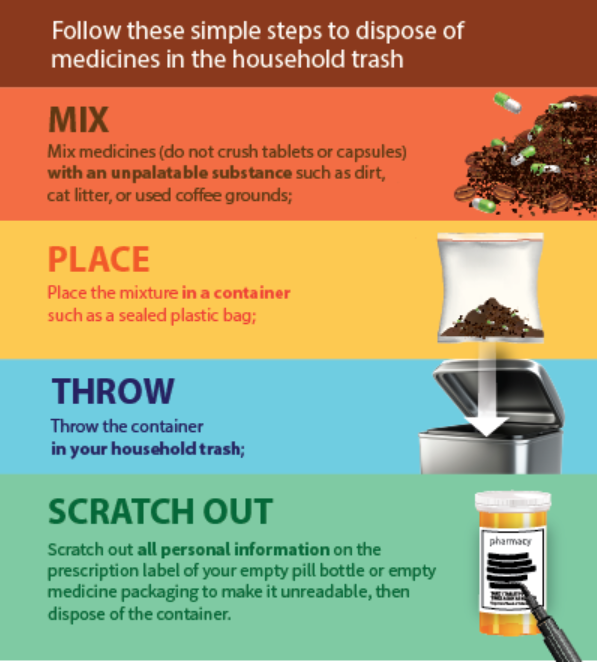
If the medicine you are trying to dispose of is not on the Flush List, does not come with any disposal instructions, and you don’t have/are unable to go to a drug take back site, what can you do?
The FDA recommends following these steps:
You can read the EPA’s guidelines to dispose of medicines at home in the proper manner here.
Disposing Needles & Syringes
Finally, how does one correctly get rid of needles and syringes? The FDA recommends a two-step process:
For more information specific to your state, you can call Safe Needle Disposal at 1-800-643-1643 or e-mail info@safeneedledisposal.org.
If you have further questions about safe drug disposal, you may be able to find answers in the FDA’s FAQ section here.
By a Biometrica staffer Drug related offenses accounted for almost one-third of all cases reported...
Read articleBy a Biometrica staffer London in the late 17th and 18th centuries was a rather...
Read articleBy a Biometrica staffer Anyone can, potentially, help in the battle against human trafficking. How?...
Read article