Is Organized Retail Crime (ORC) really a cause for concern? Isn’t it a victimless crime, as many perceive? The answer to the first question is an emphatic yes, while the answer to the second is an equally clear no. We’ll expand on that in the next section but first, a quick recap of why we’re talking about ORC: Last week, we gave you an introductory look at the new step the Homeland Security Investigations (HSI) and the Association of Certified Anti-Money Laundering Specialists (ACAMS) took recently to combat the growing threat of ORC.
In this piece, we briefly explore why it matters, and possible reasons why ORC is on the rise.
Does It Matter To Us?
Organized crime, in the Federal Bureau of Investigation’s (FBI) words, “poses a significant and growing threat to national and international security with dire implications for public safety, public health, democratic institutions, and economic stability across the globe.” Any kind of organized crime, therefore, is very much a cause for concern.
In our previous piece, we also spoke about the kind of financial damage ORC does to an economy. For example, retail theft costs federal and state governments nearly $15 billion in personal and business tax revenues, not including the lost sales taxes.
ORC is not a victimless crime either, nor one that only financially affects retail store owners. In one survey of retailers, nearly 76% of respondents said a criminal has threatened the use of weapon against an associate. Around 40% of Asset Protection Managers (APMs) who responded to the same survey we mentioned also said that an organized retail criminal has used a weapon to harm an associate.
As recently as last year, a string of brazen burglaries of retail stores, including some that involved dozens of burglars acting together, left experts concerned that the groups behind those were “sophisticated organizations” and not your average shoplifter. What makes ORC darker, as we’ve seen last week, is that the money generated from it is sometimes used to commit more heinous crimes in society such as human trafficking, narcotics trafficking, weapon trafficking, money laundering, and more.
In other cases, the nature of the ORC itself can prove to be a threat to public safety and security: for example, infant formula thefts. Storage condition requirements make the burglary of infant formula a retail theft that could pose a significant health risk to children. If the formula hasn’t been stored
The HSI and ACAMS partnered to publish a comprehensive report on ORC and organized theft groups (OTG) earlier this month, and said this kind of crime has become an increased threat to public safety and economy. The retailer survey we mentioned earlier was prepared for the Retail Industry Leaders Association (RILA) and the Buy Safe America Coalition and cited by HSI-ACAMS in their report.
“Organized retail crime is leading to more brazen, more violent attacks in retail stores throughout the country and many of the criminal rings orchestrating these thefts are also involved in other serious criminal activity. Tackling this growing threat is important to the safety of store employees, customers, and communities across the country,” HSI’s acting executive associate director Steve Francis said in a statement.
What’s Behind The Recent Increase In ORC?
The phenomenon of ORC itself is not new. In 2013, for instance, retail investigators in Oregon busted an infant formula theft ring that had hit stores from Portland to Salem. The culprits allegedly stole about $11,537 worth of infant formula from Safeway stores in Oregon’s Multnomah, Clackamas, Washington and Marion counties and in Washington state on nearly 100 occasions. One of the suspects in this case was a convicted felon who had been arrested 20 times, including on counts of organized retail theft.
Even in 2013, when the internet hadn’t become as ubiquitous as it perhaps has after the Covid-19 pandemic forced people around the world to stay at home, one of the reasons why infant formula theft was lucrative for burglars was that it could be marked down and sold online. In the case we mentioned above, that’s one of the routes the suspects took to sell the stolen formula: i.e. sell it at a lower price on eBay.
Today, online marketplaces are being misused in greater numbers and intensity than in 2013 by criminals to sell stolen goods anonymously, from any location, anywhere in the world. Just as customers of legitimate businesses and brands are ever-increasingly shifting their shopping to online channels and marketplaces, so are criminals. As we’ve seen in several other types of crime, the internet’s convenience and low cost makes it an attractive tool for criminals to exploit.
Source: Screengrab from the HSI-ACAMS report on OTGs and ORC
Another factor behind the recent rise in ORC, the HSI-ACAMS report says, is the raise in felony thresholds for theft in the United States, which essentially decriminalizes the act in an attempt to cope with overpopulated jails. The ease of selling stolen goods online combined with a higher felony bar could be making organized theft “an attractive criminal activity for organized crime groups for funding with little risk,” the report says. Finally, what complicates investigations and, perhaps, emboldens criminals is the increasingly globalized nature of ORC that leads to jurisdictional challenges.
This is the second in a series of pieces Biometrica will do on the comprehensive HSI-ACAMS report.Other pieces in the series will examine the modi operandi and organizational structure of OTGs, the several red flags associated with ORC, and SAR/other AML considerations.
Late last November, about 80 people barged into a Nordstrom department store in the East Bay Area city of Walnut Creek in California, stealing merchandise until police arrived and arrested three of them. That was but one of a string of “smash-and-grab” robberies that hit luxury retailers in California and Illinois in the run up to the holiday shopping season in 2021. Although the spike in organized crime before the holiday season wasn’t new, retail crime experts had expressed that it had become more aggressive in recent years, per a Reuters report from last year. One expert had said that the groups behind the robberies were “sophisticated organizations” and not “your normal shoplifter.”
Law enforcement authorities had also expressed their alarm at the “brazen nature of the burglaries” last year, including the number of people it involved in some cases. To help combat organized retail crime, the Homeland Security Investigations (HSI) and the Association of Certified Anti-Money Laundering Specialists (ACAMS) have formed a partnership and published a report last week. This type of crime has become an increased threat to public safety and economy, they say. In this piece, we’ll examine some key highlights from the HSI-ACAMS report on the definition of organized retail crime (ORC) and organized theft groups (OTG), and why it matters to financial institutions.
What Is ORC?
In simple terms, ORC is the large-scale theft of retail merchandise with the intent to resell items for financial gain. The more formal definition for it, according to the Washington Organized Retail Crime Association (WAORCA) is: “the theft/fraud activity conducted with the intent to convert illegally obtained merchandise, cargo, cash, or cash equivalent into financial gain when the following elements are present: occurs over multiple occurrences OR in multiple jurisdictions, conducted by two or more persons or an individual acting in dual roles (booster and fencer).”
The HSI-ACAMS report says that ORC syndicates typically plan attacks on highly sought-after goods and then look to sell them either through backdoor and online marketplaces, or in many cases through apparently, legitimate business fronts, operating in plain sight. A common misconception among the general public is to label all retail thefts as shoplifting cases that only pose challenges to retailers.
But, this is not the case of a mother who cannot afford baby formula, for instance, the report stresses. It even goes on to add that ORC is also not necessarily those “smash-and-grab” cases that make headlines. ORC is a type of crime that involves professional OTGs, i.e. transnational criminal networks of individuals working together to steal for profit to finance their on-going operation and other criminal activities.
“Many of the criminal rings orchestrating these thefts are also involved in other serious criminal activity such as human trafficking, narcotics trafficking, weapon trafficking, and more. Tackling this growing threat is important to the safety of store employees, customers, and communities across the country.”
Steve Francis, Acting Executive Associate Director, Homeland Security Investigations is quoted as saying in the HSI-ACAMS report
How is ORC different from burglary and larceny (such as shoplifting)?
It is not the result of a single individual breaking the law, but rather part of an organized scheme to defraud retailers or to steal products for resale elsewhere, the report says. That’s why ORC syndicates focus on high value branded items like: leather goods, over-the-counter medications, health and beauty products, designer clothing and power tools. Most consumers who finally end up purchasing these stolen goods may not even be aware that they’re buying burgled merchandise.
Source: Screengrab from the HSI-ACAMS report on OTGs and ORC C.L.E.A.R stands for the Coalition of Law Enforcement and Retail
The Financial Cost Of ORC
There’s no clear-cut number on how much damage ORC does to the economy. But, most estimate that the total impact is around $69 billion annually, the report says. That number amounts to about 1.5% of total retail sales in the country. To add to it, retail theft costs federal and state governments nearly $15 billion in personal and business tax revenues, not including the lost sales taxes.
Another estimate says that the average American family will pay over $500 annually in additional costs arising from the impact of ORC. When it comes to retailers, ORC is estimated to cost retailers an average of $700,000 per $1 billion in sales, and three-fourths of retailers saw an increase in ORC in 2020, the report adds.
Where Do Legitimate Financial Institutions Fit In?
To answer that question, we’ll quote this line from the HSI-ACAMS report: “While retailers and law enforcement partner to investigate ORC cases and provide education on the misconceptions and misunderstandings, it is clear there is a missing link in these partnerships, and that link is financial institutions.” What does that mean?
Criminals need to launder the nearly $70 billion in proceeds that they make from ORC activities annually. And to do this, they typically turn to the formal, legitimate financial sector, unregulated payment processors, and online marketplaces. A key takeaway from the HSI-ACAMS report is that to take down OTGs and combat ORC more effectively, financial institutions must be brought into “the awareness and education triangle.”
The other two takeaways for financial institutions per the report are:
Public-private partnerships and information sharing channels between retailers, law enforcement, and financial institutions need to be created
As law enforcement and retailers prioritize investigations involving ORC, financial institutions should look to reasonably enhance their anti-money laundering (AML) and counter-terrorist financing (CTF) programs to detect and report illicit proceeds stemming from these crimes
Financial institutions should ensure proper controls are in place to detect and report illicit activities tied to or involving ORC, the report adds. Illicit proceeds aside, investigations in many cases have shown that ORC is related to and funds other criminal activity that financial institutions already monitor for.
Proceeds from this type of low cost, high reward crime have been used to fund further criminal activities, the report says, like:
Drug and arms trafficking across the southern border
Third-party money laundering for the benefit of Asian OTGs
Possible terrorist financing through Middle Eastern OTGs and the ORChestrators (or the leader of an OTG)
Labor trafficking of Central and South Americans forced to act as boosters and steal goods for transnational criminal organizations. Boosters are the thieves on the ground that steal (or boost) the products and often happen to be undocumented immigrants who are labor trafficked into the U.S.
Counterfeit goods and cross-border fraud schemes
But whether ORC activity leads to, or is tied to, other criminal activities or not, a financial institution has government reporting obligations as the funds that come from ORC activities are illegal. A financial institution would be required to file a Suspicious Activity Report (SAR) if it knows, suspects, or has reason to suspect a transaction conducted or attempted by, at, or through the financial institution involves:
funds derived from illegal activity, or attempts to disguise funds derived from illegal activity;
is designed to evade regulations promulgated under the BSA (Bank Secrecy Act)
lacks a business or apparent lawful purpose
the use of the financial institution to facilitate criminal activity, including sanctions evasion
This is the first in a series of pieces Biometrica will do on the comprehensive HSI-ACAMS report.Other pieces in the series will examine the modi operandi and organizational structure of OTGs, the several red flags associated with ORC, and SAR/other AML considerations.
On May 31, Tuesday, the Federal Bureau of Investigation’s (FBI) Uniform Crime Reporting (UCR) Program published the National Use-of-Force Data Collection’s report for 2021 and some data for the first quarter of this year. Per the report, 50.7% of use-of-force incidents submitted to the FBI for the year 2021 resulted in serious bodily injury of a person, 33.2% caused the death of a person, and 17% involved the discharge of a firearm at or in the direction of a person.
We’ll get into more details on those use-of-force incidents later on in this piece, and also give you an overview of what exactly this database is and the timeline of events that led to its creation. But firstly, how does the FBI define a use-of-force incident?
It says: “A use-of-force incident occurs when a law enforcement officer takes an action that results in someone’s death or serious injury.” The definition of serious injury is based, in part, on Title 18, United States Code, section 2246 (4): “The term ‘serious bodily injury’ means bodily injury that involves substantial risk of death, unconsciousness, protracted and obvious disfigurement, or protracted loss or impairment of the function of a bodily member, organ, or mental faculty.”
The Bureau goes on to add that use-of-force incidents also include when a law enforcement officer fires a weapon at or in the direction of someone, even if that person isn’t seriously harmed or killed.
Participating Agencies
For 2021, 8,226 law enforcement agencies submitted use-of-force data to the collection. The FBI released national-level data based on a threshold of 60% participation by federal, state, local, tribal, and college/university sworn officers for that year. Agencies submitted data concerning qualifying uses of force that included any action that resulted in the death or serious bodily injury of a person, or the discharge of a firearm at or in the direction of a person.
If no qualifying incidents occurred, agencies submitted a zero report for that month. The statistics in the report include those agencies that submitted at least one incident report or zero report for 2021.
The FBI says it uses a total count of 860,000 sworn police employees, an estimate by the UCR Program, based on all known and reasonably presumed federal, state, local, tribal, and college/university sworn law enforcement personnel eligible to participate in the National Use-of-Force Data Collection. Participation in the data collection is voluntary and open to all federal, state, local, and tribal law enforcement and investigative agencies.
Reasons For Initial Contact
As we mentioned earlier, of the reported use-of-force incidents in 2021, just over half of them resulted in serious bodily injury of a person. When it comes to the reasons behind initial contact, these were the most reported, per the FBI’s data:
56.8% involved officers responding to unlawful or suspicious activities
11.0% stemmed from traffic stops
10.1% resulted from warrant services/court orders
7.6% were for medical, mental health, or welfare checks on individuals
3.2% followed routine patrols other than traffic stops
2.7% involved follow-up investigations
6.9% were unknown and unlikely to ever be known Please note: The report says these numbers may not add up to 100% since they were rounded off.
The types of force that were reportedly used most often include firearms; hands, fists, or feet; electronic control devices; canines; and others. When it comes to these incidents, officers most often encountered individuals who failed to comply with verbal commands or other types of passive resistance.
Other types of resistance encountered included displaying a weapon at an officer or another individual, attempting to escape or flee custody, using a firearm against an officer or another individual, or resisting being handcuffed or arrested.
Timeline Of Key Events
“Police-involved shootings and the use the force have long been topics of national discussion, but with recent high profile cases, it has heightened the public’s awareness of this topic. And so we see this as an opportunity to report information that, from the law enforcement community’s perspective, makes sure that we’re accountable and transparent to the public while telling the entire story. And up until this point, there’s been a lack of data in order to share this from a national perspective,” Trudy Ford, a section chief in the FBI’s Criminal Justice Information Services Division (CJIS) explains in a 2020 ‘Inside the FBI’ podcast on why the Bureau decided to launch a national use-of-force database.
And so, in 2015, the FBI created the National Use of Force Data Collection in partnership with law enforcement agencies, to provide nationwide statistics on law enforcement use-of-force incidents. The Bureau began collecting this data from law enforcement agencies on January 1, 2019. The database is meant to offer big picture insights and not information on specific incidents. It’s also important to note that it does not assess or report whether officers followed their department’s policy or acted lawfully.
By the end of 2015, the CJIS’ Advisory Policy Board (APB) had approved a new data collection on law enforcement use of force. In early 2016, the National Use-of-Force Data Collection Task Force, including law enforcement leaders from across the U.S., met to discuss the collection. The following year, the data collection pilot study began. And, in 2019, the data collection was launched nationwide and all law enforcement agencies were encouraged to participate. It was only last July, though, that the FBI released participation data from this collection.
Wednesday, May 25, was International Missing Children’s Day. It’s a day that’s dedicated to encouraging parents, guardians, caregivers, and others concerned with the well-being of children to make child safety a priority. The commemoration of this day, per the U.S. government, serves as a reminder to continue efforts to reunite missing children with their families and an occasion to honor those dedicated to this cause.
The first National Missing Children’s Day, also observed on May 25, was proclaimed by President Ronald Reagan in 1983. It was dedicated to the memory of Etan Patz, a 6-year-old boy who disappeared from a New York City street corner on May 25, 1979. As part of Biometrica’s efforts to observe International Missing Children’s Day, we’re putting the spotlight on a related, but equally crucial, child safety and protection issue in this piece: online grooming. This form of child sexual exploitation can turn even uglier offline and lead to kidnapping/abductions, rape, and even murder of the young victim in question.
Why should you learn about, and be aware of, online grooming tactics if you are a parent or a guardian of a child? To begin with, it’s a given that children the world over have been spending more time online. Through the peak of the Covid-19 pandemic, in particular, many children around the world had to turn to online methods of learning. While stay-at-home measures to curb the spread of the pandemic have long since eased in several parts of the globe, it hasn’t fundamentally altered the fact that more kids are using the internet than ever before.
According to the UNICEF, “around the world, a child goes online for the first time every half second.” Granted, the advantages of using the internet for kids are similar to those for adults: virtually limitless opportunities. Unfortunately, those also come with various risks that, perhaps, adults are better equipped to identify than kids.
“Cyberbullying and other forms of peer-to-peer violence can affect young people each time they log in to social media or instant messaging platforms. When browsing the internet, children may be exposed to hate speech and violent content – including messages that incite self-harm and even suicide,” a UNICEF blog post says. Over a third of young people in 30 countries report being cyberbullied, with one in five skipping school because of it, it adds.
Much like with other kinds of crime, the internet has also made it easier than ever before for child sex offenders to contact their potential victims, share imagery and encourage others to commit offences, the UNICEF says. “Children may be victimized through the production, distribution and consumption of sexual abuse material, or they may be groomed for sexual exploitation, with abusers attempting to meet them in person or exhort them for explicit content.”
Take the tragic example of 15-year-old Kayleigh Haywood from the UK. One day, Haywood was contacted by 28-year old Luke Harlow on Facebook, as described in a report by the International Centre For Missing & Exploited Children (ICMEC). Harlow reached out to her and asked her how she was on Facebook, to which she responded: “Fine — who are you?” Within 10 minutes, they swapped mobile phone numbers, and there began an exchange in communication that would result in over 2,600 messages.
Two weeks later, Haywood met with her groomer at his apartment, where she was given substantial amounts of alcohol, and was subsequently raped and killed. “With the support of Kayleigh’s family, the Leicestershire Police Department made a movie showing the last two weeks of her life, raising awareness of the dangers of online grooming. After showing the movie to a great number of schoolchildren, more than 20 children came forward to report possible cases of grooming,” the ICMEC report says.
What Is Online Grooming?
Around 80% of children in 25 countries report feeling in danger of sexual abuse or exploitation online, the blog says. Online grooming is closely linked to sexual abuse or exploitation of children via the internet. “Grooming” here can be defined as: the act of befriending and influencing a child, and sometimes the child’s family as well, for the purpose of preparing the child for sexual activity,” per the ICMEC report.
It involves the use of the Internet or other digital tools to establish or build a relationship with a child under the age of 18 in order to facilitate either non-contact (online) or contact (offline) sexual interaction with that child. Going by that definition, the act could take place online, offline, or through a combination of the two. The groomers’ goal is to lower children’s inhibitions by creating an emotional connection with them. They establish that connection using “psychological manipulation that is usually very subtle, drawn out, calculated, controlling, and premeditated,” the ICMEC report says.
Modus Operandi Of Groomers
Per the ICMEC report, through the grooming process, an offender looks to gain the child’s compliance to maintain secrecy, and to avoid detection and punishment. Sometimes, they focus on one or a few children at a time and slowly establish a relationship. In other cases, offenders may use a “scattergun” approach and contact hundreds of children at once to identify those most receptive to grooming.
Public forums like chatrooms, social networks, or online gaming sites are often used by groomers as a means to identify victims. From there, once contact has been established, they typically move the grooming process to a more private setting like private chatrooms, email, text and instant messages, and other apps on mobile phones.
The manipulation tactics used by groomers can include:
misrepresenting their own age
offering gifts to the child
befriending the child by claiming to share common interests, or by empathizing with them over problems the child may share with friends or family
Grooming Stages
By the end of the manipulation process, the goal is to convince the child that the offender is their friend. Once that happens, i.e. the offender has gained the child’s trust, they break down the child’s defenses, and “manipulate the child into performing or permitting the desired sexual exploitation,” per ICMEC. If it’s an only-online relationship until that point, the offender will shift it into one that’s sexual in nature. It’s at this point that, in some cases, the offender may suggest an offline meeting to continue the sexual exploitation of the child victim in person.
According to the ICMEC report, several studies suggest that there are certain typical stages in the grooming process. These generally include:
Friendship and relationship forming stage
Risk assessment
Exclusivity or isolation
Sexual stage
What makes it that much tougher to identify is that during the early stages, grooming behaviors may “appear to be innocent in nature and typical of adult child interactions when viewed independently,” per ICMEC. But, when such behaviors are taken into consideration along with other elements like coercion, manipulation, and the introduction of sexual themes or even content into the communication, the offender’s intention to commit serious harm to the child becomes evident.
Predators who are looking to groom children for exploitation tend to use fake accounts, names, and photos to befriend the child on various digital platforms. They could: “appear as another child, modeling agent, a scout, sports coach, or famous influencer that pretend to have the same interests to build trust and establish a friendship. Online predators are indifferent to race, ethnicity, or gender- any child is in danger. Some children may be more susceptible due to other vulnerabilities such as special educational needs disability. They have difficulty in learning and communication skills,” per the Victim Service Center of Central Florida.
Sending Explicit Content
Once offenders have gained the trust of the child and have moved the grooming process into the sexual stage, they typically desensitize their victim to sexual abuse. One of the ways of doing this is by sending “sexually graphic, suggestive, or explicit images to the child — including adult pornography and child sexual abuse material (CSAM) — to persuade the child to reciprocate this behavior,” ICMEC says. At this point, the offender could begin to start persuading the child to send sexually explicit images of themselves.
They may initially request for photos of the child in ordinary settings and then progressively begin to demand and pressure the child into sending more sexually explicit images or videos, or even to perform sexual acts over video calls/webcams. One Middlesex University study, cited in the ICMEC report, found that offenders often introduce sexual topics with children after just three minutes of chatting online and can form a bond with a child after just eight minutes.
Child predators achieve this manipulation of their victims into sending CSAM by using various tactics, including: flattery, blackmail, threats, sexualized games, deception and bribery. What’s important to remember is that sexual abuse of a child victim happens the minute the offender sends them sexual content. The abuse can, therefore, take place without the offender even having to meet the child offline.
This was a brief introduction to how predators can target children online and sexually abuse or exploit them. But, online grooming is an extensive topic, and one that Biometrica will continue to examine through more posts in the future.
Here are a few related pieces from our archives on all things child safety and protection:
One-and-a half centuries. Over 400 Indigenous boarding schools run by the federal government, with support from religious institutions. The use of systematic militarized and identity-alteration methodologies in an attempt to ‘assimilate Indigenous persons.’ Corporal punishment to enforce rules at these schools. 53 burial sites and over 500 deaths identified so far, with the count expected to increase. That’s the heartbreaking and undeniable shrouded legacy the U.S. acknowledged on May 11, Wednesday.
Department of Interior (DOI) Secretary Deb Haaland tweeted about a crucial announcement on Wednesday. “Today, from the ancestral homelands of the Anacostan and Piscataway people, I provided remarks on the history of federal Indian boarding schools in this country and our work on the Federal Boarding School Initiative,” she said in the first of a series of tweets. Haaland and Assistant Secretary for Indian Affairs Bryan Newland released Volume 1 of the Federal Indian Boarding School Initiative yesterday.
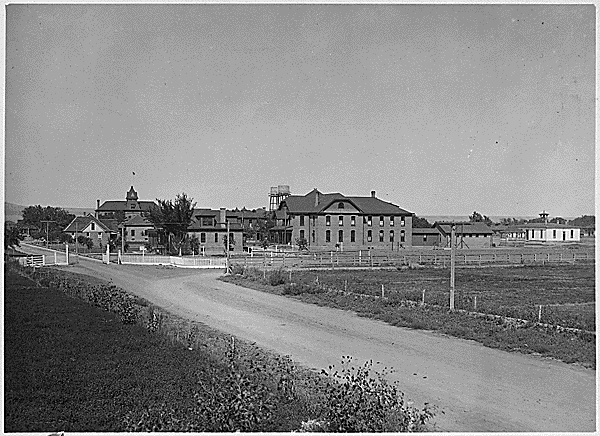
The 106-page investigative report is “a comprehensive effort to address the troubled legacy of federal Indian boarding school policies,” the DOI statement says. It also lays the groundwork for the continued work of the DOI to address the intergenerational trauma created by historical Federal Indian boarding school policies. The announcement and the report acknowledge the large-scale and violent treatment of Indigenous students at 408 Indian boarding schools run by the federal government between 1819 and 1969.
During that timeframe, these schools were present across 37 states (or then-territories), including 21 schools in Alaska and 7 schools in Hawaii. The report identifies each of those schools by name and location, some of which operated across multiple sites. The investigation identified marked or unmarked burial sites at approximately 53 different schools across the school system. As the investigation continues, the Department expects the number of identified burial sites to increase.
The DOI’s statement says the report is a: “significant step by the federal government to comprehensively address the facts and consequences of its federal Indian boarding school policies — implemented for more than a century and a half — resulting in the twin goals of cultural assimilation and territorial dispossession of Indigenous peoples through the forced removal and relocation of their children. It reflects an extensive and first-ever inventory of federally operated schools, including profiles and maps.”
Secretary Haaland, the first Native American to serve as a cabinet secretary, echoed those sentiments in her series of tweets: “The languages, cultures, religions, traditional practices and even the history of Native communities… all of it was targeted for destruction. Nowhere is that clearer than in the legacy of federal Indian boarding schools … The consequences of federal Indian boarding school policies—including the intergenerational trauma caused by forced family separation and cultural eradication—which were inflicted upon generations of children as young as 4 years old are heartbreaking and undeniable.”
“Many children never made it back home. Each of those children is a missing family member, a person who was not able to live out their purpose on this earth because they lost their lives as part of this terrible system. The Biden-Harris administration is determined to make a lasting difference in the impact of this trauma for future generations. Today, we take a critical step forward in that work,” DOI Secretary Haaland said in her tweets.
In June 2021, Haaland announced the “Federal Indian Boarding School Initiative,” at a conference of the National Congress of American Indians, the country’s largest coalition of Indigenous Peoples. The Initiative was launched to undertake a “comprehensive review of the troubled legacy of federal boarding school policies.” The DOI has been historically tasked with monitoring and looking after the country’s Indigenous population. The DOI is responsible for honoring the federal government’s treaties with the 574 federally recognized Indian tribes and Native Alaskan villages. Last June, Secretary Haaland said that as the primary force behind the management of these schools, the DOI was “uniquely positioned to assist in the effort to recover the histories of these institutions.”
What the DOI published yesterday was the first report from that initiative. We bring you some key highlights from the report in the rest of this piece. Given how comprehensive the report is, this will be the first in a mini series of articles Biometrica will do on it.
Chart courtesy: National Archives Identifier 76048375
Federal Indian Boarding Schools Defined
To begin with, the report confirms that the U.S. directly targeted American Indian, Alaska Native, and Native Hawaiian children in the pursuit of a policy of cultural assimilation that coincided with Indian territorial dispossession, Bryan Newland, Assistant Secretary – Indian Affairs said in the report. It further identifies the Federal Indian boarding schools that were used as a means for these ends.
For a school to qualify as a Federal Indian boarding school, for the purpose of this investigation, the institution must meet four criteria, the report says, including whether the institution:
Housing: The institution has been described as providing on-site housing or overnight lodging. This includes dormitory, orphanage, asylum, residential, boarding, home, jail, and quarters.
Education: The institution has been described as providing formal academic or vocational training and instruction. This includes mission school, religious training, industrial training school, manual labor school, academy, seminary, institute, boarding school, and day school.
Federal Support: The institution has been described as receiving Federal Government funds or other Federal support. This includes agency, independent, contract, mission, contract with white schools, government, semi-government, under superintendency, and land or buildings or funds or supplies or services provided.
Timeframe: The institution was operational before 1969 (prior to modern departmental Indian education programming including BIE, or Bureau of Indian Education).
Outside the scope of the Federal Indian Boarding School Initiative, the DOI identified over 1,000 other Federal and non-Federal institutions, including Indian day schools, sanitariums, asylums, orphanages, and stand-alone dormitories that may have involved education of American Indian, Alaska Native, and Native Hawaiian people, mainly Indian children, the report adds.
The earliest opening date of a Federal Indian boarding school in the system was 1801, and the latest opening date was 1969. However, the open date does not necessarily correspond to when the Federal Indian boarding school was first documented as receiving Federal support. Present-day Oklahoma had the highest concentration of schools in the Federal Indian boarding school system with 76 such schools, or 19% of the total number. Arizona ranked second with 47 schools, or 12% of the total, and New Mexico was third with 43 (or 11%).
Initial investigation results show that about 50% of Federal Indian boarding schools may have received support or involvement from a religious institution or organization, including funding, infrastructure, and personnel, the report says. At times, the Federal Government paid religious institutions and organizations on a per capita basis for Indian children to enter the Federal Indian boarding schools that these institutions and organizations groups operated.
Investigation also shows that the U.S. may have used monies held in Tribal trust accounts, including those based on cessions of Indian territories to the U.S., to fund Indian children to attend Federal Indian boarding schools, per the report.
The Identity-Alteration Tactics Used On Children
Often using active or decommissioned military sites, Federal Indian boarding schools “were designed to separate a child from his reservation and family, strip him of his tribal lore and mores, force the complete abandonment of his native language, and prepare him for never again returning to his people,” the report says. Given this design, the U.S. applied systematic militarized and identity-alteration methodologies in these schools to assimilate American Indian, Alaska Native, and Native Hawaiian children through education.
Generations of Indigenous children, separate and together, experienced the Federal Indian boarding school system, which Congress recognized was “run in a rigid military fashion with heavy emphasis on rustic vocational education,” the report adds. Emphasis was placed more on teaching the children habits than learning from books. For instance, the children were taught obedience, cleanliness, and given “a better carriage.” Their 24 hours was so systemized that there “was little opportunity to exercise any power of choice,” the report says. Below is an example of the curriculum for first grade students across the Federal Indian boarding school system in 1917:
Image courtesy: Screengrab from the DOI report
Schools used various methods to systematically alter the identity of the children. Some of those methods include:
Renaming Indigenous children from Indigenous names to different English names
Cutting the hair of Indigenous children
Requiring the use of military or other standard uniforms as clothes
Discouraging or forbidding certain practices in order to compel them to adopt western practices and Christianity. Those include using Indian languages, conducting cultural practices, and exercising their religions.
This quote from archived documents in the report sheds further light on the situation at these boarding schools: “When first brought in they are a hard-looking set. Their long tangled hair is shorn close, and then they are stripped of their Indian garb thoroughly washed, and clad, in civilized clothing. The metamorphosis is wonderful, and the little savage seems quite proud of his appearance.”
Children were not permitted to study any other language than “our own vernacular – the language of the greatest, most powerful, and enterprising nationalities beneath the sun,” the report says. The first step in the training of the children was to teach them English.
Corporal Punishment & Runaways
Rules at these boarding schools were often enforced through punishment, including corporal punishment, such as solitary confinement, “flogging, withholding food, … whipping,” and “slapping, or cuffing.”
“At times, rule enforcement was a group experience: “for the first offense, unless a serious one, a reprimand before the school is far better than a dozen whippings, because one can teach the whole school that the offender has done something that is wrong, and they all know it and will remember it, while it is humiliating to the offender and answers better than whipping,” the report adds.
Sometimes, in order to “conduct discipline,” Federal Indian boarding schools also made older children punish younger ones. The report sheds more light on this practice by quoting from archives: “When offenses have been serious enough to demand corporal punishment, the cases have generally been submitted to a court of the older pupils, and this has proved a most satisfactory method.”
Initial analysis suggests that there was a trend of Indigenous children escaping and running away from these schools. Those who did were “promptly brought back and punished,” judiciously. The DOI has recognized that, for instance, runaways were frequent during the first half of the year at the Kickapoo Boarding School, Kansas. Corporal punishment was resorted to with the belief that: “a prompt returning of the runaways and a whipping administered soundly and prayerfully, helps greatly toward bringing about the desired result.”
Grossly Inadequate Provisions
Provisions for the care of Indigenous children at these schools has been considered grossly inadequate by the DOI. Rampant physical, sexual, and emotional abuse; disease; malnourishment; overcrowding; and lack of health care in Indian boarding schools are well-documented, the report says. For example, at White Earth Boarding School, Minnesota, the ratio was one bed to two pupils. Similarly, at the Kansas Kickapoo school, the ratio was three children to each bed. At Rainy Mountain Boarding School, Oklahoma, single beds were pushed closely together and each bed had two or more occupants.
When the number of children at these schools expanded even beyond those cramped arrangements, schools would resort to increase dormitory capacity without any major expenditure involved by adding sleeping porches. But these porches shut off light and air from the inside rooms, which are already filled beyond capacity.
In many cases, even as the number of students increased, toilet facilities did not. They were also frequently not properly maintained or conveniently located, while the supply of soaps and towels were also inadequate. When it comes to diet, too, the Federal Indian boarding schools lacked. Poor diets that were high in starch and sugar and low in fresh fruits and vegetables were common in the system.
Child Labor
“The labor of [Indian] children as carried on in Indian boarding schools would, it is believed, constitute a violation of child labor laws in most states,” the Meriam Report, made at the request of the Secretary of the Interior in 1928 said. The boarding school system focused on vocational training, involving the manual labor of Indigenous children.
In 1902, the Commissioner of Indian Affairs described that to “educate the Indian is to prepare him for the abolishment of tribal relations, to take his land in severalty, and in the sweat of his brow and by the toil of his hands to carve out, as his white brother has done, a home for himself and family,” the report says.
Some of the manual labor practices children at these schools were engaged in include:
Livestock and poultry raising
Lumbering
Working on the railroad
Carpentering
Blacksmithing
Fertilizing
Irrigation system development
Well digging
Making furniture
Cooking
Laundry and ironing services
Garment making
For example, in 1857, girls at the Winnebago Manual Labor Schools, Nebraska, made 550 garments for themselves and the boys attending the school, and some 700 sacks for the use of the farm. In 1903, boys at the Mescalero Boarding School, New Mexico, sawed over 70,000 feet of lumber and 40,000 shingles and made upward of 120,000 brick.
Photo of jackets made at a school in South Dakota by children from Oglala Sioux Tribe | Photo courtesy: National Archives Identifier 12461069
Safience will continue to explore the report in follow-up posts as part of this mini series.For information on Safience’s own efforts towards helping to solve the crisis of Missing and Murdered Indigenous Persons, click here.
In a previous piece, we gave you a quick look at contractor fraud. We examined what it is, looked at common signs, and gave you a few tips to protect yourself from falling prey to such scams. In this piece, we will delve into the modi operandi of contractor fraudsters by examining common schemes that they use on unsuspecting people to get away with their illegal activities.
Some of the schemes we will go over, based mainly on information from the National Insurance Crime Bureau (NICB) and the U.S. Department of Transportation, include bid rigging, conflict of interest scams, kickbacks, and materials overcharging. Given the number of common scams to explore, this piece will be the first of a two-part series on contractor scam types.
First, here’s a run-through of what exactly contractor fraud is. Contractor fraud happens when an individual contractor or a company offers services that knowingly mislead the other party. It could include performing unsatisfactory repairs or charging more than a job is worth. It usually ends up becoming a costly affair for a homeowner, with racked up bills, unnecessary additional repairs, and insurance complications.
How do you avoid falling prey to such scams? Always be wary of unsolicited approaches by contractors, and never pay the full amount upfront. Always make sure you get everything in writing and get your contractor also to sign off on it. This should include prices for labor and materials, clean-up procedures, and estimated start and finish dates.
Ideally, try to make a list of contractors that you feel will be good to hire if the need arises. Look up reviews on these contractors, check on their licenses, and seek out their Better Business Bureau information. If possible, shop around for a contractor by getting recommendations from friends and neighbors. It’s better to try and do this background check beforehand, whenever possible.
Here are some common kinds of scams that contractor fraudsters tend to employ, per the U.S. DoT Office of Inspector General (OIG):
Bid Rigging
In bid rigging and collusion, contractors misrepresent that they are competing against each other when, in fact, they agree to cooperate on the winning bid to increase job profit. Some red flags to watch out for when it comes to this, the DoT OIG website says, are —
Unusual bid patterns: too close, too high, round numbers, or identical winning margins or percentages
Different contractors making identical errors in contract bids
Bid prices dropping when a new bidder enters the competition
Rotation of winning bidders by job, type of work, or geographical area
Losing bidders hired as subcontractors
Apparent connections between bidders: common addresses, personnel, or telephone numbers
Losing bidders submitting identical line-item bid amounts on nonstandard items
Persistent high prices by all bidders
Joint venture bids by firms that usually bid alone
Losing bids do not comply with bid specifications or only one bid is complete and other bids are poorly prepared
Conflict Of Interest
In fraud involving conflict of interest, a contracting or oversight official misrepresents that he or she is impartial in business decisions when he or she has an undisclosed financial interest in a contractor or consultant who inflates the job cost to the government. The red flags here, according to the DoT OIG, include:
Unexplained or unusual favoritism shown to a particular contractor or consultant
Government official disclosing confidential bid information to a contractor, or assisting the contractor in preparing the bid
Employee discussing about employment with a current or prospective contractor or consultant
Close socialization with and acceptance of inappropriate gifts, travel, or entertainment from a contractor
Incomplete vendor or consultant address, or an address that matches employee’s address
Government official leasing or renting equipment to a contractor for performing contract work
Contracting employee fails to file Conflict of Interest or Financial Disclosure forms
Kickbacks
In kickback schemes, a contractor or subcontractor misrepresents the cost of performing work by secretly paying a fee for being awarded the contract and, therefore, inflating the job cost to the government. Some red flags of this kind of scheme include:
Unexplained or unreasonable limitations on the number of potential subcontractors contracted for bid or offer
Continuing awards to subcontractors with poor performance records
Not awarding the subcontract to the lowest bidder
“No-value-added” technical specifications that dictate contract awards to particular companies
Non-qualified and/or unlicensed subcontractors working on prime contracts
Poor or no established contractor procedures for awarding of subcontracts through competition
Materials Overcharging
Under this fraud scheme, a contractor misrepresents how much construction material was actually used on the job and then is paid for excess material to increase job profit. Here are some warning signs to watch out for when it comes to this kind of contractor scam:
Discrepancies between contractor-provided quantity documentation and observed data, including yield calculations
Refusal or inability to provide supporting documentation
Contractor consistently loading job materials into equipment away from inspector oversight
Truck weight tickets or plant production records with altered or missing information
Photocopies of quantity documentation where originals are expected
Irregularities in color or content of weight slips or other contractor documents used to calculate pay quantities
Not receiving report for invoiced goods
Unusually high volume of purchases from one vendor
Invoiced goods cannot be located in inventory or accounted for
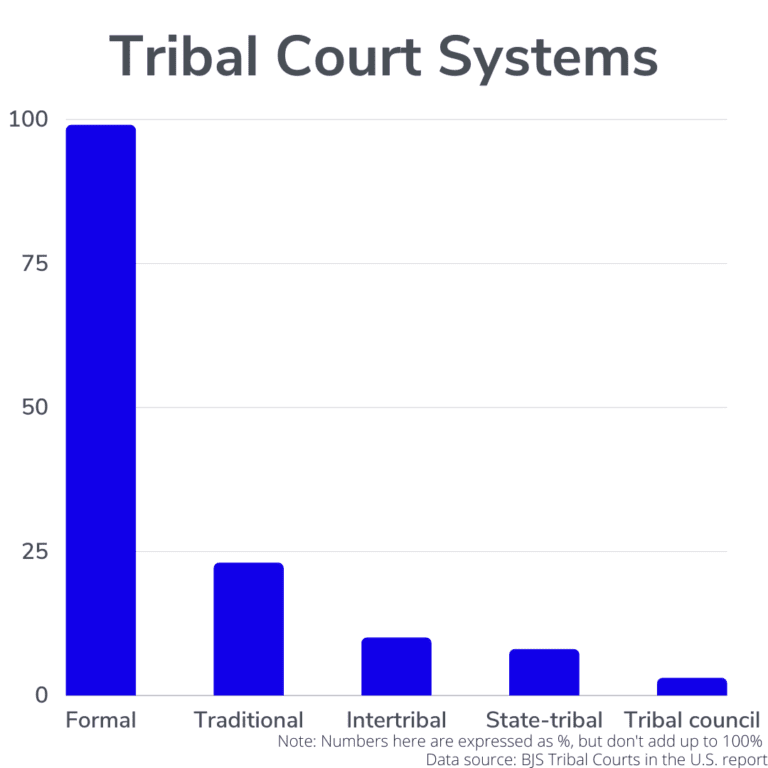
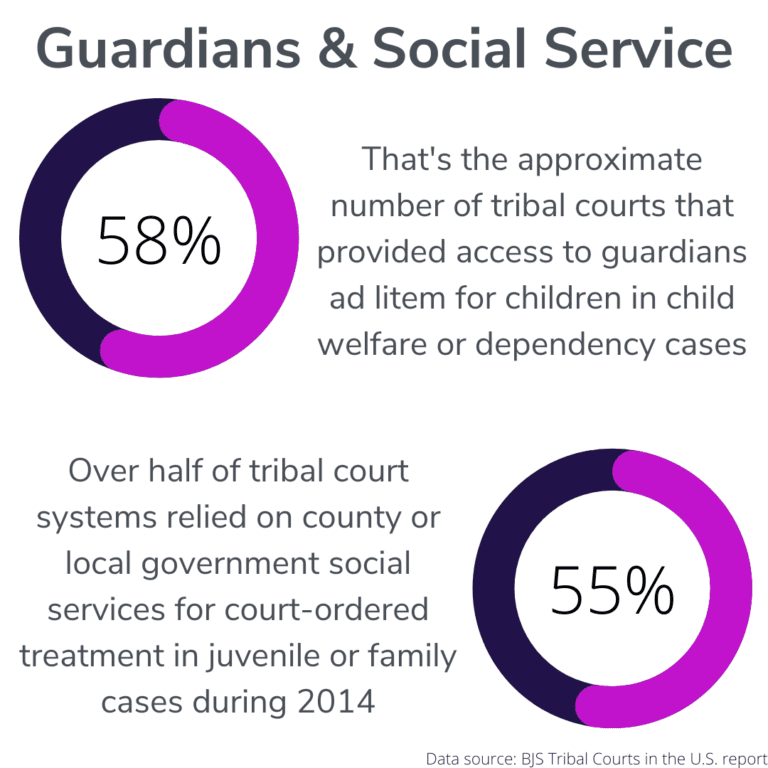
The Bureau of Justice Statistics (BJS) published what it called the first complete enumeration of tribal court systems operating in the United States. Termed the National Survey of Tribal Court Systems (NSTCS), it consists of three surveys specific to tribal court systems in the lower 48 states, Alaska Native villages, and the Code of Federal Regulations Courts (CFR Courts) operated by the Bureau of Indian Affairs (BIA).
Why is the report important? One of the key aspects of sovereignty is to “to establish a judicial system and administer justice.” And each of the three types of sovereign entities in the United States (the federal government, the states, and the Indian tribes) has its own judicial system, and plays a role in the administration of justice, and in maintaining public safety. In this piece, we present key highlights of the report in a series of graphics.
Pilot Program to kick off in Phoenix/Appleton in August-September 2022, with a focus on fundamentals, including understanding data and data privacy, creating case-use guidelines for facial recognition, ensuring accountability, and preventing bias.
PHOENIX/APPLETON, March 21, 2022: On Monday, the National Criminal Justice Training Center (NCJTC) of Fox Valley Technical College, one of the nation’s leading training providers for law enforcement and criminal justice professionals, announced an innovative partnership with Biometrica Systems, Inc., a big data and software company focused on public safety, risk mitigation, and child protection, to build and pilot an industry first foundational course to train law enforcement in the understanding and ethical use of big data and facial recognition for critical investigations.
NCJTC Executive Director Bradley Russ stated that for almost 30 years, the Center had a core mission: “To deliver quality innovative training, expert instruction, and technical assistance solutions for combating prevailing public safety and community challenges.”
“Two such major challenges today,” he added, “are to strengthen trust between law enforcement officers and the communities they serve, while also leveraging technology in an ethical and responsible manner to enhance investigative capabilities and better protect the citizens they serve. This partnership combines our expertise in training and Biometrica’s expertise in using big data and facial recognition in support of public safety to build this new course.”
Biometrica CEO Wyly Wade said the partnership was a natural collaboration for the organization. “We work on big data, use facial recognition, and see the tremendous good it can do, especially in the world of child safety or vulnerable adult protection, if used correctly. But the use of any technology by untrained practitioners, without accountability and guidelines, could have terrible consequences, even if unintended.” He said Biometrica hoped to help prevent this.
“The mistrust isn’t just between law enforcement and communities, especially those of color, it’s also between tech companies and everyone else. We’re not big tech. We’re small tech. But we wanted to try and rebuild some of that trust by working with NCJTC, who are outstanding at what they do, by helping them train law enforcement in using big data and FR, establish ethical use protocols around the use of the technology, and make a start toward positive change.”
Russ, a former police chief himself, added, “This technology offers great promise to assist with investigations of all kinds, including crimes related to missing, exploited and abused children. But it requires training and guidelines. You don’t give an officer a firearm without proper training, reinforced by use-of-force policies that define acceptable use under a range of circumstances. It should work the same way with technology-based tools and information. Give them the tools they need to improve their investigative capabilities in a tech-dominated world, but after they have been properly trained in the proper use of those tools.”
About NCJTC For more than a quarter century, the National Criminal Justice Training Center (NCJTC.org) of Fox Valley Technical College (http://www.fvtc.edu), has served as a national leader offering training and technical assistance to professionals and organizations in the law enforcement and criminal justice fields. Many of their training programs are offered through grants and cooperative agreements with the U.S. Department of Justice. For information, email Aaron Tomlinson at info@ncjtc.org Media Contact: Carmelyn Daley-Hinkens 920-309-9196
About Biometrica Biometrica Systems, Inc. (https://safience.io/) is a software & data company focused on public safety. They support federal, state, tribal and local law enforcement, organizations focused on child and vulnerable adult protection, and private sector safety teams. They are a PBSA associate member, committed to building better quality arrest and conviction data, in and more transparent access to it. Private Investigator License # 1295 [Nevada PILB] Contact: media@safience.io
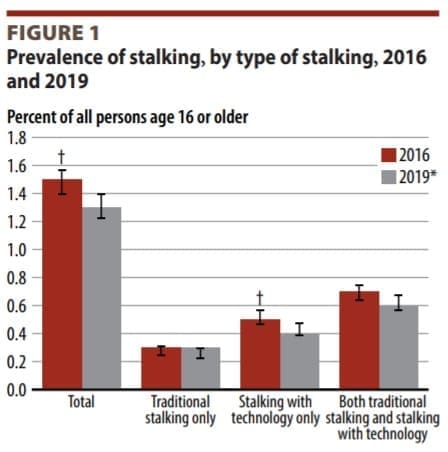
An estimated 3.4 million U.S. residents aged 16 or older were victims of stalking in 2019, the Bureau of Justice Statistics (BJS) said in its Stalking Victimization report published this month. That estimated number amounts to around 1.3% of all U.S. residents aged or older falling prey to stalking in 2019, the latest year for which the BJS has data available. Statistically, 2019’s 1.3% is a significant decrease from 2016’s 1.5%, the BJS said.
However, the decline is largely due to a reduction in a subset of stalking as measured by BJS: stalking with technology. The number of stalking with technology victims fell to 1.1 million in 2019 from 1.3 million victims in 2016. In comparison, though, the number of victims of traditional stalking only or both traditional and technology stalking did not change significantly during this period.
The BJS report’s findings are based on the 2019 Supplemental Victimization Survey (SVS) to the National Crime Victimization Survey. In this piece, we first take a look at what constitutes stalking, how the BJS defines it, and examine a few key highlights of the report.
Stalking: Definition and classification
Per the BJS, “stalking includes repeated unwanted contacts or behaviors that caused the victim to experience fear or substantial emotional distress or would cause a reasonable person to experience fear or substantial emotional distress.” How does the BJS report classify someone as a victim of stalking?
It says, to be classified as a victim of stalking in the SVS, the respondent must have experienced a repeated course of conduct (i.e., experienced the same behavior or contact more than once or experienced two or more different behaviors one time) that either —
caused them substantial emotional distress or to fear for their safety or the safety of someone they know (actual fear)
would cause a reasonable person to fear for their safety or the safety of someone they know
What does reasonable fear mean here? Per the BJS report, it includes victimizations where the victim reported that they experienced either —
damage, attempted damage, or destruction of property
threatened, attempted, or completed attacks on the victim, someone close to them, or a pet
Image source: Screengrab from the BJS report
Under stalking, the SVS measured 12 types of stalking behaviors, incorporating both traditional stalking and stalking with technology. Traditional stalking, the report says, includes the following:
following and watching
sneaking into a place
waiting at a place
showing up at a place
leaving or sending unwanted items
harassing friends or family about the victim’s whereabouts
Stalking with technology includes the following unwanted behaviors:
making unwanted phone calls, leaving voice messages, or sending text messages
spying using technology
tracking the victim’s whereabouts with an electronic tracking device or application
posting or threatening to post unwanted information on the Internet
sending unwanted emails or messages using the Internet
monitoring activities using social media
Select highlights from the report
Most (67%) stalking victims knew their stalker
In 2019, females (1.8%) were stalked more than twice as often as males (0.8%)
Less than a third (29%) of all stalking victims reported the victimization to police in 2019
An estimated 67% of victims of both traditional stalking and stalking with technology were fearful of being killed or physically harmed
Victims of both types of stalking in 2019 were more likely to be stalked by an intimate partner (35%) than victims of only traditional stalking (11%) or only stalking with technology (18%)
Victims of both stalking types were more than twice as likely to have applied for a restraining, protection, or no-contact order as victims of traditional or technology stalking only
In 2019, about 16% of all stalking victims sought victim services and 74% of the victims who sought services received them
Two-thirds of victims of stalking with technology received unwanted phone calls, voice messages, or text messages in 2019
The most frequently reported traditional stalking behaviors in 2019 included the offender following and watching the victim (58%) or showing up at, riding by, or driving by places where the offender had no business being (49%)
Nearly 42% of victims of traditional stalking said the offender harassed their friends or family for information on their whereabouts
Almost a third (31%) of traditional stalking victims said the offender waited for them at home, school, or another place. More than a fifth (22%) said the offender left or sent unwanted items. In 2019, less than a fifth (17%) of victims said that the offender snuck into their home, car, or another place to let them know the offender had been there
Stalking with technology victims most commonly received unwanted phone calls, voice messages, or text messages (66%) in 2019, followed by unwanted emails or messages via the Internet (55%). About 32% o victims of this type of stalking said their activities were monitored using social media. Twenty-nine percent experienced the offender posting or threatening to post inappropriate, unwanted, or personal information about them on the Internet
Twenty-two percent of stalking with technology victims said the offender spied on them or monitored their activities using technologies such as listening devices, cameras, or computer or cellphone monitoring software. About 14% were tracked with an electronic tracking device or application
On Friday, Feb. 4, the Justice Department announced that Aaron Crawford of Maryland had been sentenced to 20 years in federal prison, followed by 20 years of supervised release. Why? For engaging in what Attorney General Merrick B. Garland has repeatedly termed “an insidious crime:” human trafficking. Crawford pled guilty to recruiting, harboring, and transporting two minor victims to engage in commercial sex acts. His case describes why human trafficking is considered an insidious crime by policymakers.
After Crawford (37) ‘recruited’ Victim 1, he posted the victim’s images in online advertisements for commercial sex and provided lodging in two locations for Victim 1 where Victim 1 conducted sex “dates.” Victim 1 was 15-years-old and had been reported missing for two months at the time. Crawford instructed Victim 1 to send sexually explicit images to him for the online advertisements.
Upon further investigation, law enforcement located numerous communications on Crawford’s phone between Crawford, Victim 1, and sex procurers between Nov. 5 2019 and Dec. 6, 2019. Crawford sent “johns” the addresses where Victim 1 was kept on 182 occasions. Most of the communications were related to facilitating prostitution in various locations in Maryland and the District of Columbia.
Crawford’s second victim was even younger when they first met. He met Victim 2 in March 2017 when Victim 2 was 13-years-old. He first introduced Victim 2 to an adult female who encouraged Victim 2 to work as a prostitute. Crawford refused to share profits from the commercial sex dates with Victim 2, though, and that led to Victim 2 leaving with the adult female. But, Victim 2 and Crawford met again in 2019.
At that time, Victim 2 performed sex acts for customers at Crawford’s direction at an apartment complex and a parking lot. When Victim 2 declined to engage in further commercial sex dates, Crawford raped Victim 2 and threatened to kill her if she did not engage in more sex dates. Luckily, Victim 2 escaped soon thereafter when Crawford left the apartment complex where he was keeping her. After Crawford’s arrest, investigators discovered that his cell phone contained communications with numerous women where he attempted to recruit them to work for him as commercial sex workers. In at least two of the conversations, the women identified themselves as minors.
It’s cases like these that tell us why it’s crucial to combat human trafficking, and always stay alert. To that end, on Jan. 31, the DOJ released its new National Strategy to Combat Human Trafficking. The new strategy remains rooted in the foundational pillars and priorities of the interagency National Action Plan to Combat Human Trafficking, which President Joe Biden released on Dec. 3, 2021.
“Human trafficking is a stain on our society’s conscience and an affront to the ideals that form the basis of our national strength: liberty, justice, equality, and opportunity,” Biden said in the introductory section of the National Action Plan to Combat Human Trafficking published in December. The DOJ’s new strategy, it says, is expansive in scope and aims to enhance the department’s capacity to prevent human trafficking; to prosecute human trafficking cases; and to support and protect human trafficking victims and survivors.
Separately, child protection is what drives us at Safience. It is at the heart of why we do what we do, every single day: We want to use technology, our data, software, and systems, to help build partnerships that make our communities stronger, our world safer, and a little more secure for the most vulnerable amongst us.
In the rest of this piece, we’ll take a quick look at some key introductory takeaways from the DOJ’s new strategy.
As we mentioned before, the new DOJ strategy is aligned with the foundational pillars of the President’s National Action Plan. The four pillars are — Prevention of human trafficking Prosecution of human trafficking cases Protection of human trafficking victims and survivors Partnership at every level of government
The DOJ says its new strategy will “bring the full force of the Department to the fight.”
In his statement on the new strategy, Attorney General Garland also said their work will involve cross-jurisdictional collaboration and coordination among federal, state, local, Tribal, and territorial law enforcement partners. It will also require them to take a multi-disciplinary, trauma-informed approach that unites investigators, prosecutors, victim assistance specialists, and non-governmental service providers.
The new strategy uses the Trafficking Victims Protection Act (TVPA) of 2000 as a foundation. The TVPA, in turn, defines human trafficking as: 1. The recruitment, harboring, transportation, provision, obtaining, patronizing, or soliciting of a person for the purpose of a commercial sex act (sex trafficking), in which a commercial sex act is induced by force, fraud, or coercion, or in which the person induced to perform such act has not attained 18 years of age; or, 2. The recruitment, harboring, transportation, provision, or obtaining of a person for labor or services through the use of force, fraud, or coercion for the purpose of subjection to involuntary servitude, peonage, debt bondage, or slavery.
The DOJ goes on to explain that there’s a difference between trafficking and smuggling of people. “Human trafficking is sometimes incorrectly conflated with human smuggling. However, these are two distinct crimes,” it says. Human trafficking is a crime of exploitation committed against an individual that requires no transportation or physical movement, either internationally or domestically. By contrast, human smuggling is a crime against a country’s immigration laws and requires the illegal transportation of an individual across an international border; while some smuggling crimes also involve exploitation of the smuggled individual, others do not.
As is the case with other crimes of exploitation and abuse, human traffickers often prey upon members of marginalized communities and other vulnerable individuals, including: – children in the child welfare system or children who have been involved in the juvenile justice system – runaway and homeless youth – unaccompanied children – persons who do not have lawful immigration status in the U.S. – Black people and other people of color – American Indians, Alaska Natives, Native Hawaiians, Pacific Islanders, and other indigenous peoples of North America – Lesbian, Gay, Bisexual, Transgender, Queer, and Intersex (LGBTQI+) individuals – migrant laborers – persons with disabilities – individuals with substance use disorder
Combating human trafficking requires us to recognize the intersection between these crimes and gender, racial, and economic inequality. Vulnerabilities such as poverty, limited English proficiency, or lack of lawful immigration status are often exacerbated by lack of stable, safe housing, and limited economic and educational opportunities, the DOJ adds in its strategy document.
How do traffickers exploit these vulnerabilities? They manipulate them on multiple levels. First, they offer protection and opportunity, and then coerce victims to provide labor, services, or commercial sex through a combination of physical and sexual violence, threats of physical harm to their families or other close relations, psychological harm, financial or debt-related threats, threats of deportation or arrest, theft of disability benefits, manipulation of substance use disorder, or withdrawal of housing security or other material support.
But, combating human trafficking doesn’t just mean dealing with criminals whose sole role is that of a trafficker. What do we mean by that? Often, human trafficking has a nexus to other criminal activities that pose a risk to public safety. Many human traffickers are members of domestic or transnational criminal organizations, and they are often engaged in drug-related crimes and financial crimes, such as money laundering, the DOJ says.
Why is human trafficking tough to track, spot, and dismantle? Forced labor and sex trafficking are often hidden crimes that can easily evade detection, are frequently underreported, and are constantly evolving. Reliable prevalence estimates have been difficult to ascertain, the DOJ says. Cross-jurisdictional collaborations and partnerships at every level of government are an attempt to overcome the difficulty of documenting the full extent of human trafficking threats, and to increase law enforcement’s ability to detect and respond to cross-cutting human trafficking indicators.
In our next piece in this mini series on the new anti-human trafficking strategy, we will examine what the DOJ plans to do under each of the four foundational pillars we mentioned at the start of the piece.