Tech Support : support@biometrica.com

The Solution

Real-Time Identity Verification for Investigators and Prosecutors

With No Biometric Storage

Why We Built a 1:1 Matching Tool


Modern investigations often hinge on identity, but not in clean, obvious ways.

Investigators are routinely asked to determine whether two images taken years apart depict the same individual, or a partial, obscured, or low-quality image is sufficient for confirmation. The officer first on scene may need to confirm identity on a deceased individual in quick time, or a financial crimes investigator needs to check whether a suspect is using a false or borrowed identity. And then, in cold cases involving missing children, an investigator may want to quickly check if a missing child and an adult subject may be the same person, without an age progressed image.

These determinations are critical, time-sensitive, and legally consequential, yet they are often made with incomplete or degraded imagery and without reliable reference points.

QAPLA is designed to support identity confirmation, not surveillance. It enables investigators, analysts, medical examiners, and prosecutors to compare two facial images to assess whether they depict the same individual, even across differences in age, time, image quality, and context.

QAPLA focuses on the comparison, not the collection of people.

Detect. Compare. Analyze. Inform.

Your Challenge

How QAPLA Helps

Uncertain identity across time, age, or image quality

One-to-one facial comparison designed to assess whether two images depict the same individual, even across years or significant age change

Partial, degraded, or obstructed facial imagery

Advanced comparison capable of working with low-quality, partial, or non-ideal images commonly found in investigations

Medical examiner and deceased identification cases

Supports rapid identity confirmation when only limited imagery is available

Investigative confirmation without triggering surveillance concerns

Designed for identity confirmation, not population monitoring or tracking

Need to confirm identity without an existing gallery

No biometric gallery required — QAPLA compares only the two images provided

Suspected false or borrowed identities

Enables direct comparison against known reference images to assess identity consistency

Legal, evidentiary, and prosecutorial scrutiny

Human-reviewed results intended to support investigative and prosecutorial judgment, not automated decision-making

Why Investigators Choose QAPLA

  • Purpose-built for one-to-one identity confirmation, not surveillance or population monitoring
  • Can be used standalone or alongside UMbRA to add investigative and criminal-history context
  • Designed to work across time, age change, and image quality variation common in real cases
  • Requires no biometric gallery and performs no broad searches or continuous scanning
  • Supports human-led, legally defensible decisions for investigators, analysts, medical examiners, and prosecutors
  • Privacy-first by design — minimizes data exposure while maximizing evidentiary value

What QAPLA Can Do

Supports long-term investigations, prosecutorial confirmation, and historical or cold-case review where appearance has changed over time.

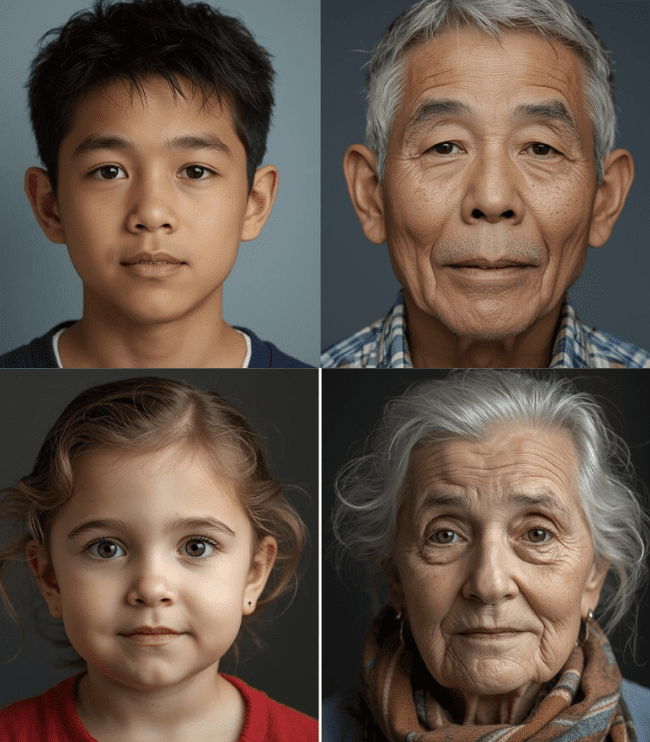
Enables direct comparison from toddler → adolescent → adult, particularly powerful in missing children, trafficking, and long-term exploitation cases.

Designed for real investigative conditions — side profiles, occlusions, motion blur, low-resolution captures, and non-ideal imagery.

Used to help confirm identity of deceased individuals in quick time, including on mobile devices, when traditional identifiers are not immediately available.

Helps identify false IDs, identity reuse, aliases, and borrowed or manufactured identities across jurisdictions.

Built-In Guardrails

QAPLA is governed by technical and ethical guardrails designed specifically for investigative identity confirmation — not surveillance.

  • One-to-one image comparison only: QAPLA compares only the two images provided by a user. It does not scan populations or perform bulk searches.
  • No biometric access, transmission or gallery: QAPLA does not require, create, or maintain a biometric gallery of individuals.
  • No image storage, transmission, or retention: Images submitted for comparison are not stored, reused, or retained after the search is completed.
  • Private, non-replicable searches: Each QAPLA search is private to the authorized user. Once closed, it disappears and cannot be replayed or reconstructed.
  • Credentialed, restricted access: Access is limited to trained, authorized users such as investigators, analysts, medical examiners, and prosecutors.
  • Designed for identity confirmation, not surveillance: QAPLA answers a specific investigative question — whether two images depict the same individual — and nothing more.

QAPLA Workflow for Investigators

Investigators upload two images only for comparison. QAPLA does not search galleries, scrape databases, or ingest population data.

QAPLA performs a direct 1:1 facial comparison to assess whether the two images depict the same individual, even across significant differences in age, quality, or context.

Results must be reviewed by trained analysts to assess similarity indicators and contextual relevance. QAPLA is designed to support investigative judgment, not automate conclusions.

All QAPLA searches are session-based and private. Once a search is closed, it cannot be replayed, retrieved, or reconstructed. Search activity is logged for legal integrity and accountability, without retaining biometric data or images. Outputs are suitable for investigative review, prosecutorial evaluation, and court scrutiny.

Identifying a Partial Face With QAPLA

QAPLA can identify individuals even when only part of the face is captured, as long as the image contains enough measurable facial points for comparison. Key advantages:

  • Works with masks, hoodies, partial angles, or obstructed images
  • Algorithm isolates and analyzes available facial landmarks (eyes, brow structure, nose bridge, cheekbones, etc.)
  • A human must validate every match before taking any action
  • Ideal for gang and ORC investigations, where offenders frequently conceal their faces
  • Reduces the incidence of “dead-end” leads
  • A partial, depending on the image, can be used to match against sensors

Caveat: It depends on the quality of the image and the angle, etc.