A 21-year old was charged with two counts of being a convicted felon in possession of a firearm, after the shooting of a teenager last week, the US Department of Justice Nashville Field Division said in a statement.
The charges stem from investigation into the shooting of a 17-year old boy, who was shot in the stomach with an AR-style rifle last week. When Metropolitan Nashville Police Department (MNPD) responded to this incident, Gievanne Courtlyn Ashley, 21, was identified as the shooter by witnesses.
Ashley had fled the scene, according to witness statements from the criminal complaint. MNPD officers knew at the time that Ashley was wanted on a probation violation warrant.
Further investigation by MNPD on August 24 2020 led to a house on Herman Street, where Ashley was found by SWAT officers hiding in a bedroom closet and was arrested. During a search of the premises, officers located a loaded .40 caliber Glock under the cushion of a chair in the living room.
Based on further interviews, MNPD officers obtained a search warrant for an apartment on Alameda Street in Nashville and recovered a loaded .32 caliber long revolver, a Ruger AR-5.56 mm caliber rifle with 30 rounds in the magazine, an additional 5.56 mm magazine loaded with 10 rounds, a Glock .40 caliber magazine loaded with seven rounds, and, 12 additional rounds of .40 caliber ammunition.
Ashley has two prior felony convictions in the Criminal Court of Davidson County, including burglary of a motor vehicle and being a convicted felon in possession of a firearm. If convicted of the instant offenses, Ashley faces up to 10 years in prison on each count.
This case was investigated by the MNPD and the Bureau of Alcohol, Tobacco, Firearms & Explosives (ATF).
A young woman from Minneapolis pleaded guilty to attempting to provide material support to a designated foreign terrorist organization (al-Qa’ida). The 22-year old, Tnuza Jamal Hassan, entered her guilty plea on Wednesday before Judge Patrick J. Schiltz at a district court in Minneapolis, the US Department of Justice said in a statement.
While she was a freshman at St. Catherine University in St. Paul, Minnesota, Hassan drafted a letter encouraging others to join al-Qa’ida. She anonymously delivered the letter to two other students at the university for the purpose of recruiting them for the designated foreign terrorist organization. Hassan denied authoring or delivering the recruitment letter in an interview with FBI agents subsequently.
On September 18 2017, Hassan purchased a round-trip airline ticket from Minneapolis’ St. Paul International Airport to Dubai, United Arab Emirates, according to her guilty plea and documents filed in court. She purchased a second round-trip ticket from Dubai to Kabul, Afghanistan.
Hassan later admitted that she planned to travel from Dubai to Kabul where she hoped to join al-Qa’ida, and that she had no intentions of returning to the US. On September 19 2017, Hassan boarded a flight and traveled from Minneapolis to Dubai. She was prevented from traveling to Kabul because she failed to secure a travel visa, allowing her to enter the country.
On January 17 2018, Hassan, who was living in a St. Catherine University dorm lounge without the university’s permission, attempted to set several fires on the campus, according to the guilty plea and court documents. Hassan admitted that she attempted to burn the university’s buildings as a retaliatory act against the US for its opposition to al-Qa’ida in Afghanistan.
She has been charged in Ramsey County District Court with one count of first-degree arson.
This case is the result of an investigation conducted by the FBI-led Joint Terrorism Task Force, St. Paul Police Department, and arson investigators from the St. Paul Fire Department.
A Russian national was arrested for conspiring to recruit an employee of a Nevada-based company to introduce malicious software into the company’s computer network, extract data from the network, and extort ransom from the company.
Egor Igorevich Kriuchkov, a citizen of Russia, was charged with one count of conspiracy to intentionally cause damage to a protected computer, the US Department of Justice said in a statement. The 27-year old was arrested on August 22 in Los Angeles and had his initial appearance before US Magistrate Judge Alexander F. MacKinnon, who ordered Kriuchkov detained pending trial.
From about July 15, 2020 to about August 22, 2020, Kriuchkov conspired with associates to recruit an employee of a company to introduce malware – i.e., malicious software programs designed to damage or do other unwanted actions on a computer system – into the company’s computer network.
The malware was meant to provide Kriuchkov and his co-conspirators with access to the company’s system, according to the complaint and statements made in court. After the malware was introduced, Kriuchkov and his co-conspirators planned to extract data from the network and then threaten to make the information public, unless the company paid their ransom demand.
Kriuchkov entered the US using his Russian passport and a tourist visa. He contacted and met with the employee numerous times to discuss the conspiracy, and promised to pay the employee $1 million after the malware was introduced. Kriuchkov also provided the employee with a burner phone, and instructed him to leave the burner phone in airplane mode until after the money was transferred.
After being contacted by the FBI, Kriuchkov drove overnight from Reno, Nevada, to Los Angeles. Kriuchkov asked an acquaintance to purchase an airline ticket for him in an attempt to fly out of the country.
Sun Pharmaceutical Industries Inc’s subsidiary – DUSA Pharmaceuticals Inc – agreed to pay the US a $20.75 million settlement to resolve false claim allegations. DUSA allegedly caused physicians to submit false claims to Medicare and the Federal Employee Health Benefit Program, the US Department of Justice said in a statement.
It knowingly promoted an administration process for the drug Levulan Kerastick, which contradicted product instructions approved by the US Food and Drug Administration (FDA), and was unsupported by sufficient clinical evidence.
Levulan Kerastick is a prescription topical solution approved by the FDA for the treatment of minimally to moderately thick actinic keratosis of the face or scalp. Actinic keratoses are scaly spots or patches on the top layer of skin. With time the spots or patches may become hard with a wart-like surface.
At all relevant times, the “Dosage and Administration” section of the drug’s FDA-approved instructions described a two-stage process involving application of the topical solution to the target lesions and then, following an incubation period of 14 to 18 hours, illumination of the target lesion with blue light.
The US alleged that by January 2014, senior management at both DUSA and Sun Pharma knew that administration of Levulan Kerastick employing short incubation periods – ranging from one to three hours – resulted in clearance rates significantly lower than those achieved in clinical trials using 14 to 18-hour incubation. Still, between January 2014 and December 2016, DUSA allegedly encouraged physicians to use these demonstrably less effective short incubation periods.
DUSA used, among other things, paid physician speaker programs, paid physician peer-to-peer discussions, promotion by DUSA’s sales force, and the dissemination of incomplete or misleading responses to questions from prescribing doctors to encourage physicians.
It failed to inform physicians that administering the drug using short incubation periods resulted in significantly lower clearance rates than achieved with the longer incubation period described in the FDA-approved instructions. In some instances, the company falsely stated that clearance rates were the same for the shorter and less effective incubation periods.
While this scheme to provide false instructions on the use of its product may have resulted in more sales and bigger profits, it also meant customers endured the frustration of being repeatedly subjected to less effective treatments to try to get their skin lesions to clear. This investigation seeks to restore money to taxpayers and discourage those who put profits over effective treatment.
U.S. Attorney Brian T. Moran for the Western District of Washington
As part of the settlement, DUSA and its parent company, Sun Pharma, have agreed to enter into a Corporate Integrity Agreement with the US Department of Health and Human Services Office of Inspector General. That agreement provides for procedures and reviews to be put in place to avoid and promptly detect conduct similar to that which gave rise to this matter.
The settlement with DUSA resolves a lawsuit filed under the whistleblower provision of the False Claims Act, which permits private parties to file suit on behalf of the United States for false claims and share in a portion of the government’s recovery. The civil lawsuit was filed by Aaron Chung, who formerly worked for DUSA as a sales representative. As part of today’s resolution, Chung will receive approximately $3.5 million.
The department is committed to protecting taxpayer-supported health care programs from fraud and abuse. We will hold drug manufacturers accountable when they knowingly promote ineffective uses of their products that undermine patient care or waste program funds.
Acting Assistant Attorney General Ethan P. Davis for the Justice Department’s Civil Division
A man from Minnesota was charged for allegedly defrauding the Paycheck Protection Program (PPP) of about $841,000, the US Department of Justice said in a statement. Kyle William Brenizer, 32, of St. Paul, Minnesota, was charged in a criminal indictment with wire fraud and money laundering in the District of Minnesota.
Established by the Coronavirus Aid, Relief and Economic Security (CARES) Act, the PPP provides small businesses with necessary funds to remain operational despite the severe economic hit from the covid-19 pandemic.
Brenizer was the owner and manager of True-Cut Construction LLC (True-Cut), a contracting and construction company located in Brooklyn Park, Minnesota. True-Cut and Brenizer were ordered by the Minnesota Department of Labor and Industry to cease and desist from doing business in August 2018. In December 2019, True-Cut’s contractor license expired and was never renewed, the indictment alleges.
He allegedly submitted a false and misleading PPP application in the name of True-Cut seeking around $841,000, but the application was denied. Brenizer submitted a PPP application again seeking the same amount, in the name of True-Cut. But this time, he allegedly submitted the application under the name of another individual.
Brenizer falsely stated that True-Cut’s average monthly payroll was over $330,000 for about 30 employees. He also falsely certified that he was not subject to any pending criminal charges, even though he was allegedly named in multiple pending felony charges in the State of Minnesota for check forgery, identify theft, and theft by swindling.
Since his second application contained various misrepresentations and omissions, it was approved on May 13 and he received $841,000 in PPP funds. Instead of using the funds for permissible business expenses, Brenizer transferred around $650,000 to a bank account unrelated to True-Cut, made a $29,000 payment to purchase a Harley-Davidson motorcycle, and spent over $1,000 on golf expenses, among other expenses for his personal benefit, according to the allegations in the indictment.
The indictment was unsealed on Friday. Brenizer made his initial appearance before US Magistrate Judge Becky R. Thorson of the District of Minnesota and remains in custody. He will appear for a detention hearing on August 26.
The FBI, IRS-CI, FDIC-OIG and SBA-OIG investigated the case. Assistant Chief L. Rush Atkinson of the Department of Justice’s Criminal Division’s Fraud Section and Assistant U.S. Attorneys Matthew S. Ebert and Allison K. Ethen of the U.S. Attorney’s Office for the District of Minnesota are prosecuting the case.
The CARES Act is designed to provide emergency financial assistance to millions of Americans who are suffering the economic effects of the covid-19 pandemic, and was enacted as federal law on March 29. One source of relief is the authorization of up to $349 billion in forgivable loans to small businesses for job retention and certain other expenses through the PPP. In April, Congress authorized over $300 billion in additional PPP funding.
Through PPP, qualifying small businesses and other organizations are eligible to receive loans with a maturity of two years and an interest rate of 1%. Businesses must use PPP loan proceeds for payroll costs, interest on mortgages, rent and utilities. The PPP allows the interest and principal to be forgiven if businesses spend the proceeds on these expenses within a set time period, and use at least a certain percentage of the loan towards payroll expenses.
Anyone with information about allegations of attempted fraud involving COVID-19 can report it by calling the Department of Justice’s National Center for Disaster Fraud Hotline at 866-720-5721 or via the NCDF Web Complaint Form.
A former Bureau of Prisons (BOP) Corrections Officer was sentenced to 42 months in prison and three years supervised release for sexually assaulting two women on multiple occasions, and for one count of making false statements to federal agents.
Adrian L. Stargell, 39, worked as an Education Specialist at the FCI-Aliceville facility in Aliceville, Alabama. He was sentenced in federal court in Tuscaloosa, Alabama, the US Department of Justice said in a statement.
Stargell had previously pleaded guilty to two counts of violating the rights of the women. He had made false statements to agents from the US DOJ Office of the Inspector General (OIG).
The Department of Justice will not tolerate corrections officers who sexually assault individuals whom they are otherwise supposed to protect and keep safe. The Civil Rights Division will continue to vigorously prosecute these cases and secure justice for victims of these egregious crimes.
Assistant Attorney General Eric Dreiband
While he was on duty as an Education Specialist during 2017 and 2018, Stargell sexually assaulted the two women who were incarcerated at FCI-Aliceville, according to court documents. He admitted that he knew what he was doing was wrong and against the law, yet he did it anyway.
When OIG agents interviewed Stargell about the allegations of sexual misconduct, he lied by denying that he had any sexual contact with the victims.
Today justice was served for the victims of these egregious crimes. We will continue to aggressively prosecute those who abuse authority and prey on vulnerable people in their care.
Interim U.S. Attorney Prim Escalona of the Northern District of Alabama
This case was investigated by the Department of Justice OIG Miami Field Office. Assistant U.S. Attorney Robert Posey of the Northern District of Alabama and Special Litigation Counsel Fara Gold and Trial Attorney Anna Gotfryd of the Criminal Section of the Civil Rights Division of the U.S. Department of Justice prosecuted the case.
Stargell abused his power, sexually assaulted two inmates, and lied to try to cover up his actions. Today, justice is served. He will rightly serve time for his egregious actions.
James F. Boyersmith, Special Agent in Charge of the OIG Miami Field Office
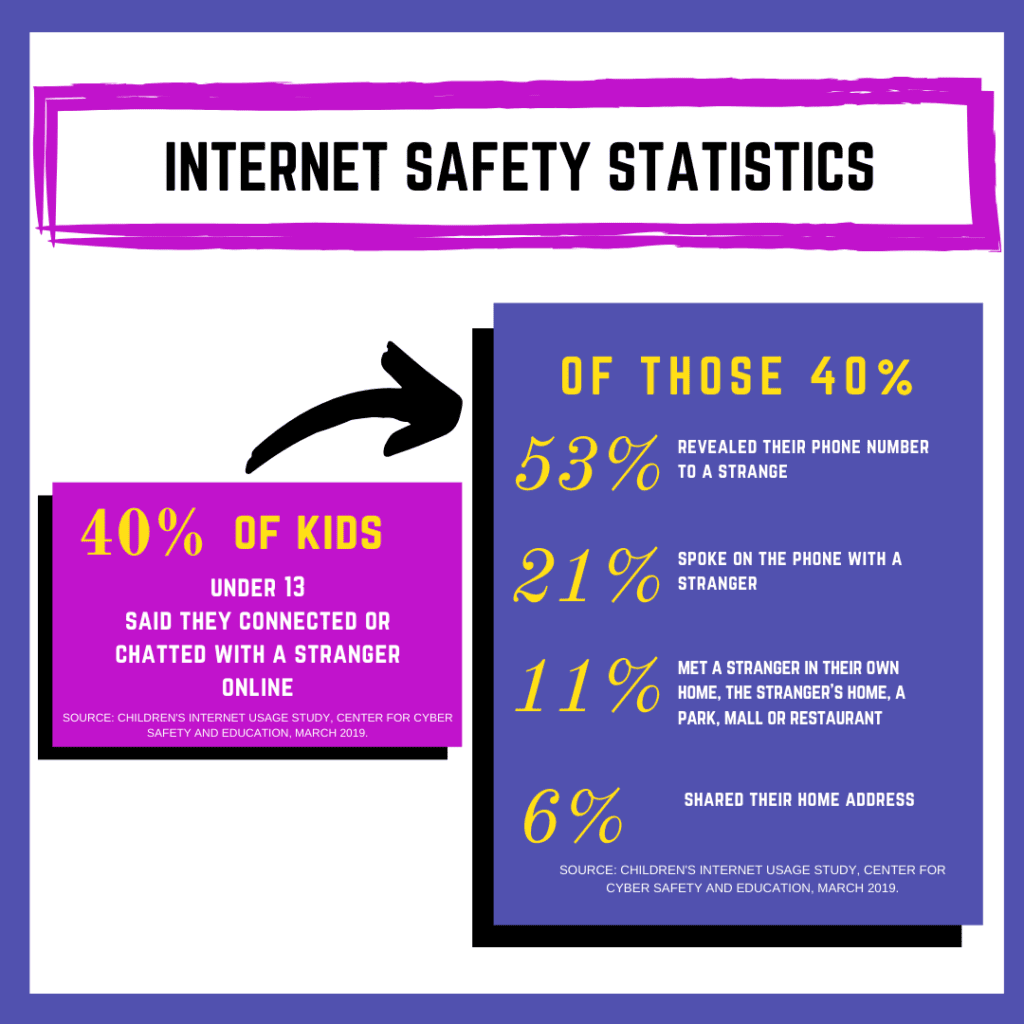
Operation Covid Chatdown led to the arrest of 34 men in Fresno, California, for soliciting sexual acts from individuals they believed were 12- or 13-year-old children. In reality, the individuals were undercover law enforcement operatives and part of an operation conducted by several law enforcement bodies, the U.S. Immigration and Customs Enforcement’s (ICE) Homeland Security Investigations (HSI) said in a press release.
The operation is a startling look at the number of people actively grooming children online to meet them for sexual encounters in just the Fresno region alone. During the undercover operation, conducted from July 20 to Aug. 2, 2020, more than 190 online contacts continued to chat even after they knew they were talking to whom they believed was a minor.
There were a significant number of instances in which perpetrators also sent sexually explicit images. When the subjects asked the undercover operatives to engage in sexual acts, they were provided an address in Fresno, where they traveled and were subsequently arrested. No minors were involved in the operation.
These abhorrent attempts by predators to exploit innocent children for immoral and illegal sexual gratification have no place in American society. Homeland Security Investigations will relentlessly pursue anyone involved in criminal behavior against children.
HSI San Francisco (NorCal) Special Agent in Charge, Tatum King
These 34 men traveled by foot, skateboard, bike, or vehicle to meet 12- and 13-year-old boys and girls, who turned out to be law enforcement operatives with badges, guns and handcuffs. A number of the arrested individuals admitted to victimizing real children during previous attempts. One man admitted he was HIV positive and that he planned to have sex with a 13-year-old child.
The suspects face a range of criminal charges including state charges for sending harmful material to seduce a minor, arranging meeting with a minor for lewd purpose, and possession, transmission and transportation of child pornography.
Graphic created by Biometrica
Operation Covid Chatdown was conducted by the Central California Internet Crimes Against Children (ICAC) Task Force. The Central California ICAC Task Force, which was formed in 2007, comprises of 64 federal, state, and local law enforcement agencies spread throughout nine counties in the Central Valley. It is dedicated to protecting children online and investigating crimes committed against children, which are facilitated by the Internet and computer usage.
HSI agents and criminal analysts’ investigative work, together with HSI’s partners, bought these subjects to justice. These arrests were made possible through a joint effort with HSI’s Law Enforcement partners in the Fresno County Sheriff’s Office, Multi-Agency Gang Enforcement Consortium (MAGEC), the Police Departments of Clovis, Fresno, Kingsburg, Parlier, San Luis Obispo, the U.S. Attorney’s Office, Eastern District of California, the Fresno County District Attorney’s Office, and the Contra Costa County District Attorney’s Office.
Philadelphia ranks second nationwide in terms of the number of homicides so far this year, just behind Chicago, statistics presented by Philadelphia Police Commissioner Danielle Outlaw showed, according to a CNN report.
Homicides in the city increased 32% to 247 as of July 26, when compared with the same period a year ago, Outlaw told city council members at a hearing on gun violence on Tuesday. While crime dipped, overall, in many cities at the beginning of the Covid-19 pandemic, violent crime and homicides are rising sharply around the country, the CNN report added.
Although Philadelphia ranks second highest in numbers, its percentage growth was slower than that of ten other cities. For instance, Minneapolis’ homicides surged 85% and Fort Wayne, Indiana, saw a 58% increase, according to the data Outlaw presented.
Chicago, where a series of shootings have occurred recently, ranks number one in homicides nationwide at 433, a 52% increase from the previous years, according to the data. New York ranked a close third, with a 29% increase to 227 homicides.
Tuesday’s meeting was scheduled before the increased gun violence in the city this past weekend, when six people were shot at in a single incident.
Shootings are up 36% in Philadelphia this year. On average, three children per week have been shot this year in the city, according to data from the city’s police department from last week. Nine of the shootings were fatal. In the meeting, Outlaw said top issues driving gun violence include: existing rivalries between gangs and groups; competition for territory to sell drugs; “beefs” between individuals; and a rise in the likelihood for individuals to carry firearms.
Wynn Resorts Ltd closed its office in Yokohama, Japan’s second largest city by population, due to delays in the integrated resort licensing process but said it remains interested in the country on a long-term basis.
“The pandemic is having an unprecedented negative impact on integrated resort development, and resort companies such as Wynn are considering how we evolve our operations to align with a post-pandemic market,” Wynn said in a statement, according to an article by Bloomberg Quint. “Long term, we remain interested in the Japan integrated resort market and will monitor the situation closely.”
Enthusiasm among operators for Japan ran high for nearly two years, as analysts estimated it could eventually become the world’s second-largest gaming market, behind only Macau and well ahead of Las Vegas, the article said.
Japan’s population, proximity to other Asian nations with throngs of gamblers, and the country’s status as one of the wealthiest in the world were among the traits that had operators vying to capture the market. Japanese legislators approved the country’s first Vegas-style casino developments, known as integrated resorts, but none have yet been built.
Wynn’s announcement came less than three months after rival Las Vegas Sands said it was bowing out of the competition for Japan. In May, Las Vegas Sands withdrew plans to set up an integrated resort (IR) in Japan, with its chairman and CEO Sheldon Adelson citing the Asian country’s IR development framework as the reason behind the decision, according to an article in Casino.org.
Caesars Entertainment Corp ended its pursuit of a Japanese casino last year, as it decided to focus on the U.S. market instead. MGM Resorts International, the lone remaining bidder for a casino in Osaka, said it will continue to pursue the project despite delays in the process that could last until next year.
In July 2018, Japanese policymakers approved IRs, pledging to award three licenses to start with. But it became clear later that a single, plush IR could cost $10 billion to $15 billion to build, making it the most expensive project in industry history, according to the Casino.org article. Additionally, consistent delays in proposal submission deadlines and other regulatory hurdles drew the ire of some operators, the article added.
Initially, the hope was that Japan would award licenses this year or in early 2021, which meant gaming venues could hope to open in 2025. But now, the request for proposal (RFP) process could extend into the middle of 2021, and it could be 2026 or later before a casino there opens its doors.
Wynn declared its intention to focus on Yokohama last December. But with Wynn and Las Vegas Sands both now appearing to be out of the picture, the field of competitors for a license in Yokohama is thinning.
Genting Singapore and Melco Resorts & Entertainment are among the other operators that previously expressed interest in Yokohama. Neither has given any indication about possibly scrapping their Japan plans.
Before the covid-19 pandemic, Atlantic City’s casinos were working toward expanding their appeal among younger visitors and non-gamblers, in a bid to branch out from their image of mostly being a gray-haired slot player’s haven. While they did succeed in bringing a younger crowd, the pandemic has amplified that shift since gambling parlors re-opened in July, after being closed for over 15 weeks to mitigate the spread of the virus, according to an article by The Press of Atlantic City.
The presence of younger gamblers and the number of families staying at the hotels has increased at most of the city’s casinos since the industry was permitted to reopen on July 2, several executives and employees said, even as many older players continue to stay away.
Frequent customers and core gamblers could be staying away because of the pandemic and the restrictions imposed on casinos as a result, the article said quoting Steve Callender, regional president for Caesars Entertainment Inc., which operates four of the city’s nine casinos.
“It appears that more of our more mature guests are not coming back yet or, at least, as frequently as they used to. I think this is due to less amenities than they expect from their experience at our facilities,” Callender said in the article. “I’m sure some are just waiting until there is a vaccine so they feel more comfortable, but, mostly, they don’t want to stand in line on the Boardwalk waiting to eat.”
Indoor dining, drinking and smoking on the casino floor are all prohibited, while other offerings like spa services or live entertainment are either extremely limited or not available at all.
“We are seeing that the older the customer is, the less frequent we are seeing that customer compared to last year,” Joe Lupo, president of Hard Rock Hotel & Casino Atlantic City said in the article, noting that trend is similar at other casinos across the Hard Rock brand.
Player’s cards give the casino a clear picture of who is, and who isn’t, coming to the property, Lupo added. “I think it’s very expected that the older customer segment is a little bit more leery of going out in public with the risk of COVID, and the numbers specifically show that.”
Meanwhile the number of younger visitors to Atlantic City is growing, and the increase is evident in metrics the casinos can gauge, such as hotel bookings and loyalty card signups, said Ron Baumann, senior vice president and general manager for Caesars Entertainment. Baumann said that in the first two weeks of July, nearly 6,000 new CAESARS Rewards cards were activated, with a good portion of those signups being done by people between the ages of 29 and 39.
Another factor that is likely contributing to the uptick in younger and first-time visitors to Atlantic City is the affordability of casino hotel rooms. When combined with travel restrictions and canceled out-of-state summer vacations, Baumann said local families are staying at casino hotels more often than in years past.
The reduction of older gamblers and visitors coming to Atlantic City was anticipated by the casino industry since that population is, according to health officials, more at-risk to contract covid-19.
“There’s a fear factor,” the article said quoting Bob Ambrose, a gaming industry consultant, writer and adjunct professor of casino management and hospitality. “I think it’s going to take a while for the more mature visitor to feel comfortable enough to come back.”
Ambrose said he understood why some senior gamblers may shy away from coming to a casino but added that the industry’s precautions and safety protocols are “much better” than at supermarkets or retail stores.
Not every casino is trending younger, though. Without HQ2 Beachclub or a nightclub, and sports betting only recently ramping back up, Mike Donovan, chief marketing officer and senior vice president at Ocean Casino Resort, said the things that typically attracted a younger demographic to the property are missing.
“I think (the crowd) is probably a little bit older, just for us, because we don’t have those things and that was such a big piece of business last year. That nightlife, sports betting and entertainment would bring … 10,000 people on your property in one day that are all primarily under 40,” he added.
But with a clientele perhaps more focused on gambling this summer, Ocean is poised to report a good month in terms of gaming revenue. “July has been a great month for us at the property,” Donovan said. “Our gaming revenues — they’ll come out on the 12th (of August) — but we’re going to be up, likely, 20% to 25% over where we were last year.”