
Tech Support : support@safience.io

Blog

When Terror Comes Calling: Safety, Security & Survival In The Age Of Mass Casualty Attacks

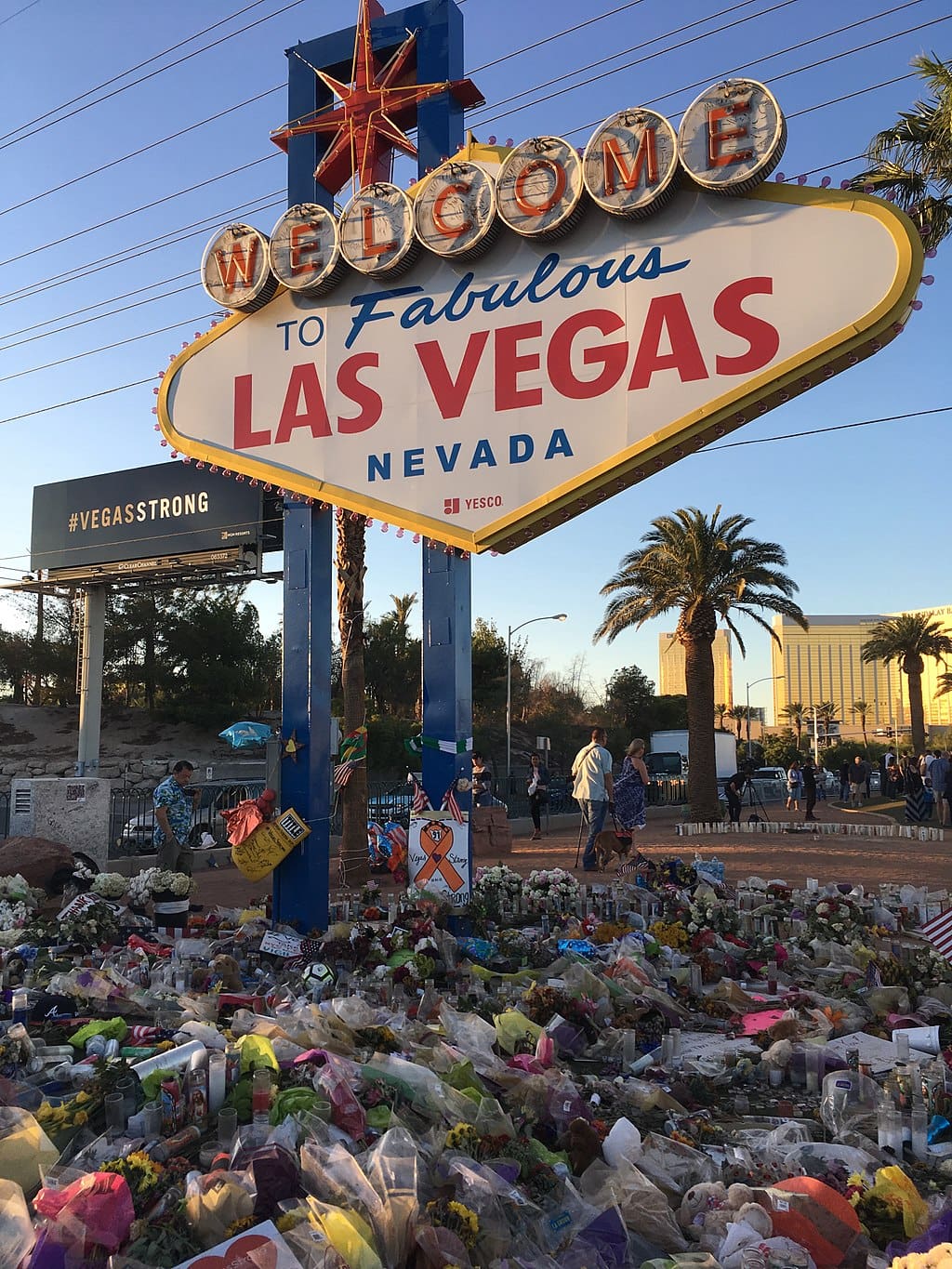
By Kadambari M. Wade On Oct. 1, 2017, Stephen Paddock opened fire on the Route 91 Harvest Music Festival from the 32nd Floor of the Mandalay Bay Hotel. One nondescript killer, a man who fit no known profile of a mass murderer, prior to or since the events of that fateful evening, managed, in the space of minutes, to let off more than 1,100 rounds of gunfire.   It was enough to kill 58 people and cause physical injuries and unknown, irreparable harm to 869 others. There were 413 gunshot or shrapnel injury victims, 360 people sustained injuries other than from gunshot or shrapnel, and 96 were identified as “having sustained other injuries where the type of injury sustained was unable to be confirmed,” in the Las Vegas Metropolitan Police Department’s final “Criminal Investigative Report of the 1 October Mass Casualty Shooting.” One year since that eventful night, life has moved on in Vegas, except for the survivors and victims’ families. It remains a people magnet, glitzy and glamorous, shimmering in the desert heat, even if every now and then, despite the Golden Knights’ season in the sun, there is now a frail reality to that shimmer, something familiar to the citizens of any city that has been brutalized; a tarnish to that shining city in the valley that has nothing to do with the underlying tawdriness that has always been the flip side of the lights of Las Vegas, a veiled viciousness that, to locals, was always an accepted part of life in Sin City, or any city of temptation. Locals understand that this callousness of Vegas is also part of her siren’s call, but for many of them, October 1 last year was a different kind of ugliness, one that ripped the bandage off gaping wounds. Over this past year, through innumerable calls for strength and endurance and resilience, there have also been calls for shoring up the city’s defenses, and for stronger security, both on the law enforcement side and from the businesses and industries that depend on Vegas’s massive influx of everyday tourists for their very survival. There is also a belief, however, that this is a city that has seen a heck of a lot through the years and decades, and she has always fought back, stronger, and she has always shimmered on under the unforgiving Nevada sun. In this final piece of our MUPC month series, on this one-year anniversary of Paddock’s pitiless assault, we asked Jeffrey Muller to take us through the Investigation of Mass Casualty Incidents and Terrorism. Mr. Muller, now the president of strategic security group Muller Group International (MGI), is perhaps uniquely qualified to answer these questions. The son of a lifelong FBI agent and an FBI victim witness coordinator himself, he understands the importance of the investigator’s perspective as much as keeping victims and survivors front and center. He and his brother, a helicopter pilot with the U.S. Army, grew up all over the country, but he considers Maryland home, having finished high school there and gone on to the U.S. Naval Academy in Annapolis. He’s been on SWAT Teams, in war zones — during Desert Storm — is a trained sniper, was a weapons and engineering officer in the United States Navy, and served 21 years as a Supervisory Special Agent in the FBI, where he co-founded the Bureau’s Weapons of Mass Destruction Directorate. He also developed and founded INTERPOL’s Chemical, Biological, Radiological, Nuclear and Explosives (CBRNE) Directorate in Lyon, France, and chaired the United Nations Critical Infrastructure Protection, Tourism Security and Cybersecurity Working Group, comprised of 34 UN agencies.

Jeff Muller (left) at Calverton Executive Airpark in Suffolk County, New York, during the TWA 800 investigation, with the reconstruction of the ill-fated Boeing 747 behind him. He spent weeks out in the Atlantic Ocean on a scallop boat, dredging the ocean floor for victims and evidence. crashed into the Atlantic Ocean near East Moriches, New York, on July 17, 1996, at about 8:31 p.m. EDT, 12 minutes after takeoff from JFK Airport en route to Rome, with a stopover in Paris. All 230 people on board died in the third-deadliest aviation accident in U.S. history. Photo courtesy Jeff Muller.

Interviewer: Both from the perspective of the shooting and the injuries caused by the ensuing chaos, this was the deadliest mass casualty incident by a single individual in U.S. history. You were privy to the LVMPD report well before it was made public, have been privy to discussions with different Las Vegas hotels and businesses on security preparedness and been part of innumerable mass casualty investigations in your time with the FBI and INTERPOL. What exactly happened on October 1, and could you take us through that night? Jeff Muller:

One year ago, on October 1, 2017, 64-year-old Stephen Paddock, who had had no prior engagement with law enforcement other than a few speeding tickets, and had no evident ideological or other motive that could be determined, acted alone, 100% — we know this from thousands of hours of interviews as his moments were detailed down to the second, going back months and years; committed one of the worst mass murders and one of the greatest mysteries of our times. In the week before, Paddock had taken a room on the 32

nd

floor of the Mandalay Bay, and had transported multiple large bags [26] on different days, up into his room. A few days before, he had paid for the room next to the one he already had, one at the end of the hallway, both of which overlooked the Route 91 Country Music Festival. A diagrammatic representation of the 32nd Floor of the 100 Wing of the Mandalay Bay hotel, from where Paddock rained down death on innocent concertgoers. Graphic Courtesy: The publicly released LVMPD Criminal Investigative Report of the 1 October Mass Casualty Shooting. Shortly after 10p.m, when Jason Aldean, the star performer, began his performance, Paddock began shooting into the crowd. He initially shot into the crowd with multiple weapons, changing magazines, ultimately shooting over 1,100 rounds. At one point, he changed his aim and started to try and shoot at a fuel oil tank that was located in the vicinity. The belief is that he wanted to see if it could make that explode and luckily that didn’t happen.

Why do hotels in Vegas and elsewhere in the US not have cameras in corridors? They do exist in hotels in several other countries.

That is correct. They might be there in elevators, but not in passageways, or in rooms, obviously, the latter for privacy reasons. The hospitality industry, traditionally, has been trying to cater to clients, in terms of privacy issues, but I think there’s an understanding now of a need for some change here, on both sides, because of public safety and security. We are working with some organizations on this, on systems that would allow for the covert identification of weapons when someone comes through a door or walks into a lobby. We’ll be working with these organizations on the installation of Facial Recognition, Weapons Recognition and Shot Detection Systems. There are newer systems now that can even detect the exact location of an elevated shooter. Things like that have been some of the major problems of the past — and these are problems that are being rapidly solved by advances in integrated technological security. One of the major issues we have traditionally had, for instance, is that law enforcement did not have the ability to identify a shooter if an individual was shooting from above street level. They basically could not identify where exactly the shot was coming from. But now, with new technology that was originally developed for the military being commercially available, this is an issue that can be dealt with, both by law enforcement and the private sector. Private organizations, including hotels, are now looking to proactively have these plans in place to manage incidents. And they are not just looking at plans like these for active shooter situations after a shooting begins. They’re also implementing plans that will train their employees to look for red flags: For instance, if someone has a “Do Not Disturb” sign on a door for beyond a certain length of time, to get their housekeeping staff to file a report and have security go access that door. Also, to train their staff, both the cleaning staff and other housekeeping staff, to know what to look for when they go into a room, so you get additional pairs of eyes who can add to a security profile. The front page of a newspaper attempts to answer a question that hasn

The Incident Response

There are different kinds of mass casualty events: A shooting is very different from a bombing is very different from a plane being downed. What does the initial assessment in responding to mass casualty incidents look like?

The initial response is very well practiced under the National Incident Management System or

NIMS

, from the local level police all the way up to the inter-agency model at the federal level, irrespective of the kind of incident. It’s always been a presidentially-directed development, but is also now part of a

Presidential Policy Directive

on National Preparedness for any kind of modern day threat, implemented through the DHS. What they did initially was create the

ICS

, an Incident Command System, the structure by which the response at all levels, in all jurisdictions, is controlled. The emergency operations centers, in many cases, are already established, and they will have identified locations for all agencies that will have to respond to a mass casualty event. Now depending on the kind of event, the list of responding agencies will be modified. In the assessment phase, whoever is assessing the situation will need to look at whether it involves multiple bombs, or hazardous material. Let’s say there was nuclear or radiological material detected. In that situation, you know you’re going to need additional components from the Department of Energy and others that are experts in a certain area.

What happens when the source of a mass casualty attack is unknown?

In that case, it’s an almost Pavlovian response, people will flow into their assigned locations in an emergency operations center while information flows in. It is a very well practiced and well-coordinated response. For instance, it may end at the local level if it is a single shooter incident. It is still a tragic incident to a police department or a local community, but it is not a multiple site, multiple shooter incident, which would lead to a much larger response.

At which stage does the FBI get involved when something like Vegas or the Marjory Stoneman Douglas High School shooting in Parkland happens, they were both single shooter incidents too.

Immediately, and for two basic reasons: First, the scale of the incident and second, at least initially, when you’re still getting information on victims and there’s a lot of confusion, you don’t know what you’re dealing with. The FBI is involved until there is a determination that it doesn’t have a federal nexus. And even then, quite honestly, there are support mechanisms in place where we may lend specialty units, such as a hazardous material response team, or a bomb technician. We have specialty assets that can be provided whenever needed. There is a very well established command and control system — there are areas designated for SWAT teams, hostage negotiators, evidence response teams, it’s all very well structured. An Orlando memorial near Pulse to the 49 people killed and 53 wounded in Omar Mateen

A shooting in a closed area, like the Pulse nightclub shooting, where more than 100 people were ultimately shot — leaving 49 dead and 53 with gunshot wounds, and 5 with other injuries — and there is a developing hostage situation, obviously elicits a very different response. A Critical Incident Review of the Orlando Public Safety Response to the Pulse attack by COPS, indicated that some of the challenges confronting the agencies responding to the incident included the following:
  • Transitions in the operational and tactical strategies from active shooter to barricaded suspect with hostages to terrorism.
  • The dark and difficult layout of the nightclub.
  • The safety and wellbeing of hostages and law enforcement.
  • Coordinating different local, state, and federal agencies that had overlapping roles and different communications systems and protocols.
  • The threat of secondary attacks and explosions with little information.

We just recently met with a city commissioner and a high level deputy chief within the Orlando police. They’ve had multiple incidents in their jurisdiction, including school shootings and the

Pulse nightclub attack

. They’ve also had situations that they haven’t seen before. Nightclub shootings in the United States aren’t exactly uncommon. To have one turn into a mass terror attack is. Once it was determined that it was a more than ordinary shooting incident, there are tactics, trainings and procedures that kick into place. Every level of law enforcement is trained, for instance, that when we respond to a school shooting, the first four people that respond — and those four could be an FBI agent, a patrol officer, a secret service agent, and a local sheriff — could form a diamond formation, as an example, and enter the school. Do note that tactics and strategies are continuously evolving when it comes to active situations and what tactic to use depends on the situation, the available resources and the urgency of the case. At the end of the day, it's about saving lives.

Tactics, Training, Teamwork

Just to clarify, this doesn’t mean you wouldn’t enter a building until four people get there, it means you’d have to do a real-time assessment of the situation on the fly. What happens to the children inside while you’re determining this?

The old way would have been, “let’s wait until the SWAT team gets here.” Now, when we determine that we can’t wait, like when there’s an active shooter situation and children inside, we have to do what we can to neutralize that threat. Four is ideal because if you go in with two, you’re both looking front, or front and back, and if the shooter comes in from a side doorway, you could both be dead in seconds and add to the casualty list, helping no one. You go in the diamond and all four sides are covered. Obviously, a lone individual could go in by himself, or herself, and also make a difference, but we’re trained to look at the situation on a case-by-case basis and see what works best in each situation. In this case, in Pulse, they responded, there was continuous shooting, it had turned from a mass shooting into an incident where they didn’t know if the shooter was in there or not, whether negotiations were needed, and what exactly was going on. I’ve been in a situation where we went to effect an arrest, got into a shootout, one of our guys was shot badly, and ultimately, our team had to back out and that turned into a hostage situation. The transition from tactical to a slow-moving hostage situation calls for a different set of skills. There are individuals who are specifically trained to deal with those situations, and tactics where the SWAT team will take up positions where they are prepared to assault if the individual inside starts shooting again. A lot of it comes down to training.

What about the layout, like in the Pulse case? Or in Vegas, when you couldn’t quite tell what was happening?

The second issue you raised, with the dark and difficult layout and not having awareness about where you’re going or what you’re looking at, that’s an issue that can be tackled through technology and partnerships. At all levels of law enforcement, public-private partnerships exist with industries and businesses within local jurisdictions. Whether this means knowing how to contact the utility personnel for a block, or where to get the blueprints needed for a building, or get hold of a business owner or another employee not working that night, someone with inside knowledge of a store or restaurant or club, law enforcement does realize they need to engage with communities, and can’t possibly know everything about everyone, even at the local level. And it’s important to constantly train. When you go into a situation in a building where there’s an individual you need to arrest, you’re doing a less-dynamic law enforcement “Clear.” It’s a slow, methodical process. If it turns into an active shooter scenario, it’s a more dynamic entry. That’s something that gets drilled and drilled into a tactical responder’s head. Jeff Muller, left, from his days days on the Chicago FBI SWAT team. He and fellow SWAT team member Kevin Cassidy, were in the mountains of North Carolina searching for Eric Rudolph, also known as the Olympic Park Bomber. Rudolph is an American domestic terrorist convicted for a series of anti-abortion and anti-gay-motivated bombings across the southern United States between 1996 and 1998. Photo courtesy Jeff Muller.

Do you believe the Las Vegas MVPD and Clark County were equipped to deal with a mass casualty event of this scale?

Yes, absolutely. When I was with the FBI, I was in charge of countermeasures and preventions of Weapons of Mass Destruction (WMD) attacks. We had done countless exercises with Las Vegas. Everything from responding to a food borne attack at a salad bar at one of the hotel properties to shootings and explosions, to chemical attacks. They were very well practiced. The Las Vegas City skyline -- a panoramic night view. Photo © Songquan Deng | Dreamstime.com

Collaboration & Communication Post 9/11

There was an exponential rise in global terrorism post 9/11, in terror attacks around the world, and in threats against the United States by various terrorist groups, especially with our involvement in the War on Terror on various fronts. However despite all that, there hasn’t been a 9/11-like attack on U.S. soil in the 17 years since then. What would you attribute that to?

I think one of the other major changes was that they fixed the system, so all of the intelligence agencies would talk to each other. There are 17 identified intelligence agencies in the U.S. and in the old days, I’d say pre-9/11, they didn’t talk to each other. They maintained their information and they didn’t share it. Information lived in silos. That got fixed, some of it was by mandate and some of it was by opening doors and putting liaison officers in each others’ space, so that they could get information in real time and pass on what needed to be passed on without delay. It really helped with us being able to coordinate all of our efforts and have better results. Additionally, on the military side, our being able to stay on the offensive, both against terrorist havens, plus stopping them from being able to proactively plan major events by disrupting supply chains, meant that terror groups had to shift to attempt to reach out to their audience via the Internet, to try and find self-radicalized individuals and different means of attack. As a result, we have begun seeing these calls for individuals to make a difference and subsequent attacks by people armed with machetes and hammers and knives, or by those that drive vehicles into crowds of pedestrians. We’re seeing a bit of a shift in the type of attack, but at this point, we’re not seeing the large, grandiose terrorist attack. A view of Manhattan from over the Hudson River, with two light beams in memory of September 11. Photo © Songquan Deng | Dreamstime.com

Tackling The Lone Wolf

Moving away from terrorism to other attacks, irrespective of whether a religious or other ideological belief fuels them, or just anger — is there any way to control the lone wolf attack?

I would say no. There are lots of ways to identify them. We do a lot of work on social media, monitoring, and scrubbing. We use human intelligence networks, we use electronic means, but if we have an individual such as Paddock, who showed no signs, communicated with nobody, and did it all on his own, we’re really back to seeing if we can stop the method of attack. Can we stop him from bringing weapons into a building where he’s going to shoot down into a crowd? It has to be a multi-layered approach. We have to do as much on the proactive prevention side as possible, but when that doesn’t work, and there will be times it doesn’t, we’re prepared to mitigate with a very practiced, well trained response.

Are there benefits to crowdsourcing investigations in mass casualty incidents like the Boston Bombing? In this world of the omnipresent smartphone and social media, the general public often has access to photo and video footage and may have seen or heard important details about the incident? How do you collect this information and sift through it in real time? There were also people that got badly hurt at that time, with false identifications broadcast in the media, which portrayed them as terrorists.

I think there are great benefits to crowdsourcing, typically when it comes to identification of an individual, but we’ve got to be very careful. I think we’ve seen great success at every level of law enforcement with asking for help from a community but you have to be a bit careful with the utilization of the media, depending on the situation. If it were a hostage situation, for example, and you were providing live coverage of where the SWAT teams were and the individual inside was able to watch TV and see it happening live, that’s a completely different situation. Crowdsourcing has tremendous benefits, but there is a process that has to be followed and it can’t be avoided. You know this, through the work you all do, that there are a great many advances in biometrics that give you the ability to identify an individual in real time, and utilize that imagery to scan his or her face. There are multiple sources of media that come in much faster than when we were working in the past, and these are good tools. But there are cases where, through the investigative process, you have to prioritize which film you want to look at from what angle, and that’s really about applying old-fashioned investigative training and thinking to modern day tools, along with common sense. Otherwise, there will be problems. There are pros and cons to helicopters and UAVs. Drones have the advantage of being able to adapt to flying in more densely populated urban areas, but learning to fly them well takes practice and an FAA remote pilot

Future Threat: Disaster Delivery

Is there a different kind of mass casualty incident of the future that we need to keep a watch out for, with technology changing the world, and making it a more accessible one?

Yes, there is a current threat I’m more concerned about — and do keep in mind that with my background in weapons of mass destruction, I’m always concerned about a large chemical attack and disbursement in some way, or a biological attack. But right now, the drone attack is my major concern. There are reasons for that. One, they are so easy to get hold of. Two, they’re being increasingly utilized overseas against

our forces

by ISIS and other groups, and being documented all over the Internet in propaganda publications. Three, there’s been testing with drones where you can automate a drone to

hold an automatic weapon

and target from the drone, from the controller. With their presence in conflict areas increasing, typically, that’s a sign that lone wolves or self-radicalized individuals could utilize drones in the near future in attacks on the home front. And I’m always concerned about the proliferation of information out there about chemicals that can be utilized to make explosives, picked up at any Home Depot or other hardware store, and now, delivered via an unmanned aerial vehicle.

What about 3D printed guns?

It is a concern in that they can defeat a metal detector, but they are less of a concern inasmuch that in all the testing so far, they’ve really been proven to be single-shot weapons. So they can’t be used, at least for the moment that we are aware, in mass shootings of the kind we have been seeing, as a multiple shot firearm, or a semiautomatic.

Bumping Up Background Checks 

Let’s keep the politics of it all aside for a minute. From a law enforcement perspective, is there a need for some sort of gun control? What does the law enforcement community believe? We’re not talking about taking away the Second Amendment here. Is there a need to put in safeguards, and if so, what would those look like, whether they’re restrictions on modifying bump-fire stocks, semiautomatic rifles, the sale of ammunition, more stringent and longer background checks, what can be done and what is being done, what should be done?

Everyone I talk to, whether from law enforcement or from industry and looking at it from the perspective of being a target, everyone recognizes that we’re not looking to intrude on a citizen’s Second Amendment rights, but there does seem to be a fairly common thread to what they feel about possible solutions. Most involve more stringent background checks, and integrating the background check system, or more specifically, the weapon purchasing system, with the public health and mental health database.

[Editor’s note: A semiautomatic rifle fires a single round every time you squeeze the trigger. Automatic rifles, banned for civilian sale unless they are manufactured pre-1986 when restrictions on sale came into place, fires nonstop as long as you can hold down the trigger. A bump-fire stock replaces the part of the rifle that rests against your shoulder, and includes a design that allows a shooter to keep a finger on the trigger, helped by the gun’s recoil, increasing the rate of fire.]

How the states processed firearm checks, as seen by NICS, the FBI The highest weeks of activity as seen through the FBI The highest days of activity as seen through the FBI

  • NICS, the FBI’s National Instant Criminal Background Check System, had its highest ever week just days after the Dec. 14, 2012 Sandy Hook Elementary School massacre, when Adam Lanza murdered 20 children and 6 adults, after previously killing his mother at their Newtown home,
  • The second and third highest weeks were after the Dec. 2, 2015 San Bernardino terrorist attack, in which Syed Rizwan Farook and Tashfeen Malik, killed 14 people and injured 22.
  • Two of the highest weeks were in 2017, both around the holidays. During 2017, in fact, NICS experienced two of its all-time top weeks for volume of background checks processed.
  • NICS observes an uptick in transaction activity associated with hunting seasons, expectedly, and also with the yearend holidays. The day after Thanksgiving is a traditionally high day for processing NICS background checks, with the 2017 day after Thanksgiving being the highest ever, to date.
  • Thanksgiving last year was less than three weeks after the Sutherland Springs massacre in Texas, when Devin Patrick Kelley, an Air Force veteran who had been court-martialed in 2012 for beating his wife and child, walked into a tiny Baptist church in the rural Texas town, and turned a quiet Sunday service into bloody carnage, murdering 26 people in quick time.

A law enforcement police support flag painted over a cracking wooden texture. © Enterlinedesign | Dreamstime.com

A QUICK EXPLAINER: THE DIFFERENT BACKGROUND CHECKING SYSTEMS

Interstate Identification Index (III):

The III maintains subject criminal history records. As of Dec. 31, 2017, the III records available to be searched by the NICS during a background check numbered 75,950,530.

National Crime Information Center (NCIC):

The NCIC contains data on persons who are the subjects of protection orders or active criminal warrants, immigration violators, and others. As of Dec. 31, 2017, NCIC records available to be searched by the NICS during a background check numbered 6,430,380.

NICS Indices:

The NICS Indices, a database created specifically for the NICS, contain information contributed by local, state federal and tribal agencies pertaining to persons prohibited from possessing or receiving a firearm pursuant to state and/or federal law. Typically, the records maintained in the NICS Indices are not available via the III or the NCIC. As of Dec. 31, 2017, the NICS Indices contained 17,399,461 records.

ICE:

The relevant databases of the ICE are searched by NICS for non-US citizens attempting to receive firearms in the United States. In 2017, the NICS Section and the Point of Contact (POC) states (states that have implemented a state-based NICS program), sent 214,823 such queries to the ICE. From February 2002 to Dec. 31, 2017, the ICE conducted more than 1,186,167 queries in support of the NICS.

Courtesy: The 2017 FBI NICS Operations Report


You really think anyone’s going to agree to combining the databases, with the rules around the HIPAA Privacy laws? Plus, on the practical side, determining which mental health issue disallows you from owning a weapon could make it very difficult to get a weapon; and who would determine that? It might be a slippery slope.

That’s probably the biggest and the most difficult issue to tackle, with the most obstacles, because of privacy issues related to medical records. However, if people look at it from a common sense perspective, this is an issue that absolutely needs to be solved. We can put as many privacy measures in place as needed, and restrictions in terms of access to the database as necessary, but those seem to be the common thread, when we talk to law enforcement or industry, on what we need to do — we do have to look at mental health.

Why not control the kind of weapon that’s available to civilians — that seems far simpler?

I think that’s because there’s a belief within the law enforcement community that whether it’s a 15-round magazine versus a 40-round magazine, in the end, it doesn’t really matter if you’re dealing with a trained individual. I can shoot as many rounds in one minute from a handgun if I have five 12-round magazines, as if I had two 30-round magazines on a semiautomatic rifle. Having been a SWAT Team operator and a sniper, and very familiar with weapons, if you have someone that wants to conduct an attack with a weapon, that’s splitting hairs. It’s really important to integrate the mental health and public health and weapon purchase systems, so there can be an alert and restrictions put in place ahead of an incident.

I’d like to bring up something you just said. You’re a former Navy officer, you’ve served in a war zone during Desert Storm. You’ve been an FBI agent, on SWAT Teams, and are a trained sniper. Most mass shooters, especially school shooters, don’t have your profile or your discipline. They may have some training, but a lot of them are antisocial, tend to be loners, and have exhibited, in many cases, some pattern of escalation — whether it was Omar Mateen, who abused his wife, James T. Hodgkinson, the Congressional shooter, Jarrod W. Ramos, the Capital Gazette shooter, both of who had documented anger issues. Does everyone have to have access to all weapons?

I think in the end, there are layers of prevention that can be put in place both to identify an individual that can be planning an attack, and to stop them from entering a building or property with a weapon. In the Annapolis

Capital Gazette attack

in June 2018, which happened seven miles from where I live, through a series of events — the local cops had just had a training exercise on mass shootings, they had just had a shift change, they had instituted a policy by which officers could take patrol cars home so they could get to places quickly in case of emergencies, and they had a sub-station half a mile away — they had double the number of law enforcement on the street and in double quick time. Because they got there as quickly as they did, they were able to save as many people as they could. There were 11 people there; 5 were killed, 6 were not able to get out because the perpetrator had barricaded the back entry with a blocking device. But he did not have a high-caliber, multi-round semiautomatic rifle; he had a shotgun. You have to try and prevent an attack when you can. That can be done by providing better information to people that are there in an office, or a school, or a nightclub, or concert, or to the responding police. Obviously, one death is too many, and you want to be able to stop it, but you also want to be able to save as many as you can and be able to interdict it if you can’t stop it for some reason. Even rigid Second Amendment advocates think that background checks should be more stringent when it comes to looking at mental health. But itThe argument about individual types of weapons, we do threat vulnerability assessments on a variety of buildings, from large properties in Las Vegas to government facilities, and one thing that always comes up is that you can just as easily, with information available online nowadays, buy or make an explosive. It’s very difficult to begin a discussion on limiting access, simply because there will always be something else that will come up that will be worse. There is broad agreement, even among the more rigid Second Amendment supporters, that we should have more stringent background checks when it comes to weapons purchases, and that we should find a way to integrate that with mental and public health databases. We should do what we can do.

Security: Coexisting With Convenience

If you grow up in several other places in the world, you have metal detectors in malls and hotels, just like in airports here. It becomes an accepted part of life. Is that something that is potentially an American reality in the future because of lone wolf attacks that are hard to predict, despite the work of American intelligence in being able to prevent mass casualty terror attacks, so far, since 9/11?

It will be, we’re seeing a very significant uptick in industries and law enforcement that are asking for new technologies. This is a field I now work in, and there are new-to-market technologies out there, particularly in metal detection or shot detection or biometrics, that are covert. One of the biggest issues with industry, especially with places like Las Vegas that live off the tourism industry, is that they don’t want the security to be omnipresent, and they don’t want to inconvenience people — that’s a big thing. Some of the new technologies allow a free flow of people; you don’t have to empty pockets or bags unless they are metal bags. It really allows you to have security in place and enhance your security significantly, and it would have made a difference in the Paddock case, because every single bag that he dragged through the doorway would have registered and security would have been alerted.

What you’re saying is that despite events, including mass casualty incidents, people in industry are still looking for solutions that have to seamlessly integrate new security technology into buildings that are not a) overt and b) do not inconvenience customers or clients who enter the premises.

Yes, exactly. They are looking for that, and frankly, the technology is available now.


A demonstration of the ShotPoint Security Technology on March 6, 2018, at the Silver Eagle Group Range in Ashburn, Virginia, which was witnessed by Jeff Muller and his associates at MGI. ShotPoint is a sensor network system, where sensors mounted on walls, ceilings or integrated into outdoor lighting continuously listen for shots. This video is the property of the Databuoy Corporation and is published with permission, courtesy of Jeff Muller.  What about integrating the technology directly into a building and building technology itself, especially with smart cities?

We’re working at the federal and state level, and with the larger engineering and appliance companies on projects that do incorporate this; things like new LED lighting systems that Smart Cities project are going to be installing. We have integrated our ShotDetection system in that with a complete focus on preventing mass casualties, and giving people as much information as possible, in real-time, whether it’s first responders or it’s concert-goers. For instance, if they had a software app on their phone, and shooting started, they would know immediately, where those shots were coming from. So for self-evacuation for example, they would know what their best choice was. Think of a teacher in a school. They’d get an immediate alert on their phone that there were shots fired, and that they had an active shooter situation. In addition, let’s say that it was a large high school; they may get the information that the shot came from the northeast side of the school. Well if you’re on the south or the southwest side of the school, it may not be the best option to lock your flimsy wooden door and hunker down with your kids, and hope that someone gets the shooter before the shooter gets to your classroom. Your best option might be to evacuate your class in the safe direction, instead of waiting.

Technology For The Good 

Is it practical to expect school systems that don’t have enough money to pay for books, or pay teachers, or have buildings that are dilapidated, and very little to spend on special education programs, schools in more economically depressed neighborhoods, many with higher crime, some in minority majority areas, to find the money to pay for these technologies? All of this technology is undoubtedly lifesaving, but will also undoubtedly come with a substantial price tag. Would we be then creating two separate classes of school systems, one where the privileged can afford these lifesaving technologies and others cannot? How do we solve that?

Actually, what we’re doing is working with both federal and state legislatures on this because of some of these very issues. I’ll use New York because I think it’s a perfect example of what’s possible if there’s a will and a belief that this is necessary, without taking this money away from something else that is essential. We briefed their Senate Majority Leader and what they called their state Security Council in New York, and most of their senior state senators. They are putting together a School Security Bill for $2 billion – they’re going to be voting on it at the end of the year. This is for every public school in New York — 5,600 schools across the state. There’s no differentiation between the schools. They are looking for a standardized solution using technologies that they would utilize. There is federal funding available and they are also looking at state bond funding. So it would essentially be a 10-year program. Different states are looking at different ways to utilize both federal dollars and generate additional dollars at the state level for school security, dollars that are outside what they already give to schools, so you’re not taking away from book supplies, or teachers or special ed. An early morning sunrise over Las Vegas and the Valley of Fire in November 2017, after that deadly October. Photo © Alex Grichenko | Dreamstime.com

A Note About This Series Running from mid-September to Oct. 1, the one-year anniversary of the Las Vegas shooting, this was a four-part series in lieu of the Missing & Unidentified Persons Conference (MUPC), which is skipping a year as it moves to Las Vegas for its 12th edition in 2019. Each piece featured an expert and focused on an aspect of law enforcement and other public safety response to missing persons and mass casualty incidents: Urban Search and Rescue; Forensic Imaging in Missing Children Cases; Investigations focused on At-Risk Communities, Including Human Trafficking; And Mass Violence and Terrorism. This was the fourth and final piece of this series, which was a collaboration between the NCJTC and Biometrica Systems, Inc. You can register for the 2019 MUPC event here. In addition to the NCJTC, we are especially grateful to the National Center for Missing & Exploited Children (NCMEC), the National Association for Search and Rescue (NASAR), the Bay Area Search and Rescue Council (BASARC), Muller Group International (MGI), Ryan United, Chris Young, Jeff Muller, Collin McNally, Derek VanLuchene, Nadia Eley and Priyanka Oberoi for all their patience and generosity in working with Biometrica on this community education initiative.  You can email the writer with suggestions for other series or anything else at kmurali@safience.io  

For NCMEC’s Forensic Artists, Every Face Tells A Story, Every Child Has A Name

Above: National Center for Missing & Exploited Children forensic artists, Colin McNally and Joe Mullins, at work in Alexandria, Virginia. Mullins is holding 3D prints of skulls. Photo credit: NCMEC Senior Multimedia Editor Sarah Baker, courtesy NCMEC By Kadambari M. Wade Nestled in the middle of Alexandria’s bustling historic district, and walking distance from the serene waters of the Potomac, the popularity of this Virginia area might make it an unlikely setting for the command center from which some of America’s most critical battles are planned and fought. But there is nothing typical about the work of NCMEC, the National Center for Missing & Exploited Children, the group that leads the nation’s fight against child abduction, abuse, and exploitation, and is the country’s clearinghouse and reporting center for all issues related to the prevention of and recovery from child victimization. It is here that forensic artist Colin McNally, the Supervisor of the Forensic Imaging Unit at NCMEC, and his team wage their relentless fight in the name of the thousands of American children that remain missing year after year, mixing technology with age-old patience, years of dedicated artistry with help from modern science, and instinct with expert anthropological advice. Some numbers are a testament to this unit’s success. Over the years, since it was established in 1989, this unit has completed more than 6,500 age progression renderings, reunited more than 1,300 children with their families, put together 516 facial reconstructions — 198 on skeletal remains and 318 on soft tissue from morgue photographs and medical examiner observations — and provided 100 identifications. For Mr. McNally, however, the numbers aren’t the story. The children are. Getting them back is the ultimate goal. But when that isn’t possible from the start, he’ll settle for getting a mother or a father and a family some answers, through identification. This is the story of NCMEC’s artistic warriors, the details of their forensic work, their thinking, and their calling, as he sees it, through their unit chief’s eyes. Interviewer: We’d like to start with the basics. For the sake of our readers, what exactly is a forensic artist? Most people that follow law and order shows associate forensic artists with police sketch artists. Is there a difference and what is the difference? CM:

Forensic artists do fall under the umbrella of police sketch artists. In addition, they can be forensic anthropologists, or people with forensic science backgrounds. Basically, a forensic artist is someone that works in law enforcement, or assists law enforcement in creating images that can assist in identification. When you’re talking about a police sketch artist, you’re talking about somebody that’s actually sitting down with a witness to create a version of what this person might have looked like, in order to help in a police investigation. When you’re talking about NCMEC, you’re dealing with four artists, Paloma Galzi, Christi Andrews, Joe Mullins and me, that are working full-time to create

age progression renderings

for long-term missing children, and also doing

facial reconstruction on the unidentified remains

of children. We’re not the only people that create age progressions but we’re unique in that we’re the only people that create them for children. The FBI, for instance, has forensic artists that are creating age progressions, but they deal mainly with fugitives, or age progressions of terrorists, or facial reconstructions of unidentified adult remains.

Just to clarify matters here, you don’t do just age progression renderings.

Correct. The age progressions are of children that have been missing at least two years. We update those every two years up to the age of 18, depending on the family’s preference, after which we update them every five years. We also create facial reconstructions from unidentified remains we may receive. We may receive photographs from medical examiners of morgue photos of children, or skeletal remains. In the second case, we’ll do a three-dimensional reconstruction from the remains. Basically, NCMEC and other forensic artists around the country don’t deal with active investigations; we create tools that can assist in those investigations.

The Supervisor, Forensic Imaging Unit, NCMEC, Colin McNally, Works on Facial Reconstruction. This video has been made available courtesy NCMEC, and has been edited. The full video can be seen here. You deal only with long-term cases?

Yes, any case that my unit deals with has to be that of a child that has been missing for at least two years. So they are still active cases, even though we aren’t doing the investigating itself. We receive photographs of the children and family members, and these are our greatest tools for creating the age progression. We then base our rendition on the images we receive. Once our images are done, we send them off to law enforcement. There’s a method for this, it goes via the case management system and the case manager that deals directly with the family; we don’t directly deal with them either.

What is the background of your team?

I majored in fine arts in college, and growing up, I had a graphic design background. I started at NCMEC a week after finishing college and have been here 9 years —that’s pretty similar to the other artists. Once we begin here, we receive training in more of the scientific and anthropological aspects of the forensic art field. We’ve trained at the

FBI Imaging Lab

in Quantico, Virginia — it’s an interconnected community of forensic artists all doing the same thing — and we’ve traveled to the University of Dundee in Scotland, which is one of the only places in the world where you can get a MSc in

Forensic Art & Facial Identification

. There, we’ve trained with the Masters’ degree candidates, and learned their techniques. We’ve also been fortunate enough, through NCMEC, to go to different trainings annually, and been able to consult with anthropologists, many of who volunteer their time and expertise with us on cases. One in particular, from the Natural History Museum in DC, Dr. David Hunt, is a Board Certified Forensic Anthropologist, who’s helped us out on about 300 cases, where he gives us assessments of skeletal remains. He has been a huge help. I can’t emphasize enough how invaluable his expertise has been, and he’s done this for free, because he wants to give back to the community. Having that expertise, and combining that with the artistic skill that the four of us have, is what makes this work — it really is a collaborative effort.

What made you — any of you, really, decide you wanted to join NCMEC one week after college? It’s not a typical career path, to go straight into working on missing children cases.

As a junior in college, I learned about the work NCMEC did from the former supervisor of a law enforcement forensic imaging unit, who was a neighbor of my parents. He didn’t know I was interested in art, and while I knew he was a cop at one point, I didn’t quite know what he did. I later got to talk to him, and he introduced me to NCMEC’s Forensic Imaging Unit and the work they were doing. Till that point, my education on age progression renderings was based on television shows. I wasn’t prepared for the fact that artists were actually doing this work, or that it was a manual process. I assumed, like most people, that it was all automated, much like you see on

CSI

or

Bones

. My parents’ neighbor brought me into the office in Alexandria and introduced me to everyone. I was on a path to go into something more mainstream. But once I saw the work that was being done by forensic artists, I made it a point to at least apply for a job here, I’d learned that they would be hiring later, when I was a senior. I was fortunate to get the job, and took over as unit supervisor a year-and-a-half ago.

So the passion came later.

You can’t be here and not understand what an amazing opportunity this is to make a difference, but the passion really kicked in a couple of months after I joined work in June 2009. In August 2009,

Jaycee Dugard

was recovered. She was a long-term missing child, held captive for 18 years, and I got to see the age progression that was created of her. It was a story that was highly publicized. Getting to see how close the age progression came, a rendering that was based on the work of Joe Mullins, the artist I had been learning from those first two months, and getting to see firsthand that it really did work, this process and this technology we used, that was incredible!

National Center for Missing & Exploited Children’s forensic artist, Joe Mullins, at work on an age progression of Jaycee Dugard in February 2006. Dugard was abducted at age 11 in August 1991 and recovered at age 29, in August 2009. Mullins’s age progression images, which were based on 15-year-old photographs of her at age 11, bore a remarkable resemblance to the adult Jaycee. You can see the resemblance in a 2015 CBS17 30-second news clip here. This video is courtesy, NCMEC.

It made it all real?

The age progression poster of Jaycee Dugard created by NCMEC forensic artist Joe Mullins, for public distribution. It did. And it wasn’t even that it was my work, it was the work of all of these people, the case manager, the person at the call center that took the initial call 18 years earlier — getting to see their reaction when they heard the news of her being recovered, and then getting to see how close the image was. It’s really hard to describe but my passion really kicked in from that case, and then it went into overdrive when I started seeing identifications and recoveries from the work I had done. I was fortunate enough, maybe a year or two years into working, to do an age progression of a child who had been missing for 40 years. The child was obviously an adult when he was recovered at age 42, but he was recovered. As far as I know, that’s one of the biggest gaps there’s been, in terms of missing person recoveries based on age progression renderings.

Age progression technology predicts what an individual may look like years after they go missing. How exactly do you predict that? You’ve said it’s a mix of art and science, I assume you mean in the latter sense of both technology and genetics. Could you be more specific?

I’ll start with how we intake the cases first, because I think that will give you an idea of where we begin our work. As I’d mentioned, a child is eligible for an age progression image after he or she has been missing for at least 2 years. The reason for that 2-year gap is because a child’s face is going to grow and develop, and therefore, that original photo that people work off would be outdated — in effect, an inaccurate portrayal of what the child looks like today. So we create these age progressions to give the public as best of an idea as possible of what this child may currently look like. The way we’re able to do that is by getting as many photographs as possible of the child from as close as possible to the time they went missing, as well as photographs of family members at the target age we’re going to age progress the child. So hypothetically, if we have a 2-year-old, who is 6-years-old when we’re doing the age progression, we want to see photos of the parents, any biological family members, older siblings, grandparents, aunts, uncles, whatever we can get, at the age the child went missing, as well as the target age. In this case, for instance, we’d be looking at the parents at age 2, and the parents at age 6. Why we talk about it being art and science is because while we do talk about biological similarities between family members, which is science, it is more art than science in the sense that it is subjective on the part of each artist to determine the commonalities between each family member. In addition, we’re using an artistic program to create artistic renditions of what the child would look like. We’re using Adobe Photoshop, off the shelf Photoshop, and we’re photo-compositing images of these children and family members to create the age progression. Though we use aspects we see in the genealogy and biology of the family, and have an understanding of how the human face grows and develops based on different ancestries, we use artistic determinants to create age progressions.

Diversity Matters

How hard is it when you have a missing child from more than one race or ethnicity or ancestry? For instance, my husband is White, of English and German ancestry. I’m Asian, of Indian origin. Our daughter’s skin color is more like my husband’s, her eyes and features are like mine. She’s clearly a mix of us both. But I have relatives and friends, interracial couples, where one side’s genes have clearly dominated in their child, but it’s not always evident by 12 months or age two.

The difficulty in doing an age progression is always in the starting point, in how young the child is. Take your daughter, for example: If we’re dealing with a picture of your daughter at age 1, as opposed to age 10. By age 10, she’s going to have many uniquely developed characteristics in her face that will show what she has in common with you and your husband — things that are really difficult to determine when a child is very young. That’s why we try to get the parents’ actual written feedback. We might not see it in an image, but when a searching mother tells us in an email or a phone call: “My child shares my nose, my husband’s eyes, and I think their hair is going to be this texture, you may not see it in the photograph, but I think it will turn out this way,” we listen. I think the best way to explain this is by saying we’re not the experts on a child’s face, the parents are.

Admixtures

are only as difficult as the photographs we receive. Forensic artists are of the opinion that we need as many photographs as possible. In my experience, no matter what the mixture of ancestry, we can complete an accurate age progression. Forensic artist Joe Mullins works on a facial reconstruction from a partial skull. Photo credit: Robert Bird, courtesy, NCMEC

Is this something you’re seeing more often, as the U.S. population gets more diverse? Yes, it’s something we see on a regular basis because

of the diversity in our population. The one thing that is difficult though, in this regard, with a child of two or more races, is when we do a facial reconstruction from skeletal remains. We do consult with anthropologists on this and receive an assessment based on those skeletal remains, but keep in mind that an anthropologist is just looking at the skull. In some of these cases, unfortunately, we’re looking at very young children. That’s when these admixtures or mixed ancestries can make things very difficult, because it’s hard to tell from a skull, especially that of a young child, what features are going to be prominent; like when a child is a mixture of African and Asian ancestry.

Many of us are readers of crime fiction, and we’ve always been told that bones tell a detailed story. What do you do when they don’t quite tell that story, or the story is much more complicated because of mixed ancestry thrown into the mix?

They still tell a story, it’s just different. It can be very difficult, but working with people like

Dr. David Hunt

, he’s never going to give us feedback or an assessment that he’s not confident in. He’s going to give us the best assessment possible, whatever he can — he’s good at predicting things like age. Then, he uses dentition, how the teeth are developing, and the skull to determine the approximate admixture or race, and he bases that on different contours and different parts of the anatomy of the skull. He’s able to see things that are indicative of different ancestries, and how those things combine together in the skull to determine what that child’s admixture or ancestry could be. It really depends on the case. Archaeological excavation with old skull still half buried. The Smithsonian

[Editor’s Note: Dr. Hunt is one of the world’s best known physical and forensic anthropologists, and is in charge of the “Bone Collection” — or more technically, the Physical Anthropology Collections Manager — overseeing more than 30,000 cataloged human remains at the Smithsonian National Museum of Natural History in Washington, DC. He is active in forensic consultation to the Northern Virginia Medical Examiner’s Offices as well as NCMEC. The information in the above audio clip was sourced from a Smithsonian Magazine article by Michael Kernan. You can read the whole piece here].

Why ‘Social’ Changed It All

How long does it typically take to complete an image or rendering and what does it depend on? What do you do when there’s a dearth of source material — all of what you’ve told me so far indicates that you’re dependent on the material you get, the images, the feedback etc. What do you do when you lack that?

It takes approximately eight hours to do one age progression composite image — one full workday, with no interruptions.

That seems like a very short time!

We’ve got it down to where once we actually begin creating the image itself, that’s about how much time it takes. The reason for that is that there’s a huge amount of work that comes through this unit, and we’re only four artists. The process does depend on the images we receive — so we couldn’t really do the work if we didn’t have source material. Sometimes, if we get a lot of material, that process might take longer because we tend to study the material longer, in order to be more accurate. Once we complete an age progression, we give it to the case manager, who will submit it to a family for approval.

Just to clarify, the actual image creation process takes about eight hours or so, this doesn’t include time spent on studying all the material and researching anything you need?

Yes, basically. We say eight hours of working time, but the whole process in itself depends on the images. NCMEC forensic artist Christi Andrews works on an age progression rendering. Photo credit: Serkan Gurbuz, courtesy NCMEC

You don’t speak to the families?

No. The feedback comes through the case manager. When a family member of a missing child decides that they want an age progression done — and do note that this isn’t mandatory, it is a choice they make and we offer this as a free service to them — they are assigned a case manager. That manager talks to them and emails with them and then submits the request to have the age progression done on behalf of the parents to us.

What happens when it’s done?

Before the parents even receive the rendition of the age progression, they receive a cover letter, an explanation of what they’re about to see. For most parents, it can be traumatic to see what their child could look like; years after they’ve disappeared or been missing, especially when they’ve been looking for their child through this time. There is often feedback from the family because it’s difficult for them to see their child’s face created by an artist. If we had to sit down and talk to every family, it would make our work very difficult. I’ve spoken to parents on rare occasions. I have utmost respect for the law enforcement officers and case managers that talk to parents going through the unimaginable pain of not knowing where their child is. However, from my perspective, I don’t think speaking with parents would make my job easier — I need to focus on the details of a child’s face. We do get emotionally invested in all our cases, and have the numbers to prove that these can be accurate renditions of what these children could look like. That is where our focus has to be — on telling that piece of the story.

What tools do you use? And how much technology do you use? Is it always 2D because of posters?

For age progression, it’s always two-dimensional. We use Adobe Photoshop to create age progression renderings, but when actually doing the work, we use a

Cintiq Monitor

, made by a company called Wacom. Basically this monitor allows us to draw on the surface of a screen, so for us, it allows us to feel like we’re using a pencil and paper and drawing. That’s the extent of the tech for creating the age progression itself. But I can’t emphasize enough how important it’s been to have the technology that led to people having cameras on every phone, or to Facebook and Instagram. Before camera phones, before social media, we’d often have hard copies sent in; we’d have to be careful about sending them back to families. Now, as far as reference photos go, we have all these social media accounts, and everyone has a million pictures of their kids on their smartphones and pictures of themselves. Just the ability to take a selfie has changed so much for us, and social media has been a huge benefit from the point of view of creating an accurate age progression. It makes it so that there usually isn’t a dearth of family reference photographs.

It’s interesting you say that. Three months ago, Biometrica ran a piece with Caroline Humer from ICMEC, the International Centre for Missing and Exploited Children. One of the issues we discussed was online grooming, which is a problem because of the growth of social media and access to social media by children, on one hand, and by anonymous predators on the other, so it’s all a balance, isn’t it? [Editor’s Note: ICMEC is a NCMEC affiliate focused on the global response aspect to child abduction and exploitation, while NCMEC is focused within the United States.]

It is that, absolutely. From our perspective though, social media has been invaluable, not just as reference material, but also because of things like when people re-post missing children information. Every now and then, when I scroll down my newsfeed on Facebook, I’ll get a posting from NCMEC, a poster with an age progression rendering, where you’ll get a link to click to learn more about the case. There may be something from our Facebook page on unidentified reconstructions we’ve worked on, and people in the public from all over the world can see these cases and help — it’s a huge benefit.

It Takes A Spark

It is. You update the posters every 2 years till a child turns 18 and then every 5 years after that. How hard is that process, at two levels:
  • First from a work perspective, in terms of developmental changes that occur as a child grows up in a potentially very different environment. For instance, they may have had no proper dental work while missing, or be malnourished, both of which may cause major changes in appearance. They may have been abused; be on the streets, homeless, or on drugs, which might cause other changes in appearance.
  • Second, how hard is it from an emotional and intellectual perspective, as time goes on and a child hasn’t been found?

Creating the images of these children over the years does get more difficult as the years go by and they aren’t found. As forensic artists, we don’t want to take the liberty of imagining the kind of environment these children may be living in. We don’t know if they are smoking or doing drugs, we don’t know if they are malnourished or abused or what their diet might be. We have to create these images on average; we have to create them with the mindset that there needs to be something in a face that will spark recognition.

6-week-old Aric Austin was kidnapped by his father on December 20, 1981, in Vancouver, Washington. 22 years later, a Department of Education investigator was investigating a man named Michael Johnson for reportedly falsifying information on government-secured student loans, something he discovered when the birth certificate of Johnson’s alleged son raised red flags. When they interviewed the son, his face sparked a memory and the investigator contacted NCMEC. The age progression of Austin quite closely matched the way he looked. Shortly thereafter, Aric Austin was reunited with his mother and siblings, 22 years after he first went missing. All images courtesy, NCMEC.

We’ve always maintained that it’s not necessary to create a 100% accurate portrait, that’s not going to happen, it is important to create a rendition that will spark recognition with the public and potentially lead to a child being found. It’s impossible for us to know what a missing child’s lifestyle will be like; what we try to do is emphasize to case managers and families that if there are any tips or leads that give an indication of a lifestyle, we’ll take that into consideration. If they had been smokers or done drugs, the family dental history, if there was a history of obesity, it depends on each case with these images. But we basically work on an average, and we don’t want to take too many liberties. Another huge issue we might have is with runaways — they might dye their hair different colors, get piercings, we try to work with the case manager to get any details we can on how we should portray these children.

Do you provide different image options to the families?

We have in the past. We then leave it up to the case manager and family to decide which one to put out to the public. But we emphasize that we put out only one.

Why is that?

If you think about the people in general that look at these age progressions, at most, they’d look at these renditions for a minute or two and then move on with their day. You don’t want multiple images of a child taking up too much time or space; you need the people looking at them to focus. You don’t want these images to become a blind spot. While we have created versions of a child wearing glasses and not wearing glasses, or, if a child is male and older, done images of him with and without facial hair, we’ve then left it to the family or law enforcement to decide which one to go with publicly.

Have you ever created an image of a potential abductor?

Absolutely. Especially if it’s a family abduction, we’d create that as we would any age progression.

I thought you did worked only on images of children.

It is mostly children, but not just children, it could be adults who have abducted children or committed crimes against children. We don’t necessarily consider that our regular workload because the cases are few and far between, but we’ve done quite a few over the years.

Quick question. When does the case get to law enforcement from your end?

After the family approves the case, it goes through the process of getting through our case management support system, and then it goes to law enforcement. Law enforcement can then create a local or national news campaign. The family has the ability to do the same, and sometimes NCMEC gets involved, depending on the case, or if there is something like an anniversary of a missing child. First and foremost it goes on our website, missingkids.org.

NCMEC forensic artist Christi Andrews works on an age progression rendering of Tammy Flores in 2013. Tammy is believed to have been abducted, along with her younger brother, Diego, by their non-custodial father, Francisco Flores, in October 2007. Video courtesy, NCMEC. 

Going on from this same question, you’re as much first responders as law enforcement, firefighters or EMTs, along with your case managers. You provide an invaluable service, you work on the front lines and you work with children and families that have been traumatized, and are living their worst nightmares. It’s bound to take an emotional toll. How hard is it to work in this field and community day in and day out, to maintain the professional and emotional investment needed to create a unique likeness, yet have enough of an emotional detachment to move to the next case, because you have to, irrespective of whether a child has been found or not? Likewise, how do you revisit that case 2 years later or 5 years later? Do forensic artists get PTSD and do they burn out?

Speaking from my own experience, yes. I have dealt with cases that I haven’t been able to forget over the years. NCMEC is tremendous in providing support. Therapy is provided to employees that would like to use it, which I have. I found my biggest support system through working here has been talking with other employees that have worked in law enforcement for 30 years and now work at NCMEC as a second career. Being able to share stories on how things impact you really help when you’re working with a long-term missing child case that comes up every 2 or 5 years, or when you’re dealing with a deceased child with heavy trauma to their face. Sometimes when there is a very young child, it’s very hard. It’s also always difficult when you’re working on unidentified remains, because you know whatever you do, you’re not going to be able to bring this child home to their family. It’s a very emotional job, but getting to speak with other members of NCMEC, and seeing the art I’ve been doing my whole life being applied to something positive to help families reunite, helps make up for the emotional toll that some cases do take from time to time. I don’t have children; I plan to some day. But I know that for those that are parents and work here at NCMEC, it’s much harder. Two of my forensic artists have children, and I know that for them, you can definitely see it’s different when they work on some cases. It is a draining job but the positive impact does make up. Colin McNally, supervisor of NCMEC’s Forensic Imaging Unit, uses a Phantom Desktop tool to put the face back on John Parker Doe’s skull. Photo credit: NCMEC Senior Multimedia Editor Sarah Baker, courtesy NCMEC

Have you ever thought about quitting?

Honestly, never. There are other forensic art jobs out there, but I really did find my passion and my calling with this work. I still consider myself lucky to be here, to have found this. I thank my former supervisor who took a chance on me, and a friend who encouraged me to pursue it.

Have you ever had to deal with threats when a child hasn’t been found? Sometimes, when families are facing the worst times of their lives, and they’re emotionally overwrought, they’re not always rational and are looking to blame someone, or something. Has that ever been directed at you or other artists or your case managers?

I can’t say I or the other artists have ever received a threat, but I can say we’ve received criticism. It’s completely understandable. Families go through the process of grief differently and the process of coping differently. Some are very positive in the way they respond to an age progression, and some are not. It’s definitely rare, but we have had cases where a family has been openly negative about a rendition. They have then suggested what we can do to improve it, we go ahead and make the adjustment, and then there’s a whole other list of adjustments. At that point, we realize that some parents may just not be capable of seeing what this version of their child would look like today, because they have their mind set on what their child was like at the time of their disappearance. Seeing an artistic rendering of the child in the now is too traumatic for them.

So it’s an inability to cope?

The NCMEC Team HOPE volunteers provide peer and emotional support to families with missing, recovered and exploited children. © Nmsfotographix | Dreamstime.com That’s what we think, from an artist’s perspective and having dealt with innumerable cases of families of missing children. But I’m not an expert in the psychology of parents or parents that are grieving. However, I do know one thing, the other artists and I are all so open to this criticism and ready to make adjustments — we understand where it’s coming from and we want to help. But at some point, we have to limit the number of adjustments we make with an age progression and move to other cases. We have the fortunate capabilities of case managers that are really good with dealing with cases, we also have

Team HOPE

, a support system of parents of missing and sexually exploited children that have come together as trained volunteers under the aegis of NCMEC, to act as a support system to other parents. This also includes families that have recovered children, and they’re able to explain how age progression works. We also have a family advocacy division that will help, so there are different support systems in place. This work does have to come with a thick skin. You have to emphasize this is not intended as a portrait you can frame and put up on your wall. It is a tool for law enforcement and the public to spark recognition, a tool that can assist in the investigation, and they have to see it that way.

There was a piece in Forensic Magazine about the case of James Allen Reymer, an Illinois teenager who went missing in 1983. He was finally connected, through a forensic reconstruction you put together in 2013 from old morgue photographs, to a body that was found in early 1984. After he was identified, you said, “It makes us feel like we have the best job in the world.” “You get a case like this, and it starts off as a sad story — and you provide answers to the family that’s been searching, in many cases. You get the child their name back.” Could you reconstruct that case for us?

I remember that case very well. That was from a photograph but it was almost like doing a skull reconstruction, because of the nature of the incident. It was a gunshot, straight to the face, heavy trauma, no recognizable facial features. I was basically looking at the child’s skull with 80% of the facial features missing. I was trying to follow the features of the child’s skull and fortunately, the child was of an age where there was a lot of uniqueness in the skull. On the left is the reconstructed face of James Reymer that Colin McNally created, from morgue photos of a face that had been partially blown away. On the right is a photo of Reymer, post identification. He was identified on the basis of McNally I could see things like the steepled nasal aperture, I could see that this child would have a relatively narrow nose, I could see what the projection of this child’s nose would be like, what the tip of the nose would be like. It was difficult to see what the mouth would like because the amount of information on the photo, so there were parts of the image I could do an accurate portrayal on, because I had a good view of the orbits. So for me, because of the time period, during when the unidentified child was approximately alive, I was able to incorporate the hairstyle into the reconstruction. When it was created, it was out there in the public for a few years before the child was identified and I was pretty blown away at what the child actually looked like, compared to the rendition. It was one of my favorite cases. I still remember the day that I found out, I was really blown away. I thought he was identified because of something else. I thought perhaps that it was the DNA that identified him, I didn’t realize it was because of the reconstruction. It wasn’t bringing home a child to a family, but in a case like this, it was providing answers to a mother that had been looking.

How often do you or your team revisit cases like these? A recent piece in Evidence Technology Magazine by NCMEC president and CEO John F. Clark talked about what he called the “John Parker Doe case.” He stated your team has done 516 facial reconstructions, and provided 100 identifications so far. In this case, this was the unidentified remains of a white male, believed to have been between 15-20 years old, originally found in 1985 in the Dallas-Fort Worth area. The case was revisited in 2012 by NCMEC Forensic Services Unit’s Project ALERT (America’s Law Enforcement Retiree Team) volunteers, which eventually led to your team receiving a CT-scan of the skull. The piece also talked about how you’d be able to do this facial reconstruction in color, because of a new partnership between NCMEC and a Reston-based company called Parabon NanoLabs, and a process they’d developed called Snapshot DNA Phenotyping. The article said it uses DNA, in this case extracted from skeletal remains, to determine traits, including eye, hair, and skin color, facial features, any freckling, and ancestry. Could you elaborate on the technology changes that potentially lie ahead?

This summer, John Parker Doe became NCMEC’s first facial reconstruction done in color.

This was the first case that we’d worked on with

Parabon. It was based on a request from the ME of a Texas County. They reached out to us to update a facial reconstruction. We had been working on this developing partnership with Parabon because of their technology advancements and use of genealogy to apply color palettes to facial reconstruction, not just color palettes — things like hair color, skin tone, eye color, and freckling in the face.

You’ve talked about how important it is to do this work manually, and been focused on doing this layer by layer. How comfortable is it bringing in technology to do some of this work and where is this going, whatever the technology?

It is different. We’ve been used to working with anthropologists and we’ve been successful working with them. Sometimes algorithms might go against what the experience of an anthropologist says or has noted in an assessment, so some of this is new ground and there is a balance to be found. For me, and really every part of NCMEC, we’re very comfortable with embracing new technology in the hope it will work. We think new tech will make it all more accurate, but it’s a matter of finding out and building trust through a process. I trust the tech that Parabon, for instance, has shown us, I just wish I understood it a little better. I do have to note, though, that when I did the facial reconstruction, I used the manual process that involved working with an anthropologist and getting an assessment done through the traditional method. I used Parabon for applying the color. I think it can be hugely beneficial if it ends up working because, simply put, I think the public at large is drawn to color images, and it can be effective. We’re currently involved in conversation on a second case, so we’re hopeful this will go well.

John Parker Doe hasn’t been identified yet though?

No, not yet.

There have been other companies that have said they use tech to do age progression online; you primarily use human intelligence, intuition and ability. I know that in our field, with facial recognition, it’s always a combination of machine and human intelligence to give you an answer; whatever Hollywood and TV shows tell you, it isn’t automatic. What does the future hold? What do you think, for instance, of a University of Washington study from a few years ago, which said it could predict and create age progression algorithmically? Where do you think all of this is going?

I did actually hear about that study — my supervisor at the time had reached out to the University of Washington and said we would be interested in meeting with them. I don’t think there was any follow-up from their end. As I’d mentioned, we’re very interested in new technology and anything that can make the process of finding missing children easier or faster. The reason we don’t use automated aging software is because of the nature of the images we receive, the pixilation quality, or sometimes the children are very young.

Carlina White was 19 days old when she was kidnapped by a woman posing as a nurse at the Harlem Hospital Center in Manhattan. She was raised as Nejdra “Netty” Nance by the woman, Annugetta “Ann” Pettway. At age 23, she became suspicious of the circumstances of her birth, and went on to solve her own case by going on to NCMEC’s website,  finding the age progression renderings of herself, and calling their hotline. Her case is believed to be the longest-known gap in a non-parental abduction, where a victim was reunited with the family. Images and poster of Carlina White courtesy, NCMEC. Could you elaborate?

Sometimes, the children are only a few months old, or younger, if they’re taken from a hospital. There’s no software I know of that can take an infant’s photograph and accurately portray it as a 10-year-old, or take unique facial features from family members and manually manipulate them in a way that can render them into a portrait that can be an effective tool for investigation or spark public memory. A forensic artist can do that. I think there’s a middle ground though, by potentially using facial recognition technology, and running our age progression images against facial recognition software to see if anything comes up in a database. We’re open however, to any developing technology, if there’s anything that can truly help us find missing children faster, or identify remains and give families answers, we’d be all for trying it out in the future.

A Note About This Series Running from mid-September to Oct. 1, the one-year anniversary of the Las Vegas shooting, this is a four-part series in lieu of the Missing & Unidentified Persons Conference (MUPC), which is skipping a year as it moves to Las Vegas for its 12th edition next year. Each piece features an expert and focuses on an aspect of law enforcement and other public safety response to missing persons and mass casualty incidents: Urban Search and Rescue; Forensic Imaging in Missing Children Cases; Investigations focused on At-Risk Communities, Including Human Trafficking; And Mass Violence and Terrorism. This is the third of the four. The fourth and final piece will run on Monday, October 1. This series is a collaboration between the NCJTC and Biometrica Systems, Inc. You can register for the 2019 MUPC here. You can email the writer at kmurali@safience.io  

An Odyssey: Tracking The Sex Offenders That Live Among Us & Securing Our Communities

This artwork, in the image of 8-year-old Ryan VanLuchene doing what he loved best, being outdoors, was created especially for us by Germany-based Indian photographer and artist, Priyanka Oberoi. Her work can be found here. By Derek VanLuchene, with Nadia Eley

On August 31, 1987, the last day of summer that year, 8-year-old Ryan VanLuchene went out into his backyard in a rural Montana town. Ryan loved the outdoors.  On this particular day, he went down to play by the creek that ran behind the family home, to catch minnows.  Little did he or anyone else know, that on that last day of the summer break, more than 30 years ago, the unthinkable would happen. Ryan disappeared — right from his backyard. Thinking that Ryan had simply wandered off, or chased butterflies too far into the woods, Ryan’s family began to search for him. After an hour or so of looking for him, his mother knew something was wrong and called the police. The police believed there was little to worry about despite his mother’s call for help, because they too assumed that Ryan had “just gotten lost,” and wasn’t “really missing.”  In fact, an officer was not sent to the VanLuchene home until six hours after Ryan was reported missing, because nothing like this ever happened in this small Montana town. The search for Ryan lasted throughout the night and well into the next day, with no clues forthcoming, nor a sign of Ryan.  Meanwhile, a probation officer, who heard the missing child bulletin on the radio, had a very bad feeling. He knew that in the same community, a dangerous, repeat sex offender had been released from state prison not even 90 days before Ryan went missing.  Thinking the unthinkable, the probation officer and law enforcement found the individual and questioned him about Ryan’s disappearance. Through this process, they found evidence that connected him to Ryan. Eventually and tragically, this unsupervised repeat child molester led them to Ryan’s lifeless body, changing the course of the VanLuchene family forever. 

(From RyanUnited.Org)

“On August 31, 1987, my life changed forever. My 8-year-old brother Ryan was abducted from our family’s backyard and murdered by a repeat sex offender. I was just 17-years-old when Ryan disappeared. Since then, my family and I have dedicated our lives to honoring Ryan’s memory. I have dedicated my career to sex offender management and child abduction response. In 2003, I founded Ryan United, a nonprofit organization dedicated to providing training to law enforcement and communities.”

[Editor’s Note : Derek VanLuchene brings both personal and professional experience to missing person investigations. In addition to serving as President and Founder of Ryan United, he also served 18 years as a Montana Law Enforcement Officer working for both the Conrad Police Department and the Montana Division of Criminal Investigation. In his current role as Project Coordinator for the NCJTC, Derek remains steadfast in his efforts to protect children. Today, we take a closer look at missing person cases from the perspective of a family member, and examine the progress that we have made and how far we still must go. Derek writes this piece with his National Criminal Justice Training Center colleague and the 2019 Missing & Unidentified Persons Conference Event Coordinator, Nadia Eley, JD ].  

The Missing Person Investigation

Over 600,000 people go missing each year (

NamUs

). The sheer number of missing person reports annually indicates that this problem has become the nation’s silent mass disaster — a national epidemic (

NIJ

). In a June 2018

conversation

with Biometrica, Caroline Humer, the Director of the

Global Missing Children’s Center

at

ICMEC

, the International Centre for Missing & Exploited Children, highlighted the challenges to prevent child abductions, including the absence of a clear definition of missing persons, and the lack of comprehensive, usable data. The bottom line is that there is no true measure about how big this problem is, even though everyone is aware that it is a problem of epidemic proportions. Existing data suggests, however, that in many instances the missing individual returns home safely. Unfortunately, there remain missing person cases that go unresolved or result in tragic circumstances, resulting in more long-term investigations and cold cases, and ongoing trauma for the family and community.

“Ryan’s case was rare [less than 1% of all abductions are stranger abductions that result in murder], but others had suffered in similar ways, either through having a missing child, or having a loved one suffer through the horrible crime of sexual assault.”

As we have learned in Ryan’s case and in many others, missing person investigations are complex and multilayered. Many present “rare” or varied circumstances, with some more difficult to solve than others. In fact, as reflected in

NCIC

data, missing person cases often include circumstances that go beyond abduction. This includes any individual whose whereabouts are unknown, whether it be voluntary or involuntary, the result of a mass casualty or catastrophic event, or other circumstances that have caused that individual to leave their families, homes, or communities, such as a transient lifestyle, mental or physical disability, etc. In all cases, no matter the circumstance, the threat of possible danger warrants an expeditious yet thorough approach to investigation. Though many of the same investigative strategies and tactics are widely used, departmental resources, time of reporting, the cause of disappearance, and many other factors play a part in determining solvability and response. As an example, in mass casualty incidents, the urgency of safely securing the scene and providing aid may cause some delay in the identification and recovery of victims. In cases involving homicide or other crimes, the investigative process that is dedicated to identifying the suspect of the crime runs parallel to the search and investigation of the missing person. In at-risk and vulnerable missing person cases, communication barriers or elopement may present challenges to the search team and investigator. Some individuals may evade the police, even when their name is called; or, hide or seek shelter in enclosed areas that prevent search teams from finding them. For those responsible for the search and rescue, a lack of knowledge or training on how to communicate effectively with and safely locate a person with a disability, or language barriers or a fear of police may adversely affect the recovery and outcome.

[Editor’s Note: You can see more on this last in our first piece in this series on SAR here]

The Road To Nowhere

    A homeless child hides in a sack. Photo © Konradbak - Dreamstime.com
    A runaway child, ostensibly homeless, hides in a sack. Photo © Konradbak – Dreamstime.com
    According to a 2017 NCIC report, 33,896 persons (out of 651,226) were entered as a missing person with a mental or physical disability.
  • Approximately 1 out of every 59 children has been identified with Autism Spectrum Disorder. According to the National Autism Association, “nearly half of children with autism engage in wandering behavior. More than one third of children with autism who wander/elope are never or rarely able to communicate their name, address, or phone number.”
  • The Alzheimer’s Association reports, “6 in 10 people with dementia will wander. A person with Alzheimer’s may not remember his or her name or address, and can become disoriented, even in familiar places.”
  • According to the FBI, there are more than 7,700 American Indian children listed as missing in the United States.
  • In Washington State, Native Americans make up less than 2 percent of the population, but represent more than 5 percent of the missing persons cases.
  • The National Institute of Justice reports that more than 56% of American Indian and Alaska Native women experience sexual violence in their lifetimes.

Perceived voluntary disappearances, such as those involving runaway and homeless youth, or even missing adults with substance abuse disorders or life-changing circumstances, may cause delays in reporting to the authorities and ultimately, investigative hurdles for responding jurisdictions.

The hard truth is that children living on the street are vulnerable to recruitment and exploitation by traffickers and other perpetrators who intend to harm them. In fact, research suggests that traffickers approach youth living on the street within 48 hours of running away. 

Many children run away or are lured away from home due to factors in their home, school, or community-related environment, such as poverty, abuse, neglect, alcohol or substance abuse. Ultimately, these factors contribute to a cycle of abuse and create opportunities for coercion or exploitation in exchange for food, shelter, the feeling of belonging, or love. Hotels or motels, densely populated areas, and truck stops are common venues for this crime making it almost undetectable, and the victim’s whereabouts unknown to their families and community. Similarly, homeless adults are at risk for violence and victimization. In 2015, the MUPC conference provided a case study of the disappearance and murder of 19 year-old Casey Jo Pipestem, a Native American from the Seminole Tribe. Police believe Casey Jo was murdered in January 2004 after being abducted from an Oklahoma City truck stop. Her disappearance was believed to have been tied to a number of serial murders in the Midwest. This in turn led to the development of the FBI’s Highway Serial Killer Initiative, which was designed to raise awareness among law enforcement agencies, truck drivers, and the general public about the murders. A 2009 map from the FBI, announcing the Highway Serial Killings Initiative. This map displayed the more than 500 cases in their database over a 30-year period -- the red dots marked where bodies or remains were found along U.S. highways over the previous 30 years. The disappearance and murders of adults and minors, males and females, persons of various ethnicities, many presumably high risk due to transient or alternative lifestyles, demonstrate the unconventional nature of missing person cases and that not all disappearances should be investigated in the same manner. It is often cases like Ryan’s and Casey Jo’s that promote awareness and opportunities for the field to improve its responses through training, collaboration, and coordination. Information courtesy: NCSL, NCMEC, Williams Institute (UCLA), National Coalition for the Homeless, National Human Trafficking Hotline, Thorn.

By The Ticking Of The Clock

When individuals are missing, time is the enemy. The initial hours are the most critical for reducing injury to the missing person, safely locating them, and minimizing any resulting trauma to the missing person, their family, and the community. A timely response is key to obtaining critical information and details about their actions and common behaviors, the last known location, figuring out whether a crime was involved, and gaining an insight into the identities of any suspects.

“When my brother was abducted, the responding agency spent lots of time trying to get resources together. During this type of investigation, all effort should be focused on locating the child, and not on obtaining resources.”

Preparedness is a crucial component of timeliness in any missing person investigation. It is critical that responding agencies know what their resources are and how to access them BEFORE they receive a missing person report. Whether through training or resources inventories, knowledge of all possible tools and resources — including forensic, geospatial and surveillance technology, telecommunications and social media — are a key to developing and more rapidly deploying investigative strategies.

“Any extra time spent securing resources is time wasted. Every minute counts.

Furthermore, the search and investigation of any missing person is not one that should be undertaken alone. Rather, collaboration and the leveraging of all possible resources promotes successful outcomes and case closures. Identifying and developing partnerships with local search and rescue (SAR) partners, neighboring law enforcement jurisdictions, human trafficking task forces, probation and parole, and/or the media in advance, can minimize any investigative hurdles in navigating jurisdictional boundaries and assigning manpower and resources to the investigation.

“So much has changed since my family faced the unthinkable in 1987.”

Despite the common challenges in any missing person investigation, there is hope for the missing and their families. Today’s missing person data, training, and information are more inclusive of all missing persons — children and adults — and the various circumstances behind missing person reports. The evolution of technology and training has increased our ability to respond to missing person reports, identify suspects, provide public notification, and more importantly, provide a swift and coordinated response. State and federally sponsored endangered or missing person advisories, like New York’s Vulnerable Adult Alert Program, the AMBER Alert, Silver Alert, Green Alert, Virginia's Ashanti Alert, and others provide tools and strategies for a more effective collaboration and communication to facilitate the rapid deployment of information. Technological advances in forensic imaging and reconstruction,

DNA phenotyping

and genealogy, have increased the solvability of long-term and cold cases.

Facial recognition software

, social media, cell phone data, app technology and online investigative techniques are used to identify and safely locate victims of exploitation and trafficking. A representation of the Global Missing Children These and other tools demonstrate our heightened awareness of missing person cases and vulnerabilities, our ability to investigate missing person reports with greater precision, and our collective dedication to ensuring the safety of all no matter the circumstance. But, as a family member who has faced this tragedy head on, I know there are still more groundwork to be covered until all missing persons return home safely. This is our collective challenge.

“Despite how far we’ve come in technology and training, it is crucial that those in the field are continually expanding their knowledge of the dynamics involved in these rare and complex cases. While every missing person case will most likely not be the worst-case scenario, it is crucial that we are prepared for that worst-case scenario.”

[This piece is courtesy Derek VanLuchene and Nadia Eley, JD, of the National Criminal Justice Training Center  (NCJTC) of Fox Valley Technical College. For more than 25 years, the NCJTC has provided national training and technical assistance to agencies, organizations, and individuals in the criminal justice field, to help solve the most pressing public safety needs. Through its National Conference on Responding to Missing & Unidentified Persons (MUPC), the NCJTC offers innovative approaches, techniques, and technologies to more effectively investigate the tragic circumstances surrounding missing person reports.]   A Note About This Series Running from mid-September to Oct. 1, the one-year anniversary of the Las Vegas shooting, this is a four-part series in lieu of the Missing & Unidentified Persons Conference, which is skipping a year as it moves to Vegas for its 12th edition next year. Each piece features an expert and focuses on an aspect of law enforcement and other public safety response to missing persons and mass casualty incidents: Urban Search and Rescue; Forensic Imaging in Missing Children Cases; Investigations focused on At-Risk Communities, Including Human Trafficking; And Mass Violence and Terrorism. This is the second of the four. The third piece will run on Saturday, September 29. This series is a collaboration between the NCJTC and Biometrica Systems, Inc. You can register for the 2019 MUPC here.

You can email any questions to media@safience.io

In Search Of The Missing: What To Do, What To Know, And What To Say

With the city of San Francisco waterfront in foreground, a container ship sails on San Francisco Bay with the city of Oakland and Port of Oakland in the background. Mt. Diablo looms over the scene. The Bay Area Search And Rescue Council (BASARC) has quite the task. 

Photo © Stevehymon | Dreamstime.com

By Kadambari M. Wade * As of Dec. 31, 2017, the National Criminal Information Center Database or NCIC contained 88,089 active missing person records. * Agencies added 651,226 missing person records to the NCIC last year, and purged 651,215 records (not necessarily the same) for various reasons. This included when a Law Enforcement agency located a person, or a person returned home. * As of Dec. 31, 2017, the NCIC also contained 8,634 unidentified person records. * Agencies entered 886 unidentified person records into the system in 2017 — 674 were deceased unidentified bodies, 5 were unidentified catastrophe victims, and 207 were living persons who were unable to ascertain their identities.                                                                                                                                        Source: NCIC Forty-eight hours after we first began this conversation in late July, Christopher S. Young’s Search and Rescue (SAR) team, based in a Northern California county and operating under the jurisdiction of the sheriff’s department there, received a call to be on standby to head to one of California’s giant fires, for logistical support. “What exactly did that mean?” I asked. “Anything the firefighters on the frontline and law enforcement need,” Mr. Young responded. “We’re trained in Search and Rescue, and we’d apply that training, it could mean moving people out of homes, it could mean persuading them, it could mean searches, whatever.” Mr. Young, the Chairman of the Bay Area Search and Rescue Council ( BASARC ), is a past reserve captain for the Sheriff’s SAR Team, and a current Level 1 Law Enforcement Reserve Officer with his sheriff’s department and the city he also does patrols for. He has been active in Search and Rescue since 1981. Author, instructor and educator, he is recognized as one of the preeminent authorities on Urban Search and Rescue in the country, and works with different groups within and beyond Law Enforcement on missing person searches across the United States and elsewhere. But on any typical day, the frontline for his team of searchers is a very different one. It’s not necessarily fiery, but the environment could be dark, smoky, dense, crowded, unfamiliar, hostile, and dotted with any number of pitfalls familiar to anyone who’s ever lived in a large, teeming urban environment. More densely populated areas, certain areas that have higher crime, or shifting homeless populations, sections that may have people not comfortable with English, others that have people wary of, unresponsive or hostile to anyone in uniform. Then there’s the shifting or changing terrain — there may be an apartment building one minute, a mall the next, an office complex two blocks away, and homes with backyards two streets down. Through all of this, time is of the essence, and every incident is an active situation, where the missing subject’s life is potentially at risk. In this first of four pieces this September, as we look at public safety over the annual MUPC Month, Mr. Young takes us through the process, the emotion, and all the rest of what is involved in finding a missing person.

A time lapse video of the BART, which served 124.2 million passengers in 2017. For Search and Rescue officers, searching for missing persons in densely populated urban areas, with public transportation and easy travel, is a very complex process. Photo © Sean Fleck | Dreamstime.com

USAR, SAR & Urban Search

Interviewer: Before we begin, while you’ve defined this in your book , “Urban Search: Managing Missing Person Searches in the Urban Environment,” could you define the difference between “Urban Search and Rescue,” and “Urban Search?” Chris Young:

Urban Search and Rescue is USAR, that’s the term

FEMA

uses and they are really

focused

on disasters — hurricanes, buildings falling down, floods, and earthquakes. These are usually people from the fire services. FEMA has them scattered across the U.S. In the Bay Area, for instance, they’re in Oakland and Menlo Park, and there’s LA in the south. They are people with specialized training and the equipment to deal with disasters of different kinds. Urban Search is what we do. When we talk about Search and Rescue or SAR in general, I would put it as the urban world, the wilderness world, and the interface between the two, because there are times we search at the edge of an urban or suburban housing development that backs up to an open space. We have to be able to shift gears and look in both environments. There’s training that goes along with this and its management, but the core tenets of search don’t change. I’d also like to emphasize that we’re dealing with Law Enforcement, who have ultimate responsibility for searches, certainly in the State of California, but that’s not uniform across the United States and certainly not in other countries.

Just to be clear, Urban Search and Rescue is focused on urban disaster management on a mass scale, Search and Rescue could be focused on searches in any environment, and Urban Search is specifically focused on individuals that are missing in an urban environment, which is what you and your teams do.

Yes, that is correct. But we tend to use Search and Rescue (SAR) and Urban Search interchangeably for the purposes of conversation, as we’re focused on Urban Search. We do not use USAR, as that is what FEMA is focused on. We look for people that are lost or disoriented, but it also depends on how you define missing. If someone went off trail, they’re lost, and they may be reported as missing. Take the case of a hunter who hasn’t turned up at camp when he was supposed to. From his perspective, he’s bagged his deer, and is dragging it back to camp. He knows where he is, but it took longer than he thought, so he made a decision to spend the night somewhere and set off again in the morning. His buddies, however, might think he’s missing, presumed lost, so it’s a matter of perspective. In SAR, we have to determine whether they’re lost, disoriented, don’t want to be found, depressed, or suicidal, and also have to prioritize all of this based on a number of things.

So in the case of the hunter, would you have put him down as a low priority case or incident?

No, it may turn out that he has a preexisting heart condition or is diabetic. In that case, if he doesn’t get his medication, he may be down for the count. These are pieces of the puzzle we need to know. In the beginning of a missing person’s search, there’s a sense of urgency. I mention this in my book; it’s called the Urgency Chart. In the wilderness, there are 7-9 different conditions we look at, including the weather, age, and medical conditions. In urban conditions, we look at about 14 factors to decide how many resources to send out and when.

So if you knew the hunter was in his 30s, in great physical shape, had no preexisting condition that was known, and the weather was fine, you wouldn’t be as worried about him as opposed to an older hunter that was a known heart patient.

It doesn’t mean we won’t look for the first hunter immediately — it could mean he’s hurt, but when a decision is made on how many resources need to be applied to a missing person incident and in what time frame, that decision depends on the available data.

Who makes that decision?

It depends on who’s managing the process. Typically, Law Enforcement is the authority having jurisdiction, but if they don’t have the expertise, they bring in the pros, and call in SAR to manage the process. The way it’s set up in some counties like ours, SAR is managed through the sheriff’s department. We also have our own jurisdiction, in the unincorporated areas. So while we may also report to a sheriff’s sergeant, who’s still responsible for it, we’re all working for the same agency, or we may end up working for a nearby city too. In that case, that city’s police department may have overall responsibility, but we manage the process. While it’s a balance, there’s a general understanding on all sides.

You also have a Mutual Aid System within the state and elsewhere.

Yes, within California, but also in other states and countries, where, if someone has exhausted their resources, they’ll call for other resources. For instance, if a local Law Enforcement jurisdiction has exhausted its resources for a missing person search, they’ll call in the local SAR team. When rural counties in the state that use their own peace officers run out of resources, they call the California State Office of Emergency Services (OES) 24×7 number, and say, “We need more help.” The State will then call around to local counties around that county, and say, “Hey, they have a missing person, they need resources.”

In The Heart Of The Fire

I have a question on the recent California fires. In terms of an incident, they would come under USAR, or disaster management, even if not urban. What role, if any, could people like you and your team, with the experience you have in SAR, play in these situations?

We absolutely could and do. We were in the fires in October 2017, and going back, we’ve worked on others, including the

Oakland Hills Firestorm

in October 1991.

[Editor’s Note: 25 people died, 150 were injured, and 2,843 single-family dwellings and 437 apartments were destroyed in this disaster, officially called the Tunnel Fire]

. The actual fighting of the fires is the responsibility of the Fire Service. They will call in specialized services trained in firefighting, and bring in people from other parts of the state and out of state for that. Now Law Enforcement, under which SAR falls, will be called upon to provide security, provide evacuation, go door to door and say, “You need to leave, the fire’s coming.” You try not to use force, but there have been times when you’ve had to say, “You need to leave now or you’re going to die!”

You’ve actually had people resist even when you told them they might die?

Yes, absolutely, and say, “I’m not leaving my home.” Several reasons. Pets, livestock, or they were afraid people would come in and loot their homes. SAR is tasked with going with Law Enforcement and saying, “You need to leave,” when there is a mandatory evacuation order, and provide logistical support. After a fire, SAR is brought in to search residences or what’s left of residences to look for missing persons. In the Oakland Hills fire, more than 2,000 homes were destroyed, there were many missing person reports, and there wasn’t a lot of communication. So we, as in the Bay Area Search and Rescue teams, got together, and were asked by local Law Enforcement, fire, and the State Office of Emergency Services to look for missing people and body parts. I was part of the management of that, they figured it would take us six-plus weeks; we did it in six days. We used our management and search techniques, and were able to apply that to this type of incident, we used dog resources trained to find human remains, we use planning, and called for the resources we needed.

  Who has authority on calling for resources?

It’s a combination of state law, statutes, and who wants to take on the role. You get some rural police departments who may not have any idea on how to go about managing a search and may not be trained or equipped for it. They get a call about a missing person, and say, “I’m going to send my deputies out to look for him,” not even realizing that there are protocols, there are other resources out there…

Doesn’t that potentially put the deputies in danger? When they get sent out without being trained or equipped in Search and Rescue?

Well, for anybody in Law Enforcement, officer safety is always paramount. We don’t want to send them out without knowing what environment we’re sending them into — we have what’s called a safety checklist, whether we’re sending them out into the wilderness, or going into so-called bad neighborhoods, where there’s drug dealing, the homeless, and needles everywhere. When our teams approach homeless encampments, we wear uniforms. Most people in our SAR teams are not sworn reserve officers like I am, so part of the training process is needing to know that if they have a uniform on, they may face a perception from people that are homeless that “these people might be coming to take my stuff.” We train our people to make a lot of noise to let the homeless know they’re coming, to ask for help, and say, “We’re looking for this person, can you help us?” Homeless people can be very helpful in searches, and they have helped us find missing persons.

The Uniform: A Target Or A Talisman? 

When you go into some of these high crime areas, is the uniform a good thing or a bad thing? Does it protect you, or is it a target?

I’d have to say both. In Law Enforcement, there’s what’s called a

Command Presence

— just the fact you walk in, you have a uniform on, you have these things hanging off your belt — people that have a uniform on, whether you’re in Law Enforcement, or the military, even security guards, that typically signifies a sense of command and respect for authority to the general populace. Now, the sense of what that command presence signifies to a particular section of the populace may differ, it may mean, these are bad guys, or, these are good guys, let’s help them, but there’s always an association. One of the things we teach is when you go into a neighborhood, keep your eyes open, observe, and look around for potential dangers. When you walk up to a house to talk to a resident that might have seen something, note how they have the cars parked, whether they have dogs barking loudly, do they look mean, do you want to go into that yard? Perhaps you don’t. We tell our SAR people, if you don’t feel safe, don’t go in there. We can send people higher up the chain as far as that command presence goes, meaning someone with a badge, a bulletproof vest, a gun, people that would have a better opportunity to protect themselves if something went sideways.

But everyone has some kind of uniform?

Yes, always.

Do you also aways travel in pairs or teams on searches?

Yes, a minimum of two, but usually three of four, whether it’s urban or wilderness, you don’t want to send people out by themselves. We train that way. It’s for safety purposes too, if someone gets hurt, what do you do?

At the beginning of your book, you list 7 basic questions you indicate a search team has to ask.
  • Is each missing person actually lost or just avoiding the caregiver?
  • What resources would you use to conduct the search?
  • Where do you start searching?
  • How would you search?
  • Would you search at night?
  • How long would you search before asking for more help?
  • Do you even need to start a search?
  • Here’s one more question: How much time do you give yourself to answer those questions, and who takes that call when you have different agencies involved?

An old man walks alone along a lonely road. © Alikaj2582 | Dreamstime.com It might be easier to talk about a scenario unfolding. Let’s take the case of someone suffering from dementia. Let me clarify here that we use the terms Alzheimer’s and dementia interchangeably, but Alzheimer’s is a form of dementia and not the other way around. Let’s say a family is caring for an elderly father suffering from dementia and they wake up one morning and he’s not in his room. Normally, people would do a basic search, check the bathrooms, check the house, check around the house, and then finally, if they can’t find him, pick up the phone and dial 911. If they are in a campground or something, they’d find a phone, find a ranger and do the same thing. But dialing 911 in our country is pretty standard protocol.

What happens next?

At the end of that phone line, the 911 operator asks a series of questions that are supposed to help make a determination on where to route that call. Suppose the family knows where the father is, but he is down and hurt, the dispatcher will call Fire and Ambulance. If it’s a missing person, then they assign that to whichever jurisdiction has responsibility for where he or she lives.

What about if you’re calling an elderly parent from out of town?

If a family is trying to contact their father from out of town, their calling 911 will get them through to their local 911 operator, who will then contact their local police department. That local department is required to take the report of the missing person, and in turn, contact the police department in the jurisdiction where their father is, ask that police department for what’s called an “Outside Assist,” and ask for a “Welfare Check.” When I’ve been on patrol, I’ve got that call several times: “You need to do a Welfare Check at such and such address,” based on some basic information given by the reporting party. There is decision-making that goes on through this process, and while someone is driving to the residence, it’s possible that you find the missing subject on the road just walking along, and you give him a ride back.

The Devil Is In The Data — And The Details 

What information do you need, as part of this decision-making process?

There are two types of information that we in Law Enforcement and SAR want to know about the missing subject. The first is searching or

searcher data

. In other words, the basic descriptor information on the missing person: What’s their clothing description, height and weight, male, female, etc. Your environment then plays a role; for example, in the wilderness, for instance, if you’re looking for an 8-year-old, you may not need a lot of information other than it’s a missing 8-year-old. To emphasize the difference between a wilderness and an urban environment, I sometimes say this half in jest to my students, that “when you're in the wilderness and you find more than one 8-year-old, you can bring them back and we can sort them out later!” It isn't intended to make light of any situation, it's to teach them that there is a huge difference in the environment, one they need to recognize and pay heed to, by keeping track of the details and the data. In an urban environment, you’ve got lots of 8-year-olds out there, so you need specific information to pick out the one you want.

You have searcher data as the first, what’s the second type of data you need?

With urban search, more than other searches, because of the sheer population density and the rapid environmental changes, the details matter, the data matters. © David Burke | Dreamstime.com

Planning data.

In search management or Law Enforcement, that’s the information you need to plan the operation looking at scenarios in determining what resources to apply and where to deploy them. We have to be able to assign people based on the history of the person. This guy we’re looking for may like to go to the local 7-Eleven and buy cigarettes, so we would need to look at the their security cameras.

Is this what you’ve referred to as pre-planning?

What Goes Into Pre-Planning. Information Courtesy “Urban Search: Managing Missing Person Searches in the Urban Environment,” by Christopher S. Young & John Wehbring Pre-planning actually is different. Pre-planning goes back

to

looking at types of incidents you’ve had before, and using those experiences to plan ahead for similar incidents. Take BART, for example, the Bay Area Rapid Transit. If we suspect a subject has managed to get onto a BART train and gone into San Francisco, one of the things we’d like to do is look at security videos and see if the person went through the pay gates, got off at a platform, and went into the City. Part of the pre-planning is whom do we call at BART? They have their own police department, but who is the contact person there to get access to the video feed, and who is that person at 2 a.m., when BART isn’t running. That’s all planned out and that’s pre-planning, part of inter-agency coordination.

What else goes into pre-planning?

Part of pre-planning is also to do a search of the residents again, even if Law Enforcement has been through there already. We’ve found people, after houses have been ostensibly searched, in attics, in closets, kids in bedsprings even. Search and Rescue teams are trained to search a certain way, and have a set of standard operating procedures that other professionals, even those in Law Enforcement not trained in SAR, may not have. If the person is not in the house, then the local beat cop will go in and get some more information, and get the information out on the streets as soon as possible, then they have to make a call. They can get their own off duty police officers to come in, civilians who work for the police department to drive around, or a SAR team that is in the area. That’s the point where we come in.

By The Ticking Of The Clock: Why Missing Minutes Count   

What do you do when someone doesn’t want to be found but is reported as missing? As someone who is both Law Enforcement and SAR, how much of a difference has that Law Enforcement perspective made to your decision-making in cases like these? In addition, can we expand on the categories of missing persons?

Let’s look at why they don’t want to be found first. Part of our investigation, which is what my new book’s focusing on, is what led up to this person going missing. What was going on in their life, minutes, hours, days, weeks, and years up to the point they went missing? The family may not recognize why they’re missing when you get to someone that is “voluntary missing.” Law Enforcement looks at things a little differently than SAR. A missing person, by state and national law, gets filed in a particular category. The person that is missing is classified “at-risk” if they’re very young or very old, has a mental health issue, a preexisting medical condition, or under certain other circumstances. Under those conditions, Law Enforcement has to act within four hours.

Irrespective of whether this individual wants to be missing or not?

If the missing individual falls is someone that is considered Yes, exactly. If someone files a report, Law Enforcement has to act on an at-risk individual’s case within four hours of a report being filed, and get that information into a national database — the National Crime Information Center (

NCIC

). There’s a subset of that called Missing and Unidentified Persons System (MUPS), you fill in the attributes of that missing person within that. There are serious ramifications if this is not done. Then you have other categories. Runaway, for instance, which is a very broad category. It may be a child that doesn’t have permission from a parent or guardian to be away. In California, that’s probably 90% of kids that are reported missing. Then it breaks down into "voluntary missing," like someone that has run away, but for some other reason, not yet ascertained. Then there are "abductions", parental, relative, or stranger, "disasters," etc. For us, in SAR, we also have other questions: Is the missing individual a hunter, a fisherman, a hiker (by activity), is he or she a child between the ages of 2-4, 4-6, 6-10 (by age), and other questions like these too.

How would you classify someone like my daughter, who is 9-years old, but about 4 years old developmentally, and also deaf?

She would be among those definitely placed in the most at-risk and vulnerable category. These are children or adults with developmental issues, there may be an age issue, there may be autism, or ADHD, there are upward of 40 categories, based on activity, age, preexisting condition, a separate one for dementia, and a bunch of others. We’d have to talk to you about what signs she understands, what behaviors are typical, or atypical. Robert Koester, who helped me write a chapter in my book on lost person behavior, has written his own book called Lost Person Behavior, and studied thousands of reported missing persons cases on the attributes of lost person behavior, has defined certain traits in this regard.

Could you provide an example?

For instance, individuals with dementia will generally walk in a straight line till they get stuck, then make a slight turn and walk in a straight line till they get stuck again, and then walk in a straight line again, and so on. It’s sometimes referred to as the “pinball effect.” We, as SAR managers, need to understand that Mr. X, a missing gentleman with dementia, is likely to keep going straight in a pattern till he can’t go any further. We may find him 15 miles out of town, just walking. We use that data. We look for other data too: Is this the anniversary of the death of a loved one that may indicate a possible despondent? It isn’t just one clue, we look for clusters of information, and scenarios. Is someone depressed? Is a gun missing? We need to let our searchers know. Someone may want to take his own life and take someone with him. Or want death by cop. We look at all that. It doesn’t mean we won’t search for someone, it means we need to keep all this in mind, and plan each team’s make-up and our resources accordingly.

Sense, Scent, and Sensitivity   

Have you lost any team members?

No, thankfully, not because of SAR situations; however, there are teams in the Bay Area where someone had a heart attack and didn’t survive. There have been other incidents where matters got pretty hairy. Once, a homeowner came out with a shotgun and was waving it around and screaming “get out of my backyard”. His wife was yelling for him to put it down. Fortunately, the team had some good talkers who talked him down. The thing is, if a Law Enforcement Officer had also been on that team, he would have had to draw his gun, and if had raised his gun, and the homeowner hadn’t put his own down, things could have escalated.

How many women do you have?

I’d like to think we’re about 50-50, I haven’t counted, but it’s pretty much around that. I’d say around the western world at least, there are a lot of women in SAR, especially dog handlers. Women seem more dedicated when it comes to training dogs, and they’re great at it.

Is it because the dogs also offer them protection?

No, let’s step back and differentiate a little. Law Enforcement Officers have K-9s. They’re trained to run down suspects, bite when need be, protect their trainer, and search for specific stuff. They work off a different scent, that of people when they’re scared. You definitely don’t want an aggressive dog in SAR. You have dogs like bloodhounds that are trained to follow a specific scent, a piece of cloth, or a sweater. They will work on a leash. Then you have dogs trained to find any live human scent in a wilderness space, or in or under water. They usually work off leash. © Maljalen | Dreamstime.com Therapy dogs at work in Slovenia, at a camp for children, adolescents and adults with special needs called Helping Paws. In the United States and internationally, dogs that work in Search and Rescue are non-aggressive, very different from K-9s used by law enforcement. A few SAR dogs are also multi-trained to offer therapy.

What happens when an off-leash dog picks up a scent?

Once they find the scent or the subject, there are signals and they’ll let their handlers know in some way. In these cases, the handler is looking at the body language of the dog — perhaps the dog having his head up, sniffing the air, something that is sometimes referred to as “casting.” There are dogs, like cadaver dogs, which are trained to find human remains. Some dogs are trained to find specific evidence, like guns or bullets, while some of our teams are brought in to find evidence after a crime or an incident. We look for bullets, knives, other crime evidence. Some dogs are cross-trained. You may have to tell these dogs, “find live,” or “find dead,” and give them a specific direction. We do a lot of public relations and safety events, and we encourage kids to come up and pet our dogs. But part of our investigation is whether a missing subject is afraid of dogs. Are they going to turn around and run, or sit and play? We don’t want a potential catastrophic reaction to a dog. We may want the dog along but we may have to leave it behind.

When the missing person is a child, how do you make the determination on whether to return a child to the environment he or she ran away from, or went missing from?

Again, we work hand in hand with Law Enforcement. Occasionally, these searches turn into crimes, especially if a subject is found and he or she is deceased, and we then have to do a coroner’s report. In some counties, like mine, the Sheriff and the Coroner are the same person. So as a reserve deputy with the Sheriff’s Department, I’m also the deputy sheriff’s coroner and my job, in such cases, is to determine whether this is actually a crime or not. The same thing will hold through when it comes to the circumstances of why this person went missing.

For instance?

Let’s take a hypothetical example: A kid comes home from school. He has an F on his report card. His mother tells him, “When your dad gets home, he’s going to beat the crap out of you.” Poof, the kid vanishes. We have to determine a few things. Was there some child abuse stuff going on here? Was the mother just trying to scare the kid and there’s nothing going on — the kid just overreacted? All this needs to be taken into consideration. Because we’re also Law Enforcement, we do have access to Child Protective Services (CPS). If we do find someone alive and they’re despondent, we can put them under what’s called

5150

of the Welfare and Institutions Code, where we can put them under a 72-hour watch for a mental evaluation. Photo of a grubby child lying on the ground with a toy. If a SAR team is affiliated with Law Enforcement, they are what

What happens if it is determined he or she comes from circumstances where there’s child abuse?

We get involved. But it all needs investigation, and the job is made more difficult when a child doesn’t want to be found because he or she doesn’t want to go back to an environment because of fear of punishment, abuse, or anything else. So we have to evaluate that and determine what we need to do once we find the child. Typically, if abuse is suspected, Law Enforcement will take a child into protective custody. As we’re affiliated with the Sheriff’s Department, we’re “mandatory reporters”— in other words, if we see something like child abuse, we have to do something. As most of our searchers are not sworn Law Enforcement, they have to tell someone up the chain of command that they suspect something because of this, this and this. Law Enforcement, though, may already know. There may already have been calls to that house, the beat cop may be aware of other incidents.

What other issues do you face with missing children searches?

We also have to deal with stranger danger. There was a missing Boy Scout some years ago in Utah. They spent days and days looking for him, and he heard them calling for him and knew they were out looking for him. He never came out of the woods because it was instilled in him to never talk to a stranger and he was determined never to break that code, till finally, he just couldn’t deal with the hunger. Some parents will teach kids a safe word. Some will say, “You need to ask what the password is, if someone says mommy sent them.” We need to know that password. That’s not what’s commonly asked of families, but we ask them questions like that, it’s training and standard procedure for us.

America: Dealing With Demographic Development & Diversity 

According to the latest Census Bureau data from the 2011-2015 American Community Survey, the foreign-born population, or anyone who is not a U.S. citizen at birth, including those who become U.S. citizens through naturalization, comprised 13.2 percent of the overall U.S. population between 2011-2015. Most of this population resides in what’s called “mostly urban” counties, including California. How do changing demographics and different cultural experiences that may affect attitudes toward Law Enforcement and first responders, affect missing person reports, Urban Search training, and response to situations?

It’s interesting that it’s only 13.2%, because California is much, much higher. Where I work, we recognized that fact — of needing diversity training — years ago, and there’s no difference to how we approach a missing person’s report based on the individual that’s gone missing. The hard part is the community, and the perception of the families that are here, legally or illegally, in first, knowing the process of reporting a person that is missing, second, in getting over the fear of reporting it, and third, getting over the fear that they’re going to be found out in case they’ve done something wrong.

Could you elaborate on this?

With criminals, for instance, a family might not want to report a loved one missing because he has an outstanding warrant for drugs, or they don’t know, and we happen to find out, through investigation, that the guy is wanted for drugs. Now are we going to stop and say, “I’m not going to look for him? “ No. We’ll still look for him. The hard part with the immigrant population, on the other hand, is having them understand that we are here to help and not to arrest them, and that we’re going to apply the resources the same as we would for anyone else that is born American. Some of them come from countries or escaped conflict where Law Enforcement or people in uniforms haven’t always been helpful, or been viewed as being helpful, and it’s important to work with communities to get over that perception.

What do you do if you find someone that has an outstanding warrant?

Usually, Law Enforcement will figure that out before SAR does, and it’s happened, I don’t know how many times, before. Law Enforcement, besides filling in the initial missing person reports, will do the initial background checks, and run individuals for wants and warrants. If something comes back that says, yes, he’s wanted for this, or has an outstanding warrant for this, or has a history of this — say, it’s the third time he’s tried to commit suicide — then someone will probably let us know. Most SAR, unless they’re also Law Enforcement, do not have access to that data, and Law Enforcement can choose to share it with them or not. But we find that typically they will share some of it, because they are associated with them.

What about sharing data that’s for your own protection?

If it’s a violent offense, and someone has a violent past, absolutely — if it’s a drug offense or white-collar crime, not necessarily. We’ll notice upticks in potential suicides depending on how the stock market is doing. The big crash, when the dotcom when dot bomb back in the early 2000s, there was an uptick in suicide attempts in some of the upscale parts of the Bay Area — Marin County, parts of Contra Costa, where people lost everything. Again, it doesn’t change our perspective on how we deal with immigrant populations. Dragons Gate on Grant Avenue at Bush Street in Chinatown. The oldest Chinatown in North America and the largest Chinese community outside Asia. © Michaelurmann | Dreamstime.com

I was also wondering how they deal with you. Many immigrants, as you mentioned, move to the US from countries where Law Enforcement is perceived as the enemy, or corrupt, where people are not used to approaching Law Enforcement, for fear of being treated badly, or brutally.

That is true, and we do actually address that in our training. Part of my training for urban settings is that there are many such families and communities and we need to be culturally sensitive. How do we do that? We train. We go out and bring in resources to train about certain cultures. I have to say we haven’t done a lot of it recently, bringing in outside resources, that is, we’ve kept it more in-house and based it on our own experiences, but we will. It’s all focused on cultural understanding, understanding cultural biases, religious beliefs, and how to communicate, for instance, with first generation immigrants from Asian cultures.

Could you elaborate on that?

Suppose you’re dealing with an elderly Chinese gentleman who can’t speak English, and his grandson is translating. The little kid’s off to the side, speaking. It’s important to know that you’ve got to face the grandfather even while speaking to the kid. You’ve got to give him that respect. So you’re having this conversation with the grandfather as if he understands every word you’re saying. In some other cultures, eye contact’s a problem. It’s considered an insult if you keep eye contact too long with a woman and you’re a man, and we’ve got to know all this. You have to gaze down. We have to be culturally aware of who our “customers are,” if you want to use a marketing term. It’s important because we’re part of a community, and because of whom we’re working for — we’re working for the Missing Subject.

Is this hard on Law Enforcement Officers and SAR teams?

What do you mean by that?

Does it complicate things — needing to keep multicultural sensitivities in mind, while you’re trying to do the basic job of responding to a live or active situation and trying to potentially save someone’s life?

If you’ve never been exposed to a diverse population, it is hard. But the way we deal with it is, we train our people in what to expect. The first encounter might be somewhat awkward — you can train people as much as you want, but when you actually put someone in a real life situation, it’s invariably different. It isn’t quite textbook or practice. But you put teams together that have seasoned veterans with newbies, so they can learn. This also goes back to pre-planning, on what you can expect from your environment.

What would you do if your search focused on part of a county that had a large population that wasn’t comfortable with English? Does that happen?

Could we be searching in part of a county where a majority of the population didn’t speak English? Yes. They may all speak Vietnamese. We would need a translator or change our tactics. We may not be able to ask the local population for help, or we may use technologies, say, reverse 911, or

Community Alert Networks

(CAN), or some kind of

Emergency Telephone Notification Systems

(ETNS), they all come by different names. We can put out alerts in the geographic area with a prerecorded message in different languages, saying something like, “The Office of the Sheriff is looking for a Missing Subject. Here’s what they look like, if you see them, please call this number.”

What kind of system do you use?

There are a lot of chemical plants and refineries in our county and we actually use their system. They use it to report whenever something chemical is coming out a plant, to tell people not to go out for a while. We use it for alerts like these or others. That’s how we can get the word out. It would not change our actual response, other than we may have additional challenges related to culture or language.

Ask, And You Might Receive … Information  

We touched upon this slightly but just to expand a bit, how do you deal with missing individuals in areas like the Bay Area, where homelessness is also high? How do you know who is missing? What are some of the issues and challenges specific to the area?

A homeless encampment under a freeway in San Francisco. There are some of the same issues with the homeless population, whether in encampments or the homeless on the street. Downtown San Francisco has exploded. It’s hard to walk anywhere in San Francisco. In my real job, managing construction projects, I have to walk all over town. I’m walking and stepping over needles, the homeless sleeping on the streets. Do we want to talk to those people or do we want to avoid those people? We tell our searchers, do your best to talk to them, assuming they respond, because they have those same perceptions — a uniform equals bad guy.

But you have to reach out?

They may have seen something. They may have seen the older gentleman with Alzheimer’s. He may be someone that walks by a couple of times a day. He may have had breakfast with the guys in the homeless encampment, who knows? These may be what are called “unknown witnesses,” people who may have seen something, but don’t know that what they’ve seen is important to an investigation, because the person they saw doesn’t look out of place, doesn’t look abnormal, they just walked by — so we do want to talk to those people.

What about someone that is homeless and missing?

We, as SAR, will not get involved with those searches. That usually falls under pure Law Enforcement. If someone is a missing person, presumed homeless, living in San Francisco, we wouldn’t even know where to start looking for someone like that.

Training, Terrain, Tools, and Tech  

When people think of urban environments, they simply think “urban,” but it’s not simply that. You have urban, suburban, retirement communities, educational campuses, government and military facilities, construction sites, office complexes, malls, industrial complexes, urban parks and recreational facilities like sports stadiums, transportation systems, and any number of mixed use developments . Urban Search is a complex, convoluted painstaking process and a time sensitive one, as always. Two parts to this question: A) What do you look at when you look at this terrain and B) How has technology helped?

Terrain, as such, is very broad. In the urban environment I described in my book, I outlined all that you mentioned simply because when people think urban, they think housing developments and cul-de-sacs, or open spaces and little parks. Or they think of downtown cities like San Francisco. The reason I described some of the rest was because you have any number of micro-pieces in there. Like shopping malls. A shopping mall is its own little environment: You have open walkways between different stores, you have the stores themselves, you have cinema halls and food courts. Universities have hallways, plazas, classrooms, cafeterias, laboratories, workshops, theaters, stadiums, clinics, and that’s a different thing too. A campsite in Yosemite, where you have all these tents and people with campers, that’s actually a small urban community. People come from urban communities to get away, and then they end up getting into a more compact urban community in a campground, it’s kind of an oxymoron. All these are environments in which SAR skills are trained to adapt to, to look in, out, under and around in, and talk to people in those environments in — Urban Search personnel are specifically trained to look in more densely populated environments. You’re trained to not just look twice at a storefront where someone else may just walk by. You’re trained to notice that the missing subject may be there, leaning over a counter or sitting down behind someone. Details matter. The SAR team would look twice, go in there, walk in and come out. That comes from training. In many wilderness environments, and fields, and golf courses, unless someone is lying down because they can’t physically get up, or is hiding, searches, at one level, are easier to conduct.

Urban environments do seem to make things harder because of the density of population and density of structures.

Exactly. Getting back to the technology side of things, we make use of all available tech. We do cell phone tracking, research surveillance video, put airborne units like helicopters out. Each has efficient and inefficient attributes. Let’s take helicopters vs. Unmanned Aerial Vehicles (UAV) or drones. Helicopters are really good; they have cameras and observers, but are restricted in the air space they can fly over, and how low they can go. But we can use them for transportation, getting people out on the field, and for rescue and recovery. There are pros and cons to helicopters and UAVs. Drones have the advantage of being able to adapt to flying in more densely populated urban areas, but learning to fly them well takes practice and an FAA remote pilot

And UAVs?

UAVs have some of the same attributes as helicopters, they can get up high and look down, fly lower, record what they see and transmit it. They are limited by battery life — 15 to 20 minutes — and limited by law, in that whoever is flying one has to be in visual contact with the drone. Do note, I use drone and UAV interchangeably but UAV is the correct term — if it gets out of sight, he or she has to push a button to make sure it

returns to home

and most that we use are set up to do that by GPS. But there are concerns regarding privacy, and some states aren’t using them.

You are, though. 

We’ve been using them in California for a while and our county just adopted usage, but there’s training that goes along with it. You have to have an FAA Remote Pilot’s license to fly the UAV, but you also have to be trained to spot what you’re looking for. When you’re flying over somebody, depending on how the camera is tilted, you’re looking down on somebody. When you’re looking down, you can’t see everything about that person. I’m easy to find because I have white hair, my kids laugh about it. But if the person has dark hair, it ‘s going to take training to find them in a crowd. That’s a new technology and we’re still learning how to use it.

What’s your basic view on technology coming into SAR?

I’m all for it, I think it’s exciting. I also think it’s important to realize technology is a tool, if you don’t understand why you’re using a tool, there’s no point in using it. I’m a firm believer in that you need to know how to do something by hand before you can understand how you can use technology. It’s like math, you need to know basic arithmetic before you can use Excel. Excel is actually a good example: It’s an extremely powerful piece of software. Most people use it as an extremely basic data collection spreadsheet. They simply don’t use all the functions of excel or mine the data out of it. The other thing about tech sometimes, is that if it becomes so complicated that only one person with a PhD in Computer Science can use it, and if he’s not on your search team, you can’t use that tech, there’s no point to it. It’s got to be simple. I’m a firm believer in advancing technology, being open to anything that will help is essential, but a bigger believer in understanding why a certain resource has to be applied somewhere and how it helps maintain efficiency.

Conversation Matters, Communities Matter 

Collaboration in a missing person investigation is paramount. What do you believe to be the most critical element of the Public Safety-Emergency Responder relationship? What happens when an incident crosses county or state lines? Time still remains essential.

Photo courtesy, “Urban Search: Managing Missing Person Searches in the Urban Environment,” by Christopher S. Young & John Wehbring.

You have to collaborate. It’s as basic as that.  Who reaches out first?

We, as Search and Rescue, always try and reach out to the other agency. We say, “Hey, we’re here, this is what we can do for you, these are the resources we have, here’s how we can apply them, please call us early.”

So the most critical element is communication? How important is communicating with the public, and at what stage does communication with the public become paramount?

Yes, communication is absolutely the most critical element of any operation, within our own group and beyond it. We’ll draft up a map, color it all in, and tell our searchers, “Here’s a description, search for 25 feet on either side of that.” When they come back, we’ll ask them what they saw, where did they go, where did they not go, and why?

What comes next?

The intelligence gathering part, and dealing with Law Enforcement Officers on that, and after that, general public communications. The reason we want to communicate with the public at large is so they can help us find missing persons. I wrote in my 1

st

book about what I called Cooke’s Law

. 

“The larger the population, the greater the chance that someone other than the SAR Team or Law Enforcement will find the missing subject.”

But this is only true if the general public knows we are looking for someone. We have contacts with the local media, through the Department Public Information Officer, and the more information we get out, the more the chance we have of finding someone.

It does depend on the situation, though — what happens in, say, an abduction? If a child has been kidnapped, and the abductor has sent a message saying, “Do not make this public,” how and when is a call made to not do so or to do so? Could you also expand on the use of child abduction alert systems?

Abductions are different. That doesn’t happen only with child abduction cases, it could be a missing adult, it could be a prominent member of a community that is missing. But when it comes to missing children, let me cite some statistics. In California, roughly 80-90% of missing children are considered runaways. You start going down the categories of parental abductions, stranger abductions, etc. Of the roughly 100,000 kids reported missing every year here — and these numbers are going down and are in the vicinity of about 80,000, primarily because of advanced communication as every kid has a cell phone now — 1,000 or so are related to parental abductions. Twenty to 30 cases are related to stranger abductions. In percentage terms, that’s a very small percentage of the 80-100,000 reported missing. However, because of perception, when the mother of a 4-year-old at a soccer game turns around and the kid’s gone, what’s the first thought? Kidnapping.

For most parents, even if your 4-year-old is missing for a few seconds, you’re going to imagine the worst in those few seconds and think of calling the cops, even if your little girl, or boy, has simply run down the field to play with someone else. It’s a natural reaction. 

© Ievgen Tytarenko | Dreamstime.com

Well, it’s that first reaction for any parent!

Universal thought — for every parent. I’ve been there, done that. Statistically, however, a very small percentage of children are actually abducted by strangers. A child may have wandered down two or three games down that soccer field and be found playing with another child. But people may want to activate the AMBER Alert system. However, in California and other states, there's a very strict and narrow criterion to activate the alert and there's a reason for that. The narrowness is focused on specific factors: If it’s a

known abduction

, and there’s

knowledge of the vehicle

, and there’s r

eal worry about the welfare of the child. Who makes that call on the AMBER Alert?

There’s only one agency that has jurisdiction over the AMBER Alert in California — the California Highway Patrol, so we’d have to contact them. It differs from state to state. They’d look through their criteria and if it doesn’t meet A-Z, they won’t activate it. But if you tell that to the parent of a missing child, they’d go nuts. We understand the AMBER Alert logic, but we can’t always tell a parent that, so we use whatever means we can — the resources at our disposal — to get the word out. You also don’t want the AMBER Alert to become a blind spot, desensitizing the general public to these alerts.

Do you check the backgrounds of people that volunteer to find missing kids?

Anyone that is actually on Search and Rescue teams with us in California has to go through background checks, interviews, training and a probation period. Everyone who volunteers isn’t necessarily cut out for this. Some people are motivated for reasons that are not apparent. In an advertised event, like if there’s a media announcement that we’re looking for Mr. X, a dementia patient, people will come out to help, these are people we call spontaneous or emergent volunteers. Do we use them? We will give them something to do, but not integrate them in our teams. On very rare occasions, that might occur, but generally not in California.

What happens in other states?

Some states rely heavily on convergent volunteers for all searches, and will advertise for volunteers just ahead of a search. I think that is a huge liability that agency is taking on, bringing in all those people, because you don’t have time to run background checks on everyone. You will, however, want to at least take their identification. If they refuse to provide ID, your “spidey” sense should be going off in all directions and you should be saying, “Hey, why not! What’s the reason?” Don’t use them.

Have you had incidents where an abductor has been part of a search?

Yes, we have had incidents where an abductor has interjected himself in a search for a missing child and posed a problem. Usually, though, those searches have been going on at two levels — the organized search, with SAR/Law Enforcement teams, and the unorganized search, where the community has come together and some person, typically a family member or a friend, has organized people into groups. It is an issue in any case, because even with the best of intentions, they may not be trained at all, may not have the right clothing, or may be inadvertently destroying evidence, but we can’t physically or otherwise stop them. We have to keep an eye on them. We tell them that if you see something, don’t take action, call, unless it is life threatening and there’s no time. We try and direct the public as best as we can, and get the word out.

The MUPC & SAR: Today, Tomorrow & Beyond

For the last two years, you’ve presented at the National Criminal Justice Training Center’s Annual Missing and Unidentified Persons Conference (MUPC). As the conference was once traditionally geared toward Law Enforcement, how do you see it in supporting or advancing Search and Rescue training and/or practice?

The first one I went to was with the National Association for Search and Rescue or

NASAR

. It made sense because we’re dealing with missing and unidentified persons, mostly on the missing side. At my first experience, I did a pre-conference, an urban search management course, and the instructors’ course that goes along with it the next day. Last year, I presented on how Volunteer Search and Rescue and Law Enforcement can work together. Many believe that the conference is directed at Law Enforcement, but NCJTC has been working with organizations such as mine, as well as its other partners, to expand the participation to all agencies, organizations, and individuals who play an integral role and have an important stake in the search and recovery of missing persons.

What do you think about the conference moving west?

I think the fact that the MUPC is moving next year to Las Vegas will allow them to get more people, people who are already familiar with the conference, and many more people who weren’t able to go previously, and help them learn and train. I think it’s great because the community needs this conference.

Finally, it’s exciting to hear you’re in the final stages of your second book. Could you talk a little but about your upcoming book and why you’re writing it?

I wrote the first book because Law Enforcement doesn’t always understand the motivation for SAR professionals to be able to do their job and how to do it — I thought this would help. The motivation for the second book is intelligence gathering. You don’t know what you don’t know, so this is about what you need to know, and how you go about knowing it. It’s a work in progress, and the current working title is “

Search Intelligence: The Art and Science of Gathering Information and Building Profiles of Missing Subjects.”

I’ve taken out one of the chapters of my current book and expanded it into its own book. The book is designed for Law Enforcement, Search and Rescue managers, Technicians, Trainers and others. It defines what intelligence and information we need to gather regarding a missing person in the early stages of the search. It starts with the classic face-to-face interview with persons that have first-hand knowledge of the missing subject. This includes who should be doing the interviews, the interview setting, and the basic information needed to develop searching and planning data. It then discusses the variations of gathering first-hand knowledge through the use of telephone or remote interviewing, field interviews of persons on the street or trails, neighborhood door-to-door canvassing as well as post-search interviews of the missing subject. It then goes into investigational tools and other sources of information, such as mining information from social media, crowdsourcing of surveillance system videos and photographs, cellphone forensics, and other technology tools, both currently available and our hope from the near future.

A Note About This Series Running from mid-September to Oct. 1, the one-year anniversary of the Las Vegas shooting, this is a four-part series in lieu of the Missing & Unidentified Persons Conference (MUPC), which is skipping a year as it moves to Vegas for its 12th edition next year. Each piece features an expert and focuses on an aspect of law enforcement and other public safety response to missing persons and mass casualty incidents: Urban Search and Rescue; Forensic Imaging in Missing Children Cases; Investigations focused on At-Risk Communities, Including Human Trafficking; And Mass Violence and Terrorism. This is the first of the four. The second piece will run on Monday, September 24. This series is a collaboration between the National Criminal Justice Training Center  (NCJTC) and Biometrica. You can register for the 2019 MUPC here.

You can email the writer at kmurali@safience.io

With Focus On Missing Persons, National Criminal Justice Training Center And Biometrica Announce Four-Part Expert Series on Security And Public Safety

Running from mid-September to Oct. 1, the one-year anniversary of the Las Vegas shooting, each piece focuses on an aspect of law enforcement and other public safety response to missing persons and mass casualty incidents: Urban Search and Rescue; Forensic Imaging in Missing Children Cases; Investigations focused on At-Risk Communities, Including Human Trafficking; And Mass Violence and Terrorism

LAS VEGAS, NV, SEPT. 13, 2018: On Thursday, Biometrica Systems, Inc., a Las Vegas-based technology company that tracks crime and criminals, and the Washington, D.C.-area-based National Criminal Justice Training Center (NCJTC), announced a collaborative series on different aspects of public safety, emergency response, and investigations with a focus on missing persons to commemorate Missing & Unidentified Persons Conference (MUPC) month, traditionally held each September.

“According to NCIC (National Crime Information Center) data, 651,226 people were reported missing in 2017,” said Helen Connelly, the Washington Office Program Administrator at the NCJTC of Fox Valley Technical College. “While media attention often focuses on victims of stranger abductions and kidnappings, the truth is that only a small fraction of reported cases involve these circumstances. Many missing person reports involve individuals who wander off, run away, and are homeless or at-risk due to different stressors. They are aging populations, veterans and active service members, college-aged students, tribal and minority groups, and the nation’s adults and children with physical, mental and developmental disabilities, which make them more at risk for injury or harm.”

“With the annual MUPC event skipping a year, in preparation for its big move to Las Vegas next September for its 12th edition, we and the NCJTC thought it was important to still focus attention on missing persons, public safety, and mass casualty events in some way this month,” said Biometrica CEO Wyly Wade.

“From our perspective, this series by experts in the field made sense at several levels. First, we’re a Vegas-based company and it’s almost one year since the horrific events of Oct. 1, 2017. Two, this has been a landmark year for missing person legislation at the federal and state levels, and the recognition of a need for resources, including data, education, and the building of a larger, more networked response community. We’re hoping this series helps with that, as it ties directly into the heart of what our community is all about. At a personal level, as another Arizonan, I hope, somewhere, Sen. McCain is looking down and approving of what we’re trying to do. After all, he was very invested in this.”

A little over six months ago, on Feb. 26, 2018, the U.S. House of Representatives passed the Ashlynne Mike AMBER Alert in Indian Country Act, following bipartisan legislation introduced in the Senate by Sens. John McCain and Heidi Heitkamp, and sponsored in the House by Congressman Andy Biggs, to expand the AMBER Alert child abduction-warning system to Native American reservations. The Act made clear they were eligible for Department of Justice grants that help assemble AMBER Alert systems for law enforcement agencies.

Talking about its passage, Sen. McCain had then stated, “In 2016, the Navajo community was devastated by the abduction and murder of 11-year old Ashlynne Mike. In that high profile case, authorities did not issue an AMBER Alert for Ashlynne until the day after family members reported her abduction. We must do more to ensure Native American tribes have the resources they need to quickly issue AMBER Alerts and give abduction victims the best possible chance to survive.”

On April 13, President Trump signed the Ashlynne Mike AMBER Alert in Indian Country Act into law.

Three other at-risk “missing” communities have received legislative focus this year. On March 28, Wisconsin became the first state to officially create a “Green Alert” system for when a veteran with a known physical or mental health condition went missing. The Corey Adams Searchlight Act was named for a Milwaukee Air Force Veteran who died last year after going missing for 18 days.

On July 1, Virginia’s “Ashanti Alert,” officially known as the “Virginia Critically Missing Adult Alert Program,” went into effect. Named for 19-year-old Virginian, Ashanti Billie, who was found murdered in Charlotte, North Carolina, last year, the alert is to be used when an adult between the ages of 18-65 is missing, believed to have been abducted, and is determined to be in critical danger by law enforcement.

And in Washington, another bipartisan legislative effort saw HB 2951 go into effect this summer. It requires the Washington State Patrol (WSP) to work with tribal law enforcement and the state Governor’s Office of Indian Affairs to conduct a study, by June 19, 2019, on how to increase state criminal justice resources for reporting and identifying missing Native American women in the state.

“It’s very difficult for me to understand that there are barriers to prevent us from finding a 12-year-old girl”, said State Rep. Gina Mosbrucker, the bill’s sponsor, during a recent NCJTC event on Using Risk Mitigation Ecosystems in the Search for Missing Persons. “Hopefully, we can serve as a model and learn from other states so that we can do it across the nation. This is not a Washington only problem. This is a problem across the nation. It’s our job as legislators to be the voice of the people, and the people that I serve are also on the reservation.”

Chris Boyer, the Executive Director and COO of NASAR, the National Association For Search And Rescue, which has co-sponsored the MUPC with the NCJTC since 2015, said the conference was the only national event that “provided experience-based education focused on response to homicides, suicides, and mass fatality events; searching and recovering missing and unidentified persons and unidentified remains; managing mass fatalities and family assistance centers; the return of personal effects and repatriation of remains; serving victims with special needs; and recognizing the critical role all first responders play in the search for the missing.”

“This series,” Boyer added, “aims to distill some of that experience into four in-depth pieces to provide our community at large with a bird’s eye view of what goes into different parts of that response.”

The four-part series, each by experts in different aspects of public safety, emergency response and investigations, will be featured from mid-September to Oct. 1 on Biometrica’s website (safience.io) and distributed to the law enforcement, intelligence, other first responder and criminal justice community across the NCJTC network. Here is a quick backgrounder on the series and featured experts:

  • Chris Young on Urban Search and Rescue: In addition to his duties with a Northern California Sheriff’s Department Search and Rescue team and surrounding jurisdictions, Mr. Young is the Chair of BASARC, the Bay Area Search and Rescue Council, Inc. and one of the country’s preeminent authorities on Search and Rescue.
  • Colin McNally on Forensic Imaging, Age-progression Renderings, and Facial Reconstruction and Cold Cases:  McNally is Supervisor of the Forensic Imaging Unit at NCMEC, the National Center for Missing & Exploited Children.
  • NCJTC’s Derek VanLuchene and Nadia Eley, JD, on Missing Person Investigations, Human Trafficking and At-Risk Communities:  VanLuchene is a Project Coordinator for the AMBER Alert Training and Technical Assistance Program (AATTAP) with a focus on AATTAP’s Child Abduction Response Team (CART) program (including in native communities). Mr. VanLuchene spent 18 years as a Montana Law Enforcement Officer working for both the Conrad Police Department and the Montana Division of Criminal Investigation. Ms. Eley is the 2019 MUPC conference coordinator. She has been with the NCJTC 10 years, with a focus on coordinating training and technical assistance and special projects.
  • Jeffrey Muller on the Investigation of Mass Casualty Incidents and Terrorism: Muller is the President of strategic security group MGI. He previously served 21 years as a Supervisory Special Agent of the FBI, where he co-founded the Bureau’s Weapons of Mass Destruction Directorate. He also developed and founded INTERPOL’s Chemical, Biological, Radiological, Nuclear and Explosives (CBRNE) Directorate, and chaired the United Nations Critical Infrastructure Protection, Tourism Security and Cyber Security Working Group, comprised of 34 UN agencies.

About NCJTC

For more than 25 years, the National Criminal Justice Training Center (NCJTC.org) of Fox Valley Technical College (www.fvtc.edu), has served as a national leader offering training and technical assistance to professionals and organizations in the law enforcement and criminal justice fields. Many of their training programs are offered through grants and cooperative agreements with the U.S. Department of Justice.

For more information:
Nadia Eley (eley@fvtc.edu, 202-971-7205)
Helen Connelly (connelly@fvtc.edu, 202-971-7206)

About Biometrica

Biometrica Systems, Inc. (safience.io) is a Nevada-based technology company that creates software and systems with the intention of minimizing criminality. We have the country’s largest private multi-jurisdictional, 100% law enforcement verified database of arrests, attached to near real-time Facial Recognition, and a range of other biometric-enabled tools — including private, encrypted information networks and incident management software.

We work with and support the work of federal, state and local law enforcement, other first responders, criminal justice professionals (including nonprofits working in education, research and training), intelligence agencies, private investigators, process servers, and private sector security and surveillance teams. We are committed to doing our part in building better quality arrest and conviction data and more transparent access to that data.

Private Investigator License # 1295 [Nevada PILB]
For more information: media@safience.io

‘We Do Not Know How Many Children Around The World Go Missing … The Data Doesn’t Exist’

Above: A young child, evidently alone, and at risk, asks for a lift by the side of a road as the sun begins to set. © Alien185 | Dreamstime.com

Note: This is the second in a series of “Conversations across Communities,” which will touch upon various aspects of security, surveillance, law enforcement, intelligence, crime, crime prevention, criminal behavior, law, investigations, research, technology, demographics, data, incarceration, and the effect and confluence of business, government, non-government and policy work on these. It features the people and communities affected by changes in and across these areas. Each conversation will be highlighted in Biometrica’s monthly newsletter on the first Wednesday of every month. You can sign up for the newsletter here.  By Kadambari M. Wade ICMEC, the U.S.-based  International Centre for Missing & Exploited Children , was formed in 1999 to lead and coordinate a global effort to eradicate child abduction, sexual abuse and exploitation. Caroline Humer, the Director of ICMEC’s  Global Missing Children’s Center , is at the forefront of their effort to continue to grow their global resource network, and use technology, including machine learning and facial recognition, to empower law enforcement and other first responders around the world to find missing children and their abductors. An impassioned advocate for using technology for the good, Ms. Humer spoke to us about some of the major challenges on the frontlines of the battle to prevent children going missing, and to prevent them becoming victims, the paucity of data on missing children, the upcoming GMCNgine, using Amazon’s Rekognition, and much more.   What exactly is a missing child?

Caroline Humer is Director of ICMEC

Caroline Humer:

While there is no universally-accepted definition of a “missing child,” at ICMEC we use the definition of “

any child under the age of 18 whose whereabouts are unknown.

” Consistent

with

the UN Convention on the Rights of the Child, a child is anyone under the age of 18.

When is a child considered missing?

It varies from country to country and jurisdiction to jurisdiction. In my opinion, a child is missing as soon as you do not know where he or she is, or where he or she is supposed to be. There is no defined period of time for how long a child must be gone before you can call them a missing child. It can be the 10 seconds you lose sight of your child at a playground or a supermarket, or it can be the 10 hours your child hasn’t come home from school, but you didn’t know that your child was missing because you thought your child was at school or school-related activities. The amount of time doesn’t matter; it’s your thinking, and you have to act immediately. An abandoned carriage in the bushes. © Sergiy1975 | Dreamstime.com

So there’s no question of overreacting?

Correct. When you think your child is missing, report it immediately, don’t wait 24 hours, don’t wait two hours. Law enforcement should take the report immediately, should start an investigation immediately. A missing child is a vulnerable child.


Information the intake officer should take  from a person reporting a missing child.

Note: This is not an exhaustive list.

• Full Name of child, age, height, weight, eye and hair color, any characteristic description.

• What was the child wearing, the last time he/she was seen?

• Where was the child last seen?

• Does the child have any medical condition?

• Does the child have means of travel — i.e., money, credit card, etc.?

• Does the child have an online presence or a cellphone?

• A list of the child's friends, and any clubs they belong to.

• A recent photo of the child

• Any witness or car involved

• The full name and contact information of the reporting person and their relationship to child


Is there a difference in the way law enforcement treats missing children reports below a certain age or above a certain age in the below-18 category, say, below-12 or above-14?

It really depends on the country. However, what we teach law enforcement during our training programs across the world is that you have to treat every missing child as if that child is in danger, no matter the age. Every case is different and that’s the difficulty and the complexity of these cases. Law enforcement has to assume a child is at risk until there is information that proves otherwise.

One of the problems we’ve talked about is the fact that there is no universal definition of “missing” children, and that complicates everything.

If you don’t know how to define it, how are you going to respond? If you don’t know what you’re dealing with, and can’t describe it, you can’t know what resources you need, or what to do. So, the first thing we do when we work with law enforcement is teach them what missing means, so they can respond accordingly — is it, for instance, a runaway, a parental abduction or a stranger abduction? Those are very different kinds of responses, but they’re all missing kids with different inherent risks. By defining it, you actually acknowledge the issue and a problem that needs to be addressed.

If there’s no universal definition, there’s no basis for comparative analysis of data. We know there’s not enough data for a variety of reasons. But when there’s no universal definition of missing children, is a missing child in Australia or India or Canada a missing child in the United States? If not, why? Could you elaborate?

Absolutely. When data is available, it’s being collected differently because definitions differ. Different agencies even within the same jurisdiction may define the same categories differently or collect data differently. A runaway may be called something different in one jurisdiction and something else in another. That makes it hard to compare the data — how many cases are reported, how many are solved, etcetera. That’s why we don’t know how many children around the world go missing annually. Just as an example from here in the United States, approximately 465,000 reports of missing children are entered into the FBI’s National Crime Information Center (

NCIC

) database, on an annual basis. It is important to note that these numbers are reports of missing children. So, a child who runs away multiple times would be counted each time he or she was reported as having run away.

So those 465,000 cases are not individual records, they’re incidents?

They’re reports of individual incidents and not the number of children who go missing. For example, within that 465,000, you’ve got children who have run away multiple times, which means the number of missing children in the United States is different from the number of reports of missing children.

At the end of 2017, the NCIC “Missing Persons File” contained more than 32,000 records of youngsters under the age of 18. Could you explain that number?

That means that at the end of 2017, 32,000 reports of missing children were still open. But overall, in 2017, there were 465,000 incidents that were reported. A majority of those cases (93.12%) have been closed because the child has been found. A little girl standing alone on Strada Sforii or String Street in Romania. © Tutye2001 | Dreamstime.com

Would the 32,000 open cases still include duplicate records — not in terms of incidents, but in terms of children that have been counted twice for various reasons?

Yes. For instance, by law, in the U.S., care homes have to

report

every missing child to law enforcement. You’ve got children who run away from care homes multiple times a day, or every other day. Those 32,000 will include duplicates because they’re incidents, not the number of children. It’s important to note, however, that these are not necessarily “inflated” numbers, given recidivism — repeat runaways, for example — and also because there are people that do not report their child as missing. We simply do not know how many people do not report their children as missing, but we know they are there.

So we have no way of knowing how many children are missing?

It comes back to if we don’t define it, we don’t know and we don’t collect it. A lot of countries don’t look at the issue because once they open Pandora’s Box, they fear it will be bigger than they can handle. They don’t want to look at it.

There are obviously different challenges in dealing with different countries. With migration, for instance, how hard are some of the challenges of inter-country parental or familial abductions? How are they treated?

There are challenges, and they are complex and difficult. One of the issues we constantly face is building awareness and understanding around the issue. We look for a leader or champion within that country, look to understand the challenges there, and understand how to solve the challenges particular to that country or region. There is a process that focuses on defining, educating, building awareness and being able to know what it is. For instance, with parental abductions; in some countries they’re considered a civil matter, in others, a criminal matter. This determines the response by law enforcement and the country. What we look for is having a coordinated response on the ground from the leader we’ve identified.

Could you elaborate?

We know that with children who are missing, whether a parent or someone else abducts them, they’re running to or away from something, and we have to address these issues as well. “Missing” is a gateway to a host of risk factors. By focusing our attention on the prevention of and quick response to missing children, we are working to get to a child before he or she is victimized. Every case is different, every country is different, but certain things are the same — a child who is missing is a vulnerable child in need of protection, no matter the circumstances under which he or she went missing.

At what point does a missing child become a victim?

As soon as they leave their safe environment, a missing child may become a victim. However, children could also be victims in their own homes, and in many cases this may be a reason a child goes missing. We stress upon law enforcement the importance of making sure the environment is safe, before returning a child who has been found after going missing.

[Note: Here’s a link this to a piece on online grooming we’d carried last year from Sandra Marchenko, Director of The Koons Family Institute on International Law & Policy at ICMEC].

Technology For The Good

Above: A representation of how the GMCNgine will function, courtesy ICMEC and the Global Missing Children’s Center. The GMCNgine is an innovative new image-based search and matching platform, which will use machine learning, facial recognition and access to multi-jurisdictional criminal databases to scour the surface web and the dark web for leads on missing children and their abductors. It will be accessible to law enforcement and other first responder members of the GMCN.  Technology is obviously one major focus of ICMEC, as is the new Facial Recognition initiative you’ve been working on with Amazon Web Services and Amazon Rekognition , among other security services. Is there anything you can share with us about your plans on the technology front, to help find missing children through a global facial recognition database?

We’ve been working with AWS and other security and data companies like yourselves [

Biometrica

], to create one single global platform that allows law enforcement and NGOs that are members of our

Global Missing Children’s Network

to upload an image of a missing child into the database and then use AWS facial recognition to search for that missing child and have leads return to them on the possible whereabouts of that missing child. In your case, with Biometrica, we’d be looking at possible leads being returned on the abductor’s information. This platform, that we call the

GMCNgine

would then allow law enforcement and NGOs to use technology to find missing children, either directly, or by finding the person they are with.

What do first responders use at the moment, for the most, while looking for missing children?

Generally speaking, they’re using old-fashioned methods to finding missing children — they’re creating a poster, putting it on a lamp post, putting it on Facebook, putting it on a website, or a bus, or in a taxi or a gas station. Those are great, however, they’re limited in both reach and capacity, because you’re only focusing on the people that come across it in person, either in the physical realm or the virtual. What we’re hoping to do is move them into a different era, technologically speaking, and use technology to scour the Internet to find missing children. We’ll be able to find these children anywhere on the web using Amazon, if the child posts a picture of themselves, or with another person, or if someone posts a picture of the child, we can have law enforcement run that picture of the abductor through your database to look for possible leads on the whereabouts of the abductor, and therefore, through that abductor, get the whereabouts of the child.

When do you hope to kick off the GMCNgine?

Later this year.

I have a data question. We have some data from different countries; do we have data at all on children that are missing in Central America?

We don’t have data on all children missing in/from Central America, but we do work with countries in Central America and they’re doing great work. They have a huge challenge that they are dealing with and they’re dealing with it the best that they can. We are working with Central American countries to put in place an appropriate and coordinated response on missing children and that follows our

Model Missing Child Framework

.

There are 28 Global Missing Children's Network member countries, including the United States.

Above: The Global Missing Children's Network (GMCN) country members.

Could you elaborate on the response they’re looking to put in place?

Guatemala is doing great work putting procedures in place to find missing children, they’ve got laws in place, they’ve also got a risk assessment in place that allows them to determine what the risk is to a child that is reported missing. We worked with Costa Rica to implement some of their Model Missing Child Framework implementation, and also with Panama and El Salvador. We’re also working with other countries throughout Latin America. For example, Mexico has an AMBER Alert program in place that the United States

helped

implement. Colombia is in the process of developing their AMBER Alert program, and Ecuador is launching their alert this June. There’s a lot happening in the region.

[Note: Ecuador’s Ministry of the Interior announced the country’s AMBER Alert program, called Alert Emilia, along with the announcement of their tie-up with ICMEC in January 2018. They named their warning system after 9-year-old Emilia Benavides, who was abducted and murdered in 2017]. About the International Centre for Missing & Exploited Children (ICMEC) ICMEC  works around the world to advance child protection and safeguard children from abduction, sexual abuse and exploitation. Headquartered in Alexandria, Virginia, ICMEC also has regional representation in Brazil and Singapore. Together with an extensive network of public and private sector partners, ICMEC’s team responds to global issues with tailored local solutions. (You can reach the writer at kmurali@safience.io)

With Public Safety Prime Focus, Biometrica Announces API Partnership With VSBLTY

The partnership will see Biometrica’s UMbRA database and its advanced facial recognition technology integrated with VSBLTY VECTOR™ as an enhancement to security and surveillance in stadiums and entertainment venues.

LAS VEGAS, NV, May 22, 2018: On Tuesday, Biometrica Systems, Inc., a Las Vegas-based SaaS company that uses biometrics — including facial recognition systems, multi-jurisdictional databases and encrypted information networks — to track crime and criminals, announced the successful integration of its UMbRA database with the VSBLTY VECTOR™ platform, in order to improve security and surveillance at stadiums and other entertainment venues.

UMbRA, the Unique Mission to Build Records and Arrests, is a 100% law-enforcement-sourced multi-jurisdictional database of people that have been arrested or convicted of a crime, and is intended to allow law enforcement officers, private investigators, process servers, or private sector security and surveillance professionals to conduct text or advanced facial recognition searches against person of interest records.

VSBLTY software turns regular digital signage into Proactive Digital Displays. However, on the security front, VSBLTY VECTOR™ uses its proprietary FacialAnalytics™ and (AOR) Advanced Object Recognition technology as an enhancement to security and surveillance in stadium and entertainment venues. VSBLTY software can cross-reference POI (Persons of Interest) databases and trigger security alerts in real time if a known subject of interest is on location.

“We’re a company that’s headquartered in Las Vegas, which unfortunately, last year, was a city that saw unspeakable violence in the deadliest mass shooting by an individual in American history, and that, at an entertainment venue,” said Biometrica CEO, Wyly Wade. “We’re also a technology company that’s entire focus is on using technology to keep people safe.”

He added that from a public safety perspective, the integration with VSBLTY made “perfect sense.” “Their technology’s focus is on recognizing faces that frequent public spaces — stadiums and concert venues — and ours is recognizing, in operational real time, whether those faces present a threat to public safety,” said Wade. “Together, we hope our integration will usher in a new age of security in stadiums and other entertainment venues.”

VSBLTY CEO Jay Hutton said he was pleased to announce the company’s partnership with Biometrica for VSBLTY VECTOR™ security-specific deployments. “Its proven application in the gaming industry, along with the most comprehensive list of persons of interest we have seen in the market today, made Biometrica an easy choice,” said Hutton.

He added, “VSBLTY VECTOR™ is an advanced and proactive facial detection, analysis and recognition technology. When you integrate this with access to a comprehensive real-time potential threat database, it takes our focus on security in crowded public spaces, whether stadiums or concert venues or even school buildings, to a whole different level.”

About Biometrica 

Biometrica Systems, Inc., a Nevada corporation, is in the business of creating software and systems that link the physical to the digital and the digital to the physical with the intention of minimizing criminality, or events that could lead to crime.

To this purpose, the company’s cyber-physical products and modules, and range of biometric-enabled tools — including private, encrypted information networks, facial recognition systems and databases, and incident management software — enable the recording of criminal occurrences, recognize threats, track individuals or groups that have either committed a misdemeanor or felony or contributed to breaking the law, protect PII, help organizations know their customers and their employees, and allow law enforcement, PIs, process servers, and security and surveillance teams link all of the above.

Private Investigator License # 1295 [Nevada PILB]

For more information, please contact media@safience.io

About VSBLTY 

VSBLTY software turns regular digital signage into Proactive Digital Displays. This transformation incorporates FacialAnalytics™ to provide groundbreaking real time customer measurement, drive brand engagement, and provide sales lift at retail. With interactive touch screens creating rich immersive brand interactions, data measurement in out of home and retail has seen the dawning of a new age with VSBLTY.

VSBLTY VECTOR™ uses proprietary FacialAnalytics™ and (AOR) Advanced Object Recognition technology as an enhancement to security and surveillance in stadium and entertainment venues. VSBLTY software can cross reference POI (Persons Of Interest) databases and trigger an alert to security if a know subject is on premises.

For more information, please contact

Nels Fellman: nfellman@vsblty.net

Beyond The Blue: Felony Killings of American Law Enforcement, 2016-2017

Photo © Enterlinedesign | Dreamstime.com

By Kadambari M. Wade

More law enforcement officers were killed in the line of duty in May than in any other month last year as a result of felonious incidents. More law enforcement officers were also feloniously killed on a Friday, than on any other day of the week in 2017. We’re publishing this piece on a Friday, in May, during National Police Week, as a gentle reminder: While being a law enforcement officer isn’t necessarily called the most “dangerous job in America” (in terms of sheer numbers), it is probably the only legal peacetime job out there where you wake up and leave for work every morning, knowing someone may intentionally try and kill you that day. And the next. And every single day thereafter. Day in, day out. Week in, week out, year in, year out. Or at least, try their best to do so. 

In 2016, the last year for which there is complete data for reported assaults on law enforcement officers in the line of duty, the FBI collected assault data from 12,421 law enforcement agencies that employed 586,446 officers who, among them, serve more than 268.2 million people, comprising 83% of the U.S. population. According to this data, 57,180 officers were assaulted in the line of duty in 2016, a rate of 9.8 assaults per 100 sworn officers. Of the 57,180 officers who were assaulted, 16,535  or 28.9% sustained injuries. By any yardstick, when you factor in the rate of assault and injury on duty, being in law enforcement gets catapulted to the top of any “most dangerous jobs in America” list.  

However, this piece has a specific focus; it is a comparison of officers that were killed in the line of duty in 2016 and 2017 in felonious incidents — when someone intended to kill them because they wore a badge. In 2016, 66 officers were feloniously killed in the line of duty, while 2017 saw 46 officers feloniously killed. Seventeen of those that died in 2016 were ambushed. 

The first known law enforcement officer believed to have been feloniously killed in the line of duty in the United States of America was a veteran, killed less than a decade after the end of the Revolutionary War he fought in. Columbia County (NY) Sheriff Cornelius Hogeboom was shot on Oct. 22, 1791, as he attempted to serve a writ of ejectment. His alleged murderers, all 10 of them, were all apparently acquitted.

In the 227 years since his murder, more than 21,540 American law enforcement officers have died in the line of duty, their names engraved in remembrance on the walls of the National Law Enforcement Officers Memorial in Washington, D.C. New names of fallen officers are added every year this week, National Police Week, which comes by in the week of May 15 each year.

While the law enforcement memorial and that 21,500+ number is a stark reminder of how many Americans sacrifice everything to protect and serve, we decided, as mentioned, to limit our focus in this particular piece to officers that were victims of criminal homicide while acting in a law enforcement capacity, i.e. murdered on the job, for doing their job.

We also decided to narrow this down further, using data from the FBI’s Uniform Crime Reporting (UCR) Program on LEOKA (Law Enforcement Officers Killed and Assaulted), and look at the last two years (2016 and 2017), but focus it just on officers who had died because of injuries received on duty in felonious incidents. This was to separate felonious deaths from accidental ones, or ones where the officer was not on duty or had not identified himself or herself as law enforcement.

As mentioned at the start of this piece, more law enforcement officers were killed in felonious incidents in May in 2017 than in any other month last year, and more died on a Friday than on any other day of the week last year. Over a 10-year period however, going back to 2008, Monday had the least number of incidents related to officers feloniously killed in the line of duty (56 of a total of 496 deaths between 2008-2017), while Thursday and Sunday tied for the maximum (77 felonious officer deaths each, in the line of duty).

A Troubling Pattern?

Of the 55 alleged offenders that killed law enforcement officers in felonious incidents in 2016, 51 were male, while the gender of four alleged offenders was not reported. All 44 alleged offenders that killed 46 law enforcement officers in felonious incidents in 2017 were men. While it is a very small sample, what we do know, is that in 2016 and 2017, not one woman is known to have been the alleged offender in the felonious death of a law enforcement officer. The assailant profile therefore, for the last two years, is male.

Of a total of 59 alleged offenders in 2016, while 45 had prior criminal arrests, 39 had convictions on prior criminal charges. Interestingly, while a higher percentage — 40 of 44 — of alleged offenders in 2017 had prior criminal arrests, there was no data available as yet, on convictions on prior criminal charges.

[Note: The reasons for the prior arrests have been defined in the “Breakouts” category in the graphic above.]

In 2016, while race wasn’t reported for 11 of the 59 alleged offenders, 32 were White, 15 were African American, and 1 was American Indian/Alaska Native. In 2017, race was reported for all 44 alleged offenders, 26 of whom were White, 16 African American, 1 American Indian/Alaska Native, and 1 was Asian.

A Shot In The Dark: Too Often, Too Late

Picture © Mystock88photo I Dreamstime.com

Sixty-two of the 66 officers feloniously killed in 2016 were killed by a firearm, 37 of these were shot with handguns. In 2017, 42 of 46 officers feloniously killed were shot dead, handguns were used in 32 of these cases.

14 officers managed to fire their weapons in 2016, 11 attempted to do so before being killed. In 2017, 10 fired their weapons and 10 attempted to do so before being killed in the line of duty.

These findings — firearms as the primary weapon in felonious killings of law enforcement officers — are consistent with FBI data in a study on the killings of police officers between 1972 through 1992. In a March 1995 draft report for the National Institute of Justice, called “Death on Patrol: Felonious Homicides of American Police Officers,”  authors Lorie Fridell of Florida State University and Antony Pate of The Police Foundation, stated that during the 21 years from 1972 through 1992, “92.8 percent of police killings were committed with firearms, including 69.1 percent with handguns, 13.7 percent with rifles, and 10.0 percent with shotguns. Just under two percent (1.9%) of the officers were killed with sharp objects (primarily knives) and the remaining 5.4 percent of the killings
involved officers being struck by cars, beaten to death, pushed to their deaths, killed by
explosives, or killed with ‘personal weapons,’ such as hands and feet.”

Officers Killed At the Federal Level

While this piece is based on data collected from non-federal agencies, we thought we’d add a note on federal law enforcement officers here too. According to the FBI data, “In 2017, no federal law enforcement officers were feloniously killed,” but 1,784 federal officers were assaulted, of whom 426 were reported as having injuries.

2016 however, saw 1 federal law enforcement officer killed — do note that the UCR database does not use the word “feloniously” here, so it is unclear if this was a felonious death — 1,447 federal law enforcement officers were assaulted that year, of whom 324 were non-fatally injured. From 2013 through 2017, 7,755 federal officers have been assaulted; 6 of these officers have been killed.

Of these, 2 were employed with the U.S. Marshals Service, 1 with the U.S. Drug Enforcement Administration (DEA), 2 with the Customs and Border Protection (CBP), and 1 with the Bureau of Indian Affairs.

One final note, for anyone wondering why this data might seem incomplete in some cases, here’s a possible example as an explainer. On May 20, 2017, almost exactly one year ago, Border Patrol Agent Isaac Morales was off duty, outside a bar in El Paso, Texas, when he was confronted with a knife-wielding assailant. According to the CBP, he identified himself as law enforcement, attempted to disarm the assailant, and was stabbed multiple times. He died four days later, he was only 30 years old. In April 2018, there was a mistrial declared in the trial of the man accused of killing him. Agent Morales had been with the Border Patrol for nine years.

You can reach the writer here: kmurali@safience.io

You can also write to Andrew Long, our contributing graphic artist, here: andrew@longcreative.com

Native Edge: Why Protecting Your Tribal Business Is Protecting Your Tribe In A World Without Borders

Above: Chris James addresses the Reservation Economic Summit (RES) in Las Vegas in March 2018; photo courtesy NCAIED.

Note: This is the first in a series of “Conversations across Communities,” which will touch upon various aspects of security, surveillance, law enforcement, intelligence, crime, criminal behavior, law, investigations, regulation, technology, demographics, data, incarceration, and the effect and confluence of business, government and policy on these. It features the people and communities affected by changes across these areas. One conversation will be highlighted every month in Biometrica’s new monthly newsletter, starting Wednesday, May 2, 2018. Biometrica’s blog will host these conversations and other pieces every Tuesday. You can sign up here for the newsletter.

By Kadambari M. Wade

From frauds and scams to cyber-attacks and terror attacks in both the real world and the virtual, threats to businesses and communities are varied and real. For Native American communities, where businesses, government, transportation and socio-cultural systems are intrinsically linked, the threat is even greater for two reasons: First, because various parts of the whole are inherently connected, what affects one part will affect another in general. And second, because, as Chris James, the President & CEO of NCAIED, the National Center for American Indian Enterprise Development, puts it, “If I’m a tribal business and I lose PII data, often times, it isn’t just my head or my business on the line. In the case of many tribes, it’s my community on the line. Depending on the scope of the loss and when you knew and what you allowed to happen, it could well be a criminal act that affects the community.”

As head of NCAIED, James’s work is directly focused on assisting American Indian and Alaska Native communities and their enterprises with business and economic development, and on empowering individuals within those communities. However, as someone who grew up in rural western North Carolina on the Cherokee Indian Reservation or Qualla Boundary, he is passionate about the importance of having access to resources and technology. In an IOT-driven world, he also feels it’s crucial for tribal governments and businesses to recognize economic development also includes the importance of protecting their assets in the real world and the virtual, on a continued basis across physical and virtual environments. 

From The Native Edge Institutes, to resource scarcity when dealing with security issues, to dealing with the economic effects of generations of historical trauma, to hope from a revitalized youth, we spoke to James on a variety of issues affecting Tribes today.

Interviewer: About two years ago, we spoke with Andrew Hofstetter, the head of the Tribal Gaming Protection Network, on why the TGPN existed [See that interview here]. He had said there was a “real need to educate tribes as to red flags, and what tribes could do to protect themselves.” One of the major issues he spoke about when it came to protecting a property or business from liability, across a variety of topics, from frauds and scams, to active shooter situations, to OSHA compliance and cybersecurity, was the lack of resources available to dedicate to protection. How do you tackle something like this in your conversations on asset protection, which is an integral part of developing a business or enterprise?

Rapidly changing technology and multiple malware attacks have made it hard on any small business, not just on tribal communities, to keep pace. © Airdone | Dreamstime.com

Chris James: Our focus, in all our activity, is on business and economic development, and some of those challenges include working with some of the things you’ve mentioned, specifically in the context of fraud, safety, security, cybersecurity, data-sharing and privacy. Some of the challenges our communities have, or any small business has, really, is that technology is moving so fast, or changing so fast, that it becomes very challenging to come to grips with it. It’s really hard on the small business owner or tribal manager or tribal official every time there’s a new malware attack and something new crops up — resources are scarce, and you feel constantly overwhelmed; by the time you’re protected in one area, something else crops up. The spate of ransomware attacks of late has been worrying, to my knowledge, a major attack on a tribal community so far has not happened, but everyone is vulnerable.

I think a couple of tribal casinos were hit, actually, and PII information has been lost, but nothing on a mass scale that we know of as yet. Do you think that’s more because they haven’t really been identified as a potential target? And it’s a larger problem if they are, because of the links within communities.

Yes, often times the issue is that a cyber-attack on a tribe would be an attack not just on a business sector but also an attack on a tribal government, if you hit one, you could hit the whole network, and that is a major problem.

There’s often a relationship between the business and the socio-political community at large?

Absolutely. A tribal business, more often than not, works for the betterment of its members and the tribe as a whole. A lot of times, their businesses are under an umbrella, it could be a Section 17 umbrella, where it’s owned by the tribe but is distinct from the tribal government. It could be a business that’s an 8(a), or manufacturing, while a second piece could be a gaming facility. Regardless of the size of the business itself, it may have a bingo hall, for instance [as the gaming facility], it still falls under that umbrella of enterprise development.

There’s no separation?

As always, it all depends on the community but yes, in many cases, there’s little separation.

So an attack on one part of a tribal network may be an attack on all its parts. It really depends on the community…

Yes, exactly, and that’s one of the things we’re hoping will be more evident at our cybersecurity, security and data-sharing presentations during late summer’s upcoming Native Edge Institute.

This conversation about every part of the whole often affecting the other brings us to something else we wanted to bring up, an article we’ve also referred to in past pieces. It’s not directly linked, but it is linked to the whole of what we’re discussing when it comes to factors affecting both economic development and security of tribal communities. A 2015 article in a five-part Al Jazeera America project on Native American gangs stated: “The growing threat of Native gangs is not a retelling of cowboys and Indians set against the backdrop of a modern black market. It’s a story about how historical trauma, federal policy and tribal pride have created a new Indian problem: Organized crime.”

The project referred to two telling statistics: Data from 2007, which showed that less than half of Native Americans aged 25 and over had a college or graduate degree. And a 2014 Aspen Institute report that asserted that Native American teens experience the highest suicide rate of any population group in the United States.

These facts, coupled with rising drug use across America, not just on tribal lands, have led to a renewed resolve to tackle a not-so-new problem that is also quickly reaching epidemic proportions in Indian country: Human Trafficking. An article in Indian Country Today on Aug. 1, 2016, reported that a Northeastern State University study on methamphetamine use in tribal communities, found several disturbing trends. This is from that: “Organized criminal gangs are targeting casinos in tribal jurisdictions to facilitate drug sales and sex trafficking, and drugs are being trafficked by large non-Native organizations with international ties…”

Given the above context — here’s the question. How do you look at working with the community at large at understanding and tackling issues like these: A lack of employment, a rise in drug use and drug sales, a rise in sex and human trafficking and organized gang activity on reservations, and a lack of resources, all of which are known factors that hamper economic development and enterprise development, both of which are core tenets of what you are tasked to do at NCAIED.

An abandoned farm in the American Midwest stands testament to the harsh economic challenges America’s farmers face. Photo © Ehrlif | Dreamstime.com

Let me try and break this all down. The first piece, from my perspective, is the Indian Country Today article. Unemployment on American Indian reservations has historically been extremely high. This is a persistent challenge and one that is the focus for the National Center for American Indian Enterprise Development and many other organizations. Unemployment means poverty, in most cases, despair, high suicide rates, dropout rates, poor health, poor housing conditions. These conditions are created by chronic unemployment, and the persistence of these issues creates an almost never-ending cycle of poverty. We must break it.

A majority of our tribal community today is rural, living in areas that are largely rural. If you look at rural America as a whole today, it is facing some of the same issues that are facing our tribal communities — it is well documented that some of the poorest places in the country are in rural counties that have been affected by factories closing, automation replacing labor in facilities and farms, a rampant opioid crisis, and young people without degrees or jobs. So I think some of the issues you mention aren’t just a tribal problem, they’re an American problem.

In some ways, reservations face the same economic challenges as rural areas in general. No access to big markets, lack of high-speed internet, geographic isolation, limited educational and other training opportunities, little access to capital or other forms of outside investment. These factors are often realities in rural areas. They are amplified on reservations.

What is the solution?

There are lots of solutions. Technology is one example; communities working together to use social media — which they are doing increasingly — is another. Just recently, after working together for two years in the wake of the tragic murder of a child, the Navajo Nation implemented its own Amber Alert system. It can reach 11 counties across Arizona, Utah and New Mexico in real time when a child goes missing. Previously, the response time might have been up to 24 hours or so, and that is a terrifying thought, not just from the perspective of a father, but also from the perspective of someone that has grown up in a rural area — in my case, Cherokee, North Carolina, about 60 miles west of Asheville — I’m well aware of how isolated it can be, and how far away help can be.

Often, it wasn’t just that a reservation was rural, but also that the county itself was rural. And that’s where I think technology can play a big part, whether it’s the Amber Alert, whether it’s other technology like what you guys do at Biometrica, or many examples of where community change comes from social media, from things like Facebook, and Twitter, where the response isn’t necessarily from government or external forces but from citizens. Now there are apps, community apps where we can connect, where we can help each other in real time. Looking at some of the issues of human trafficking, influence of gangs and drugs, etc., we’ve got to involve communities too.

We’ve talked about resistance to change. I get that. But I don’t get the resistance to life-saving technology. Whether it’s an Amber Alert, or something that gives you real-time alerts on pedophiles, or helps you augment your depleted police force with technological resources, or something that can help you protect your child, or track what your child is using, why the resistance to that? Why is that even up for debate?

An Amber Alert message displayed on a transit bus destination sign. © Ian Mcdonald | Dreamstime.com

Unfortunately, I don’t have an answer to that. That might just be the cost of a system. In the case of some tribal communities, it could be access to grants, or financial support. A second system may just be a need to find a way to get across an understanding of the benefits of using a particular technology. With some communities, it helps seeing the example in another community. If one community, like the Navajo with the Amber Alert, of a similar size, capacity and rural-ness, begins adopting a particular technology successfully, then another one is likely to follow suit with adopting that technology or others.

It’s really important to keep in mind also that these are sovereign nations. Each is governed separately. Each is proudly independent. Just because something will work in New York City does not mean something will work or can be replicated on a rural reservation. When we created Startup in a Day at the Small Business Administration, and focused on working with communities, including tribal communities, to make it easier for businesses to apply for licenses and permits to launch a business in a day, we found that in the major cities, it was easier to identify roadblocks and find solutions quickly. However, as you went further out, beyond the major big cities and centers, it became harder to find support structures, harder to get them to open up their books and find what the roadblocks to entrepreneurship were, what the barriers to change were, what workable solutions could be found. It’s similar, isn’t it? On or off a reservation — changing minds isn’t always easy.

How difficult is information sharing from a security perspective, between different businesses and sovereign nations?

I think it’s a challenge but not just because of the business or sovereign nation part. I think it’s also a resource issue. In a lot of areas, the newspaper is still the No. 1 avenue to get information out. Back home in Cherokee, North Carolina, you still have the Cherokee One Feather as a once-a-week print publication as the mainstay, part of a tribal program, but you now also have an online version. In my community, an online connection is fairly easy, but in other communities, it’s very hard. You still have dial-up connections, and no fast access to broadband. You can get access to a daily newspaper but it’s very hard to have access to commerce and business on dial-up, or connectivity to social networks, or real-time security updates.

From a security perspective, data in this world we’re in and the world we’ll be in, increasingly, is everything. If you don’t have data and information sharing, how do you monitor the good from the not so good? Surveillance is given a bad name and called Orwellian, but if you don’t look out for bad actors or threats, in a world where you have malware, or active shooter situations, and have communities where you don’t have enough cops, what’s the alternative to tech and data sharing?

There isn’t really one and it is a challenge. But it’s a challenge not just for tribal communities and businesses; data sharing is a challenge right up to the federal level. Look at DC, and the chaos that often exists between various branches of agencies of the government there. It continues to be a challenge. That is also true of rural communities, and information sharing across city, town, county, reservation and state lines. I think it’s a process, and we’re going to have to eventually look at adopting technologies that allow us to securely share data that protect our assets, human and otherwise, and provide access to information-sharing networks. But it’s not going to be overnight.

Depending on whether you’re a criminologist or an economist, your theory of the relationship between crime rates and economic conditions may differ. However, there’s no question that no community can prosper, economically or otherwise, if its women are being victimized. According to “The Devastating Impact of Human Trafficking of Native Women on Indian Reservations,” a transcript of the 2013 testimony of Lisa Brunner, of the National Indigenous Women’s Resource Center, to the U.S. Senate, “Native women experience violent victimization at a higher rate than any other [segment of the] U.S. population.”

It also stated: “Congressional findings are that Native American and Alaska Native women are raped [at the rate of] 34.1% — more than one in three will be raped in their lifetime; 64%, more than six in 10, will be physically assaulted. Native women are stalked [at] more than twice the rate of other women. Native women are murdered at more than 10 times the national average. Non-Indians commit 88% of violent crimes against Native women.” Brunner’s testimony was deeply disturbing. It also spoke of the predatory economics of “undocumented man-camps” after the fracking boom in North Dakota and Montana, which led, in turn, to a documented increase in multi-faceted criminal incidents.

The reason I mention this is while the economic and environmental impact of fracking gets a lot of play, the negative impact of certain economic “events” on American Indian women, by non-Native men, is not talked about as much as it should be. From an economic perspective, a business organization perspective, and the fact that in in the tribal world, you cannot always separate your business organizations from your community organizations, how do you protect each part of the whole, from an enterprise perspective, in order to protect the whole?

In 2013, President Obama signed the reauthorized Violence Against Women Act, and that made a huge difference to Native women. © Max Herman | Dreamstime.com

There are two things here. In 2013, President Obama signed the reauthorized and strengthened Violence Against Women Act. About two years after it was signed, one of the updated provisions allowed us, as a community, to reach a monumental milestone. For the first time, a non-Native man who abused a Native woman on a reservation or tribal land could be investigated by tribal law enforcement and tried by tribal courts. Previously, a non-Native man could only be tried by state or federal law enforcement, who could not or would not immediately respond, and given those statistics you mentioned, about an overwhelming number of violent crimes against Native women being committed by non-Natives, it led to terribly traumatic situations for women.

Additionally, in many of our communities, you already had associated problems of rural-ness. Often, there was just not a response. And I would also say, often times, too, because of those factors, and because people knew there would be no repercussion for a non-Native committing violence against a Native woman, there also wasn’t often enough reporting of the incidents because they didn’t see that it made a difference.

On the economic level, we continuously work at the National Center to also empower Native people. We’re looking at developing our American Indian and Alaskan Native businesses, working for tribal companies, working for citizen-based entrepreneurs, at not bringing in a workforce to do work, but training the workforce that’s already in existence. In the example you used about the fracking boom leading to an increase in criminal incidents, you were also bringing in an outside workforce. I think leveraging an existing workforce by training them would help with some of the protecting as well, in addition to giving them a new set of skills. It is happening, but it takes time.

Finally, we’ve got to keep in mind that we’re looking at hundreds of years of historic trauma in our communities that has been generational and is as yet being overcome. Although, over the last 20-30 years, which is a very short time, there have been more increases of economic development activity in our communities, specifically through some of the larger gaming tribes, but also 8(a) businesses with some of the Alaska Native corporations and it’s the start of redeveloping wealth, there are generations to rebuild.

And technology is playing a role in that?

Yes. Because of technology, our youth may not feel as disconnected or isolated. They can reach out. Growing up, my closest friend was 3-4 miles away, and some folks were 30-40 miles away. Having connectivity has changed all that, and now people don’t feel as alone as they once did. There’s a whole different side to it that can hurt as well, but I see more hope and more identifying with each other, with the tribe, with causes, than I’ve ever done, and that’s a major positive. You saw that with the Dakota DAPL protests. A lot of our youth were front and center of those protests. Our youth are not only empowering themselves but they’re also educating our elders in various things, including technology. It is a time of hope.

So just like rural communities within Indian country are reflective of rural communities elsewhere, a more active youth across tribes, and a more hopeful youth might also be more reflective of a more active, empowered youth across other American communities?

Yes, but I would also add that there’s a cultural resurgence within our communities. Their grandparents were not encouraged to know their culture within some communities, but young people within our tribes are now actively encouraged to rediscover their roots. There’s a revitalization of language, a pride in understanding your identity and your roots, and that was almost lost for a generation, perhaps.

Is that also polarizing? Or does that exist with an understanding of being American, as much as being American Indian or Native American?

I think the various identities coexist. In the America of 2018, a lot of our communities have language immersion programs, even for kids that are under one year old. For instance, on some reservations, immersion schools teach tribal languages. When children get home from schools, even if their parents may not speak the traditional languages, the idea is to revitalize the community, and allow our children to know their roots and have a tribal identity, in addition to the American identity they grow up with too.

(You can reach the writer at kmurali@safience.io)

Web of Darkness: Groomed, Manipulated, Coerced, and Abused In Minutes

This was a guest piece written in 2017. Numbers and statistics cited have since changed. You can find updated internet usage statistics at https://firstsiteguide.com/internet-stats/ and current information on other facts cited in this article at https://www.icmec.org/.

Above picture: Courtesy ICMEC

The anonymity that the Internet allows makes it easier for predators to search for, identify, exploit and sexually abuse young children and teenagers online or in person. The process of building a relationship of trust with potential victims using the Internet, only to sexually exploit and abuse them later, is called online grooming.

ICMEC, the U.S.-based International Centre for Missing & Exploited Children, was formed in 1999 to lead and coordinate a global effort to eradicate child abduction, sexual abuse and exploitation. It has since partnered with governments, academia, law enforcement, and the NGO community to offer a range of practical measures to protect children. Here, ICMEC details what online grooming is, and what needs to be done to prevent it and protect our children from predators.

By Sandra Marchenko

Approximately one third of the world’s 3.8 billion Internet users is below the age of 18. This growing population of young people online, along with the rapid expansion of the Internet and advancement in technologies, creates a challenge. The Internet is a powerful tool providing countless positive benefits, but in the child protection arena, it also facilitates new and constantly changing risks of abuse for young people. Online grooming of children for sexual purposes is just one example of these risks. It is time that we work to understand and address the danger of online grooming and move forward legislation to create a safer online experience for all children.

What is online grooming?
In the context of sexual abuse and exploitation, grooming (or “sexual grooming”) is the act of befriending and influencing a child, and sometimes the child’s family as well, for the purpose of preparing the child for sexual activity. Online grooming is the same process, but it happens over the Internet. It refers to the use of digital technologies to establish or build a relationship with a child in order to facilitate either non-contact (online) or contact (offline) sexual interaction with that child.

You may never have heard the term “online grooming.” That is because the term is not yet settled, with laws around the world referring to the same behavior as sexual grooming, luring, solicitation, online enticement, or even describing it rather than using one set term.

How does online grooming happen?
It can happen through email, instant messaging apps, social networking sites, chatrooms, online gaming sites, photo sharing sites, and dating apps, which can be accessed through personal computers and laptops, tablets, and mobile phones. These technologies are not only popular amongst younger generations, but they also provide offenders with a platform to create a persona and, in some cases, to mask their true age and identity to more easily gain their trust before introducing a sexual element into the relationship.

Why are social networking sites used by predators?
Offenders can use social networking sites to access profile pictures, demographic information, interests, and communications with others target victims. Child Internet users are often very open with strangers; a cybercrime study conducted in the UK estimated that “850,000 cases of unwanted online sexual approaches were made in chat rooms during 2006 and that 238 offences of meeting a child following sexual grooming were recorded.” A 2010 US study reported that one in 11 US children aged 10 to 17 reported receiving an unwanted sexual solicitation online.

Over the last two decades, online gaming has similarly grown into a worldwide activity for adults and children alike. Sexual predators increasingly use online games as a means to easily gain access to and connect with children. The unique capabilities of video games often enable video and voice communications between a child and an offender. Children often spend time on the gaming platforms with little or no adult supervision, which increases an offender’s ability to build and progress a relationship and eventually introduce sexual conversations and images/videos, and even live-streaming sexual acts.

In this YouTube video, ICMEC explains online grooming, the scope of the issue, and the need for urgency in tacking it. 

How does an offender approach a child?
An offender may manipulate a child by convincing the child that they are friends by misrepresenting his or her age, offering gifts, befriending the child by sharing common interests, or empathizing with problems with family or friends. Offenders use the trust they have built to desensitize the child to sexual abuse — they may send sexually graphic, suggestive, or explicit images to the child to persuade the child to reciprocate this behavior. A Middlesex University study found that offenders often introduce sexual topics with children after just three minutes of chatting online, and can form a bond with a child after just eight minutes. You are probably wondering how that can even be possible. Here’s an example…

Justin Bloxom, a 12-year-old boy, was spending the night at his friend’s house. He received a text message at 11:00 pm that night from “Amber,” who appeared to be teenage girl. Justin responded and “Amber” sent a nude photograph. Justin replied, “You gotta remember, I’m only 12,” trying to change the topic of conversation. “Amber” continued to text Justin for four hours and by 3:00 am had manipulated Justin into believing they should meet in person. A taxi soon arrived at the friend’s house to pick up Justin. In reality, “Amber” was 34-year-old taxi driver Brian Horn. Justin was found on 30 March 2010 smothered to death and left alongside the highway. The events leading to Justin’s death happened so quickly; there was no ongoing relationship between the two; Justin did not lie or conceal the online interactions. “It was four hours,” Justin’s mother Amy said. “Four hours, from the first text that night. It was not an online relationship.”

What is the impact of online grooming?
While Justin’s case is extremely tragic, the effects on all victims of online grooming can be lasting. In online grooming cases, a child’s trust has been violated by the offender, and this betrayal of trust can harm a child’s ability to relate to others later in life. A child who has been groomed online may feel responsible for or deserving of the abuse, making it more difficult for the child to disclose the abuse. Following a grooming experience, the child may suffer numerous negative effects such as embarrassment, irritability, anxiety, stress, depression, and substance abuse. Even in the absence of physical sexual abuse, the child may be traumatized and suffer long-lasting emotional damage caused by non-contact sexual abuse. The abuse also may lead to a shift in the victim’s attitudes and social values regarding sexual behavior and promiscuous sexual activity.

How often does online grooming occur?
While comprehensive data are lacking, there are a rising number of reported cases of online grooming of children for sexual purposes. The Child Exploitation and Online Protection Centre (CEOP) in the UK found that online sexual offending has evolved in recent years to focus more on web-based actions, such as coercing children to take indecent photos or participate in sexual conversations or video chats. CEOP investigated 1,145 cases of online grooming in the UK in 2012. The Canadian cyber tipline, Cybertip.ca, received received approximately 1,000 reports of online luring cases from September 2007 to June 2011. Similarly, the National Center for Missing & Exploited Children (NCMEC) in the U.S. reported that from 1998 to 2013, the CyberTipline had received reports of more than 60,000 cases of online enticement of children for sexual acts.

Figures from the National Society for Prevention of Cruelty to Children (NSPCC) in 2015 show that more than 3,000 offenses in the UK were perpetrated against children following the use of Internet technology. This equates to about one child being sexually abused online every three hours.

This YouTube video by the nonprofit Enough is Enough, which has been working to confront online pornography, child pornography, child stalking and sexual predators since 1992, elaborates on what constitutes online grooming and why it occurs. 

What is “sextortion?”
In some cases, online grooming leads to another alarming trend: that of sexual extortion, or “sextortion,” which is when an offender persuades a child to send sexually explicit material of themselves to the offender, who then uses that material to blackmail the child into sending progressively more explicit material. In extreme cases, the victim is blackmailed into paying the offender to prevent the material from being sent to friends and family. A study conducted by the Canadian Centre for Child Protection found that 93% of online grooming cases included an offender requesting photos from the child, with 30% of children fulfilling the request. The same study found that 24% of online grooming victims were threatened by the offender, with the most common threat being distribution of the victim’s images.

While the grooming process can occur in-person, online grooming often progresses more rapidly, and the offender may use a variety of techniques to persuade, pressure, and manipulate the child to cooperate, all while taking advantage of the anonymity the Internet provides. Children may not even understand that they are being groomed for future sexual abuse until it is too late. Online groomers can persuade a child to meet in less than half an hour and, according to the findings of a UK-based research team, in some cases it can take as little as 18 minutes to convince a child to meet. It is important to remember that the grooming process is complex. As there is no single method of grooming children, there is also no single profile of online groomers.

Is online grooming illegal?
Unfortunately, many countries do not have laws against online grooming. The laws that do exist predominantly require that communication with the child be followed by a meeting or a clear plan to meet, such as traveling or making arrangements to travel to meet the child. But, the online grooming process often includes sexual conversation, showing adult pornography and/or child sexual abuse material to the victim, and pressuring or coercing the child to create and share sexual images of him or herself. It has been noted that if the law requires that, a meeting or steps towards a meeting, it may be too late to avert the threat to the child since the grooming has already happened. Furthermore, through information and communication technology, it is absolutely possible for non-contact sexual abuse to occur even without a face-to-face meeting.

In fact, recent reports show that an increasing number of grooming cases take place completely online; the offender has no intention of meeting the child offline. According to CEOP, for instance, of the 1,145 online grooming (online child sexual exploitation) cases investigated in the UK in 2012, the intention to meet a child offline was apparent in less than 7% of the cases, while the majority of cases were confined to the online environment. Therefore, it is crucial that online grooming legislation criminalize all types of child grooming, regardless of whether the offender intends for the relationship to progress to an offline setting.

What is ICMEC’s role?
To understand how countries are addressing this issue and to make recommendations for the development of new laws, ICMEC staff and interns worked tirelessly to conduct a review of existing international and national law. The Convention on the Protection of Children Against Sexual Exploitation and Abuse (also known as the Lanzarote Convention) is the only international legal instrument that specifically addresses online grooming, calling it “solicitation of children for sexual purposes.” The Convention requires that the proposal to meet be followed by material acts leading to a meeting, one of the limitations noted earlier to effectively addressing online grooming. While this is an important first step, laws must also address grooming in situations when the offender does not intend to meet the child in-person because sexual abuse can begin before a meeting occurs or remain solely online.

ICMEC developed a set of five core criteria and assessed the national legislation of all 196 countries against those criteria. Specifically, our research looked to see whether national legislation:
1. Exists with regard to the online grooming of children for sexual purposes;
2. Defines/describes “grooming,” including online grooming, and utilizes computer- and Internet-specific terminology;
3. Criminalizes online grooming, with the intent to meet the child offline;
4. Criminalizes online grooming, regardless of the intent to meet the child offline; and
5. Criminalizes showing pornography to a child (as offenders may use this as a means of grooming).

The results of our Online Grooming: Model Legislation & Global Review show that only 63 countries out of 196 have some legislation regarding the online grooming of children for sexual purposes, of which 24 countries meet all 5 criteria. And only 34 countries criminalize grooming regardless of the intent to meet the child offline. More importantly, it became clear that much more needs to be done to raise awareness of this pressing issue, as 133 countries have no such legislation.

Last year, we conducted a similar study of legislation on child sexual abuse material (child pornography). It is interesting that of the 161 countries with laws against child sexual abuse material, only 61 countries also criminalize online grooming. This shows that even the countries that have addressed some forms of online child sexual abuse must remain engaged and make a continued effort to take ongoing legislative action to address new trends.

The Internet and new technologies are attractive to online offenders as a means to contact and exploit children because online predators are able to stay virtually anonymous and conceal their true identities, making it easier to approach children and more difficult for law enforcement agencies to identify them. The damage that can be done to a child through online grooming is significant, even without a physical meeting ever taking place. Governments and law enforcement agencies, parents and guardians, private corporations, and everyone in child-serving professions must work together to understand and address risk in order to make our children safer from exploitation, and to create a community of concerned adults working together to protect children. Passing and implementing legislation that enables the relevant parties to identify, locate, investigate, and prosecute online offenders effectively to prevent online grooming are crucial steps towards creating a safer online experience for all children.

About the International Centre for Missing & Exploited Children (ICMEC)

ICMEC works around the world to advance child protection and safeguard children from abduction, sexual abuse and exploitation. Headquartered in Alexandria, Virginia, ICMEC also has regional representation in Brazil and Singapore. Together with an extensive network of public and private sector partners, ICMEC’s team responds to global issues with tailored local solutions.

The author is the Director of The Koons Family Institute on International Law & Policy at ICMEC. The Koons Family Institute on International Law & Policy (The Koons Family Institute) is ICMEC’s in-house research arm. The Koons Family Institute combats child abduction, sexual abuse and exploitation on multiple fronts by conducting and commissioning original research into the status of child protection laws around the world, creating replicable legal tools, promoting best practices, building international coalitions, bringing together great thinkers and opinion leaders, and collaborating with partners in the field to identify and measure threats to children and ways ICMEC can advocate change.