August proved to be a strong month for the gaming industry in the United States. To begin with, Atlantic City Casinos and racetrack sports betting outlets announced a 31% increase for the month in comparison to the same period in the previous year, CDC Gaming Reports said.
Figures released on Sept. 16 by the New Jersey Division of Gaming Enforcement show the nine casinos and three horse tracks that offer sports betting brought in $427.6 million in August, compared with $326.3m in August 2020.
August was the first time casinos were open for a full month after nearly four months of closures and restrictions due to the Covid-19 pandemic.
“Peak summer in the resort produced promising revenue returns for the city’s casinos,” said Jane Bokunewicz, coordinator of the Lloyd Levenson Institute at Stockton University, which studies New Jersey’s gambling industry.
“If pandemic mitigation efforts are successful in lowering transmission rates into the fall and winter and live events continue to return to the resort, we can expect a strong (off-peak) season fueled by continuing demand for experiences,” she added. “The start of the NFL season earlier this month is sure to boost sports gaming revenues moving into the fall.”
Over in Michigan, iGaming operators posted record winnings for the year. In August, iGaming accounted for $97.2 million of the total gaming revenue of $113.1 million. This was up from the previous record of $95.1 million, posted in March.
“Michigan, as well as New Jersey and Pennsylvania, each of which have icasino products, continue to lag the broader regional gaming complex, with respect to Brick & Mortar GGR performance relative to 2019, by a fairly large margin,” analyst Carlo Santarelli with Deutsche Bank was quoted as saying by CDC Gaming Reports.
In Connecticut, sports betting and online gaming seems set to be launched on Oct. 7, Gov. Ned Lamont’s chief of staff said, announcing that the U.S. Bureau of Indian Affairs has given final approval to the state’s revised gaming compacts with the Mohegan and Mashantucket Pequot Tribes.
“This critical step in the process of modernizing our gaming landscape here in Connecticut ensures that our state will have a competitive, nation-leading marketplace for wagering both in-person and online,” Lamont was quoted as saying by Fox 61.
In Deadwood, South Dakota, the opening up of legal sports gambling in early September is already producing results. The winter months have traditionally been a period of down time in the region, but the opening week of the NFL last week meant that patrons flocked to the historic gold rush town.
“The World Series is coming up… the NFL playoff season is still a long way out. All those events are just different opportunities for us in Deadwood to have these big events that typically happen in our slower time, the winter months,” Josh Thurmes, assistant general manager of the Tin Lizzie Gaming Resort, told KOTA.
The Deadwood Gaming Association projected that sports betting could generate $22 million in additional gross gaming revenue, $2.2 million in taxes, and approximately 150 new jobs with a combined income of $6.1 million.
In Maryland, the state’s Lottery and Gaming Commission opened license applications Tuesday for the 17 locations named in the legislation legalizing sports betting in the state. There will also be an additional 23 retail license applications opening up at a future date, Legal Sports Report said. Sports betting was approved in Maryland in November 2020.
Similarly, in Louisiana, eight operators are waiting on sports betting licenses that were approved but that have been delayed by the aftermath of Hurricane Ida. The state approved of a total of 20 licenses earlier in the year, according to Sports Handle.
Meanwhile, in Washington, three more tribes saw their applications for sports betting receive the green light, the News Tribune reported. The granting of licenses to the Confederated Tribes of the Colville Reservation, Shoalwater Bay Tribe, and Muckleshoot Indian Tribe takes the number of tribes approved for sports betting operations to 12 in the state.
On Sept. 17, 2020, in recognition of National Physician Suicide Awareness Day, the Physicians Foundation published the alarming results of a new survey that found that nearly one in four physicians (22%) know another physician who has committed suicide, and that the majority (58%) express feelings of burnout. Even before the Covid-19 pandemic struck and led to massive overtime and exacerbated emotional stress of working in the healthcare industry, physician burnout rates were already at an all-time high. The Physicians Foundation 2018 Survey of America’s Physicians found that 40% of physicians often or always experienced feelings of burnout.
“Physician wellbeing was a public health crisis long before COVID-19. Now, we’re seeing the pandemic exacerbating this issue,” said Gary Price, MD, president of the Physicians Foundation. Per the 2020 survey, 50% of physicians reported experiencing inappropriate anger, tearfulness, or anxiety as a result of Covid-19’s effects on their practice or employment.
The latest survey also targeted coping mechanisms among physicians in the face of the pandemic-led prolonged uncertainty: 18% reported increasing their use of medications, alcohol, or illicit drugs, but only 13% of physicians said they sought medical attention for a mental health problem as a result of Covid-19’s effects on their practice or employment situation. This despite healthcare workers having to bear some of the worst of the pandemic, given they’ve been on the front lines of the war against the virus.
It’s this last statistic that lawmakers and advocates pushing for the passing of the Dr. Lorna Breen Health Care Provider Protection Act (S. 610) hope to change. Many physicians and healthcare workers don’t seek counselling or other behavioral health services, fearing it could jeopardize their medical license or impede their careers, says a Bloomberg Law article.
“There are two main reasons that so few physicians seek help – stigma and fearing a loss of their license. But just like anyone else, physicians are people and should feel comfortable seeking help without worry of being judged or losing their right to practice,” said Robert Seligson, CEO of the Physicians Foundation. And yet, it’s of critical importance not just to healthcare workers but everyone to address physician burnout and suicide.
S.610 —Dr. Lorna Breen Health Care Provider Protection Act
The bill in brief: It establishes grants and requires other activities to improve mental and behavioral health among health care providers. Specifically, the Department of Health and Human Services (HHS) must award grants to hospitals, medical professional associations, and other healthcare entities for programs to promote mental health and resiliency among health care providers. In addition, HHS may award grants for relevant mental and behavioral health training for health care students, residents, or professionals. It also requires HHS to conduct a campaign to encourage healthcare providers to seek support and treatment for mental and behavioral health concerns, and to disseminate best practices to prevent suicide and improve mental health and resiliency among healthcare providers. It would direct $140 million in American Rescue Plan funds to train current and future health professionals on how to prevent suicide, burnout, and substance abuse.
In addition, HHS has to study and develop policy recommendations on:
improving mental and behavioral health among healthcare providers
removing barriers to accessing care and treatment
identifying strategies to promote resiliency
The bill was introduced in the Senate on March 3, and was passed/agreed to in the Senate with an amendment by Voice Vote on Aug. 6. Senators Bill Cassidy, M.D., and Tim Kaine issued a statement applauding Senate for the passage of the bipartisan piece of legislation. This measure was also introduced by Senators Todd Young and Jack Reed. The bill, which has 29 co-sponsors so far, now awaits action in the House where it’s been held at desk since Aug. 10. It has strong bipartisan support.
The long title of this act is “address behavioral health and well-being among health care professionals.”
Per Senators Cassidy and Kaine’s statement from August, the bill aims to:
Establish grants for training healthcare professionals or trainees in strategies to address mental health and substance use disorders.
Require identification and dissemination of best practices for preventing suicide and improving mental health and resiliency among health care professionals.
Establish a national education and awareness initiative to encourage healthcare professionals to seek support and care for mental health and substance use concerns.
Establish grants to healthcare entities (e.g., hospitals, community health centers, and rural health clinics) for healthcare provider education, the establishment of programs to prevent suicide and improve mental health among health care professionals, peer-support programming, and mental health treatment. Healthcare providers in health professional shortage areas or rural areas will be prioritized.
Require a review related to improving healthcare professionals’ mental health and resiliency, including the impact of the COVID-19 pandemic on such professionals’ health and the barriers they face when seeking and accessing mental health care.
The bill is named in honor of Dr. Breen, a physician from Charlottesville who died by suicide after fighting on the front lines of the coronavirus pandemic in New York. In 2019, Dr. Breen was one of four co-authors of a research article in the American Journal of Emergency Medicine that found emergency room providers could reduce the “alarming prevalence of clinician burnout” by working in “paired teams” of caregivers.
“Burnout is characterized by emotional exhaustion, physical fatigue, and cognitive weariness, which may lead to feelings of depersonalization and reduced accomplishment. The consequences of burnout are broad and has been shown to adversely influence both clinician well-being and patient care outcomes. Factors such as Emergency Department (ED) crowding, hallway care, and patient volume has been associated with increased perceived psychological distress and perceived communication quality among patients and providers in the ED setting,” the research article says.
The ED is a fast-paced setting, where teamwork is critical to efficient care. Would a novel ED team-based structure be associated with decreased levels of clinician burnout? That was the question Dr. Breen and her co-authors aimed to answer. Tragically, only ten months after that was published, in April 2020, Dr Breen committed suicide after “treating scores of dying Covid-19 patients, contracting the virus herself, and being consumed by feelings of helplessness and despair,” Bloomberg Law says.
She led the emergency department at New York-Presbyterian Allen Hospital in Manhattan, and became an early casualty of pandemic provider burnout — the very condition her research hoped to address, the Bloomberg Law article adds. To make matters more complicated, female doctors have higher suicide rates than men and, in general, doctors had the highest suicide rate of all professions.
Female doctors have even been known to risk miscarriages while on duty. The Bloomberg Law article cites the example of Dr. Mara Windsor, an emergency room physician in Phoenix, Arizona. Dr. Windsor said the pressure to persevere, to work when sick, to never take “mental health days” led her to continue making her hospital rounds as she began to miscarry early in her third pregnancy some nine years ago.
Dr. Windsor continued working despite severe abdominal pain, and sat down in the rooms when she was with patients because she was having a hard time bending over and walking, the article adds. She made it through her shift and went to see her OB/GYN only the next day, when an ultrasound confirmed the miscarriage and bleeding in her pelvis.
Stories of dealing with death, grief, frustration, and the stress of extreme uncertainty are echoed across various aspects of healthcare today, including nurses who are in “moral distress” after months of working under “crisis standards,” underscoring further the urgent need to address this public health crisis. Even today, i.e., Sept. 16, Senator Kaine urged lawmakers to pass the bill named after Dr. Breen.
“The level of burnout, moral distress, and repetitive trauma experienced by our health care workforce when we started this, is now magnified, 10-fold. We need to demonstrate to our healers that this is our recognition of their care for us, and we need to care right back for them,” Corey Feist, Dr. Breen’s brother-in-law who helped found the Dr. Lorna Breen Heroes Foundation said, per Senator Kaine’s statement.
Dr. Breen, for instance, had no prior mental health issues (known or suspected) and had no history of depression or anxiety, the Dr. Lorna Breen Heroes Foundation website says. “It was not until after her death that we learned that she had one significant risk factor – she was a physician,” it adds.
Alex Murdaugh, a prominent South Carolina lawyer, is set to turn himself in to law enforcement today, Sept. 16, according to his lawyers. Murdaugh allegedly arranged for a former client to kill him so that his surviving son could collect an insurance payment of approximately $10 million.
Murdaugh was shot in the head on Sep. 4, but survived. Three months earlier, Murdaugh’s wife and other son had been shot and killed. Murdaugh admitted to authorities on Sept. 12 that he had conspired with the gunman in the suicidal fraud scheme, according to CNN. An arrest warrant has been issued for Murdaugh on charges of conspiracy to commit insurance fraud, Jim Griffin, his lawyer said.
Curtis Edward Smith, who was the one who allegedly shot Murdaugh, was charged with assisted suicide; assault and battery of a high and aggravated nature; pointing and presenting a firearm; insurance fraud; and conspiracy to commit insurance fraud, according to the South Carolina Law Enforcement Division (SLED).
Attorneys for Murdaugh said that while their client was not without fault, his “life has been devastated by an opioid addiction.” They added: “For the last 20 years, there have been many people feeding his addiction to opioids. […] During that time, these individuals took advantage of his addiction and his ability to pay substantial funds for illegal drugs. One of those individuals took advantage of his mental illness and agreed to take Alex’s life, by shooting him in the head.”
Murdaugh is the scion of a powerful legal dynasty in South Carolina. Three generations before him served as 14th Circuit Prosecutors, CNN reported, leading prosecutions for Allendale, Beaufort, Colleton, Hampton, and Jasper counties. Alex Murdaugh worked for the the law firm Peters, Murdaugh, Parker, Eltzroth & Detrick (PMPED).
On June 7, he called 911 to report that his wife and son were shot dead outside their home in Islandton, a community about an hour away from Hilton Head Island. Nearly three months later, Murdaugh was shot in the head. Soon after, his law firm announced that the man had resigned after it was found that he had “misappropriated funds.” Subsequently the state Supreme Court suspended his license to practice law in South Carolina.
“The murders of my wife and son have caused an incredibly difficult time in my life. I have made a lot of decisions that I truly regret,” Murdaugh said in a statement. “I’m resigning from my law firm and entering rehab after a long battle that has been exacerbated by these murders. I am immensely sorry to everyone I’ve hurt including my family, friends and colleagues. I ask for prayers as I rehabilitate myself and my relationships.”
According to filed affidavits, Murdaugh provided Smith with the firearm that he was shot with. Smith admitted to being present at the shooting and to disposing of the firearm. He was also charged with distribution of methamphetamine and possession of marijuana.
SLED also said that they are opening a criminal investigation into the Feb. 2018 death of Gloria Satterfield and the handling of her estate, as Satterfield had been the Murdaugh family housekeeper for 20 years before she died of what was described then as a “trip and fall accident.”
SLED is opening an investigation based on a request from the Hampton County coroner that highlights inconsistencies in the ruling of Satterfield’s manner of death, CNN reported.
“The decedent’s death was not reported to the Coroner at the time, nor was an autopsy performed. On the death certificate the manner of death was ruled “Natural,” which is inconsistent with injuries sustained in a trip and fall accident,” the coroner’s request to SLED said.
Initially, it was believed that Satterfield’s sons, Michael “Tony” Satterfield and Brian Harriott, would get $475,000 in direct payment to “compensate them for the grief, sorrow and mourning associated with the loss of their mother.”
But nearly two years after a settlement was reached with Lloyd’s of London, the insurers in this instance, the sons of Satterfield had received nothing, NBC News reported.
It’s the first week of the National Football League (NFL) and the season is already smashing some non-football records. The games have generated a record volume of legally placed sports bets since the season began on Thursday night, i.e., Sept. 9, through to 7 p.m. on Sunday, Sept. 12. These numbers, while not definitive, further cement a trend that the country has been witnessing in the recent past: a spike in legal online sports betting. It also goes to show that consumers have long hungered to place sports bets legally.
GeoComply Solutions, a Canadian tech company referenced by most in the legal U.S. sports betting industry, reported 58.2 million geolocation transactions across 18 states and Washington, D.C. between when the season began and Sunday evening. That marks a 126% increase from the same period of the 2020 NFL season, when GeoComply processed 25.8 million transactions. Last Tuesday, the American Gaming Association (AGA) said a record 45.2 million Americans would wager on the 2021 NFL season, per its annual survey on the nation’s betting plans. That number is a 36% increase from those who said they would place bets in the 2020 season.
Only earlier this year, Americans placed a record $4.3 billion in bets on Super Bowl LV, marking “the largest single-event legal handle in American sports betting history,” the AGA said.
The AGA’s NFL survey also predicted that although betting on the game is expected to be up across all wagering methods, betting with online sportsbooks is expected to see the largest increase when compared with the 2020 season. Thanks to the legalization of sports betting across an increasing number of states, illegal bookies are expected to see the slowest growth. “We expected high volumes, but what we have seen has surprised us nonetheless,” Lindsay Slader, a managing director with GeoComply, told CBS News.
New Jersey had the highest volume of sportsbook transactions, followed by Pennsylvania, Michigan, Arizona, and Illinois, according to the GeoComply data, an ESPN report said. Arizona’s sports betting market was launched just hours before the Dallas Cowboys and Tampa Bay Buccaneers opened the 2021 NFL season. In just its first weekend of legal sports betting, Arizona has already catapulted into the top five list. On its first day of sports betting, the state wagered more than even mature markets like Michigan, Colorado, and Tennessee at the FanDuel Sportsbook, CBS News said, citing spokesman Kevin Hennessy.
More than 271,000 newly created sportsbook accounts in Arizona accounted for over 6.1 million transactions during the four days, according to GeoComply. New Jersey led the list with 12.5 million transactions, doubling Arizona’s total. But this level of demand in new markets like Arizona indicates consumers have “long waited for the option to legally place a sports bet,” GeoComply’s Slader added per CBS News.
GeoComply’s solutions are used by most U.S. betting firms as part of the process of verifying its users are who they say they are. Its data records the number of times it was called on to verify a customer’s location, and is considered a good indicator of at least a minimum level of sports betting activity. Over 80% of that sports betting activity happens online in the U.S., says the CBS News report.
The NFL, NCAA, and other sports have been witnessing “skyrocketing” betting activity in recent years. That’s both a result, as we mentioned earlier, of more states legalizing sports betting, and of the Covid-19 pandemic, which has changed the way much of the world lives and, among other things, bumped up the popularity of online sportsbooks.
State Of The States
Image Source: Screengrab of the AGA’s map on sports betting in the US “Live, Legal” denotes states where single-game sports betting is legally offered to consumers through retail and/or online sportsbooks. States classified as “Legal – Not Yet Operational” have authorized sports betting, but have yet to launch. “Active or Pre-Filed Legislation” denotes jurisdictions where bills to legalize single-game sports betting have been pre-filed/introduced in the state legislature or where a voter referendum is scheduled. Sports betting provisions, revenue, and location data are sourced from state regulatory agencies.
In total, 26 states and the District of Columbia currently have legalized sports betting markets that are live, according to the AGA. In other words, over half the United States now offers legal sports betting, just three years after it was permitted by the Supreme Court. As many as five additional states are expected to offer such bets before the season ends with the Super Bowl in February.
At the start of last year’s football season, there were 18 states with legal sports betting markets. Today, some of the biggest markets, including California and Florida, are moving toward legalization, with New York planning to adopt mobile sports betting at some point. New Jersey won a Supreme Court case in 2018, clearing the way for any state to adopt legal sports betting.
Last month, the Louisiana Gaming Control Board on Thursday, Aug. 19, approved emergency rules to kick-start sports betting in the state as early as mid-September, just in time for the latest NFL season to begin. North Carolina also took a significant step in legalizing online and in-person wagers on professional, college, electronic, and amateur sports in August. The State Senate passed SB 688 in a largely bipartisan 26–19 vote, and sent the bill to the House for approval. Lawmakers and industry leaders in Oklahoma are also calling for the legalization of sports betting.
In June, we wrote that monthly operator revenue at sportsbooks across the country came in at $318 million, the highest nationwide win rate for this year, and only the fourth time that the number has clocked in higher than $300 million since the aforementioned Professional and Amateur Sports Protection Act (PASPA) law was struck down. The operator revenue and $48.4 million in tax receipts for June were both also the third-highest monthly totals in the post-PASPA era.
In August, we wrote that nationwide commercial gaming revenue from traditional casino games, sports betting, and iGaming came in at $13.64 billion in the second quarter of 2021 (Q2 2021), smashing the industry’s previous best-ever record from Q3 2021 by a whopping 22.5%, per the AGA’s Q2 Commercial Gaming Revenue Tracker. Those numbers suggested that 2021 is on track to become the highest-grossing year in gaming history. Sports betting generated $888.9 million in Q2 2021, an increase of more than 600% over Q2 2019.
Here are some other stats from the AGA’s 2021 NFL betting survey that further underscore the immense growth in legal sports betting across the nation:
21.7 million American adults will bet on the 2021 NFL season casually with friends, up 31% from 2020
19.5 million will place a bet online, up 73% from 2020
14.6 million will participate in a paid fantasy contest or other type of pool competition, up 69% from 2021
10.5 million will place a bet at a physical casino sportsbook, up 58% from 2020
6.7 million will place a bet with a bookie, up 13% from 2020
In conclusion, while the expansion of legal sports betting is a huge opportunity for sports fans to engage with their favorite teams in a new and fun way, it’s equally important to also remember to bet responsibly. For more information on how you can ensure you, or your loved ones, are betting responsibly, we’d urge you to take a look at AGA’s Have A Game Plan.
More from Biometrica on the world of legal sports betting and gambling:
Three former U.S. intelligence officers have agreed to pay more than $1.6 million to resolve federal charges of conspiring to violate hacking laws, the Justice Department announced on Sept. 14.
Marc Baier, Ryan Adams, and Daniel Gericke worked for the United Arab Emirates and faced federal charges of conspiring to violate hacking laws. The trio entered into a deferred prosecution agreement (DPA) that restricts their future activities and employment.
According to court documents, the defendants worked as senior managers at a UAE-based company (U.A.E. CO) that supported and carried out computer network exploitation operations or hacking for the benefit of the UAE government between 2016 and 2019.
The services they rendered included the provision of support, direction, and supervision in the creation of sophisticated “zero-click” computer hacking and intelligence gathering systems — i.e., one that could compromise a device without any action taken by the target.
These zero-click exploits were leveraged to illegally obtain and use access credentials for online accounts issued by U.S. companies, and to obtain unauthorized access to computers and mobile phones around the world, including in the United States.
“This agreement is the first-of-its-kind resolution of an investigation into two distinct types of criminal activity: providing unlicensed export-controlled defense services in support of computer network exploitation, and a commercial company creating, supporting and operating systems specifically designed to allow others to access data without authorization from computers worldwide, including in the United States,” said Acting Assistant Attorney General Mark J. Lesko for the Justice Department’s National Security Division. “Hackers-for-hire and those who otherwise support such activities in violation of U.S. law should fully expect to be prosecuted for their criminal conduct.”
“The Bureau’s dedication to justice is commendable, and I have the utmost respect for the agents assigned to this case,” Lori Stroud, a former NSA analyst who worked on Project Raven (the secret unit that worked for the UAE) and then acted as a whistleblower, was quoted as saying by NBC News. “However, the most significant catalyst to bringing this issue to light was investigative journalism — the timely, technical information reported created the awareness and momentum to ensure justice.”
Meanwhile, in Miami, Mohammad Faghihi, his wife Farzeneh Modarresi, and his sister Faezeh Faghihi were charged in federal district court with crimes related to their alleged violations of U.S. sanctions on Iran, as well as on money laundering. The three operated the Florida-based company Express Gene, which, between October 2016 and November 2020, received numerous wire transfers from accounts in Malaysia, the People’s Republic of China, Singapore, Turkey, and the UAE, totaling almost $3.5 million, the Justice Department has said.
It is alleged that some of these funds were used to buy gene sequencing equipment and ship this to Iran without requisite permissions. On Feb. 20, Faghihi arrived at Miami International Airport from Iran, where he was inspected by Customs and Border Protection (CBP) officers. His luggage contained 17 vials of unknown biological substances covered with ice packs and concealed beneath bread and other food items.
According to the charging documents, Faghihi made false statements, including that he did not practice his profession in Iran or conduct any type of research in Iran.
In fact, Faghihi was the director of a laboratory within Shiraz University of Medical Science in Iran, which also bears his name: “Dr. Faghihi’s Medical Genetic Center.”
All defendants are charged with conspiring to commit an offense against the United States and conspiring to commit money laundering. Faghihi and Modarresi are additionally charged with the unlawful exports of goods to Iran, and smuggling goods out of the United States.
In a separate action, Mehrdad Ansari, an Iranian national, was sentenced to 63 months in prison for illegally exporting military sensitive items. Ansari, a resident of the UAE and Germany, was convicted by a federal jury in May 2021 for his role in a scheme to obtain military sensitive parts for Iran in violation of the Iranian trade embargo.
Ansari obtained parts that had dual-use military and civilian capability and that could be used in such systems as nuclear weapons, missile guidance and development, secure tactical radio communications, offensive electronic warfare, military electronic countermeasures (radio jamming), and radar warning and surveillance systems.
Taiwanese citizen Susan Yip, aka Susan Yeh, and Iranian citizen Mehrdad Foomanie, aka Frank Foomanie, the co-defendants in this case, obtained over 105,000 parts valued at approximately $2.6 million, involving more than 1,250 transactions.
You don’t need to be a poker player to have come across the phrase “Dead Man’s Hand.” References to it are scattered across popular culture says Casino.org. From books, like James Patterson’s Along Came a Spider; to movies and TV shows, as in one episode of Criminal Minds; to video games, as in an expansion to Fallout: Las Vegas; as a theme for some escape rooms; and, of course, in music. It’s such a popular phrase, with a fascinating tale behind it, that as a special homage, the folks at Vanishing Inc. Magic produced a limited edition Dead Man’s Deck targeted at collectors.
What lies behind this legend that has crossed over from the world of saloons into cinema halls, books, and music? Crucial to the telling of this is the tale of “Wild Bill” Hickok. It was his unfortunate and tragic death that led to this macabre legend, which, in turn, ended up securing an important spot in the annals of pop culture. In this piece, Biometrica’s third on the beloved all-American game, we take you back in history to understand the legend of Dead Man’s Hand.
The Origins Of The Dead Man’s Hand
Our story begins in the 1830s, when James Butler Hickok was born to William Alonzo Hickok and Polly Butler Hickok. He’s said to have had four brothers and two sisters. His parents allegedly operated a station on the Underground Railroad, and helped smuggle slaves out of the South.
It was during the period his parents were helping people escape slavery that young Hickok first got a taste of hostile gunfire. His father is said to have been killed because of his stand on abolition when Hickok was only 14 years of age in 1852. He went to work three years later, at the age of 17, and would eventually be described using several terms, including a wagon master, soldier, scout, lawman, gunfighter, gambler, showman, and actor. In the 1850s, stagecoaches were often subject to the threats of bandits along the trail, and Hickok allegedly quickly put his excellent marksmanship to work.
Legend has it that Hickok grew tough enough to even fend off a bear attack, and actually killed the animal in his fight to escape. However, an account by former Broome County historian Gerald Smith, author of the book Sweeping Across America, simply states that Hickok was mauled by a mother bear that he had tried to shoot.
In the 1860s, he signed on with the army as a station master and scout. That’s where he is said to have taken on, or received, the nickname “Wild.” He had used the name William Haycock during some of his Civil War service, but settled his final name in the early 1860s, per the excerpt from Smith’s book.
Hickok is said to have been involved in a few skirmishes with others, including some due to gambling-related rivalries. He gradually began to spend more time at the gambling tables than performing other duties, including that of a sheriff at one point. An account by a young man who described Hickok’s gambling habit compared Wild Bill’s bearing to that of a “hunted tiger.” The account went on, forebodingly, to say Wild Bill would always sit in the corner of the room “to prevent an enemy from stealing up behind him.”
In early 1876, Hickok was diagnosed with glaucoma and ophthalmia. It affected his vision, and his health had been in decline, says Smith. It was later on in the same year, in early August, per Smith, that the fateful event occurred. Wild Bill was in Deadwood in Dakota Territory and is said to have entered Nuttal & Mann’s Saloon, where he sat down to play poker. A heavily inebriated man called Jack McCall also sat down to play and, as is perhaps logical, lost heavily. Wild Bill is said to have generously given McCall back enough money to buy something to eat, and advised him not to play again until he could cover his losses.
The next day, Hickok was again playing poker. Only this time, his preferred seat was taken before he reached the saloon. Some accounts say he reluctantly joined the game. Nevertheless, he’s said to have seated himself with his back to the door and the bar. Smith says he even tried to switch seats twice during the course of play. Sitting with his back exposed proved to be a fatal mistake in the story of Hickok. McCall, who was allegedly drinking heavily again at the bar in the same saloon, walked over to where Hickok was playing.
McCall is said to have pulled a double-action .45 pistol from under his coat, shouted “Damn you! Take that!” and pulled the trigger, shooting Hickok in the back of the head and killing him instantly. At that precise moment, Hickok is said to have been holding a two pair that has now come to be known as Dead Man’s Hand.
The Unlucky Hand
According to the earlier references of Dead Man’s Hand, in the late 1880s, it was described as a full house of three jacks and a pair of tens. But in 1903, the Encyclopedia of Superstitions, Folklore, and the Occult Sciences of the Worldreferred to it as a very unlucky hand of jacks and sevens. “In a poker game, it is very unlucky to hold them and win the pot,” the digitally archived version of the Encyclopedia says. But under other poker superstitions, it also adds that “when playing poker, should you hold a jack full on red sevens, it means death, and is called ‘a dead man’s hand.'” Just a few years after that encyclopedia entry though, 17th century British author Edmond Hoyle, who wrote rule books for games to settle disputes, referenced it as jacks and eights. It was only in the 1920s that the definition changed to the two pair of black aces and black eights that it’s come to be associated with today. The cementing of that description, too, was largely thanks to a biography titled Wild Bill Hickok: The Prince of Pistoleers, says the Casino.org article.
Regardless of whether or not today’s definition is historically accurate, it’s the one that people imply these days when they are talking about Dead Man’s Hand in a game of poker. However, it’s not all that terrible a hand in poker, nor is it a high valued hand. It’s just a hand that has a lot of psychological and historical value, so it can be intriguing to be dealt a Dead Man’s Hand in a game. Whether it proves unlucky or not — well that, we suppose, has got to do with the individual player’s skill and luck.
At an annual meeting of the International Association of Chiefs of Police (IACP) on Sept. 13, Attorney General Merrick B. Garland announced the results of Associate Attorney General Vanita Gupta’s review of the use of monitors in civil settlement agreements and consent decrees with state and local governmental entities.
A total of 19 actions that the department should undertake in order to improve the use of monitors was recommended in a memo. The Attorney General accepted AAG Gupta’s recommendations and ordered them to be made effective immediately. The announcement was praised by law enforcement officials, the New York Times reported.
The remarks come on the back of increased scrutiny of local policing practices by the Justice Department. The investigation of high profile officer-involved shootings often lead to consent decrees, which are court-approved deals between the Justice Department and local governments. These are put in place to create a roadmap for training and operational changes. Monitors are then appointed to ensure that these are implemented.
The five principles outlined in AAG Gupta’s memo are:
Monitorships should be designed to minimize cost to jurisdictions and avoid any appearance of a conflict of interest.
Monitors must be accountable to the court, the parties involved, and the public.
Monitors should assess compliance consistently across jurisdictions.
Sustained, meaningful engagement with the community is critical to the success of the monitorship.
Monitoring must be structured to efficiently move jurisdictions into compliance.
In order to comply with the five principles laid out, the department will have to take certain steps in all monitor agreements.
Future consent decrees will include an annual cap on monitors’ fees to increase transparency and help contain costs. Additionally, there will be no “double-dipping,” so as to dispel any perception that monitoring is a cottage industry. Hence, lead monitors in future consent decrees will no longer be able to serve on more than one monitoring team at a time.
Monitors are to prioritise stakeholder input so that they are able to understand a variety of interests and perspectives of the stakeholders in the process, including impacted communities, law enforcement, and victims of official misconduct.
Specific term limits will be put in place for monitors, which will only be allowed to be extended after judicial evaluation. Effective practices guides, assessment tools, and training materials will be made available to make sure that monitorships are being conducted consistently across jurisdictions.
Further, future consent decrees will have to be reviewed after five years to ensure that monitorships are designed to incentivize monitors and jurisdictions to move towards compliance as efficiently as possible.
“The department has found that – while consent decrees and monitorships are important tools to increase transparency and accountability – [we] can and should do more to improve their efficiency and efficacy,” said AG Garland. “The Associate Attorney General has recommended – and I have accepted – a set of 19 actions that the department will take to address those concerns.”
“Consent decrees have proven to be vital tools in upholding the rule of law and promoting transformational change in the state and local governmental entities where they are used,” said AAG Gupta. “The department must do everything it can to guarantee that they remain so by working to ensure that the monitors who help implement these decrees do so efficiently, consistently and with meaningful input and participation from the communities they serve.”
In 2018, there were 1.2 million emergency department visits for assault in the United States, the Centers for Disease Control and Prevention (CDC) says on its website. Over 19,000 people died due to homicides, more than 14,000 of them from firearm-related homicides in 2019, the CDC adds. One in three women will experience rape, physical violence or stalking in her lifetime, the American Psychological Association (APA) says.
Interpersonal violence can take several forms. For instance, the APA advocates in the areas of child abuse, domestic and sexual violence, community violence, and international violence prevention (i.e., support for survivors of human trafficking and preventing mass atrocities). Individuals with disabilities, people of color, and non-gender-conforming individuals have a heightened risk of domestic and sexual abuse.
Injuries that are a result of interpersonal violence are all too common in the U.S. and disproportionately affect minority populations. Trauma centers are on the front lines of this, and with injury recidivism rates typically tending to trend on the higher side, a comprehensive approach is necessary. It also makes the prevention of interpersonal violence a matter of public health. And this is where hospital-based violence intervention programs (HVIPs) come in.
In this piece, we give you a brief introduction into HVIPs, when they began, and what their goals typically are, and discuss some other concepts connected with HVIPs.
HVIPs have now existed for over 20 years. It was in 1994 that the first one was established when Youth ALIVE!, a non-profit public health agency based in Oakland, California, set up “Caught in the Crossfire.” In the years that followed, similar programs were launched in Milwaukee and Baltimore. In March 2009, Youth ALIVE! convened 30 medical directors, program directors, board chairs, and clinicians to begin a dialogue on the key components and best practices of successful hospital-based intervention.
At the end of the two-day symposium, the National Network of Hospital-Based Violence Intervention Programs, made up of eight programs from across the country, was born. That network is now known as the Health Alliance for Violence Intervention (HAVI). Under this umbrella, HVIPs grew and expanded greatly in the early 2000s. The HAVI is an organization that fosters hospital and community collaborations to advance equitable, trauma-informed care and violence intervention and prevention programs.
The program relies on peer-based crisis intervention specialists to visit violently injured youth in hospitals and to convince them, their families, and their friends to avoid seeking revenge, while they offer youth mentoring and social services. In order to heal communities affected by violence, the HAVI fosters hospital and community collaborations to advance HVIPs
These programs, usually present in urban hospitals, attempt to connect victims of violent crimes (i.e., shootings, stabbings, and blunt trauma) to community services to prevent further victimization of the same person or retaliation against another, the Center for Public Safety Initiatives, Rochester Institute of Technology said in a working paper on the overview of HVIPs published in 2014.. In general, hospitals refer patients to an outside non-profit or community-based organization, whose staff usually visits the patient and/or family prior to release from the hospital.
Typically, each program has its own target or focus population that they serve, but most programs within the HAVI focus on victims of violent crime between 15 and 25 years old, the paper said. At-risk youth make up most of these target populations because they are more easily influenced at a younger age and experience the highest levels of violence of any age group. Program staff are thought to be more likely to help rehabilitate these youth and turn their lives around and prevent further retaliatory violence.
There are two crucial, fundamental ideas behind any HVIP. One is the age of intervention for patients, and the other is the timing of when a specialist reaches out to a potential client after they are victimized. There’s a window of opportunity in the time lapse between a violent crime victim’s admission into and time of release from the hospital. This window, experts say, contains an even smaller period of time called the “Teachable Moment.” That’s when program staff can most effectively engage a victim of violence and stop the cycle of violence, the working paper from 2014 said.
HVIP services generally begin with the in-hospital consultation before a patient’s discharge. That meeting includes an assessment of whether it is safe, both for the patient and for others, for the client to be discharged from the hospital. It’s where the “Teachable Moment” can encourage new clients to follow through with post-discharge services. Those include mentoring, parental home visits, information and referral services, case management, healthcare, conflict resolution skills training, advocacy services, and group counseling and support sessions. Advocacy services help the client with legal, educational, financial, entitlement, and/or housing issues.
HVIPs rely on official records, like hospital/Emergency Room records and police, probation, or parole records, as well as self-reports from program participants to record its impact.
The broad goals of HVIPs are to reduce violent retaliations, re-injuries, and criminal justice involvement, and to impede repeated violent victimization by providing violently injured victims with culturally sensitive, comprehensive, and multifaceted intervention programs, the John Jay College of Criminal Justice says on its website. And violence — like infectious diseases — the post says, is transmitted through close contact with others and is one of the leading causes of death in the United States, particularly among teenagers and young adults.
If HVIPs programs are able to prevent further violence, re-injury, and death, they can save lives and lessen the heavy financial, social, and human costs associated with future violence, the John Jay College of Criminal Justice says.
On Sept. 8–9, U.S. Attorney General Merrick B. Garland and Deputy Attorney General Lisa O. Monaco met remotely with G7 and EU Security Ministers, along with the Secretary General of INTERPOL, to discuss responding to the rapidly evolving events in Afghanistan, as well as countering racially and ethnically motivated extremism within their respective countries’ borders.
They were joined by Deputy Secretary John Tien of the Department of Homeland Security, who attended the London meeting in person.
The various nations’ ministers agreed to continue to work together on several aspects of law enforcement and in countering terrorism, with the assurances made being termed the London Interior Commitments.
“As we approach the twentieth anniversary of 9/11 and reflect on more recent terrorist attacks, we are reminded of the need for urgent global action to work collectively to counter all forms of violent extremism and terrorism, regardless of ideology, while respecting human rights and the rule of law, including the protection of freedom of expression,” the Ministers said in the aftermath of their meeting.
The ministers said that they strongly supported the cross-border sharing of information and intelligence regarding Afghanistan. They also acknowledged the need to counter “enduring threat posed by ideologically-motivated violent extremism and terrorism, including by self declared Islamist terrorist groups such as Al-Qaeda, ISIS, and their affiliates.”
The meeting also reiterated the need for a global approach to tackling the increasing problem of criminals exploiting the internet.
“The COVID-19 pandemic has accelerated the increase in global use of the internet thereby escalating the threat of online sexual exploitation and abuse of children and gender based violence, which can disproportionately affect women and girls.”
The Commitments noted that “as lockdowns in response to COVID-19 have seen 4 billion people sheltering at home, UN Women has described a shadow pandemic of violence against women (2020). Given the harms of violence against women and girls, the G7 recognise that addressing violence against women and girls – as well as other forms of gender-based violence – needs to form part of COVID-19 recovery.”
The ministers called for the expansion of the use of INTERPOL in in responding to global criminal threats. With more than 4,200 INTERPOL alerts related to subjects with either direct or indirect links to Afghanistan, as well as details of some 60,000 profiles of foreign terrorist fighters, Secretary General Jürgen Stock underlined the need to make this information as widely available as possible.
An example of fingerprint matching was cited in which an irregular migrant was arrested in Schengen borders in September 2020. At the time the fingerprint was matched to an improvised explosive device from Afghanistan years ago.
“We can do more, and with the right support we will do more, because the global threat requires it,” said Secretary General Stock. “Intelligence flows should mirror an increasingly interconnected world, which is why we must avoid creating regional silos or duplication of processes which prevent global information fusion. A fully integrated global security architecture supported by Interpol can help more effectively address crime threats such as terrorists attempting to cross borders, child abusers exploiting their victims, or ransomware attacks against critical infrastructure.”
Ministers also committed to the active promotion and use of the International Child Sexual Exploitation (ICSE) database. On average, the ICSE database helps identify seven child abuse victims every day and, in total, has assisted in the identification of more than 26,000 victims worldwide, as well as more than 12,000 offenders.
When one talks of a terror attack, people are most likely to conjure up images of a group of masked assailants, with some kind of weaponry, hijacking a plane. That’s the lasting effect that images and videos of the 9/11 attacks created, more so, of course, on those who were present on that fateful day and those old enough to remember it across the world. In any case, there’s no doubt of the transcendent impact of the terror attacks of Sept. 11 2001. A total of nineteen militants associated with the extremist group Al Qaeda, were involved in carrying out the events that led to the hijacking of four aircrafts.
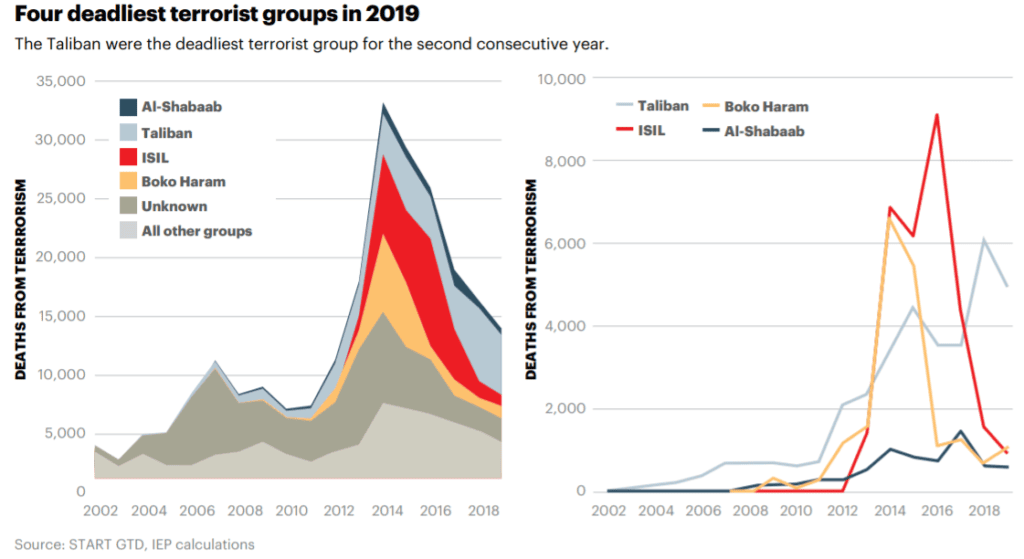
But a majority of terror attacks since have not happened in a similar manner, and have rarely involved so many actors working together. In fact, since 2006, 98% of all deaths from terrorism in the U.S. have been the result of attacks carried out by lone actors, according to a 2017 report on terrorism. In the United States, both Islamist and far-right terrorism are displaying a shift away from affiliations with specific groups towards lone actors who are driven by a specific ideology, but who are not formally tied to a specific terrorist group. Of 53 recorded attacks in the U.S. in 2019, only two were attributed to a specific terrorist group, says the Institute for Economics & Peace’s (IEP) 2020 Global Terrorism Index report.
What has, perhaps, also played a role is the location in which terror attacks have happened in recent times. Staging an attack onboard an aircraft remains a prime target for terror groups, but aviation security has come miles over the last two decades, making it a much harder target. Logically, hijacking a plane would also be incredibly tough for a lone wolf actor to pull off.
For instance, the 19 terrorists who executed the Al Qaeda’s 9/11 attacks were divided into “teams” in order to bring down the four planes: Two planes were flown into the Twin Towers of the World Trade Center in New York City, a third hit the Pentagon just outside Washington, D.C., and the fourth crashed in a field in Shanksville, Pennsylvania. In and among the 2,996 people who died at the WTC were hundreds of first responders: 343 firefighters and paramedics, 23 New York City police officers, and 37 Port Authority police officers.
Image source: Screengrab from the Global Terrorism Index 2020 report
But terror attacks have been known to happen in other modes of transport too — on trains, for instance. All manner of “public spaces” have also been used by terrorists to stage attacks: from streets to office buildings, marathons to bicycle tracks, synagogues to churches, and stadiums to government buildings. Unlike aircrafts, airports, or other transportation locations that now have better security practices, the lone wolf terrorist can access some of these public spaces with much more ease and convenience than others.
The Federal Bureau of Investigation (FBI) and the Department of Homeland Security (DHS) warned in a joint report in May this year that “the greatest terrorism threat to the Homeland we face today is posed by lone offenders, often radicalized online, who look to attack soft targets with easily accessible weapons. Many of these violent extremists are motivated and inspired by a mix of socio-political goals and personal grievances against their targets.” But the rise in lone offender terrorism — or “lone wolf” terrorism, as its also known — is not new.
In this piece, we look at the evolution of the lone wolf threat in the United States in brief, take you through a few examples where lone offenders have managed to pull off a major attack, and examine whether they can be considered to be truly acting “entirely alone,” given their influences.
The Evolution Of The Lone Wolf Offender
Concerns over an increasing number of lone wolf offenders predates 9/11. It was in the early 1990s that law enforcement authorities became increasingly concerned about the advent of such terrorism, according to a research brief published by the National Consortium for the Study of Terrorism and Responses to Terrorism (START) in 2014. “The extreme right began advocating this ‘uncoordinated violence’ approach in 1992 under what was called a ‘leaderless resistance’ model. It was around this time that the emergence of the Internet allowed cyberspace to become a major source of radical propagandizing for environmental terrorists and al-Qaida-inspired movements,” the brief adds.
Although lone actor terror incidents were rare at that point, the START research brief said they were nevertheless responsible for a disproportionate 25% of all terrorism incidents in the U.S. back then.
In the U.S., it’s not only jihadist terrorism that’s been on the rise and that has been increasingly seeing lone wolf actors getting involved. As we mentioned earlier, there’s also far-right terrorism, and several other kinds besides. These actors could all fall under the government definition of Domestic Violent Extremists (DVE). When it comes to domestic terrorism, lone offenders will continue to be the primary actors, and will continue “to pose significant mitigation challenges due to their capacity for independent radicalization and mobilization and preference for easily accessible weapons,” the FBI and the DHS said in their joint report from May.
The FBI and the DHS define a lone offender as “an individual motivated by one or more violent extremist ideologies who, operating alone, supports or engages in acts of unlawful violence in furtherance of that ideology or ideologies that may involve influence from a larger terrorist organization or a foreign actor.” Over the years there’s been disagreement over what kind of violent acts ought to be classified as terrorism. It can be argued that infliction of fear upon a targeted group or the public is sufficient to classify an act as terrorism. But the Bureau’s definition of terrorism also requires a “a purported motivation that goes beyond exclusively personal motivations and attempts to influence change in furtherance of extremist ideologies of a social, political, religious, racial or environmental nature.”
In 2019, the FBI published a study that analyzed 52 lone offender attacks in the U.S. since 1972. Among other aspects, that report tried to identify demographic trends and similarities among lone offenders. It discovered that the offenders varied widely in characteristics like age, race, relationship status, and educational background. Consistent with other studies, it arrived at the conclusion that there’s no real profile of a lone offender that can be drawn, though there were some factors overwhelmingly represented.
For instance, all 52 offenders in the FBI study were male, although women can and have engaged in acts of targeted violence through history too, of course. The youngest offender was 15 years old and the oldest was 88, with the average age at the time of the attack being 37.7 years old. Among radical Islamic extremists, the study says, the average age was a much younger — 26.3 years. Most offenders (90%), contrary to popular belief, were not foreigners or immigrants but were born in the United States; and in terms of race, a majority of them were white.
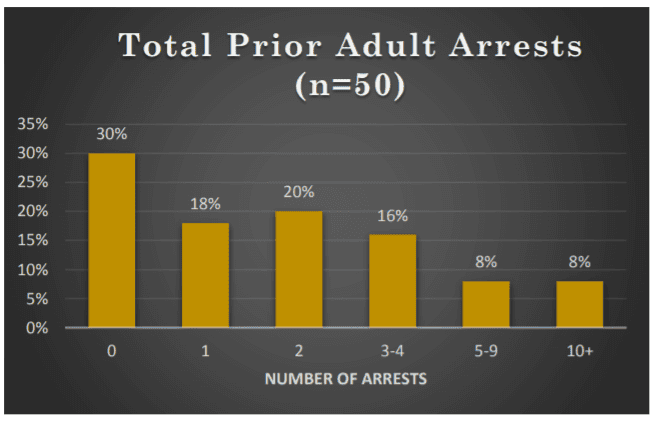
Nearly half of all offenders were also not in a relationship at the time of the attack, and over half were neither employed nor attending school. Still, most had completed an associate’s degree or at least some college education. Of 26 offenders who identified as religious, 50% identified as Christian and 35% as Muslim. Almost 70% of the offenders were arrested at least once as an adult before carrying out their attack.
Image Source: Screengrab from the 2019 FBI Lone Offender Terrorism report
A quarter were diagnosed with one or more psychiatric disorders at some point before their attack. There were other psychiatric factors that played a role, per the study — paranoia, for example. More than half of the offenders demonstrated a pervasive distrust and suspiciousness of others, or a belief that others were plotting to harm them. Then there were other issues including delusion, grandiosity, and even cases of hallucinations among a few of the offenders. Nearly 40% of them had also expressed suicidal ideation at some point before they carried out their attack. Half the offenders had also exhibited some evidence of prior drug use.
Radicalization as a process is difficult to discern fully and can be non-linear and shaped, in many ways, by an individual’s private thoughts, experiences and opinions. Per the FBI study, it is “the process through which an individual transitions from a nonviolent belief system to a belief system to actively advocate, facilitate, or use unlawful violence is necessary and justified to affect societal or political change.” What somewhat separates lone offenders from those that belong to a terror group, or who are directed to carry out an act by a terror group, is that lone wolves claim their violence is done in service of larger ideological goals, like inciting social or political change.
It’s not just the U.S. that’s grappling with lone wolf acts, though. Just last month, Europol published its third annual report on Online Jihadist Propaganda. In that report, it said propaganda from both the Islamic State and Al Qaeda continue to call for lone actor attacks by individuals who have no physical connections to either group. Why does that matter? In another report published June, for instance, Europol noted that the number of completed jihadist attacks in Europe (EU, Switzerland, and the UK) in 2020 more than doubled in comparison with the number in the EU (including the UK) in 2019. The one common factor between all the completed jihadist terror attacks was that they were carried out by lone actors, while disrupted plots mainly involved multiple suspects.
The difference between lone wolf acts in Europe and the United States, per FBI-DHS statements and Europol, is that in the EU it’s still jihadist terrorism that’s responsible for many lone offender attacks. And that is not entirely a lone wolf act either, since the Islamic State and Al Qaeda are also either directing or inspiring these individual actors.
Major Lone Offender Attacks
In 2020, the FBI’s director, Christopher Wray, stressed the importance of lone wolf offenders. “The FBI is most concerned about lone offender attacks, primarily shootings, as they have served as the dominant lethal mode for domestic violent extremist attacks. More deaths were caused by DVEs than international terrorists in recent years. In fact, 2019 was the deadliest year for domestic extremist violence since the Oklahoma City bombing in 1995,” he said.
The same technological advances used by many of us to make our everyday lives more convenient can also be misused by criminals and terror actors. It’s a well known fact that cybercrime is often much more complicated for law enforcement officers and investigators to crack than crimes committed in the physical world. And the cyber world is increasingly becoming a target for all manner of criminals.
For instance, in December 2019, then 21-year-old Mohammed Saeed Alshamrani was able to communicate using warrant-proof, end-to-end encrypted apps to deliberately evade detection by law enforcement to plan his attack at Naval Air Station Pensacola in Florida. “The online, encrypted nature of radicalization, along with the insular nature of most of today’s attack plotters, leaves investigators with fewer dots to connect,” the FBI Director said of that particular case. Alshamrani’s shooting at the naval air station, where he was training, killed three U.S. sailors and severely wounded eight other Americans.
“It took the FBI several months to access information in his phones, during which time we did not know whether he was a lone wolf actor or whether his associates may have been plotting additional terrorist attacks,” the FBI Director said. In May 2020, the FBI said he had “significant ties” to Al Qaeda, citing new evidence gleaned from iPhones the FBI was able to unlock after months of trying. They also discovered, upon unlocking the phones, that Alshamrani’s preparations for terrorism began years ago. He had, in fact, been radicalized as early as 2015.
It’s not just jihadist terrorism, as we mentioned earlier, nor is it individuals who have a clear affiliation or are inspired by a designated terror or extremist group that have carried out lone wolf attacks.
In March this year, the Office of the Director of National Intelligence (DNI) — the nation’s premier intelligence office — in a declassified report warned that DVE poses an “elevated threat” in 2021, particularly white supremacist organizations. The report singled out “racially or ethnically motivated violent extremists” and anti-government/authority militias, the former being most likely to “conduct mass-casualty attacks against civilians,” and the latter most likely to “target law enforcement and government personnel and facilities.”
An example of that is Dylann Roof’s 2015 murder of nine Black churchgoers in Charleston. In August, a federal appeals court upheld Roof’s conviction and death sentence for the racist slayings and said the legal record cannot even capture the “full horror” of what he did. One report says Roof became more radicalized as he grew enthralled with white supremacist communities online.
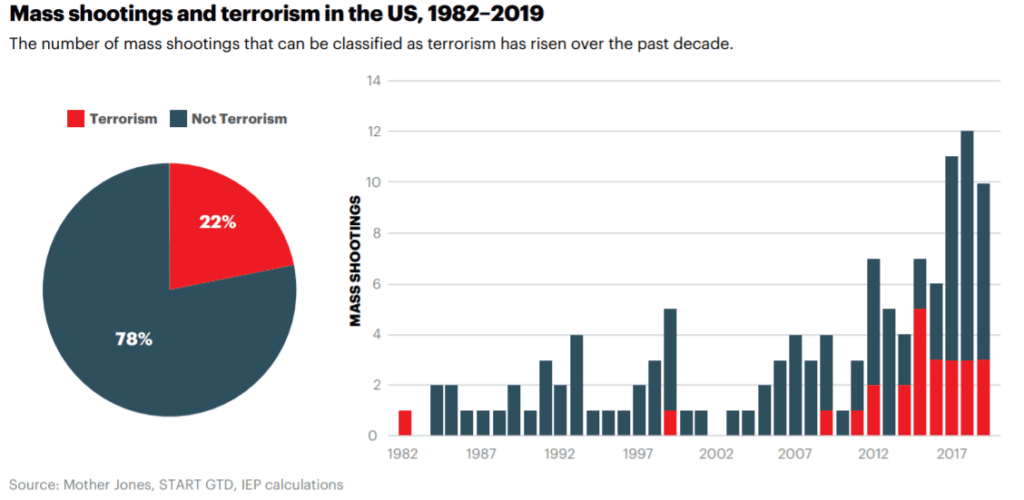
Image Source: Screengrab from the Global Terrorism Index 2020 report
Since 9/11, there has been a blurring of boundaries between hate crimes, mass shootings, lone offender attacks, and terrorism — most of which is a legal conundrum, more than a theoretical or practical one. What we are witnessing in the national security landscape today, according to some experts, is the transformation of routine, generic grievances into larger acts of terror and violence.
For instance, the 2016 shooting at the Pulse nightclub in Orlando, Florida. Although it’s not on the FBI-designated list of domestic terrorism incidents from 2015 through 2019, it can be considered an example of that blurring of lines between mass shootings, lone offender attacks, and terrorism. That fateful weekend night was Latin Night at Pulse, one of the city’s best-known gay clubs, and the place was packed with patrons both gay and straight, young and not-so-young, from the U.S., Puerto Rico, the Dominican Republic, Mexico, and elsewhere, having a good time dancing salsa and bachata, says an NPR report.
At 2:02 a.m., according to an FBI timeline, Orlando police received reports that multiple shots had been fired at Pulse. In all, the lone gunman, Omar Mateen, killed 49 people and injured dozens of others. He pledged allegiance to the Islamic State in a 911 call after the shooting began.
Then there are other radical motivations for acts of domestic terrorism, like the Planned Parenthood shooting, which is on the FBI-designated domestic terrorism list. In 2015, Robert Dear Jr. attacked a Planned Parenthood facility in Colorado Springs, shooting and killing three people and injuring multiple others. He said he attacked the clinic because he was “upset with them performing abortions and [with] the selling of baby parts.” He admitted to fatally shooting an arriving police officer through a tinted window because he knew the officer couldn’t see him. He also told police he dreamed he would be “met in Heaven by aborted fetuses wanting to thank him for saving unborn babies,” a USA Today report said.
Then there are hate crime incidents, which also do not fall under the official designation of terrorism but lie where in the gray. For example, various nationwide synagogue attacks, and the rise since last year in anti-Asian hate crimes.
Are They Truly Isolated?
As part of its 2019 study, the FBI says lone offenders are seldom completely isolated. True, these attacks are tougher to predict. But, the Bureau encourages the public to follow the government’s “see something, say something” advice to help prevent such terror acts. Most offenders had “family, peers, or online contacts who were in a position to notice troubling behavior.”
Drawing the links between lone wolf attacks them actually paints a more sinister and insidious picture, Aara Ramesh wrote in our second feature in this post-9/11 series. In some ways, individuals with similar grievances are organizing online, shirking labels of just being unhappy “trolls” in their own “internet echo chamber.” For instance, there has been a rise in the number of mass murder incidents tied to misogyny, perpetrated by self-described “incels” (involuntary celibates). They may, at the moment, lack a central leader or mastermind a la Osama bin Laden or Khalid Sheikh Mohammed, but they are still displaying signs of nascent organization and cohesion.
It is seemingly evident that though they are not motivated by religion, many of these criminals are motivated by some shared ideology. They gather in a place together — online — and feed into each other’s rhetoric, encouraging violence and revenge. In fact, mass murderers like Roof and Rodgers often leave behind written or recorded “manifestos,” that are passed around by similarly minded people online and are even referred to by subsequent murderers.
In 2018, a Pacific Standard report said even the lone wolf white American terrorists are radicalized in “packs.” They’re reading the same websites, talking to each other, and killing the same targets, the report adds. Elliot Rodger’s 2014 shooting spree in Santa Barbara was also a result of radicalization. The Southern Poverty Law Center (SPLC) called Rodger the country’s first “alt-right” killer. In early 2018, the SPLC said it had counted over 100 people killed or injured by alleged perpetrators influenced by the so-called “alt-right” — a movement that, it added, continues to access the mainstream and reach young recruits.
Terrorists and those who run amok are similar, whatever their ideology, criminologist Britta Bannenberg said in an interview with Deutsche Welle (DW), Germany’s international broadcaster. “Most often, individual perpetrators are people with few or no social contacts. So what do they do? They go online and seek out those forums that reinforce their hate and rejection of others or other groups,” she says in the interview.
Whatever the case, there’s no doubt that lone offender attacks are tougher to combat and connecting the dots in an investigation is that much more complicated. With the world increasingly being driven online, especially after the Covid-19 pandemic, and everyone from terror groups to individual actors adapting to the shift, it’s going to become a vital part of the fight against terrorism.
This was the final part of our series on the post-9/11 landscape.