Counterfeit coins are increasingly being sold online and via social media, targeting customers, a Federal Bureau of Investigation (FBI) advisory warned on Thursday, Sept. 9. Per the report, investors and collectors are at risk of losing money in these purchases from scammers who claim the coins are originals. The FBI said there are three types of counterfeits: transactional coins (quarters, dimes, etc.), numismatics (high value collectables), and bullion (precious metals).
The elderly were most likely to fall prey to scammers selling fake or overpriced precious metals, the American Association of Retired Persons says. Estimates suggested that millions are being spent online in these purchases in which customers ultimately receive near-worthless foreign-made counterfeits.
In April 2021, U.S. Customs and Border Protection (CBP) officers at Chicago’s international mail facility seized 279 shipments from China containing counterfeit coins and currency. Similarly, in 2020, CBP seized over $1.64 million in counterfeit cash and coins at Chicago O’Hare International Airport.
Amateur investors online have been particularly badly hit in 2021 as a result of a coin shortage brought about by the Covid-19 pandemic. Many victims found buying online an easy and convenient method to make investments, as they could easily find what they were looking for, paid cheaper prices, and had their investments delivered right to their doorstep.
The FBI recommends purchasing from reputable, registered coin dealers. In case of purchases outside these avenues, the FBI says customers should get their coins tested by a certified organization.
The Anti-Counterfeiting Educational Foundation (ACEF), a non-profit organization, said that they helped law enforcement remove more than $1 million worth of counterfeit rare coins and precious metal coins in 2020.
ACEF assisted CBP in seizing over 1,500 counterfeit silver American Eagles at Dallas-Fort Worth International Airport and worked with the Treasury Department’s Office of Inspector General (OIG) in the seizure of fake rare coins valued at over $450,000.
“ACEF/ACTF has become a central repository for offenses related to counterfeit coins and precious metals. We’ve developed a searchable database for offenses and intelligence information and are continually providing a tool for law enforcement to identify trends, patterns, suspects, manufacturers, as well as uncovering websites and social media platforms offering counterfeits,” said Doug Davis, ACEF’s Director of Anti-Counterfeiting.
There were broadly five different ways in which counterfeit coins are produced, according to American Rarities. Cast counterfeits are the most basic method. Electrotypes are made by creating an impression from a coin on a soft material and then using that to make fresh coins. In the transfer die method, the coin design is used on a working die to strike coins. In spark erosion, an electrical process is used to etch die steel. Finally, in the struck counterfeit method, a model die is hand carved and then used to produce coins.
While authorities say the best way to check the authenticity of coins is to use an expert or an expert agency, the Chicago Gold Gallery offers some simple tips that all buyers can also follow.
The first is to look for a casting seam on the edge of coins. The second is to check if the coins contain any dimples or pockmarks, as the methods used by counterfeiters are unlikely to produce the same quality as the mint. Another is to look for mint markings on coins. Finally, they suggest checking the density of the coins, as counterfeits may be made to the right thickness and diameter but may not be of the same density as coins from the mint
Earlier this week, on Sept. 7, erstwhile FBI Deputy Director Andrew McCabe cautioned D.C. law enforcement to be on the alert ahead of the Sept. 18 “Justice for J6” rally planned in support of the rioters charged for the Jan. 6 insurrection at the U.S. Capitol. He added that the risk of violence should be taken “very seriously.”
McCabe is just one of many on Capitol Hill who are bracing themselves for another possible riot. One law enforcement source allegedly confirmed to CNN that “the Metropolitan Police Department will be fully activated,” and that they are monitoring the internet and social media chatter for any anomalies and to come up with an estimated crowd size.
The mood around D.C. could be described, then, as one of fear and uncertainty. As the 20th anniversary of 9/11 looms, and in the shadow of the unbelievable events of Jan. 6, many are increasingly drawing links between the foreign attacks Americans have come to associate with the term “terrorism” in the last two decades, and the largely domestic violent incidents we have seen of late.
Furthermore, in March this year, the Office of the Director of National Intelligence (DNI) — the nation’s premier intelligence office — in a declassified report warned that domestic violent extremism poses an “elevated threat” in 2021. The report particularly singled out “racially or ethnically motivated violent extremists” and anti-government/authority militias, the former being most likely to “conduct mass-casualty attacks against civilians,” and the latter most likely to “target law enforcement and government personnel and facilities.”
Over the last five or six years, the concept of domestic terrorism, defined by the incidents we have witnessed, has started to somewhat shed its amorphous form. There have been incidents driven by political beliefs, gender discrimination, white supremacy, racial or ethnic hate, and religious bias. There is, of course, some overlap in this Venn diagram, but each element can also function independently.
This rise in domestically perpetrated violence evades simplification. These acts do not all fit into one neat box, like so-called “radical Islamic” or “jihadist” terrorism might; rather, the gray complicates the definition and, thus, the general public’s awareness of the mounting threat such violence poses.
In today’s piece, we take a look at how the understanding of “terrorism” has changed in the two decades since 9/11 and at the shifting landscape that is defined more by domestic actors and ideologies, and less by foreign groups’ goals.
Understanding The Face Of Terrorism Today
Per the Code of Federal Regulations, terrorism includes “the unlawful use of force and violence against persons or property to intimidate or coerce a government, the civilian population, or any segment thereof, in furtherance of political or social objectives.”
The Federal Bureau of Investigation (FBI) defines domestic terrorism as “violent, criminal acts committed by individuals and/or groups to further ideological goals stemming from domestic influences, such as those of a political, religious, social, racial, or environmental nature.”
This category includes — per the FBI, Department of Homeland Security (DHS), and the DNI — violent extremism related to race or ethnicity, anti-government or anti-authority sentiments, animal rights and environmental issues, abortion rights, and religious, gender, or sexual orientation biases.
In contrast, international terrorism is defined as “violent, criminal acts committed by individuals and/or groups who are inspired by, or associated with, designated foreign terrorist organizations or nations (state-sponsored).”
The Bureau’s director, Christopher Wray, has clarified that “regardless of the specific ideology involved, the FBI requires that all domestic terrorism investigations be predicated based on activity intended to further a political or social goal, wholly or in part involving force, coercion, or violence, in violation of federal law.”
Per the Anti-Defamation League (ADL), a Jewish non-governmental organization aiming to fight anti-Semitism and bigotry, terrorism can take many forms, including that of “bombings or use of other weapons of mass destruction, assassinations and targeted killings, shooting sprees, arsons and firebombings, [and] kidnappings and hostage situations.”
In the twenty years since 9/11 — the most significant terror attack in modern American history — the FBI says “the threat landscape has expanded considerably.” While thwarting international terrorism is still a priority of the government, the Bureau adds, “the threat of domestic terrorism also remains persistent overall,” with such dangers today being motivated mainly by racial or ethnic extremism, and/or anti-government or anti-authority extremism.
“The threat posed to the United States has expanded from sophisticated, externally directed plots to attacks conducted by self-radicalized lone actors who mobilize to violence based on international and domestic violent ideologies,” according to the testimony top FBI officials gave to the House Oversight and Reform Committee, Subcommittee on Civil Rights and Civil Liberties in 2019.
The FBI, whose “number one priority” is “protecting the United States from terrorist attacks,” says a number of factors have contributed to shaping the new face of terrorism, including a propensity towards attacks being perpetrated by “lone wolves” rather than organized, “large-group conspiracies.” Also underlying this evolution is the proliferation of social media, through which potential violent extremists — both international and domestic — have been able to find community and radicalization material.
Law enforcement faces “significant challenges” when it comes to thwarting homegrown violent extremists (motivated by the ideologies of foreign terrorist organizations) and domestic terrorists (those who plan to use violence to achieve a set of goals, but are not directed or inspired by foreign terrorist organizations), mainly because of the ubiquity and ease of online self-radicalization, and the diffused nature of those extremists’ networks and affiliations.
Violent Attacks On U.S. Soil: The Numbers
Despite the lack of a “terrorism” label, there has been an unmistakable rise in the number of such events. The FBI disclosed, just last month, that the number of hate crime incidents reported in 2020 was the highest it’s been in more than a decade, many of which resulted in multiple deaths and injuries.
Per the latest annual report from the ADL’s Center on Extremism, there were at least 15 separate domestic extremism-related incidents in the U.S. in 2020, during which a total of 17 people were killed. For comparison, there were 45 extremist-related murders in 2019 and 54 in 2018. The group ties this surprisingly low number to Covid-19 restrictions limiting opportunities for mass casualty attacks. Strikingly, the ADL report says that 2020 was “the second year in a row that no killings linked to domestic Islamist extremism occurred” in the U.S.
According to the Brookings Institute, “Roughly 75% of domestic terrorist acts are committed by right-wing extremists and 75% of them are committed by white nationalists and white supremacists.”
This disturbing phenomenon has also prompted the White House to take action, with President Joe Biden in June releasing the first-ever “National Strategy for Countering Domestic Terrorism,” an all-government framework devised to combat what he deemed “the most urgent terrorism threat the United States faces today.” In May, he also signed into law the Covid-19 Hate Crimes Act.
The Case For Defining Domestic Attacks As Terrorism
Since 9/11, there has been a blurring of boundaries between hate crimes, mass shootings, lone offender attacks, and terrorism — most of which is a legal conundrum, more than a theoretical or practical one. What we are witnessing in the national security landscape today, according to some experts, is the transformation of routine, generic grievances into larger acts of terror and violence.
As some observe, there is a certain unfamiliarity to this new landscape, and experts and the average Joe alike might be left scrambling to understand the motivations of groups without traditional political goals, “like installing an Islamist regime or winning the right for their region to secede from a country.”
While it is true that, just like with the Islamic State or Al Qaeda, “there is no single cause that motivates individuals to radicalize,” some observers point out that modern-day domestic terrorism is not actually all that different from what we would traditionally describe as terrorism.
It would be tempting to label the incidents enumerated at the start of this piece as “lone wolf” attacks, but drawing the links between them actually paints a more sinister and insidious picture.
In some ways, individuals with similar grievances are organizing online, shirking labels of just being unhappy “trolls” in their own “internet echo chamber.” For instance, there has been a rise in the number of mass murder incidents tied to misogyny, perpetrated by self-described “incels” (involuntary celibates). They may, at the moment, lack a central leader or mastermind a la Osama bin Laden or Khalid Sheikh Mohammed, but they are still displaying signs of nascent organization and cohesion.
It is seemingly evident that though they are not motivated by religion, many of these criminals are motivated by some shared ideology. They gather in a place together — online — and feed into each other’s rhetoric, encouraging violence and revenge. In fact, mass murderers like Roof and Rodgers often leave behind written or recorded “manifestos,” that are passed around by similarly minded people online and are even referred to by subsequent murderers.
Alek Minassian, the man who drove a truck into a crowd in Toronto in 2018, killing 10, referred in his online activity to Rodgers. Minassian claimed to have been “radicalized” via the internet. He spoke to detectives of an “uprising” or “rebellion,” and said he spoke to “at least two other mass murderers before their attacks.”
Also key to this discussion is the fact that Minassian did not have a specific target in mind, the way that mass shooters do — whether that is a particular physical building or person. Rather, like the people behind 9/11, “he wanted to instill terror in society writ large.”
In 2020, Canadian authorities said they would be prosecuting the attack as both an act of terrorism and as first-degree and attempted murder. This marked the first time the Canadian government has used a terrorism charge against someone not connected to Islamic extremism. It is probably also the first time that someone motivated by incel ideology has been tied to terrorism.
What Next?
There is no doubt, according to senior law enforcement officials, that the terrorism landscape has changed since 9/11. Just as that fateful day was a watershed moment in shifting Americans’ perception of danger, this latest turn needs also to be studied and understood, or we will be left on the back foot, trying to play catch up.
Some in the criminal justice system have, in the recent past, called for the establishment of a federal domestic terrorism statute. Under current law, a white supremacist or incel who commits a terror attack cannot be prosecuted under that terminology. They can face murder, hate crime, or weapons charges, but “terrorism” is a crime reserved for the 60-odd federally designated foreign terrorist organizations (most, but not all, of which are Islamist).
The danger with this way of doing this is that if a potential repeat offender faces lesser charges and sentences, they may be given the opportunity to cause more harm later. A serious charge and an appropriate punishment could serve as a deterrence in the future, though of course there is no way to guarantee this, as with all other crimes.
Others say this would endanger Americans’ first amendment rights to free speech and religion. Rather than wade into such murky and potentially treacherous waters, they argue, the way to counter rising domestic terrorism is to invest in social outreach, anti- and de-radicalization programs, and evidence-based and proven violence intervention techniques, thereby evading altogether a more legal, punitive route.
Either way, it seems apparent that we are, once more, at a crossroads and, once again, our approach to terrorism must adapt.
You can find the FBI’s list of significant domestic terrorism incidents in the U.S. between 2015 and 2019 here.
The latest report in the Cocaine Insights series, published by the United Nations Office on Drugs and Crime (UNODC) and the Europol takes a hard look at the trade in the illegal drug around the world, highlighting some of the challenges that are emerging. To sum it up in a single line, the report lists three main characteristic features of the cocaine trade today in Europe: it’s more violent, diverse and competitive.
New dynamics in the cocaine market represent a clear threat to European and global security. “Cocaine trafficking is one of the key security concerns we are facing in the EU right now. Nearly 40% of the criminal groups active in Europe are involved in drugs trafficking, and the cocaine trade generates multi-billion-euro in criminal profits. Understanding better the challenges we face will help us to counter more effectively the violent threat that cocaine trafficking networks represent to our communities.” said Julia Viedma, Head of Department of the Operational and Analysis Centre at Europol.
The supply chain to Europe has increased its efficiency and ultimately the accessibility of cocaine to European consumers. The fragmentation of the criminal landscape in source countries has created new opportunities for European criminal networks to receive a direct supply of cocaine, cutting out the intermediaries. For instance, there has been a fragmentation of the criminal landscape in Colombia, the prime source for cocaine.
“While cocaine oligopolies tended in the past to supply a limited number of trusted established wholesale traffickers, the removal of centralized control over much of the cocaine supply chain and the opening of the cocaine supply market in Colombia may now be providing an opportunity for smaller international trafficking organizations to gain access to supplies and wholesale quantities of cocaine,” the report said.
This has meant that new alliances have been forged between criminal groups and also increased opportunities for criminal networks in Europe to source cocaine. This has been borne out by the increased purity of drugs seized in Europe. Convergence of the United States and European markets and expansion of the cocaine market can be seen in the level of cocaine purity that has reached the same level in both geographies and is on the increase.
The report also notes a shift in the epicenter of the European cocaine network, with the focus now shifting to the north. “The increased use of containerized shipments relying on the high-volume ports of Antwerp, Rotterdam and Hamburg has consolidated the role of the Netherlands as a staging point and led to continental Europe’s North Sea coast overtaking the Iberian peninsula as the primary point of entry for cocaine reaching Europe,” the report observed.
Customs seizure data indicate that cocaine continued to be seized in large quantities in 2020, notably at seaports. In addition to the established major ports, secondary smaller seaports are increasingly used as entry points to traffic cocaine to the EU. Data available from 2021 shows that there were as many as 4.4 million cocaine users in the Western and Central Europe.
A byproduct of the increased drug trade has been an “an increase in the occurrence of assassinations, shootings, bombings, arsons, kidnappings, torture and intimidation.” The report noted that the nature of violence has also changed as a result.
The report found that there were several factors that influenced how alliances were made between suppliers of cocaine from South America and distributors in Europe. “Historical, cultural, ethnic and linguistic ties, such as those between Portugal and the rest of the lusophone world, or Spain and Spanish-speaking countries in South America, may also facilitate links of a criminal nature,” the report posited.
Spanish speaking countries in the Americas accounted for 74-91% of seizure cases in Spain in the period between 2007 and 2011. The report suggested that alliances were not forged overnight and the time taken for trust to be gained between parties could be aided by family ties or a history of working together.
It was also noted that different modes of transport were being used to get the drugs into Europe. In France in 2017 and the United Kingdom in 2018, large shipments were seized from private charter airplanes landing in smaller airfields. In 2019, Spanish authorities recovered 3 tons of cocaine from a semi-submersible vessel which had been scuttled off the Galician coast. In February 2021, Spanish police found a similar vessel under construction in the Malaga region, which was presumably intended for cocaine trafficking.
Seizures in Europe had increase to 200 tons in 2018 as compared to a little over a 100 tons in 2005. In 2020, Antwerp had the highest seizures, 66 tons, with Rotterdam coming in second at 33 tons. For Antwerp this implied a massive spike, with fewer than 10 tons being seized there in 2013.
A facility that could produce 150-200 tons of cocaine a day, from precursor materials, was dismantled in Nijveen, 20 km northeast of Amsterdam, the report added.
While the report threw up these insights, it noted that there was still much to be learned and highlighted three questions where a “knowledge gap” still existed:
What is the scope of the presence and the activities of South American criminal networks based in Europe and which exact function do they play in maintaining the flow of cocaine from production to destination regions?
How has the role of West African and North African countries evolved as transit and, potentially, as destination countries for cocaine produced in South America and trafficked to destination markets in Europe and elsewhere?
Who are the main local interlocutors for European criminal networks maintaining a presence in South America in order to procure wholesale quantities of cocaine and facilitate its trafficking to Europe?
In the last two decades since 9/11, terror groups, mostly acting through either lone actors or small groups of around 2-3 people, have staged attacks just about anywhere and everywhere in the United States. Aviation, of course, is the target that’s constantly in the media spotlight, and a prime one for terror groups worldwide even today. Attacks have been known to happen in other modes of transport too, on trains for instance. All manner of “public spaces” have also been used by terrorists to stage attacks: from streets to office buildings, marathons to bicycle tracks, synagogues to churches, and stadiums to government buildings.
Does that mean nowhere is safe? Not necessarily. Billions of dollars have been spent on just aviation security alone since the 9/11 attacks, for instance. Public security has become more effective, partly thanks to several technological advancements when it comes to the gathering and sharing of intelligence, and the high priority it has been given since Sept. 11, 2001, by policymakers and various law enforcement organizations alike. Facial recognition and surveillance are part of the bundle of technologies that have contributed to improving public safety.
The good thing, as the Associated Press says in its article, is that “there has not been another 9/11; nothing even close,” in the aviation industry since that fateful day in 2001.
But even with advancements in various aspects, threats to the U.S. remain. This is particularly so in the wake of unrest in Afghanistan, where the newly created interim Taliban government includes those wanted for attacks on U.S. forces over the past two decades. Reassuringly, there appears to be no imminent credible threat on the horizon, although, a recent DHS bulletin cautioned of a “heightened threat environment” ahead of the 20th anniversary of the 9/11 attacks. On Tuesday, Sept. 7, Department of Homeland Security (DHS) Secretary Alejandro Mayorkas said there were no “credible, specific threats” at this time in the run-up to the anniversary but added: “We are ever vigilant.”
Aviation is definitely high on the priority list when it comes to constant vigilance for threats to public security. It has, as we said earlier, become an even tougher target for terror groups in current times. However, it definitely remains a key part of their playbooks. That said, there’s another arena that’s emerging as a main cause of worry for authorities in recent times: the cyber world.
If someone were asked to coin a crime “catchphrase” for 2021, their answer would probably be ransomware. Cybercriminals, mostly wielding ransomware, have attacked everything from American government agencies to infrastructure to the healthcare and education sectors this year. In this piece, the second in our series on the post-9/11 landscape, we explore some of the locations where terror groups have staged attacks in the past, and examine why the cyber world could be the next major frontier.
From Planes To Mail
Since 9/11, several attempts have been made by terror groups, or individuals who claim to be “inspired” by designated terror groups, at bombing either airports or airplanes. The most well known of those, of course, was the case of a British national who attempted to detonate a shoe bomb while on American Airlines Flight 63 from Paris to Miami in 2001. Then there was the case of the man who smuggled a bomb in his underwear aboard a commercial airliner on Christmas Day in 2009, and was sentenced in 2012 to life in prison for his role in what was later determined an Al Qaeda plot.
As security protocols at airports, helmed by the Transportation Security Administration (TSA) in the United States, have evolved and become more efficient, terrorists have also tried to find new strategies to work around them. For instance, in 2017, Australian officials uncovered a plot to plant a bomb in a meat grinder on an Etihad Airways flight from Sydney to Abu Dhabi. The two brothers who attempted to pull that off had links to Islamic State operatives in Syria.
In December, the Department of Justice (DOJ) unsealed an indictment against Cholo Abdi Abdullah, a Kenyan national who allegedly was plotting a 9/11-style attack at the direction of senior al-Shabab leaders, the Washington Post reported. “I know some of these schemes that the terrorists are coming up with are fantastical, but it’s still on their minds. It’s still in their playbook,” Brian Michael Jenkins, senior adviser to the president of the nonprofit Rand Corp., told the Washington Post on aviation remaining prime target for terror groups.
Still, terrorists have found other locations to stage attacks too.
At this point we have to pause to say that there is no universally agreed definition of the word “terrorism,” although it is broadly understood as “a method of coercion that utilizes or threatens to utilize violence in order to spread fear and thereby attain political or ideological goals,” according to the United Nations Office on Drugs and Crime (UNODC).
Back in 2001, just after the 9/11 attacks, letters laced with anthrax began appearing in the U.S. mail. Five Americans were killed and 17 fell ill in the incident, considered to be one of the worst biological attacks in U.S. history. In 2003, Iyman Faris, a native of Pakistan, was arrested for plotting to destroy the Brooklyn Bridge in New York. He evaluated the practicality of the plot to collapse the bridge using gas cutters, and communicated his assessment to Al Qaeda via coded messages.
In 2006, Mohammed Taheri-Azar plowed his SUV into a crowd at the University of North Carolina at Chapel Hill, in a self-professed bid to avenge Muslim deaths overseas. It’s not just jihadist terror actors, though, who have used violence to achieve political or ideological goals in public spaces. Take the case of the Boston Marathon bombing, for instance. Two bombs went off near the finish line, killing three spectators and wounding more than 260 other people in 2013. Although the two brothers who carried out the attack were declared unconnected to terrorist groups by investigators, the bombing itself was considered an act of terror.
Other examples include one from 2009, that involved a teenager setting off a crude explosive device at a Starbucks in Manhattan, New York. The Starbucks attack was meant to be a “tribute” to the movie Fight Club. Then there was the man who purposely crashed his plane into the IRS building in Austin, Texas because he was angry with the agency. There is a point where the line possibly blurs between severely violent acts of hate crime and domestic terrorism, but that’s a subject for another day.
The Online Multi-Frontal Assault
Like the rest of us, terror groups have also moved online in recent times, particularly after the Covid-19 pandemic led to travel bans and other restrictions world over. But cyberterrorism is by no means a new threat.
In 2004, when nearly every aspect of daily living had not yet fully moved online, a special report by the United States Institute of Peace said: “The potential threat posed by cyberterrorism has provoked considerable alarm. Numerous security experts, politicians, and others have publicized the danger of cyberterrorists hacking into government and private computer systems and crippling the military, financial, and service sectors of advanced economies.” And that was before any such real instance of cyberterrorism had even been recorded. In 2009, the U.S. said it had uncovered evidence that cyber spies, most likely from China and Russia, had penetrated its power grid and left behind software that could be activated to disrupt American infrastructure.
Of course, nobody could have predicted back then that a global pandemic would push a significant number of people into the virtual world on an everyday basis, making it an even more attractive target for criminals and terror groups alike. In July this year, experts and lawmakers across the country were sounding the alarm over what seems to be a cyber free-for-all on American businesses, infrastructure systems, and industries. President Joe Biden brought the subject up with the Russian government, and various intelligence agencies have since issued advisories on how to prepare for, prevent, and deal with cyberattacks.
In May, Colonial Pipeline, the largest fuel supply line in the country, was debilitated by a ransomware strike. The resulting outage caused gas supply shortages all across the south-eastern United States, driving up prices and prompting the president to issue multiple urgent orders to patch up the gaps. The Colonial Pipeline cyberattack is but one of many ransomware attacks carried out by cybercriminals against critical infrastructure companies around the world in recent times. REvil, a Russia-based group, was pinpointed as the organization behind the attack, early in July, on Kaseya, a prominent company in the supply chain and IT infrastructure spaces, which incapacitated over 1,500 businesses worldwide. They were also behind the strike in May against the U.S.’ largest meat-packing plant, JBS.
Threats against Industrial Control Systems (ICS) have been on the rise once again from the second half of 2020 (H2 2020), a Kaspersky report published March 25, 2021 said. And the industries that experienced the most significant percent of ICS computers attacked were oil & gas, building automation, and engineering. Experts have also warned that the most vulnerable and worrying sector to be hit with a cyberattack could be critical water and wastewater systems. The country has 50,000 drinking water and 16,000 wastewater systems dispersed all across the nation. Many of these sites are in rural areas and do not possess the resources or capabilities needed to mount an efficient defense against cyberthreats.
Meanwhile, Europol has published reports on how designated terror groups like the Islamic State and Al Qaeda have adapted to shifting realities so as to survive and stay relevant in the cyber age; and how terror groups, in general, moved online like the rest of the world in 2020.
John Katko, a United States Congressman and ranking member on the House Homeland Security Committee, said cyber terrorism can be more difficult to understand than visualizing what attacks like the 9/11 can do. But they can also be devastating. In June, Reuters reported that the DOJ was elevating investigations of ransomware attacks to a similar priority as terrorism after the Colonial Pipeline hack. It listed the pipeline data breach as an example of the “growing threat that ransomware and digital extortion pose to the nation.”
But one of the most succinct ways to sum up the cyber terror threat has come from U.S. Senator from Maine Angus King, who said in July: “I believe that the next Pearl Harbor, the next 9/11, will be cyber.”
You can read the first piece in our post-9/11 series on first responders here.
Three ex-NFL stars have pleaded guilty to healthcare fraud the Department of Justice (DOJ) said in a media release on Tuesday, Sept. 7. Clinton Portis and Tamarick Vanover, entered their pleas on Sept. 3 while Robert McCune did so on Aug. 24. The former players admitted to participating in a scheme to defraud the Gene Upshaw NFL Player Health Reimbursement Account Plan, the DOJ revealed.
The plan, set up in 2006, provided tax-free reimbursement for out-of-pocket medical care expenses that were not covered by insurance, that were incurred by former players, their spouses, and their dependents, up to a maximum of $350,000 per player.
Portis allegedly submitted false and fraudulent claims on his behalf over a two-month period, obtaining $99,264 in benefits for expensive medical equipment that was not actually provided.
Vanover, a former wide receiver for the Kansas City Chiefs and the San Diego Chargers, is accused of recruiting three others for his scheme and obtaining $159,510 in benefits.
According to court documents, McCune was the main perpetrator in this fraudulent scheme, swindling $2.9 million in benefits, with the program paying out most of the money between June 2017 and April 2018, according to the DOJ.
Portis and Vanover pleaded guilty two days after a trial against them resulted in a hung jury and a mistrial on certain counts against Vanover. They both agreed to repay what they defrauded from the scheme and face a maximum 10 year prison sentence.
“Portis knew the claims McCune submitted on his behalf were false and fraudulent or was aware of a high probability that that the claims McCune submitted on his behalf were false and fraudulent and deliberately ignored that fact,” the plea agreement reads, according to USA Today.
Portis was leading rusher for the Denver Broncos and the Washington Football team in the 2000s, setting several records before he retired in 2012. Later, he faced financial problems, and filed for bankruptcy in 2015. At the time he owed more than $5 million, according to CBS News.
McCune, the third defendant in that trial, accepted all charges against him on the second day of trial. With him pleading guilty to conspiracy to commit wire fraud and healthcare fraud, 13 counts of healthcare fraud, 11 counts of wire fraud, and three counts of aggravated identity theft, he could well spend the rest of his life in prison.
McCune began his NFL career with the Washington Football Team (then known as the Washington Redskins) in 2005 but has also played for the Miami Dolphins, Baltimore Ravens, Cleveland Browns, and the Calgary Stampeders.
He faces a maximum penalty of 20 years in prison for conspiracy to commit wire fraud and health care fraud, 10 years for each count of healthcare fraud, 20 years for each count of wire fraud, and two years for each count of aggravated identity theft.
A total of 10 NFL players were charged with healthcare fraud in Dec. 2019, Reuters reported, adding that the total amount of money involved in these schemes could be as much as $3.4 million.
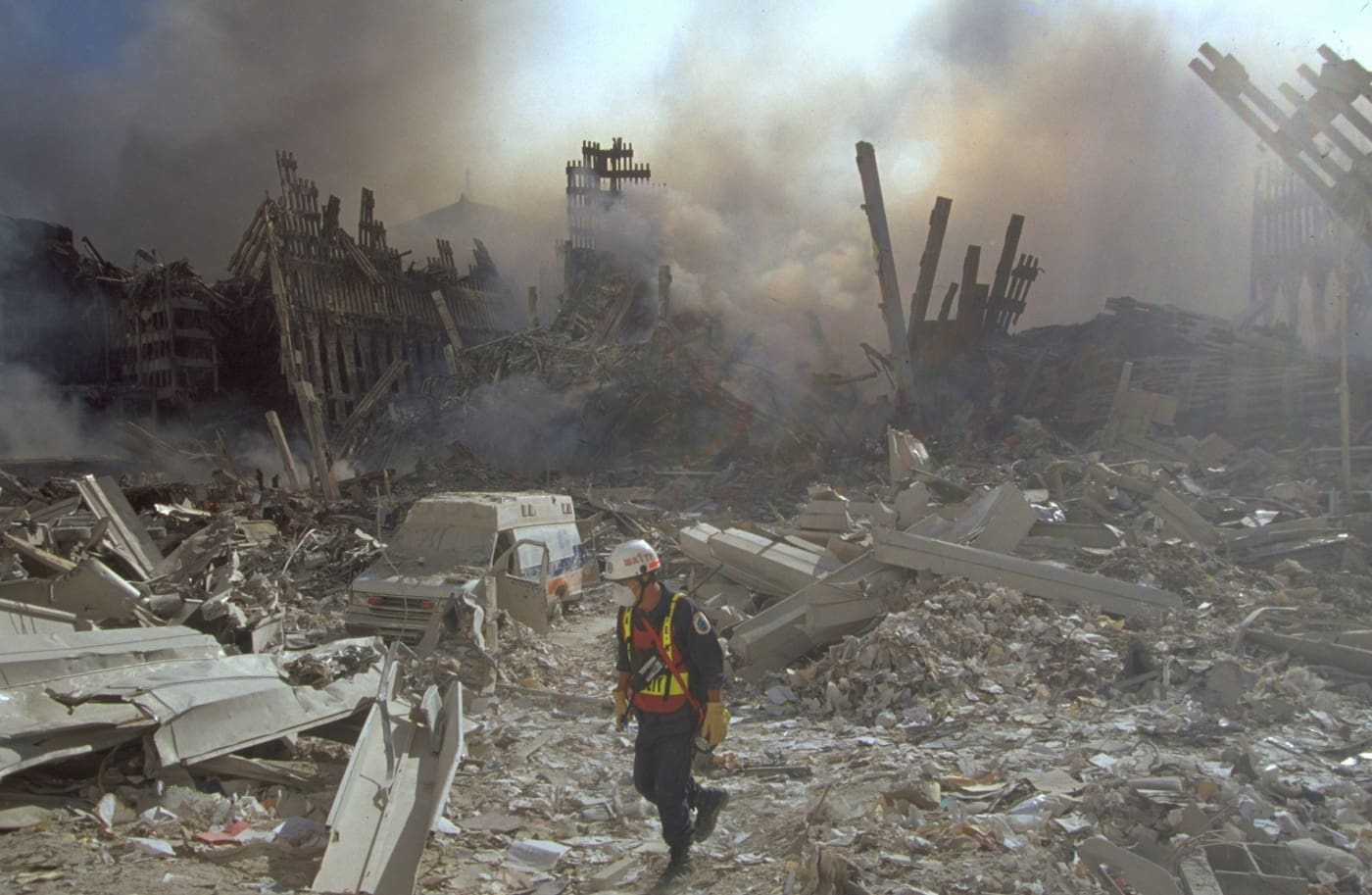
In and among the 2,996 people who died at the World Trade Center (WTC) on September 11, 2001, were 343 firefighters and paramedics, 23 New York City police officers, and 37 Port Authority police officers. They were just a fraction of the thousands of first responders and volunteers who were on site to help evacuate those trapped on the higher floors of the buildings, and those who worked, lived, and went to school in the surrounding areas.
In the early days after 9/11, the Environmental Protection Agency, still grappling with the scale of the attack, told search and rescue crews that the air around the crash site was safe and would not cause long-term harm. It wasn’t until years later that the truth emerged — the collapse of the buildings had released toxic fumes and particles that would come to haunt those present.
The most common refrain around 9/11 — “Never Forget” — rings particularly true for first responders, who even now, twenty years later, don’t have the luxury of beginning to forget the horrors they witnessed firsthand in the immediate aftermath of the Twin Towers’ collapse. Even as the country moves forward, facing new disasters and crises, many of those survivors and first responders continue to live with considerable physical and emotional trauma.
Today, in the first of our series on the post-9/11 landscape, we fittingly take a look at the lives of those first responders who breached the World Trade Center even as it was crumbling and who were the last to leave Ground Zero after the clean-up, eight months and 19 days later.
Legislative Response
In response to the attacks, the George W. Bush government swiftly established the September 11 Victim Compensation Fund (VCF) to assist those injured within 96 hours of the attacks (around Sept. 15). The Fund was active from 2001 to 2004.
After much lobbying from survivors, their families, and others, in January 2011, then-president Barack Obama signed into law the James Zadroga 9/11 Health and Compensation Act of 2010 (Zadroga Act). This law revived the VCF for a five-year period that would end in October 2016.
The Act was named after an NYPD officer, James Zadroga, who responded to the disaster at Ground Zero. Previously a healthy non-smoker, Zadroga died of a respiratory illness in 2006, and was the “first person whom health officials declared died due to toxic chemical exposure” at the crash sites, as well as the first to receive a settlement from the VCF (in 2004).
Before that deadline, however, in December 2015, President Obama reauthorized the Act and the VCF for an additional five years, set to run out in December 2020. In February 2019, it was determined that the money the VCF still had was insufficient to cover all pending and projected claims, necessitating changes to the Fund’s policies.
A handful of months later, President Donald J. Trump signed the Never Forget the Heroes: James Zadroga, Ray Pfeifer, and Luis Alvarez Permanent Authorization of the September 11th Victim Compensation Fund Act (VCF Permanent Authorization Act), which seemingly put the matter to rest for good by extending the claim-filing deadline to October 1, 2090, roughly nine decades after the attack.
The VCF And The WTC Health Program
The VCF covers first responders, debris clean-up and construction crews, and all survivors from the exposure zone of the WTC, Pentagon, and Shanksville, Pennsylvania crash sites. Per official estimates, around 55,000 people have submitted claims to the VCF. In the first three years of its existence, between 2001 and 2004, the VCF paid out over $7 billion to the victims’ families and to those injured in the attacks.
The Zadroga Act and its subsequent iterations also established the WTC Health Program, a federal initiative that serves over 100,000 responders to and survivors of the various 9/11 attacks. Administered by the National Institute for Occupational Safety and Health, Centers for Disease Control and Prevention (CDC), and Department of Health and Human Services, the Program “provides no-cost medical monitoring and treatment for certified WTC-related health conditions,” and also “funds medical research into physical and mental health conditions related to 9/11 exposures.”
There is no official federal definition of who constitutes a first responder. Generally, however, this group is considered to include all manner of professions that involve responding to public safety emergencies, such as emergency medical technicians (EMTs), hospital ER staff, law enforcement agents and police officers, and firefighters.
Per the Department of Homeland Security, the term generally covers those who “in the early stages of an incident are responsible for the protection and preservation of life, property, evidence, and the environment.” This includes “Federal, State, and local governmental and nongovernmental emergency public safety, fire, law enforcement, public safety telecommunicators/dispatcher, emergency response, emergency medical services providers (including hospital emergency facilities), and related personnel, agencies, and authorities.”
In the context of 9/11, this would include Fire Department of New York (FDNY) personnel, New York Police Department (NYPD) officers, and Port Authority staff, as well as around 4,000 Federal Bureau of Investigations (FBI) employees and those responding to the crash sites at the Pentagon and Shanksville.
The latest quarterly report from the CDC said that, as of June 2021, 81,460 responders and 30,582 survivors were enrolled in the WTC Health Program, across the country. Almost two in three of the former category (57%) is made up of general responders, while FDNY responders comprise 15% and Pentagon/Shanksville Responders 1%. Over 4,600 of the total have passed away.
The long-term debilitating effects of nuclear weapons are well documented, but most people may not be aware of the hazards associated with a building collapse, which extend far beyond burn injuries.
At the WTC site, around 400,000 people were exposed, for a prolonged period, to the soot and dust from the burning buildings, which contained “more than 2,500 contaminants including glass, lead and mercury.” Experts estimate that 24,000 gallons of jet fuel exploded, with the resulting fire covering 100,000 tons of organic debris and 230,000 gallons of various oils present in the buildings.
In addition, the fires continued to burn for days after (some until December), further releasing chemicals like asbestos, carbon monoxide, hydrogen sulfide, and crystalline silica, which formed the backdrop for ongoing search, rescue, and recovery missions.
As a result of this toxic cocktail, many present at the site were diagnosed with health problems ranging from persistent coughs and respiratory illnesses to at least 68 types of cancer. Per experts, the dust was found to increase propensity of lung problems, respiratory symptoms, sinus problems, chronic bronchitis, emphysema, Chronic Obstructive Pulmonary Disease (COPD), and/or asthma. It was also found to cause digestive and musculoskeletal disorders.
An estimated 10,000 people were discovered to have developed 9/11-related cancer by 2018. This ranges from prostate and thyroid cancer to multiple myeloma and leukemia. As of 2015, some studies found, over 7,000 FDNY Firefighters and EMTs had been treated for a condition related to being involved in WTC clean-up operations.
Per official estimates, around 3,496 people have died in the 20 years since the attacks, as a result of the events of 9/11. These numbers could well be much higher though, and probably are, since disclosing such illnesses to federal authorities, even for employees, is voluntary.
Since 2011, the NYPD says, more than 200 former and current officers have died from 9/11-related complications, while around 500 more have developed cancer from their exposure to the toxic fumes. The FBI says at least 1,000 of its current and former employees are seeking treatment for conditions developed as a result of working at or near the 9/11 crash sites. The Bureau adds that at least 17 of its employees have died from these illnesses.
Unfortunately, this problem was only exacerbated by the Covid-19 pandemic. Many 9/11 first responders were in their 30s in 2001, putting them in their 50s today. In fact, the average age for a 9/11 first responder today is about 59–60, making them borderline high-risk targets for the virus.
In addition, many of are even more susceptible due to their 9/11-related comorbidities, of which cancer and respiratory disorders like asthma and COPD are the most dangerous. Per some estimates, nearly half of FDNY medical responders ended up with Covid-19. Around 32 of the 158 people with a 9/11 illness who died between Sept. 2020 and April 2021 also suffered from Covid-19.
Emotional And Cognitive Problems
In addition to the myriad physiological problems described above, the most enduring and debilitating challenge faced by 9/11 first responders and survivors is long-lasting post-traumatic stress disorder (PTSD), depression, and survivor’s guilt. Some say this is “the most common health effect of 9/11,” and that around one in five adults directly exposed to the attacks developed PTSD — a rate four times greater than that typically found in the general population. Per some estimates, over 3,700 WTC first responders have been diagnosed with mental health stress-related conditions.
Lately, as reported by the Washington Post, researchers have also been exploring a link between “mild cognitive impairment” and the 9/11 fumes. In some extreme cases, this has even manifested as dementia. Per experts, some of the cognitive deficiencies they are noticing in people in their 50s is more typical of individuals in their 70s, if they are present at all. These usually manifest as memory loss or loss of comprehension.
Though the exact cause isn’t known, researchers suspect this could be due to the toxic air and/or PTSD these responders were exposed to. Per the Post, “The air at Ground Zero contained chemicals and microscopic particles that are toxic to brain cells and have been linked to higher risk of Alzheimer’s and other dementias.” Unfortunately, while some mental health disorders are covered by the VCF, cognitive ailments are not.
Much like with physical health issues, Covid-19 too has taken a toll on the mental health of 9/11 first responders. At the very least, the familiar feeling of a nationwide emergency and lack of clarity around the future have re-traumatized those who were on the job 20 years ago and still working on the front lines of the pandemic.
In addition, some are reporting that the PTSD they live with has been exacerbated by the fear of contracting the virus and isolation associated with the lockdowns. Left vulnerable, they are unable to connect with peers. Last year, many were unable or unwilling to risk exposure by attending annual 9/11 memorial ceremonies, which can be crucial to their healing and general wellbeing.
With two decades having passed — and now with the apparent end of the War on Terror with the U.S. withdrawal from Afghanistan — it is relatively easy for the rest of us to relegate the events of 9/11 to history books. According to FDNY Battalion Chief Timothy Rice, ”The further we get away from 9/11, the harder it is to encourage people to remember.” He added, “If we start to forget 9/11 or incidents like Pearl Harbor, the focus goes away. This remembrance, I believe, goes hand-in-hand with ensuring that we’re doing everything we can as a country to prevent the next one.”
But for the survivors and first responders, the nightmare is as real as it was in 2001. In the words of Richard Roeill, a retired Nassau County firefighter and rescue swimmer, on the day, he and his peers “had family members and friends of [missing people] giving us pictures, saying, ‘Please, if you see my husband, my brother.’ […] I went down there thinking I was going to save the world. That I was going to bring someone home.”
In the end, no matter how much time has passed, scenes like that can never really be forgotten by those who were there.
In the course of the Labor Day weekend, five people were killed and dozens wounded in a spate of gun violence, CBS Chicago reported. This takes the total number of shootings in Chicago to more than 2,300 in 2021.
This weekend’s shootings also mark the latest holiday weekend to experience a spike in gun violence.
On Saturday, June 19, celebrations were underway across the country to commemorate Juneteenth, the date that marks the unofficial end of slavery. Many of these celebrations were marred by shootings.
The latest Chicago shootings have been linked to straw purchases — the act of buying a firearm for someone who is prohibited by law from owning one, or who does not want his or her name associated with a firearm purchase. This a federal crime.
Authorities are attempting to crack down on straw purchases after a May 2021 incident in which three officers stationed at Fort Campbell were arrested for allegedly purchasing guns and illegally selling them to convicted felons in Chicago, according to the Justice Department.
This incident was uncovered in the course of an investigation into a mass shooting in which five guns were found to be purchased in Tennessee.
“This is not a victimless crime. Guns end up in the hands of the wrong people,” John Lausch, U.S. Attorney for the Northern District of Illinois, told CBS News.
In July, the Justice Department launched strike forces in five cities, including Chicago, to tackle straw purchases.
“Our straw purchasers are savvy and their intent is to deceive a firearms dealer,” said Kristen de Tineo, special agent in charge of Chicago’s ATF office. “It is a major cornerstone of our trafficking strategy to identify those straw purchases. Our offenders are completely emboldened. They’re not afraid of getting caught. They’re not afraid of the consequences once they get caught.”
A particularly tragic incident over the Labor Day weekend resulted in the killing of a four-year-old who was randomly shot in the head in Chicago, NBC News reported. Mychal Moultry Jr. was getting his hair styled in the front part of a home when two bullets flew in through a window struck the child in the head.
He was one of eight children shot in Chicago alone in the course of the Labor Day weekend. “We definitely need the help from the public to further this investigation,” said Rahman Muhammad, deputy chief of the Chicago police detective division.
According to Police Superintendent David O Brown, multiple children were victims over the weekend but they were not the intended targets of the shootings. “There are few if any circumstances where our young people are directly being targeted,” Brown said while asking people to come forward with any information about these incidents.
In Florida, a man wearing full body armor fatally shot four people including a mother and the three-month-old infant she was cradling, the Associated Press reported on Monday, Sept. 6. After a massive gunfight with police and deputies, the gunman was injured and finally arrested.
The gunman was identified as Bryan Riley, a former marine who served as a sharpshooter in Iraq and Afghanistan. Polk County Sheriff Grady Judd told a press conference that Riley appeared to be suffering mental health issues. Judd said that Riley’s girlfriend told authorities that he had recently claimed that he could communicate directly with god.
In order to better tackle the issue of gun violence, President Joe Biden announced on April 8 that authorities were cracking down on ghost guns.
Ghost guns are self-assembled firearms with parts that do not include serial numbers. As they’re handmade, they do not require background checks and the acquisition of a ghost gun skirts federal gun laws.
When you buy a gun from a licensed dealer, that gun, or more specifically, its receiver, is made by a licensed manufacturer, and is marked. It has a serial number that can be traced, which is invaluable for tracking crimes.
“We know that shooters don’t just stop after one shooting,” ATF (the Bureau of Alcohol, Tobacco, Firearms and Explosives) Special Agent Fred Milanowski told ABC 13 News in May. The first shooting is hard, the second one is a little easier, and by the time a serial shooter gets to the third shooting, they don’t pause to think about it and end up pulling out the gun to shoot every time they’re upset, Milanowski added, per that article. The whole idea behind the ATF’s creation of Crime Gun Intelligence Centers (CGIC) in 2016, in layman’s terms, is to get violent criminals, especially those with a history, off the streets before they become suspects in additional homicides. The goal is ensuring public safety by preventing future violence.
Why do CGICs and violent crime matter right now? At Biometrica, we’ve repeatedly covered reports of gun violence since the start of this year, including mass shootings. Even as recently as last week, we wrote about a new study released by a research team at Rutgers University–Camden that found a link between high eviction rates in some Philadelphia neighborhoods and high rates of crime, homicide, and burglary.
The country, law enforcement, and elected officials have been grappling with a recent spike in gun-related offenses and violent crime, not all of which is attributable to the seasonal spike recorded every summer. Fresh research seems to suggest that there’s been a reduction in the rates of criminal offenses like robberies, residential burglaries, larceny, non-residential burglaries, and drug offenses this year, but the number of murders have increased. Meanwhile, even as mass shootings spiked during the early months of the year, so did firearm background checks. In April, we wrote about the FBI conducting more background checks for individuals wanting to buy firearms in the first quarter of 2021 than in corresponding periods over the five previous years.
There’s no doubt that combating gun violence, which President Joe Biden has, on more than one occasion, termed an “epidemic,” and its related violent crimes remain a priority for law enforcement and society. In today’s piece, we take you through a few success stories where CGIC has helped in investigations of violent crime and has prevented future homicides from occurring; we also look at the typical workflow of a CGIC.
CGIC Success Stories
Per the ATF and the CGIC website, there have been instances where both well-established and newly created local CGIC sites are experiencing success. These local CGICs are leading to the identification and apprehension of serial shooters in a more strategic and timely manner, they say.
For instance, in April 2019, critical tips, surveillance video, and evidence all came together to identify and arrest the suspected shooter in the death of a 10-year-old in Phoenix, Arizona. Summer Bell Brown was shot in the driveway of her home and later died from her injuries in a suspected road-rage incident. She and her family were driving home on West Moreland Street when they noticed a white Ford F-150 4-door pickup following their vehicle closely, AZ Central said in a report from 2019. When Summer and her family pulled into their driveway, the truck stopped behind their car and the driver opened fire.
Summer and her father were both shot and taken to a hospital. Her mother and sister were also in the car but were not injured, officials said. The truck driver drove away after the shooting. The aforementioned tips from the public and looking through surveillance videos helped the police find the alleged truck, five miles from the scene of the shooting, parked in front of a home. Police were able to get a warrant to search the home and found a handgun in the garage. That handgun, in turn, was linked by forensic evidence to the shooting. What helped crucially, when it comes to the CGIC perspective, was that the suspected shooter had an extensive criminal background of violence.
Thus, the shooter, Joshua Gonzalez was booked into a Maricopa County jail on suspicion of first-degree murder and aggravated assault.
In Texas, the Houston Police Department and other local agencies joined the newly-formed ATF Crime Gun Strike Force only three years ago. Over the last two years alone, the strike force has managed to connect suspects to 466 violent crimes, the ABC 13 report says. In one case, three people were arrested as part of a crew that robbed GameStop, grocery stores, and money transfer kiosks. Federal court records show they first started with just threatening victims with guns, but eventually escalated into shooting victims, the article adds. Eventually, the three suspects, and 26 others, were linked to 39 robberies. And this spring, the most dangerous crew member was sentenced to nearly 27 years in federal prison.
In Indianapolis, the local police department set up a CGIC in 2019. Members of the CGIC were conducting surveillance on a suspect wanted for federal crimes in mid-2019. Instead, they managed to nab an unrelated suspect who was allegedly dealing drugs. In this case too the suspect, Brendyn Woods, is said to have had a record of multiple felony burglary convictions and was found with a stolen gun. Until mid-June 2019, the CGIC had made 152 arrests, leading to 27 federal cases. And, as a whole, at that point the Indianapolis Metropolitan Police Department had seized more than 1,737 guns.
But the ATF and local CGICs also consider victimless crimes equally important, which includes instances of people just firing in the air. “The amount of calls coming in for just shots fired is just astronomical,” Jim Osburg, a federal agent with the ATF in Houston told ABC 13 News.
How Does It Work?
CGICs, like we mentioned before, were launched by the ATF as an inter-agency collaboration designed to collect, analyze, and distribute intelligence data about crime guns, mass shootings, and major incidents across multiple jurisdictions. CGICs provide investigative leads and support to crime gun intelligence initiatives across the country and beyond.
There are 25 CGICs located across the nation. In the fiscal year 2019, 67,000 investigative leads were generated by 220 National Integrated Ballistic Information Network (NIBIN) locations and 450,000 crime guns were traced back to their origins by the National Tracing Center, the ATF website says.
CGICs typically follow a seven step process. Here’s a quick summary of how that process works when it’s most effective, according to the Bureau of Justice Assistance:
Comprehensive Collection of Cartridge Casings and Crime Guns: CGICs are both most functional and effective when law enforcement personnel (e.g., patrol officers, crime scene technicians, investigators, etc.) are called to the scene of all gun crimes and collect cartridge casings and crime guns left at the scene.
NIBIN Entry/Correlation and Crime Gun Tracing: Within 24 hours of recovery, crime guns are processed for forensic evidence; test-fired cartridge casings and recovered crime scene cartridge casings are entered into the NIBIN; and NIBIN correlations to associated crimes are identified.
Crime Gun Intelligence Analysis: The ATF, with support from local law enforcement, conducts a comprehensive analysis of all crime gun data collected from eTrace and NIBIN. These data are rapidly disseminated to investigators to ensure appropriate linkage of crimes to unlawfully used firearms and suspects.
NIBIN Lead/Hit Assignment and Analysis: NIBIN leads/hits are triaged and immediately assigned to investigators.
Law Enforcement and Prosecution Collaboration and Offender Arrest: All actionable crime gun intelligence generated by the CGIC is rapidly disseminated to all partners and pursued using all available resources in conjunction with state and federal prosecutors.
State or Federal Prosecution: A strong partnership and close collaboration between the local prosecuting attorney and the United States Attorney’s Office are critical to the effectiveness of CGIC operations.
CGIC Feedback to Process Participants: All CGIC-related activities, such as NIBIN lead development and offender arrest and prosecution, should be tracked to measure CGIC outcomes and the impact on violent crime in the community.
We leave you with some recent statistics on the gun violence epidemic. According to the Gun Violence Archive (GVA), there have been 49 additional mass shootings in 2021 when compared with 2020, and 1,588 more gun deaths this year than last, as of Sept. 1. Tragically, there have also been 88 more children shot this year than there were last year, and 2,547 additional gun-related injuries in 2021 than in 2020.
Healthcare workers in the U. S., hailed as heroes at the start of the Covid-19 pandemic, have become — over the last several months — the targets of a disgruntled public. The hostility against workers administering Covid-19 vaccines has reached such a fever pitch that government officials are having to plead with the public to treat them in a civil manner.
Georgia Department of Public Health Commissioner Dr. Kathleen Toomey joined Gov. Brian Kemp to urge residents to stop harassing, bullying, and threatening healthcare workers, Becker’s Hospital Review reported this week.
“I’ve become aware that many of our line workers who are doing these vaccinations are receiving threats or receiving hostile emails, harassing emails,” Dr. Toomey was quoted as saying. “That’s something that you know has happened to me early on. Maybe it comes with the territory or to someone in my position. But it shouldn’t be happening to those nurses who are working in the field who are trying to keep this state safe.”
At least one mobile vaccination center in the state of Georgia has had to be closed after staff received threats and after a group of organized individuals showed up at the venue, harassing workers. The exact venue of the North Georgia center was not revealed as it was feared that doing so could put staff in further danger.
Moreover, the matter is not specific only to Georgia. Nearly a quarter of 26,000 healthcare workers surveyed in March and April 2020 felt bullied, the Centers for Disease Control & Prevention (CDC) revealed.
In mid-August the Methodist Healthcare System in San Antonio reported that its staff had been threatened with guns and knives when the center was strained by Covid-19 admissions. As a result of the threats, security was beefed up with the help of the San Antonio Police Department.
“Now, we go in somewhat slumped, somewhat tired,” Jane McCurley, chief nurse executive for Methodist Healthcare System told KENS5. “I felt like I was walking in a warzone among the walking wounded. I have been through the riots in the ’80s, the floods, the fires, the hurricanes. I have been through it all. I have evacuated hospitals throughout my career. I have never seen what we are seeing today. ”
“People are angry, and they’re frustrated,” she added. “When our staff experiences cursing, screaming physical abuse, ‘I am going to get my gun,’ (have) a knife pulled on them—it is terrifying.”
Curley attributed some of the frustration to mandatory mask regulations, restricted visitation hours, and longer wait times.
In Dallas, too, incidents of this nature were reported. Karen Garvey, vice president of patient safety and clinical risk management at Parkland Health & Hospital System in Dallas, said, according to the Texas Tribune, that this included “people being punched in the chest, having urine thrown on them and inappropriate sexual innuendos or behaviors in front of staff members. The verbal abuse, the name-calling, racial slurs […] we’ve had broken bones, broken noses.”
With hospitals already reporting historic nursing shortages as the Covid-19 pandemic drags on, these attacks have made the work of medical staff that much more dangerous and stressful.
“Tempers are high,” said Carrie Kroll, director of advocacy for the Texas Hospital Association, “to the point where some systems are putting a security guard at check-in because family members are getting so abusive over the masking and some of the other screening things they need to do.”
Those working in the healthcare industry were four times more likely to face workplace violence as those in other fields, a study by the New England Journal of Medicine found. Hospitals have taken to installing panic buttons on staff identity badges to allow security to respond quickly in more dangerous incidents.
In Tennessee, a law came into force in July stipulating that if a person knowingly engages physical contact with a nurse, they can be charged with a Class A misdemeanor, face a mandatory fine of $5,000, and face a minimum sentence of 30 days in jail.
In addition, if a person commits aggravated assault — including attempting to cause serious bodily harm or brandishing a weapon — they could face a Class C felony charge, a mandatory fine of $15,000, and a minimum sentence of 90 days in jail.
The American Journal of Managed Care called for increased protections for healthcare employees as early as May 2019. While 75% of nearly 25,000 workplace assaults occur annually in healthcare settings, only 30% of nurses and 26% of emergency department physicians have reported incidents of violence, a study showed.
While doctors also faced hostility, it was nurses who bore the brunt of the ire, as they spent more time with patients. Among emergency doctors, 47% reported having been physically assaulted on the job, while that number rose to 70% for emergency nurses, WebMD reported.
In March, Biometrica did a round-up of some of the key crime, prison, and law enforcement bills with most support in the House in 2021 up to that point. Today, we pick a few crime-related bills in the House and tell you where each one stands as of today, Sept. 2, and also give you an update on a few that we had covered in March. Several pieces of legislation being discussed and debated on the House floor deal with one major focus area: hate crimes.
It was only Tuesday, Aug. 31 that we wrote about how hate crime reports soared to their highest level in over a decade in 2020, according to the Federal Bureau of Investigation’s (FBI) 2020 Hate Crime Statistics data. In total, there were 7,759 hate crime incidents reported in 2020, a more than 6% increase from 2019 and the highest number of such incidents recorded since 2008. It’s no wonder then, perhaps, that most of the crime-related bills with the House currently focus on combating the spike in this kind of crime.
But there are other interesting pieces of legislation, too, including those that deal with modernizing gun tracing by creating a database, and addressing the illegal purchase and possession of firearms.
All bill numbers are per the 117th session of Congress (2021-2022).
H.R.983 — Preventing Crimes Against Veterans Act Of 2021
The bill in brief: It seeks to establish a new criminal offense for knowingly executing, or attempting to execute, a scheme to defraud an individual of veterans’ benefits, or in connection with obtaining veterans’ benefits for an individual. A violator is subject to criminal penalties — a fine, a prison term of up to five years, or both.
It was introduced in the house on Feb. 11 and was passed/agreed to in the House on June 22. The bill has three co-sponsors so far.
The long title of this act is “to amend title 18, United States Code, to provide an additional tool to prevent certain frauds against veterans, and for other purposes.”
H.R.1652 — VOCA Fix To Sustain Crime Victims Fund Act Of 2021
The bill in brief: It adds a new source of revenue for the Crime Victims Fund and makes changes to formula grants supported by the fund. It also increases the percentage of state compensation payments to crime victims in the prior fiscal year used to calculate formula grants for state victim compensation programs.
This is the only bill featured in our piece today that’s actually become law. It was introduced in the House on March 8, and ended up with 38 co-sponsors. It was passed in the House on March 17 and the Senate on July 20, and was signed by the President into public law on July 22.
The long title of this bill is “to deposit certain funds into the Crime Victims Fund, to waive matching requirements, and for other purposes.”
The bill in brief: It establishes requirements and authorities for the Department of Justice (DOJ) to take certain actions to address the illegal purchase and possession of firearms, including by authorizing grants and establishing task forces to increase investigations and prosecutions of relevant offenses.
There hasn’t been any action on this bill, though, since it was introduced in the House on March 8, and it has one co-sponsor.
The long title of the bill is “to direct the Attorney General to prioritize the investigation and prosecution of Federal firearms offenses, and for other purposes.”
H.R.3536 — Crime Gun Tracing Modernization Act of 2021
The bill in brief: It requires the National Tracing Center within the Bureau of Alcohol, Tobacco, Firearms and Explosives (ATF) to establish and maintain an electronic, searchable database of records related to certain firearms transactions.
There’s not been much action on this bill, either, since it was introduced in the House on May 25, and it has one cosponsor.
The long title of the bill is “to amend section 923 of title 18, United States Code, to require an electronic, searchable database of the importation, production, shipment, receipt, sale, or other disposition of firearms.”
H.R.3515 — Preventing Anti-Semitic Hate Crimes Act
The bill in brief: It aims at facilitating the expedited review of anti-Semitic hate crimes, and for other purposes.
It was introduced in the House on May 25 and has 71 co-sponsors. A version of this bill has been introduced in the Senate, too.
In June, Biometrica wrote about the worrying resurgence of anti-Semitism in the United States, after two synagogues were vandalized in a span of three weeks.
H.R.2541 — Hate Crime Victim Assistance Act of 2021
The bill in brief: It seeks to amend the Omnibus Crime Control and Safe Streets Act of 1968 (42 U.S.C. 3711) to establish grants to reduce the incidence of hate crimes, and for other purposes.
It was introduced in the House on April 14 and has nine co-sponsors so far.
H.R.2539 — Education Against Hate Crimes Act of 2021
The bill in brief: It requires the Department of Education (ED) to award competitive grants to states, local educational agencies, and nonprofit organizations to conduct hate crime prevention and prejudice reduction education for secondary school students and students in middle grades. It also requires the ED, in consultation with the Department of Homeland Security, and the DOJ, to develop relevant curriculum requirements.
It was introduced in the House on April 14 and has eight co-sponsors.
The long title of the bill is “to direct the Secretary of Education to make grants for hate crime prevention and prejudice reduction education, and for other purposes.”