Tech Support : support@safience.io

Blog

Nearly 12M People Are In Prison Globally, And One-Third Of Them Are Unsentenced: UNODC

By a Biometrica staffer
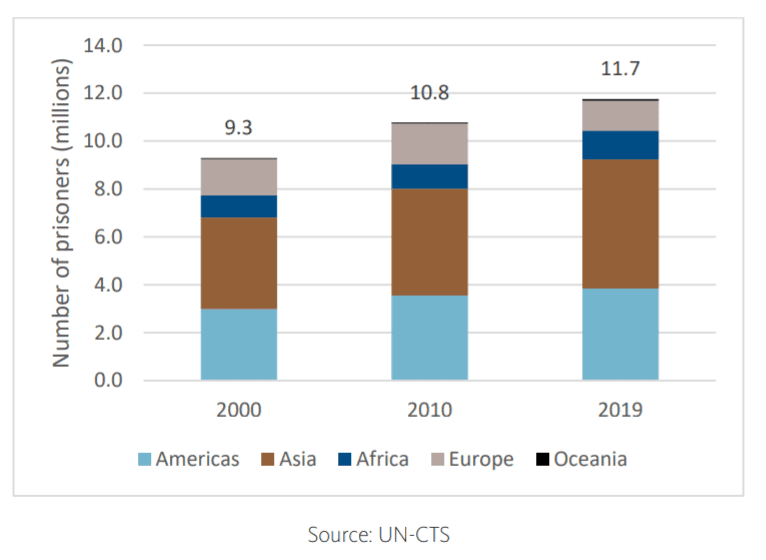
Source: Screengrab from the UNODC report depicting global prison population by regions

The total number of people held in prison has increased by over 25% since 2000, with an estimated 11.7 million persons detained in jails across the world at the end of 2019. That number adds up to a population comparable in size to entire nations such as Bolivia, Burundi, Belgium, or Tunisia, according to a research report by the United Nations Office on Drugs and Crime (UNODC). In 2000, the total number of people in prison worldwide was estimated to be at around 9.3 million.

In today’s piece, we examine some of the key findings of the UNODC report, including the gender ratio of the global prison population, geographic differences, and the universal challenges of overcrowded prisons and unsentenced prisoners.

Gender Ratio

Of the 11.7 million people incarcerated at the end of 2019, estimates say 10.9 million were male while 0.8 million were female. A majority of the persons detained globally are men (at around 93%), but over the past 20 years, the number of women in prisons has increased at a faster pace than men (i.e., a 33% vs. 25% increase).

As a result, the female share of the global prison population rose to 7.2% in 2019 from 6.1% in 2000, with the largest increase being recorded in Europe. Meanwhile, over the past two decades, Africa has persistently recorded a low female prisoner ratio of around 2.9%.

Globally, there has been a 13X increase in the likelihood of more men being held in prison than women, but gender disparities are less marked in North America and Central Asia (where males are around 9 times more likely to be imprisoned than females), and much more marked in North Africa (45 times more likely) and South Asia (24 times more likely).

Source: Screengrab from the UNODC report depicting the annual rate of change in global male and female prison populations

Geographic distribution

In terms of geographical regions, the Americas still have the highest ratio of prisoners to the wider population. North America is estimated to have had a ratio of 577 prisoners per 100,000 population, while the figure for Latin America and the Caribbean was at 267 at the end of 2019. Overall, the Americas had a ratio of 379 prisoners per 100,000 people in the general population.

That compares with an estimated 166 prisoners per 100,000 population in Europe, 158 in the Oceanic countries, 117 in Asia, and 92 in Africa. The global rate has not changed much over the past two decades and stood at an estimated 152 prisoners for every 100,000 population at the end of 2019.

Over time, some sub-regions have experienced a long-term decrease in the number of prisoners relative to their overall populations, such as North America, Sub-Saharan Africa, and Eastern Europe. Others like Latin America and Australia/New Zealand have been witnessing growth instead over the past two decades.

Overcrowding in prisons: a global challenge

Of the 100 countries and territories for which UNODC has data on both prison capacity and occupancy between 2014 and 2019, 47% were operating at more than 100% of intended capacity, the report says. A smaller share of countries and territories (around 18%) operate at an even higher 150%+ of intended capacity. On average, countries in Africa and the Americas have a high numbers of prisoners compared to their available space, but there are countries with insufficient capacities in every region of the world.

Prison overcrowding became an even more pronounced problem during the Covid-19 pandemic. As of May this year, it was estimated that nearly 550,000 prisoners in 122 countries had contracted Covid-19, with close to 4,000 fatalities in prisons across 47 nations, the report says, citing a global analysis of official and media sources. One in every five state and federal prisoners in the United States has tested positive for the coronavirus, a rate more than four times as high as the general population. In some states, more than half of all prisoners have been infected, the Associated Press, in collaboration with The Marshall Project, reported at the end of last year.

Some countries did opt to release, at least temporarily, large numbers of people in custody, particularly remand prisoners and those convicted of non-violent offences. Since March 2020, at least 700,000 persons around the globe (or 6% of the global prison population) were authorized for or considered eligible for release through emergency release mechanisms. Another fallout of the pandemic on the prison population across the world was the limiting of recreation, work opportunities, and visitation rights.

Those are all essential tenets of rehabilitation programs. Some of those impacts are still being felt, as many countries are dealing with a fresh spike in Covid-19 cases, particular of the delta variant. For instance, on Tuesday, July 27, it was reported that Louisiana’s eight state-run prisons had suspended prisoner visitation and volunteering in response to the state’s recent surge in cases. The suspension is scheduled to last for at least three weeks.
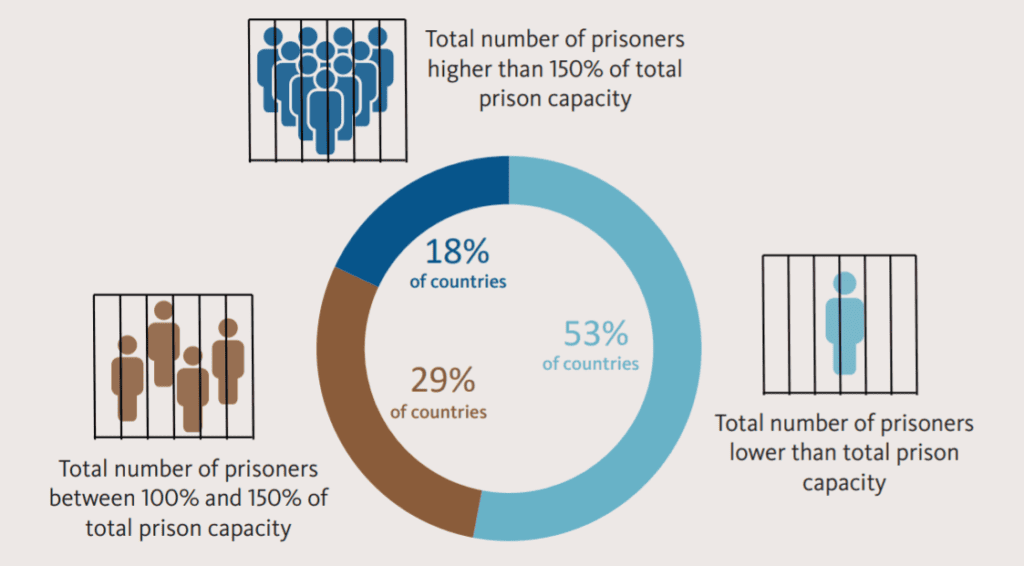
Source: Screengrab from the UNODC report

Unsentenced prisoners

One in every three prisoners worldwide is being held without having been found guilty by a court of justice, the report says. The global share of unsentenced detainees in the prison population has not changed much in the past 20 years, ranging between 29% and 31%. Asia and Africa had the highest share of unsentenced prisoners (both at 34%), while Europe had the lowest share (15%) as of 2019.

Even so, Africa has seen the sharpest decline in the share of prisoners who are unsentenced, which dropped from 45% in 2000 to 34% in 2019. In contrast, the Oceanic countries, including Australia and New Zealand, recorded a sharp increase over the same time period, from 20% in 2000 to 32% in 2019.

How Native Americans Used The Indian Gaming Regulatory Act To Empower Their People And Improve Their Communities

By Aara Ramesh

Last week, the National Indian Gaming Association (NIGA) held its Indian Gaming Tradeshow & Convention in Las Vegas, drawing a record crowd of 7,000 according to its own estimates. The four-day conference’s success was attributed to tribes and even commercial operators of casinos seeking out new technology and equipment as the industry continues to navigate gaming in the time of Covid-19.

Victor Rocha, the conference chairman, noted the attendance of tribes of all sizes, including smaller ones, as well as commercial-gaming operators who were hoping to meet and conduct business with vendors. By NIGA’s own estimates, over 350 vendors participated, resulting in a $10 million impact on Las Vegas’ economy over the week.

The success of NIGA’s first convention since 2018 bodes well not only for the city, but also for the overall gaming industry, the overall American economy, and Native American communities, as a whole. Per some estimates, tribal gaming accounts for around 43% of overall gaming revenue in the country.

The NIGA says that the tribal gaming industry was worth a record $34.6 billion in the 2019 financial year, a 2.5% increase from the $33.7 billion generated the previous year. According to the Association’s President, Ernie Stevens Jr., tribal gaming contributes a further $6.2 billion to the economy via “ancillary revenues from hotels, entertainment, restaurants, and retail operations.” NIGA also says that tribal gaming is ranked 11th when it comes to generating employment in the country.

Keeping this significant contribution in mind, it is worth taking a look at the inception and development of tribal gaming over the course of the last three decades.

How Native Americans Came To Be Involved In Gaming

Nearly 33 years ago, Congress enacted and President Ronald Reagan signed into law the Indian Gaming Regulatory Act of 1988 (IGRA). The Act was designed to “support and promote tribal economic development, self-sufficiency, and strong tribal governments through the operation of gaming on Indian lands.” It lays out how the federal government and tribal governments should work together to regulate gaming on Native American lands.

The IGRA created a whole Native American gaming industry virtually “overnight and practically nationwide,” as every state with federally recognized tribes also permitted gambling (excepting Utah).

As a result of IGRA becoming law, the Department of Interior (DOI), under whose jurisdiction the Bureau of Indian Affairs falls, created the National Indian Gaming Commission (NIGC), an independent agency within the DOI that is tasked with regulating and supporting tribes’ mission of using gaming to generate revenue for Indigenous communities. It is also in charge of providing technical assistance and training, as well as conducting background checks of those looking to invest or participate in tribal gaming operations.

The IGRA created three classes of Indian gaming, with different games falling into different categories and being subject to its own rules and regulations. Class I gaming covers games that are considered traditional or ceremonial for Native communities, and are exclusively reserved only for tribes. These are generally social games, with prizes of “minimal value,” or are related to specific ceremonies or celebrations.

Class II games include activities such as bingo, pull-tabs, punch boards, tip jars, and card games not banked by the house. Each tribe regulates these games within its own boundaries, with the NIGC providing oversight.

Class III gaming is probably what is understood conventionally as “tribal gaming.” It spans an array of activities, from lotteries, machine gambling, and casino games, to horse racing, pari-mutuel wagering, and house-banked card games. Any tribe looking to introduce Class III gaming on its lands must sign a contract (or “compact”) with the state outlining all details. The compact then needs to be approved by the DOI.

You can find a full list of which games fall under which classification here.

Today, there are 574 federally recognized American Indian tribes and Alaska Native Villages in the U.S, and almost 2 million American Indians and Alaska Natives. Of these, 245 tribes across 29 states own over 500 gaming operations such as casinos, bingo halls, travel plazas, and convenience stores. 

The Impact Of Gaming On Indigenous Communities

In the late 1990s, a report was commissioned by the federal government to study the effect that IGRA and gaming, more broadly, had on Indigenous communities. According to the National Gambling Impact Study Commission, revenues earned from gaming proved to be “a critical source of funding for many tribal governments,” used as they were for bettering the health, education, and overall well-being of those Native Americans living on reservations.

One study from 2000 concluded that tribal gaming had “provided substantial employment opportunities on rural reservations where unemployment has been endemic and pervasive for decades.” The profits from casinos, as well as the full-time productive jobs generated, helped on a psychosocial and behavioral level, impacting self-esteem and mental health, and lowering the rates of alcoholism, poverty, and crime. The report also found that the impacts had spread to the non-Native community as well, through jobs in construction and tourism.

In 2005, Harvard University released a study that looked at census data from 1990 and 2000 to gauge the socioeconomic changes that occurred on reservations over that decade (depicted in the table below). They concluded that reservations with gaming facilities outperformed those without in regards to all the indicators, except two, measured by the census. The overall improvement of all reservations over the period did indicate that gaming was not the sole driver of that progress, but it is evident, according to the researchers, that the self-determination associated with controlling gaming was a significant part of the overall improvement. 

Table source: American Indians on Reservations: A Databook of Socioeconomic Change Between the 1990 and 2000 Censuses

Moving Forward

Today, the varied Native American communities all across the country are making a slow trek back to normalcy after the devastation they witnessed during the peak of the Covid-19 pandemic. The virus disproportionately affected Indigenous Peoples, according to almost every account. The Navajo Nation alone has witnessed 30,000 infections, with 1,233 confirmed deaths. The infection rates in Native populations were 3.5 times higher than non-Hispanic whites, and they were over four times more likely to be hospitalized.

This collided in an alarming way with the prolonged forced shutdown of casinos across the country, to mitigate the spread of the virus. With gaming being a major source of revenue and employment for residents of reservations, the unfortunate cocktail of circumstances led to Native American communities truly suffering.

But things, according to some, are looking up. Going off data from the Centers of Disease Control and Prevention, American Indians and Alaska Natives had the highest vaccination rate of any other racial group in the country — as of early July, 45.5% of Native populations had received at least one dose of the vaccine, while 39.1% are fully inoculated.

Much as with the introduction of the IGRA, there are many who hope that the rebounding of the gaming industry will lead to a similar bounceback in the fortunes of Indigenous Peoples. Certainly, those who attended the NIGA conference last week were buoyed by the record attendance and enthusiastic participation of residents.

At the conference, attendees turned their attention to pressing topics such as the post-pandemic revival, cybersecurity and domestic terrorism, federal legislation, sports betting, and online betting, leaving everyone with a sense of hope.

“Indian gaming showed up, rolled up our sleeves, and did the work united in our efforts to bring our industry back after the pandemic stopped the world in its tracks,” said Chairman Stevens. “Coming off the success of our event this week, I am confident that our industry can and will build back. We regroup and reunite to build upon the success of our Indian gaming industry that has empowered tribal communities.”

You can access thorough coverage of the NIGA convention here.

‘Long Covid’ Is Now A Protected Anti-Discriminatory Disability Under The ADA: What Does That Mean?

By a Biometrica staffer

On Monday, July 26, the United States government said it will not be lifting existing travel restrictions due to concerns over the highly transmissible delta variant of Covid-19 and the rising number of coronavirus cases in the country, Reuters reported. The Covid-19 pandemic is by no means over, and this news confirms that even further, if ever there was any doubt about it.

Even as the virus continues to evolve and brings forth new spikes in cases, we are still working to figure out how many aspects of life it has and will affect. We look at one such facet in today’s report: On Monday, the Department of Justice (DOJ) and the Department of Health and Human Services (HHS) joined forces to issue a guidance on how “long Covid” can be a disability under the Americans with Disabilities Act (ADA).

This is to address the fact that some people continue to experience symptoms that can last weeks or months after first developing Covid-19. It can happen to anyone who’s had Covid-19, even if their illness was initially only mild. Those who have this condition are sometimes called “long-haulers” and the condition itself is termed “long Covid.”

Long Covid is beginning to become a persistent and significant health issue that has ramifications that spill over into the realms of anti-discrimination policies. It is with this in mind that the DOJ and the HHS published their guidance on Monday, which also happened to be the 31st anniversary of the ADA. Long Covid is now considered a disability under the ADA, Section 504 of the Rehabilitation Act of 1973, and Section 1557 of the Affordable Care Act. Each of these federal laws protects people with disabilities from discrimination.

“The ADA is one of our most transformative civil rights laws, helping to ensure that our schools, courthouses, townhalls, businesses and workplaces are open to all people, regardless of their disability status. This anniversary, we recognize the ongoing challenges to full equality, including COVID-19’s devastating and disproportionate impact on people with disabilities. As many of our neighbors find themselves with long-lasting effects from COVID-19, we are committed to making sure that people understand their rights under federal nondiscrimination laws,” said Kristen Clarke, Assistant Attorney General of the DOJ’s Civil Rights Division.

According to the Centers for Disease Control and Prevention (CDC), people with long Covid have a range of new or ongoing symptoms that can last weeks or months after they are infected with the virus, and that can worsen with physical or mental activity. Some of the common symptoms of long Covid include difficulty thinking or concentrating, shortness of breath or difficulty breathing, dizziness on standing, depression, tiredness and fatigue, etc. For the CDC’s full list of symptoms, click here.

When is someone considered to have a long Covid-related disability according to the guidance?

A person with long Covid has a disability if the person’s condition or any of its symptoms is a “physical or mental” impairment that “substantially limits” one or more major life activities. A physical impairment can includes any physiological disorder or condition affecting one or more body systems, including, among others, the neurological, respiratory, cardiovascular, and circulatory systems. Meanwhile, a mental impairment includes any mental or psychological disorder, such as an emotional or mental illness.

The guidance elaborates on the term “major life activities,” which it says can include a wide range of things, starting with caring for oneself and performing manual tasks to being able to perform routine activities like seeing, reading, concentrating, thinking, eating, sleeping, interacting with others, working, etc. The term “substantially limits,” it says, is construed broadly under these laws and should not be analyzed extensively, as the limitations need not be severe, permanent, or long-term. Even if the impairment comes and goes, it will still be considered a disability if it substantially limits a major life activity when it is active, the guidance adds.

An individualized assessment is necessary to determine whether a person’s long Covid condition or any of its symptoms substantially limits a major life activity.

People whose long Covid qualifies as a disability are entitled to the same protections from discrimination as any other person with a disability under the ADA, Section 504, and Section 1557. In other words, they are entitled to full and equal opportunities to participate in and enjoy all aspects of civic and commercial life. This may mean that businesses or state and local governments will sometimes need to make changes to the way they operate to accommodate an individual’s long Covid-related impairments.

“It’s critical that we ensure people who have disabilities as a result of long COVID are aware of their rights under federal nondiscrimination laws. It also is crucial that they know how to connect to services and supports available if they now need assistance to live in their own homes, go to school or work, or participate in their communities,” Acting Administrator and Assistant Secretary Alison Barkoff for Aging at the Administration for Community Living at HHS said.

Trucking & Logistics And Cybersecurity: Why It Matters Now More Than Ever

By a Biometrica staffer

Transportation was one of four industries that suffered the highest percentage of malicious attacks last year, according to IBM’s Cost of a Data Breach Report 2020, along with the technology, retail, and financial sectors. As transportation becomes more and more connected and dependent on advanced computing systems and software, the opportunities for cybercriminals to target it and rob such companies of cash also, invariably, go up. Cybercriminals have been increasingly, almost persistently, targeting everything from K-12 schools to critical infrastructure this year.

Meanwhile, when it comes to trucking and logistics, the nation is facing a trucker workforce shortage, trailer utilization is said to be near its peak, there are order delays, and a rise in demand for optimization of existing trailers means some fleets are engaging third parties to add to manpower by helping them monitor, analyze, and decide when to move a trailer, where to move it, and when to have it maintained. Then there are automated trucking fleets, which may not necessarily mean we will see self-driving vehicles on the roads — not in the near term anyway — but mixed operations involving automation systems are inching closer to becoming a reality.

The Federal Motor Carrier Safety Administration (FMCSA) sought public opinion late last year in a survey of private trucking companies, aimed at helping the government establish safety rules that would govern autonomous trucks. All of these developments imply that more technology is coming, ergo more connected devices, which puts cybersecurity under the scanner even in the trucking industry, although it’s pipelines that have been in the limelight when it comes to the broader infrastructure space this year.

While the three other sectors with the highest percentage of malicious attacks — technology, retail, and financial — also had a higher level of security automation deployed, transportation lagged on that front, according to the IBM report we mentioned earlier. When it came to the root causes of data breaches across industries last year, malicious attacks accounted for 58% of all breaches in the transportation sector, which was second only to the tech sector with a similar 59% accounted for by malicious attacks.

So, it’s no wonder that as part of transportation, the trucking and logistics industries did not emerge unscathed either when it comes to cyberattacks in 2020. In fact, cyberattacks in the trucking and logistics space have also reportedly been on the rise since last summer. And as with the Colonial Pipeline hack, many of the attacks against trucking and logistics companies last year also involved ransomware, according to a Freight Waves article. Earlier this month, for instance, data stolen from heavy truck and military vehicle maker Navistar International Corp. is said to have made its way to the dark web. The leaked data exposed detailed financial information, and came less than a month after the company had disclosed that it had been a victim of a cyberattack.

Here’s a quick look at a few major attacks in recent times that depict the interconnectedness of the logistics and trucking industry, therefore making cybersecurity even more pertinent:

  • CMA CGM, the world’s fourth-largest container shipping group was hit by a cyberattack that it reported on September 28 last year, which paralyzed its own activity, the impact of which, in turn, was felt globally. While the attack was first discovered in a subsidiary, the company ultimately had to disable its core IT systems, and some functions were down for two weeks.
  • In October 2020, when CMA CGM restored its online services, news had also broken of the UN shipping agency the International Maritime Organization (IMO) falling prey to a cyberattack. The IMO’s website and intranet had been disabled by the hackers and its IT specialists had shut down key systems to prevent further damage. An IMO spokeswoman said that while the organization had thwarted other cyberattacks in the past, last year’s was the first to have disabled services.
  • In December 2020, trucking and freight transportation logistics giant Forward Air said a ransomware attack affected its operational and information technology systems, causing service delays, in a filing with the Securities and Exchange Commission (SEC). In February 2021, the company said the ransomware attack had a $7.5 million impact on its fourth quarter financial results. The company provides ground transportation and related logistics services to the air freight and expedited less than load (LTL) trucking market in North America. In other words, it is a key link in the airline cargo operations chain. It was targeted by a new and relatively unknown ransomware gang called Hades. The attack left customers unable to book loads for days. Although it is not the largest trucking and logistics company in the country, it had no peer that was immediately able to pick up the slack, according to a Freight Waves article.
  • But it’s not just large companies. Small businesses are allegedly the most common victims of cyberattacks. Hundreds of thousands of small trucking companies keep the supply chain going across the country, and are a crucial link in the system. As with the larger firms, companies with smaller fleets are also often threatened and held for ransom by cybercriminals.

Only last week, groups representing various infrastructure sectors called for robust methods to protect the country’s freight and mobility grids, according to Transport Topics. To be sure, cybersecurity is only going to gain even more importance for the trucking and logistics industry with time. As a Freight Waves article puts it, the shutdown of Colonial Pipeline — i.e., a vital supplier of diesel that powers trucks — could just as easily have happened to a major truckload carrier or, really, any other company in the complex, interconnected supply chain that keeps the country running.

‘Urgent And Overlooked’ Side-Effect Of Pandemic — Children Left Without A Caregiver Due To Covid-19

By a Biometrica staffer

Last week, a coalition of researchers from organizations including the Centers for Disease Control and Prevention (CDC), the UN’s World Health Organization, and the World Bank published a report in the medical journal Lancet, in which it was estimated that during the first 14 months of the Covid-19 pandemic, at least 1.5 million children globally were left without caregivers as a result of the virus, with over a million of them losing their primary caregivers.

This “hidden pandemic” has widened the net casted by Covid-19, adding another population to the virus’ global toll of 4 million-plus direct deaths. The study looked at mortality and fertility data across 21 countries that together accounted for 77% of Covid-19 deaths over the time frame. Children were most severely affected in South Africa, Peru, United States, India, Brazil, and Mexico. The deaths measured included those associated directly with the virus, and those indirectly linked, including through lockdowns, movement restrictions, healthcare infrastructures being overburdened, and other chronic diseases/comorbidities.

Map source: The Imperial College of London dashboard

Between March 1, 2020 and April 30, 2021, the report estimates that 1.13 million children lost a parent or custodial grandparent, with 1.04 million losing either a mother, father, or both (most lost only one parent, not both). Overall, children were anywhere between two to five times more likely to have lost a father than a mother, with the overall death rates associated with Covid-19 seeming to disproportionately have affected men.

The World Bank put it in particularly stark terms: “For every 2 people who die of COVID, 1 child is left orphaned.” Additionally, at the current rate noted by researchers, every 12 seconds roughly one child is orphaned due to Covid-19.

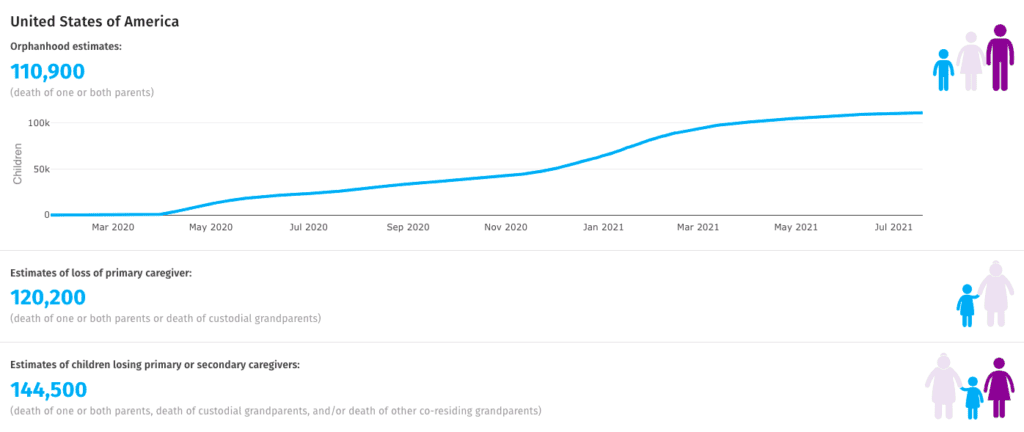
In the U.S. in particular, around 119,000 children lost a primary caregiver, with over 140,000 experiencing the death of a primary or secondary caregiver. This is in addition to the 600,000 Americans who died as a direct result of contracting the virus.

Image source: The Imperial College of London dashboard

The report strongly emphasized that the noted results were indicative of a much more devastating trend, estimating that over 4 million more children (on the conservative end) could lose a parent or caregiver to Covid-19 in the coming years. The pandemic seems to be showing no signs of abating, with more mutant strains spreading throughout the world, and with vaccines not having reached many people globally.

As the New York Times reported, “A child’s life often falls apart when he or she loses a parent or grandparent caregiver.” For context, around 40% of American grandparents who live with their grandchildren are their primary caregivers. According to the Pew Research Center, in 2016, 64 million Americans (roughly 20% of the overall population) were living with multiple generations of their families, with roughly 3.2 million living in households with grandparents and grandchildren.

The effect could be even more severe in the long-term as this type of trauma could increase a child’s susceptibility to substance abuse, homelessness, mental illnesses, estrangement from siblings or other family members, dropping out of school, and other “behavioral and chronic health conditions” down the line. By affecting stability, it can also impact the poverty and nutrition levels of children. They may be more likely to engage in and be victims of violence, and may fall prey to child marriage.

According to the World Bank, the fallout of such loss “will reverberate across generations.” The researchers behind the report say that as various stakeholders begin to implement new response plans, they should also prioritize the “psychosocial and economic” well-being of children who have lost parents, grandparents, and/or caregivers to Covid-19.

In addition, last month, the UN revealed that the number of children forced into labor increased in 2019 for the first time in 20 years, a situation only likely to have worsened during the pandemic. As of the start of 2020, around one in ten children (160 million) were involved in child labor.

The Proceedings of the National Academy of Sciences estimates that a total of 5.48 million people in America have mourned the loss of a loved one to Covid-19. Meanwhile, the CDC said last week that the average life expectancy of Americans fell by 1.5 years in 2020, and that just under 75% of this effect was attributable to the pandemic. Last year, over 3.3 million Americans died, with Covid-19 being responsible for around 11% of that figure.

Beware The Newest Type Of Fraud On The Block: Child Tax Credit Scams

By a Biometrica staffer

On Wednesday, July 21, the Internal Revenue Service (IRS) issued a warning urging parents to be aware and on the alert for criminals trying to steal their personal and financial information, as families across the country are starting to receive the first of the new monthly child tax credit payments. Last week, tens of millions of families were sent the first payment of the expanded child tax credit, part of the $1.9 trillion stimulus package signed by President Joe Biden earlier this year.

Before we discuss the IRS warning and the best steps to follow to avoid falling prey to tax scammers, here’s a quick look at why this could be construed as another opportunity for criminals to exploit. Firstly, the Covid-19 relief package — as it is also called — increased the size of the credit, made it fully refundable so more households qualified, and called for it to be sent out in periodic payments rather than be rolled into regular tax-time refunds, a major shift in policy aimed at helping families pay their bills.

Politically, among some Democrats, there’s already calls to make the more generous credit permanent. As we mentioned earlier, under this new policy, payments have already been sent to tens of millions of families. There are various articles in mainstream media about who qualifies for this, etc., although the main idea behind the policy is to help low-income families and poor children. Whether the higher credit becomes permanent or not, what’s given is that there is going to be transfer of money to tens of millions of families. To scammers, that’s opportunity enough to try and defraud some of those people of their much-needed and earned money.

How could they do that? They could adopt various methods, as the IRS warning says. It says criminals could ask you by phone, email, text, or even on social media, to verify your information so you can get advance Child Tax Credit payments. Cybercriminals, in particular, have been additionally active since the pandemic began, and are on the lookout for every opportunity to scam people. They may use these payments as bait, the IRS warns.

Here are a few things to remember, specifically when it comes to child tax credit scams and to avoid falling prey to them:

  • Never give out any personal information, your social security number, etc. to anyone who calls/emails/texts/direct messages (via social media) you asking for it.
  • The IRS does not initiate contact with taxpayers by email, text messages, or social media channels to request personal or financial information. No government agency will call you and ask you to confirm sensitive information over the phone, such as your social security number.
  • Even when it comes to phone calls, the IRS does not leave pre-recorded, urgent, or threatening messages. If you get a voicemail saying a warrant will be issued for your arrest… it’s not the IRS calling.
  • There is no need to take any additional action to get advance payments of the child tax credit. If you are eligible, the IRS will use information from your 2019 or 2020 tax return to automatically enroll you for advance payments. So do not reveal any information to someone who calls/emails/texts/direct messages (via social media) you saying you need to fill out additional information to qualify for it.
  • If, however, you are not required to file a tax return and have not given the IRS your information, make sure you go to the IRS website directly to provide the basic information required for the child tax credit here. You can also find more information about the advance child tax credit payments for 2021 on the IRS website here.
  • In case you haven’t received your payment even after having given your information, or having filed taxes, here’s a good article on what measures you can take.
  • It’s best to avoid answering calls from unknown numbers altogether. Let it go to voicemail instead, most experts say. In particular, if you can see from the number that it’s a call that appears to be coming from a state in which you have no connections — i.e., no relationships to people or companies there — then you should definitely let those calls go to voicemail.
  • Phones are the most common medium used by scammers to swindle Americans of their money. Nearly one-in-three Americans have fallen victim to a phone scam in the past year, according to a report from Truecaller published early this month.

It’s not often easy to tell whether something is a scam or not. There have been several instances where scammers have been so thorough in their research that it takes quite a bit of effort to figure it out. However, in the case of the child tax credit, given that it’s also still a “new opportunity” that scammers wouldn’t have had too much time to research either, following the IRS’ measures and general guidelines on avoiding various scams is a good defense mechanism to begin with.

For more resources from the IRS on scams and frauds, click here.

‘The Next Pearl Harbor, The Next 9/11, Will Be Cyber’ — A Cybercrime News Round-Up

By a Biometrica staffer

Experts and lawmakers across the country are sounding the alarm over what seems to be a cyber free-for-all on American businesses, infrastructure systems, and industries. President Joe Biden brought the subject up with the Russian government, and various intelligence agencies have issued advisories on how to prepare for, prevent, and deal with cyberattacks.

In May, it was Colonial Pipeline, the largest fuel supply line in the country, that was debilitated by a ransomware strike. The resulting outage caused gas supply shortages all across the south-eastern United States, driving up prices and prompting the president to issue multiple urgent orders to patch up the gaps.

Yesterday, we wrote about how K–12 schools became the number one target for ransomware attacks last year, once learning shifted entirely online, severely straining an already impacted system.

“I believe that the next Pearl Harbor, the next 9/11, will be cyber,” U.S. Senator from Maine Angus King said this week, succinctly describing what can feel like a multi-front assault. 

With seemingly daily attacks on both private and public organizations, it can be hard to keep track of the latest news in the world of cybercrime. Today, we sum up some of the key developments on this front over the last week.

Water Systems

Earlier this week, experts urged the government to turn its eye towards what could be the most vulnerable and worrying sector to be hit with a cyberattack — critical water and wastewater systems. According to one official, the country has 50,000 drinking water and 16,000 wastewater systems dispersed all across the nation. Many of these sites are in rural areas and do not possess the resources or the capabilities to mount an efficient defense against cyberthreats. Increased coordination and budget allocation is required to implement effective security measures.

The risk potential of attacks on water systems are multifaceted. On one hand, such an attack could severely impact already-strained infrastructure and public health sectors. On the other hand, there is a significant chance of a psychological fallout after such an attack, according to one official. When the public learns of drinking water systems becoming compromised, it could lead to widespread panic and fear.

These vulnerabilities seem to have been picked up on by malicious actors as well. Earlier this year, a hacker tried to poison the water supply in a Florida town, albeit unsuccessfully. In January, a different hacker gained access to the systems of a water treatment plant in San Francisco; and just two months later, one person was indicted for breaching the water system of a county in Kansas.

Kaseya Obtains Master Decryption Key

Kaseya, the Florida-based company at the center of a massive ransomware attack over the Fourth of July weekend, announced that it had acquired a universal key that would decrypt all the data that had been hacked and locked in that incident. Kaseya said the key will be provided to all the victims, though it may be too late for many of them, who have likely already used back-ups or have started from scratch to rebuild their systems.

At the time, over 1,000 businesses and public organizations across the world were left reeling as supply-chain, IT, and infrastructure systems were compromised. The Russia-linked group REvil that was behind the attack reportedly became overwhelmed by the number of ransom negotiations it was receiving from across the world, and settled for a $50–$70 million ransom for the master key.

It is unclear how Kaseya got the key; all the company would say is that it had come from “a trusted third party.” Cybersecurity firm Emsisoft verified the authenticity of the key. According to experts, the key could have been provided due to Kaseya or a government paying the ransom, the victims may have come together to pool funds and pay the money, a discontented member of the group may have passed it on as a revenge move, or the Russian government could have seized it from the criminals and turned it over through back-channels.

Cyberattacks Crippling Tribal Casinos

At the National Indian Gaming Commission (NIGC) Tradeshow this week, officials revealed to operators that cyberattacks against tribal casinos have spiked 1,000% since 2019, when there was only one such attack. Since January 2020, however, NIGC has received at least 12 complaints of ransomware attacks.

NIGC Officials are saying they may now require casinos to mandatorily report such attacks. They are also urging operators to invest in cybersecurity to protect their data and customers’ personal information. Apparently, ransom demands have ranged from the low thousands to over $1 million.

In June this year, six tribal casinos in Oklahoma fell victim to malicious cybercriminals, and were forced to close temporarily, significantly affecting an industry already suffering due to Covid-19 lockdowns. Similarly, last year, the Cache Creek Casino Resort in northern California was forced to suspend operations for three weeks after an attack.

Russian Cybercriminal Groups Banding Together

Experts are warning that some of the largest and most notorious Russian cybercriminal gangs — including Wizard Spider, Twisted Spider, Viking Spider, and LockBit — are coming together in one “cartel-like” coalition to share techniques, stolen information, tools, custom malware code, and technology infrastructure, all of which are “limited resources.”

One analyst is warning that this coalition might be the most dangerous form of cybercriminal groups seen to date due to the fact that it is more structured and organized, leading to particularly sophisticated weaponry. In the past, groups have appeared and disappeared without much fanfare in the aftermath of becoming the subject of scrutiny, rebranding and reworking their strategies before popping back up.

New Proposal To Mandate Cyberattack Reporting

A bipartisan group of senators on the Senate Select Committee on Intelligence unveiled on Wednesday, July 21, a proposed Cyber Incident Notification Act that would require federal agencies and contractors, as well as critical infrastructure companies, to tell the Department of Homeland Security if they have been victimized by a cyberattack.

The aim is to increase the speed at which reports are made, allowing the government to respond in an efficacious and expedient manner. Currently, companies are not obligated to report such incidents, which can complicate matters for the federal government, especially if their own systems have also been compromised in the hack.

Kayleigh’s Law: Targeting Lifetime Protection For Some Sexual Assault Victims

By a Biometrica staffer

On Wednesday, July 21, a legislator in Wisconsin proposed what’s known as “Kayleigh’s Law” in the state legislature to help protect certain sexual assault victims from their attackers. The proposed bill would allow those who have been victims of serious crimes, including sexual assault and kidnapping, to petition the court for their convicted assaulters’ restraining orders to last a lifetime.

Kayleigh’s Law was passed earlier this year in Arizona and was inspired by Kayleigh Kozak, a survivor of childhood sexual abuse. “He was my PE teacher, my soccer coach, and he groomed me and did things that he should not have done,” Kozak told NBC15. She came forward when she was 14 years old, after which her assailant was convicted. But last year, she heard his probation could end.

“I asked what protection would be in place for me once his probation was terminated, and I learned there was nothing. There was no such thing as protection that comes after probation is terminated. A victim’s direct protection falls within the terms of their probation. I cannot believe it was an all-or-nothing case scenario,” she told Spectrum News. Kozak believes the law can prevent assaulters from re-inserting themselves into the lives of their victims. With the law in place, there will be direct consequences for attackers if they violate those terms.

https://twitter.com/RepDittrich/status/1417944513339867142?s=20
Tweet Source: Rep. Barbara Dittrich’s Twitter account

Arizona became the first state to offer this kind of protection to victims of sexual assault on April 20, and its straightforward, two-page law could be used as a blueprint in Wisconsin. The latter proposal was put forth by State Rep. Barbara Dittrich in the Wisconsin State Legislature. It would allow for a lifetime restraining order to protect survivors of first, second, or third degree sexual assault, as well as in cases of an “individual [being] at risk.”

Currently, a restraining order can be issued for up to four years for an adult, and up to two years for a child. The orders can be extended by four years for adults and two years for children, with the option for 10 years and five years, respectively, if there is a substantial risk to the survivor.

“The trauma victims experience, most often, remains with them an entire lifetime, and as the battle against human trafficking is a bipartisan issue with bipartisan support, this simple but critical legislation just makes sense,” Dittrich told reporters at a press conference to announce the proposed bill.

In Arizona, Kayleigh’s law received overwhelming bipartisan support. But media reports say it is too soon to predict what may happen in Wisconsin, as the proposal has been circulated for co-sponsorship from other lawmakers only recently.

Nearly one in five high school students in Wisconsin reported that someone has forced them “to do sexual things they did not want to do,” Dittrich said in a statement published on her Twitter account, citing Youth Risk Behavior Survey data. At the national level, one in three women and one in six men have experienced sexual violence in their lifetime, her statement adds, citing a National Intimate Partner and Sexual Violence Survey.

To be sure, the statistics surrounding sexual assault are horrific. An American is sexually assaulted every 68 seconds, and younger people are at the highest risk of sexual violence, according to anti-sexual violence organization RAINN (Rape, Abuse & Incest National Network).

Women and girls experience sexual violence at higher rates, but it also does affect other genders, especially those who identify as transgender, genderqueer, or gender nonconforming. When it comes to ethnicity, Native Americans are at the greatest risk of sexual violence according to RAINN, as they are twice as likely to experience a rape/sexual assault when compared with all other races.

As Kozak said: “No victim should ever have to re-face their abuser to fight for the protection that they rightfully deserve, and now in the state of Arizona, they no longer have to. I am so happy to say that this is a law in Arizona, but Arizona is not enough because victims everywhere matter to me. It is my mission to get this law passed nationally.”

Video Source: Channel 3000 / News 3 Now’s YouTube account

K–12 Schools, The Number One Target For Ransomware Strikes Last Year, Are Still Dealing With Cyber Attacks

By a Biometrica staffer

Earlier this month, the Morgan County school system in West Virginia was hit by a cyberattack, presumably from a Russia-based group, in which the files and data seized are being held for a $70 million ransom. Though all the details are not known, reports suggest it was “just office computers” that were compromised. Officials are reportedly speaking to the West Virginia Board of Risk Insurance Management about a claim, and are also liaising with law enforcement to investigate the attack.

The news has been inundated recently with reports of ransomware attacks striking everything from critical infrastructure to healthcare systems. Amidst this, the spike in attacks targeting schools all across the country has largely slipped under the radar. This West Virginia attack is but the latest in a spate of ransomware attacks targeting schools in the last year, after schools began to shut down due to the pandemic, and learning shifted almost entirely online.

In September last year, a ransomware attack took down the Newhall School District in California, affecting around 6,000 students at 10 elementary schools at a time when the entirety of the education delivery was digital. Some estimates say that over two dozen school systems in California have been hit by a cyberattack over the last five years, ranging from secondary schools to universities. The state’s schools are now exerting a concerted push in shoring up their defenses against such attacks.

In April this year, the Broward County Public Schools system in Florida was crippled by a cyberattack in which district data was encrypted. The hackers demanded $40 million in ransom, threatening to release personal information online, and erase the files it had captured.

The Broward County system is the country’s sixth largest school district, comprising over 270,000 students. The district has an annual budget of around $4 billion, which seems to be the reasoning behind it being targeted and the ransom being so exorbitant.

The school refused to pay the ransom, in line with recommendations from the Federal Bureau of Investigations (FBI), the Department of Homeland Security, and Multi-State Information Sharing and Analysis Center (MS-ISAC). As a result, the hacker group published online almost 26,000 files it had stolen.

According to the FBI, in 2020, K–12 schools became the most favored target sector for cybercriminals, and were also the subject of the majority of all ransomware attacks. They also said that between August and September 2020, almost 60% of all reported ransomware attacks targeted schools, which was up significantly from the January–July figure of 28%.

MS-ISAC said that between 2019 and 2020 it had noted a 19% increase in ransomware and other cyberattacks against K–12 schools. It says that in 2021, there is likely to be a staggering 86% increase, largely due to the pandemic.

One cybersecurity firm, Emisoft, said that in 2020 it had tracked 84 cybercrime incidents against at least 1,681 schools, colleges, and universities. Just under 60 of those incidents involved school districts. There is a lack of data as there is no federal reporting requirement or regulation specifically for school districts. According to some estimates, the average ransom these schools pay is around $50,000, but it can be as high as $1.4 million.

The reason school systems, especially public ones, have become such an attractive target is due to a number of factors. The main one is the fact that the tight budgets of educational institutions means that they are likely to have less developed cybersecurity infrastructure than private entities or critical public ones, leaving more vulnerabilities exposed. They are also more likely to have open WiFi networks, which makes them easy targets. Each teacher and student’s laptop is also a potential gateway to the overall network.

There is a perception as well that schools would be more willing to acquiesce to ransom demands quickly due to their high dependence on their computer systems for things like grading and sharing files, in addition to facing pressure to resume classes as soon as possible. 

The personal information of students is also an attractive target due to the fact that they are less likely to have bank accounts or credit cards, and, thus, they and their parents may not notice their information has been compromised or their identity stolen for fraud purposes for a long time.

On its website, the Cybersecurity and Infrastructure Security Agency (CISA) has a separate section just for K–12 educational institutions. The attacks that CISA has noticed include locking people out of the most basic of functional systems, stealing confidential student data, disrupting online lectures and classrooms, verbally harassing students, flashing pornography or other disturbing or violent imagery on the screen, and “doxxing” students.

Last year, the FBI, CISA, and MS-ISAC disseminated a Joint Cybersecurity Advisory about the cyberthreats faced by K–12 school systems. The government has also developed a resource center for all stakeholders to familiarize themselves with the ways they can detect and prevent cyberattacks on their school networks.

Johnson & Johnson, McKesson, Cardinal, and AmerisourceBergen Agree To Colossal $26B Settlement In Opioid Epidemic Case

By Aara Ramesh

One of the largest civil suits in U.S. history took a turn towards resolution on Tuesday, July 21, when officials announced that a deal had been brokered in the 3,000 lawsuits filed by states, cities, counties, and other jurisdictions against the drug manufacturer Johnson & Johnson (J&J) and three distributors (McKesson, Cardinal Health, and AmerisourceBergen Corp.) over their alleged role in propagating the opioid abuse public health crisis.

The total settlement is for $26 billion. Through regulatory filings, it appears as though the three distributors will pay a total of $21 billion over 18 years, while J&J will pay $5 billion over nine years. Those who filed the suit alleged that millions of dollars have been spent on beefing up law enforcement, emergency personnel, and treatment centers as a result of the opioid epidemic. As such, the settlement money will be spent on the changes necessitated by the crisis, including on treatment, prevention, and public awareness raising. None of the money will directly go to those who lost loved ones to opioid overdoses, nor to the millions suffering addictions.

Over the last two decades, there have been half a million fatal overdoses across the U.S. from opioid abuse, beginning with OxyContin’s introduction in the late 1990s, progressing into heroin abuse, and now into illicit and often unwitting fentanyl consumption. Between 2006 and 2014, data suggests that over 100 billion hydrocodone and oxycodone pills were prescribed and distributed all over the country.

Despite the fact that the number of legal opioid prescriptions fell between 2012 and 2019 (to 153.2 million from 255.2 million), the opioid epidemic continues to claim lives. Last year alone, in a deadly collision between this public health crisis and the Covid-19 pandemic, the Centers for Disease Control and Prevention (CDC) estimates that almost 191 people died every day from opioid overdoses. The almost 70,000 deaths in 2020 is far above the 50,963 recorded in 2019.

J&J has been accused of using false and misleading marketing practices surrounding opioids. They also were a major supplier of raw materials for opioids to other companies, in addition to selling their own legal narcotics, neither of which the company does in the U.S. anymore.

The three other companies are some of the largest drug distributors in the country. Between them, the three companies account for around 90% of the market. Under federal law, they are responsible for ensuring that legal prescription drugs are not being illegally diverted, and are thus liable for “turning a blind eye” to suspiciously large shipments of opioids to specific areas. The deal also establishes a regulatory mechanism in which McKesson, Cardinal, and AmerisourceBergen will create and maintain a “clearinghouse,” to ensure that no one is seeking an outsized quantity of drugs.

Negotiations with the four companies have been ongoing for years now, with Tennessee, Texas, Pennsylvania, North Carolina, and Iowa being the driving forces behind the endeavor. Other states will have 30 days to decide whether to sign on or not; more than 40 of them are expected to do so. The remaining states are likely to reject the deal so they can move forward with the court cases that have already been set for trial.

The three distributors deny the accusations leveled against them, though they said they are hoping the settlement will enable them “to focus their attention and resources on the safe and secure delivery of medications and therapies.”

Meanwhile, J&J said, “The settlement is not an admission of liability or wrongdoing, and the Company will continue to defend against any litigation that the final agreement does not resolve.”

All four companies are facing other lawsuits across the country. The “big three” distributors are involved in an ongoing case in West Virginia, which is likely to conclude next week, and the outcome of which will not be affected by this $26 billion settlement as closing arguments have already been made there. Meanwhile, J&J, along with three other drug manufacturers, are being sued by several California counties, who are seeking damages and penalties of $50 billion for the costs they have incurred in fighting the epidemic.

On the other hand, the three distributors have been dropped from the ongoing case in New York. J&J agreed to a $263 million settlement in that case before proceedings began, and New York Attorney General Letitia James announced on Tuesday, July 20, that the other three companies will pay the state $1.1 billion. The case will continue against the six remaining defendants.

The other opioid-related court proceeding that is capturing nationwide attention is the bankruptcy proceedings of Purdue Pharma, the manufacturer of OxyContin, the drug widely believed to have birthed the opioid crisis, and its owners the Sackler family. The proposal suggests that the company would be turned into a public benefit company, whose profits would be used to mitigate the crisis. It also says that the Sacklers will relinquish control of the company and pay around $4.5 billion from their own pockets to be immunized against any future civil litigation, though they deny any wrongdoing in the opioid epidemic.

The deal gained ground earlier this month when a group of states including New York and Massachusetts dropped their opposition to the plan. Those still against it include a few states, the U.S. bankruptcy trustee, some Native American tribes, and individual victims. The main point of contention appears to be that the Sacklers are not being held accountable for their role. A hearing is scheduled for early August, when a judge will decide whether to accept the deal. Creditors are widely expected to approve the deal.

Litigation is also being pursued in Tennessee, Ohio, Texas, California, and Alaska against a variety of manufacturers, distributors, and pharmacy chains.