Tech Support : support@safience.io

Blog

Reports Of School Crime And Safety Issues Have Become Less Prevalent In The Past Decade: Study

By a Biometrica staffer

In 2019, lower percentages of students aged 12-18 reported any kind of criminal victimization during the previous six months, compared with 2009, and that included theft and non-fatal violent victimization, a report published by the National Center for Education Statistics (NCES) and the Bureau of Justice Statistics (BJS) shows. The report, titled Indicators of School Crime and Safety: 2020, aims to establish reliable indicators of the current state of school crime and safety across the nation.

There were also fewer reports of students being bullied during the school year, being called hate-related words, seeing hate-related graffiti, and observing gang presence at school. Similarly, the percentages for those in grades 9–12 who reported having been in a physical fight on school property in the previous 12 months, and carrying a weapon on school property during the last 30 days was also lower in 2019 than in 2009.

But, reports of certain crime and safety-related issues were either unchanged or became more common over time. For instance, the percentages of students aged 12–18 who reported avoiding one or more places in school during the school year because they thought someone might attack or harm them was slightly higher than it was in 2009 (i.e., 5% in 2019 versus 4% in 2009). Among those in grades 9–12 who were asked about issues faced on school property during the past year, 22% reported being offered, sold, or given an illegal drug, while 7% reported being threatened or injured with a weapon — roughly the same when compared with the numbers from 2009, the report says.

In today’s piece, we give you a quick look at what the report says on various topics related to school safety, including violent deaths, shootings, more on criminal victimization, bullying, gangs, hate-related speech, fights, weapons, illegal substances, and student and teacher perception of school safety.

Violent death and shootings

Although these events are rare, they tend to have far-reaching effects on schools considering the level of tragedy that comes with it. In 2019–20, there were a total of 75 school shootings with casualties, including 27 with deaths and 48 with injuries only. In addition, there were 37 reported school shootings with no casualties in 2019–20. Most of the school shootings, whether with or without casualties, happened at high schools.

Bullying victimization

Research done in the past has shown that students who are bullied are more likely to experience depression and anxiety, have more health complaints, and skip or drop out of school. The involvement of young bullying victims in recent suicides and school shootings has also heightened concerns regarding the public health implications of bullying, the report says.

However, the percentage of students aged 12–18 who reported being bullied at school in 2019 was lower than the comparable percentage in 2009 (i.e., 22% in 2019 versus 28% in 2009). The percentages of students who reported being bullied was higher for those who belonged to two or more races (37%) than for white students (25%), Black students (22%), and Asian students (13%). The report also says 16% of students in grades 9–12 reported being bullied electronically during the previous 12 months in 2019. In this case, the percentage was higher for students of the LGBTQ community.

Criminal victimization

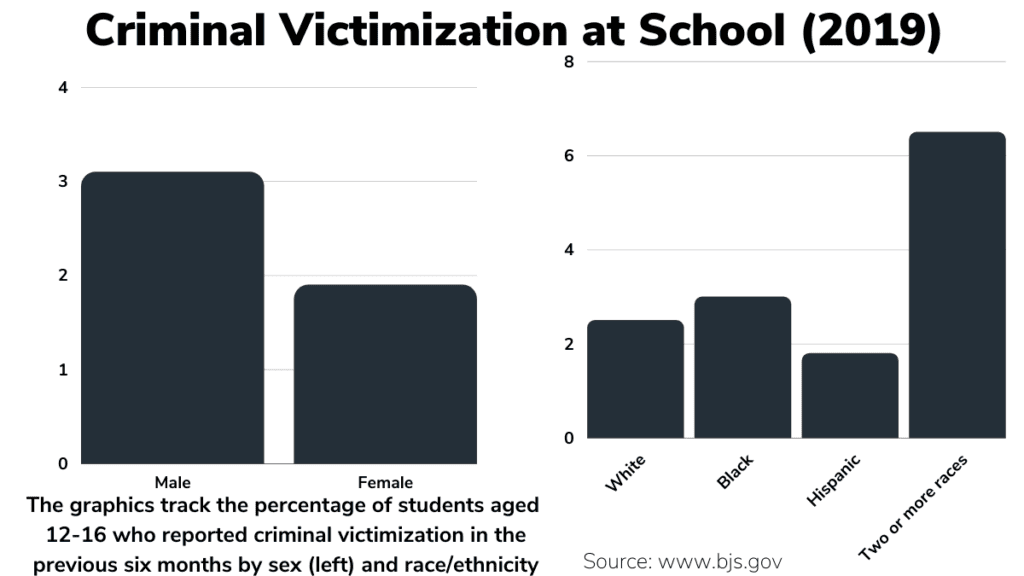
In 2019, students ages 12–18 experienced 764,600 victimizations at school and 509,300 victimizations away from school. This translates to a rate of 30 victimizations per 1,000 students at school, higher than the rate of 20 victimizations per 1,000 students away from school. But both rates represent a decrease of more than 80% from what was recorded in 1992. A higher percentage of male students reported any victimization at school than female students, but that was largely driven by a higher percentage of male students reporting violent victimization.
Gangs and hate-related speech

In 2019, of students ages 12–18, about 9% reported a gang presence at their school during the school year, 7% reported being called hate-related words, and 23% reported seeing hate-related graffiti. But those conditions appear to be less prevalent than they were a decade ago, based on the number of reported incidents. Students who reported being called hate-related word at school during the school year were asked to indicate whether the derogatory word they were called referred to their race, ethnicity, religion, disability, gender, or sexual orientation. In 2019, race was the most frequently reported characteristic referred to by hate-related words, the report added.

Fights, weapons, and illegal substances

The percentage of students in grades 9–12 who reported having been in a physical fight anywhere during the previous 12 months was 22 % in 2019 versus 31% in 2009. Those who reported having been involved in a physical fight on school property in the previous 12 months was also lower than in 2009. There were more male students who reported having been in a physical fight on school property than female students in 2019. The percentage was also higher for students who were American Indian/Alaska Native (19%), Black (15%), and those who belonged to two or more races (11%) than it was for students who were white (6%) or Asian (5%).

Student perceptions of school safety

In 2019, about 5% of students ages 12–18 reported that they had been afraid of an attack or being harmed at school during the school year, higher than the percentage of students who reported that they had been afraid of an attack or being harmed away from school. The numbers reported, though, were not measurably different from those in 2009, the report said.

Teacher reports

When it comes to teachers, threats of injury were more common than actual physical attacks, the report says citing data from the 2015–16 National Teacher and Principal Survey (NTPS). Both percentages, i.e., of threat of injury and actual physical attack, were higher in 2015–16 than in 2007–08.

Other key points

Schools implement preventative and responsive measures across the U.S. to maintain discipline, order, and safety. In 2019, about 94% of students reported a written code of student conduct, and 89% reported the presence of school staff or other adults supervising the hallway, other than security guards or assigned police officers. But both measures were also less prevalent compared to a decade ago (i.e., 96% and 91%, respectively). In contrast, the percentage of students who reported observing the use of one or more security cameras to monitor the school increased between 2009 and 2019 (from 70% to 86%), as did the percentages of students who reported observing the use of locked entrance or exit doors during the day and the presence of security guards or assigned police officers.

When it comes to post-secondary institutions, in 2018 a total of 28,500 criminal incidents against persons and property on campuses of post-secondary institutions were reported to police and security agencies. That translates to 19.5 on-campus crimes reported per 10,000 full-time-equivalent students. Although the overall number of reported on-campus crimes was lower in 2018 than in 2009, the number of reported forcible sex offenses on campus increased. Also, a total of 814 hate crimes were reported on the campuses of post-secondary institutions in 2018.

‘You Gotta Know When To Hold’em, When To Fold’em’ — A Quick History Of Poker

By a Biometrica staffer

Late last week, Massachusetts’ Encore Boston Harbor Casino said it did not have any plans to bring poker back to its gaming floor any time soon, though a final decision would likely be made by the end of the year at the earliest. A spokesperson also said that if the $2.6 billion resort-casino in Everett did decide to reintroduce live poker, it would probably be with a reduced capacity, as the casino tries to “prioritize space” based on “current market conditions.”

Maybe to some people’s surprise, the pointed absence of legal poker in either Encore or MGM Springfield since operations resumed in full in May has not been welcomed by the general public. According to one official with the Massachusetts Gaming Commission, complaints from patrons about the lack of poker “have increased tenfold in the last two weeks.”

Experts say that under the commission’s rules, only four players are allowed per table, leading the two companies to conclude that using up space for it would not be profitable, especially as compared to some of the other offerings they have.

But despite this notion that catering to poker players is not currently profitable, the truth is that this card game has had a long history in America, and is one of the most popular games with amateurs. In fact, Colonel Jacob Schenck, the erstwhile-U.S. minister to Great Britain in the 1870s, once called it America’s “national game.”

So where did poker come from? And how did it become so popular?

Despite the fact that poker really came into its own in the United States, the roots of the game can be traced back nearly 1,000 years to countries halfway across the globe. The exact origins of the game aren’t known. Some say that it began in the 900s in China, others point to similar games in Persia in the 1500s. But most historians agree that the form of poker we know today emerged from some amalgamation of the French game “Poque” and the British game “Brag,” which lent to early iterations of poker its characteristic 20-card deck. The games also had German and Spanish roots, and were based on bluffing or betting high on lousy cards.

When the French came to the Americas, they brought with them Poque to New Orleans. Meanwhile, British merchants and colonists imported Brag. The games thus became popular in the two European countries’ colonies. In 1803, the Louisiana Purchase saw then-President Thomas Jefferson give cash to Napoleon to finance his wars in exchange for a tract of land including New Orleans.

Poque then spread to the English-speaking colonies, leading to the two combining into some form of the game we know and love today. By 1834, standard card decks went from having 20 cards to 52 cards.

New Orleans was central, both to trade and to the proliferation of poker as a game. It was a significant port on the Mississippi River, which was the largest waterway in North America. Through the river, New Orleans was neatly accessible to the Gulf of Mexico, the Caribbean, and the Atlantic Ocean, in addition to the rest of the country. The river was used to transport goods, and the crews upon the riverboats spread throughout the colonies the game of poker. This is when the “steamboat gambler” became well-known.

Poker continued to maintain its lofty status among troops on both sides of the Civil War. After, as Americans moved to settle the west, poker became ubiquitous in the notorious saloons that dotted the frontier settlements and mining towns of the Wild, Wild West. Due largely to the association of the western expansion with an “anything goes” attitude, poker began to be considered the game of scoundrels, more than of the genteel. Violence, cheating, and arming oneself with knives and guns were not uncommon.

It took a while for these perceptions to fade. During World War I, American forces abroad popularized the game among the Europeans, despite the fact that it had been introduced to Queen Victoria in 1871. By the 1920s, the game had established a foothold with members of both sexes and all stratas of society. By the middle of the century, poker was noted as American men’s favorite card game, and women’s third favorite.

In the 1970s, Texas Hold’em took over, especially once it became the focal point of the World Series of Poker. Most historians generally seem to agree that the inception of this style of play was in the early 1900s in Robstown, Texas, but it did not venture outside the state until around 1967, when it was introduced to the Golden Nugget in Las Vegas. It became a source of intrigue due to the perception that unlike most other forms of gambling, Texas Hold’em calls for strategic thinking and skill.

In 1969, the Dune — a key landmark on the Strip at that time — held a Texas Hold’em tournament. Then in 1970, a father-son duo, Benny and Jack Binion, created the World Series of Poker, with Texas Hold’em as the game of choice. The events that unfolded in this rebranding of the Gambling Fraternity Convention is worth its own in-depth look, which is a story for another time.

The two factors that had the most impact on the game were, first, when tournaments began to be televised and cameras were devised to allow the audience at home to see a player’s hidden cards; and second, the introduction of online poker, which allowed many average people to easily and conveniently play the game via the internet.

Today, poker is the favored game of choice for amateurs, professionals, and celebrities alike, with millions having adopted wholeheartedly this uniquely American past-time.

You can read a much longer and more detailed history of poker here.

NSA, CISA, FBI Issue Advisory Saying Chinese State-Sponsored Malicious Activity Major Threat To US Cyberspace Assets

By a Biometrica staffer

In a cybersecurity advisory released on Monday, July 19, the National Security Agency (NSA), Cybersecurity and Infrastructure Security Agency (CISA), and Federal Bureau of Investigation (FBI) said Chinese state-sponsored cyber activity poses a major threat to U.S. and allied systems. 

These cyber actors aggressively target U.S. and allied political, economic, military, educational, and critical infrastructure (CI) personnel and organizations to steal sensitive data, critical and emerging key technologies, intellectual property, and personally identifiable information (PII), it adds. Target sectors include managed service providers, semiconductor companies, the Defense Industrial Base (DIB), universities, and medical institutions.

The Joint Cybersecurity Advisory (CSA) describes over 50 tactics, techniques, and procedures (TTPs) Chinese state-sponsored cyber-actors used when targeting U.S. and allied networks, and also details mitigations. It provides specific mitigations for in-depth tactics and techniques aligned with the recently released NSA-funded MITRE D3FEND framework. The information in this advisory builds on the NSA’s previous release: Chinese State-Sponsored Actors Exploit Publicly Known Vulnerabilities.

“To increase the defensive posture of their critical networks and reduce the risk of Chinese malicious cyber activity, NSA, CISA, and FBI urge government, CI, DIB, and private industry organizations to apply the recommendations listed in the Mitigations section of this advisory and in Appendix A: Chinese State-sponsored Cyber Actors’ Observed Procedures,” the advisory from Monday says. It also encourages organization leaders to review CISA’s insights for leaders for more information on this threat.

The advisory identifies the following trends in Chinese state-sponsored malicious cyber operations, through proactive and retrospective analysis:

  • Acquisition of Infrastructure and Capabilities — These cyber actors take effort to mask their activities by using a revolving series of virtual private servers (VPSs) and common open-source or commercial penetration tools.
  • Exploitation of Public Vulnerabilities — They consistently scan target networks for critical and high vulnerabilities within days of the vulnerability’s public disclosure. In many cases, these cyber-actors seek to exploit vulnerabilities in major applications, such as Pulse Secure, Apache, F5 Big-IP, and Microsoft products.
  • Encrypted Multi-Hop Proxies — They have been routinely observed using a VPS as an encrypted proxy. The cyber actors use the VPS as well as small office and home office (SOHO) devices as operational nodes to evade detection.

It recommends federal and state government bodies, CI, DIB, and private industry organizations use these mitigation tactics:

  • Patch systems and equipment promptly and diligently — Focus on patching critical and high vulnerabilities, and consider implementing a patch management program that enables a timely and thorough patching cycle.
  • Enhance monitoring of network traffic, email, and endpoint systems — Review network signatures and indicators for focused activities, monitor for new phishing themes, and adjust email rules accordingly.
  • Use protection capabilities to stop malicious activity — Implement anti-virus software and other endpoint protection capabilities to automatically detect and prevent malicious files from executing.

FBI’s Cyber Division Assistant Director Bryan Vorndran released a statement after the CSA was issued saying the FBI and its partners were determined to disrupt the “increasingly sophisticated Chinese state-sponsored cyber activity that targets U.S. political, economic, military, education, and counterintelligence personnel and organizations.”

On Tuesday, July 20 China rejected accusations by Washington and its Western allies that Beijing is to blame for a hack of the Microsoft Exchange email system and complained, instead, that Chinese entities are victims of damaging U.S. cyberattacks. China is a leader in cyberwarfare research along with the United States and Russia, but Beijing denies accusations that Chinese hackers steal trade secrets and technology, the Associated Press reported on Tuesday.

On Monday, the FBI had published a statement saying four Chinese nationals working with the Ministry of State Security were charged with a global computer intrusion campaign targeting intellectual property and confidential business information, including infectious disease research. While rejecting the theory that China had anything to do with the Microsoft Exchange hack on Tuesday, a foreign ministry spokesperson from China demanded Washington drop charges against the four Chinese nationals.

Women, Children, Migrants: The Three Most Vulnerable Groups To Human Trafficking During The Covid-19 Pandemic

By a Biometrica staffer

The Covid-19 pandemic turned the whole world upside down in a manner of speaking, but for some sections of global society, the impact was darker and more pronounced. Last Tuesday, we gave you a brief overview of the new United Nations Office on Drugs and Crime’s (UNODC) human trafficking study, which was released on July 8. In that piece, we established that — as with terrorists during the Covid-19 pandemic (at least in Europe) — human traffickers across the world also discovered a “new normal” for operations in 2020.

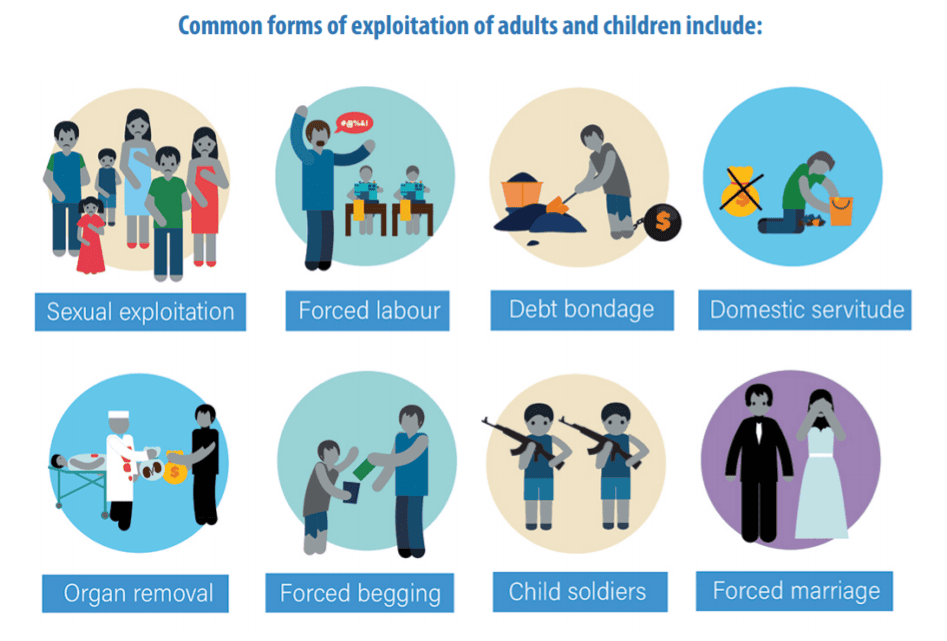
They began to recruit victims online and within their own areas rather than transporting them across state and county lines. Traffickers took advantage of the global crisis due to the pandemic and capitalized on the opportunities that arose because of people losing their jobs. Even the temporary closure of places where trafficking typically occurs — including bars, clubs, and massage parlors — did not stop them. All they did was move the sexual exploitation of adults and children to private homes and apartments.

We also stated in our piece from last week that there were three groups that were extra vulnerable to being recruited and exploited by human traffickers due to the impact of the pandemic: women, children, and migrants. In today’s piece, we look at what the UNODC study found on each of these in detail, giving insight into the overall landscape of human trafficking when it comes to these three segments.

Graphic Source: UNODC study on the effect of the pandemic on human trafficking

Women — Often The Most Affected Group During Crises

Before we go into what the report says, it’s important to note that even before the pandemic, most reported cases of trafficking globally involved women and girls. That said, the Covid-19 pandemic and its impact, combined with several other factors like migrant status, ethnicity, disability and overall socioeconomic status, have the potential to really render women particularly vulnerable during emergencies.

In December 2020, UN Women said in a blog that the pandemic had amplified existing gender inequalities across and within societies. Women earn less, save less, hold less secure jobs, and are more likely to work in the informal sector with fewer social protections, it continued. The blog went on to estimate that by 2021, around 435 million women and girls will be living in extreme poverty on less than $1.90 a day — including 47 million pushed into poverty as a result of Covid-19.

Overall, women’s employment was said to be 19% more at risk than men’s, and while the pandemic was expected to impact overall global poverty, women of reproductive age were expected to be disproportionately affected. This difference in employment loss is due to occupational segregation by gender, which causes women to be working predominantly in those sectors that have been hit hardest, such as the garment industry.

The International Labor Organization (ILO) said in a report published at the start of this year that there were 114 million jobs lost in 2020 in comparison with 2019, and those losses were higher for women than men. Around 21% of stakeholder survey respondents reported that women had been particularly affected by the pandemic, the UNODC study found. Women and girls were mostly recruited for sexual exploitation, particularly in private apartments. It is not known what percentage of them were trafficked, but interview and survey respondents suggested that many were coerced and have been unable to leave the place of exploitation, or be rescued, due to ongoing pandemic lockdowns.

With the closure of schools during the pandemic across various countries that implemented lockdowns, the risk of girls dropping out of the education system permanently also increased, as did the likelihood that many would be forced to marry and bear children early. Globally, 70% of the workforce that was at the frontline of the pandemic was made up of women who were nurses, midwives, cleaners, and laundry workers. This meant that the health of women was also more at risk during the pandemic.

The lockdowns also had another unintentional impact on women by exposing them to increased risk of gender-based violence, including intimate partner violence. The two crimes are closely intertwined, the report says, as some of the factors of vulnerability of victims are similar and they involve comparable control techniques and show analogous barriers to reporting. It also makes women more vulnerable, overall, to falling prey to human trafficking schemes. The number of women reporting violence to dedicated hotlines increased by up to 770% in some cases, a recent UNODC study on the impact of Covid-19 on the criminal justice system’s responses to gender-based violence against women found.

Graphic Source: UNODC study on the effect of the pandemic on human trafficking

Exponential Growth In Demand For CSEM

Stakeholder survey respondents reported that children are particularly affected by the pandemic: 20% of survey respondents in the UNODC study reported that girls are particularly impacted and an additional 14% reported that boys are particularly affected. As we mentioned earlier, with schools being shut due to the pandemic in several countries, learning moved online for children whose parents had the financial means to purchase laptops or tablets and use it at homes that had internet connections. But for others who are less fortunate, it meant a life deprived of education, and some of these kids even had to search for employment to support their families. This was especially the case in families where one or both parents had lost their jobs during the pandemic.

Covid-19’s unintentional effects on child safety have been far-reaching, the report says. Children have been trafficked for everything from sexual exploitation, labor, and forced marriage, to forced begging and criminality. Girls have been increasingly targeted online for sexual exploitation and forced marriages, while boys were targeted for criminal activities and forced begging.

In an extremely worrisome turn of events, with more adults being at home during the pandemic, there is evidence that demand for child sexual exploitation materials (CSEM) increased exponentially in some parts of the world. This demand happens through open networks, the dark web, and peer-to-peer networks.

For instance, the report says in the United Kingdom, there were nearly 9 million attempts in April 2020 to access child sexual abuse websites that had been previously blocked by the Internet Watch Foundation. Demand for abuse imagery also rapidly increased in Australia, where police reported that downloading child sex abuse images increased by 86% in the three weeks after the March 21 lockdown. In the Philippines, officials reported that online CSEM has significantly increased from approximately 59,000 reports in February to more than 101,000 in March, the month that the Covid-19 lockdown began there, too.

In the United Kingdom, thousands of children are being used to carry drugs from rural areas of England into urban areas in the so called “county lines” drug trade, a practice that has further increased with the onset of the pandemic. It is estimated that in the next 10 years, up to 10 million more girls will be vulnerable to becoming child brides as a consequence of the Covid-19 pandemic, according to a March 2020 report by UNICEF.

Migrants

Interview and survey respondents emphasized the negative effects of the pandemic on migrants, the UNODC study said. Many of those in destination countries have been unable to return home and have ended up in an irregular status after being unable to renew visas and residence permits. Some have been forced to stay in inadequate accommodation where they cannot be socially distant from other migrant workers. Many have faced challenges in accessing healthcare in destination countries, with national health systems overwhelmed by the need to provide care for Covid-19 patients. Quarantine measures for migrants have potentially placed them at heightened risk of trafficking in persons, the report added.

Study participants further identified the impact of the pandemic on the family members of migrants in the country of origin. After losing regular remittances, many families became destitute and this, for example, led to more children being forced to find local employment and thus becoming vulnerable to trafficking, the study found.

It highlighted, in particular, the plight of domestic workers who have been confined to households during pandemic-related lockdowns with abusive employers. It’s unclear how many domestic workers have been trafficked, but survey respondents said many female domestic workers have been subjected to physical and sexual abuse by employers, been denied payment, been confined to their home, or been forced to work longer hours and take on additional duties. Escape or rescue has been extremely difficult for exploited domestic workers, the study says, particularly those in an irregular situation in the destination country who fear detention and deportation.

In South Africa, a study conducted during the pandemic found that domestic workers experienced increased gender-based violence and harassment in the place of work, particularly by the heads of households who hired them. Employers exposed themselves, displayed pornography, demanded sexual favors, and sexually assaulted and raped domestic workers at higher rates. Domestic workers have reported being fired when they refused demands for sex by their male employers, and were left with nowhere to go in the midst of the pandemic. A similar study in the Middle East and the Americas, involving surveys of live-in domestic workers, found that psychological, physical, and sexual violence increased during the pandemic.

As the UNODC Executive Director, Ghada Waly put it: “The pandemic has increased vulnerabilities to trafficking in persons while making trafficking even harder to detect and leaving victims struggling to obtain help and access to justice.”

Graphic Source: UNODC study on the effect of the pandemic on human trafficking

Last Year, Federal Authorities Recovered $3.1 Billion Lost To Healthcare Fraud And Abuse

By a Biometrica staffer

Earlier this month, officials released the 2020 edition of the annual audit of the Health Care Fraud and Abuse Control Program (HCFAC) that is jointly run by the Departments of Health and Human Services (HHS) and Justice (DOJ). According to the report, a total of $3.1 billion in false and fraudulent claims was recovered and returned to the federal government or individual persons in the 2020 fiscal year.

Of that total, around $1.8 billion was from judgments and settlements last year, while the rest was the result of investigations from previous years. In terms of where the money then went — $2.1 billion went to the Medicare Trust Fund, and $128.2 million in Medicaid funds was directed to the Treasury Department. 

The HCFAC was established under the the Health Insurance Portability and Accountability Act of 1996 (HIPAA) and is administered by the HHS’ Office of the Inspector General (HHS-OIG). It aims to connect law enforcement at the federal, state, and local levels to tackle healthcare fraud and abuse.

Additionally, the Federal Bureau of Investigation (FBI) took down over 100 criminal syndicates involved in healthcare fraud, and interrupted the criminal activity of more than 400 operations.

The DOJ convicted 440 people of healthcare-related crimes. Criminal charges were filed in 412 cases, against a total of 679 defendants. The DOJ opened around just under 1,100 new civil healthcare fraud investigations, with a further 1,498 incidents still pending action by the end of the financial year.

Almost 600 criminal actions were undertaken as a result of investigations conducted by the HHS-OIG last year, mainly in fraud related to Medicare and Medicaid. Further, these investigations also resulted in nearly 800 actions taken against civilians for assorted crimes such as filing false claims. In addition, 2,148 people and entities were disqualified from participating in Medicare, Medicaid, and other federal healthcare programs, for multiple reasons, including being convicted for crimes related to Medicare and Medicaid fraud, abusing or neglecting patients, and having a state license revoked.

In 2020, the departments faced the additional challenge of fraud related specifically to Covid-19 and criminal elements seeking to take advantage of people’s fear and uncertainty, as well as the overburdened insurance and healthcare systems. Under the COVID-19 Anti-Fraud Initiative, the FBI was able to track and identify medical entities over billing customers, engaging in price gouging, practicing fraudulent billing, etc.

In addition, many criminals engaged in counterfeiting and the black market trade of medical equipment, personal protective equipment, masks, etc.

The report says that due to the sequestration of mandatory funding last year, all departments engaged in fighting medical and healthcare fraud had fewer resources at their disposal to tackle the rise noted in such types of predatory activities.

Momentum Building On Proposed $4.1 Trillion Infrastructure Spending Plans Ahead Of Congress’ August Recess

By a Biometrica staffer

Widely considered to be one of the least polarizing issues in politics, infrastructure has become the key priority of the Biden-Harris Administration’s agenda. Currently, there are three bills being discussed in the U.S. Congress — two in the Senate and one in the House — that tackle this key issue. Though none of them is close to being passed, experts believe that any final infrastructure package will be an amalgamation of all three.

The first Senate bill, informally called the bipartisan infrastructure deal, was proposed around three weeks ago. The bill for it comes in at roughly $1.2 trillion over eight years. The second Senate proposal was announced late on Tuesday, July 13, when top leaders in the Senate Democratic caucus reached an agreement on a $3.5 trillion, ten-year broad-based outline. This version includes many of President Joe Biden’s priorities that were left out of the first bill due to a lack of bipartisan support. The House version was approved, largely along party lines, early this month, and has a total spend of $715 billion over five years.

Senate Majority Leader Chuck Schumer said he plans to bring the bipartisan bill to the floor as early as next week, expecting to call for a motion to proceed by Wednesday, July 21. Members from both parties involved in its drafting are working to resolve differences, including how to pay for it, and nail down an acceptable version. Wednesday will also be the deadline for all 50 Democrats in the Senate to commit to moving forward with the second bill.

Due to the Senate’s filibuster rule, to pass, the former will require the support of all 50 Democrats in the Senate, plus at least another ten Republicans. Democrats and President Joe Biden are looking to move the second Senate bill forward through a process called “budget reconciliation,” which would only require 50 votes. In the House, the Democrats in effect have a four-vote margin on any bill that is rejected wholesale by all Republicans.

Both chambers, as well as President Biden are under pressure to gain some ground on the topic of infrastructure ahead of Congress’ August recess.

Let’s take a look at what each bill contains.

The Bipartisan Senate Bill

The total $1.2 trillion spending in this bill will be split pretty evenly between funding the continuation of existing federal schemes and investing in new infrastructure. Nearly $600 billion will be earmarked for just physical infrastructure, like roads, bridges, etc. The total $312 billion budgeted for transportation includes:

  • Roads, bridges, major projects: $109 billion
  • Safety: $11 billion
  • Public transit: $49 billion
  • Passenger and freight rail: $66 billion
  • Electric vehicles: $7.5 billion
  • Electric buses/transit: $7.5 billion
  • Airports: $25 billion
  • Ports and waterways: $16 billion

About $266 billion will be set aside for “other infrastructure,” including $55 billion on water and $65 billion for improving broadband access.

A detailed breakdown of the budget can be found here, as can information on how the Biden-Harris administration intends to pay for it.

The Senate Budget Reconciliation BIll

This package is being touted by Democrats as a landmark, comprehensive package directed at improving the lives of average Americans. Not much is known about the bill as of yet, since the details will be decided on once the resolution is passed, which might happen next week. The measures in the bill will largely be paid off, it is expected, by increasing taxes on the ultra wealthy and the largest corporations. 

Its general contents are thought to include:

  • Targeting spending on helping the elderly and the disabled through an expansion of Medicare that would cover dental, vision, and hearing.
  • A temporary extension on subsidies for those buying health insurance through the Affordable Care Act, a provision that was included in an earlier pandemic-focused bill.
  • A provision that would look at boosting access for all parents to pre-kindergarten facilities.
  • Two free years of community college education for everyone.
  • An extension of some pandemic-era tax credits, especially the one that provides $300 per child for poor and middle-income families.
  • National paid family leave and subsidized child care in general 
  • Extensive policies to address climate change, which President Biden considers a key aim of his agenda.
  • Measures disallowing tax increases for small businesses and individuals who earn less than $400,000 a year.
  • Revisions of the tax codes governing international businesses, energy companies, and renewable energy sources.
  • Modifications in the capital gains tax and the individual tax for wealthy Americans

The House Bill

The House bill represents a 50% increase over current spending levels, and focuses on transportation and drinking water. Its measures include:

  • Just over $340 billion allocated to building and improving new and existing roads, bridges, etc.
  • $6.2 billion focused on better preparing physical infrastructure to withstand increasingly common climate events, like hurricanes, tornados, and wildfires.
  • A 140% increase in federal spending on transit, with a total amount of $109 billion.
  • $168 billion for wastewater and drinking water policies, including a plan to wipe clean the water bills that Americans could not afford to pay during the pandemic.
  • Tripling the kitty for Amtrak to $32 billion and making some progress on the development of a high-speed rail system.
  • $4 billion for building charging stations for electric vehicles.
  • $8.3 billion towards reducing carbon emissions.

What Next?

The road ahead is far from clear. The House version will likely serve as a base for the eventual package decided upon in the Senate. In addition, the budget reconciliation process — overseen by the Senate Parliamentarian — is governed by strict rules on what does and does not qualify for inclusion in such a measure. In order for it to pass, all 50 Democrats would have to agree to it, as it is not expected that any Republicans will vote in favor of it. On the other hand, the bipartisan bill is also not done and dusted, with lawmakers still struggling to finalize its provisions.

If some version of all three bills emerges victorious, it would probably amount to a total of $4.1 trillion investment in infrastructure, in addition to the trillions of dollars already spent by President Biden on post-pandemic recovery and relief efforts.

The New York Times says the proposed legislation has the potential to be “transformative,” and would direct money to “poor and middle-class families in amounts not seen since the New Deal.”

Contractor Fraud: ‘If You Didn’t Request It, Reject It,’ Says NICB

By a Biometrica staffer

After someone has been evacuated from their home or been impacted in any other way by a natural disaster, the last thing they’d want is to fall victim to something else. Yet that’s what happens to many Americans after a disaster, thanks to disreputable and fake contractors. Often after a disaster, contractors go door-to-door in damaged neighborhoods, offering their cleanup or repair services. Although a lot of these contractors are just honest, reputable people looking for work, there are also those who are not.

As David Glawe, president and CEO of the National Insurance Crime Bureau (NICB), put it in a recent statement: “As insurance claims increase in the aftermath of a catastrophic event, so, too, does the opportunity for fraud. Sadly, many fraudsters prey on disaster victims at a time when they are emotionally devastated and most susceptible to scam artists who present themselves as concerned contractors.” The NICB, the not-for-profit organization that works to combat and prevent insurance crime, just launched its inaugural “Contractor Fraud Awareness Week” on Monday, July 12.

With some parts of the country recently being inundated by flood waters even as wildfires force people out of their homes in other parts, we thought it only apt to discuss scams that follow in the wake of natural disasters. In today’s piece, we give you an overview of contractor fraud: What it is, what the common signs of being scammed are, and what you can do to protect yourself from it.

What is contractor fraud? Contractor fraud happens when an individual contractor or a company offers services that knowingly mislead the other party. It could include performing unsatisfactory repairs or charging more than a job is worth. It usually ends up becoming a costly affair for a homeowner, with racked up bills, unnecessary additional repairs, and insurance complications.

Image Source: NICB Contractor Fraud Week

Common Signs Of Contractor Fraud

  • Your contractor reaches out to you unsolicited, and claims to be approved by the Federal Emergency Management Agency (FEMA) or another government agency.
  • They claim that they require you to pay upfront to do the job, or in order to get the job done faster. Sometimes, even genuine and reputable contractors may ask you to pay upfront, but do not put down a substantial part of the total upfront.
  • They claim they work with several insurance companies and can help by giving you advice on how to interpret insurance policies.
  • If your contractor seems hesitant to sign a lien waiver, it could be a sign for caution.
  • If it sounds too good to be true, it probably is. For instance, if your contractor says you can get full credit for your deductible, again exercise caution as it could be illegal.
  • Always be extra attentive during the inspection when, sometimes, disreputable contractors could go “examine” spaces that are tough to access that may not require any repairs, but could be used to bump up your cost later on.
  • Think twice before you hire an out-of-state contractor as they can prove to be hard to chase, even if they are legitimate.
  • Always sign a contract listing out everything before you make any payments to your contractor. If your contractor seems hesitant to do this, it could be a sign that they are probably not as reputable as they claim to be.
  • If you choose to work with an unlicensed contractor, you can be held responsible for any problems that arise. It could be doubly worse if the contractor in question is trying to scam you, of course.
Image Source: NICB Contractor Fraud Week

Tips To Protect Yourself

  • Try and maintain good relations with your insurer. They will be your first line of defense against fraud. The first thing you need to do after you come back home post-disaster is call your insurance company. Ask them for details like how long you have to fill out your claims, how much your deductible is, whether your policy covers that kind of loss, etc. You also should take pictures of everything that has been damaged, small or big, for your own records, even though an adjuster will arrive to note everything down anyway.
  • Ideally, if you have had enough fair warning that you may need to evacuate, try to make a list of contractors that you feel will be good to hire if the need arises. Look up reviews on these contractors, check on their licenses, and seek out their Better Business Bureau information. If possible, shop around for a contractor by getting recommendations from friends and neighbors.
  • It’s better to try and do this background check beforehand, whenever possible. This way, you’ll minimizing the chance of making decisions in a hurry when you are in a vulnerable state if your house is damaged by a disaster.
  • As we mentioned before, always be wary of unsolicited approaches by contractors. And never pay the full amount upfront. Always make sure you get everything in writing and get your contractor also to sign off on it. This should include prices for labor and materials, clean-up procedures, and estimated start and finish dates.

The Cannabis Administration and Opportunity Act: What You Need To Know About The Newly Released Draft Bill

By a Biometrica staffer

On Wednesday, July 14, Senate Majority Leader Chuck Schumer, Sen. Cory Booker, and Sen. Ron Wyden unveiled a draft of their bill to legalize marijuana at the federal level. The proposal seeks to remove the drug from the Controlled Substances Act and impose a federal tax on marijuana products.

Titled the “Cannabis Administration and Opportunity Act,” the draft of this long-anticipated Senate bill was released by the sponsors to seek public input to improve it before it is formally introduced on the floor. At the outset, it’s important to remember that while this is a key step towards decriminalizing marijuana at the federal level, this piece of news does not mean anything will change immediately, or even in the near term. The public will be able to comment on the bill until Sept. 1.

Source: Sen. Ron Wyden’s Twitter account

Schumer, Wyden, and Booker had previously spoken about releasing a draft legislation of this kind in February. In December 2020, congressional leaders voted overwhelmingly to decriminalize cannabis at the federal level. But the bill failed to pass the Senate at that time. In May this year, congressional leaders reintroduced a bill to strike marijuana from the list of controlled substances and invest in communities disproportionately affected by the “drug war,” NBC News reported.

The Marijuana Opportunity Reinvestment and Expungement Act of 2021, also known as the MORE Act, was introduced by House Judiciary Committee Chairman Jerry Nadler. Of the vote count in December, 222 Democrats were in favor of passing the MORE Act and six were against it. Five Republicans voted in favor of it and 158 voted against passing it.

According to the new draft Senate bill, which runs 163 pages, the aim is: “to decriminalize and deschedule cannabis, to provide for reinvestment in certain persons adversely impacted by the War on Drugs, to provide for expungement of certain cannabis offenses, and for other purposes.” It goes on to say that the Congress finds that communities that have been most harmed by cannabis prohibition are benefitting the least from the legal marijuana marketplace. A legacy of racial and ethnic injustices, compounded by the disproportionate collateral consequences of cannabis prohibition enforcement, now limits participation in the industry, it adds.

Legal cannabis businesses support over 321,000 jobs in the country, according to the draft bill. But the continued enforcement of cannabis prohibition laws results in over 600,000 arrests annually, and disproportionately impacts people of color who are four times more likely to be arrested for it than their white counterparts, despite equal rates of use across demographics, the bill continues.

As with the MORE Act, this new bill also is expected to face a contentious battle ahead. It is generally opposed by Republicans and by some moderate Democrats, and has not received an endorsement from President Joe Biden, CNBC says in its report. It will require 60 votes, including at least 10 GOP votes, to pass through the Senate.

Source: Sen. Chuck Schumer’s Twitter account

Here are a few important aspects of the new draft Senate bill:

  • To summarize, it would federally deschedule cannabis, expunge prior convictions of nonviolent cannabis offenders, allow people serving time in federal prison for nonviolent marijuana crimes to petition for resentencing, maintain the authority of states to set their own marijuana policies, and remove collateral consequences like immigration-related penalties for people who’ve been criminalized over it.
  • A gradual federal tax rate would be imposed on marijuana sales, starting at 10% for the first year after the bill’s enactment and the first subsequent calendar year. Then it would be increased annually, rising from 15% to 20% to 25%. Meanwhile, small cannabis producers with less than $20 million in sales annually would be eligible for a 50% reduction in their tax rate, via a tax credit.
  • The bill also lays out a structure for how marijuana businesses will be approved and regulated. Companies selling taxable marijuana products, or cannabis at the wholesale level, for instance, would require Treasury Department approval. Marijuana producers would further need to be registered with FDA.
  • The bill also calls for the creation of an Opportunity Trust Fund from new tax revenue, like the MORE Act did, in order to invest in programs for communities most affected by the “failed War on Drugs.”
  • Under the bill, the regulation of marijuana use is slated to be transferred away from the Drug Enforcement Administration to the Food and Drug Administration and other agencies.
  • While states are still allowed to set their own cannabis laws, businesses and individuals in those that have legalized it will be allowed to sell and consume marijuana without the risk of federal punishment, Axios says.
  • States that have not legalized it cannot stop businesses from transporting cannabis products across their borders to other states where it is permitted, Marijuana Movement points out in its detailed article on the draft bill.
  • The proposed legislation requires federal districts to expunge nonviolent marijuana-related arrests and convictions within one year. It requires the attorney general to remove marijuana from the Controlled Substances Act within 60 days of it being enacted.
  • It would authorize physicians with the U.S. Department of Veterans Affairs to issue recommendations for medical cannabis to veterans. 

A Gallup survey last November found that Americans are more likely now than at any point in the past five decades to support the legalization of marijuana. What happens to the Cannabis Administration and Opportunity Act, though, and what form it finally takes remains to be seen.

Graphic source: Screengrab from DISA Global Solutions website. Read more about the laws in each state using DISA’s Map of Marijuana Legality by State here.

Ecocide: The Movement To Criminalize Intentional Mass Environmental Destruction

By Aara Ramesh

With the world slowly beginning its journey back to some semblance of normal, after a trying 18 months, climate change is jostling its way back into the limelight. Debates have recently been spurred by the two-front war America was briefly fighting — the plague of record-high temperatures, wildfires, and droughts sweeping through the western states of the continental U.S., and the deluge of rain on the Atlantic seaboard brought about by Tropical Storm Elsa.

Both these disasters have been viewed by most experts as the result of global warming and climate change. In fact, some scientists have said that the late-June heatwave experienced in the Pacific Northwest, which left hundreds dead, would have been “virtually impossible without the influence of human-caused climate change.”

Amidst this, a movement to criminalize some truly terrible crimes against nature is gaining momentum worldwide as, last month, a global panel of 12 lawyers formally put forth an official definition of “ecocide,” the first step in a larger effort to make it an international crime that is prosecutable.

But what is ecocide and why is it important to officially make it an international crime? In today’s piece, we try to break down this often divisive issue.

What Is Ecocide?

Put simply, ecocide is understood to be any event of mass environmental destruction, with the implication that such acts are detrimental to the welfare of humans as a whole.

The formal definition suggested by the Independent Expert Panel for the Legal Definition of Ecocide took six months to craft, and involved consultations with various experts and stakeholders.

It explains ecocide as “unlawful or wanton acts committed with knowledge that there is a substantial likelihood of severe and either widespread or long-term damage to the environment being caused by those acts.”

Source: Stop Ecocide Foundation

The term was first used by Arthur Galston, a biologist and bioethicist, in 1970, at the Conference on War and National Responsibility. At the time, he used it to refer to the havoc wreaked by Agent Orange, the toxic herbicide used by the U.S. in the forests of Vietnam. The idea of making ecocide a crime was originally suggested just two years later at a UN conference on the Human Environment, by Olof Palme, the then-Prime Minister of Sweden.

There were some brief debates about including it in the International Criminal Court (ICC), but that idea was summarily dismissed. Since 2017, the Stop Ecocide Foundation, based in the Netherlands, has led the charge to criminalize serious environmental damage under the jurisdiction of the ICC. It was this organization that convened the panel of lawyers to propose a definition.

In addition to the Agent Orange situation, the other top ecocide cases cited by experts include the 1986 explosion in Ukraine of the Chernobyl nuclear plant, which devastated the region and left it radioactive for decades; and the Deepwater Horizon oil spill in the Gulf of Mexico in 2010, which killed 11 people in the 87-day release of around 170 million gallons of crude oil.

Source: Inside Climate News

The Fifth Crime

To understand why advocates are hoping to work through the ICC, it is imperative to look first at what the that body is and what it does. Established in 2002 through the Rome Statute (its founding treaty) and comprising, today, 123 countries, the ICC was envisioned to be a universal court that could prosecute and punish the worst international crimes, particularly those committed during wartime. At present, the court only looks at four types of crime: war crimes, genocide, crimes against humanity, and crimes of aggression.

Environmental activists hope to make ecocide the fifth crime. But why?

Proponents say that something like environmental destruction cannot be contained to one country, so it does not make sense to treat the issue as one particular to individual nations. Environmental harm affects the climate and weather patterns all across the world, regardless of where it originated from.

In arguing why the acts defined as ecocide can’t just be prosecuted under the “crimes against humanity” category, Tanya Sanerib, the international legal director at the Center for Biological Diversity, said “Crimes against nature are also crimes against people. It’s past time to […] realize that biodiversity loss and climate change are equally vast threats to our collective life — problems that need to be solved together.”

Listing it as the fifth crime also lowers the burden of proof of harm than crimes against humanity. It also accounts for “acts of omission,” that is, not just actively committing a crime, but failing to prevent the crime (for instance, greenhouse gas emissions) from happening in the first place.

Crucially, however, the U.S. is not a signatory to the Rome Statute, meaning it does not consider valid the authority of the ICC. Neither do China nor India. All three are within the top five carbon dioxide emitters today. Thus, opponents of the idea of making ecocide an international crime say that any attempt to do so would ultimately be toothless.

Also of great concern to nations such as India and China is the possibility that such a move could seriously hamper their economic growth and development. They say, in fact, that doing so could benefit nature at the expense of human needs.

As of now, the support for criminalizing ecocide seems to be gaining traction. Its supporters include Pope Francis, wunderkind and youth activist Greta Thunberg, and French President Emmanuel Macron. In addition, countries across the European Union and Scandinavia, as well as Canada, have expressed a willingness to, at the very least, enact ecocide laws in their individual nations.

The movement also, however, has its detractors.

When The Amazon Rainforest Sneezes…

At the beating heart of this issue is the Amazon rainforest, the majority of which falls within the borders of Brazil. For the last several years, alarm and panic has been growing amidst the international community over what is perceived as the lethal and possibly irreversible destruction of the Amazon.

The Amazon ecosystem is among the most important on Earth when it comes to fighting climate change. Though it is not, as is commonly believed, the “lungs” of the planet, it does significantly impact global temperature, carbon dioxide processing, and rainfall patterns.

In July 2019, Brazil’s National Institute for Space Research (INPE) called out the highest rate of deforestation in the region that had been seen up to that point since 2008. The deforestation rate in May this year was up 67% compared to May 2020. Experts say that this action — mainly done to free up land for farming, ranching, and producing timber — is combining dangerously with drought conditions, making some parts of the forest “a tinderbox.” The fires that result release huge amounts of CO2 into the air, exacerbating global warming in the long run. 

Of particular concern to observers is the supposed rise in deforestation activities and wildfire eruptions in the Amazon that have been noted since Jair Bolsonaro took over Brazil’s presidency in 2019. Critics say that he has actively worked to encourage deforestation in the Amazon in pursuit of more rapid economic growth. Under this guise, he reduced budgets and staff at federal environmental agencies, to obstruct efforts to thwart illegal logging and ranching in the area.

For these measures, Bolsonaro has already been referred to the ICC for accusations of “crimes against humanity,” by Indigenous leaders and human rights groups, both for ecocide and for allegedly infringing upon the rights of Indigenous Peoples in the Amazon. The court filing also levels allegations of murder, displacing Indigenous Peoples, and persecuting them.

Brazil is a signatory to the ICC, which means that if ecocide were to officially become the fifth crime, Bolsonaro could potentially face serious consequences at the Hague.

For his part, Bolsonaro says that any international efforts to regulate the activities in the Amazon would impinge on Brazil’s sovereignty and that any concern for the environment and planet are only a façade. This is a belief also widespread among the populace in his country, where it is believed that the U.S., UN, and other international powers are conspiring to “take over” the Amazon — a cherished, valuable, and vast territory.

The Path Ahead

The process to officially get ecocide into the Rome Statute is far from easy or simple. It could, in fact, take decades. First, it needs to be proposed to ICC member countries at the annual meeting, where it will need to be approved by a majority. Then, it moves into the amendments and debate stage, as countries work on fine-tuning the law.

At the end of the tunnel is the ratification process and the efforts each country will have to make to create the necessary infrastructure for implementing it. By then, it could theoretically be too late to act, in any meaningful way, against climate change.

But lawyers and activists are by no means confident that their movement will achieve its ultimate goal.

They are, however, banking on the idea that the mere suggestion of criminalizing ecocide may “shift the behavior of some businesses, governments, insurers and financers.” Monitoring how countries are responding to the suggestion also helps identify which governments are truly serious and committed to taking action against climate change.

Putting ecocide on par with crimes like genocide that are traditionally understood to be among the most heinous could also underscore the “gravitas” of the climate crisis, experts say, which could serve as an impetus for the action so crucially needed at this time.

Either way, the race to combat climate change is on. As President Biden says, “We have to act and act fast.”

Armchair Sleuthing: Bringing An American Obsession Online

By Deepti Govind

America’s obsession with true crime isn’t new by any means. It’s no wonder, then, that internet sleuthing is real, has many loyal, passionate practitioners, and is a somewhat well-established past-time by now. But before we talk about how armchair sleuthing created amateur detectives who use the internet to try and solve real-world crimes, we give you a quick overview of the history of America’s obsession over true crime. Really, this enduring obsession continues to set the tone for today’s internet detectives, too. Well, we say America’s obsession, but it’s one that actually has takers across much of the globe.

How did crime became appealing — darkly so perhaps — to common people? The answer to this pervasive phenomenon maybe lies in the discovery of crime writing as a genre. Although some say, in England, it can be traced back to the days when hundreds of crime pamphlets were circulated among the populace. They usually detailed horrific murders. Apart from the pamphlets, there were ballads recounting the deeds of the country’s most notorious criminals, and accounts of trials and judicial proceedings that were also consumed by a relatively newly-literate section of British population.

But our story begins with the very first detective novel, thought to be “The Notting Hill Mystery,” fittingly written under the pseudonym Charles Felix, whose real identity remained hidden for 149 years! The story originally ran as a series in a weekly magazine and was later on published in the form of a book in 1865. During that age, nobody knew what a detective novel was and one of the reviewers back then said it was best understood “like a game of solitaire or like a puzzle that you’ve been handed to figure out.”

Crime fiction went on to become an established genre later on in the 19th century, and was mostly dominated by American and British authors. One aspect of the genre that has made it successful over the years is that readers get to “figure out” the crime along with fictitious characters as they progress through a book. So, it was only a matter of time before creators realized that they need not restrict themselves to works of fiction. After all, truth was stranger, more twisted, and chilling than fantasy.

Enter books like “In Cold Blood,” which is considered the first true-crime novel. Written by Truman Capote, it’s based on the 1959 murder of the Clutter family in Holcomb, Kansas. We’d leave it at that, but maybe those of you who don’t know about the case are curious. Here’s our one line summary: Four members of the Clutter family were murdered in their home in what was a case of a robbery that took a much more tragic course. With technology, the range of platforms used to cater to people’s love for true crime expanded from books to TV shows, and in more recent years to docuseries and podcasts. It’s no wonder, then, that internet forums were not far behind.

The Rise Of Internet Sleuthing

“There’s an internet forum for everything out there,” an amateur detective says in a Netflix documentary about using the internet to find a cat killer. In the documentary, the detective talks about how she used an internet forum for vacuum cleaners to help get her and a fellow internet detective closer to cracking the case. When there’s a forum for everything online, how could true crime not find its own space?

But true crime made its way online much, much before internet forums became a fad. Way back in 1995, barely ten years after Tim Berners-Lee invented the World Wide Web (WWW), users around the world subscribing to Prodigy’s dial-up service were asked to help solve a “real murder investigation,” which they did arduously, only to discover that the entire thing was fictitious — the brainchild of one Tom Arriola from Oxford. Needless to say, many weren’t happy that they had to spend $16 per hour browsing only to discover it was not real.

That was one of the earliest examples of true crime making its way online, though, and of it proving irresistible to many who had just an internet connection and no expertise or experience in sleuthing to want to crack a “real” case. When Prodigy featured the site Arriola created — which still exists — the number of hits caused the server to crash, with visitors numbering more than 100,000. “Calls flooded offices of the police department and the newspaper. A Dallas reporter had already booked a flight to Oxford to research a Texas student’s brutal murder/mutilation before he found out the whole scenario was fictitious,” an archived news report from 1998 says.

Cut to today, and not only does Arriola’s website still exist, there are countless forums and websites catering to internet detectives. Take Reddit, for example. Its Reddit Bureau of Investigation (RBI) subreddit is very much active even today, logo and all, despite the fact that it played a role in falsely identifying a missing 22-year-old as one of the Boston bombing perpetrators. The subreddit, which was created on Jan. 3, 2012, currently has 479,000-odd members. To be fair, Reddit apologized for that. But it did bring to the table a big question surrounding internet sleuthing: How do you prevent witch-hunts, and what do you do when it all goes horribly wrong? But that’s a story for another day.

Then there’s Websleuths.com, an internet community website that was launched in 1999. It was purchased by Tricia Griffith in 2004. Griffith gave up a 25-year career in radio to work full-time on the website in 2008. Her web forum famously ended up helping solve the case of a casual laborer who was murdered after winning a lottery in Florida in 2006. The lottery winner, Abraham Shakespeare, went missing in 2009 and people on the web forum suspected his business partner Dorice “Dee Dee” Moore, who ended up with Shakespeare’s assets, as being responsible. Moore herself signed up to websleuths.com in a bid to clear her name. Griffith passed the information onto police, who then managed to solve the case and arrest Moore.

There are many, perhaps countless, other forums like this, including The Doe Network, a volunteer organization devoted to assisting investigating agencies in bringing closure to national and international cold cases concerning missing and unidentified persons. The Federal Bureau of Investigation itself has sought the public’s help in solving cases many-a-time, even for more serious crimes like murder. Then there’s the Department of Justice’s NamUS (the National Missing and Unidentified Persons System), which was launched in 2008, as a resource center for missing, unidentified, and unclaimed person cases. The FBI and other law enforcement agencies also routinely seek public help in identifying suspects, most recently in the Capitol Hill riots case.

But a law enforcement agency seeking public help in identifying culprits of whom they typically have videos or photos to circulate, and common people dissecting all aspects of a case on an online forum, are not exactly the same. The question of ethics also comes into play when cases that are “investigated” on online forums move from fact to the realm of witch-hunts and preconceived notions, or worse, ulterior motives. Those, however, are points that we will explore in another piece in this series on internet sleuthing.