Tech Support : support@safience.io

Blog

Hate Crimes Against Sikhs In The U.S. — An Overview From 9/11 Until Date

By Deepti Govind

We are just about five months away from the 20th anniversary of the deadly 9/11 terrorist attacks on the World Trade Center and the Pentagon. Neither the United States, nor the rest of the world, is likely to forget the date, perhaps ever. But there’s another equally important aspect that must not be forgotten about the 9/11 attacks: The spate of revenge killings, or hate crimes, that followed. This holds particularly true in today’s America also, as hate crimes continue against several communities, and in some cases, are on the rise even.

If we look at a two-decade historic timeline, here’s where the chain likely first began with intensity. After the 9/11 attacks in 2001, a man named Frank Roque is said to have told a waiter at Applebee’s that he was going to go out and “shoot some towel heads.” And that: “We should kill their children, too, because they’ll grow up to be like their parents.”

On Sept. 15 2001, an Indian Sikh immigrant, Balbir Singh Sodhi, was out planting crates of flowers in front of the gas station he managed in Mesa, Arizona. Roque found Sodhi planting flowers when he drove up to the station, and shot him five times in the back. He continued his shooting rampage at another gas station, where his bullet narrowly missed a Lebanese American clerk, before going to his own previous home — which had been sold to an Arab family — and firing several more shots.

Sodhi became the first of dozens of people killed in hate crimes against Sikhs and Muslims after 9/11. When police arrested Roque for killing Sodhi the next day, he yelled, “I am a patriot! I stand for America!,” an article by civil rights activist Valarie Kaur in The World says. He was sentenced to death — a sentence that was later reduced to life in prison. He told the court then that voices told him to “kill the devils.” Kaur, who made a film about Sodhi’s murder, wrote that article in 2016. And in that article, Sodhi’s brother Rana Sodhi told Kaur that it felt like nothing had changed, and that the cycle of violence felt endless.

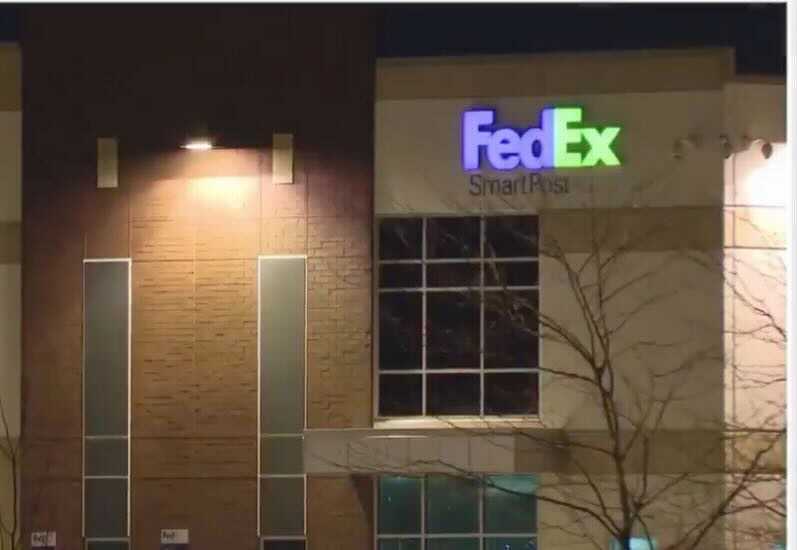
What worries the Sikh community living in the U.S. today, is that not enough seems to have changed in the last two decades since 9/11. On April 16, just last Friday, a mass shooting at a FedEx warehouse at 8951 Mirabel Rd, Indianapolis, left four members of the Sikh community dead. On April 18, officials released names of the eight people who were killed by the 19-year-old gunman in the shooting. The Sikh victims include a mother, a father, and two grandmothers — Amarjit Sekhon, Jaswinder Singh, Amarjeet Kaur Johal and Jasvinder Kaur. All of them, killed suddenly and tragically that night, became yet another senseless American statistic in the spate of mass shootings that have shaken this nation. They’ve also become part of another, less reported tragedy: Of crimes against Sikhs in the United States.

About 90% of workers at the FedEx facility are members of the local Sikh community, police chief Randal Taylor was quoted as saying by the BBC. Gurinder Singh Khalsa, a businessman and leader of the local Sikh community, told Reuters the FedEx center was known for hiring older members of the local Sikh community who did not necessarily speak fluent English. “Given everything our community has experienced in the past–the pattern of violence, bigotry, and backlash we have faced–it is impossible not to feel that same pain and targeting in this moment,” reads a joint statement from eight Indianapolis-area gurdwaras (the term for Sikh houses of worship) published on April 17.

Brandon Scott Hole, the gunman, legally purchased two semiautomatic rifles he used in the attack just a few months after the police seized a shotgun from him, the New York Times reported, citing the chief of the Indianapolis Metropolitan Police Department. In March 2020, the police seized a shotgun from Hole after his mother raised concerns about his mental state, records show. He was briefly employed by FedEx last year, and a release on the company’s website says: “Our team continues to work closely with law enforcement. We can confirm that the attack occurred in the parking lot and screening area of the facility where the suspect was previously employed for two months, from August to October 2020.”

FBI agents who interviewed Hole last April found no criminal violation at the time and determined he possessed no “racially motivated violent extremism ideology,” the Reuters report said citing Paul Keenan, special agent in charge of the FBI’s Indianapolis field office. But the attack has renewed fears among American Sikhs, who have over the years been accosted for wearing turbans and attacked in a house of worship, the New York Times added in its report. “The shock wave went through the entire Sikh community. Why would a 19-year-old do that to these innocent people?,” the New York Times report said, citing Kanwal Prakash Singh, who has watched the Indianapolis-area Sikh population grow from a handful of individuals to thousands since he arrived in the late 1960s.

The Sikh Coalition, a civil rights advocacy group based in New York, called for a full investigation into “the possibility of bias as factor” in the FedEx shooting. “No further information about his possible motive has been released at this time, but we fully expect that authorities should and will conduct a full investigation–including the possibility of bias as a factor,” the group said in a press release on April 16, posted on its website. “While we don’t yet know the motive of the shooter, he targeted a facility known to be heavily populated by Sikh employees, and the attack is traumatic for our community as we continue to face senseless violence,” Satjeet Kaur, Sikh Coalition Executive Director said in the statement.

Aasees Kaur, legal client and community services manager of the Sikh Coalition reads a statement on the groups response after the group met at the Sikh Satsang of Indianapolis in Indianapolis, Saturday, April 17, 2021 to formulate the groups response to the shooting at a FedEx facility in Indianapolis that claimed the lives of four members of the Sikh community. A gunman killed eight people and wounded several others before taking his own life in a late-night attack at a FedEx facility near the Indianapolis airport, police said. (AP Photo/Michael Conroy)

From Temples To Cabs, Sikhs Have Faced Hate Everywhere

Sikhism is the fifth-largest religion in the world, with around 500,000 adherents in the United States, the advocacy group Sikh Coalition says. Many practicing Sikhs are visually distinguishable by their articles of faith, which include the unshorn hair and turban. It is their appearance that has made them a target of racially-motivated crimes. In the aftermath of 9/11, of the many images that probably stayed vividly real in the mind of Americans, was that of Osama Bin Laden — founder of the terror group al-Qaeda. In those images, Bin Laden is shown wearing a turban and sporting a full beard.

“People saw only a turban and a beard,” Rana Sodhi told NPR in 2018. “People yell to us using F-word and asking to ‘Go back to your country.” Sikhs were mistaken to be Muslim because of their turbans and beards in the 9/11, and anti-Muslim sentiment was high in the U.S. following the terror attacks. In September 2013, more than a decade after 9/11, Prabhjot Singh and a friend — also a Sikh man — were walking on 110th Street near Central Park. Singh heard someone yell: “Terrorist, Osama, get him,” and he ran, but not fast enough, according to a CNN report from 2016. A group of boys and young men on bicycles taunted him using racial slurs, which went on to punches and kicks. He lay on the ground, waiting for them to stop, when passers-by intervened. Prabhjot Singh ended up in the hospital with a broken jaw, dislodged teeth, and other gruesome injuries, the report adds.

On a September evening in 2015, a limousine driver, Inderjit Singh Mukker, was picking up food from an Indian grocery store near his home in Darien, Illinois. When he stopped at a traffic light, a male teenager in another car started yelling “Bin Laden, go back to your own country!” at him, and cut off Mukker when traffic started moving, a 2017 article in ProPublica says. The teenager got out of his car and started punching Mukker so hard, he broke his right cheekbone, damaged both his eyes and rendered him unconscious. Mukker is not the only Sikh cab driver who has been attacked because of his religious identity. In 2010, cab driver Harbhajan Singh attacked in West Sacramento by a passenger who shouted racial epithets at him, called him a Muslim and punched him in the face several times, a Reuters factbox of violent anti-Sikh incidents in the U.S. published in 2012 said.

Even in 2020, after the death of George Floyd, when the Black Lives Matter movement was gaining momentum, there were individual incidents of hate crimes against the Sikh community that occurred. A restaurant in the Sante Fe City of New Mexico, owned by a Sikh, was vandalized and broken into. Hate messages were scrawled across the walls of the restaurant, saying things like “White power,” “Trump 2020,” and “go home,” according to a CNBC report. At that point, it was the second incident of hate crimes against Sikhs in less than two months. On April 29, 2020, a 61-year-old Sikh American was brutally attacked by a man identified as Eric Breeman in Lakewood, Colorado. The attacker told Lakhwant Singh to “go back to your country” but no official hate crime charges were brought against him.

Since 2015, the Sikh Coalition has received an average of one legal inquiry per month related to anti-Sikh hate, it says in its 2020 year in review report. It was only in 2015 that the FBI added crimes against Sikhs to the national hate crimes database, the ProPublica article says. According to the FBI’s latest available Hate Crime Statistics report, which is for the year 2019, there were 49 anti-Sikh incidents reported in that year. When the FBI began collecting records of anti-Sikh crime, its data showed that there were six such offenses committed in 2015. But many Sikhs, including Harpreet Singh Saini, said back then that they believed the actual numbers were much higher.

Who is Saini, you may wonder. Saini lost his mother at the massacre at the Sikh temple of Wisconsin in Oak Creek in 2012. In the ProPublica article referred to above, Saini recalls his first day at community college where one of his teachers asked him and his classmates to get better acquainted by sharing stories of their summer vacations. When it was Saini’s turn, his story was this, the article says: “One month earlier, Wade Page, a neo-Nazi skinhead, murdered his mom and five other people. The whole thing happened just a mile-and-a-half down the road, during prayer services at the Sikh Temple of Wisconsin, a blocky beige building topped by five gold-colored minarets.” Six people were killed and three others were wounded by the gunman’s rampage on Aug. 5, 2012. The temple website’s homepage still carries photos of the six victims in remembrance.

The examples of hate are seemingly endless. Add firearm purchases to the mix, and the result appears to be tragedy after tragedy. The U.S. has had over a dozen mass shootings this year, and three just in Indianapolis. When it comes to last week’s FedEx shooting, for instance, the gunman was able to legally buy a firearm just months after he had his shotgun taken away. The two assault-style rifles that the gunman used in the attack were bought in July and September of 2020. Those purchases would have been possible only if a red flag determination had never been made, the New York Times report mentioned at the start of this piece said, citing the Indianapolis Police chief.

Despite all the hate, there are those within the Sikh community who have been striving to spread the message of love. When Saini testified before the Senate Judiciary Committee, he said he wanted to tell the gunman who killed his mother that he “may have been full of hate,” but his mother “was full of love.” In Valarie Kaur’s 2016 article, also referenced higher up in this piece, she goes on to describe a heartbreaking yet touching incident between Rana Sodhi and his brother’s killer, Roque.

Kaur asked Rana Sodhi if he would want to talk to Roque, if he had a chance to, in the spirit of reconciliation. Sodhi agreed and Kaur called Roque over phone. During the conversation, Roque told Sodhi: “One day, when I go to heaven to be judged by God, I will ask to see your brother, and I will hug him, and I will ask him for forgiveness,” according to Kaur’s article. Sodhi replied saying Roque had already been forgiven.


After Spike In Zoom Sessions, And Zoombombings, Company And Authorities Get Down To Business

By Anand Vasu

Last week, San Jose-based videoconferencing platform Zoom made a big announcement, which it labeled, “On Academic Freedom for our Higher Education Users.” The crux of the statement was that in the case of Zoom meetings and webinars hosted by a higher education institution, the company’s Trust and Safety team would only act on reports alleging content-related violations of prescribed Community Standards or Terms of Service that originated from the meeting’s host or the account’s owners or administrators, except in three cases. If Zoom determined that there was a legal or regulatory risk to the company if it did not act; or an abuse report alleged an immediate threat to the physical safety of any person; or the meeting or webinar was unrelated to the institution’s academics or operations.

This release came in the aftermath of criticism Zoom received for canceling a university-organized event last fall in which Leila Khaled, a member of the Popular Front for the Liberation of Palestine (PFLP), was scheduled to speak. Subsequently, Zoom reportedly began conversations with academicians and their legal representatives on how to balance university-blessed free speech and academic freedom with their terms of service. The PFLP has been designated a terrorist organization by the United States, European Union, Japan, Canada and Australia. 

Zoom’s Trust and Safety program has had an interesting, controversial, and somewhat high-profile year with a sharp rise in virtual conferences after global lockdowns because of the coronavirus pandemic, especially with a large number of children being online, and Zoombombers, also called Zoom-raiders, hijacking and disrupting virtual meetings by posting material that is obscene, racist, sexist, homophobic, Islamophobic, or antisemitic. Some of the material is downright violent, and criminal.

In June last year, Motherboard detailed how a 60-person meeting of a German economic thinktank was interrupted by a user called “Christoph H,” who played a video depicting what appeared to be a four-year-old child being raped. The shocked virtual hosts reportedly took a few seconds to kick out the man and resume the conference, when another mystery caller dialed in and shared another rape video on screen. They ended the meeting. 

In April 2020, Zoom stated it had more than 300 million daily meeting participants. A month later, in May 2020, the FBI issued a rather dire release. It stated that over the past few months, FBI agents had received more than 195 reports of incidents throughout the United States and in other countries in which a Zoom participant was able to broadcast a video depicting child sexual abuse material (CSAM). The release stated that “the FBI considers this activity to be a violent crime, as every time child sexual abuse material is viewed, the depicted child is re-victimized. Furthermore, anyone who inadvertently sees child sexual abuse material depicted during a virtual event is potentially a victim as well.”

The abuse isn’t just on Zoom, but with the popularity of the platform soaring, Zoom has had little choice but to take serious note. In October 2020, the Chicago Tribune reported on how an 18-year-old local man, out on bond for a gun case, inadvertently livestreamed himself sexually assaulting a 7-year-old first grader during a remote learning class, reportedly on a Google e-learning platform. The first-grader’s teacher immediately reported the incident to authorities and the man was later arrested.

While the child sexual abuse material and depictions are the most egregious, there have been other issues. In September 2020, for instance, the U.S. Department of Justice announced that a University of Houston student, Ibraheem Ahmed Al Bayati, had been charged with “making threats or conveying false information to destroy by means of fire or explosives and making a threat over interstate commerce.” On Sept. 2, 19-year-old Al Bayati, identifying himself as Abu Qital al Jihadi al Mansur, joined a UH student lecture via Zoom. Shortly thereafter, he allegedly interrupted and said “what does any of this have to do with the fact that UH is about to get bombed in a few days?” According to the criminal complaint, he then uttered an Arabic a phrase that means the “Islamic State will remain,” held up his index finger, and repeated the phrase before exiting the conference call.

The Anti-Defamation League reported that by Feb. 25, 2021, at least 30 instances of Zoombombing had disrupted Black History Month events in the U.S. with violent imagery and racist slurs.  February is traditionally celebrated as Black History Month each year. The attackers went after all sorts of events, from film screenings to poetry competitions and panel discussions. The ADL stated that the events were often coordinated on platforms like 4chan, where “anonymous users openly coordinated and encouraged some of the targeted attacks throughout February, sharing Zoom links for Black History Month events and suggesting strategies for when and how to disrupt scheduled speakers.”

What Exactly Is Zoombombing?

Simply put, it is the process in which unauthorized individuals gain access to a Zoom meeting and then disrupt it. The disruption can come in various forms: Individuals turning on and off their cameras in order to slow things down, shouting slogans, or racial slurs or abuse, or the sharing of offensive or abusive content through screen sharing, with images or video calculated to go after the gathering in question. In some cases, the number of attackers simultaneously joining a Zoom meeting could be so high that it would become impossible for the intended participants to even comprehend what was on their screens.

On Sunday, April 18, the Seattle Times recalled one such occurrence in detail. On February 9, Seattle University senior and Black Student Union President Adilia Watson hosted a movie screening for around a dozen students as part of the Black History Month. Soon after the Zoom session began, hijackers took over the meeting, calling the participants “monkeys” and using other methods to disrupt proceedings. Efforts to remove the attackers were unsuccessful and eventually the meeting was shut down. Watson recalled that “it felt like terrorism.”

“Hijackers” have got into other special interest Zoom sessions, such as Covid-19 response events and Asian interest groups. While Zoombombing is believed to have begun as merely a prank, it is now being used by sophisticated groups that hack into sessions.

While there are protocols in place to minimize Zoombombing risks, such as password protecting meetings and permission settings in place to authorize users to enter, these are by no means foolproof or practical, especially with large gatherings. What has become a larger concern is how to legislate against these attacks. In many cases, the Zoombombings are not thought to be serious enough for victims to report them, in others it is unclear who has jurisdiction to follow up.

On March 9, the Metropolitan King County Council in Washington, one of the largest counties in the United States, by population, passed an ordinance that made it illegal to Zoombomb or record mental health and recovery video teleconferences without the participants’ consent. This ordinance allows victims of Zoombombing to file civil suits against their attackers seeking compensation for mental pain and suffering and legal fees.

It’s worth recalling that Zoom has had its share of teething troubles when it grew suddenly, and also security lapses that have been exploited.

In the middle of 2020 Zoom came under criticism for working with the FBI. It was widely assumed that working with law enforcement would mean more monitoring and perhaps even surveillance of users and their behavior on Zoom. However, when it became clear that Zoom was encrypting it’s free and premium services, these fears were allayed.

The company also made it clear what they were attempting to do. “We plan to provide end-to-end encryption to users for whom we can verify identity, thereby limiting harm to these vulnerable groups,” Zoom said in June 2020. “Free users sign up with an email address, which does not provide enough information to verify identity. Zoom does not proactively monitor meeting content, and we do not share information with law enforcement except in circumstances like child sex abuse. We do not have backdoors where participants can enter meetings without being visible to others.”

Eight Dead, Five Injured In Thursday Night Massacre At FedEx Facility In Indianapolis

By a Biometrica Staffer

On the 14th anniversary of the Virginia Tech massacre, in which 32 people were killed and 17 others wounded, the United States woke up to the news of yet another mass shooting on Friday, April 16, this time one at a FedEx warehouse at 8951 Mirabel Rd, Indianapolis, not far from Indianapolis International Airport. The first reports of the shooting apparently began around 11pm local time Thursday.

By the end of Thursday night’s rampage, eight people, in addition to the shooter, later reported to be a 19-year-old male named Brandon Scott Hole, were dead, and five people had been taken to area hospitals with gunshot injuries. The shooter also died of a self-inflicted gunshot wound. Reports from witnesses stated that the shooter might have been a former employee, but this has not been confirmed either by FedEx or by law enforcement, who are working to identify the victims and the shooter.  

The Gun Violence Archive, which documents every reported incident of gun violence in the United States, collecting this information from more than 7,500 law enforcement, media, government and commercial sources daily, in an effort to provide near-real time data about the results of gun violence, has the Indianapolis shooting classified as a “workplace shooting (disgruntled employee).” This is a developing story, however, and this information could change.

Of the 12 mass shootings this year, three have happened in Indianapolis itself. There have been 12 mass casualty events — defined as four or more killed, excluding the shooter — in 2021 so far. Besides this one, these incidents have taken place in Illinois on Jan. 9, Indiana Jan. 24, Oklahoma on Feb. 2, Indiana on March 13, Arizona and Georgia on March 16, Colorado on March 22, Maryland March 28, California on March 31, Texas on April 4, and South Carolina on April 7.

This FedEx facility is reportedly FedEx Corporation’s second largest express ground facility, employing more than 4,500 people, according to media reports. Just to get an idea of why that is relevant in the FedEx world, FedEx Corp. is headquartered in Memphis, Tennessee, and operates more than 1,950 FedEx stations, 13 Air Express hubs, 39 ground hubs, more than 600 FedEx Ground operating facilities, 370 freight service centers, and 2,200 FedEx Office locations. They have an estimated 600,000 team members. FedEx Corp  released a brief statement shortly after news of the incident broke in the early hours of Friday morning. “We are deeply shocked and saddened by the loss of our team members following the tragic shooting at our FedEx Ground facility in Indianapolis. Our most heartfelt sympathies are with all those affected by this senseless act of violence. The safety of our team members is our top priority, and we are fully cooperating with investigating authorities.”

Frederick W. Smith, the Chairman and CEO of FedEx Corporation, released a signed statement, saying that the company’s priority right now was to focus on the “the situation on the ground” and help team members and law enforcement. “We have a team onsite in Indianapolis to provide support, and we are making counselors available,” he said.

Indiana Gov. Eric Holcomb said, “In times like this, words like justice and sorrow fall short in response for those senselessly taken.”

https://twitter.com/GovHolcomb/status/1383042726023794690?s=20

Even while the debate over gun control surges, President Joe Biden has made it clear that gun violence is a focus of his administration. Earlier this month, on April 8, he announced an initial set of measures to take on what he called “an epidemic” of gun violence. This came mere hours after a shooting in Rock Hill, South Carolina, claimed six lives in another senseless act of violence and a particularly bloody March, which saw several mass shootings as the United States appeared to be returning to business as usual after the pandemic.

While the debate over gun control and gun violence takes on even more urgency, there appears to be no letup in people wanting to own guns. This has resulted in the FBI conducting more background checks for individuals wanting to buy firearms in the first quarter of 2021 than over corresponding periods in the five previous years.

The FBI ran more than 12.45 million background checks in the period between Jan. 1 and March 31, 2021, significantly more than the 9.24 million checks run over the same period in 2020 and almost double the 6.86 million background checks run through the National Instant Criminal Background Check System (NICS), in Q1 of 2019. The first quarter of 2018 saw 7.13 million checks through the NICS, while there were 6.71 million in 2017 and 7.68 million in 2016.

The 4,691,738 background checks run between March 1 and 31 — exactly a year after the beginning of the coronavirus pandemic threw life into a tailspin — is also a record in its own. We looked at NICS data back to December 1998, the first month for which the permanent provisions of background check requirements under what’s called the Brady Act kicked in, and March 2021 appears to be the highest ever month on record for firearm background checks run through the NICS. The only other month that crossed 4 million was January 2021, which saw 4,317,804 background checks run.

29 Million Healthcare Records Were Compromised In 2020, But You Can’t Protect Your Cyber World If You Leave Your Real World Unsecured

By Wyly Wade

Section 13402(e)(4) of the HITECH Act requires the U.S. Department of Health and Human Services (HHS), Office for Civil Rights, to post notice of any breach of unsecured protected health information that affects 500 or more individuals. According to HHS, 155 healthcare data breaches have been reported to them just this year — between Jan. 1 and April 9, 2021 — that are currently under investigation. These breaches have come about for a variety of reasons, from hacking or IT incidents involving networks or devices, to unauthorized access of emails or servers, theft, or even because of the loss of physical papers. 

Hospital systems have always had vulnerabilities, but the Covid-19 pandemic appears to have magnified them several times over. According to HHS data, more than 29 million healthcare records were exposed or compromised in 2020. This story, though, isn’t about those breaches or exposures, it’s about putting in place protocols to protect vulnerable virtual systems by securing the real world: Verifying credentials, having pinch point admissions, implementing physical access protocols to devices, and being able to assess internal and external threats from employees, visitors, patients and vendors.

In late October 2020, the Cybersecurity and Infrastructure Security Agency (CISA), the Federal Bureau of Investigation (FBI), and HHS issued a joint cybersecurity advisory, saying they had “credible information of an increased and imminent cybercrime threat to U.S. hospitals and healthcare providers.” The advisory described the tactics, techniques, and procedures (TTPs) used by cybercriminals against targets in the Healthcare and Public Health (HPH) Sector to infect systems with ransomware for financial gain.

On Feb. 24, 2021, IBM Security released their 2021 X-Force Threat Intelligence Index, examining how cyberattacks developed in 2020 against the backdrop of new challenges created by the pandemic. The report, based on insights from monitoring more than 150 billion security events per day in more than 130 countries, observed that threat actors pivoted “their attacks to businesses for which global Covid-19 response efforts heavily relied, such as hospitals, medical and pharmaceutical manufacturers, as well as energy companies powering the Covid-19 supply chain.”

According to the report, “cyberattacks on healthcare, manufacturing, and energy doubled from the year prior, with threat actors targeting organizations that could not afford downtime due to risks of disrupting medical efforts or critical supply chains.”

Trust No One, Check Everyone

Approximately 6.6% of all attacks in 2020 targeted healthcare industries, with 33% of global attacks focused on North America. A host of cyber ops specialists have recommended healthcare — and other — organizations adopt a security concept called Zero Trust, which basically means they should trust no one, within or beyond their physical and virtual boundaries, and verify and authenticate all credentials while authorizing access to network systems.   

With resources dispersed across multiple IT environments because of the pandemic, and people working remotely, it becomes even more crucial for healthcare systems to be able to Know Your Employee, Know Your Visitor, Know Your Vendor, and Know Your Patient and verify their threat potential in real-time, in order to protect not just their physical environment — their people and physical assets — but also their virtual ecosystems. There’s no such thing as cyber if you don’t protect the physical. If that doesn’t quite make sense, read on.

We’d taken a deep dive into this a few years ago, in the aftermath of extraordinary DDoS attacks on DNS provider, Dyn, by hackers using an estimated 100,000 infected devices, and decided to revisit why organizations have to look at fortifying the real world if they want to secure virtual spaces. We already do certain things to keep ourselves digitally secure: We change passwords, we secure networks, and we put double validation processes in place for online access. We also spend a lot of money protecting the copper wire — the fiber-optic wires that come into a building and attach to the network or the Internet.

The problem, however, is that we don’t spend that same quality time protecting our actual doors, i.e., our access points, or vetting the people who come through those access points. And we should. Why? Because once someone walks through the front door and has physical access to a building, they could infiltrate your digital ecosystem from anywhere. People tend to think of cyber as being something in the cloud, or something that comes across the Internet. Quite frankly, that’s really not the persistent attack surface.

It is very, very hard to crack cryptography, despite the attention it gets when it happens. It’s easier for a committed hacker to walk into a building, act like he or she belongs there, pay attention, and steal or gain unauthorized access to an insider’s credentials to get access to a system.

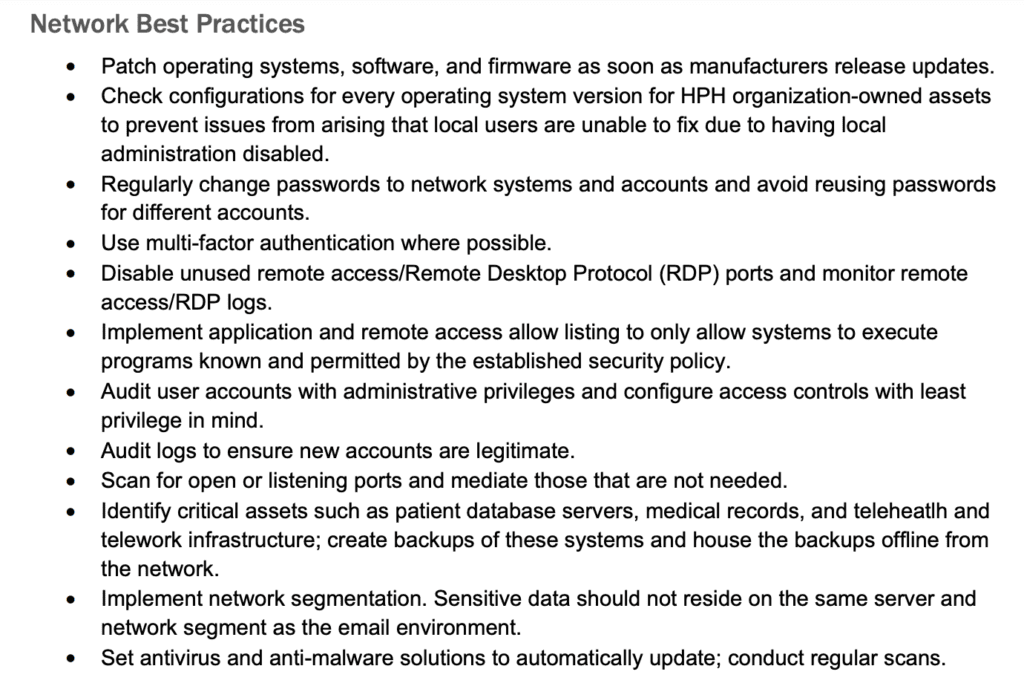
Graphic courtesy: CISA, FBI, HHS Advisory

Physical Access Matters

What happens if you walk into a busy place like a hospital? You watch. People get up and walk away from a terminal for any number of reasons, and it’s not all that difficult to casually gain access, if you look the part. It’s quite easy to gain access to a hospital’s network if you’re hanging out there, you can plug into a network port, plug a USB key into an unmonitored computer and download something. For an assured, practiced hacker with mala fide intent, that’s all it takes.

Take the Target hack in 2013. Hackers installed malware in their payments system not by hacking into Target’s systems, but simply by stealing credentials from a third-party contractor, an HVAC vendor who had access to Target’s network. They eventually used those stolen credentials to upload malicious software onto point-of-sale devices at stores, which led to the exposure of a massive 40 million credit and debit cards of Target customers during the peak retail season between Thanksgiving and the pre-Christmas sales. 

Hacking does happen, we know that. There are any number of cases, including the 2014 Anthem breach, where hackers gained illegal access when someone on the inside clicked on an email link they shouldn’t have clicked on and allowed the malware in. Those attacks make the news, and we do spend lots of money securing against them — we repel a lot more cyberattacks than we allow. What we don’t spend enough on securing however, are the simple things that we can secure. Most organizations, especially in places like hospitals, have policies in place that specify who has the right to be on their premises and who doesn’t. But with multiple points of entry and exit and a huge number of people moving in and out of the premises — employees, contractors, patients, visitors and vendors — they’ve got to look for innovative solutions in real-time. 

What could those be?

Most facilities should have a single point of registration of entry and exit. This doesn’t mean you don’t have emergency exits, but in the normal course, force everyone to go through pinch points, that way you have everyone walking through a particular area where you can validate their credentials, whether it’s a building, a facility, a floor or anything. There should also be no tailgating allowed.

The next step is making sure you have some kind of Know Your Visitor (KYV) real-time software in place, something that would allow your security guard or intake professional (for a patient or visitor), to run a basic criminal background check on the individual in seconds, even while they’re signing in. Is that possible? Yes, including with Biometrica’s software, you can actually run a background check in under 10 seconds, longer than it takes for someone to fill in their visitor or intake details and get signed in.

Third, make sure you continuously monitor everyone who may not be on the premises but has remote access to your network systems for any arrests or convictions. Anyone who is arrested — for any reason — is stressed and vulnerable, you need to be able to know of that arrest in real-time in order to make a determination of any action: Get them help, depending on what the arrest is for, but if they are in a sensitive role with access to information or networks, help yourself by conducting an internal investigation and pausing access to your network.  

If you don’t control physical access to your systems, your credentials, your mobile devices, you don’t really control the cyber aspect to that device. Essentially, if I am able to steal a device on your network, or I’m able to compromise, with physical access, a device that has access to your network, there would be no way for you to know that I’m not supposed to be doing that. Especially if I am physically on site. There are lots of little devices I can simply plug into a wall, and they would just sit there and hack your system from inside your own network, get onto your WiFi and create a tunnel back to me and my network. So later, even remotely, I can now act like I’m internal to your network.

It would then not only look like I am a credentialed user on your network inside your system, but I’m also literally inside your system. I’m inside your virtual walls. And how I got there was because you didn’t protect your physical walls.

FBI Warns Of Five Vulnerabilities Being Exploited By Russian Hackers

By Anand Vasu

The Federal Bureau of Investigation warned on April 16 that actors of the Russian Foreign Intelligence Service (SVR) were exploiting five known vulnerabilities.

The vulnerabilities listed by the FBI were:

CVE-2018-13379 Fortinet FortiGate VPN

CVE-2019-9670 Synacor Zimbra Collaboration Suite

CVE-2019-11510 Pulse Secure Pulse Connect Secure VPN

CVE-2019-19781 Citrix Application Delivery Controller and Gateway

CVE-2020-4006 VMware Workspace ONE Access

The FBI said that the actors, also known as APT29, Cozy Bear, and The Dukes, frequently conducted widespread scanning and exploitation against vulnerable systems in an effort to obtain authentication credentials to allow further access. 

“NSA, CISA, and FBI are aware that United States Government, critical infrastructure (including Defense Industrial Base), and allied networks are consistently scanned, targeted, and exploited by Russian state-sponsored cyber actors,” the latest report of the US Department of Defense, said.

The release also formally named Russian actors in the SolarWinds attack. In 2020 a massive cyberattack — one of the largest of its kind — targeted the US government, its agencies and several other private companies.

More recently, SVR’s activities included targeting COVID-19 research facilities via WellMess malware, and targeting networks through the VMware vulnerability disclosed by NSA.

The Department of Defense advocated taking the following measures to mitigate the risk posed by Russian actors:

  • Keep systems and products updated and patch as soon as possible after patches are released since many actors exploit numerous vulnerabilities. 
  • Expect that the risk from data stolen or modified (including credentials, accounts, and software) before a device was patched will not be alleviated by patching or simple remediation actions. Assume that a breach will happen, enforce least-privileged access, and make password changes and account reviews a regular practice.
  • Disable external management capabilities and set up an out-of-band management network.
  • Block obsolete or unused protocols at the network edge and disable them in device configurations.
  • Isolate Internet-facing services in a network Demilitarized Zone (DMZ) to reduce exposure of the internal network.
  • Enable robust logging of Internet-facing services and authentication functions. Continuously hunt for signs of compromise or credential misuse, particularly within cloud environments.
  • Adopt a mindset that compromise happens: prepare for incident response activities, only communicate about breaches on out-of-band channels, and take care to uncover a breach’s full scope before remediating.

US law enforcement has warned of the threat Russian cyber criminals posed for some time now.

Chicago Man Sentenced To 45 Years For Producing Child Pornography

By Anand Vasu

Cornell D.A. Johnson, of Chicago, was sentenced to 45 years in prison on April 13 for producing child pornography involving multiple minors.

Senior U.S. District Judge Michael M. Mihm called Johnson the “ringmaster” of the operation and said that he had preyed on victims, exercising his power over children of a vulnerable age.

Johnson entered a guilty plea on Feb. 19 and this detailed his modus operandi. He created and operated several fake Facebook profiles, presenting himself as a female.

He then used these profiles to contact other females on Facebook, and enticed unsuspecting individuals to send him photographs that progressed from various stages of undress to sexually suggestive and/or sexually explicit photographs of themselves.

Once he had those photos, Johnson threatened to injure the minor victims’ reputations and embarrass them by posting their nude pictures online if they failed to comply with his demands for additional images.

Johnson then demanded that minor teenagers sexually abuse younger members of their households and produce images while doing so.

When he was arrested, Johnson was identified in more than 80 Cybertips Facebook reported from across the U.S. and Canada to the National Center for Missing and Exploited Children.

Johnson’s victims numbered at least 17 and the youngest victim was just four years old.

Johnson, who has been in the custody of US Marshals since his arrest, was ordered to remain on supervised release for life upon completion of his prison sentence.

The case was prosecuted by U.S. Attorney’s Office Central District of Illinois and investigated by Homeland Security Investigations, the Decatur Police Department and the Illinois Attorney General’s Office Internet Crimes Against Children Task Force.

The U.S. Attorneys’ offices for the Eastern District of Oklahoma, provided assistance, as did the Western District of Pennsylvania, the District of Arizona, the Middle District of Pennsylvania and the Western District of Wisconsin. Assistant U.S. Attorney Elly M. Peirson prosecuted the case on behalf of the government.

The case was brought as part of Project Safe Childhood, a nationwide initiative by the Department of Justice to combat child sexual exploitation and abuse.

HSI is the principal investigative arm of DHS and a vital U.S. asset in combatting transnational crime and threats. One of HSI’s top priorities is to protect the public from crimes of victimization, and HSI’s child exploitation investigations program is a central component of this mission set.

According to Thorn, an organization set up by Ashton Kutcher and Demi Moore in 2012 to combat child pornography, more than 25 million images on the Internet are reviewed by the National Centre for Missing Children annually.

This translated to nearly 500,000 images being reviewed each week.

The organization acknowledged that child pornography was a global issue, but also said that the United States was one of the largest producers and consumers of such material.

Section 2256 of Title 18, United States Code, defines child pornography as “any visual depiction of sexually explicit conduct involving a minor (someone under 18 years of age).”

In 2002, NCMEC started a program collecting child abuse images as part of its Child Victim Identification Program. 

Since then, it has been determined that 76% of images depicted penetration while, 44% contained images of bondage or sado-masochism, Thorn reported.

According to the Children’s Advocacy Center, child pornography accounted for nearly 25% of all online searches relating to pornography. The Center estimated that as many as 28,000 individuals were consuming child pornography on the Internet at any given second.

Proposed Legislation to Tackle the Opioid Epidemic

By Charlotte Spencer

Years into the opioid epidemic, Congress is still working to find solutions that help society address this issue. This year several laws have been proposed already. They include laws focused on warning labels, patient education, healthcare worker education, healthcare marketplace navigator education, alternative treatment options, telehealth, marketing campaigns, grants to states, and grants to community organizations. Here is an overview of the bills to combat the opioid epidemic introduced so far this year.

H.R.1026 – LABEL Opioids Act

This would amend 21 U.S.C. 825 to require a warning label on opioids that states that the opioids or opiates dispensed can cause dependence, addiction, and overdose. It would also require a label on all schedule II, III, and IV drugs, including opioids, stating that it is a crime to transfer the drug to any person other than the patient. This bill has bipartisan support.

H.R.1185 – Opioid Patients’ Right to Know Act of 2021

This would create a grant program to help educate patients about the risks of opioids, and their analogues. Grants would be up to $1 Million each and would go to states. This bill has bipartisan support.

S.586 – NOPAIN Act

The long title of this bill is “A bill to amend title XVIII of the Social Security Act to combat the opioid crisis by promoting access to non-opioid treatments in the hospital outpatient setting.” This bill has bipartisan support, and would amend current law to promote alternatives to opioid treatment for applicable patients.

H.R.2067 – To amend the Controlled Substances Act to require physicians and other prescribers of controlled substances to complete training on treating and managing patients with opioid and other substance use disorders, and for other purposes.

This bill with bipartisan support would amend current law to require doctors, and any others with the power to prescribe medication, such as nurse practitioners,  to complete training on treating and managing patients with substance use disorders.

H.R.1685 – To authorize the Assistant Secretary for Mental Health and Substance Use, acting through the Director of the Center for Substance Abuse Treatment, to award grants to States to expand access to clinically appropriate services for opioid abuse, dependence, or addiction.

If made law this would help get money to states in need of more resources to address opioid abuse, dependence, and addiction.

S.166 and H.R.706 – Emergency Support for Substance Use Disorders Act

If made law these would create a grant program to help combat the harms of drug misuse. Grants would go to States, Tribes, and community organizations to support the delivery of overdose prevention, syringe services programs, and other harm reduction services that address the harms of drug misuse during the COVID–19 pandemic. Money could be spent on education, counseling, naloxone, and harm reduction services. Both have bipartisan support.

H.R.888 – RIDE Act of 2021

This bill addresses the issue of drugged driving. If made law it would create a drugged driving pilot program to study the effects of public marketing campaigns to prevent drugged driving, and eventually require a report to Congress after sufficient time to conduct a study.

S.340 – TREATS Act

If made law this would amend title XVIII of the Social Security Act to increase the use of telehealth for substance use disorder treatment and mental health services.

S.352 – Health Care Improvement Act of 2021

This would amend the Patient Protection and Affordable Care Act to reduce health care costs and expand health care coverage to more Americans. Although it is not focused on the opioid epidemic, it does address the opioid epidemic. It would require that navigators receive opioid specific education and training that ensures the navigator can best educate individuals on qualified health plans offered through an Exchange, specifically coverage under such plans for opioid health care treatment. Navigators are individuals or organizations that help consumers as they look for health coverage options through the healthcare.gov marketplace.

H.R.2364 – To amend title III of the Public Health Service Act to direct the Secretary, acting through the Director of the Centers for Disease Control and Prevention, to provide for a public education campaign for the promotion outreach and education campaign to raise public awareness of synthetic opioids.

This bill has been referred to the Committee on Energy and Commerce. If made law this would require a public education campaign specifically focused on the dangers of synthetic opioids.

H.R.2366 – To establish programs to address addiction and overdoses caused by illicit fentanyl and other opioids, and for other purposes.

This bill has been referred to the Committee on Energy and Commerce, and to the Committee on the Judiciary. As the title suggests, it would create programs to combat opioid addiction and overdose.

H.R.2379 – To amend the 21st Century Cures Act to reauthorize and expand a grant program for State response to the opioid use disorders crisis, and for other purposes.

This bill has bipartisan support. It would assist with funding state responses to the opioid epidemic.

H.R.2448 – To amend title XIX of the Social Security Act to prohibit the Secretary of Health and Human Services from treating any Medicaid-related funds recovered from one or more pharmaceutical companies or drug distributors with respect to opioid litigation as an overpayment under such title, and for other purposes.

This bill has bipartisan support. It deals with the issue of what to do with medicaid money recovered from pharmaceutical companies and drug distributors through opioid litigation. This is increasingly an issue as prosecutors continue to go after those who contributed to the opioid epidemic.

This article is part of a larger series of articles that Biometrica will be doing to look in depth at the public safety implications of the opioid epidemic. Follow us for more on this topic.

The writer is a lawyer and a coder, and a member of the Arizona bar.

If you have feedback on this article, please write to us at marketing@safience.io.

I Survived Child Sex Trafficking. So Can You. This Is My Story.

By Barbara Jean Wilson

I was eight years old when my mother’s boyfriend, “Uncle Bob,” as he asked me to call him, touched me, and told me not to tell anyone. He said he was doing what he needed to make me grow up to be a beautiful woman. As I mentioned, I was eight. I ran to my mother, as all children do, and promptly told her. I think that was the first time she broke my heart, my trust, and from what I later came to understand, the law.

She told me I should absolutely not tell anyone because Uncle Bob touching me was how our rent was going to get paid. She told me I was stronger than my older sisters, which is why I was the chosen one. I also understood that if I made a fuss, or told anyone, it wasn’t just me that would be beaten, it would be my mother. In my head, it was my responsibility to protect her and my sisters. After all, I had been chosen and I was stronger.

But to protect myself, I would retreat into a safe space in my head where it was peaceful and painless, where no one was touching me, or beating me, or hurting me, and that’s all I could do. In big, bustling New York City, where any number of people disappeared into the streets and so many more were homeless, my mother was the only mother I had, and this was the only home I knew.

Eventually, Uncle Bob would do a lot more than touch me, and this continued for years, from the time I was eight through when I was 13. At some point, he began bringing other men over to the house to touch me and abuse me. They would feed me drugs and alcohol to numb my little body and mind to all that they were doing to me. I remember that the one time I managed to see past the haze of drugs and alcohol and find the courage to tell one of the men “no,” he put a gun to my head. “No one tells me no,” he said, before proceeding to brutally assault me. I didn’t speak up again. Despite it all, desperately scared, I still wanted to live.   

But It Impacted My Life

I began eating more and biting my fingernails down to the skin until they bled. I also started wetting the bed every night, it became so difficult that I would lose control of my bladder during the day, while in school, sitting at my desk. The first time it happened, I was so out of it, that I did not even realize I had wet my pants till another student brought it to our teacher’s attention. It should have been mortifying but I couldn’t feel much of anything anymore. In the world we now live in, perhaps someone around me would have seen the signs and asked questions. In Flushing, Queens, in the early 1960s, you were on your own. If someone suspected something, they kept their suspicions to themselves. It wasn’t done to speak up, no one wanted that kind of attention on the family or the community.

I began to lose focus, nothing seemed important anymore, not school, not my family, my fellow students, not being around people. I felt utterly, terrifyingly alone, in my head and in my life. The joy, the laughter and my self-esteem had disappeared at home and at school. I began to talk back to my teachers and to any adult who said anything to me, outside of the procession of men who used me. I lost all respect for adults and trusted no one, not family, not teachers, not law enforcement, no one. In my mind, they were all complicit in what was happening to me or knew what was happening and chose not to do anything about it or to protect me. Instead, they all let me suffer through the humiliation, loneliness and agony. 

As I became older, already having been exposed to all kinds of narcotics, I began smoking cigarettes and doing drugs of all kinds. By the time I was 16, I had been kicked out of one school, dropped out of another, and found myself pregnant. That, I think, was the turning point of my life — the birth of my daughter Tawanna.

Tawanna was the first time I had someone in my life I could unconditionally love. She was and remains my joy and pride. Back then, even at 16, I knew enough to stop doing drugs and alcohol while I was pregnant, though, unfortunately, I returned to experimenting with them after she was born. Addiction is hard, especially when you’ve lived it from a very young age. Many years later, though, a series of events saw me enroll in night school. I received my GED, and in 2008, I graduated from Strayer University with a bachelor’s degree in Business Administration. That is a story for another day.

How Did I Survive?

There was a lot of anger built up in me, a combination of resentfulness at the world, fear of what was going on, and self-loathing, even if I knew I wasn’t to blame, buried deep inside of me because of the things that were forced upon me. I survived though because of my faith; God’s grace and mercy ensured I did not lose my mind.

I remember I had been baptized just a week before the abuse began.  There were two Scriptures read at the baptism and I distinctly remembered the verses and memorized them through those endless hours spent in my own head:

Psalm 27:10 (KJV): “When my father and my mother forsake me, then the Lord will take me up.” Exodus 20:12 (KJV):“Honor thy father and thy mother: that thy days may be long upon the land which the Lord thy God giveth thee.”

When I was older, after reading these Scriptures over and over, I realized that God was telling me that even though I had gone through something so ugly, heinous and painful, He was with me all the time. I also decided that no matter what, I had to be me, and my faith required that I had to forgive, love and respect my mother, even if she had sinned. 

That also meant I had to forgive myself first, in order to begin to receive complete healing from the hurt, pain, guilt, and shame. So, I did.

My mother died on April 6, 1993, and I had a long talk a day before she died. She asked me if I could forgive her for what she had done. I told her I had forgiven her a long time ago and never stopped loving her. I can only be the person I am.

I believe having a platform where I am able to speak and share what I went through as a victim of child sexual abuse and human trafficking will help so many women become free from the pain, shame, and guilt of their past that they have been holding on to and carrying around for so many years. It is absolutely crucial to let other girls and women know that they have nothing to be ashamed of and it was not their fault.

If you have lived through an experience like mine and survived, my prayer is that if you have not already broken your silence, do so now. Speak up so that you too can be healed as I was and gain your freedom to move forward in your life and receive the peace you so deserve. Most importantly, stop blaming yourself.  It was not your fault, and you have nothing to be ashamed of: You are beautiful inside and out, a child of God who is loved by God.

Reach out. The world cares more than you realize, if you can find the strength to tell someone. Know that you are not alone, and you can and will be healed. You deserve to be happy and free.

The writer is a Human Trafficking Survivor Leader, Motivational Speaker and the Author of two books, ‘Mute But Now I Speak’ and ‘Blessings After Going Through The Valley.’ She went on to retire from Freddie Mac, and now speaks for victims and survivors of child sex trafficking through the National Child Protection Task Force.

Europol Recognizes Heightened Threat From Certain Criminal Activities in 2021: Report

By Anand Vasu

In their 2021 Serious and Organized Crime Threat Assessment, or SOCTA, Europol has identified the most serious threats posed by criminal organizations to individuals and businesses.

The annual report, put together by Europol after analyzing data from law enforcement in different countries, has concluded that the following areas demand most immediate and specific attention:

  • High-risk criminal networks (including corruption, money laundering, and the use of firearms)
  • Cyberattacks 
  • Crimes against persons 
  • Drugs
  • Fraud 
  • Property crime 
  • Environmental crime 

While these were not the only crimes that Europol warned about, these were named as potentially the most threatening in the current environment.

“The organized crime landscape is characterized by a networked environment where cooperation between criminals is fluid, systematic and driven by a profit- oriented focus,” the 108-page report said in its conclusions. “A key characteristic of criminal networks, once more confirmed by the pandemic, is their agility in adapting to and capitalizing on changes in the environment in which they operate. Obstacles become criminal opportunities and may be as simple as adapting the narrative of a known modus operandi.”

The report identified the ability to launder large sums of money and the use of such funds to corrupt key institutions as major threats. 

“High-risk criminal networks can use corruption as an intrinsic part of their business model and to target public servants or sectors in strategic positions. Corruption erodes the rule of law, weakens institutions of states and hinders economic development. Corruption is a key threat to be addressed in the fight against criminal networks involved in any area of serious and organized crime,” the report said.

“High-risk criminal networks in the EU fundamentally rely on the ability to launder vast amounts of criminal profits. For this purpose, professional money launderers have established a parallel underground financial system to process transactions and payments isolated from any oversight mechanisms governing the legal financial system. This parallel system ensures criminal proceeds cannot be traced as part of a sophisticated criminal economy, which allows high-risk criminal networks to flourish financially.”

While money laundering and organized crime fell under a more generalized, even systemic issue, there were specific threats that the report identified.

Cybercrime Surged During The Covid-19 Pandemic

The report defined cybercrime as any criminal activity conducted using computers, computer networks or information technology.

“During 2020, the Covid-19 pandemic has seen a surge in connections from private to corporate systems as telework became the norm in many sectors and industries. This development has made many corporate networks more vulnerable to cyberattacks,” the report observed.

In 2021, Europol successfully ensured the disruption of EMOTET, a Trojan first discovered in 2014 and later thought to be the most dangerous malware around.

“EMOTET was much more than just a malware. What made EMOTET so dangerous is that the malware was offered for hire to other cybercriminals to install other types of malware, such as banking Trojans or ransomwares, onto a victim’s computer.”

The report also warned that online child exploitation was on the rise.

“Online child abuse material can easily be accessed on all types of devices, including mobile devices. The widespread abuse of encryption tools, including end-to-end encrypted apps, has lowered the risk of detection by offenders. Offenders increasingly rely on anonymization services such as virtual private networks (VPNs) or proxy servers,” the report concluded.

“The number of reported incidents involving live distance child abuse has steadily increased in recent years. This development has further intensified during the COVID-19 pandemic. As a result of the lockdown measures imposed to halt the spread of the COVID-19 pandemic, children have been spending more time online unsupervised, making them more vulnerable to exploitation.”

The Rise Of Violence In The Drug Trade

The report noted that different groups of drug classes attracted different types of crimes and criminal organizations, but underscored that the one thing common across classes was violence.

“The use of violence related to the trade in drugs has escalated notably in recent years,” the report said. “The trade in cocaine and cannabis in particular triggered a significant number of violent incidents, which included killings, shootings, bombings, arsons, kidnappings, torture and intimidation.”

The report identified Cannabis as the biggest drug market in the EU. 

“Cannabis resin and herbal cannabis remain the two main cannabis products traded in the EU,” the report said. “The average potency of both cannabis resin and herbal cannabis has increased over the last decade. A higher strength/potency of cannabis increases its potential harm.”

However, the report also said that Cocaine seizures were on the rise and that the purity of seized cocaine was also on the rise.

“The majority of Member States report an increase in cocaine trafficking since 2016. The cocaine market has attracted a growing number of EU-based and non-EU criminal networks,” the report said. “More criminal networks have been reported as being involved in cocaine trafficking than for any other criminal activity.”

Exactly What Is Environmental Crime?

Environmental crime, as looked at in this report, involved the illegal transport and disposal of waste materials, some of which were hazardous.

The report found that waste trafficking in the EU was rampant.

“The most successful waste traffickers are those who control the entire processing cycle, from source to destination countries. Criminals trafficking waste between different countries primarily use legal business structures to orchestrate waste crimes. Often multiple companies are owned by the same individuals or by strawpersons,” the report said. “The legal business structures frequently change leadership and are often terminated after a short period of activity, as a new trading entity takes over the business. Companies operating different stages in the waste cycle are often located in different jurisdictions.”

Legal Casinos Up Ahead In Japan: Why This Is Cause For Excitement And Concern In The Country

By Anand Vasu

Change is on the horizon in Japan, which the late Sheldon Adelson once reportedly called “the Holy Grail” for casino operators. Earlier this month, Japan’s Casino Regulatory Commission released a first version of its draft casino regulations, and opened them up for public comment. All things being equal, people visiting Japan will soon have access to limited gambling options at casinos. But this will not be without a series of checks and balances, and there are restrictions on the kind of games available.

On April 2, the Commission said that nine games would be allowed in casinos. This includes variations of baccarat, blackjack, poker, roulette, Sic Bo, craps, Casino War, money wheel and pai gow. 

Additionally, casinos would be allowed to operate electronic versions of these games.

Significantly, traditional Japanese games such as pachinko, pachislot and mahjong were not available to patrons at these venues.

At the moment, these moves are at a proposal stage, and only after receiving feedback from the public till May 9, will the final set of regulations be passed into law.

Japan is also determined to be proactive in order to help prevent a rise in addictions to gambling, or exploitation of the same. Casino operators will be required to impose a one-year ban on any patron they believe shows gambling patterns that indicate addiction. In addition, the number of visits per month for these patrons could be limited even after the one-year ban is served.

Interestingly, the current local time will have to be displayed on casino floors, and no ATMs would be installed in the gaming sections, something that is not the norm in casinos in many parts of the world.

Online Gambling Will Not Be Legalized in Japan

Even as initiatives were being rolled out on casino gambling, Hachiro Okonogi, Chairperson of the Liberal Democratic Party’s National Public Safety Commission, made it clear that there were no plans to legalize online gambling.

“There are provisions on casino acts in the existing IR Development Act, but it does not include online casinos and they are not subject to this regulation,” Okonogi was quoted as saying by Inside Asian Gaming in response to a question from Hiroyuki Moriyama of the Constitutional Democratic Party. “However, when I was asked at the Cabinet Committee last week, I answered that we would continue to take strict action as the police and Chairperson of the National Public Safety Commission.”

Okonogi explained that the reason the proposed act would not deal with online gaming was because online casinos were illegal in Japan.

“There is precedent of online casinos being run in Japan, busted and tried in court.” Okonogi said, while underscoring that there was no change in government policy on this count. “Continuing to come down on online casinos is the role of the police and Chairperson of the National Public Safety Commission. The fact is that this does not fall under the jurisdiction of the IR Development Act or the minister in charge of the Casino Management Committee.”

Japan Has Historically Been Wary Of Opening Up Casino Operations

While recent developments have given the pro-casino movement some traction, Japan has traditionally been opposed to going down this route, and with good reason.

In 2000, the Governor of Tokyo proposed the construction of a casino off the coast of the capital on an artificial island. He had also suggested considering floating casinos — cruise ships that would not actually travel but operate as anchored casinos — but this did not find favour with law makers.

It was only in 2018 that there was a change in mindset, with Japan looking to the Singapore model, in which casinos were expected to cater largely to foreign visitors, while not barring locals from being patrons.

What happened next was that Japan opened up a long-term process that would involve localities bidding for the right to host casinos that would be integrated facilities — also having hospitality, convention space, entertainment, shopping and hotel rooms — through to April 2022. 

Successful bidders would then have to fund partners to operate and manage these venues.

MGM Resorts Sole Bidder For Osaka Casino Venue

MGM Resorts emerged as the sole bidder for the proposed resort in the Osaka prefecture. Osaka is Japan’s third largest city by population and have put forth a proposal for a casino resort. If they are successful in their bid they will then have to make their case in Tokyo.

MGM Resorts, who launched their “Osaka First” campaign in 2019, had partnered with Japan-based financial services firm ORIX.

“We’ve spent a lot of time and energy becoming the sole one standing … in Osaka,” Bill Hornbuckle was quoted as saying by casino.org. “We haven’t had our people on the ground there for a better part of nine months. So, it’s going to take some time to rebound. But we have that intent, and I believe that the government still has the same intent of moving forward.”

While MGM were favored by the powers that be in Osaka, they would be required to set up a venue that featured at least 215,000 square feet of convention space, which would have to be expanded to more than one million square feet in 15 years.

It was also stipulated that the resort would have to have at least 3000 rooms and that the actual gaming floor space should not constitute more than 3% of the premises.

Law Enforcement Fear Opening Up Of Gaming Will Give Organized Crime A Foothold

The greatest deterrent to casino operations getting the go-ahead in Japan is the fear that the Yakuza, one of the oldest organized crime groups in the world, would be among the first to step in and finance these operations.

A high-ranking gang member affiliated with the Yamaguchi-gumi Yakuza, told the Japanese newspaper Asahi Shimbum in 2018, that the gang would find a way to get involved in the legalized gambling sector, estimated to be worth $15B.

“Once rules are decided on how to place restrictions on organized crime, we can begin thinking about ways to get around those legal barriers,” the source told Asahi Shimbun.

The Organized Crime And Corruption Reporting Project classified the Yamaguchi-gumi Yakuza as a transnational criminal group.

The Yakuza has been present and active in Japan since the 17th century, and membership to the group is not outlawed even today.

While the Yakuza offer aid and assistance during earthquakes and invest in legitimate businesses, they also operate outside the lines of the law, usually taking care to keep these interests separate from their illegal activities.

Why Is There So Much Interest In Japan?

Japanese gamblers and Japan’s gambling industry is pegged to be worth as much as $40B annually, putting the country on par with Macau, the current hub of gambling in the region, according to Nikkei Asia.

The report said that Japanese gamblers already wager around $200B a year on pachinko and slot machines.

While Japan offered a similar environment to Singapore — infrastructure, hotels, flights, entertainment — the critical difference was the fear that organized crime, in the form of the Yakuza, would inevitably become a part of the legalized gambling space. Thus far they have operated in the shadows and been a target of law enforcement.

Matsumoto Hiroki, an investment adviser and former stockbroker who has studied yakuza strategies, noted in his book “Kyoseisha: The behind-the-scenes fixers in the Japanese stock market and yakuza money” that the groups can be exceptionally good at gaining control over a company via the use of information gathering, honey traps and blackmail.

While it was believed that advanced technology, including facial recognition, would be deployed to ensure that known yakuza members would not get access to the legalized casinos, there was the fear that these individuals could still gain back door or indirect access to these venues and extort or otherwise put pressure on legal patrons from parting with their winnings.