
Tech Support : support@safience.io

Blog

Casino Tuesday: State Of The States

By Deepti Govind

Map courtesy of the Casino City Press Gaming Directory, which can be accessed here. You can change the date on the map above to see openings at any given time.

The $261 billion U.S. casino and gaming industry may have faced one of its toughest years yet in 2020, with most casinos shutting down for months on end due to the Covid-19 pandemic. But, things are already looking better so far this year.

Nearly 90% of all casinos in the country have now reopened for business, including both commercial and tribal properties, according to data compiled by the Casino City Press Gaming Directory. Most states have also relaxed quarantine rules, allowing hotels, restaurants and bars to reopen entirely or partially, The Points Guy blog, which makes for excellent reading, reported.

Meanwhile, the American Gaming Association (AGA) plans to work with President Joe Biden’s administration on policies that can assist the industry, according to Bill Miller, CEO and president of the AGA. The spread of vaccines and rapid testing should help kick-start the return of travel and tourism, Miller said in a Las Vegas Review-Journal report on Jan. 28.

AGA research found one in every three American adult plans to visit a casino this year, the highest rate since the AGA began tracking responses in March. As casinos continue to reopen, here’s a look at how different states are handling quarantine regulations to curb the spread of Covid-19, what’s completely operational, and what isn’t when it comes to hotels, hospitality and the entertainment industry. This is based on data compiled up to Jan. 29 2021 by The Points Guy blog.

Alabama

Quarantine required: No, but many counties still classified high risk

Travel to state: Allowed

Penalties for violation: None

Hotels: Open

Beaches & parks: Open

Restaurants & bars: Open

Alaska

Quarantine required: Yes, unless negative Covid-19 PCR test result provided

Travel to state: Allowed, but travelers have to submit proof of, or take the Covid-19 test on arrival

Penalties for violation: $1,000 to $25,000 in fines and/or a year in jail

Hotels: Open

Beaches & parks: Open

Restaurants & bars: Open

Arizona

Quarantine required: No

Travel to state: Allowed

Penalties for violation: None

Hotels: Open

Beaches & parks: Open

Restaurants & bars: Partially open

Arkansas

Quarantine required: No

Travel to state: Allowed

Penalties for violation: None

Hotels: Open

Beaches & parks: Open

Restaurants & bars: Open
California

Quarantine required: Recommended state-wide, 10 days quarantine for travel to San Francisco, LA County & Santa Clara County

Travel to state: Non-essential travel still discouraged

Penalties for violation: Differs on a county-to-county basis

Hotels: Open

Beaches & parks: Partially open

Restaurants & bars: Partially open

Colorado

Quarantine required: Aspen/Snowmass requires either an affidavit of a negative test taken within 72 hours, or a 10-day quarantine

Travel to state: Allowed, but encouraged to embrace responsible tourism

Penalties for violation: None

Hotels: Open

Beaches & parks: Open

Restaurants & bars: Partially open

Connecticut

Quarantine required: Yes, 10-day self quarantine for anyone traveling to Connecticut from a state other than New York, New Jersey or Rhode Island or from any international destination

Travel to state: Allowed, with quarantine rules; and all travelers to fill out a Travel Health Form before arrival

Penalties for violation: $500 for each violation

Hotels: Open

Beaches & parks: Open

Restaurants & bars: Partially open

Delaware

Quarantine required: No

Travel to state: Allowed

Penalties for violation: Any emergency order issued, if violated, can lead to fines of up to $500 or subject to imprisonment for up to six months for each violation

Hotels: Open

Beaches & parks: Open

Restaurants & bars: Partially open

Florida

Quarantine required: No

Travel to state: Allowed

Penalties for violation: None

Hotels: Open

Beaches & parks: Open

Restaurants & bars: Partially open

Georgia

Quarantine required: No

Travel to state: Allowed

Penalties for violation: None

Hotels: Open

Beaches & parks: Open

Restaurants & bars: Open
Guam

Quarantine required: Yes, mandatory 14-day quarantine at a government facility at traveler’s own expense; transiting travelers will be permitted to pass through Guam as long as they do not leave the airport

Travel to state: Not welcome

Penalties for violation: Fine of not more than $1,000 or imprisonment of not more than one year or both (10 GCA, Chapter 19, §19604 (c) Cooperation

Hotels: Open

Beaches & parks: Open

Restaurants & bars: Partially open

Hawaii

Quarantine required: Yes, unless negative Covid-19 PCR test results are provided from a test taken no more than 72 hours before taking off to Hawaii

Travel to state: Allowed, but all travelers have to register with the Safe Travels program

Penalties for violation: $5,000 fine, a jail time of up to one year, or both

Hotels: Open

Beaches & parks: Open

Restaurants & bars: Open

Idaho

Quarantine required: Yes; 14-day self-quarantine is encouraged, but not required for those coming in from other states or countries with substantial community spread or case rates higher than Idaho

Travel to state: Allowed

Penalties for violation: None

Hotels: Open

Beaches & parks: Open

Restaurants & bars: Open

Illinois

Quarantine required: Yes, for travelers to Chicago from certain states

Travel to state: Allowed

Penalties for violation: Fines of $100–$500 per day, up to a maximum of $7,000

Hotels: Open

Beaches & parks: Open

Restaurants & bars: Partially open

Indiana

Quarantine required: No

Travel to state: Allowed

Penalties for violation: None

Hotels: Open

Beaches & parks: Open

Restaurants & bars: Open
Iowa

Quarantine required: No

Travel to state: Allowed

Penalties for violation: None

Hotels: Open

Beaches & parks: Open

Restaurants & bars: Open

Kansas

Quarantine required: Yes, but only in certain cases

Travel to state: Allowed

Penalties for violation: None

Hotels: Open

Beaches & parks: Open

Restaurants & bars: Open

Kentucky

Quarantine required: No, although it is recommended for certain states and travelers coming in from international destinations

Travel to state: Allowed

Penalties for violation: None

Hotels: Open

Beaches & parks: Open

Restaurants & bars: Open

Louisiana

Quarantine required: No

Travel to state: Allowed

Penalties for violation: None

Hotels: Open

Beaches & parks: Open; but the Mardi Gras parades in New Orleans and St. Tammany parishes have been cancelled while other locales have delayed it until late May

Restaurants & bars: Partially open

Maine

Quarantine required: Yes, unless negative Covid-19 PCR test results are provided from a test taken no more than 72 hours within arrival; or, unless they are from New Hampshire and Vermont

Travel to state: Allowed, Certificate of Compliance to be filled

Penalties for violation: Up to six months in jail, a $1,000 fine and/or civil damages to the state

Hotels: Open

Beaches & parks: Open

Restaurants & bars: Partially open

Maryland

Quarantine required: Yes for 10 days, unless negative Covid-19 PCR test results are provided, except those traveling to the state from Delaware, Pennsylvania, Virginia, West Virginia and Washington. D.C. 

Travel to state: Allowed

Penalties for violation: Imprisonment for up to a year or a fine of up to $5,000 or both

Hotels: Open

Beaches & parks: Open

Restaurants & bars: Open

Washington, D.C.

Quarantine required: No, but returning residents are required to limit activities and self-monitor for 14 days, or until they receive a negative test result taken 3-5 days after their return

Travel to state: Allowed, but those from high-risk states must get tested within 72 hours prior to travel

Penalties for violation: None

Hotels: Open

Beaches & parks: Open

Restaurants & bars: Partially open

Massachusetts

Quarantine required: Yes for 10 days for those coming from high-risk states, unless negative Covid-19 PCR test results are provided

Travel to state: Allowed but required to fill out a health form on arrival

Penalties for violation: Up to $500 per day

Hotels: Open

Beaches & parks: Open

Restaurants & bars: Partially open

Michigan

Quarantine required: No

Travel to state: Allowed

Penalties for violation: None

Hotels: Open

Beaches & parks: Open

Restaurants & bars: Partially open

Minnesota

Quarantine required: Recommended for 14 days, but not required

Travel to state: Allowed

Penalties for violation: None

Hotels: Open

Beaches & parks: Open

Restaurants & bars: Partially open

Mississippi

Quarantine required: Mandatory only for people who test positive for Covid-19

Travel to state: Allowed

Penalties for violation: None

Hotels: Open

Beaches & parks: Open

Restaurants & bars: Open

Missouri

Quarantine required: No

Travel to state: Allowed

Penalties for violation: None

Hotels: Open

Beaches & parks: Open

Restaurants & bars: Open

Montana

Quarantine required: No

Travel to state: Allowed

Penalties for violation: None

Hotels: Open

Beaches & parks: Open, but since November, only the North Entrance to Yellowstone at Gardiner, MT is open for the winter season. Glacier National Park is open only at its West Glacier entrance. The East entrance borders the Blackfeet Indian Reservation remain closed

Restaurants & bars: Open

Nebraska

Quarantine required: No, but it is encouraged for visitors

Travel to state: Allowed

Penalties for violation: None

Hotels: Open

Beaches & parks: Open

Restaurants & bars: Open

Nevada

Quarantine required: No

Travel to state: Allowed

Penalties for violation: None

Hotels: Open

Beaches & parks: Open, but individual regions may be closed

Restaurants & bars: Partially open

New Hampshire

Quarantine required: Yes 10 days for some visitors; those from Massachusetts, Maine, Connecticut, Rhode Island, Vermont are exempt

Travel to state: Allowed but with restrictions

Penalties for violation: None

Hotels: Open

Beaches & parks: Open

Restaurants & bars: Partially open

New Jersey

Quarantine required: Yes for 10 days; those from New York, Pennsylvania, Connecticut and Delaware are exempt

Travel to state: Non-essential travel still discouraged

Penalties for violation: Some reports suggest a “disorderly persons charge,” which could cost a $1,000 fine and up to six months in jail

Hotels: Open

Beaches & parks: Open

Restaurants & bars: Partially open

New Mexico

Quarantine required: Yes, self-quarantine for 14 days for those coming by air or car

Travel to state: Allowed

Penalties for violation: Non-compliant individuals are subject to involuntary quarantine

Hotels: Open

Beaches & parks: Open

Restaurants & bars: Partially open

New York

Quarantine required: Yes, for 4 days if tested and 10 days if not tested; those from New Jersey, Connecticut and Pennsylvania are exempted

Travel to state: Allowed, but Arriving passengers are required to fill out a self-declaration form

Penalties for violation: Maximum fine is $10,000

Hotels: Open

Beaches & parks: Open

Restaurants & bars: Partially open

North Carolina

Quarantine required: No

Travel to state: Allowed

Penalties for violation: None

Hotels: Open

Beaches & parks: Open

Restaurants & bars: Partially open

North Dakota

Quarantine required: No

Travel to state: Allowed

Penalties for violation: None

Hotels: Open

Beaches & parks: Open

Restaurants & bars: No data

Ohio

Quarantine required: People coming in from states where cases are surging are urged, but not required, to self-quarantine for 14 days

Travel to state: Allowed

Penalties for violation: None

Hotels: Open

Beaches & parks: Open

Restaurants & bars: Open

Oklahoma

Quarantine required: No

Travel to state: Allowed

Penalties for violation: None

Hotels: Open

Beaches & parks: Open

Restaurants & bars: Open

Oregon

Quarantine required: No

Travel to state: Allowed

Penalties for violation: None

Hotels: Open

Beaches & parks: Open

Restaurants & bars: Open

Pennsylvania

Quarantine required: Yes, 10-day quarantine for those over the age of 11 unless they provide a negative Covid-19 PCR test

Travel to state: Allowed

Penalties for violation: None

Hotels: Open

Beaches & parks: Open

Restaurants & bars: Open

Puerto Rico

Quarantine required: Yes, unless negative Covid-19 PCR test results are provided

Travel to state: Allowed but an online Travel Declaration forms must be filled, and travelers from many other countries are banned

Penalties for violation: Mandatory quarantine without proof of negative test

Hotels: Open

Beaches & parks: Open

Restaurants & bars: Restaurants are open

Rhode Island

Quarantine required: Yes, 14-days quarantine unless negative Covid-19 PCR test provided

Travel to state: Allowed but a certificate of compliance must be filled

Penalties for violation: Fine of $100 for a first offense, $250 for a second offense and $500 for a third

Hotels: Open

Beaches & parks: Open

Restaurants & bars: Partially open

South Carolina

Quarantine required: No

Travel to state: Allowed

Penalties for violation: None

Hotels: Open

Beaches & parks: Open

Restaurants & bars: Open

South Dakota

Quarantine required: No

Travel to state: Allowed

Penalties for violation: None

Hotels: Open

Beaches & parks: Open

Restaurants & bars: Open

Tennessee

Quarantine required: No

Travel to state: Allowed

Penalties for violation: None

Hotels: Open

Beaches & parks: Open

Restaurants & bars: Open

Texas

Quarantine required: No

Travel to state: Allowed

Penalties for violation: None

Hotels: Open

Beaches & parks: Open

Restaurants & bars: Partially open

Utah

Quarantine required: No

Travel to state: Allowed

Penalties for violation: None

Hotels: Open

Beaches & parks: Open

Restaurants & bars: Open

Vermont

Quarantine required: Yes, for 14 days or opt to quarantine for seven days and then take a Covid-19 PCR test and receive a negative result

Travel to state: Allowed but with restrictions

Penalties for violation: None

Hotels: Open

Beaches & parks: Open

Restaurants & bars: Open

Virgin Islands

Quarantine required: Yes, but only for those who don’t provide a negative Covid-19 test result on arrival

Travel to state: Allowed but have to submit test results to the U.S. Virgin Islands Travel Screening Portal

Penalties for violation: Mandatory self-quarantine for 14 days or the duration of the person’s stay in the Territory

Hotels: Open

Beaches & parks: Open

Restaurants & bars: Open

Virginia

Quarantine required: No

Travel to state: Allowed

Penalties for violation: None

Hotels: Open

Beaches & parks: Open

Restaurants & bars: Partially open

Washington

Quarantine required: Yes, for travelers from the United Kingdom and South Africa; it is recommended for those from other areas

Travel to state: Allowed

Penalties for violation: None

Hotels: Open

Beaches & parks: Open

Restaurants & bars: Partially open

West Virginia

Quarantine required: No

Travel to state: Allowed

Penalties for violation: None

Hotels: Open

Beaches & parks: Open

Restaurants & bars: Open

Wisconsin

Quarantine required: No, but the health services department urges people to cancel or postpone all travel

Travel to state: Allowed

Penalties for violation: None

Hotels: Open

Beaches & parks: Open

Restaurants & bars: Open

Wyoming

Quarantine required: No

Travel to state: Allowed

Penalties for violation: None

Hotels: Open

Beaches & parks: Open

Restaurants & bars: Open

Data Monday: First Cases Ever Brought Under BOTS Act

By Charlotte Spencer

Graphic by Charlotte Spencer

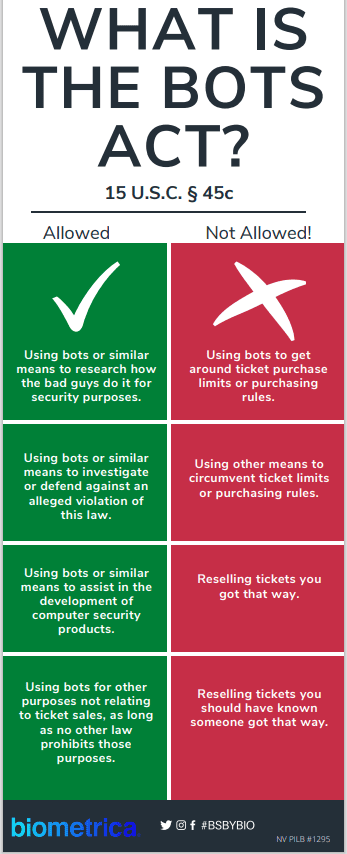
This January, the FTC brought the first cases ever under a new law passed five years ago. The BOTS Act, which passed with bipartisan support in 2016, is designed to protect consumers from people who use technology to buy up all tickets for an event before anyone else can, in order to inflate the price.

Many have had the experience of attempting to buy tickets as soon as online sales open, only to find all tickets are already sold out. The only options left at that point are to give up on the event they wanted to go to, or to pay a reseller exorbitant prices for the exact same thing. This happens because a computer program can conduct those transactions faster than human customers.

In the past, original ticket sellers attempted to combat this using their own technology. They would limit sales to a certain IP address, but people would use proxies, or VPNs to disguise their addresses. They would limit the number of sales to each user name or email address, but people would create large numbers of accounts for themselves. They would use services such as captcha, but people would build or buy their own programs for getting around this. As is often the case, the law took a bit of time to catch up with technology, leaving the would-be-customers frustrated by these middle men who charge much higher prices.

In 2016, the law finally did catch up with the technology, making it illegal to run such schemes. The BOTS Act does not ban all bots, just the ones used for this purpose. Not all bots are bad. In fact, you probably benefit from them behind the scenes in a lot of the services you use. The Act does not ban all bots in general, and importantly, also does not ban these types of bots when they’re used for research purposes to help combat the problem. In other words, just as knives are not illegal, but certain uses of knives are illegal, bots are not illegal, but certain uses of bots are illegal. The law also criminalizes selling, or attempting to sell tickets which you knew, or should have known, were obtained this way (15 U.S.C. § 45c).

The FTC filed complaints against three ticket brokers on January 14. Altogether they will be subject to a judgement of more than $31m, partially suspended due to an inability to pay, unless they are later discovered to have misstated their ability to pay. For the first time others considering doing the same thing will see that those who came before them were not actually able to keep any money gained this way, essentially taking away the motivation to copy the practice.

While it may take some time for others to internalize this and start to give up on the practice, consumers should finally begin to see some relief from this annoying practice. By the time concerts and sporting events start to open up again after coronavirus, with any luck, resellers will have finally learned that it’s time to give up on this practice.

Man Pled Guilty To Illegal Sale Of Mounted Leopard

By a Biometrica staffer

A man from New York pled guilty to charges of illegally selling a mounted leopard, which is classified as an endangered species, on Jan. 29. He caught the attention of an undercover special agent with the U.S. Fish and Wildlife Service when he posted a photograph on his Instagram account that showed the mounted leopard in the background.

Unknown to him, Michael T. Merisola, 62, of Buffalo had been communicating with an undercover agent on Instagram. After seeing the leopard in Merisola’s photo, the agent approached him with an offer to buy the mounted animal and they discussed the illegality of buying/selling a leopard across state lines, the U.S. Department of Justice said in a statement on Feb. 1.

Merisola wanted $4,200 for the leopard, and the undercover agent traveled from Ohio to Buffalo to see it and make a down payment. Merisola later accepted the remaining payment and shipped the leopard from New York to Ohio.

He was charged with one count of violating the Endangered Species Act. Passed with bipartisan support in 1973, the Endangered Species Act allows individuals and organizations to petition to have a species listed as endangered or threatened. These listing petitions undergo rigorous scientific evaluation and public review before a final decision is made on whether a species should be protected.

The Act has proven to be extremely successful, the World Wildlife Fund (WWF) says on its website. “The US Endangered Species Act (ESA) is our nation’s most effective law to protect at-risk species from extinction, with a stellar success rate: 99% of species listed on it have avoided extinction,” a post on the WWF website reads.

Leopards are classified under federal regulations as threatened or endangered wherever they are found.

The ESA also supports the conservation of listed species outside of the US and is the law through which the US enforces the Convention on International Trade in Endangered Species (CITES). CITES is a global agreement between governments to follow rules to monitor, regulate, or ban international trade in species under threat and is a key tool in the fight against the illegal wildlife trade.

Individual Attacks Down As Cyberattacks Focus On Holding Businesses Hostage

By a Biometrica staffer

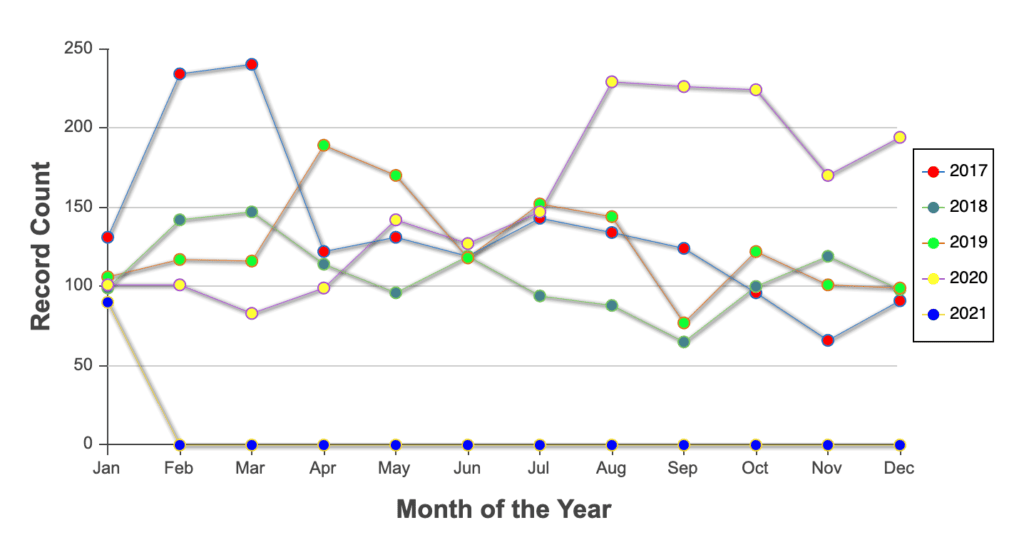
The chart shows data compromises in the U.S. for the past five years. There was a total of 7,398 publicly reported data breaches in this period.

January 29th 2021

There’s been an interesting mix of information on 2020, coming from different sources focused on data breaches and other cyberattacks. The Identity Theft Resource Center (ITRC), which has tracked publicly reported data breaches in the United States for more than 15 years, building a database that now includes details on 12,250+ data compromises, just released its 2020 edition, reporting that the number of data breaches saw a significant drop.

According to the ITRC, 2020 reported one major trend: A move away from mass attacks that targeted consumer and individual information, with cyber attackers focusing their attention instead on attacking businesses, effectively holding them hostage using stolen logins and passwords.  Why? Less work for a larger payoff. As a result, there was a drop in the total number of data breaches, along with a drop in the number of people directly impacted by those breaches. The report stated, “cybercriminals are less interested in stealing large amounts of consumers’ personal information. Instead, threat actors are more interested in taking advantage of bad consumer behaviors to attack businesses using stolen credentials like logins and passwords. Due to the shift in tactics, ransomware and phishing attacks directed at organizations are now the preferred data theft method by cyberthieves.”  

The ITRC report said that 2020 saw a total of 1,108 data breaches in the US, down 19% compared to 2019. In a year where an estimated 51% of American workers worked remotely, with 33% continuing to do so even now, and online purchases increasing by 33%, the number of individuals impacted by publicly reported data breaches fell to 300,562,519 —down 66 % over 2019.

A similar report by another cybersecurity firm, Risk Based Security, based on the first three quarters of 2020 and released last month, stated there were 2,953 publicly reported breaches Q1-Q3 globally. They too reported a decrease, 51%, in overall breaches compared to the same time period last year. Some of the other significant points in their report included these:

— Even by the end of Q2 (June 30, 2020), the year was already the “worst year on record” in terms of the total number of records exposed. By the end of September, they said an unprecedented 36 billion records had been exposed.

— Two breaches in Q3 exposed over 1 billion records each and four breaches exposed over 100 million records. Together, they stated, these six breaches accounted for approximately 8 billion exposed records, or 22.3% of the records exposed through the end of Q3.

Risk Based Security reported that between January to September 2020, their research team cataloged over 440 breaches that included a ransomware component to the attack in some way, about 21% of all breaches. They said this included what were both obvious “data breaches”, “where information was clearly taken, as well as those events that indicate attackers were inside systems or services and could have accessed sensitive data.” These ransomware-related events contributed to the unusually high number of unknown (11.2%) and miscellaneous (10.4%) data types exposed.

The Associated Press, quoting cybersecurity firm Coverware, which specializes in ransomware incident response and extortion negotiations on behalf of victimized companies, stated that the average ransomware payout has grown from less than $10,000 per event in 2018 to more than $233,000 per event in 2020.

Talking to Security magazine, Chris Hallenbeck, Chief Information Security Officer (CISO) for the Americas at California-based endpoint security and systems management company

Tanium, said that while the compromise of Twitter accounts held by several celebrities probably garnered the most headlines and was more click-bait than anything else, it offered “a valuable lesson for organizations of all sizes – employee education matters. Three teenagers managed to gain access to the accounts of public figures by simply convincing employees at the social media company that they were colleagues who needed access to the customer service portal. While this sounds simple, social engineering is more common — and more successful —than most people realize.”

DoJ busts dog fighting ring, charges 11

By a Biometrica staffer

January 29, 2021

The Department of Justice has charged 11 individuals on a 136-count indictment, including flouting dog fighting prohibitions outlined by the Animal Welfare Act and several drug-related violations. Five of the defendants had allegedly attended dog fights between May 2019 and Feb. 2020 and discussed training and matching up their dogs for fighting.

The defendants are Jarvis Lockett, 40, of Warner Robins, Georgia; Derrick Owens, 37, of Woodland, Georgia; Christopher Raines, 50, of Talbotton, Georgia; Armard Davis, 41, of Fort Valley, Georgia; Jason Carter, 38, of Phoenix City, Alabama; Shaquille Bentley, 26, of Roberta, Georgia; Bryanna Holmes, 24, of Fort Valley, Georgia; Vernon Vegas, 49, of Suwanee, Georgia; Lekey Davis, 45, of Talbotton, Georgia; Kathy Ann Whitfield, 61, of Columbus, Georgia; and Rodrick Walton, 40, of Shiloh, Georgia.

Lockett, Owens, Raines, A. Davis, and Walton have been charged separately with possession of dogs for participating in fights — 15 counts for Lockett, 40 counts for Raines, 44 counts for Owens, 18 counts for Walton and nine counts for A. Davis.

“Dog fighting is brutal and illegal; it is particularly troubling when combined with drug trafficking,” Peter D. Leary, Acting U.S. Attorney for the Middle District of Georgia, was quoted as saying in a statement released by the Department of Justice. “As this case demonstrates, we continue to aggressively prosecute dog fighters and those who work together to support and further their inhumane criminal activities,” said Jean Williams, Deputy Assistant Attorney General of the Justice Department’s Environment and Natural Resources Division.

Lockett, Owens, Raines, A. Davis, Carter, Bentley, Holmes, Vegas, L. Davis, and Whitfield have also been charged with conspiring between May 2019 and Feb. 2020 to possess with the intent to distribute five kilograms or more of cocaine and 28 grams or more of cocaine base.

California Business Owner Charged With Possession Of Five Pipe Bombs, Other Unregistered Devices

By a Biometrica staffer

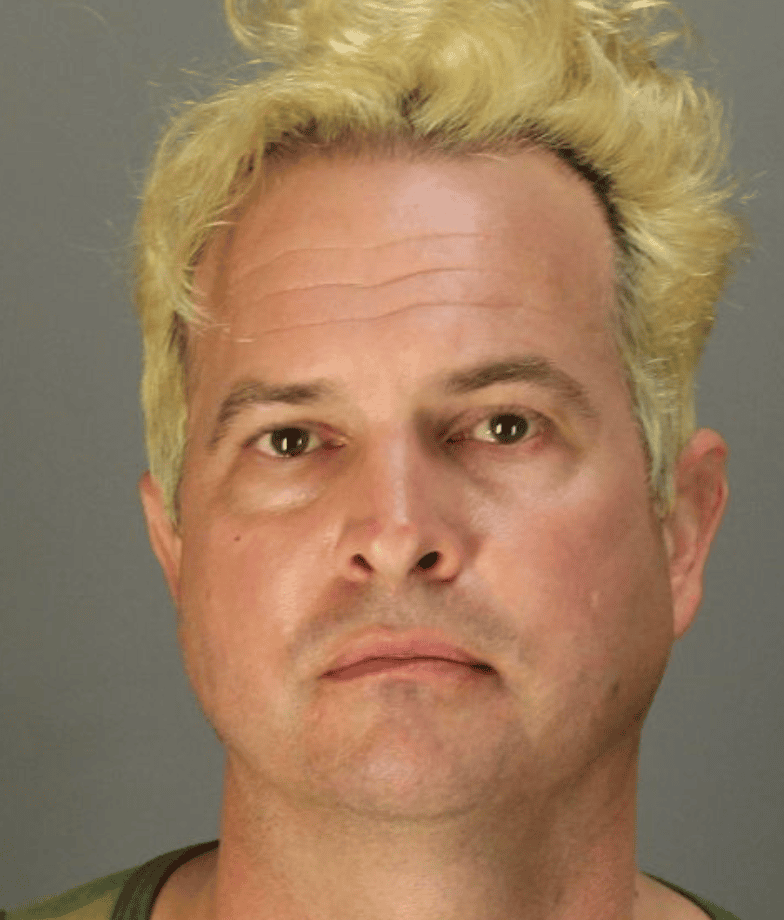
Photo courtesy: Napa County Sheriff’s Office

California business owner, Ian Benjamin Rogers, 43, of Napa County, was charged this week by federal authorities with the possession of unregistered destructive devices following a joint investigation by the FBI’s Joint Terrorism Task Force, the Napa County Sheriff’s Office and the Napa Special Investigations Bureau, which discovered five operational pipe bombs and “the material to make more” after a search of his home and business. 

He was arraigned Jan 20. in the Napa County Superior Court, where he also faced state illegal firearm charges, including 28 felony counts of possessing bombs and illegal firearms. The Napa County Sheriff’s Office said federal and state law enforcement recovered five pipe bombs and several pounds of gunpowder, along with more than 50 guns — some of them illegal or unregistered — and 15,000 rounds of ammunition.

Local daily the Napa Valley Register had previously reported that “a bomb squad blocked the driveway to British Auto Repair and a nearby section of the Napa Valley Vine Trail as various objects removed from the garage were detonated in a bunker assembled from old tires, with several small pops followed by a final, larger bang.”

Photo courtesy: Federal criminal complaint against Rogers

According to a release from the Department of Justice, Rogers was arrested Jan. 15, and a search warrant was served on his home and his auto business in Napa County. Following that, officers found a large gun safe at his business. Inside the safe, the officers and agents discovered and seized several guns and the five pipe bombs. They also identified other materials at the scene that could be used to manufacture destructive devices, “including black powder, pipes, endcaps, and manuals, including The Anarchist Cookbook, U.S. Army Improvised Munitions Handbook, and Homemade C-4 A Recipe for Survival.” They also found two copies of a U.S. Army Special Forces Guide to Unconventional Warfare, and a U.S. Army Guerrilla Warfare Handbook.

The criminal complaint stated that on Rogers’s vehicle window, officers found a sticker believed to be representative of the “Three Percenters,” a rightwing militia group who ascribe to extreme anti-government, pro-gun beliefs. According to the SPLC, “The reference to 3 percent stems from the dubious historical claim that only 3 percent of American colonists fought against the British during the War of Independence.”

The criminal complaint also stated that they found what they believed to be a “White Privilege card” (see pic). The FBI special agent-in-charge wrote: “I believe that the statement “Trumps Everything” and the numbers “0045” repeated four times (to make it look like a credit card number), are references to Donald Trump, the 45th President of the United States … Further, text messages recovered from ROGERS’s phone indicate his belief that Donald Trump won the 2020 presidential election, and his intent to attack Democrats and places associated with Democrats in an effort to ensure Trump remained in office.”

Agents believe that text messages found on Rogers’s phone, including, “I’m thinking sac office first target” and “Then maybe bird and face offices,” were a reference to the Sacramento office of California Gov. Gavin Newsom and the corporate offices of Twitter and Facebook, as both social media platforms had banned former President Trump.

Photo courtesy: Federal criminal complaint against Rogers

Authorities reported finding approximately two dozen ammunition boxes containing thousands of rounds of ammunition. Several of the firearms, including what appears to be a kit-built replica MG-42 belt-fed machine gun, appear to be capable of firing fully automatic. The FBI stated that they had asked a Napa County Sheriff’s Office bomb technician to examine the pipe bombs and a preliminary report described them as “7-inch-long segments of galvanized pipe with end caps screwed on and 1 to 2.5 inches of fuse material sticking out of a hole in one of the end caps.”

Inside the pipes, the bomb tech found black powder material consistent with the material found inside a plastic bottle of Hogdon Rifle Powder gunpowder that was also seized from Rogers’s residence. Special Agent Stephanie Minor wrote in the federal complaint, “I know from my research that Hogdon Rifle Powder is commercially-available gunpowder that can be used for reloading bullets. The bomb technician conducted a burn test on a sample from the powder taken from one of the pipe bombs. He put some powder on the concrete and applied heat to one end. The powder burned unconfined. He also examined the fuses and determined them to be common fuses which can be purchased over the internet or at hobby stores. Based on his examination and tests, the bomb technician concluded that ROGERS constructed 5 improvised explosive devices that were fully operational and could cause great bodily harm or injury if handled improperly.”

Photo courtesy: Federal criminal complaint against Rogers

Rogers reportedly later told authorities he was building the incendiary devices for “entertainment.” The Bureau of Alcohol, Tobacco, Firearms & Explosives (ATF) checked the National Firearms Registry and determined had no registrations for any destructive devices registered to him. Rogers already was being held on $5 million bail on state charges when prosecutors filed the federal case. 

Texas man with ties to ISIS pleads guilty

By a Biometrica staffer

January 28, 2021

A Texas man pled guilty to conspiring to provide material support to the Islamic State of Iraq, at a hearing in San Antonio on Jan. 25.

Jaylyn Christopher Molina, aka Abdur Rahim of Cost, was plotting attacks on the White House and Trump Tower in New York City, according to an AP report. Molina, 22, also pled guilty to one count of receiving child pornography after federal authorities found images on his mobile while executing a search warrant.

Molina admitted he was conspiring with 34-year-old South Carolina resident Kristopher Sean Matthews, aka Ali Jibreel, and others since May 2019 to provide services to ISIS by supervising an encrypted chat group devoted to people who supported ISIS ideology. The chat group was used to disseminate ISIS propaganda and bomb-making instructions apart from trying to recruit for the banned outfit.

The AP report says the pair had discussed traveling to Syria to fight with ISIS or carry out attacks at Trump Tower, the White House, the New York Stock Exchange or the headquarters of federal law enforcement agencies. When Molina’s mobile was seized while executing a search warrant on Sept. 18, 2020, federal authorities found 18 images depicting child pornography.

He faces up to 20 years in prison on the conspiracy charge and up to 20 years on the child pornography charge. Matthews pled guilty to a conspiracy charge to provide material support to ISIS. Matthews is scheduled to be sentenced in Mar. 4 and Molina for Apr. 22. The San Antonio FBI’s Joint Terrorism Task Force (JTTF), with assistance from the San Antonio Police Department, the U.S. Secret Service and the Gonzalez County Sheriff’s Office, investigated this case.

Groping a child through clothes not sexual assault?

By a Biometrica staffer

January 27, 2021

Groping a child through clothing does not constitute sexual assault, the Nagpur bench of the Bombay High Court ruled last week, drawing outrage across the country. On Wednesday, India’s top court suspended that ruling and permitted the attorney-general to file an appeal against the ruling, Reuters reported.

On Jan. 19 the lower court delivered a ruling that acquitted a man who had groped a 12-year old girl over her clothes, saying since there was no “skin to skin” physical contact, it could not be defined as sexual assault.

The Supreme Court, India’s top court, stayed the order  and issued a notice to the Maharashtra state government to file an appeal against the verdict.

The Bombay High Court had reversed the decision of a sessions court that had convicted 39-year-old Bandu Ragde and sentenced him to three years in jail under Section 8 of Protection of Children from Sexual Offences Act (POCSO). Ragde was accused of luring a 12-year old girl to his house on the pretext of giving her a guava. He had allegedly groped her and attempted to remove her lower clothing.

Since Ragde didn’t remove her clothes,  the offence falls under outraging a woman’s modesty under Indian Penal Code (IPC) section 354, the Bombay High Court said. Ragde was ultimately sentenced to one year in prison.

“Considering the stringent nature of punishment provided for the offense, in the opinion of this court, stricter proof and serious allegations are required,” wrote Ganediwala. “It is the basic principle of criminal jurisprudence that the punishment for an offense shall be proportionate to the seriousness of the crime,” she said.

The order drew widespread condemnation throughout India. Kavita Krishnan, secretary of All India Progressive Women’s Association, called it an “outrageous judgement” that goes against the letter of the law.” The POCSO law defines sexual assault very clearly and it has a provision for sexual touch. This notion that you will circumvent the law by saying touch with or without clothes makes no sense at all,” Krishnan said. The uproar prompted the central government to take the matter up to the Supreme Court

Many criminal laws dealing with sexual violence in India have been reformed since the brutal gang rape and murder of a young woman inside a moving bus in New Delhi in the winter of 2012. In 2013, the reforms prescribed mandatory minimum sentences for criminal use of force and outraging the modesty of a woman. However, the scope of punishment has often varied with the interpretation of the law. A high rate of violence and sexual assault against women contributes to India’s abysmally low current Gender Inequality Index rank of 125. The actual figures in India could be higher since many crimes go unreported.

Capitol Hill siege: Three charged for assaulting federal officers

By a Biometrica staffer

January 26, 2021

On Friday, three men were charged for their attacks on local and federal enforcement officers, and for other crimes they committed during the riots at the U.S. Capitol on Jan. 6.

Emanuel Jackson of D.C., Scott Kevin Fairlamb of New Jersey and Jeffrey Sabol of Colorado appeared at different United States district courts on Jan. 22. On the same day the FBI announced the arrest of Andrew Ericson in Oklahoma City for his alleged involvement in the riots, as federal authorities ramped up efforts to identify and prosecute participants in the siege. According to an AP report, five New Jersey residents, including a corrections officer, were also arrested on Friday.

Jackson, 20, was ordered held without bond pending trial after a detention hearing in a District Court for the District of Columbia. He had allegedly repeatedly struck an officer of the U.S. Capitol Police force while trying to break through the barricaded doorway of the Senate Wing entrance on the west side of the building with a large group of rioters. Later that day, Jackson had joined a violent mob outside the building at the West Terrace entrance, wielding a metal baseball bat and repeatedly striking a group of U.S. Capitol Police and Metropolitan Police Department officers in an attempt to break through.

Sabol,51, was part of a violent group that grabbed a Metropolitan police officer from the post where he guarded against access to the interior of the Capitol building, and dragged him down the exterior stairs. Sabol is seen in a photograph holding an instrument believed to be a police officer’s baton across the officer’s lower neck while his left hand is pressed to the backside of the officer. He was later pulled over by police in New York State based on reports of erratic driving.

Charges levelled against Fairlamb, 43, allege he “shoved and punched an officer on the West Front of the Capitol” when the D.C. Metropolitan Police Department arrived at the Capitol to assist the U.S. Capitol Police in restoring order. Video footage shows Fairlamb picking up a baton from the ground and placing it under his arm and leaving from inside the Capitol building. The affidavit also alleges Fairlamb posted a video on his Facebook account where he is seen carrying a collapsible baton like the one depicted in the video and said, “What Patriots do? We [expletive] disarm them and then we storm [expletive] the Capitol.”

Federal authorities have widened the search for perpetrators of the Jan. 6 riot. And with many participants openly declaring on social media about rioting inside the Capitol, most of the evidence has been easily obtainable, a New York Times report said. A New York Times report says more than 140 people have been charged, with the FBI receiving more than 100,000 tips. All cases are being prosecuted by the U.S. Attorney’s Office for the District of Columbia.

Leaders of street gang Gangster Disciples sentenced to prison

By a Biometrica staffer

January 25, 2021

Two leaders of the Gangster Disciples, a national street gang with roots in Chicago, were sentenced on Friday for a racketeering conspiracy involving murder.

Shauntay Craig, 42, was sentenced to 40 years in prison after he pleaded guilty in August 2019 to racketeering conspiracy involving murder and drug trafficking. Donald Glass, 30, was sentenced to life plus 10 years in prison after he was convicted by a federal jury in May 2019 of racketeering conspiracy involving murder, discharging a firearm during and in relation to a crime of violence, causing death through the use of a firearm for the murder of Robert Dixon, and other firearms crimes.

Highly structured, with a hierarchy of leadership posts known as “Positions of Authority” or “POAs”, the gang dates back to the 1970s and strictly prohibits cooperating with law enforcement. Violations of the rule are punishable by death. Between 2011 and 2015, the gang was responsible for 24 shootings, including 12 murders.

Homicides and shootings spiked dramatically in Chicago in 2020, ending with more bloodshed than in all but one year in more than two decades, statistics released by police showed, according to an AP report published on Jan. 2. There were 769 homicides in 2020 — 274 more than the previous year and the most since 784 in 2016.

“Members of the Gangster Disciples left a trail of death and destruction across Georgia and much of the United States,” a Department of Justice press statement quoted Bobby L. Christine, Acting U.S. Attorney of the Northern District of Georgia, as saying. “The sentence for these two gang leaders sends a resounding message to those who seek to inflict irreparable harm on their communities in furtherance of a violent gang.  It should reassure citizens that we will use every asset we have to abolish gang activity.”

Craig (aka “Shake”) was the Board Member of Gangster Disciples, the highest-ranking position in the gang, and was responsible for orchestrating the murder of a government informant in Colorado. “As leaders of the Gangster Disciples, these defendants terrorized communities across the country by engaging in, and ordering others to engage in, multiple acts of violence, including murder,” said Nicholas L. McQuaid, Acting Assistant Attorney General of the Justice Department’s Criminal Division.

“The significant sentences imposed upon defendant Craig for his national leadership role in the gang, and defendant Glass for his creation of an army of teenagers who shot and killed indiscriminately, demonstrate that even the most sophisticated and ruthless gangs are no match for the coordinated efforts of federal, state, and local law enforcement,” McQuaid added.

Glass (aka “Smurf”) led the H.A.T.E. Committee, a specialized enforcement team within the gang that committed numerous murders, shootings, and robberies. Glass’ gang of teenage shooters, including a juvenile he was grooming to be an assassin, have been ordered by him to shoot and kill over 10 people so far.

Last November, Vancito Gumbs, a former DeKalb County police officer who moonlighted for the gang, was sentenced to 15 years of imprisonment followed by five years of supervised release, for racketeering conspiracy involving murder. A self-professed “hitman” while serving as a police officer, Gumbs had relayed law enforcement information to the gang and provided a firearm to a fellow member.

According to the Chicago Police Department, 79 officers were shot at in 2020, compared with 22 who were fired upon the year before, the AP report in early Jan. added. The number of officers who were struck by bullets doubled from five in 2019 to 10 in 2020.