Two reports released recently draw attention to a mental health crisis plaguing schools and students in the U.S. One is an advisory issued by the Surgeon General, which warns that “symptoms of anxiety, depression and other mental health disorders among young people have increased since the beginning of the pandemic.” A separate report from the Government Accountability Office (GAO) that was compiled upon request by a congressional committee found that, in the two school years between 2015 and 2018, “hostile behaviors” in K–12 public schools rose sharply.
According to the advisory issued by Dr. Vivek Murthy’s office, 25% of youth report experiencing symptoms of depression and 20% anxiety. Rates of impulsivity and irritability, which are often associated with criminal behavior, have moderately increased as well. Further, between early 2019 and early 2021, emergency department visits for attempted suicide among adolescents rose 51% for girls and 4% for boys.
The GAO’s report found that attacks with weapons jumped 97%, while hate crimes and sexual assaults increased by 81% and 17%, respectively. Bullying behavior at schools was also shockingly high, per the report, with around one in every five students (5.2 million) between the ages of 12 and 18 having been affected by it.
Experiencing or witnessing bullying can be hugely damaging for adolescents, who are more likely to suffer feelings of helplessness, the GAO said. The types of victimization covered by the report can “negatively affect K-12 students’ short- and long-term mental health, education, income, and overall wellbeing.” Studies have shown a link between violence, mental health illnesses like depression and anxiety, physical and sexual abuse, adverse outcomes later in life, poor employment opportunities as a result of poor school performance, and behavioral problems that range from “acting out” to increased likelihood of interacting with the criminal justice system.
In addition, according to the Surgeon General’s advisory, adverse childhood experiences (including exposure to community violence) can lead to the development of toxic stress, which, in turn, “can cause long lasting changes, including disrupting brain development and increasing the risk for mental health conditions and other health problems such as obesity, heart disease, and diabetes, both during and beyond childhood as well as for future generations.”
The issues of violence at schools and the mental health of adolescents is likely to be fresh in the minds of Americans, following the latest school shooting to make headlines. On Nov. 30, Ethan Crumbley, a 15-year-old student at Oxford High School, carried out a shooting at the school, killing four and injuring seven others. No motive has been revealed yet in the case, though prosecutors have said there is substantial evidence of premeditation and warning signs that were missed.
Though the GAO data predate the pandemic, they mirror trends noted this year in society at large, of hate crimes and homicide rates, particularly those involving a firearm, increasing rapidly. As noted by Dr. Murthy in the advisory, the pandemic only exacerbated trends that were already being noted before 2020. However, as with adolescents’ mental health, experiences and accounts of violence perpetrated among classmates are likely to have transformed over the last twenty months, especially with schools transitioning online for a good portion of the school year in 2020. It remains to be seen what these changes are, however.
On average, a woman or girl is killed by someone in her own family every 11 minutes across the world, according to a report published by the United Nations Office on Drugs and Crime (UNODC) this month. In total, around 47,000 women and girls were killed by their intimate partners or other family members in 2020, the report adds. Over the past decade, the magnitude of gender-related killings has been largely unchanged with but marginal decreases.
Women and girls in all regions across the world are affected by this type of gender-based violence. With an estimated 18,600 victims, Asia is the region with the highest number of victims in absolute terms, while Africa is the region with the highest level relative to the size of its female population. And although national trends can be volatile and vary drastically from one country to another, the Americas has seen a 9% increase in gender-related killings of women and girls over a decade.
In this piece, we explore more key findings of the UNODC report.
Why Does It Matter?
Image Source: Screengrab from the UNODC report
“The killing of women and girls at the hands of intimate partners or other family members – people whom they would normally be expected to trust – represents one of the most extreme manifestations of gender-based violence. Such killings are often the culmination of prior experiences of gender-based violence, which can include psychological, sexual and physical abuse,” the UNODC report’s introduction says.
To put it into perspective, an overwhelming majority of all homicide victims worldwide in 2020 were identified as men or boys (80%). Yet, when one segregates that further to just look at data on killings perpetrated by intimate partners or other family members, 58% of victims were women or girls. Despite accounting for only a tenth of all homicide victims, they bore a vastly disproportionate burden of lethal violence perpetrated “at home.”
October was National Domestic Violence Awareness Month in the U.S. and in his Domestic Violence Awareness Month proclamation, President Joe Biden called on all Americans to reaffirm their commitment to ending this violence. “For too long, domestic violence was considered a “family issue” and was left for families to address in private. That is why, decades ago, I created and pushed for the Violence Against Women Act (VAWA) to be passed,” Biden’s proclamation said back then adding that domestic violence affects millions of people in the country.
The data about violence committed against women in general — and Indigenous ones in particular — are staggering. For example, of all women who were stalked by an intimate partner, 81% were physically assaulted and 31% were sexually assaulted. Experts say that violence against women does not always start and end with murder. It often escalates, moving from slightly less threatening crimes like stalking, to physical or sexual assault, only to often culminate in homicide. In addition, it is widely acknowledged that the incidence of violence experienced by Native American women is much higher than that of other races. Biometrica’s Aara Ramesh wrote about this, pegged to the Violence Against Women Act (VAWA), in an earlier piece.
The Justice Department also kicked off October by announcing more than $476 million in Office on Violence Against Women (OVW) grants. That aside, the department also said it was combatting domestic and sexual violence in local and tribal communities on other fronts. In his fiscal year 2022 budget, Biden proposed a historic $1 billion for grant programs administered by the Office on Violence Against Women (OVW). There’s no doubt that gender-based violence against women and girls remains a public safety challenge.
While global data on the impact of Covid-19 lockdown measures on gender-related killings of women or girls is patchy and inconclusive, the pandemic is generally thought to have worsened the plight of the vulnerable sections of society across the world. Gender-related violence is unlikely to be largely different from trends observed in other kinds of crimes, such as human trafficking, hate crimes, and organized crime in general.
So far, according to the UNODC report, the average annual number of these killings showed an increase of 11% from 2019 to 2020 in Western Europe and of 5% in Southern Europe. No change was detectable in Northern Europe and there was a slight decrease in Eastern Europe. By comparison, in Northern America the number of gender-related killings of women and girls increased by 8%, in Central America by 3% and in South America by 5%. But, these increases were of a similar magnitude to previous annual changes recorded in the past decade.
In October, U.S. Deputy Attorney General Lisa O. Monaco said: “Domestic Violence Awareness Month is a sobering reminder of the harm domestic violence inflicts across our country, at a time when the COVID-19 pandemic means that for many survivors, abuse may be compounded by being isolated with an abuser, loss of income and stress over the virus itself.”
Even though the data is inconclusive on whether gender-related violence perpetrated against women or girls by intimate partners or family members increased, it does, however, show with a little more clarity that this type of crime was relatively unaffected by Covid-19 measures per UNODC.
Region-Wise Trends
Image Source: Screengrab from the UNODC report
As mentioned at the start of this piece, Asia accounted for the largest number of female intimate partner/family-related killings in 2020 in absolute terms (with an estimated 18,600 victims). Africa stood second on the list with around 18,100 estimated victims, followed by the Americas with 7,300, Europe with 2,600 and, finally, Oceania with the lowest number (at 300).
The UNODC report cautions, though, that these absolute numbers are also influenced by the differences in the size of the populations of the world regions. For example, with an estimated population of 4.6 billion in 2020, Asia is by far the most populous region, so it is not surprising that the continent accounts for the largest share of female intimate partner/family-related homicides globally.
In Africa, Asia and Oceania, it is not possible to identify trends in female intimate partner/family-related homicide over the past decade, because of the limited availability of sufficiently disaggregated homicide data covering the period 2010–2020, the UNODC report says.
While the link between trends in female homicide and those perpetrated by intimate partner or other family members is not always direct, the significant reduction in female homicides in certain populous countries, such as India, Japan, the Philippines and Turkey, since 2010 may indicate that the situation is slowly improving in Asia, it adds. For example, in India, violent deaths related to dowry payments, accusations of witchcraft and other gender-related factors have been slowly declining, per the report.
The modest reduction in the total number of female victims of intimate partner/family-related homicide in Europe is the result of national trends that fluctuate around a small overall decline in several countries in Eastern Europe, including Belarus and Romania, and a few countries in Western Europe, the UNODC says.
When it comes to the Americas, the overall graph has been influenced by divergent trends at the country level. For example, among the most populous countries in the region, the U.S. and Brazil have recorded a slight decrease in recent years (although the latest data for the U.S. is for pre-pandemic 2019) while there has been an upward trend in Mexico. In contrast, less populous countries with higher rates of female intimate partner/family-related homicide like El Salvador and Honduras have recorded some reductions since 2015.
The average trends in Europe and the Americas mask differences and commonalities between sub-regions, UNODC says.
Image Source: Screengrab from the UNODC report
“In the long term, it is necessary to put in place interventions at multiple levels that can reduce the prevalence of gender-based violence and reduce the number of gender-related killings of women and girls,” the report concludes. As Biden said in his October proclamation: “Domestic violence is an abuse of power that tears apart the fabric of relationships and families and undermines the well-being of communities,” and it must be addressed holistically.
Last week, the Office of Inspector General (OIG) of the Department of Health and Human Services (HHS) released its Fall Semiannual Report to Congress, in which it was found that the efforts of the HHS in the 2021 fiscal year could potentially “recoup” almost $4 billion in taxpayer money that was falsely spent on Medicare, Medicaid, and other programs.
According to the report, in FY 2021, “$787 million is expected [to] be returned based on program audit findings and $3 billion is expected to be returned based on investigative work.” The main purpose of the HHS-OIG is to “detect, investigate, and prosecute fraud through a coordinated and data-driven approach,” as it specifically relates to HHS programs like Medicare and Medicaid.
Over this year, HHS-OIG reported 532 “criminal enforcement actions against individuals or entities that engaged in crimes that affected HHS programs” and 689 civil actions. In addition, this year, a total of 1,689 people and companies were excluded from participating in federal healthcare programs ever again.
Earlier this year, in July, another report revealed that a total of $3.1 billion in false and fraudulent claims was recovered and returned to the federal government or individual persons in the 2020 fiscal year.
When it comes to protecting children, the report found that the state of Colorado’s monitoring process did not ensure that childcare providers were complying with state criminal background check requirements for 18 of the 30 providers reviewed. The state “did not retain criminal background check records for child care center individuals,” the report says. It also did not mandate training on background check requirements. Further, the report adds, “providers did not always inform the State and properly obtain background checks when hiring individuals or when new individuals began to reside in family homes.”
In the case of Missouri, HHS-OIG found that the state’s foster care agency “ rarely attempted to reduce children’s risk of going missing,” failed to protect missing children, and did not “effectively use resources” to help find the children. These children were then “exposed to additional risks” like being trafficked for sex or a greater likelihood of having interactions with the criminal justice system.
In relation to elderly people, two out of every five of those on Medicare and in nursing homes in 2020 either did or likely contracted Covid-19. In nursing homes, mortality rose to 22% in 2020, versus 17% the previous year. At the peak of the pandemic, in April 2020, there were almost 1,000 more beneficiaries dying per day than in the same month the previous year. Over half of those Medicare beneficiaries who were hospitalized due to Covid-19 had to receive intensive care or mechanical ventilation.
Racially, around 41% of white beneficiaries of Medicare in nursing homes either had or likely had Covid-19, compared to the nearly 50% rate noted among Black, Hispanic, and Asian beneficiaries. Those who were Black and Hispanic were also hospitalized at disproportionately higher rates.
HHS-OIG also found lax standards and oversight in regard to cybersecurity for medical devices in hospitals. This is particularly worrying, as hospitals were a major target for cybercriminals and ransomware attacks last year, as we wrote about a few months ago. In addition, the pandemic created greater demand for telehealth services, which many states struggled to provide to Medicaid enrollees. Among the challenges on this front were lack of training, poor internet connectivity, and inadequate protection of the privacy and security of personal data.
The OIG almost made a series of recommendations based on its audits of the HHS and found that the department could potentially save up to $318.91 million if all are implemented.
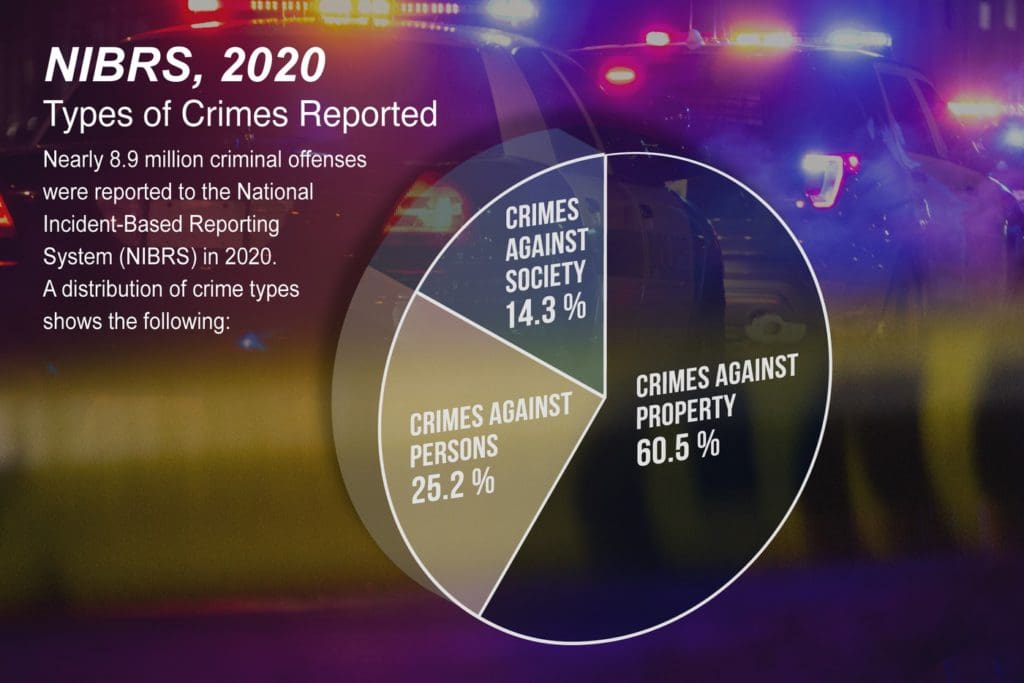
On Monday, Dec. 6, the Federal Bureau of Investigation (FBI) published data on nearly 8.9 million criminal offenses reported via the National Incident-Based Reporting System (NIBRS) in 2020. Of the total 8,879,728 offenses reported in 7,560,867 incidents, 60.5% fell under the crimes against property criminal offense category; 25.2% were crimes against persons; and 14.3% were crimes against society.
NIBRS data cannot be compared on an apples to apples basis from one year to another. But, for general understanding, the distribution of criminal offenses by category were very similar even per 2019 statistics. In 2019, the FBI published data on nearly 7.7 million criminal offenses in 6,572,870 incidents. Of those, 59.6% were crimes against property; 24.6% were crimes against persons; and 15.8% were crimes against society.
When it comes to crimes against persons, assault offenses made up the largest category of both incidents and offenses, followed in descending order by sex offenses, kidnapping/abduction, homicide offenses and, finally, human trafficking. Under crimes against property, larceny/theft offenses made up the most reported sub-category among the top five sub-categories, followed by destruction/damage/vandalism of property, fraud offenses, burglary/breaking & entering, and motor vehicle theft.
Within the broader crimes against society category, drug/narcotic offenses accounted for an overwhelming majority, followed by weapon law violations, pornography/obscene material related offenses, animal cruelty, prostitution offenses, and gambling offenses.
Per the NIBRS report, some incidents were counted two or more times when there were two or more offense types within the incident. While referring to victims, the figures represent the number associated with each offense type. The term known offender does not imply that the identity of the suspect is known, but only that an attribute of the suspect has been identified which distinguishes him/her from an unknown offender.
We begin by looking at some of the key highlights of the NIBRS 2020 report.
Participation — In 2020, 9,880 law enforcement agencies, whose jurisdictions covered more than 177.5 million U.S. inhabitants, submitted NIBRS data to the UCR Program. These agencies accounted for 62.1% of the 15,901 law enforcement agencies that submitted data to the UCR Program in 2020. In 2019, 8,497 law enforcement agencies, whose jurisdictions covered more than 146.5 million U.S. inhabitants, submitted NIBRS data to the UCR Program. These agencies accounted for 51.3% of the 16,551 law enforcement agencies that submitted data to the UCR Program in 2019.
Victims — The 9,362,709 victims reported via NIBRS include individuals, businesses, institutions, or society as a whole. For 2020, the data regarding the 6,597,394 victims who were individuals showed:
Of these victims, 23.8% were between 26 and 35 years old. In 2019, (based on data regarding the 5,547,758 victims who were individuals) 23.6% were between 21 and 30 years old.
A little more than half (50.6%) were female; 48.7% were male; and the gender of 0.8% of victims was unknown, per the 2020 data. That’s very similar to the categorization in 2019.
Most victims (66.9%) were white; 24% were Black; 1.9% were Asian; 0.8% were American Indian or Alaska Native; and 0.2% were Native Hawaiian or Other Pacific Islander per the latest report. The race of 6.2% of victims was unknown. Per the 2019 data, 68% were white; 23.3% were Black; 1.9% were Asian; 0.7% were American Indian or Alaska Native; and 0.5% were Native Hawaiian or Other Pacific Islander. The race of 5.6% of victims was unknown.
Data captured about the relationship of victims to their offenders show that just over half (50.1%) of the victims knew their offenders (or at least one offender when more than one was present) but did not have a familial relationship to them. About one quarter (24.7%) of the victims were related to their offenders (or at least one offender when more than one was present). Of the remaining 25.2% of victims, the relationships to their offenders were categorized as strangers, mutual combatants (victim was offender), or unknown.
Known Offenders — In 2020, law enforcement reported information about 7,173,072 known offenders, meaning some aspect of the suspect — such as age, gender, or race — was known.
Of these offenders, 38.2% were between 21 and 35 years of age. In 2019, 38.4% were between 16 and 30 years of age.
By gender, most offenders (62.1%) were male; 24.2% were female; and the gender for 13.7% of known offenders was unknown. Per 2019 data too most offenders were male and around 25% were female, and a similar number were unknown.
By race, more than half (50.8%) of known offenders were white; 29.6% were Black; and 2.2% were of other races. The race was unknown for 17.4% of reported known offenders. That’s similar to the numbers as per 2019’s data.
Arrestees — Law enforcement agencies submitted data to the UCR Program through incident reports and arrest reports for 3,621,299 arrestees.
In 2020, of these arrestees, 31.9% were 26 to 35 years of age (similar to 2019).
By gender, 72.6% were male; and 27.4% were female (that ratio is up a little for females from 2019).
By race, most arrestees (67.7%) were white; 27.1% were Black; and 2.9% were of other races. The race was unknown for 2.2% of arrestees (once again, similar to 2019 trends).
Going off the sheer volume of content generated about it, if there’s one thing Americans can’t get enough of, it’s a story about a cult. Be that NXIVM, which made headlines a few years ago when it emerged that some female members were being sexually enslaved and branded with the leader’s initials, or the infamous Manson family that carried out brutal murders in the 1970s at the behest of their leader.
According to one expert that CBS News spoke to, there may be as many as 10,000 active cults in the U.S. today, though many of them are small and do not attract attention as they do not break any laws.
At its root, “cult” has just become a negative term associated with an extremist group or belief in the popular consciousness. On the one hand, the First Amendment to the United States Constitution guarantees every American the inalienable rights to free speech, association, assembly, and religion.
Anyone is free to start a group with whoever they please and practice whatever they want. There are, according to some, “benign” cults. That is, groups that are just “unorthodox” or outside the mainstream, who do not exploit or deceive members, or control who their members speak to and what they read. These groups allow you to leave without threatening dire consequences.
On the other hand, if a group begins preaching or practicing violence against someone else, or if they start to break laws, that is where an offshoot religion or group united by one belief may veer into being considered a cult. Some of the most famous examples of cults in history have had documented cases of financially, sexually, or physically exploiting members; trafficking people; engaging in unfair and illegal labor practices; getting involved in child marriages or polygamy; etc.
They may also pop up on law enforcement’s radar if there are indications that they are amassing a vast amount of weapons or are developing explosive devices to prepare for a potential doomsday scenario. Of course, every American is constitutionally guaranteed the right to arm themselves, and police would never interfere with a group exercising their Second Amendment rights. But if they suspect illegal activity is going on, or that the group is planning to carry out an attack of some kind, they may be concerned.
Thus, when it comes to law enforcement officers or others involved in the criminal justice system, there is a fine line to navigate when looking at an unorthodox group and determining whether they are benign or destructive.
Here are some identifiers that experts have noted that may ring true for those who suspect they or someone they love may be part of a cult.
For one, members of a cult apply pressure on their members. The expert who spoke to CBS said to watch out for “[a]ny kind of pressure to make a quick decision about becoming involved in any intensive kind of activity or organization.”
By nature, most groups that can be described as cults work hard to “remain secretive.” They will compel members to keep the silence and not share their workings with the outside world.
Another red flag is any group leader who claims that they have “special powers” or knowledge, or that they are a messiah.
The group has a core “inner circle” that maintains utmost secrecy and is closed to “lower-ranked” members. These people will often obey the leader without questioning directions.
Another feature is that the pitch made when recruiting someone turns out to be completely different from what life is actually like inside the program. For example, NXIVM was billed as a professional development course, but those recruited from the larger pool for the inner circle found themselves branded and treated as sex slaves.
The leader may have a history of run-ins with the law, either through arrests, investigations of possible previous wrongdoings, etc.
One key thing to look out for is members being financially exploited, whether that’s through billing them for repeated programs or classes that they are told are necessary to achieve whatever goal has been promised by the group’s leadership, or whether that is through charitable donations.
A sense of isolationism can be a red flag as well — a “us vs. them” attitude about non-members or ex-members. Also, cults often threaten severe consequences if a person leaves. That can take the form of shaming, excommunication, or even making a person believe that they will fall ill if they leave.
The extreme doctrines preached by cults rarely have nuance. It is almost always a binary thought process — black or white, good or evil, etc.
Cult members are often cut off from the outside world in other ways too. For instance, they may not have free access to things like the internet, TV, newspapers, other information sources, etc. Conversely, they may be told to only trust particular sources of news.
If you notice that a loved one has suddenly changed their belief system or their manner of acting after joining a group or deciding to follow someone, it may be worth monitoring to see whether they are being brainwashed, as often happens in cults.
If a person’s sleep patterns change drastically or if they are suddenly fasting or sticking to a very restrictive diet on the orders of someone they know, that can also be a warning sign.
Much like in cases of intimate partner abuse, the group might cut off a member from their old friends, family, and support network, thereby isolating them and leaving them feeling they have little recourse if they want to leave.
It is important to remember that no one is immune to falling prey to a cult. People who choose to start these types of groups are often expert manipulators and work on eroding a person’s free will over long periods of time, sometimes even years. Often, joining a destructive group like this can just be a question of timing — for instance, right when someone is emotionally vulnerable, anyone can swoop in and promise to help them change everything.
In July, Biometrica wrote about how human traffickers adapted to the “new normal” after Covid-19 and appeared to be increasingly targeting children online, even as the pool of vulnerable persons who could be recruited by these criminals grew, also as a result of the pandemic. Globally, an estimated 25 million people are subjected to human trafficking and forced labor, which is responsible for an estimated $150 billion annually in illicit profits, per a White House statement.
In 2020, 11,193 situations of human trafficking were identified through the U.S. National Human Trafficking Hotline. On Friday, Dec. 3, the Biden administration released the new National Action Plan to Combat Human Trafficking. The updated action plan contains 61 priority actions that will be implemented in the years to come, the administration said.
“Human trafficking is a stain on our society’s conscience and an affront to the ideals that form the basis of our national strength: liberty, justice, equality, and opportunity … Any form of trafficking in people — from forced labor to sex trafficking — must not be tolerated, in the United States or anywhere around the world,” Biden said in his opening remarks in the document.
The document was originally released in 2020, but the updated version released by the White House on Friday takes into account the predatory behavior of traffickers by addressing the needs of underserved individuals, families, and communities. The anti-trafficking efforts outlined in the National Action Plan are directly linked to broader efforts to address inequities for marginalized groups, according to a factsheet published by the administration.
In other words, the plan has mainly been updated to integrate President Joe Biden’s “core commitment to gender and racial equity,” per the transcript of a background press call.
” … we know that human trafficking disproportionately impacts racial and ethnic minorities, women and girls, LGBTQI individuals, vulnerable migrants, and others from historically marginalized and underserved communities, our mission to combat human trafficking cannot be cut off from our broader efforts to build equity for members of marginalized communities. They are inextricably linked,” Biden added in the opening remarks.
As for what remains the same from the original plan, the White House statement says, is the fact that the strategy is grounded in an integrated federal response to this crime. Human trafficking is a complex issue that cuts across many federal agencies’ mandates and requires collaboration across government bodies.
Another crucial aspect of the plan, originally and now too, is that it draws on survivor voices and recommendations over the years on how to prevent human trafficking and provide the appropriate resources to protect and respond to the needs of individuals who have experienced human trafficking.
The foundational pillars of U.S. and global anti-trafficking efforts also continue to be at the heart of the updated strategy: i.e. prevention, protection, prosecution, and partnerships. You can read more about the four pillars in the White House’s factsheet on the action plan here.
Only yesterday, Dec. 2, Europol announced the results of a massive international law enforcement operation that targeted money mules. The operation, codenamed EMMA 7 (i.e. the European Money Mule Action), involved 26 countries including the U.S., and led to 1,803 arrests and the identification of over 18,000 money mules. It also showed that they were being used to launder money for a wide range of online scams such as sim-swapping, man in the middle attacks, e-commerce fraud and phishing.
Unlike other crimes where individuals get involved in illegal activities knowing what they’re about to do is wrong, what makes money muling dangerous is that regular people can be unknowingly recruited into a criminal operation. In this piece, the first of a mini series, we examine the subject of money muling, including how it is defined by law enforcement organizations, and go into details about the types of money mules per authorities.
What Is Money Muling?
Simply put, per the Federal Bureau of Investigation (FBI), a money mule is someone who transfers or moves illegally acquired money on behalf of someone else. This can happen in various ways. For instance, according to Europol, it can be done when a ‘money mule’ receives money from a third party in their bank account and transfers it to another one or takes it out in cash and gives it to someone else, obtaining a commission for it.
Other methods could include cashier’s checks, virtual currency, prepaid debit cards, or money service businesses. In some cases, money mules may or may not receive a commission. For example, a person may get involved thinking they are doing it for someone else they trust or someone else that they may have a romantic relationship with.
Why do criminals recruit money mules? Again, to put it in simple terms, to create layers of distance between crime victims and themselves and to move money around in an ‘anonymous’ way. According to law enforcement groups, criminals typically do this to help launder proceeds derived from online scams and frauds or even more dangerous crimes like human trafficking and drug trafficking. Europol says: ” … money mules help criminal syndicates to remain anonymous while moving funds around the world.”
While criminal enterprises can lure any individual in as a money mule, they seem to have certain preferred targets for this kind of scam. Per law enforcement, they often target students, those looking for work, or those on dating websites. Targets could also be newcomers to the country (often targeted soon after arrival) and those in economic hardship. In terms of age, Europol says the most likely targets are people under 35 years old, and that recently, criminal groups have begun recruiting younger generations (i.e. those between 12 and 21 years of age).
Some money mules know they’ve been recruited to assist criminal activity, but others become money mules without realizing their activity is benefiting fraudsters, the United States Postal Inspection Service (USPIS) says in a PSA on the issue.
It is, indeed, important to be aware of money muling scams though. Why? According to authorities, “ignorance is not an excuse when it comes to the law and money muling.” Several law enforcement organizations across the world, including the FBI and Europol, have campaigns to raise awareness around money muling scams. You can find more on the topic, and contribute in spreading awareness, by following #DontBeAMule.
How do you know if you are at risk? “If you are moving money at the direction of another person, you may be serving as a money mule,” the FBI says. And doing so is illegal and punishable, even if the person isn’t aware they’re committing a crime.
What happens if someone has been, knowingly or otherwise, money muling for a criminal organization? They could be prosecuted and incarcerated as part of a criminal money laundering conspiracy. Some of the federal charges they could face include mail fraud, wire fraud, bank fraud, money laundering, and aggravated identity theft.
The FBI adds that: Serving as a money mule can also damage a person’s credit and financial standing. Additionally, they risk having their own personally identifiable information stolen and used by the same criminals they are working for, and may be held personally liable for repaying money lost by victims.
Types Of Money Mules
The FBI essentially classifies money mules into three categories. Per the Bureau’s website, they are:
Unwitting or Unknowing
Individuals are unaware they are part of a larger scheme
Often solicited via an online romance scheme or job offer
Asked to use their established personal bank account or open a new account in their true name to receive money from someone they have never met in person
May be told to keep a portion of the money they transferred
Motivated by trust in the actual existence of their romance or job position
Witting
Individuals ignore obvious red flags or act willfully blind to their money movement activity
May have been warned by bank employees they were involved with fraudulent activity
Open accounts with multiple banks in their true name
May have been unwitting at first but continue communication and participation
Motivated by financial gain or an unwillingness to acknowledge their role
Complicit
Individuals are aware of their role and actively participate
Serially open bank accounts to receive money from a variety of individuals/businesses for criminal reasons
Advertise their services as a money mule, to include what actions they offer and at what prices. This may also include a review and/or rating by other criminal actors on the money mule’s speed and reliability
Travel, as directed, to different countries to open financial accounts or register companies
Operate funnel accounts to receive fraud proceeds from multiple lower level money mules
Recruit other money mules
Motivated by financial gain or loyalty to a known criminal group
In the next part of this mini series, Biometrica will explore how criminal organizations typically recruit money mules, i.e. their modi operandi, and go into tips on protecting oneself from this type of scam.
Earlier this year, we wrote about a three-decade-old case in which two men dressed as Boston Police Department officers in the early hours of March 18, 1990, stole 13 art pieces from the Isabella Stewart Gardner Museum and vanished into thin air. The entire crime took only 81 minutes and remains today the single largest incident of property theft in U.S. history.
Since then, there has been no fresh information on the case. Trails have gone cold, witnesses have checked out, and law enforcement have not been able to identify a pattern. The last significant breakthrough in the case was announced by the Federal Bureau of Investigation (FBI) in March 2015. But the two suspects they named had both died within a year of the heist.
The stolen pieces, including rare paintings by Dutch masters Rembrandt Harmenszoon van Rijn and Johannes Vermeer, are today considered to be worth half a billion dollars. The museum has offered a $10 million reward to anyone who comes forth with information that would help in recovering the works.
Now a Boston man has come forward, claiming he saw one of the pieces shortly after they were stolen, and says he has identified to law enforcement a person he believes was involved in the theft.
Paul Calantropo is a retired jeweler and fine art appraiser. According to Calantropo, in 1990, a friend of his from when he was a teenager, Bobby Donati, brought a “shiny finial in the shape of an eagle” for Calantropo to appraise. The jeweler said he was “stunned” as he recognized the piece immediately as one that was stolen from the museum about a month earlier.
Calantropo said he was “always uneasy” about his connection to Donati, who had a criminal history involving robberies and was friendly with local mobsters. He told Donati that the piece had no value on the market anymore, as “the whole world knew it was stolen” and it would be impossible to get rid of.
If his story is true, then Calantropo may have been the last to see the piece in person. Just a year later, Donati was murdered at the age of 50 and was left in the boot of his car. It took decades for Calantropo to speak to the authorities about his alleged meeting, though now he says he has been speaking with the FBI and the museum’s security director for about five years.
He is also working with a group of independent sleuths, including a “retired law enforcement official, two former convicts and [a] retired Boston Globe investigative reporter” to help track down the pieces. The group collectively signed a contract with the museum saying they will share the reward equally if they are able to help recover the pieces in “restorable condition.”
One address the group supplied to the FBI was searched in August but yielded nothing. Over the years, authorities have posited that the artwork has been circulated amongst organized crime groups across Boston, Connecticut, and Philadelphia, the last of which is where the trail seems to have ended. Apparently, an attempt was made in 2003 to sell one of the paintings, but nothing more came of that.
The FBI has not yet named any suspects officially in the crime, though they said they are reasonably certain they know who pulled it off. Whether Donati is one of them is not known, but it seems likely, according to those familiar with the case. Worryingly, it is highly possible that the information on where the artworks were stashed accompanied Donati to his grave.
Meanwhile, Julian Radcliffe, an “art detective,” says there is still hope that the paintings can be recovered, despite the fact that the “recovery rate after 20 years is only 15 percent.” Radcliffe operates a database where buyers and traders can check whether a piece they are interested in has been reported as being stolen.
Radcliffe says there is a chance that the paintings make their way back onto the market one day, either wittingly or not, as it is possible that the original thief hid the artworks and then either could not go recover them or died before they could. He hopes that one day the paintings pop up on his database.
When it comes to gun rights, one demographic proponents of gun control are particularly concerned about is children that live in homes that also have firearms. While the presence of a firearm in the house can be dangerous to anyone, children are, of course, particularly susceptible to injury or death related to one. Not even counting injuries, per some estimates, around 1,300 children die from firearm-related causes annually.
The most common method of firearm-related injury or death involving children is accidental or unintentional shootings. That is, children come across or are able to access a gun, and while playing with it, end up setting it off. With older children, having a gun in the house heightens the risk of suicide.
Additionally, around 66% of children or youngsters who intentionally carry out a shooting get the guns from within their own homes or from relatives’ homes. The latest example of this is the shooting at a school in Michigan where the teenage shooter used his father’s newly-purchased gun for the carnage.
In an earlier piece, we wrote about why having gun storage laws and minimum standards are important. At the time, we briefly touched on child access prevention (CAP) laws. Today, we delve deeper into this aspect of gun safety.
CAP laws are mostly retroactive measures that make a person criminally or civilly liable if they fail to store guns safely away from children. One study by the RAND Corporation found CAP laws might help lower gun suicide and accidental shooting rates in the states that have them. Another estimated that, among children aged 14–17, CAP laws lowered overall suicide rates by around 8% and firearm suicide rates by 11%. Other studies have found that CAP laws can reduce accidental shootings of children by up to 23%.
In states that do not have safe gun storage laws, “comprehensive” CAP laws are an effective alternative to prevent firearm-related deaths and injuries in children.
Currently, 27 states and D.C. have some form of CAP law. CAP laws vary in strength and penalties for violating them. In California, a person is criminally liable if a minor is “likely to gain access to a negligently stored firearm,” regardless of whether the minor actually does access it. On the other end of the spectrum, in Georgia, a parent or guardian is just prohibited from directly giving a minor a firearm. Crucially, states define the term “minor” differently.
There are laws in nearly two dozen states and D.C. that make a person criminally liable if they “negligently store firearms, where minors could or do gain access to that firearm. The applicability of this is often phrased as if a person “‘knows or reasonably should know’ that a child is likely to gain access to the firearm.”
The states are:
California
Colorado (also has a knowing, intentional, and reckless based law with a stronger penalty)
Connecticut
Delaware (has a “criminal negligence” standard)
Florida
Hawaii
Illinois
Iowa
Maine
Maryland
Massachusetts
Minnesota
Nevada
New Hampshire
New Jersey
New York
North Carolina
Rhode Island
Texas
Washington
Colorado, Massachusetts, and Nevada make the person criminally liable if the child may gain access to a firearm. Minnesota, New York, and the District of Columbia make a person criminally liable if a child is likely to gain access to a firearm. California imposes criminal liability for both these cases.
In all these states, as well as in Hawai’i, Maryland, New Jersey, and Texas, a person is criminally liable if a child gains access to the firearm at all, regardless of whether the child actually uses the firearm or causes an injury.
In Connecticut, Illinois, and Rhode Island, the criminal negligence statute only applies if a child accesses the firearm and then uses it to kill or seriously injure someone. In Florida, it is applicable if the minor takes the firearm to a public place and/or uses it in “a threatening manner.” In Iowa, a person is criminally liable if a child accesses the firearm, uses it to kill or seriously injure, or if they take it to a public place and/or use it in a threatening manner. In addition to these conditions, in Maine, New Hampshire, and North Carolina, criminal liability is also imposed when a child uses the firearm during a crime.
Across states, there are various exceptions made to CAP laws, including if the firearm is safely secured in a locked container and a child accesses it; whether the minor breaks into the house to access the gun; in cases of self-defense; in cases where the firearm is used by the minor to help law enforcement officers; when the firearm is used for hunting, sports, or agricultural purposes; and when the child has gone through a firearm safety course.
As such, according to the American Academy of Pediatrics, the only foolproof way to protect children from firearms is to not have any in the house. However, around one-third of all American families with children also have a gun in homes, amounting to roughly 22 million children nationwide living in homes with guns.
In the absence of CAP or safe gun storage laws, there are a few things adults can do to protect children who live in households that have guns.
It is not sufficient, experts say, to just hide a gun and believe the child doesn’t know about it. It is generally believed that three-fourths of children who live in homes with guns know where they are stored. Further, it is not true that children cannot fire a gun because they lack the strength or that they are able to tell the difference between a toy gun and a real gun.
If not having a gun at home is not an option, there are other tips that can be followed to provide a measure of safety:
The best way is to keep the gun unloaded and with the safety on.
The gun should be stored well out of the reach and sight of children.
The gun and the ammunition should be stored separately, both locked up.
Guns should also be within lock boxes or gun safes and should have a safety device like a gun lock.
The keys and/or combinations to lockboxes should never be made known to children.
Children should never be left unsupervised at home with a gun.
When your child is visiting another home, check if that family has unsecured firearms in their house.
The 15-year-old who opened fire on his fellow students at Oxford High School in Michigan on Tuesday, Nov. 30, has been charged as an adult with two dozen crimes, including murder, attempted murder and terrorism. He faces life in prison on both the terrorism and murder counts. Charging an accused school shooter with terrorism is rare, CNN said in a report.
Ethan Crumbley is said to have fired over 30 shots at people in a hallway and through classroom doors, per law enforcement officials. He’s been accused of killing four students in the carnage, which also left seven others wounded, including a teacher. Crumbley pled not guilty to the charges.
Three students were in hospitals Wednesday night, including a 17-year-old girl in critical condition. The others who were injured were discharged. Meanwhile, multiple school districts in suburban Detroit will be closed Thursday, Dec. 2, due to threats of more violence in the wake of the Oxford High School shooting.
“He deliberately brought the handgun that day with the intent to murder as many students as he could,” assistant prosecutor Marc Keast said of Crumbley, according to a report by Associated Press. Keast successfully argued for no bail for Crumbley and a transfer to jail from a juvenile facility.
No motive has been offered yet. But according to the Associated Press report, prosecutor Karen McDonald said the shooting was premeditated based on a “mountain of digital evidence” against Crumbley. Authorities investigating the shooting found videos on his phone that showed him talking about killing students, a sheriff’s official said on Wednesday, Dec. 1, per an NBC News report.
Oakland County Sheriff’s Lt. Tim Willis said the videos were recorded the night before the shooting. Authorities also allegedly found a journal with entries that mentioned shooting and killing students. “This was not just an impulsive act,” prosecutor McDonald told reporters.
Earlier, Sheriff Mike Bouchard told reporters that Crumbley’s parents were called to the school on Tuesday “for behavior in the classroom that was concerning,” per Associated Press. Crumbley remained in school, though, and the shooting occurred a few hours later. Bouchard didn’t say what had worried school officials, but he said investigators believed the gun was already in the 1,700-student school.
Based on a security video he’d seen, assistant prosecutor Keast said Crumbley walked into a bathroom with a backpack and emerged a few minutes later with a semi-automatic handgun. His father had bought the 9 mm Sig Sauer gun only last week.
Prosecutor McDonald said terrorism wasn’t a usual or typical charge in such cases, according to another Associated Press article. But the victims of the shooting were not just the four students who were killed and the seven others injured, McDonald added.
“What about all the children who ran, screaming, hiding under desks? What about all the children at home right now, who can’t eat and can’t sleep and can’t imagine a world where they could ever step foot back in that school? Those are victims, too, and so are their families and so is the community. The charge of terrorism reflects that,” McDonald was quoted as saying by Associated Press.
An act that would be a violent felony under the laws of this state, whether or not committed in this state.
An act that the person knows or has reason to know is dangerous to human life.
An act that is intended to intimidate or coerce a civilian population or influence or affect the conduct of government or a unit of government through intimidation or coercion.
But in Florida — where the 2018 high school massacre in Parkland occurred, for example — the shooter was not charged with terrorism. The law has more typically been used to charge people with making terroristic threats like calling in bomb threats, said Matthew Schneider, a former federal prosecutor who is uninvolved in the case, per Associated Press.
When it comes to other school districts that will be closed: Bloomfield Hills School District Superintendent Pat Watson wrote in a notice published at 11 p.m. Wednesday that its schools would be shut after “BHS and other communities across the region have received numerous reports of threats of violence circulating on social media.” Holly Area Schools also announced their schools will be closed Thursday and Friday, Dec. 3 “out of an abundance of caution” for similar threats posted on social media.
However, a joint investigation with the district and the Holly Police Department produced “no source for the original threat” and deemed it as “not credible due to a lack of evidence.” The Oxford Community Schools, the Oakland County district where the shooting took place, will be closed through the rest of the week, officials said in a post on the system’s website.