Tech Support : support@safience.io

Blog

911 Operators — First Of The First Responders

By a Biometrica staffer

October 28 marks National First Responders Day in many parts of the country — a day that is meant to celebrate the many hundreds of thousands of people that make up the fabric of the emergency response system in the U.S. Over the last 18 months, in particular, there has been greater appreciation for the work done by such essential frontline workers, as we watched them go to work to help Americans, often at great risk to themselves.

In general, the federal definition of the Emergency Services Sector (ESS) encompasses those agencies involved in law enforcement, fire and rescue services, emergency management, public works, and emergency medical services (EMS). It can also include SWAT, bomb disposal, canine, medevac helicopter, HAZMAT, and search and rescue teams.

Emergency Services Sector graphic
Image source: CISA

The ESS provides “a wide range of prevention, preparedness, response, and recovery services during both day-to-day operations and incident response.” Departments involved can range from city police departments and fire stations, all the way up to Department of Defense police and fire departments.

There is one crucial cog in this well-oiled and crucial public safety mechanism that often goes under-noticed and underappreciated — 911 call center employees.

Every year, there are about 240 million calls made to 911, averaging out to about 600,000 calls per day. As of Feb. 2021, there were 5,748 local public safety answering points (PSAPs), in addition to over 3,000 counties that have their own local call center. Each of these is limited to its own system and can only respond to calls within a designated area. 

Around 98.9% of the American population is covered by 911 services, with just a fraction less being covered by systems that allow an operator to peg down a physical address, in addition to the phone number. This last point is particularly salient when considering that emergencies may involve people who do not know their address or may be in too sensitive a situation to disclose their address.

The concept of a central, universal emergency response number was initially floated in the late 1950s when fire chiefs began to demand a single number to report fires, the lack of which was complicating an already-difficult occupation. At that point, people had to memorize or have handy the numbers for their closest fire and police departments. These 10-digit numbers were often used for both emergencies and non-emergencies, making wait times and poor response rates a real possibility.

In 1967, the President’s Commission on Law Enforcement and Administration of Justice recommended a single, easy-to-remember number be implemented for all emergency needs. The Federal Communications Commission (FCC) and telecommunications giant AT&T worked together on the project, culminating in the official establishment of the 911 helpline. The first call was made Feb. 16, 1968 in Alabama. The system being analog, it took a while to spread. By 1989, just a little over three decades ago, only 50% of Americans had access to 911.

Over time, of course, the sophistication of the system grew, as did the sprawl of it. Though it is such an important aspect, the appetite for the job isn’t enough to meet demands within the industry. Necessary qualifications for becoming a 911 employee vary greatly, but it is often stressful and challenging work across the board.

Some positions or departments may require specialized medical training. But, in general, requirements include an aptitude test, psychological evaluation, training for several weeks, and on-the-job training for months after. While many double up as call-takers and dispatchers, some departments separate these two positions.

Around 64% of states require a state and/or federal background check for aspiring EMS professionals to receive their initial license, with 43% requiring an additional check when the license is up for renewal. However, four states require no check at all, even for the initial license, while over 15 don’t require it upon renewal. Some states, like Delaware, require self-reporting of any incidents after the initial certification is handed out. Others, like Iowa, also depend on self-reporting, though in that case the incident will be investigated by the EMS agency in question, not law enforcement. Some departments also require polygraphs.

A criminal history can be disqualifying for the job, depending on individual rules. Given the sensitive nature of the information and situations 911 operators deal with, a criminal history can prove to be problematic. For instance, just a few weeks ago in New Orleans, a high-ranking supervisor at the agency that operates the city’s 911 call center was found to have access to the highly sensitive National Crime Information Center (NCIC) database, including criminal rap sheets and warrants, despite the fact that she herself had been convicted in 2015 for wire fraud. Legally, her felony conviction would bar her from accessing NCIC’s records.

Currently, 911 dispatchers and operators are classified as clerical workers by the Office of Management and Budget. There is, however, a growing pressure to reclassify them as working in “Protective Service Occupations,” especially in the context of Covid-19.

Advocates argue that being a 911 operator can be just as stressful as any other first job. Often called the “first of the first responders,” they directly deal with life and death situations, having to talk people through administering urgent, life-saving treatments like CPR or first aid, or even having to talk down people from committing suicide. As such, the attrition and PTSD rates within the profession can be as high as 25%. 

In addition, 911 operators have played a crucial role in protecting other first responders during the pandemic, just by identifying if a particular caller had been exposed to the Covid-19 virus and thereby determining the level of PPE and safety protocols needed at any given call. Often, this was done at great personal risk.

Multiple reports have emerged in places like New York of call center workers being forced to come into work (due to being classified as essential/frontline workers). Of course, 911 had to continue to be operational 24×7, despite lockdown orders, and a previously existing labor shortage in the industry was further exacerbated by the pandemic, forcing many to even work overtime.

In Phoenix, Arizona, Pamela Cooper was mandated to work a 15-hour shift (including five hours of overtime), despite having just spent five weeks recovering from the Covid-19 virus. Just after she clocked out for the day, she was rushed to the hospital, and died on March 5, after spending nearly a week on life support. Similarly, in Chicago, Guadalupe Lopez, 58, died in November 2020 from Covid-19, after 30 years on the job as a beloved police-emergency dispatcher.

Stories like this have only heightened calls within the first responder community to recognize the work done by 911 operators. Luckily, there has been legislative movement on that front as well. Earlier this year, in April, the 911 SAVES Act was reintroduced in Congress in a bid to change the official federal classification, though a number of states, cities, and counties have already made this move at their local level. The reclassification costs nothing but can have a significant impact. Beyond just validating these professionals and their efforts, the categorization also affects access to training, mental health resources, equitable wages and benefits, etc.
Nurses More Likely To Have Suicidal Thoughts Than Other Workers: Study

By a Biometrica staffer

Nurses in the United States experience suicidal thoughts “in greater numbers” than other general workers, a study published in the American Journal of Nursing said. Among nurses, those who do have suicidal thoughts are also less likely to tell anyone about it, the study’s findings added. What’s important to note off the bat is that the study was conducted in November 2017, before the Covid-19 pandemic struck and placed additional stress on healthcare workers.

“While the findings of our study are serious enough, we recognize the impact of the current pandemic has dramatically compounded the situation,” study author Liselotte Dyrbye, MD, a Mayo Clinic internist, said in a statement. Researchers from the Rochester, Minnesota-based Mayo Clinic surveyed 7,378 nurses and 5,198 members of the general workforce on their overall well-being in November 2017.

About 5.5% of nurses who responded reported having suicidal ideation within the past year, a Becker’s Hospital Review report on the study says. Among general workers, this figure was 4.3%. More than one-third of the nurses had at least one symptom of burnout and 40% screened positive for symptoms of depression.

In a multivariable analysis of nurses’ data, after controlling for other personal and professional characteristics, the researchers found that burnout was strongly associated with suicidal ideation. Overall, nurses were more than twice as likely to say they would seek professional help for a serious emotional problem compared to general workers. But nurses who said they recently had suicidal thoughts were less willing to seek help than nurses who had not. 

“These issues warrant greater attention. Systems- and practice-level interventions must be identified and implemented, both to address the higher prevalence of burnout and suicidal ideation in nurses and to mitigate the stigma about mental health problems and other barriers to seeking help,” the study said.

To put this study into the perspective of the Covid-19 pandemic: Data gathered during the SARS and the Covid-19 pandemics suggest that healthcare workers who have direct contact with infected patients experience high rates of depression, anxiety, and other forms of psychological distress.

In a survey of 22,316 nurses conducted by the American Nurses Association (ANA) last January and February, 23% of respondents reported feeling depressed and 1% reported suicidal ideation within the past 14 days, the study adds. Even in the absence of a pandemic, nurses appear to be at high risk for these conditions. 

Although nurses constitute the largest group of health care professionals, surprisingly little is known about their risk factors for suicide. “Suicide is difficult to study. There are challenges to obtaining reliable statistics for its incidence and prevalence, in part because of the relative rarity of an event, as well as ethical and safety concerns,” the authors of the study add.

In studies conducted among physicians and medical students, too, factors associated with suicidal ideation include depression and burnout, but these associations have been less well studied among nurses. According to the World Health Organization (WHO) as well, depression is a leading cause of disability globally and a well-recognized risk factor for suicide.

Just last month, for instance, we at Biometrica wrote about the Dr. Lorna Breen Health Care Provider Protection Act and how it addresses the urgent public health crisis of healthcare workers’ well-being. The bill is named in honor of Dr. Breen, a physician from Charlottesville who died by suicide after fighting on the front lines of the coronavirus pandemic in New York.

What has also compounded the stress of the healthcare industry in recent times is workplace violence and harassment. Also in September, we wrote about how the same healthcare workers who were lauded as the heroes at the start of the Covid-19 pandemic had become the targets of a disgruntled public and were being subjected to harassment, bullying, and threats. The hostility against workers administering Covid-19 vaccines had reached such a fever pitch back then, that government officials were having to plead with the public to treat them in a civil manner.

How To Recognize A Potential School Shooter

By Aara Ramesh

On Wednesday, Oct. 20, Nikolas Cruz, 23, pled guilty to 17 counts of murder and 17 counts of attempted first degree murder for his shooting spree at Marjory Stoneman Douglas High School in Parkland, Florida in 2018. Despite this, however, he is still facing the death penalty — a decision that will be left up to a jury and one the prosecution has pushed for.

On Valentine’s Day nearly four years ago, the then-19-year-old Cruz went on a seven-minute rampage, during which he killed 14 students and three staff members using an AR-15 semiautomatic rifle. This is still the deadliest high school shooting ever recorded in the U.S., and one of the worst mass shooting incidents ever.

According to analysis and reporting from Education Week, in 2018 there were 24 shooting incidents on K–12 school property that resulted in injuries or deaths. The following year, that number was at 25, with 8 deaths and 43 injuries. In 2020, however — largely due to the Covid-19 pandemic and associated school closures — there were 10 school shootings that resulted in 3 deaths and 9 injuries. The publication has tracked 24 school shootings so far this year, with 16 of those taking place after Aug. 1. There have been six deaths and 34 injuries in these incidents so far in 2021, with the latest occurring Oct. 12, per Education Week.

Arguably, the most infamous school shooting in modern American history is the April 1999 Columbine High School massacre, in which two gunmen killed 14 fellow students and one teacher. Since then, a Washington Post estimate says, there have been 278 school shootings, resulting in at least 474 deaths or injuries. Another study found that, before the pandemic interrupted the trend, school shootings were becoming more commonplace, with fewer days in between individual incidents.

This begs the questions — are there warning signs that a child has the potential to be a school shooter? What are they? And is there anything peers and adults in that child’s life can do to stop that from happening?

Since Columbine there has been almost an obsession with creating a “profile” for a school shooter. That is, creating a checklist of sorts that an adult can refer to and tick off factors as they go along, which would concretely identify someone as a potential school shooter. Over the years, this approach has been criticized by both law enforcement and the psychiatric community as being unhelpful and ineffective. Not all school shooters are alike, nor do they all share a revenge motivation, nor are they all “weird” or “aberrant.”

It is true, on the other hand, that they do tend to share some baseline characteristics. One analysis of school shooters since 1966 found that:

  • 45% had witnessed or experienced childhood trauma
  • 77% had mental health concerns, usually previously and formally diagnosed
  • 75% displayed some form of interest in past mass shooting incidents, expressing this in their writing, social media posts, etc.
  • 87% showed “signs of a crisis” in their behavior before the shooting
  • A staggering 78% talked about their plans ahead of time, on social media or through schoolwork
  • Only around one-third were motivated by a dispute or grievance, but there were a wide variety of other factors (as depicted in the graphic below)
Image source: U.S. Government Accountability Office

In the Columbine case, there were indications that not all was right with the two shooters in the lead-up to the attack. They had both gotten into trouble with the law for breaking into a van a few months before the shooting — in fact, both were arrested and sent to a diversion program that involved counseling and community service. Dylan Klebold had expressed suicidal ideation. Eric Harris posted his hateful opinions extensively online. Both had a history of depression.

In a similar vein, at Cruz’s sentencing trial, prosecutors intend to show that there was concrete intention behind the killings and that he had been planning and threatening such an attack for a while. Per reporting from the Associated Press, Cruz had “a history of threatening, frightening, unusual and sometimes violent behavior that dated back to preschool.” The defense, on the other hand, might use his history of “mental and emotional instability,” as well as the premature deaths of his parents, to paint a picture of a troubled boy left without support or help.

From studying such cases, the Federal Bureau of Investigations (FBI), U.S. Secret Service, non-profits, and academicians have put together some general warning signs that peers, teachers, school staff, parents, caregivers, mentors, and law enforcement can keep an eye out for:

  • School shooters tend to be male, and between 12 and 17 years old. The majority have been white.
  • They are extremely likely to be current or former students of the school.
  • They are likely to express some form of suicidal ideation – four in every five school shooters were found to be suicidal. They may also display signs of self-harm, like cutting.
  • They may exhibit “a strong fascination or obsession with firearms,” one that might be considered unusual in its intensity.
  • They express fascination with previous mass shootings and are well-versed in firearm techniques and training, or brag about their knowledge of military, law enforcement, terrorist, or fight training.
  • They exhibit excessive interest in violent topics in general, like in Hitler and the Holocaust.
  • They brag about how they have “unsupervised, illegal or easy access to firearms.” Studies have repeatedly shown that most school shooters steal their weapons from their own homes.
  • They fly off the handle, overreact, or act out aggressively for what may seem like small or inconsequential reasons.
  • Their academic performance and/or mood suddenly deteriorates, or they suddenly withdraw from social activities, as well as friends and family.
  • They express that they have been bullied and may be an “injustice collector,” i.e., they misconstrue the smallest of slights as an attack on them and keep track of who has “attacked” them.
  • They express a “victim” or “martyr” ideology in which they are the oppressed who will one day seek revenge on their oppressors (bullies). They may also be paranoid or feel they are being excessively persecuted or treated unfairly.
  • They may display “inappropriate affect,” i.e., they do not react when they see cruel behavior, may express anger or humor in situations where that is not a socially acceptable response, or they may display a lack of remorse or empathy.
  • They talk — even jokingly — about carrying out a school shooting, or they make a threat (whether specific or in jest; law enforcement will be able to best assess the urgency of that threat).
  • Their writings (academic or otherwise), social media activity, artwork, reading and viewing preferences, etc. contain fantasies of violence.
  • They have a history of troubling behaviour, whether that is getting in fights, hurting animals, breaking the law, etc. They may also have a previous school disciplinary record.
  • They come from a highly dysfunctional family and lack an emotional support system.
  • Their behavior, mental state, or actions have been the subject of concern or complaint from another student or adult.

It is important to keep in mind that one or more of these behaviors could just be signs of a teenager being a teenager. Young people at this stage are prone to social isolation, mood swings, antisocial behavior, aggression, anxiety, depression, etc. This is what makes it so difficult to identify the potential for violence in a child.

Overall, school shooters represent a microscopic fraction of teenagers with mental health issues and not every teenager suffering any of the above illnesses will go on to become a school shooter. There is no “magical number,” either, the FBI says, on how many of these traits an adolescent needs to exhibit to be a potential school shooter.

That said, it is not impossible to intervene and thwart a deadly shooting before it happens. Child and adolescent behavioral experts say that there is a degree of nuance and subjectivity in analyzing whether the student is falling into normal developmental patterns or whether they are exhibiting unusual and possibly dangerous behavior. As a result, they add, it is beneficial that adults in the child’s life receive training on crisis intervention and how to support such students.

The body of research seems to generally agree that the traditional prevention tactics — like lockdown drills or threats of suspension, expulsion, criminal charges, or even the death penalty — are largely ineffective. Instead, it is crucial that students be monitored for some of these signs and then be offered help, not preventative punishment, experts say. The best way to intervene before this type of deadly incident is to provide the child, who is often hurting and confused, support, social services, and mental health treatment so that they do not resort to extreme violence as a coping mechanism.

You can find the FBI’s comprehensive school shooter threat assessment strategy and protocol here.

Inmate Population In Indian Country Jails Declined 30% At Mid-2020 Due To The Pandemic

By a Biometrica staffer

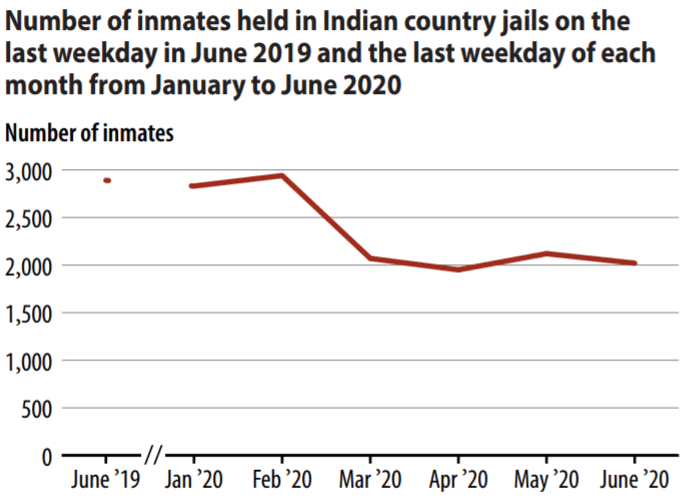
The inmate population at Indian country jails fell 30% at mid-year 2020 to a total of 2,020 inmates held in 82 jails, from 2,890 inmates held in 83 facilities at mid-year 2019, the Bureau of Justice Statistics (BJS) said on Thursday, Oct. 21. That’s the lowest it’s been since 2004, when 1,745 persons were confined in Indian country jails.

It’s the Covid-19 pandemic that has led to the decline, the BJS added in its report. The impact of Covid-19 on Indian country jails began in March 2020, with a drop of 30% in the inmate population between the end of February and the end of March. Admissions to Indian country jails decreased 45% from June 2019 to June 2020, from 9,620 persons to 5,330.

By the last weekday in April 2020, the number of jail inmates dropped to a low of 1,950. The decline in the inmate population since mid-year 2019 resulted from both a reduction in admissions to jails and expedited releases from March to June of 2020. In contrast, between 2000 and 2020, the number of operating jail facilities in Indian country has increased to 82 from 68.

Image Source: BJS’ Jails in Indian Country 2019-2020 report

Here are some other key highlights from the BJS report:

  • The number of inmates held for a violent offense increased 8% and the number held for a nonviolent offense dropped 44% from mid-year 2019 to mid-year 2020. At mid-year 2020, the number of inmates held for violent offenses accounted for 42% of all inmates held in Indian country jails, well above the 2010–2019 mid-year average of about 30% of all inmates held for these offenses.
  • From mid-year 2019 to mid-year 2020, the number of inmates held for aggravated assault increased 29%, the number held for domestic violence declined 6%, and the number held for rape or sexual assault and other violent offenses did not change. The percentage of all inmates held for aggravated assault increased from 10% at mid-year 2019 to 18% at mid-year 2020. The percentage of all inmates held for domestic violence increased from 13% at mid-year 2019 to 17% at mid-year 2020.
  • The number of inmates held for a nonviolent offense declined across all categories from mid-year 2019 to mid-year 2020. The largest decreases were in the number of inmates held for public intoxication and other unspecified nonviolent offenses.
  • From March to June 2020, about 2,130 Covid-19 tests were conducted on inmates held in Indian county jails. Around 9% of these tests were positive.
  • Of the 21,190 persons admitted to Indian country jails from March to June 2020, about 7% (1,510) received expedited release in response to the pandemic.
  • From the same March to June period last year, about 5% (85) of the 1,710 staff employed in Indian country jails tested positive for the Covid-19 virus.
  • Large declines were reported for facilities regardless of size. Since mid-year 2019, the 25 facilities rated to hold 50 or more inmates saw the largest decline (down 32%, or 620 inmates) in their inmate population. The 25 facilities rated to hold fewer than 25 inmates saw the smallest decline in their inmate population (down 26%, or 44 inmates).
  • Inmates’ expected average length of stay (the time in custody from admission to release) increased from 9 to 11 days between June 2019 and June 2020. The average length of stay was longer in larger facilities. In June 2020, inmates in facilities rated to hold 49 or fewer inmates spent an average of six days in jail from admission to release, similar to June 2019. Inmates in facilities rated to hold 50 or more inmates spent about 18 days on average in June 2020, up from about 11 days in June 2019.

The United States Is At An Inflection Point In Terms Of Cyber Threats

By a Biometrica staffer

The United States has repeatedly faced various kinds of cyberattacks in recent times, with targets ranging from infrastructure to education, and mostly due to criminals wielding ransomware. At the Justice Department Criminal Division’s fifth Cybersecurity Roundtable, Assistant Attorney General Kenneth A. Polite Jr. and Deputy Attorney General Lisa O. Monaco emphasized that the need for collective action to combat cyberthreats has never been greater. In her remarks, Monaco said the bottom line was that the country was at “another inflection point in terms of the types of cyber threats” it faces.

On the one hand, nation state actors remain a cybersecurity threat. The big four, in particular — Russia, China, North Korea, and Iran — pose a significant threat to “our national security, our economic security and our personal security,” Monaco said. But the nature of cyber threats is now no longer limited to just “state-sponsored actors.” The threat today blends criminal groups too who are forming alliances of convenience, of opportunity, and sometimes alliances by design with nation-state actors.

The tactics used today are also much more brazen, especially when it comes to ransomware and digital extortion, Monaco said. The overall environment is more aggressive, sophisticated, and belligerent. Cyber criminals, like we mentioned before, appear to be targeting everything. “Just to illustrate this issue in the ransomware context, we know that the FBI is investigating more than 100 ransomware variants, and those variants are impacting thousands of victims. Suffice it to say, there is much to be done in this space, and to combat this crowded and aggressive threat landscape,” Monaco said.

Keeping these factors in mind, the Deputy Attorney General said the Department is already doing various things to combat cyber threats including:

  • Lessons learnt from the counterterrorism fight have been applied to the cyber threat fight, making the approach more intelligence-led, more threat-driven, breaking down the walls between intelligence about cyberattacks and cyber threat actors and the efforts to disrupt them.
  • The first nationwide network of national security cyber prosecutors around the country has been created.
  • Launching a Comprehensive Cyber Review to make sure the DOJ is adjusting to the speed of the threat in terms of what it is doing, and what tools it is bringing to the table.
  • Earlier this year, the DOJ launched the Ransomware and Digital Extortion Task Force to address this particular manifestation of the cyber threat. Through this Task Force, the DOJ is making sure that the components of the department — including the Criminal Division, the U.S. Attorney’s Offices, the FBI, and the National Security Division — are all working together to address this threat.
  • The DOJ also sent a directive to all 93 U.S. Attorney’s Offices to say: “Where you see a ransomware event in your district, in your location, whether it involves a ransomware attack on a company, whether it involves a part of the ecosystem that allows it to flourish — we want to know about it so we have a national picture. It is the kind of reporting that we have required from the field for years after 9/11 when it comes to terrorist activity.”
  • Last week, Monaco also announced the creation of a new National Cryptocurrency Enforcement Team housed within the Criminal Division. The Department has made great strides in combating the misuse of cryptocurrency platforms, she said, adding that it has shown it won’t hesitate to go after those platforms that help criminals launder or hide their criminal proceeds.
  • Also last week, the Department launched a Civil Cyber-Fraud Initiative, and this is first time it will be using civil enforcement tools to drive cybersecurity accountability.

But one of the biggest takeaways from Monaco’s remarks was that the DOJ and other law enforcement agencies are seeking public help to fight off cyber threats. “In this threat environment, with the stakes that are involved, we cannot do this alone, so we need your engagement. And we want to hear from you […]. The nature of the threat, the stakes that are involved, in my mind make it critical that we have that engagement – and nowhere is this more true than in the context of ransomware attacks,” she said.

When it comes to tackling the issue of ransomware and the ecosystem that lets it flourish, there was a single message from her remarks. She said: “We need reporting from victims to address this threat, to prevent additional victims. We know those victims — oftentimes your clients — face reputational risks, they face operational risks, ultimately though, we are seeing lives and livelihoods risked. Given the stakes, we need that engagement from victim companies and we need it early. Those who come forward will see that we are determined to bring our authorities to bear, to be nimble in our response, to employ tools that go after the ecosystem that lets these bad actors flourish.”

Most entities that do business with the government abide by their contract terms and obligations, but cyber intrusions may still occur even when a contractor has a robust monitoring, detection, and reporting system, per the Deputy Attorney General. But in instances where those who are entrusted with government dollars and sensitive government systems fail to follow required cybersecurity standards, or misrepresent their cybersecurity practices or capabilities, the Department is going to go after that behavior. 

Some of the greatest progress and accomplishments to date in the area of cybersecurity comes from a “whole-of-society approach,” Monaco said. “That means we don’t just want to hear from you — we need to. We need to hear about the challenges you face and the ways you think the department can evolve to help meet the threat. We need to hear what you think is working well, and more importantly, what you’d like for us to consider doing differently,” she added.

An Overview Of Safe Gun Storage Laws And Why They Are Important

By Aara Ramesh

It’s not uncommon these days, unfortunately, to see stories of children or toddlers coming upon an unsecured firearm at home and accidentally setting it off. Research from the Gun Violence Archive and the Associated Press found that gun violence has steadily been claiming the lives of, or injuring, an increasing number of American children and teenagers over the years, with that trend continuing strong thus far in 2021 as well.

For instance, in August, Shamaya Lynn, 21, was accidentally shot and killed in Florida by her toddler while she was on a Zoom call for work. The child had found the handgun, which belonged to the father, allegedly inside a children’s Paw Patrol backpack. The gun was both unsecured and loaded. The toddler accidentally set it off, hitting Lynn in the head. The father has been charged with manslaughter and failure to securely store a firearm.

Gun control advocacy group Everytown for Gun Safety says that since 2015 there have been nearly 2,300 unintentional shootings by children, resulting in nearly 850 deaths. The group estimates that so far in 2021 there have been at least 284 unintentional shooting incidents by children, with 116 deaths and 113 injuries. When they come across unsecured guns, children risk not just injuring or killing themselves, but also their siblings, friends, parents, or other adults in the vicinity. 

In another incident earlier this year, a two-year-old in Maine shot his father and mother while they were asleep when he came across a handgun on their nightstand. Luckily, the injuries sustained were not fatal, though it could have been more tragic, the local sheriff said, pointing out that the child suffered facial contusions due to the kickback from the weapon and that a three-week-old baby was also present in the bedroom at the time. However, said Sagadahoc County Sheriff Joel Merry, “current law only allows for a misdemeanor offense to be charged.”

In addition, a majority of all gun deaths in the U.S. every year are suicides — much more than homicides or mass shootings. Research cited by Harvard Medical School found that 87% of all youth homicides can be tied to a firearm injury, with some estimates saying that 78 children, teenagers, and young adults are killed or injured by guns every day in the U.S.

Unsecured guns could be stolen and used later on in violent crimes by adults or children, and have also been frequently used in school shootings. Per one study, gun owners who do not store their guns safely are “at higher risk to have their guns stolen.” 

Studies seem to indicate that having guns within homes, especially those that also have children, is dangerous. Roughly one-third of American homes that have children in them also have a gun. Astoundingly, three in four children (including those younger than ten years old) know where the gun in their home is kept, even if their parents think they don’t. 

Further, it is estimated that 20% of American gun owners never lock up their firearms, with some studies pegging this number at nearly half (46%) of all gun owners. In states that require guns to be stored safely, there has been noted a 68% lower suicide rate, according to one 2015 study.

But are there laws that govern or mandate gun storage and what are they?

There is no comprehensive federal law that mandates guns be stored safely at home, nor are there any federal minimum standards for gun storage or safety devices. An executive order from 2013 asked the Consumer Product Safety Commission to “review the effectiveness of gun locks and gun safes, including existing voluntary industry standards, and take any steps that may be warranted to improve the standards,” but no concrete legislation has emerged from this.

The 2005 Protection of Lawful Commerce in Arms Act makes it illegal for a gun manufacturer, dealer, or importer to sell or transfer a handgun unless the recipient is “provided with a secure gun storage or safety device.” It does not, however, mandate that the recipient use the security device. This provision does not apply to transfers or sales between federal firearms licensees or private sellers, nor for federal, state, or local law enforcement officers or agencies.

On a state level, the laws and requirements vary. The broad types of safe storage laws include firearms being kept locked up; dealer sales including locks; private sales including locks; and minimum standards for locks. Individual cities like San Francisco and New York City have their own rules for gun storage.

Massachusetts, Oregon, and the District of Columbia (D.C.) mandate all firearms must be stored with a locking device in place. New York, California, Colorado, and Connecticut only require this if the gun owner resides with someone who is not legally allowed to possess a firearm, like someone convicted of a felony or someone with a history of mental illness that would make them ineligible to buy a gun.

California, Oregon, and Massachusetts require — to varying degrees and under different circumstances — that locking devices accompany all firearms manufactured, sold, or transferred within the state. Colorado, New York, Michigan, and Ohio have similar laws to the federal one requiring that licensed dealers sell locking devices alongside all firearms they sell or transfer. New Jersey, Connecticut, Illinois, MAryland, Rhode Island, and Pennsylvania require the same, but only for handguns, not all firearms.

When it comes to mandating minimum standards that all locking devices must adhere to, only California, Maryland, Massachusetts, and New York have them in place and/or maintain a “roster” of devices that are approved.

In addition to the laws described above, many states have child access prevention (CAP) laws. These are mostly retroactive laws that make a person criminally or civilly liable if they fail to store guns safely away from children. One study by the RAND Corporation found CAP laws might help lower gun suicide and accidental shooting rates in the states that have them. Another estimated that, among children aged 14–17, CAP laws lowered overall suicide rates by around 8% and firearm suicide rates by 11%.

Currently, 27 states and D.C. have some form of CAP law. CAP laws vary in strength and penalties for violating them. In California, a personal is criminally liable if a minor is “likely to gain access to a negligently stored firearm,” regardless of whether the minor actually does access it. On the other end of the spectrum, in Georgia, a parent or guardian is just prohibited from directly giving a minor a firearm. 

Image source: The National Bureau of Economic Research

Though the most foolproof method of safety is to ensure that there is no gun in the house at all (especially if anyone in the house has a history of depression or other mental health issues), gun control advocates say, the next best option is to safely secure the gun.

Best practices dictate that guns should be secured with “a trigger or cable locking device,” experts say. Alternatively, they can be locked up in a cabinet or biometric safe only accessible to the owner. It is imperative that guns be stored unloaded and that ammunition be stored separately under lock and key. 

In a future edition of this series we will explore CAP laws more and will look at tips on how to safely store guns.

DOJ Submits Comprehensive Report To Congress On Initiatives To Tackle Elder Abuse And Fraud

By Biometrica staffer

On Tuesday, Oct. 19, the Department of Justice (DOJ) submitted its annual Activities to Combat Elder Fraud and Abuse report to Congress, covering all efforts on this front between July 1, 2020 and June 30, 2021. The summarizing report disclosed that the Federal Bureau of Investigations (FBI) was able to freeze fraudulent transactions worth over $13.5 million by cooperating with financial institutions, representing a 75% success rate in protecting elders from losing funds through wire transfers.

Elder fraud has been of particular concern since March 2020 as a result of the pandemic and the ongoing opioid crisis, per the report. In 2020, the FBI’s Internet Crime Complaint Center (IC3) published its first-ever report on elder fraud, finding that more than 100,000 people aged 60 and over had filed a complaint over fraud, with a collective loss estimated at nearly $1 billion.

As Attorney General Merrick B. Garland put it: “For too long, elderly people have faced abuse, neglect, and exploitation. Even before the beginning of the worst pandemic in more than a century, a study supported by the Justice Department’s National Institute of Justice found that at least one in 10 older Americans are victims of some form of elder abuse each year.” 

The types of fraud tackled by the DOJ in this period included tech support scams, veteran scams, and scams run by an elderly person’s guardian, family, or person with power of attorney. This latter category has been termed “particularly egregious” by the DOJ, as “these individuals hold a special duty to care” for their elderly wards. The department also fought back against mass marketing and robocall fraud perpetrated by some data companies and list brokers.

Combating elder fraud is particularly crucial, as they present as attractive targets to potential criminals. They are more likely to have large sums saved up over their entire careers in retirement funds; they are also more likely to own lucrative assets like houses and to have good credit ratings. With all types of crime now increasingly moving online, elderly people are even more susceptible, due to their unfamiliarity and/or discomfort with new technology.

In addition, the elderly are more reluctant to report fraud or may not even know how. The FBI found that older people are more likely to be ashamed of having been the victim of a scam or may be worried that their families will lose confidence in them if they talk about it. The DOJ’s Elder Justice Initiative also says that older people “tend to be trusting and polite.”

Some of the most common types of fraud the elderly fall prey to include, as we wrote in July, romance scams, confidence scams, grandparent scams, online shopping scams, sweepstakes/lottery scams, investment scams, and government agency impersonation scams.

Image source: The DOJ’s report to Congress

The DOJ also focused on boosting training for federal, state, and local law enforcement and specialists in elder justice. Also of importance were public outreach and awareness programs, through town halls and media events attended by local U.S. Attorney’s Officers. This also included the ongoing commemoration of World Elder Abuse Awareness Day.

On that occasion, AG Garland said the DOJ’s annual budget for the 2022 financial year would seek an increase of 44% over the previous year’s, specifically for elder justice efforts. He said, “The Justice Department will continue to use all its available tools to prevent and combat elder abuse, neglect, and exploitation – from enforcement actions to public awareness campaigns, and from training and technical assistance to victims’ services and legal aid.” There are also a number of pieces of legislation designed to protect the elderly from abuse, neglect, and fraud that are pending before Congress.

Though elder abuse and fraud is not a recent development, its growth has been exacerbated by the Covid-19 pandemic, which left elderly people more isolated, vulnerable, and susceptible to illnesses. According to AG Garland, “The COVID-19 pandemic has exposed and exacerbated injustices faced by far too many of the most vulnerable among us, including older Americans and elderly people around the world.” In particular, internet-based fraud targeting elders, those that established a personal connection with an elderly person, and healthcare-based fraud were rampant.

Child Sex Abuse Material Production Sentencing Is On The Rise

By a Biometrica staffer

Out of the total federal caseload, child sex abuse material (CSAM) production cases account for only a small percentage. Even so, the expansion of digital and mobile technology has led to a 422% spike in the number of CSAM production offenders sentenced over a 15-year period, from 98 offenders in fiscal year 2005 to 512 in fiscal year 2019, according to a new report published by the United States Sentencing Commission (USSC). With technological advancements, offenders have gained easier access to victims. Meanwhile, the prevalence of smartphones with built-in cameras and expansive storage has also been misused by offenders.

In 2020 alone, the Cyber Tipline of the National Center for Missing and Exploited Children (NCMEC) received 21.7 million reports of child sexual abuse imagery, online child exploitation and enticement, child sexual molestation, and child sex trafficking. Some of the issues discussed by the USSC in its 2012 Child Pornography Report persist even today, including: the continued growth in the number of CSAM production cases, the volume and accessibility of CSAM images due to advancements in technology, and the resulting lengthy sentences for CSAM production offenders.

CSAM production offenders generally received lengthy sentences per the latest USSC report too. In fiscal year 2019, production offenders received an average sentence of almost 23 years, ranging in length from one year to life imprisonment. Emerging technology continues to be used to create greater opportunity for CSAM production offenders to access and exploit minor victims. As computers and mobile devices offer video capabilities and live streaming functions, some offenders produce CSAM from remote locations away from the victim.

In this piece, we take a look at the other key findings of the USSC report, from the physical proximity and relationship between offenders and victims, to offender behavior, offense characteristics, and victim characteristics.

Before we get into details of the report, though, we pause here to make a note that the official legal term — also used by the USSC — is “child pornography.” However, there is a growing movement to change the name of this category to “child sexual abuse material” because, by virtue of their age, children cannot consent to being part of any pornographic material.

Offender Proximity To Victims

Image Source: Screengrab from the USSC report

According to the report, a majority of CSAM production offenders maintained a position of trust over their victims, whether through familial relationships or by virtue of the offender’s role as a teacher or a coach, for example. Roughly 60% of the offenders in the fiscal year 2019 produced CSAM in the same location as the victim. However, given advancements in technology and social media use by both offenders and minors, close physical proximity is no longer necessary for offenders to produce CSAM.

An increasing number of offenders exploited victims remotely through the internet or the use of mobile technology to produce CSAM. Even so, the report’s findings showed that offenders who appeared to have the closest proximity and communicated with their victims in person generally committed the production offense with the youngest victims. Such offenders also appeared to have had sexual contact with the victims in most cases.

Among offenders who initiated communication with their victims in person, the youngest victims for nearly one-third (30.3%) of offenders were infants or toddlers, and slightly more than half (53.2%) were prepubescent (age 4 to 12). The youngest victims for nearly two-thirds (61.7%) of offenders who communicated with victims remotely were teenagers, who were more likely to have access to the internet, cell phones, and/or social media. The youngest victims for more than one-third of offenders who communicated with victims remotely were prepubescent (36.5%).

The report also shows that a majority of the offenders were related to or otherwise maintained a position of trust over a minor victim as a family member or through some other close relationship. This category could include parents, legal guardians or step-parents, other relatives, a parent’s intimate partner, family friends, teachers, etc. But, the single largest individual category of CSAM offenders were internet strangers who met their victims through an online or remote platform.

About half of all fiscal year 2019 CSAM production offenders communicated with a victim in person. Notably, 19.3% of offenders surreptitiously recorded a victim to produce CSAM and, thus, did not communicate with that victim either in person or remotely.

Nearly half (47.1%) of all production offenders sentenced in fiscal year 2019 used a smartphone or tablet to create CSAM images or videos. A substantial minority of offenders (36.5%) had victims create content at their request. In 11.9% of the cases, the offenders used a livestreaming platform or web camera to produce CSAM. Most CSAM production offenders (83.8%) committed the offense alone, but 16.2% of offenders committed the offense with an adult co-participant.

Offender & Victim Characteristics

CSAM production offenders tend to be racially homogenous, have higher levels of education, and have limited or no prior criminal histories. Most fiscal year 2019 production offenders were white (75.2%) and nearly all were U.S. citizens (95.5%) and male (94.3%). This contrasts with all other federal offenders, who were 19.9% white, 56.3% U.S. citizens, and 87.8% male.

The average age of CSAM production offenders sentenced was 38 years old, only one year older than the average age of all other federal offenders sentenced the same year. CSAM production offenders generally attained a higher degree of education than all other offenders, with just under half (48.4%) of production offenders having attended college compared to about one-fifth (21.1%) of all other offenders.

CSAM production offenders also have less extensive criminal histories compared with other federal offenders. In fiscal year 2019, 70.3% of CSAM production offenders were assigned to Criminal History Category I (the lowest category, requiring no more than one criminal history point). By contrast, only 44.2% of all other federal offenders were assigned to Criminal History Category I. To add further context, a majority (60.7%) of CSAM production offenders had zero criminal history points compared to one-third (33.4%) of all other offenders sentenced in fiscal year 2019.

Image Source: Screengrab from the USSC report

In fiscal year 2019, all CSAM production offenders were sentenced to a term of imprisonment. Sentences ranged from one year to life, with an average sentence of 275 months. More than three-quarters (78.0%) of the offenders were convicted under a statute that carries at least a 15-year mandatory minimum penalty. The average guideline minimum for CSAM production offenders has increased steadily over time, from an average of 273 months in fiscal year 2005 to an average of 332 months in fiscal year 2019.

The number of CSAM production victims involved in a single offense in fiscal year 2019 ranged from one to 440. A majority of cases involved a single victim, but a substantial majority had more than one minor victim. The average age of the youngest minor victim was 10 years. In over 60% of cases, the youngest victim was 12 years or younger, and 16.8% of cases involved an infant or a toddler. In nearly 40% of the cases in fiscal 2019, the youngest victim was a teenager (13–17 years old). Three-quarters of the CSAM production victims involved only female victims in fiscal 2019.

Cultural Property Crime Thrived During The Covid-19 Pandemic: INTERPOL

By a Biometrica staffer

Cultural property crime continued unabated throughout the global Covid-19 pandemic, and in some cases even surged to new heights, according to INTERPOL’s 2020 Assessing Crimes Against Cultural Property survey findings.

In the Americas, the number of offences reported in 2020 was almost double when compared with those reported in 2019, and was significantly higher than in 2018. Attacks against cultural property, including physical attacks, destruction, and vandalism, also increased sharply in the Americas (by 38.61%) in 2020 from 2019, and is more than five times the number reported in 2018.

The report, which INTERPOL says is the first of its kind since Covid-19 and the first to be made publicly available, also found that at the international level, it is organized crime groups that are in charge of smuggling items across country borders through their networks.

“The COVID-19 pandemic had a significant impact on criminals involved in the illicit traffic of cultural property but did not in any way diminish the demand for these items or the occurrence of such crimes. As countries implemented travel restrictions and other restrictive measures, criminals were forced to find other ways to steal, illegally excavate and smuggle cultural property,” Corrado Catesi, Coordinator of INTERPOL’s Works of Art unit said in a statement.

In total, 854,742 cultural property objects were seized globally in 2020, including numismatic items (coins, money, or medals), paintings, sculptures, archaeological items, and library materials. More than half these items were seized in Europe, underscoring the impact of police units specialized in cultural property crimes, which are present in most of the region’s countries.

Importantly, marked increases in illicit excavations were observed in Africa (32%), the Americas (187%), and, especially, Asia and South Pacific (3,812%) regions compared to 2019. This could be because archaeological and paleontological sites are, by nature, less protected and more exposed to illicit excavation.

On the other hand, Covid-19 restrictions also likely limited possibilities for criminals to steal objects from public collections. An estimated 95% of the world’s museums were forced to temporarily close their doors in 2020 to protect employees and visitors from the virus, according to the International Council of Museums.

Only a minority of cultural property crimes occurred in museums across all world regions, the INTERPOL survey shows. And all world regions except the Americas showed a lower proportion of such crimes occurring in museums in 2020 compared to the previous year. Still, globally, several high-profile cultural property crimes took place as police resources were dedicated to the pandemic.

One clear point that emerges from what INTERPOL has discovered about the main smuggling routes in the world is that every region is affected by the illicit traffic of cultural property, confirming the extreme transnational nature of these offences. Countries or continents could simultaneously be areas of origin, transit, and destination for stolen objects.

The three most common methods used by criminals to facilitate the illicit traffic of cultural property around the world are: hiding cultural goods in travelers’ luggage, transporting them with falsified documents, and hiding cultural property inside other objects. Law enforcement agencies indicated that their most common methods of detection of illegally exported cultural property are border controls, vehicle inspections, and searches.

More Law Enforcement Officers Are Being Assaulted, Injured, Or Killed On The Job

By Biometrica staffer

On Monday, Oct. 18, the Federal Bureau of Investigations (FBI) released the last of its Law Enforcement Officers Killed and Assaulted (LEOKA) dataset for 2020, reporting that 60,105 law enforcement officers (LEOs) were assaulted while on the job last year — 4,071 more than the 56,034 who were assaulted in 2019. The FBI says assault data were reported by 9,895 law enforcement agencies nationwide.

The news has been inundated recently with stories of LEOs being killed or injured in the line of duty. For instance, the same day of President Biden’s speech, a gunman with an AR-15-style rifle shot at three constable deputies, killing one and leaving two others wounded outside a bar in Houston, Texas. The suspect escaped and has not yet been found. On Sunday in Arkansas, on the other hand, a man stabbed a police officer in the throat when they responded to what turned out to be the scene of a violent familial dispute. After receiving treatment, he is expected to make a full recovery.

Earlier this month, a Drug Enforcement Administration (DEA) special agent was killed in a shooting on a train in Tucson, Arizona, while another DEA agent and a task force officer from the Tucson Police Department were left seriously injured and in hospital. At the same time, a U.S. Marshal Service officer also died after he was injured “ in a vehicle accident while assisting with a law enforcement operation.”

Of all those officers assaulted, just over 30% were injured as a result. The FBI report said that well over half (44,421) were assaulted with “personal weapons,” meaning they were punched, kicked, slapped, etc., and about a quarter of these particular assaults resulted in injuries. Other methods of injury included 2,744 officers being assaulted with firearms; 1,180 with knives or other cutting instruments; and the rest with “other types of dangerous weapons.”

The number one type of call officers were injured at involved such disturbances as family disputes or bar fights, with just below 30% of officers being assaulted at these scenes. Around 16.1% were assaulted while attempting other arrests, 8.8% while investigating suspicious persons or circumstances, and 8.4% during traffic pursuits or stops. An additional 3.9% were assaulted while “handling persons with mental illnesses,” while 4.1% were assaulted in the course of civil disorder, such as mass disobedience or riots. 

Earlier data from the FBI revealed that in 2020, there were a total of 46 LEOs feloniously killed in the line of duty. Updated figures from Jan. 1 through Oct. 12, 2021, indicate that the number of LEOs feloniously killed in the line of duty this year is up to 59, much higher than at the same point in any of the last five years. Accidental deaths over the same period are currently at 46, up from 37 over the same timeframe in 2020.

“What we’re seeing this year is an alarming uptick in violence against law enforcement, and it’s something that deserves way more attention than it’s getting,” FBI Director Christopher Wray said during National Police Week. “We are looking at now 59 officers or agents murdered in the line of duty this year. That’s an over 50 percent increase from (the same time) last year.” He added, “That basically translates to every five days — more often than every five days in this country — an officer is murdered in the line of duty. And that’s totally unacceptable, and it’s a tragedy and it needs attention.”

This comes at a time when police have, much like the wider public, been dealing with extraordinary circumstances. For instance, the FBI’s analysis shows that there was a major 30% spike in the number of homicides in 2020, with numbers touching levels last seen during the 1990s. In addition, the general level of violent crimes has also been trending upward.

Worryingly, more of these incidents involve firearms than ever before. Coupled with this is an ongoing shortage in ammunition and a record number of first-time buyers purchasing guns, putting law enforcement further on edge. Per analysis from CNN and the Gun Violence Archive, 2021 is set to be a record year for gun violence, with weekend after weekend being marred by shooting incidents nationwide.

The biggest challenge LEOs are grappling with, however, appears to be Covid-19. Analysis by the Washington Post found that nearly 500 officers’ deaths can be attributed to the virus. This, the paper says, is “not just more than other causes of death combined, it’s more than all other deaths for the past three years.” It is also more than the number of officers who died as a result of 9/11.

On Saturday, Oct. 16, President Joe Biden spoke at the 40th Annual National Peace Officers’ Memorial Service to honor the LEOs who died in the line of duty over the last two years. During his speech, President Biden hailed those law enforcement personnel present at the U.S. Capitol during the Jan. 6 insurrection, saying, “Because of you, democracy survived.”

During the riot, many Capitol Police officers were caught up in the crowd and, as a result, suffered PTSD, which they have spoken and testified about extensively. In addition to one officer who was attacked by protestors and died the next day, over 100 other LEOs were injured. There were at least 1,000 instances of assaults against LEOS on the day, a Justice Department (DOJ) review of police officer bodycam footage concluded. In the many months since, at least four other long-term police officers who were present at the Capitol have taken their own lives.

While he did denounce the “Defund the Police” movement, President Biden touted police reform proposals that would hold officers accountable for breaking the law, and highlighted the impossible expectations that society has for police officers. “We expect you to be people ready to stand in the way and take a bullet for us. We expect you to be able to track down the bad guys. We expect you to be able to be the psychologist who talks the couple that are having a violent confrontation together to step back. We expect you to be everything. We expect everything of you, and it’s beyond the capacity of anyone to meet the tall expectations,” he said.

President Biden is not the only high-ranking official to call out the increased stress LEOs have been facing in recent years. Earlier this week, while announcing grants worth $7 million towards LEOs’ mental health, Deputy Attorney General Lisa O. Monaco said, “Each day, law enforcement officers across the country put their lives on the line for the communities they serve.” She added, “This has been especially true since the start of the COVID-19 pandemic, which has claimed hundreds of officers’ lives and added to the stress of an already difficult job.”

In addition to the physical injuries documented by the FBI’s LEOKA report, in the line of duty, LEOs often suffer high stress and experience traumatic incidents multiple times over their career, which can leave them suffering from various illnesses like post-traumatic stress disorder (PTSD) and anxiety. This, in turn, can take a toll on their cognitive abilities, emotional regulation, connections with others, judgement, and performance, the DOJ says — all of which can have serious consequences in this line of work.