Tech Support : support@safience.io

Blog

Ransomware Giant REvil Disappears From Internet For Reasons Still Unknown

By a Biometrica staffer

Multiple news sites began reporting on Tuesday, July 13, that REvil, the Russia-based group responsible for one of the largest ransomware attacks in history, had gone dark. There is no indication as of yet as to why the group went offline, or whether the move was engineered by law enforcement.

REvil was pinpointed as the organization behind the attack early in July, on Kaseya, a prominent company in the supply chain and IT infrastructure spaces, which incapacitated over 1,500 businesses worldwide. They were also behind the strike in May against the U.S.’ largest meat-packing plant, JBS.

Several high-profile ransomware attacks have gained public attention recently, especially the incident in April when hackers shut down Colonial Pipeline, the nation’s largest fuel supplying pipeline, causing widespread shortages in the southeast United States. This prompted President Joe Biden to issue an executive order prioritizing the threat posed by cybercrime and directing his administration to develop better infrastructure to combat that danger. 

According to intelligence officials, a large number of the recent attacks apparently have ties to Russian or Eastern European countries. Since the Kaseya attack, the pressure on President Biden has been ramping up, amid calls for his administration to take a firmer stance and more decisive actions against Russian involvement in these attacks. As recently as Friday, July 9, President Biden warned Russian premier Vladimir Putin that if he does not take steps to curb such activities in Russia, the U.S. has the right to retaliate and “defend its people and critical infrastructure from attacks,”

When approached by the press in regards to REvil’s apparent disappearance, the White House and Pentagon declined to comment. Experts say it is too early to speculate on the motivating factors behind the takedown or even whether it is permanent. They say that it is possible that the recent attention shed on REvil has prompted the criminal organization to switch its methodology and rebrand before popping up again.

Security firm Chainalysis says that in 2020 alone, criminals earned around $350 million from ransom payments — an increase of 311% over a year. Similarly, Palo Alto Networks says that the average ransom paid in such attacks rose 171%. Another study found that the toll taken by cybercrimes (including online payment fraud schemes, ransomware attacks, and cryptocurrency scams) on organizations amounts to roughly $1.79 million lost every minute, with around 650 cyberthreats made every 60 seconds.

Some national security experts opine that cybercrime is escalating to the level of being a serious national security threat — the next frontier in global conflict. Indeed, in June, FBI Director Christopher Wray said that the increasingly commonplace ransomware attacks witnessed by the U.S. pose a serious defense challenge and bear similarities to 9/11.

In a similar vein, the Secretary of INTERPOL on Monday, July 12, called for police and private entities to come together to stall what he termed a “potential ransomware pandemic.” At a high-level forum organized by the agency, Jürgen Stock said to be truly effective in combating ransomware attacks, it is necessary for all stakeholders to collaborate in a manner similar to how the world handles terrorism, human trafficking, and organized crime.

“Despite the severity of their crimes, ransomware criminals are continuously adapting their tactics, operating free of borders and with near impunity,” said Secretary General Stock. He added, “Ransomware has become too large of a threat for any entity or sector to address alone; the magnitude of this challenge urgently demands united global action.”

Human Traffickers Adapted To ‘The New Normal’ And Increasingly Targeted Children Online: A Roundup Of Recent Human Trafficking News

By a Biometrica staffer

An undercover investigation in middle Tennessee ended in the arrests of 18 men accused of seeking illicit sex from minors, U.S. Immigration and Customs Enforcement (ICE) said on Monday, July 12. The operation began on July 8 and focused on identifying and recovering potential human trafficking victims, as well as those who were looking to engage in commercial sex acts with minors. Law enforcement officers (LEOs) placed several decoy advertisements on websites known to be linked to prostitution and commercial sex cases to trap those involved.

In a separate case, on July 9, a man from California pled guilty to transporting a teenager across state lines to engage in prostitution following an ICE Homeland Security Investigations (HSI) probe. He is said to have transported the young girl from Southern California to Nevada and Arizona. The defendant, Christian Alexander Augustus, admitted that he forced the victim to work on the streets and advertised her services on the internet. He also admitted that he collected the money the victim obtained from those commercial sex acts. His hearing is scheduled for Nov. 29, when he will face a mandatory minimum sentence of 10 years in federal prison and a statutory maximum sentence of life imprisonment.

These are but a few of the reports from the past week on the rising problem of human trafficking across the world. Just last Thursday, July 8, the United Nations Office on Drugs and Crime (UNODC) released a report that underscores the seriousness of this global criminal activity. The study aims to illustrate the devastating impact of the Covid-19 pandemic on victims and survivors of human trafficking, and highlights the increased targeting and exploitation of children during its course. It also discusses how frontline organizations responded to the challenges posed and how they continued to deliver essential services, despite restrictions across and within national borders.

It’s a given now that the pandemic has deepened existing disadvantages, poverty, and vulnerabilities in societies across the world. The initial response to contain the health crisis due to the spread of Covid-19 also did not always consider those most vulnerable and affected by violence and exploitation, the report says. Since the start of the pandemic, one factor that made it harder for those fighting trafficking is that much of it appears to have retreated even further underground. Still, some countries were able to report that domestic trafficking had increased, especially in terms of local recruitment and exploitation. Due to movement restrictions, border closures, and the loss of livelihoods, many traffickers recruited victims within their local areas.

Traffickers Discovered A ‘New Normal’ Too

As with terrorists during the pandemic, at least in Europe, human traffickers too discovered a “new normal” way of running operations, the UN report says. To begin with, Covid-19 ended up creating larger pools of vulnerable persons who, due to their worsened economic situation, could be recruited for labor or sexual exploitation, within their own areas instead of being transported across state and country lines, as mentioned before.

Thirty-seven percent of stakeholder survey respondents reported that the recruitment of victims has moved online during the pandemic, according to the UN report. Traffickers took advantage of the global crisis, capitalizing on peoples’ loss of income and the increased amount of time both adults and children were spending online. They used social media and other online platforms to recruit new victims.

The closures of places where trafficking typically occurs — due to lockdowns and curfews implemented to curb the spread of the virus, including bars, clubs, and massage parlors — did not stop traffickers. All they did was move the sexual exploitation of adults and children to private homes and apartments. In some countries, traffickers even capitalized on social distancing measures to transport victims across national borders, knowing that law enforcement have, at times, been unable to carefully inspect vehicles.

Covid-19 led to major job losses across several industries globally. Traffickers capitalized on this too by luring victims with fake promises of employment, according to Ilias Chatzis, Chief of UNODC’s Human Trafficking and Migrant Smuggling Section, which developed the new study. This ended up affecting children too, as having a parent who’s lost their job meant they had to drop out of school to lend financial support.

Women, Children, Migrants: The Most Vulnerable

Women, children, and migrants have been identified by survey and interview participants as particularly vulnerable to recruitment and exploitation during the pandemic. Women and girls have been recruited, often locally or online, for sexual exploitation, especially in private apartments. On the other hand, children have been increasingly targeted by traffickers at the local level and online for sexual purposes, forced marriage, forced begging, and forced criminality.

There is clear evidence of demand for child sexual exploitation materials (CSEM) having risen, which has exacerbated the exploitation of children around the world. For their part, migrants have been affected by the pandemic in a number of ways too. Many have lost their prospective employment in the destination country and have been unable to return to their homes. Some of them ended up in an irregular status in destination countries after being unable to renew their residence and/or work permits, making them even more vulnerable to traffickers.

“Crime thrives in times of crisis, and traffickers adapted quickly to the ‘new normal’. The pandemic has taught us that we need to develop strategies on how to continue anti-human trafficking activities on a national and international level even during a crisis,” UNODC’s Chatzis said.

Biometrica will examine the UN report’s contents in detail in a larger piece over the coming days.

How The Violence Against Women Act Might Better Protect Indigenous Women

By Aara Ramesh

Among the many verdicts handed down by the U.S. Supreme Court last month was the unanimous affirmation of the right of tribal law enforcement officers to detain non-Native people who they reasonably suspect to have been involved in a crime on Native land. This decision has breathed life into a piece of legislation —  the Violence Against Women Act — pending in front of Congress that tackles the epidemic of violence committed against Indigenous women and girls.

The data about violence committed against women in general — and Indigenous ones in particular — are staggering. In addition, it is widely acknowledged that the incidence of violence experienced by Native American women is much higher than that of other races.

Tribal authorities, however, find themselves hamstrung when it comes to punishing violence perpetrated against Native women due to the jurisdictional complexities associated with investigating and prosecuting serious violent crimes committed against Native communities on Native lands by people of other races.

In today’s piece we take a look at why it is critical to specifically address violence against Native American women and girls, the remedies for this adopted by the federal government in the past, and what still needs to be done to effectively be able to protect what is considered to be the most vulnerable and underserved demographic in the U.S.

Women And Stalking, Rape, And Murder

The data suggests that women are being victimized by violence at an alarming rate. Rates of crimes that largely affect women, including physical assault, sexual abuse, domestic violence, date-related abuse, and stalking, are still extremely high.  Per some estimates, 15% of all violent crime is down to intimate partner violence.

Experts say that violence against women does not always start and end with murder. It often escalates, moving from slightly less threatening crimes like stalking, to physical or sexual assault, only to often culminate in homicide. For instance:

  • Of all women who were stalked by an intimate partner, 81% were physically assaulted and 31% were sexually assaulted.
  • Over three-fourths of all women who were murdered by an intimate partner were stalked by them first. Over 85% of women survivors of murder attempts were stalked.
  • Almost nine in every ten women who were physically assaulted before they were murdered were stalked in the year before their death.
  • Over half of the women murdered by their stalkers reported the stalking incidents to the police.

By 1994, this crisis came to a head. That year, the Violence Against Women Act (VAWA) was passed, spearheaded by then-Senator Joe Biden, as a way to systematically and comprehensively address the epidemic on a federal level. It covered all manner of serious crimes perpetrated against women of all races, including domestic violence, sexual assault, and stalking. The Act was further fine-tuned, expanded, and reauthorized in 2000, 2005, and once more eight years later, in 2013.

Assaults Against Native American Women And Girls

Within this broader segment, Native American women (defined as “American Indians and Alaska Natives” by the federal government) suffer more than the average woman and women of other races. Over 4 in 5 Native women report having experienced some form of violence during their lifetime. Compared to other races, they are at least twice as likely to be victims of rape or sexual assault. 

According to the Centers for Disease Control and Prevention, for Native women aged 10–24, homicide is the third leading cause of death. For those aged 25–34, it is the fifth leading cause. In some tribal areas, the murder rate of Indigenous women is 10 times higher than the national average. Other estimates say that one in every three Native women is raped during their lifetime.

Key to this discussion, as well, is the fact that an overwhelming 96% of Native women who have been the target of violence say the perpetrator was a non-Native. Native women are also almost 4 times more likely to be stalked by a non-Native.

This is particularly important when it is contextualized against the fact that tribal law enforcement authorities have almost no ability to prosecute non-Native perpetrators of such offenses. They are, instead, reliant on state and federal authorities, who get to decide whether to pursue the cases or not. This includes all types of crimes, ranging from drug abuse to sexual and domestic violence.

According to the DOJ, in 2011, 65% of rape cases reported on tribal lands were not prosecuted. In 2019, federal prosecutors declined to prosecute 35% of violent and non-violent crimes during that period. The Government Accountability Office released a report in 2010 that indicated federal authorities chose not to pursue more than half of violent crimes that take place on tribal lands.

Native Communities And VAWA

While the original 1994 Act did look specifically at violence and sexual assault against “underserved populations and Native American” women, it was the 2013 reauthorization that made the broadest efforts to specifically target the violence enacted against Indigenous women by undoing, in part, the U.S. Supreme Court’s 1978 ruling in Oliphant v. Suquamish Indian Tribe.

In that case, the court ruled that “tribes lost authority to try non-Indians when they became dependents of the United States.” As such, police on reservations were unable to properly detain or prosecute non-tribal citizens.

The 2013 VAWA reauthorization rectified this in some small degree in regards to violence against women, by extending the authority of tribal governments over cases where non-Natives with “significant ties” to the tribe violate certain protective orders and/or commit dating or domestic violence against Native women on tribal lands.

This power is called the “special domestic violence criminal jurisdiction” and allows tribal governments to investigate, prosecute, convict, and sentence spouses or partners who commit violence against Native women on Native lands, irrespective of whether they are members of the tribe or not. However, in addition to limiting this authority to only a very narrow set of cases, VAWA 2013 does not cover a broad range of crimes, including those committed on non-Native lands, between two strangers, by anyone without “sufficient” ties to the tribe, etc.

Further Empowering VAWA

The 2021 reauthorization of VAWA was introduced by Texas Representative Sheila Jackson earlier this year, in March. Among numerous other provisions, in Title IX, the act addresses Native women in a number of ways. It is designed to improve coordination, communication, and resource- and information-sharing among all levels of governments, from tribal to federal. It would also create, for the first time, sex offender and protection order registries for Native communities.

One of the handicaps highlighted by the bill is the lack of resources available to tribal authorities when it comes to enforcing laws on their lands. As such, it allocates $7 million every year between 2022 and 2026 to tribal governments to improve their resources, training, data collection, etc. It also allocates an additional $3 million annually to help them access and use federal criminal information databases.

The 2021 version also reaffirms tribal jurisdiction over the aforementioned protective orders, and dating and domestic violence, as specified in 2013. Importantly, it also goes a step further by extending this authority to other crimes involving Native victims on tribal lands, including incidents of sexual violence, stalking, trafficking, and child abuse.

The 2021 VAWA reauthorization effort was given the go-ahead in the House several months ago, passing in a 244–172 vote in March, but it has stalled in the Senate due mostly to a provision regarding the confiscation of firearms in domestic violence situations — a matter unrelated to Native authority.

In 2013, tribal jurisdiction was one of the major sticking points of the discussions about reauthorizing VAWA. However, the Supreme Court’s June 1 verdict in United States v. Cooley (mentioned at the start of this piece) has reinvigorated hopes of passing VAWA more easily this time around.

Under that ruling, if there is reasonable suspicion that a non-Native person has committed a crime, including rape, tribal police will be able to detain that person until federal or state authorities can arrive, reducing the risk of such perpetrators fleeing. At the time, the ruling was hailed by advocates who saw it as one shuffle towards ensuring that non-Natives cannot violate laws on Native lands with impunity.

Now, advocates are looking to use this as somewhat of a legal precedent to push for the rights of Native communities to have more control over protecting their women. Though neither VAWA nor the Cooley decision would allow tribal authorities to prosecute crimes such as murder autonomously, Indigenous leaders are hopeful of being able to prevent circumstances from becoming so dire in the first place, by stopping stalkers and/or abusers before they can murder their victims.

According to Alfred Urbina, the attorney general of the Pascua Yaqui Tribe in Arizona, with the high rates of violence committed against Native women, it would be more expedient and welcome for local authorities to prosecute local crimes. The way he views it is that anyone would want to be protected by their own community, regardless of where the perpetrator comes from.


Firefighters Struggle, Power Grids Buckle, And People Flee As Western US Burns

By a Biometrica staffer

A triple threat of record high temperatures, wildfires, and drought have set ablaze large swathes of the western United States, leading to electricity shortages, mass evacuations, smoke warnings, and the deaths of at least two firefighters. According to the National Weather Service, there are currently 30 million Americans living in conditions of extreme heat, with a cool-down not predicted until at least mid-week.

According to the National Interagency Fire Center (NIFC), as of Sunday, July 11 there were 55 large fires burning across 12 states, covering over 750,000 acres. They have assigned more than 11,300 firefighters and support staff to respond to these incidents. The impacted states include Arizona, Idaho, Montana, California, Oregon, Wyoming, Washington, New Mexico, Colorado, and Utah.

On June 22, the NIFC updated the current National Preparedness Level to 4 (on a scale of 1–5), indicating that “much of the country” is experiencing some wildfire activity. At this level, areas are competing for available firefighting resources, more than half of which have been committed to efforts to minimize damage and get the fires under control.

Source: National Weather Service Twitter account

On Saturday, July 10, a small plane carrying two firefighters crashed while surveying a wildfire in Mohave County, Arizona. The two crew members killed were identified as Air Tactical Group Supervisor Jeff Piechura, 62, a retired Tucson-area fire chief, and Matthew Miller, 48, a pilot with the U.S. Forest Service.

The Beckwourth Complex Fire, currently the largest ongoing blaze in California, was sparked by lightning on June 30. The fire doubled in size between Friday and Saturday, i.e. July 9 and 10, and filtered into Nevada. As of Saturday, it spanned over 60,000 acres and was only 9% contained. Almost 2,000 people were deployed to fight the fire, with flames reaching up to 100 feet in some places. Just under 3,000 people were issued warnings or orders to evacuate.

On Sunday, that fire ate up an additional 20,000 acres, destroying about 20 homes according to authorities. Responders were able to contain about 8% of the fire, and officials say that progress has been made in curbing the flames in certain areas.

The wildfires are only being exacerbated by the extreme drought conditions faced by the state, with 50 of its 58 counties officially in a state of emergency. Californians have been asked to cut water consumption by 15%, to prevent reservoirs from drying up.

There is an excessive heat advisory active in the area until at least Tuesday, July 13 with people being urged to drink large amounts of water and remain indoors, with air-conditioning on, as much as possible.

On Friday, Death Valley, CA, saw a high of 130°F, close to the hottest temperature ever recorded on Earth. The state has been forced to set up cooling centers for those affected — essentially public spaces with air-conditioning for those who don’t have access to it otherwise, such as the unhoused.

This effort was complicated, however, by the Bootleg fire currently racing through the Fremont-Winema National Forest in southern Oregon, which disrupted three power lines responsible for providing up to 5,500 megawatts of electricity to California. Authorities in the Golden State were forced to advise the public to reduce their power consumption to proactively head-off rolling blackouts. The Bootleg blaze almost doubled in size over the weekend, now covering around 150,000 acres, and is 0% contained.

Meanwhile, Las Vegas saw an all-time high temperature of 117°F. The governors of Washington and Idaho have declared emergencies in their states over the wildfires, with the latter also having issued some evacuation orders and warnings. Idaho, too, has cautioned its residents and evacuated some, while the smoke from the fires obscured the sky in some central and western areas of the country.

Most of the wildfires ravaging the region began a few weeks ago, as June ended and July began, amidst a truly brutal heatwave that gripped the Pacific Northwest region. That extreme-heat event killed at least 118 people in Oregon and Washington, and strained local healthcare systems. According to the Wall Street Journal, 911 calls almost doubled during the heatwave, emergency departments were overflowing with patients, and emergency personnel were not able to respond to calls for help quickly enough.

The region typically and historically has been characterized by a temperate climate, meaning that resources, infrastructure, and people were not prepared for the extreme temperatures seen. Experts are chalking the scale of this year’s extreme temperature events up to climate change worsening at a faster-than-predicted rate. They say that such events are likely to continue, if not become even more common, as time goes on.

Hate Crime Investigations Declined During 2015-19, But Conviction Rates Shot Up

By a Biometrica staffer

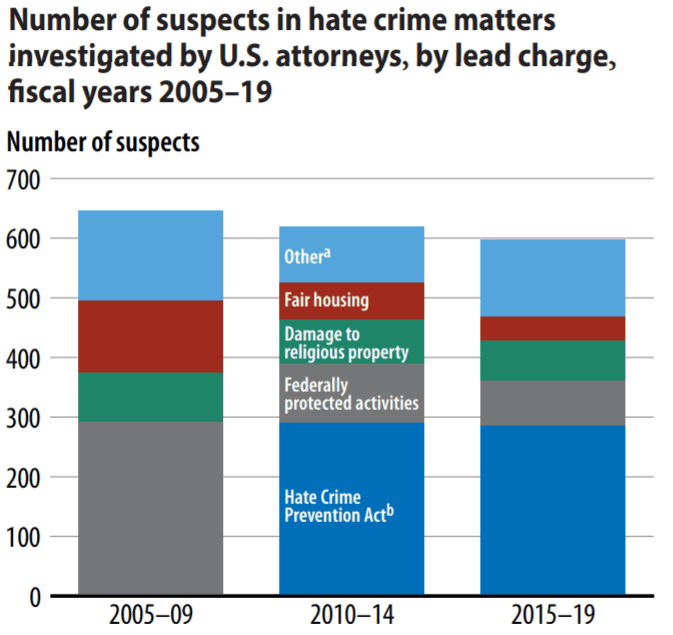
A total of 1,864 suspects in matters involving violations of federal hate crime statutes were investigated by U.S. attorneys during the fiscal years 2005 to 2019, the Bureau of Justice Statistics (BJS) said in a report published last week on federal hate crime prosecutions. The number of hate crime matters investigated during 2015–19 fell 8% to 597 (or 119 per year), from 647 during 2005–09 (or 129 per year), the report said. However, the conviction rate rose during the same comparable periods to 94% from 83%.

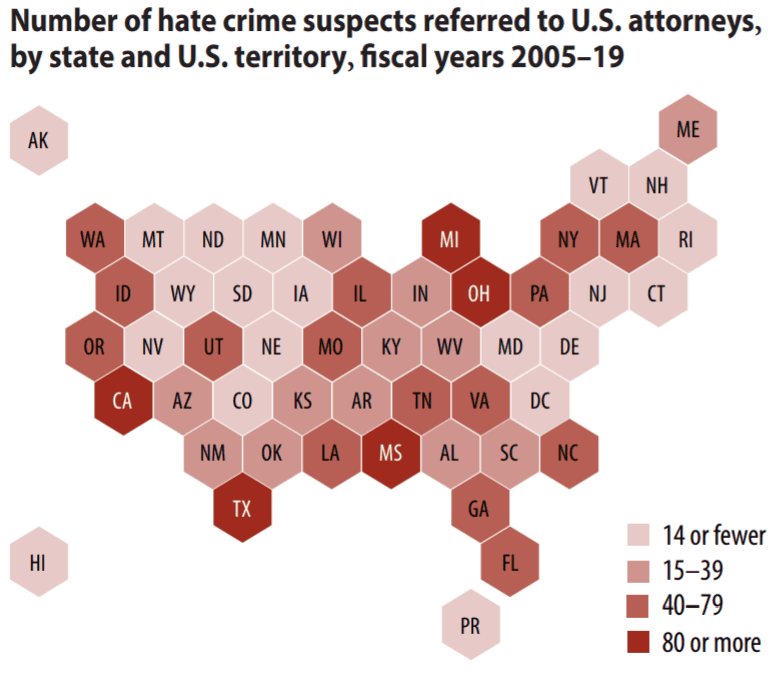
Nearly half of the 597 suspects investigated for a hate crime during the years 2015-19, the most recent period for which data is available, were referred to U.S. attorneys for violating the Hate Crimes Prevention Act (HCPA). Of the 284 hate crime convictions during the entire 15 year period (i.e., 2005-19), 40% occurred in federal judicial districts in just six states: New York (30), California (26), Texas (19), Arkansas (15), Tennessee (13), and Pennsylvania (12).

In today’s piece, we give you a broad overview of the most important statistics from the report, and examine the report’s definitions of hate crimes and the laws around it.

Image source: Screengrab from the BJS Federal Hate Crime Prosecutions 2005-19 report

Key Takeaways From The BJS Report

Apart from the points we listed above, here’s a list of some of the other statistics from the comprehensive report that we thought were important:

  • During 2005–19, U.S. attorneys prosecuted hate crimes as part of other charges most often (22%), followed by hate crimes involving damage to religious property (19%), the HCPA (18%), and fair housing (16%).
  • Federal prosecutors referred 17% of the total 1,864 suspects for prosecution from October 1, 2004 to September 30, 2019.
  • Insufficient evidence was the most common reason cited for instances where hate crime matters were declined. The second most-common reason was the prioritization of federal resources (15%), followed by the suspect being subject to the authority of another jurisdiction (13%) and the federal government lacking legal jurisdiction to file charges (13%).
  • About 85% of defendants convicted of a hate crime were sentenced to prison, with an average term of over 7.5 years.
  • A total of 202 defendants (65%) were charged with a hate crime as the most serious offense, and 108 (35%) had a hate crime as a secondary offense. Among the 108 defendants, the most serious offenses charged included conspiracy against rights (16.5%), explosives used in a felony (7.4%), explosives-related offenses (3.5%), and firearms and violent offenses (5.2%).
  • Most (63%) hate crime matters involved only one suspect. Hate crime matters over fair housing (47%) and HCPA (44%) violations were the most likely to involve multiple suspects. Matters involving damage to religious property (22%) were the least likely to involve multiple suspects.
  • More than 9 out of every 10 hate crime defendants adjudicated in U.S. district courts during 2005–19 were convicted.
  • The Federal Bureau of Investigation (FBI) was the agency of referral for the majority (89%) of federal hate crime matters investigated by U.S. attorneys during 2005–19.
  • Federal and state task forces accounted for 3% of hate crime referrals in this period. Referrals from federal and state task forces increased from 7 during 2005–09 to 39 during 2015–19.
  • The Bureau of Alcohol, Tobacco, Firearms and Explosives (ATF) accounted for 2% of referrals during 2005–19.
Image Source: Screengrab from the BJS Federal Hate Crime Prosecutions 2005-19 report

Hate Crime Definition

In a piece published at the start of this year, we explained hate crime from the FBI’s perspective and definition. According to the Bureau: In the simplest terms, a hate crime must include both “hate” and a “crime.” But there’s more to it than just that. Take the word “hate,” for instance. While in regular usage, hate may mean rage, anger, or general dislike, in the context of hate crime it means bias against people or groups with specific characteristics that are defined by the law.

Crime in this context often refers to a violent offense, such as assault, murder, arson, vandalism, or threats to commit such crimes. It may also cover conspiring or asking another person to commit such crimes, even if the crime was never carried out, according to the FBI. Acts of prejudice that do not involve threats, property damage or violence are called “bias/hate incidents” by law enforcement.

The BJS report also draws on these definitions by federal justice agencies and defines hate crimes according to statute information. According to the report, that includes crimes in which the perpetrator selected the victim based on certain characteristics, such as race, color, religion, and national origin.

Federal Statutes Used In Hate Crime Prosecutions

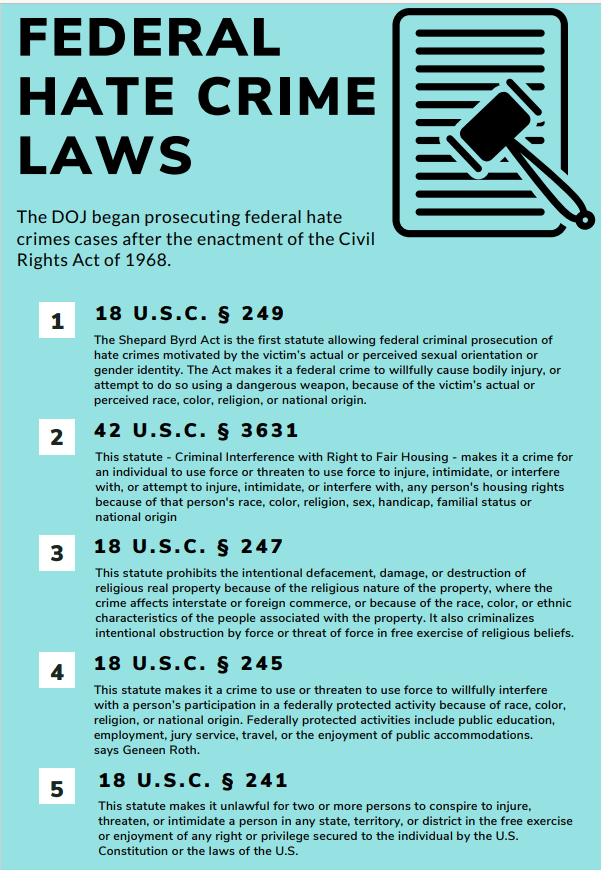
There are four federal statutes specifically for hate crimes, and they are used along with a general conspiracy statute when it comes to hate crime prosecutions. For instance, HCPA, which we mentioned earlier, is actually known as The Matthew Shepard and James Byrd Jr. Hate Crimes Prevention Act, in its full form. It was approved by the U.S. Senate as an amendment to the Defense Authorization Act (H.R. 2647) in October 2009.

It extended hate crime law to cover gender, disability, sexual orientation, and gender identity. The Act is named after Matthew Shepard and James Byrd Jr., both victims of hate crimes. Shepard was a gay student who was beaten to death in Wyoming in 1998, and Byrd Jr. was an African American man who was murdered by white supremacists in Texas in 1998. A concise overview of this act can be found here.

This graphic originally appeared in our piece “Data Monday: Hate Crime In The States” published Feb. 22, 2021.

What does the BJS report from last week say about each of these laws? Here’s a quick excerpt:

18 U.S.C. § 245: Federally protected activities — Activities protected under this law include (1) enrollment in a public school or college, (2) participation in programs administered or financed by any state, (3) federal and state employment and jury service, (4) interstate travel by common carrier, and (5) use of restaurants, lodging, gas stations, public entertainment facilities, and other establishments serving the public.
18 U.S.C. § 247: Damage to religious property — Prohibits intentionally defacing, damaging, or destroying religious property because of the race, color, or ethnic characteristics of any individual associated with that property.
18 U.S.C. § 249: HCPA — Prohibits willfully causing bodily injury, or attempting to cause bodily injury with a dangerous weapon, when the crime was committed because of certain characteristics (of the victims involved).
42 U.S.C. § 3631: Criminal interference with right to fair housing — Prohibits forcible interference with any person in selling, purchasing, renting, financing, occupying, or contracting for any dwelling due to that person’s race, color, religion, gender, national origin, disability, or family status.
18 U.S.C. § 241: Conspiracy against rights — Prohibits conspiracies to injure any person who is exercising rights or privileges protected by the Constitution or laws of the United States.

Residents Of Colorado Now Have A Say In How Companies Collect And Use Their Personal Data

By a Biometrica staffer

In a big win for those arguing for greater autonomy for consumers on how companies collect and use their personal data, this week, Colorado became the third state, after Virginia and California, to implement a sweeping piece of legislation that lets its residents choose whether or not to share their data with private entities.

The Protect Personal Data Privacy bill, signed into law on Wednesday, July 7, by Governor Jared Polis will go into effect two years from now, in July 2023. Under it, Coloradans will be able to opt-out of data collection and tracking online. It makes it mandatory for internet companies to disclose to users what data is being collected, what the data is used for, and how long the data is stored on the company’s servers. Further, it allows users to request a copy of the data that has been collected and also stipulates that each user has the right to access, correct, or delete any personal data of theirs.

The regulations make concessions based on the size of the business and its user base, and excludes some financial institutions from being subject to the law. One year after it goes into effect, by July 2024, a one-stop-shop privacy control setting setting will be implemented in browsers, making it easier for consumers to opt-out on all the websites they visit, rather than having to individually opt-out on each site.

The bill was first introduced in March this year. It coasted through both chambers, enthusiastically supported by lawmakers on both sides of the aisle. In June, the Colorado House approved the bill in a 57–7 vote, followed by the State Senate with a 34–0 vote. It was sent to Gov. Polis for his signature at the end of June.

Opponents have expressed concerns that businesses may struggle with the cost of implementing such tools, and that it could have an adverse effect on them. According to proponents, however, the final version of the bill serves to balance both the needs of businesses and the rights of the consumer. It offers the latter more protection and control over how their personal information is used, but it also allows companies to collect the kind of data they need to operate.

On the other hand, there are some advocates who say the law doesn’t go far enough. The next step for some of them would be for legislators to enact a law that would allow consumers to sue those who violate the data collection regulations.

In the private sector, in April this year, Apple Inc. introduced a feature on iOS devices that forces apps to specifically ask users whether they want to have their data tracked (essentially asking them to opt-in). Some analysts say that less than 33% of iOS users have actually agreed to have their data tracked.

There are also calls for Congress to establish a national, uniform standard for data privacy and consumer data protection. This move seems to be popular with the average American as well, with one study estimating, 83% of American voters, on bipartisan lines, said that this should be a “top” or “important, but lower” priority for Congress in 2021.

You can find a list of the different state-level legislation regarding data privacy and protection here.

Senior Citizens Lost $1B To Scammers Last Year — A Look At The Most Common Elder Fraud Schemes

By Deepti Govind

Millions of elderly Americans become the victims of some kind of financial fraud or internet scam each year. Just last year, for instance, senior citizens in the country lost $1 billion to fraud. That’s an increase of roughly $300 million compared with what was reported by victims over 60 in 2019, according to a recent Federal Bureau of Investigation’s (FBI) Internet Crime Complaint Center’s (IC3) Elder Fraud Report. Criminals know there is a high likelihood that this demographic has significant sums stored away in retirement funds, savings accrued from a lifetime’s worth of work, and that they also probably own a home and have good credit.

So, they typically work towards gaining the trust of their victims, or even use intimidation tactics and threats to take advantage of them. If scammers succeed once, they will likely keep that scheme or several others going because of the prospect of larger gains. Another reason why fraudsters go after seniors is because the elderly may not know how to report a fraud, or may even be ashamed they they’ve been defrauded and be less inclined to report such cases. The FBI says some may even be concerned that their relatives could lose confidence in their ability to manage their own financial affairs, and hence, they may refrain from reporting it.

But it’s not only the elderly who fall prey to fraud as we established in our piece last week on phone scams, and in earlier pieces on moving frauds and real estate wire frauds. Even the most prepared among us could be a potential victim of frauds and scams. That said, there are definitely ways to protect yourself, as a senior citizen, from becoming the victim of a scammer. One is to learn about the typical modi operandi of scammers, so that you can keep an eye out for them. In today’s piece, we take you through the most common types of elder fraud schemes, and what they usually entail.

Video Source: FBI’s YouTube channel
Former FBI Director William Webster and his wife were the targets of a Jamaican lottery scam in 2014. They assisted in the FBI’s investigation, which led to the arrest and conviction of Keniel Thomas, who was sentenced in February 2019 to nearly six years in prison.

Common Elder Fraud Schemes

It always helps to know what kind of scams fraudsters typically try to pull off in order to safeguard yourself from them. When it comes to elder fraud, these are some of the common scams that you need to watch out for:

Romance scams
These include all kinds of schemes designed to tug at a victim’s heartstrings. In 2020, the IC3 received reports from 6,817 elderly victims who lost over $281 million to confidence fraud/romance scams. It accounted for the highest losses reported by seniors during the year. In these cases, criminals typically pose as interested romantic partners on social media or dating websites to capitalize on their elderly victims’ desire to find companionship. They adopt fake identifies to gain a victim’s affection and confidence. Often, such scams involve the use of religion to garner trust. It’s important to remember that con artists can be, and are, present on most dating and social media sites. And they are experts at what they do. So, they will come across as genuine, caring, affectionate, and believable. Their goal usually is to establish the relationship as quickly as possible. Some may even propose marriage or make plans to meet in person with the victim, but that will never happen. The end result is the same, though, as most will eventually ask the victim for money. The IC3 report says many romance scam victims reported being pressured into investment opportunities last year, especially utilizing virtual currency.

Grandparent scams
This category of elder fraud is closely associated with romance and confidence scams. Under this, the modi operandi involves criminals and scammers posing as a relative — usually a child or grandchild — claiming to be in immediate financial need. In this type of fraud, criminals make it seem like the loved one is in dire, urgent need to induce panic and make their victims fall for the scheme.

Online shopping scams
Many seniors all over the country had to shop online for the first time ever due to the Covid-19 pandemic. An increasing number of the elderly also got on to social media platforms to connect with others, much like everyone else. But this combination of being relatively new to online shopping and social media has created an easy window of opportunity for scammers: false advertisements. Many victims report ordering items from links advertised on social media and either receiving nothing at all or receiving something completely unlike the advertised item, the IC3 report says. Non-delivery of products was the second most reported fraud among seniors last year according to IC3. This kind of fraud extends to fake products, too. Even something as seemingly low-risk as counterfeit personal products listed online, which are common, can actually cause long-term harm to customers. Government and industry studies and testing have discovered dangerous ingredients within such cosmetics, the IC3 report says. Fraudulent cosmetics may contain poisonous substances and dangerous levels of bacteria from unknown sources, and some have even caused serious health conditions, the report adds.

Sweepstakes/lottery scams
This category also includes charitable organization-related fraud. It basically involves scammers claiming to work for legitimate charitable organizations to gain victims’ trust, and trick them into making “donations” to charity. Or they claim their targets have won a foreign lottery or sweepstake, which they can collect for a “fee.” The initial contact in a lottery/sweepstakes scam is often a call, an email, a social media notification, or a piece of physical mail offering congratulations for winning a big contest, lottery, or sweepstakes that the victim did not enter. The catch? They require “winners” pay an upfront fee, or taxes, to collect the prize. Often the payments are required to be made via wire transfers or prepaid cards, transactions that are tougher to reverse when the scam is discovered. To make matters worse, scammers even ask for the victim’s bank details to “transfer their winnings.” Inheritance scams can also be included under this category, with scammers falsely contacting victims to claim that an unknown, distant relative has left a large inheritance to the victim. In such cases too, the victim is asked to pay taxes and fees upfront before the “inheritance” can be transferred.

Tech support scams
This was the third most reported fraud among senior citizens last year. Under this category, criminals typically pose as technology support representatives and offer to fix non-existent computer issues. The scammers gain remote access to victims’ devices and sensitive information. Elderly victims accounted for 66% of the total reports of tech support fraud to the IC3 last year, and 84% of the total losses. Initial contact can happen in various ways ranging from a phone call to advertising a fake number on internet search results that victims end up calling to emails, as well as pop-up messages. IC3 said it saw a large increase, in 2020, in the number of complaints involving criminals posing as customer support for financial institutions, utility companies, or virtual currency exchanges. Many reported an upsurge in the impersonation of popular online shopping companies and e-commerce companies.

Caregiver/relative fraud
Possibly one of the toughest fraud situations to deal with emotionally for seniors is those committed against them by a caregiver or relative. In such cases, relatives or acquaintances of an elderly victim take advantage of them or otherwise get their money somehow.

Other schemes
Some other kinds of schemes that fraudsters use to swindle from seniors could include outright extortion, investment scams, government impersonation fraud, TV/radio scams, home repair fraud, etc. Extortion is used in various schemes reported to the IC3, including email extortion attacks, hitman schemes, government extortion, and sextortion. Virtual currency is commonly demanded as the payment mechanism because it provides the criminal an additional layer of anonymity when perpetrating these schemes. While government impersonation is not reported as often, millions of dollars are still lost by the elderly to criminals impersonating government officials.

This is the first piece in a series Biometrica will be doing on elder frauds. Up next in the series will be a post on tips to prevent yourself from becoming victims of such scams.

Crime Bills On The Move This Summer

By Charlotte Spencer

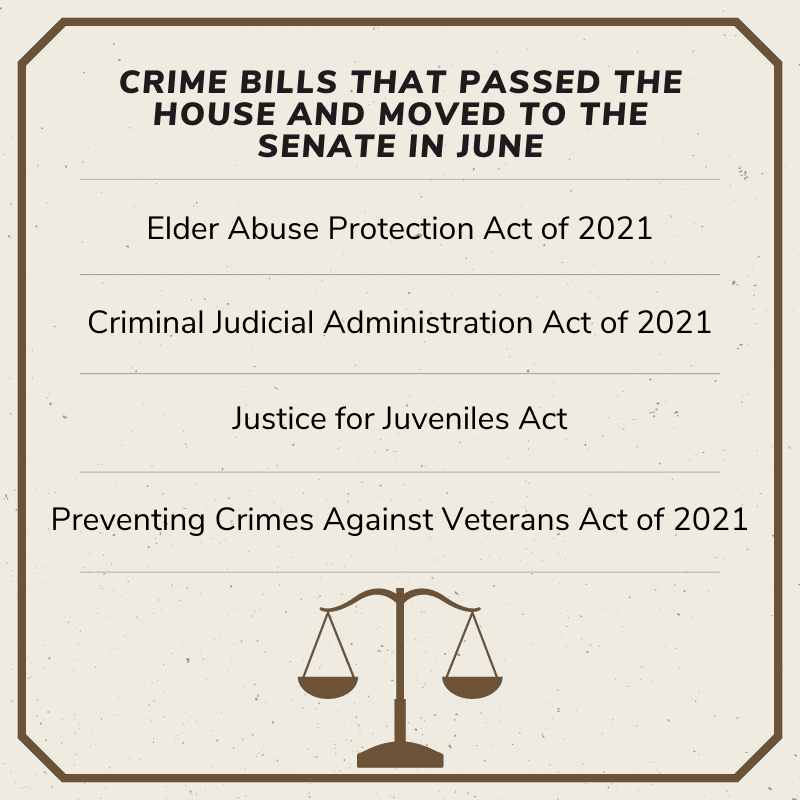
Plenty of bills are proposed that never become law. This summer, however, several crime and law enforcement bills have made progress in the process of becoming law. Here are the summer’s top movers so far in terms of bills that focus on crime and law enforcement.

Elder Abuse Protection Act of 2021

  • Passed the House on 6/23/2021 and moved to the Senate on 6/24/2021.

If made law, this would amend the Elder Abuse Prevention and Prosecution Act by adding and authorizing the Elder Justice Initiative. The Elder Justice Initiative would be a permanent program to coordinate criminal enforcement and public engagement efforts to combat elder abuse and types of fraud targeting the elderly. It would also require the Attorney General to designate an Elder Justice Coordinator within the Department of Justice. It would also mandate associated online public resources, a telephone hotline, Spanish language resources, legal aid, and tribal consultation.

Criminal Judicial Administration Act of 2021

  • Passed the House on 6/23/2021 and moved to the Senate on 6/24/2021.

If made law, this would amend 18 U.S.C. §4285 and §3401 to provide for transportation and subsistence for criminal justice defendants. This would assure that defendants unable to afford transportation, lodging, and food would be given sufficient transportation, lodging and food for proceedings at which that defendant is required to appear. This would also include post judgement motions and sentencing.

Justice for Juveniles Act

  • Passed the House on 6/23/2021 and moved to the Senate on 6/24/2021.

If made law, this would amend the Civil Rights of Institutionalized Persons Act (42 U.S.C. § 1997e) to exempt prisoners under 22 from certain requirements of the inmate grievance procedure. Prisoners under 22 would not be required to exhaust all administrative remedies before filing a federal lawsuit regarding the condition of their imprisonment. This exemption would also apply to prisoners over 22 in cases where the condition occurred before they turned 22.

Preventing Crimes Against Veterans Act of 2021

  • Passed the House on 6/22/2021 and moved to the Senate on 6/23/2021.

If made law, this would amend 18 U.S.C. Chapter 63 to directly address fraud against veterans. This amendment would impose up to 5 years in prison plus fines for defrauding veterans of their benefits. This would also include attempts at such crimes.

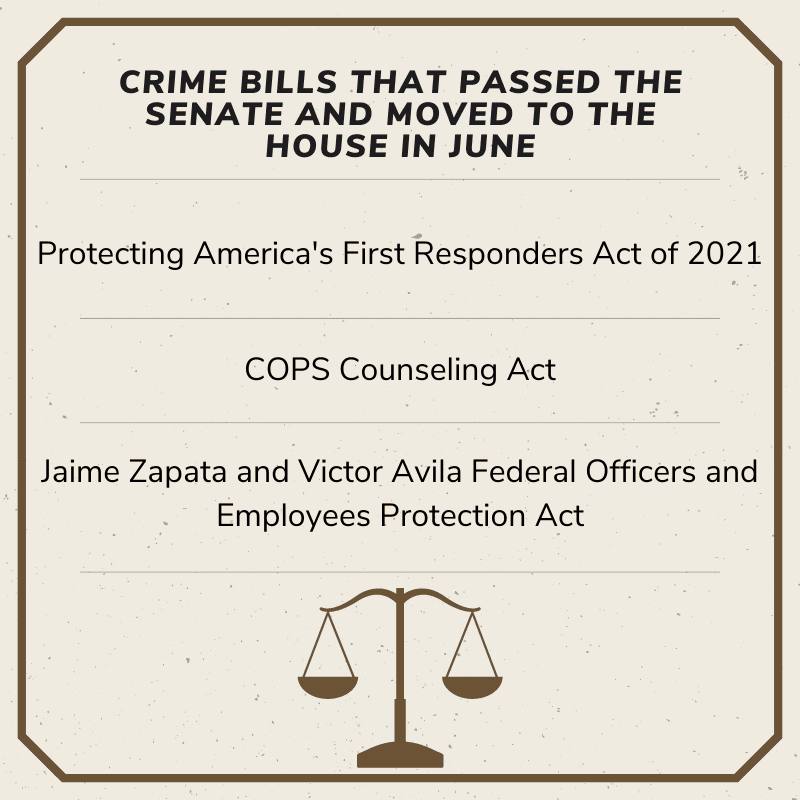
Protecting America’s First Responders Act of 2021

If made law, this would amend 34 U.S.C. §10281 through §10306 to adjust payments made to public safety officers who have become permanently disabled as a result of personal injuries sustained in the line of duty. These amendments would increase certain payments and also address investigations into such matters.

COPS Counseling Act

  • Passed the Senate on 6/7/2021 and held at the desk in the House on 6/11/2021.

If made law, this would impose requirements on law enforcement peer support counseling programs, including prohibiting disclosing contents of peer support communications. It would also require the Department of Justice to develop best practices and professional standards for peer support counseling programs. This would still allow for disclosure of communications in the following cases:

  • All parties consented to disclosure.
  • Intent to die by suicide.
  • Threat of serious bodily harm or death to another.
  • Abuse and neglect of children, older, or vulnerable people required to be reported by law.
  • Subpoena.
  • Other legal obligation to disclose information.

Jaime Zapata and Victor Avila Federal Officers and Employees Protection Act

  • Passed the Senate on 5/28/2021 and held at the desk in the House on 6/1/2021.

If made law, this would amend 18 U.S.C. to add extraterritorial jurisdiction over the conduct already prohibited. This would include assaulting, impeding, or resisting officers as described in §111; influencing, impeding, or retaliating against federal officials by threatening or injuring a family member as described in §115; and killing or attempting to kill an officer or employee of the United States as described in §1114.

The information provided in this article should not be considered legal advice or a substitute for legal advice. Biometrica is not a law firm and cannot offer legal advice.

Herded Down The Rabbit Hole — Mozilla Says YouTube Is Still Recommending ‘Harmful’ Content

By Aara Ramesh

According to a study released by the Mozilla Foundation on Wednesday, July 7, the video platform giant YouTube is continuing to push to users “disturbing and hateful” content that violates its own Community Guidelines, continuing the long-standing controversy over the site’s highly secretive recommendation algorithm.

YouTube is the second-most visited website in the world, behind only its parent company Google (owned by Alphabet Inc.). The video sharing platform has said that its recommendation algorithm is responsible for 70% of total viewing time on the site, accounting for an estimated 700 million hours daily. YouTube has said that “videos promoted by the recommendation system result in more than 200 million views a day from its homepage,” and that the system draws on more than 80 billion pieces of information.

The methodology employed by Mozilla’s investigation involved RegretsReporter, an open-source extension through which users could volunteer their data for study, in essence turning each individual into a watchdog. Between July 2020 and May 2021, a total of 37,380 users in 91 countries participated, flagging 3,362 videos as “regrettable.” Mozilla says that this is “largest-ever crowdsourced investigation into YouTube’s algorithm.”

The topics reported as “regrettable” by users included political misinformation, unsubstantiated Covid-19 “fear-mongering,” violent and graphic imagery, and “children’s” cartoons that featured inappropriate sexual content. Some videos clearly violated YouTube’s Community Guidelines by featuring “hate speech, debunked political and scientific misinformation,” while others fell into the “borderline” category, content that edges close to breaking the rules, but that does not overtly do so.

According to Mozilla, 71% of the videos that were reported as “regrettable” were “actively recommended” by YouTube itself. These suggested videos were also 40% more likely to be flagged by the volunteers, compared to those they searched out for themselves. Around 9% of the videos flagged as “regrettable” have since been removed from the platform, sometimes for rules violations. However, before they were taken down, these videos collected about 160 million views between them.

Some of the examples cited by Mozilla in its report include a person who was recommended a video titled, “Man humilitates [sic] feminist in viral video,” after searching out content related to the U.S. military. One person was directed to an extreme right-wing political video after watching a music video from Art Garfunkel.

The root of the discussion over YouTube’s algorithm stems from what it was originally created for. YouTube aims to promote “stickiness,” because that is how it remains profitable. The more engaging content is, the longer a user stays on the site, or the more times they are likely to return, increasing the “stickiness” of the platform. This, in turn, brings more eyeballs to the advertisements that play before and during a video, boosting revenue. The way to enhance stickiness is to keep recommending interesting content to users, prompting them to keep clicking “next” or even allowing suggested videos to auto-play.

The technology, being as it is not-human, does not actively look out for the kind of topics that might be “harmful” or “disturbing.” Rather, it tracks videos that are already demonstrating stickiness and that are drawing the most amount of traffic, and cues that up for the viewer. Those videos, unfortunately, are more likely to be rooted in extreme emotions like fear, doubt, anger, confusion, etc.

Ostensibly, the system was designed to help the user as much as to generate profit for the company. The aim is to suggest new topics for curious users to discover, broadening their horizons and exposing them to fresh ideas.

The difference between companies like Facebook and Twitter, and YouTube, is in where the content that users view originates from. In the case of the former two, people choose to follow or engage with particular accounts. The latter, on the other hand, takes initiative and actively suggests content that a user might not have stumbled upon otherwise.

Mozilla has been working for years to get YouTube to address this problem, as part of its ongoing “trustworthy AI” campaign. In 2019, it solicited anecdotes from users about their #YouTubeRegrets. The responses were shocking, revealing that people had been exposed to racist, violent, extreme content after watching “innocuous” content.

According to an investigation undertaken by the Wall Street Journal, even when patrons don’t show interest in political material or conspiracy theory content, YouTube will recommend such channels to them. For those who do display a political bias, YouTube recommends increasingly extreme versions of that content that echoes that bias.

Brandi Geurkink, Mozilla’s Senior Manager of Advocacy, had this to say — “YouTube needs to admit their algorithm is designed in a way that harms and misinforms people. […] Our research confirms that YouTube not only hosts, but actively recommends videos that violate its very own policies. […] Mozilla hopes that these findings—which are just the tip of the iceberg—will convince the public and lawmakers of the urgent need for better transparency into YouTube’s AI.”

In a response to Mozilla’s study, the company said, “We constantly work to improve the experience on YouTube and over the past year alone, we’ve launched over 30 different changes to reduce recommendations of harmful content. Thanks to this change, consumption of borderline content that comes from our recommendations is now significantly below 1 percent.”

According to estimates, YouTube is set to earn about $30 billion in advertising revenue this year. A study conducted earlier this year by the Pew Research Center found that of all the online platforms surveyed, YouTube was the most commonly used, with eight out of every ten Americans saying they had ever used the site (compared to 7.3 out of 10 in 2019). Additionally, Pew found that 54% of users access YouTube daily, with around a third saying they visit the site several times a day.

You can read the full report, including Mozilla’s suggested remedies, here.

Thirteen Stolen Works Of Art, Thirty-One Years On: The Isabella Stewart Gardner Museum Heist

By Deepti Govind

It’s been more than three decades now since two men dressed as Boston Police Department officers ended up pulling off what’s still considered the single largest property theft in the United States, and possibly the world. Despite this unprecedented scale, there hasn’t been much by way of new information on the Isabella Stewart Gardner museum heist in the public domain for years now.

But with so few details confirmed, a seemingly endless list of trails and suspects that appear to have emerged over the years, no single motive or pattern, and all 13 works of art — now said to be worth half a billion dollars — still missing, it’s no wonder that this Boston museum theft still manages to capture the fancy of many art and criminal history enthusiasts. The heist was even on the Federal Bureau of Investigation’s Top Ten Art Crimes list in 2005.

Today, in the second piece of our art crime series, we take you through the fundamental basics of this still-unsolved crime that continues to baffle, enthrall, and frustrate those who have followed it closely, perhaps in equal measure.

Quick Overview

What do you need to know about the robbery at the Isabella Stewart Gardner Museum (referred to as “the museum” hereon) if you only have a few minutes? Here you go, although we think you may be too hooked to spend just a few minutes on this case!

  • The museum was set up by American art collector Isabella Stewart Gardner, who constructed it from her own private Venetian palazzo–inspired home. It opened to the public in 1903. After her death in 1924, though, the museum fell into financial disrepair and by 1990, its security flaws were allegedly common knowledge among Boston’s criminal “elite,” according to a Smithsonian Magazine article.
  • The robbery happened in the early hours on March 18, 1990. Two men in what appeared to be Boston Police Department uniforms pulled up near the side entrance of the museum.
  • Once they entered the museum, they tied up the security guards and then proceeded to steal 13 works of art, including rare paintings by Dutch masters Rembrandt Harmenszoon van Rijn and Johannes Vermeer.
  • The thieves were inside the museum for 81 minutes to pull off the heist. Most of the stolen works of art were from the museum’s Dutch Room.
  • Everyone from the guards on duty that night, to well-known art thieves, and even various mobs have been considered persons of interest, either by the authorities or in the eye of the public/media.
  • In March 2013, the FBI said they had made significant investigative progress and had identified the route along which the loot was transported, but they had not been able to locate the missing works of art.
  • It was in March 2015 that the last big announcement came, with the FBI releasing the names of two suspects in the crime: George Reissfelder and Lenny DiMuzio, who were supposedly known associates of the mobster Carmello Merlino. But both Reissfelder and DiMuzio died within a year of the heist, one allegedly of a drug overdose and the other by homicide.
  • Cut to today, and the museum, the FBI, and the US Attorney’s office are still seeking viable leads that could result in the safe return of the art works.
  • “The Museum is offering a $10 million dollar reward for information leading directly to the safe return of the stolen works. (A share of the reward would be given in exchange for information leading to the restitution of any portion of the works.) A separate reward of $100,000 is being offered for the return of the Napoleonic eagle finial,” it says on its website.
  • You can view the entire list of the works of art that were stolen that night here.

What Happened That Night

The details of that fateful night have been gone over countless times. Here’s a gist of what is said to have happened, based on accounts from personnel at the museum itself, the Smithsonian Magazine, and several news reports.

During the early hours of March 18, two thieves dressed as police officers pulled up in a vehicle near the side entrance of the Isabella Stewart Gardner Museum in Boston. They pretended to be cops who were responding to a disturbance call at the museum. What perhaps sold this story to the young guards on duty that night was that it was St Patrick’s Day, an important celebration for the city and one that draws big crowds and is, therefore, liable to turn rowdy. On duty that night were Rick Abath and Randy Hestand, who were aged 23 and 25 respectively, at the time.

According to the museum’s website, the “guard on duty broke protocol and allowed them through the employee entrance.” Based on a request by the fake police officers, the guard (the website doesn’t say which one) even stepped away from his watch desk. The Netflix docuseries on the robbery released this year — “This Is a Robbery: The World’s Biggest Art Heist” — claims that there was an emergency button located on the guards’ desk that could have been used to alert authorities, the real ones, at any given point. But stepping away from the desk meant that those on duty that night could not use it.

Instead, they found themselves overpowered by the thieves, who allegedly proclaimed, “Gentleman, this is a robbery,” before proceeding. The thieves went on to handcuff and tie up the guards in the basement of the museum. After disabling the security cameras, they got down to work stealing the 13 pieces of art. Most of the pieces that were taken were from the museum were from its Dutch Room, including Rembrandt’s “Christ in the Storm on the Sea of Galilee“ and “A Lady and Gentleman in Black“; “The Concert” by Vermeer — which was one of very few paintings the Dutch master is known to have made — Govert Flinck’s “Landscape with an Obelisk“; and an ancient Chinese bronze Gu, or beaker.

The museum is said to have had motion detectors, which recorded the thieves’ movements, particularly in the Dutch Room. And the Netflix documentary explores the idea of an inside job — one of several unproven theories — using a list of the number of times the motion detectors went off that night as the foundation for that theory. In the Short Gallery, on the same floor as the Dutch Room, five Degas drawings and a bronze eagle finial were stolen. Manet’s Chez Tortoni was taken from the Blue Room.

After spending 81 minutes helping themselves to the works of art, the thieves are said to have departed from the museum at around 2:45 a.m, but not before they allegedly made two separate trips to their car with the artwork in tow. What’s been listed as odd in several reports about the heist over the years is that the thieves appear to have left the most expensive work of art in the museum untouched: Titian’s (Tiziano Vecelli) The Rape of Europa, which was hanging in a third-floor gallery. They also appear to have attempted to remove the flag of Napoleon’s Imperial Guard from its frame but were unable to do so. Instead, they appear to have “settled” for a bronze eagle-shaped finial, or ornament.

It was only when the guards on the morning shift arrived to relieve Abath and Hestand of their night duty that anyone else noticed something was wrong. The night watchmen remained handcuffed and trapped in the basement until the police arrived on the scene at around 8:15 a.m. Authorities were initially suspicious of the two guards on duty that night since art crimes of this magnitude typically require an inside informant. On his part, Abath has long denied any role and in 2015, the New York Times reported that he had generally been cleared as a person of interest in the case.

Of course, the accusations did impact him, though. “You know, most of the guards were either older or they were college students. Nobody there was capable of dealing with actual criminals. But that night two cops rang the doorbell. They had hats, badges, they looked like cops, and I let them in. They said, ‘Are you here alone?’ And I said, ‘I have a partner that’s out on a round.’ They said, ‘Call him down.’ And they said, ‘Gentlemen this is a robbery,’ … Ultimately, I’m the one who made the decision to buzz them in. It’s the kind of thing most people don’t have to learn to cope with. It’s like doing penance. It’s always there,” Abath told NPR in 2015.

In 2005, Robert M. Poole of the Smithsonian magazine wrote: “What continues to perplex those investigating the Gardner mystery is that no single motive or pattern seems to emerge from the thousands of pages of evidence gathered over the past 15 years. Were the works taken for love, money, ransom, glory, barter, or for some tangled combination of them all? Were the raiders professionals or amateurs? Did those who pulled off the heist hang on to their booty, or has it passed into new hands in the underground economy?” There are no answers to the questions Poole raised, even 16 long years after his article was published in the Smithsonian Magazine. There have been several theories and leads and characters, though. That’s a story for another day.

Even today, at the Isabella Stewart Gardner, the empty frames remain — a testament to was lost during the early hours of March 18, 1990, and also a symbol of hope that they may yet be recovered.

The museum says anyone with information about the stolen artworks should contact Director of Security Anthony Amore at 617 278 5114 or reward@gardnermuseum.org. Confidentiality is assured.

Since the investigation around this art crime hasn’t reached a conclusion yet, and keeping the long list of trails and possibilities in mind, we think this particular heist warrants its own mini series. We will continue to explore it in future posts.