On Tuesday, July 6, Governor Andrew Cuomo issued a first-of-its-kind executive order declaring the escalating gun violence in New York a disaster emergency. The new edict is just the first step in a broader seven-step plan outlined by the state government.
According to the governor, shootings in New York City alone were up 38% in the first half of this year, compared to the first half of last year. He also said that over the Fourth of July weekend, 13 people died from Covid-19, while 51 people were shot across the state. New York was not alone in that regard. Yesterday, we wrote about the scores of gun violence incidents that occurred all over the country during the celebrations. New York City police say that through July 4, around 886 people have been shot in 765 incidents so far this year. According to the New York Times, the number of gun-related incidents seen so far in 2021 in New York City is at the highest recorded level since the early 2000s.
In announcing the plan, Gov. Cuomo said that the increase in gun violence is slowly eclipsing the toll that the Covid-19 pandemic is taking, saying, “We went from one epidemic to another epidemic. We went from Covid to the epidemic of gun violence and the fear and the death that goes along with it.” He added, “It is a matter of saving lives, and New York’s future depends on it. People are not coming back to this city, they’re not coming back to any city, until they know they are safe.”
Using data and science to guide policy, the new strategy outlined by the governor will:
Treat gun violence as a public health emergency.
Funnel almost $140 million to those communities particularly suffering from gun violence crises.
Create an Office of Gun Violence Prevention under the state’s Department of Health to oversee and coordinate an all-government response to the ongoing epidemic. The Office will be run by a Gun Violence Prevention Coordinator, appointed by the governor.
Mandate individual police departments in major cities and towns to share with the state’s Division of Criminal Justice Services, on a weekly basis, “incident-level data on gun violence.”
Allow the Office of Gun Violence Prevention to use this data to identify and target “hotspots” where gun violence is growing and send them resources. Areas identified to begin with include New York City, Albany, Buffalo, Syracuse, and Long Island, where just 4,090 young men between the ages of 18 and 24 account for nearly half of recent gun violence.
Establish a State Police Gun Trafficking Interdiction Unit to stop the inter-state movement of illegal guns to New York from states with lax gun safety laws and to remove illegal guns from circulation, as almost three out of every four firearms used in a crime in New York were purchased outside the state.
Stop dangerous people from accessing firearms, including those with serious criminal histories and outstanding warrants.
Work to improve the relationship between police forces and their communities through a partnership with the John Jay College of Criminal Justice. The office of the governor noted that rates of gun violence and crime go up when communities don’t trust their police force, while the number of police patrols and 911 calls made by the public both fall.
Create a new Governor’s Council on Gun Violence Reduction, wherein stakeholders will participate and coordinate the varying needs of the state, localities, and community groups. The Council will be tasked with reviewing extant laws and proposals for reform, and will, in turn, make its own research- and data-driven recommendations on potential changes.
Disrupt the cycle of retaliatory and escalating violence often seen in shootings by expanding hospital-based intervention programs that are noted to reduce such violence by almost 60%. This will be done through experienced outreach workers engaging with and supporting the victims, families, and communities affected.
Engage with and employ youth in at-risk communities, whose lives were “destabilized” by school closures and lockdowns last year, which left them with nowhere to go during the day and without the social services they relied on to keep them safe and occupied. Citing research that showed that summer job programs could cut the likelihood of a young person being involved in violence by almost half, the governor said around $76 million — more than half of the total allocated funds — will be directed towards generating jobs and developing community activities to keep youth away from unsafe situations where they may be exposed to or may engage in gun violence.
Address the recruitment of police officers, strengthening the standards that govern background checks and hiring, and also closing a loophole that allows officers involved in serious or criminal misconduct in one police department to work in another.
Gov. Cuomo said that he intends for New York state to lead the country in addressing gun violence, in a way similar to how it tackled Covid-19. That same day, Tuesday, July 6, the governor also signed a pair of bills that would make it easier to take legal action against gun manufacturers and that would inhibit the sale of firearms to anyone considered dangerous (i.e., anyone with an outstanding warrant, or with a serious offense or felony on their criminal record). The governor said that New York state would not allow gun manufacturers to disseminate firearms with impunity when those weapons are used to endanger public health and safety, or create a nuisance.
Separately, the New York City government recently approved a budget that adds $200 million to the police department’s purse, in addition to directing $100 million to anti-violence programs run by the mayor’s office.
The Empire State’s executive order comes just a couple weeks after the Biden-Harris administration announced its own Comprehensive Strategy to Prevent and Respond to Gun Crime and Ensure Public Safety, which runs the entire gamut of firearms-related policy, from damming the flow of illegal firearms to helping formerly incarcerated people re-enter and adjust to society.
There were over 400 shootings across the country during the Fourth of July weekend, which ended up claiming the lives of at least 150 people, according to data compiled by the Gun Violence Archive (GVA), a CNN report said. It was just over two weeks ago that we wrote about how a weekend filled with Juneteenth celebrations ended up being marred by shootings. And here we are, once again writing about a weekend that’s been ridden with reports of gun violence, from New York to Illinois, from Atlanta to Texas.
Over two dozen people became victims in New York over the Fourth of July weekend, part of a wider surge in gun violence across major cities in the U.S., including a victim who was allegedly shot at point-blank range, the New York Post reported. There were at least 26 people shot in New York across 21 separate incidents between Friday, July 2, and Sunday, July 4, and three more shootings were reported early on Monday, July 5, the report added.
When it comes to New York, the number of shootings is down from last year where police had reported 25 gun-related incidents and 30 victims over the same holiday weekend, the New York Post article said. However, on a yearly basis, gun violence incidents have spiked 40% from the start of the year compared with the same period in 2020, CNN said in its report.
In Chicago, at least 82 people were shot — 14 of them fatally — since 5 p.m. Friday, CBS reported on Monday. In comparison, over the Independence Day weekend in 2019, there were at least 68 people shot, five fatally, while in 2020, there were around 80 people shot and 15 killed. Among the incidents this year was one of a 40-year-old man who was allegedly shot several times in the torso by his neighbor for playing music at night, the report added. The man is said to have been pronounced dead on the scene. Although Chicago’s homicide rate through June is 2% lower than that in the same period in 2020, the number of victims is 14% higher, CNN said.
Also among the victims of gun violence in Chicago was a 19-year-old National Guard soldier. Chrys Carvajal, who was identified by his family but whose death was not yet confirmed by the medical examiner as of Monday, was gunned down while he was leaving a party on Saturday, July 3, in a drive-by shooting in the city’s Belmont-Cragin neighborhood. In a separate incident, two Chicago police officers were also injured in an overnight shooting. On Monday, the police department tweeted that both officers were transported to a hospital with non-life threatening injuries.
Meanwhile, in Atlanta, professional golfer Gene Siller was shot and killed at Pinetree Country Club in Kennesaw, Georgia, and two other men were found dead inside the bed of a pickup truck on the golf course. Siller, who was an employee of the club, was found unresponsive with an apparent gunshot wound to the head, NBC News reported. He was pronounced dead at the scene. Siller, a husband and father of two, was reportedly responding to an issue on the golf course’s tenth hole when a man in a white truck pulled his vehicle onto a sand trap nearby. When Siller went to the truck to talk to the man, he was shot at. The truck, a RAM 3500 pickup vehicle, contained the bodies of two men including the truck’s owner Paul Pierson, and an unidentified third victim. Police are still searching for the shooter.
In a mass shooting incident at Fort Worth, Texas, eight gunshot victims were discovered by the police near a car wash on Sunday. All the victims were transported to local hospitals and were said to be in a stable condition as of Sunday. The shootings appear to have begun after an argument between several men. During the argument, one individual is said to have left the scene, only to come back with a gun. This individual began shooting at several groups of people, and multiple others in the area began to return gunfire.
The Fort Worth police tweeted a media advisory that said most of the victims appear to have been unfortunate innocent bystanders in this exchange of gunfire. Another gun-related crime in Texas over the weekend left three dead and two others injured at Dallas. That shooting happened late on Sunday night.
At a block party in Toledo, Ohio, one person was killed and 11 others were injured after a man allegedly opened fire at the event. The party is reported to have had hundreds of people in attendance and, along with the gunfire, calls to police dispatch claimed that there were nearly 300 people fighting on the street, NBC24 reported. After the first police crew arrived on scene, they requested assistance from all available police units and called out multiple shooters, the report said.
A mass shooting incident is defined as one where four or more people are killed, excluding the shooter. The GVA documents every reported incident of gun violence in the United States, collecting this information from more than 7,500 law enforcement, media, government and commercial sources daily, in an effort to provide near-real time data about the results of gun violence.
Tragically, quite a few of the gun-related incidents of violence over the weekend involved children, and not just in terms of victims. In Norfolk, Virginia four children were shot on Friday afternoon, including a 6-year-old girl who was initially reported to be suffering life-threatening injuries but is now in stable condition. The victims also included a 14-year-old boy, a 16-year-old girl, and a 16-year-old boy, all of whom are expected to fully recover., CNN reported. Police said a 15-year-old had been arrested and charged in connection with the incident.
In South Carolina, an 8-year-old boy and a 9-year-old-boy were charged with involuntary manslaughter in the shooting death of a 62-year-old man. The police found Danny Andrew Smith unresponsive and slumped over the steering wheel of his tractor, which was still running but had gone down an embankment before striking a tree. Evidence in the investigation shows that the aforementioned juveniles discharged a firearm “in a reckless manner” in the direction of Smith, the victim.
It was just under two weeks ago that the Biden-Harris administration unveiled an extremely detailed plan to combat what President Joe Biden has repeatedly referred to as an “epidemic” of gun violence that is gripping the nation. The Biden-Harris Comprehensive Strategy to Prevent and Respond to Gun Crime and Ensure Public Safety covered everything from stemming the flow of firearms used to commit crimes and supporting local law enforcement officers with tools and resources, to helping formerly incarcerated individuals successfully re-enter society.
In mid-June, law enforcement officers across the country had expressed alarm at the unrelenting surge in gun violence this year, even before the habitual summer spike got underway. As states continue to lift Covid-19 restrictions, and with more people out in warmer weather, top brass across the country had said back then that they were worried and were looking for solutions. Some cities have bulked up patrols in high-crime neighborhoods, putting rookie officers on the streets and increasing overtime spending.
Over the years, American attitudes towards gambling have changed significantly. According to the American Gaming Association (AGA) about nine in ten Americans “view gaming as a mainstream and acceptable form of entertainment,” and, as of 2020, just about half of all Americans have a favorable opinion of gambling, a 16-point improvement over the previous decade. In addition, almost 70% of those surveyed by the organization say that gaming contributes positively to the U.S. economy, while 63% say that the industry generates high-quality jobs.
More states are moving to legalize sports betting after the U.S. Supreme Court decriminalized it in 2018, and the recent Covid-19 lockdowns significantly boosted the popularity of iGaming across the country and across demographics. Against this backdrop, it might be worth looking at how gambling in its various forms took root in the fledgling United States, general attitudes towards it over the years, and how it came to be generally accepted as a leisure activity in modern-day America.
Unsurprisingly, opinions on gambling have fluctuated, depending on the social mores of the time. The perception of it is largely dependent on local customs, religious attitudes, morals, and the type of gambling in question. According to one estimate, only about 28% of Americans think gambling is morally wrong. Though there are some cautionary tales about gambling in various religious texts, it is not considered too controversial a social issue, per se, like abortion or euthanasia might be.
The definition of gambling depends entirely on the context. It could be something as simple as a game of dice or blackjack; something as small-scale as a betting pool during football season; or something as elaborate as multimillion dollar lotteries. It could involve some level of skill, like a fantasy league or picking a winner in a horse race (as we covered in a piece last month), or something more passive like playing a slot machine. Because of this amorphous nature, those looking to restrict or regulate gambling have struggled to fully and comprehensively define what constitutes the act in the first place.
One of the earliest forms of gambling known is betting on dice or other games of chance, dating back to ancient civilizations in Egypt, China, and Japan. There is also evidence of gambling in ancient religious texts and historical documents from many different cultures across the world.
American attitudes and laws towards gambling have followed a cyclical pattern, rising and falling as the economy underwent its own bust-and-boom cycles. There is considerable evidence that Indigenous people partook in some form of gambling before they were colonized, though official forms of the activity were brought over to the Americas by the Europeans.
In the early days of colonization on the North American continent, gambling was generally an unregulated and popular past-time, and included activities like betting on horse races, etc. Colonies also used lotteries to raise revenue, which was then used to further build up cities, universities, and secondary schools.
However, as the acceptability of gambling began to wane in England with more conservative attitudes towards such vices, the Crown started imposing restrictions on gambling in the colonies during the 18th and 19th centuries. This, in fact, became a source of contention between the colonies and England before the American Revolution.
Post-Independence, as America continued to steadily expand, the Mississippi River valley became the epicenter of gambling, particularly New Orleans. It was at this point that the well-known Mississippi River Boats came into existence. As society and American settlements continued to grow, however, disapproval of gambling followed in its wake. This pushed the focal point ever westward, to emerging cities where there were fewer rules and oversight. One such area to gain attention was San Francisco, as a result of the California Gold Rush, as well as Galveston, Texas.
After the Civil War, during the Reconstruction period, society once again started to view gambling revenues as an acceptable and attractive source of funding for their rebuilding efforts. With the turn of the century came the predictable backlash, with governments once again restricting and forbidding gambling. As such, it became a fertile breeding ground for criminal syndicates, with mobsters cashing in on its popularity, especially once Prohibition kicked in.
In the post-Depression era, many states legalized some forms of parimutuel betting, like in horse racing. Further, activities like bingo were used by churches and other charitable organizations to raise funds for recovery.
One area that capitalized on such a strategy was Nevada, today the country’s mecca of gaming. The state began its ascendancy in the aftermath of the Great Depression by becoming the only state to legalize casino gambling in the United States. The revenue was used to fund recovery efforts and to build the Hoover Dam. As the rest of the country continued to adhere to strict anti-gambling regulations, Las Vegas became a literal and figurative oasis in the middle of the desert. Its rapid growth overshadowed previously popular gambling destinations like Galveston and prompted New Jersey to legalize gambling in Atlantic City in 1977.
Just two years later, the Seminole tribe became the first Indigenous group to foray into gambling, through a high-stakes bingo hall in Florida. The Indian Gaming Regulatory Act of 1988 paved the way for tribes to have autonomy over certain classes of gambling within their own jurisdictions, including some card games, bingo, etc.
Today, there are approximately 462 commercial casinos in the U.S., establishments licensed by the state government and owned and run by private companies. As of today, the only two states that have legalized state-wide gambling are Nevada and Louisiana. All other states only legalized it in specific designated areas. According to the AGA, the annual economic impact of casino gaming in the country is $261 billion, with around $41 billion of tax revenue generated yearly by the industry. Nearly 240 tribes in 28 states have some stake in gambling enterprises, according to the Internal Revenue Service (IRS).
On Thursday, July 1, Attorney General (AG) Merrick B. Garland issued an order staying all federal executions until a comprehensive review of the Department of Justice’s (DOJ) policies and procedures can be completed. This is a sharp about-turn from the department’s policies under William Barr, the previous AG, who himself broke with decades-long traditions regarding the federal government’s approach to the death penalty.
The memo urged the DOJ to engage and consult with a wide variety of stakeholders in examining capital punishment systems, including medical experts and experienced capital counsel. In his statement, the AG said that capital cases merit “special” attention to ensure that all Americans are treated “fairly and humanely,” and in accordance with constitutional provisions and laws.
AG Garland ordered a review of the Justice Manual’s capital case provisions, particularly the changes made in December 2020 and January 2021 to speed up the carrying out of death sentences. He also asked for an evaluation of the policy implemented by AG Barr in November 2020 that allowed executioners to use methods other than lethal injection in carrying out the sentences.
The DOJ directive pays special attention to pentobarbital, the drug used in lethal injections at the Bureau of Prisons (BOP). The switch to a single-drug execution method was prompted by pharmaceutical companies increasingly balking at the idea of supplying drugs used to terminate lives, citing ethical and moral concerns. Almost 50 healthcare giants across the world have refused to sell to death row, including Johnson and Johnson, Pfizer, GlaxoSmithKline, and Cardinal Health.
This caused a shortage in the drugs previously used in the cocktail, prompting AG Barr to authorize the use of pentobarbital, despite widespread concerns over how humane a method of execution it really is. Autopsies of executed inmates have shown that pentobarbital “can cause a drowning sensation as it rapidly damages capillaries in the lungs.”
In his remarks, AG Garland drew attention to “serious concerns … about the continued use of the death penalty across the country, including arbitrariness in its application, disparate impact on people of color, and the troubling number of exonerations in capital and other serious cases.”
Public opinion is still largely in favor of the death penalty, with nearly two-thirds of all Americans supporting it for murder convictions. But a large majority is concerned about how the executions are carried out and nearly eight-in-ten adults agree that there is “some risk that an innocent person will be put to death.”
Research indicates that race plays a critical role in the application and execution of capital punishment sentences. Historically, data shows that the death penalty has been disproportionately applied to Black defendants. Experts say it was widely used during the periods of slavery, reconstruction, and Jim Crow, as a means to “control the Black population and discourage rebellion.” Lynchings, in particular, became common in the South after the abolishment of slavery, as a way to maintain “social order.”
According to the DPIC, since the 1970s, around 185 people have been wrongfully convicted of a crime and sentenced to death. Of that, the non-profit has identified at least 20 people so far who they say were executed despite there being “strong evidence” of them having been wrongfully convicted. One study estimates that at least 4% of people on death row are actually innocent of the crimes they were convicted for. According to the National Registry of Exonerations, 153 people were exonerated in 2019 and 133 in 2020 after it was proven they were wrongfully convicted.
The first federal execution since 2003 took place in July 2020. In the subsequent six-month period, the BOP carried out a total of 13 executions, with one occurring just days before the inauguration of Joe Biden. This made the Trump administration the most active one in this regard in over 120 years. For reference, according to the BJS, between 1930 (the first year the federal government began tracking such statistics) and 1977, only 33 people were executed. Between 1977 and 2019, that number plummeted to three.
President Biden has a complicated history with the death penalty. An erstwhile supporter of capital punishment, in 1994, then-Senator Biden had a hand in designing laws that expanded the list of federal crimes punishable by death, adding 60 new offenses. According to the Associated Press, later he “conceded the laws disproportionately impacted Black people.”
Last year, however, when he was campaigning to be president, Biden disavowed the death penalty and committed to abolishing it.
Since 1973, over 160 individuals in this country have been sentenced to death and were later exonerated. Because we can’t ensure that we get these cases right every time, we must eliminate the death penalty. https://t.co/o9LQHWwmt7
Currently, Congress is considering three bills on death penalty reforms at the federal level — two in the House (H.R.97 and H.R.262) and one in the Senate (S.582).
Last month, we published a brief but fairly comprehensive overview of the history of capital punishment in the U.S. and looked at a report published by the BJS on capital punishment at the state and federal levels in 2019.
Sample this: Nearly one-in-three Americans have fallen victim to a phone scam in the past year, according to a report from Truecaller published last week. In total, Americans lost an estimated $29.8 billion, the report added. Of the survey respondents, 19% even reported becoming victims of such scams more than once in the last year. There were 59.49 million Americans who reported having lost money to this type of fraud in the last 12 months. That’s the highest number recorded since Truecaller began researching scam and spam calls in the U.S. seven years ago, the company said.
There could be a short-term dip in scam calls over the summer, though, as the Federal Communications Commission (FCC) had mandated providers to implement caller ID authentication technology by June 30. But that will not make it totally foolproof according to Clayton LiaBraaten, senior advisory board member at Truecaller, per a CNBC article. Whenever anti-scam solutions are created and put in place, criminals find a way to get around it, LiaBraaten says. The good thing is there are ways for consumers themselves to make it tougher for scammers to operate and, thereby, add another layer of security.
But how can a consumer do that? We hope to answer that question in today’s piece (and others in future pieces) by giving you an introduction on identifying phone scams, and an overview of robocalls. Robocallers were responsible for duping 60% of those who lost money to phone scams in the past 12 months, according to the Truecaller report. They continue to be a big problem for the U.S., even though, in terms of actual numbers, there was a small dip over the past year.
How Do I Know It’s A Scam?
This is a question that can plague even the most prepared among us. Sometimes, it’s easy to smell the proverbial fishiness at the outset, but there could be instances where scammers can be so thorough in their research, that it takes more effort to figure it out. It helps to learn about these scams, though, and how they typically operate so you can better identify red flags. Here are some ways to recognize a phone scam, according to the Federal Trade Commission (FTC):
If someone calls you saying you won a lottery, but you have to pay to get the prize, it’s not a prize. It’s a scam.
Real law enforcement and federal agencies won’t call and threaten you. Scammers, on the other hand, will call and pretend to be those government agencies and say you’ll be arrested, fined, deported, etc. if you don’t pay due taxes or some uncleared debt immediately.
If someone coaxes/pressurizes you into deciding whether you want to use an offer or not right away over the phone, beware! Most legitimate businesses will give their customers time to think over offers and decide. They also typically send over written communication before asking you to commit to anything.
Never wire money to someone you’ve not met, or put money into a gift-card based on a conversation with a stranger over the phone, or pay using a prepaid/cash-reload card or a money transfer app. For many scammers, the goal is to get their victims to pay in ways that make it difficult to get the money back.
No government agency will call you and ask you to confirm sensitive information over the phone, such as your Social Security number. Beware, even if the person calling says they are with the Social Security Administration or IRS.
To begin with, you should not be getting all those calls at all. If a company is selling you something, they need your written permission to call you with a robocall. If you’re on the National Do Not Call Registry, you should not be getting any live sales calls from companies you have never done business with before. Such calls are illegal (more on that in the next section)
It’s best to avoid answering calls from unknown numbers altogether. Let it go to voicemail instead, most experts say, according to the CNBC article we mentioned earlier. In particular, if you can see from the number that it’s a call that appears to be coming from a state in which you have no connections — i.e., no relationships to people or companies there — then you should definitely let those calls go to voicemail
Image Source: FTC
Robocalls Are Mostly Illegal
What is a robocall? If you answer the phone and can hear a recorded message instead of a live person talking, it’s a robocall. A robocall trying to sell you something is illegal, unless the company has express written permission directly from you that says you’re okay with them calling you that way. To get that permission, a company has to specifically tell you that it’s seeking your authorization to call you with robocalls. It cannot make you agree to those calls to get a product or a service, and you always reserve the right to change your mind later.
Some robocalls are allowed legally even when permission has not been sought from you. Those include:
Purely informational messages, from flight cancellations to appointment reminders, etc.
Debt collection calls, as long as the company that is calling to recover its debt does not try to sell you services to lower your debt, which would be illegal and are almost certainly scams
Political calls about candidates running for office, etc.
Some healthcare provider calls, like a pharmacy calling to remind you to refill a prescription
Messages from charities, provided you are a prior donor or a member of the charity. But they also have to include an automated option that would let you elect not to receive future calls.
Not all robocalls may be scams, it’s true. But unless it falls under the exceptions listed above, it is still a call that is coming from a business or an organization that has not sought your permission to do so and is breaking the law. It’s also not a good idea to solely rely on caller ID to figure out whether who you are talking to is actually who they claim to be. Scammers can fake the name and number that shows up, making it look like a call is from a government agency like the IRS or a local number. That’s called spoofing.
Call-blocking and call-labeling solutions can help you get fewer illegal robocalls. The option you choose will depend on whether you’re getting calls on a cell phone, traditional landline, or home phone that makes calls over the internet (VoIP). Being on the National Do Not Call Registry won’t stop these calls entirely, but it will reduce the number of calls you get and make it easier for you to spot scam calls. But you need to be aware of the fact that scammers don’t really care if you are on the Registry. The Registry is designed to stop sales calls from real companies that abide by laws. The FTC also does not and cannot block calls.
Like we mentioned before, the best way to deal with such calls if you do get them would be to not answer them, and let them go to voicemail. But, if you do get an illegal robocall, report it to the FTC at DoNotCall.gov. The FTC website says: “Report the number that received the call, the number on your caller ID, and any number you’re told to call back. Also report the exact date and time of the call, if you know it. Knowing all of this information helps the FTC track down the scammers behind the call. Even if you think the number on your caller ID is fake, report it. The FTC analyzes report data and trends to identify illegal callers based on calling patterns. The FTC takes the illegal callers’ phone numbers you report and releases them to the public each business day. This helps phone companies and other partners that are working on call-blocking and call-labeling solutions. Your reports also help law enforcement identify the people behind illegal calls.”
This piece is the first in a series of articles Biometrica plans to do on mobile scams and how to tackle them. Up next in this series will be a look at the most common phone scams, going into detail about those that involve impersonating government agencies.
Federal gaming law may be changing soon if any of the several proposed pieces of legislation currently in front of Congress pass this year. In this article, we review a few notable pieces of proposed legislation that touch on the subject of gaming. For example, H.R. 2350, introduced in April, would eliminate certain federal taxes and related requirements on gaming. H.R. 3335, introduced in May, would clarify that using wire communication to gamble on commercial greyhound racing and field coursing is prohibited. S. 126, introduced in January, would, among other things, create a permanent extension on the limitation of wagering losses in the Internal Revenue Code.
We detail each below:
H.R.2350
Short Title: Discriminatory Gaming Tax Repeal Act of 2021
Official Title Introduced: To amend the Internal Revenue Code of 1986 to repeal chapter 35 (relating to taxes on wagering)
Bipartisan Support: Yes, one Democrat and three Republicans are co-sponsoring. The sponsor is a Democrat.
Committee: House Ways and Means
Introduced: April 1, 2021
Proposed Effective Date: Although it’s not clear if this will pass yet, if it does, it will apply to all taxable years starting with December 31, 2020.
Summary: This would repeal Chapter 35 of Subtitle D of the Internal Revenue Code of 1986. This is currently encoded at Sections 26 U.S.C. 4401 through 4424 of the U.S. Code. These sections deal with taxes on wagering. They impose a 0.25% tax on wagers authorized under the law of the state in which they are accepted, and a 2.0% tax on other wagers. They also impose a special $500 annual tax on each person who is engaged in receiving such wagers. They also impose record requirements and registration requirements.
H.R.3335
Short Title: Greyhound Protection Act of 2021
Official Title Introduced: To amend the Wire Act to clarify that gambling on commercial greyhound racing and field coursing using wire communication technology is prohibited
Bipartisan Support: Yes. This bill is sponsored by a Democrat. It is co-sponsored by 12 Democrats and four Republicans.
Committee: Judiciary
Introduced: May 19, 2021
Proposed Effective Date: Although it’s not clear yet if this will pass, if it does, it will have an effective date of December 31, 2022.
Summary: This would add the following section to the bottom of 18 U.S.C. 1084: “(f) Nothing contained in this section shall be construed to authorize gambling on commercial greyhound racing taking place domestically or internationally using wire communications or to permit the transport of animals for the purpose of conducting or furthering commercial dog racing, live lure training or field coursing.”
The aim of this legislation is to help protect greyhounds from abusive practices cited in the findings of this legislation, including prolonged confinement, drugging, and injury from over-racing.
S.126
Short Title: Tax Cuts and Jobs Act
Official Title Introduced: A bill to amend the Internal Revenue Code of 1986 to make permanent the individual tax provisions of the tax reform law, and for other purposes
Bipartisan Support: No. All sponsors and co-sponsors are Republican
Committee: Senate Finance
Introduced: January 28, 2021
Proposed Effective Date: Although it’s not clear if this will pass yet, if it does, the portion relevant to gambling losses will apply to all taxable years starting with December 31, 2020. The effective dates of other portions vary.
Summary: This legislation contains many sections on several different areas. In this summary, we only go over those sections relevant to gaming law. Itemized losses in the Internal Revenue Code are currently detailed in 26 U.S.C. 165. Subsection D details wagering losses. This legislation would alter this section by removing language that made previous changes to it temporary. In other words, it would keep the law as it has been since 2017 instead of allowing it to expire, as it will otherwise in 2026. Specifically, it would prevent this sentence from expiring — “Losses from wagering transactions shall be allowed only to the extent of the gains from such transactions.” In other words, you cannot deduct an unlimited amount of gambling losses.
The information provided in this article should not be considered legal advice or a substitute for legal advice. Biometrica is not a law firm and cannot offer legal advice.
On Wednesday, June 30, California’s Department of Justice (DOJ) released a recently compiled report on hate crime events and offenses throughout the state in 2020, alongside a series of recommendations, resources, and guidelines directed at the public and at law enforcement to spur a comprehensive, all-society response to the historic rise in hate crimes seen last year.
The report looks at statistics on hate crime events, offenses, victims, and perpetrators, but does not address hate incidents. An actual criminal act driven by hate must be involved for the terms hate crime event or offense (such as murder, rape, robbery, etc.) to be applicable. A hate incident, on the other hand, involves actions or behaviors, like insults and disseminating bigoted propaganda in public places, that are based in hate but are protected by the First Amendment.
Motivations for hate crimes and incidents can include “the victim’s actual or perceived disability, gender, nationality, race or ethnicity, religion, or sexual orientation,” as well as “a person’s association with a person or group with one or more of these actual or perceived characteristics,” among numerous other characteristics.
According to the analysis, reports of overall bias-related events increased 31% in 2020, up to 1,330 from 2019’s 1,015. The last time it was this high was in 2008, when 1,397 events were reported. This is the highest reported level noted in over a decade. Anti-Black bias events increased 87% in 2020 (to 456 from 2019’s 243), and prejudice against Black people was the most common bias motivation. Events rooted in anti-white prejudice also increased in 2020, up to 82 from the previous year’s 39.
The California DOJ also singled out a meteoric rise in the incidence of anti-Asian hate crime reports, which the statement called “particularly pronounced,” as it jumped a staggering 107% in 2020 (up to 89 from 43 the previous year). The greatest number of reports came in during March and April 2020, at the height of the pandemic. The report attributes this due to a concerted association by officials of the American Asian community and the Covid-19 virus, which exacerbated historic negative stereotypes related to Asian peoples.
On the other hand, hate crime events brought about by religious affiliations decreased by 13.5% overall, with antisemitic event reports decreasing 18.4% (to 115, from 141). Hate crimes motivated by sexual orientation fell 12% as well, to 205 last year, compared to 233 in 2019.
California Governor Gavin Newsom released a statement condemning the rise in prejudice-driven crimes, adding, “My administration is taking aggressive, targeted action to support targeted Californians and prevent hate crimes, proposing an investment of $100 million to support survivors and another $200 million in community-based responses to violence.”
The state’s Attorney General, Rob Bonta, also introduced a number of tools and guidelines to help the public and law enforcement better understand how to identify, respond to, and prevent hate-related crimes and incidents.
The report takes pains to point out that hate crimes are historically underreported, possibly due to fears victims may have in terms of engaging with law enforcement. As such, the California Attorney General urges officials to “[build] relationships with the local community,” which, it is hoped, will increase the prevention, reporting, and prosecuting of hate crimes.
For various state law enforcement agencies, the Attorney General circulated a bulletin reiterating and highlighting the specific laws and penalties associated with hate crimes under California law, with the hope of helping them better identify, address, and investigate such offenses.
The Department also sent a separate bulletin to prosecutors, advising them on how to best prosecute bias-related cases and directing their attention to various resources at their disposal, to ensure a “fair and uniform application” of the relevant laws, increase the number of successful prosecutions, and identify possible “alternative forms of sentencing or restorative justice approaches.”
For the public, the resources included a dashboard on the most recent hate crime data, an updated general dashboard, and a new dashboard organized by bias motivation type. It also made available brochures in 25 different languages for victims and the public-at-large to help them identify and report hate crimes, as well as secure direct assistance where appropriate.
If you believe you or a person you know has been the target of a hate crime, you should take the following measures:
If you are in immediate danger, call 911;
If needed, seek medical attention;
Write down the exact words that were used and take note of any other relevant facts so that you don’t forget them;
If it is safe to do so, save all evidence and take photos;
Get contact information for other victims and witnesses; and
Reach out to community organizations in your area that deal with hate crimes or incidents.
Next week, we will explore the hate crimes report in greater detail, with a focus on the substantial increase of anti-Asian bias.
The nation’s continued struggle with the opioid epidemic and its fallout entered a new phase on Tuesday, June 29, when a dozen companies faced in court, for the first time, a six-member jury in a case brought by the state of New York, and its Nassau and Suffolk counties, against pharmaceutical manufacturers and distributors for the role they allegedly played in exacerbating the opioid crisis.
Announced in March 2019, the lawsuit filed by the state is the nation’s “most comprehensive suit against opioid distributors and manufacturers” to date, and includes charges against the Sackler family (the owners of Purdue Pharma), Teva Pharmaceutical Industries, Endo International, McKesson, Cardinal Health, and various distributors.
The suit alleges that the manufacturers and distributors of opioid pain-killing medications engaged in “false, deceptive marketing practices,” misrepresenting the true dangers of opioids, and “egregiously failed their duties to avoid [the] unlawful diversion” of the drugs. The jury will assess whether the marketing and distribution practices so described actually led to widespread opioid addiction and abuse.
Pharma giant Johnson & Johnson was also named in the suit, but on June 27, the Attorney General of New York Letitia James announced that the company had struck a deal with the state. The parties agreed to a settlement of $230 million to be paid out over nine years, which will go to funding the treatment and mitigation of opioid addictions in New York. The company also said it would stop selling all opioid products nationwide.
Purdue Pharma has pleaded guilty to federal crimes twice in relation to the manufacture, sale, and advertising of opioids. Meanwhile, the Sackler family, many of whom were involved with the company, have not faced any criminal charges. They admit no wrongdoing and say they “acted legally and ethically.” More than 400 civil cases have already been filed against the family for their alleged misconduct. An attorney for the company said, “The Sacklers are paying $4.275 billion, and they very much plan and expect to be done with this chapter.”
The nation’s first trial in this matter was in Oklahoma, wherein the state won a $465 million judgement. Similar trials have also already occurred in California and West Virginia. Experts say a verdict in favor of New York could inspire other counties within the state and many across the countries to file their own claims.
The nation is just starting to examine under a microscope who is liable for the the hundreds of thousands of deaths caused by the opioid epidemic. According to some estimates, the economic loss associated with prescription opioid abuse in the U.S. is around $78.5 billion a year, in healthcare costs, lost productivity, addiction treatments, and criminal justice procedures.
America’s history with using opioids for pain relief stretches back to the Civil War, when morphine was used by medics as “a battlefield anesthetic,” leading many to become dependent on it after the war. In 1898, heroin was produced commercially for the first time by the Bayer Company. It was believed to be less addictive than morphine, so was prescribed to those suffering from morphine addictions.
According to the U.S. Food and Drug Administration (FDA), for the majority of the twentieth century, opioid-based medications were used mostly for pain relief in cancer patients. Researchers began to explore how to treat acute pain in chronic, non-cancer illnesses, suggesting that the existing treatments at that time were inadequate.
In 1995, the FDA approved Purdue Pharma’s OxyContin (a controlled-release oxycodone pill) for use by the public. The National Institute on Drug Abuse says that towards the end of the 1990s, before the general public became aware of the dangerous and addictive nature of prescription opioid pills, pharmaceutical companies began spreading messaging in the medical community indicating that the pills would not cause addictions. This urged practitioners to increasingly recommend them to those dealing with pain. This marked the first wave of the opioid epidemic, according to the Centers for Disease Control (CDC).
By the early 2000s, the government began to note an alarming rise in the number of reports of overdoses, deaths, and ER visits linked to prescription pain-relieving drugs, especially OxyContin. According to the FDA, from 1999 to 2003, the number of people who said they used OxyContin for non-medical reasons rose from 400,000 to 2.8 million. Between 2004 and 2009, there was a 98% increase in the number of ER visits related to the abuse or misuse of pharmaceuticals, with the biggest culprit being opioid pain relievers such as OxyContin.
The FDA says it issued a warning letter to Purdue Pharma in 2003 for their allegedly “misleading advertisements.” In 2007, the federal government leveled criminal charges against Purdue Pharma for those very same advertisements. The company and its executives pleaded guilty and were ordered to pay $634.5 million in criminal and civil damages.
The second wave of the epidemic began in 2010, when officials started noting a rise in heroin-related overdose deaths. Researchers say that around 4–6% of those who abuse prescription opioids move into using heroin, and up to 80% of those who use heroin started their addictions after being exposed to prescription painkillers.
The CDC says the third wave began in 2013, when the predominant drug involved in overdose deaths shifted from heroin to synthetic opioids, and illicitly manufactured fentanyl, in particular. In 2016, synthetic opioids were responsible for nearly half (46%) of all opioid deaths. In 2010, that figure was only at about 14%.
According to the Drug Enforcement Authority (DEA), fentanyl is 80-100 times stronger than morphine, and 50 times more potent than heroin. Just 1 kg (2.2 lbs) of fentanyl can potentially kill half a million people. In December 2018, CDC data revealed fentanyl to be the narcotic most commonly involved in overdoses, with its rate of involvement increasing 113% every year between 2013 and 2016.
Worryingly, the third wave shows no signs of abating. Border officials have noticed a sharp surge in the amount of fentanyl being smuggled in through ports of entry and other locations as well. Federal agents in El Paso, Texas, have reported a 4,000% increase in the amount of fentanyl they have seized over the last three years at locations other than ports of entry. The amount seized was up 719% at ports of entry in 2020.
Experts say drug cartels are importing cheap raw materials from China and then manufacturing the fentanyl themselves. It is the preferred narcotic for cartels due to its profitability, potency, and compact size making it easier to smuggle into the U.S.
Today, a significant portion of opioid-related overdose deaths involve a dangerous cocktail of drugs that mix depressants like fentanyl with stimulants like cocaine and methamphetamine. Some say this marks the emergence of a fourth wave of the crisis.
Meanwhile, efforts to tackle the incidence of opioid addictions in the country continue. On Monday, June 28, the DEA announced a new initiative to improve access to medications such as methadone that are used to treat opioid addictions, which will benefit a swathe of people largely in underserved rural areas and Tribal communities.
This time last week, we established that yes, terror groups were very much active during 2020, even when much of the world was closed due to the Covid-19 pandemic, as the Europol Terrorism Situation and Trend Report 2021 showed. In the second part of the series, we go into details about the biggest terror threat to the European Union in 2020: jihadist terrorism.
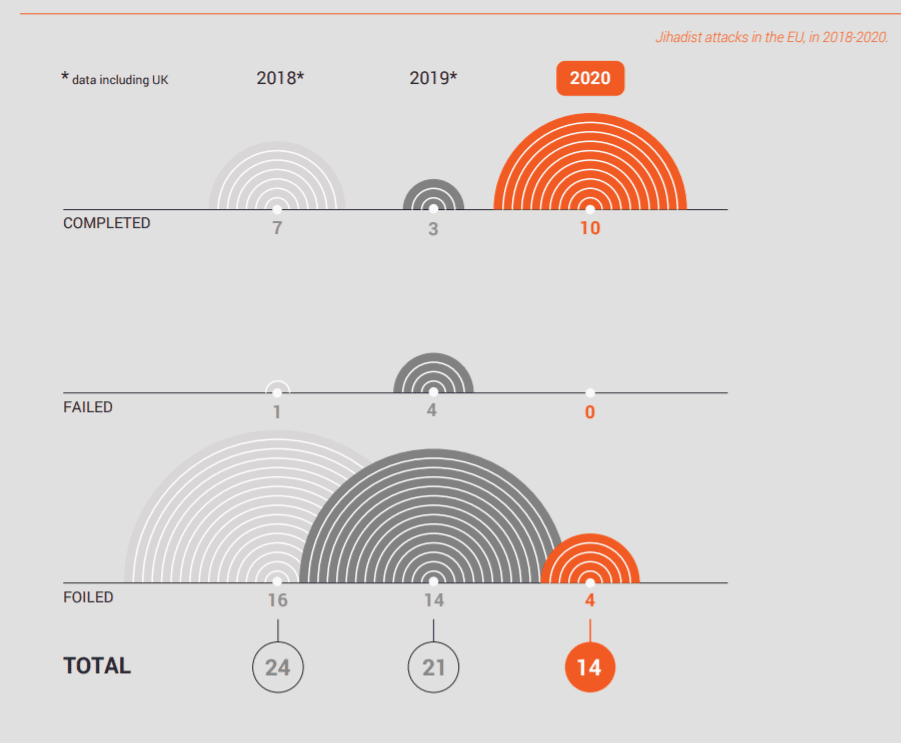
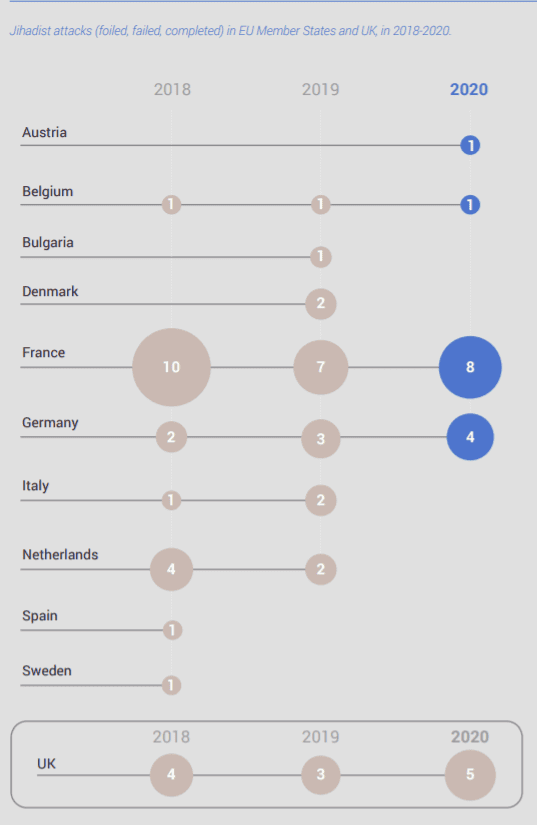
In 2020, there were 10 completed jihadist terrorist attacks in the EU, which killed 12 people in Austria, France, and Germany. More than 47 people were injured. Four jihadist attacks were foiled in Belgium, France, and Germany. The UK reported three jihadist terrorist attacks, one that led to three people being killed and two plots that were thwarted. In addition, Switzerland reported two attacks in which jihadist motivation probably played a role.
As we said in our piece last week, the number of completed jihadist attacks in Europe (EU, Switzerland, and the UK) in 2020 more than doubled in comparison with the number in the EU (including the UK) in 2019. However, it’s not immediately clear if that jump is linked to the effects of the pandemic, the report said.
In today’s piece, we delve into the definition of jihadist terrorism, its status in the EU, and give you a quick brief of each of the 10 completed jihadist terror attacks in the region during 2020. We will be examining other kinds of terror attacks, including right-wing and left-wing related extremism and terrorism in the next part of this series.
The Europol’s report says it uses a narrow definition of the term “jihadism” to define jihadist terrorism. Jihadism, it says, is “a violent sub-current of Salafism, a revivalist Sunni Muslim movement that rejects democracy and elected parliaments, arguing that human legislation is at variance with God’s status as the sole lawgiver. Jihadists aim to create an Islamic state governed exclusively by Islamic law (shari’a), as interpreted by them. Major representatives of jihadist groups are the al-Qaeda network and the self-proclaimed Islamic State (IS) terrorist group.” Other Salafist currents are mostly quietist.
The term “jihad” in classic Islamic doctrine actually means “striving” or “exertion,” the report clarifies. But in Islamic law it is treated as religiously sanctioned warfare and draws historical comparisons with the Christian crusades of the Middle Ages to describe the current situation, i.e., that Sunni Islam is believed to be under attack from a global non-Muslim alliance comprising Christians, Jews, people of other religions such as Buddhists and Hindus, and secularists as well. Some jihadists even include Shi’is, Sufis, and other Muslims in their spectrum of perceived enemies.
Jihadist Modi Operandi
We also pointed out last week that all completed jihadist terrorist attacks were carried out by lone actors, while disrupted plots mainly involved multiple suspects. There were several other factors identified by the EU report as part of the modi operandi of jihadist attacks in 2020. Here’s a look at some of those based on excerpts from the report:
In 2018 and 2019, two thirds of attack plots in the EU were thwarted prior to their execution. But in 2020, the number of completed attacks were more than double that of foiled plots. Whether or not this is because of limited law enforcement capabilities due to the pandemic cannot be ascertained based on information available, the report said.
The most frequent type of jihadism-inspired attacks in the EU, Switzerland, and the UK was assaults in public places targeting civilians.
All jihadist attackers in the EU and the UK were male and aged between 18 and 33. One of the probable terrorist attacks in Switzerland was perpetrated by a woman. The family background or place of birth of perpetrators, including those with EU citizenship, varied significantly and some came from non-EU countries.
Five of the 10 completed jihadist terrorist attacks were perpetrated by individuals having entered the EU as asylum seekers or irregular migrants; in four cases they had entered the EU several years prior to the attack. Several seem to have become radicalized in Europe.
At least five jihadist incidents in Austria, Germany, and the UK involved attackers who were either released convicts or prisoners when they committed the attack.
All completed jihadist attacks in 2020 in the EU were committed by individuals acting alone. Attacks by lone actors or small cells are difficult to predict and prevent. There is no clear profile of radicalized individuals who eventually become violent. Some lone jihadist attackers displayed a combination of extremist ideology and mental health issues, making it difficult to differentiate between terrorist attacks and violence resulting from mental health illnesses. Lone attacks were also incited by the jihadist terror group IS and the al-Qaeda network.
The picture is further complicated by isolated incidents not linked to terrorism in which individuals suffering from mental health issues or psychological stress, possibly in combination with drugs and alcohol abuse, have imitated jihadist attack behavior. Widespread availability of jihadist terrorist propaganda and reporting on terrorist modi operandi seem to have influenced a number of these incidents.
In 2020, 254 people were arrested on suspicion of committing jihadism-related offences. That’s a significant decrease in total arrests for the same reason compared with 2019. Of the 254, 21 were perpetrators of jihadist terrorist attacks or suspects arrested for plotting attacks. A total of 233 arrests were made on charges of other terrorist offences. Among those for whom offences were reported, being a member of a terrorist group was the most frequent offence, followed by propaganda dissemination and planning/preparing terrorist acts. Terrorism financing and core international crimes (war crimes) were the most frequent secondary offences.
Jihadist suspects were predominantly male (87%) with an average age between 31 and 32 years. More than half (64%) were aged between 19 and 35 at the time of the arrest. Almost 70% of all suspects were either citizens of a non-EU country or were born outside the EU.
Recruitment for jihadist terrorism takes place within online and offline networks, often without direct links to terrorist organizations. In 2020, online recruitment occurred mainly in closed spaces, such as encrypted messaging services like Telegram and, to a lesser extent, WhatsApp. Offline, individuals become radicalized through relationships with people around them, for example in circles of friends or family. Intensive consumption of jihadist propaganda has been observed to facilitate the radicalization process of many individuals at risk of perpetrating attacks.
Involvement in online terrorist propaganda activities can become the main focus of the lives of those involved. The Netherlands noted that, in recent years, very young individuals were among those arrested on suspicion of disseminating terrorist propaganda and managing jihadist social media channels. In Switzerland, for example, a radicalized minor was arrested twice in 2020 for making threats via social media channels.
Radicalization and recruitment in prison continued to be of concern to European countries in 2020. For example, the UK reported its first terrorist attack of 2020 inside prison, at Whitemoor high-security prison on Jan. 9. According to Italy, prisons and migrant detention centers continued being fertile grounds for radicalization, as the prison environment makes inmates — even those in custody for common crimes — more susceptible to it.
There were ten completed jihadist attacks in 2020, as we mentioned earlier. Here’s a quick look at them, per the report:
On Jan. 3, a 22-year-old French male convert to Islam stabbed one person to death and injured two others in a park in Villejuif (Val-de-Marne, France). The attacker was shot and killed by police. He had a history of severe mental illness. A letter found in a bag nearby contained an identity card and a letter in which the alleged perpetrator talked about God and asked for forgiveness.
On April 4,a 33-year-old Sudanese male refugee stabbed and killed two people and injured five others in Romans-sur-Isère (Drôme, France). The perpetrator first went to a tobacco shop and stabbed the owner and his wife, then to a butcher’s shop where he seized a knife and attacked people waiting outside a bakery, killing two people, before being arrested. He had entered France in 2016 and reportedly was unknown to French police and intelligence services. Documents were found at his home, probably handwritten by the attacker, in which he described France as a land of “unbelief.”
On April 27, a 29-year-old French male seriously injured two police officers on motorbikes who were checking a vehicle in Colombes (Hauts-de-Seine, France), northwest of Paris, when he rammed them with his vehicle. A pledge of allegiance to IS and a knife were found in his car. The attacker was arrested and admitted having acted intentionally.
In April/May,a 25-year-old German male, born in Bavaria to Turkish-Kurdish parents, perpetrated a series of attacks on Turkish-owned commercial establishments in Waldkraiburg (Bavaria, Germany). In an arson attack on a fruit and vegetable store on 27 April, a total of six people living in the building were injured. In 2018, he had attempted unsuccessfully to join IS in Syria.
On Aug. 18, a 30-year-old Iraqi male asylum seeker caused several car crashes and injured six people on a highway in Berlin (Germany). The perpetrator was arrested. The attack was not claimed by any terrorist organization. Statements by the attacker after his arrest suggested a religious motivation. There were also indications of psychological instability.
On Sept. 25, a 25-year-old male of Pakistani origin injured two people when attacking them with a meat cleaver in front of the building that was the scene of the 2015 attack on the satirical magazine Charlie Hebdo. The attacker was unaware that the Charlie Hebdo office had moved to a different location.
On Oct. 4,a knife attack was committed against two male tourists in Dresden (Saxony, Germany). Both victims suffered serious injuries. One of the victims died in hospital a short time later. The perpetrator, a 20-year-old Syrian national, was identified and arrested on Oct. 20. The attack had a radical Islamist motivation. The perpetrator selected his victims, a gay couple, for being symbols of a liberal and “unbelieving” society.
On Oct. 16,an 18-year-old male killed and decapitated a French school teacher in Conflans-Sainte-Honorine near Paris (France). The perpetrator, who was born in Moscow (Russia) to Chechen parents and brought to France as a young child when they applied for asylum, posted an image of the severed head on Twitter, threatening anyone perceived to have insulted the Prophet Muhammad. The teacher is said to have been targeted for showing cartoons of the Prophet Muhammad to his students. The perpetrator was killed by police near the scene of the attack. IS praised the attacker in its weekly Arabic language newsletter al-Naba’ (“The News”), but did not claim responsibility. An al-Qaeda publication eulogized him and compared him to the perpetrators of the 2015 attack on Charlie Hebdo.
On Oct. 29,a 21-year-old Tunisian male, who had entered the EU as an irregular migrant approximately a month earlier, killed three people inside Notre Dame cathedral in Nice (France) with a knife and injured a fourth one approaching the main entrance. The attacker was shot and injured by police and arrested.
On Nov. 2, shortly before a Covid-19 lockdown was to come into effect, a 20-year-old male of Austrian and North Macedonian nationality started a shooting spree near a synagogue in central Vienna. The perpetrator was carrying an AK47 assault rifle, a Tokarev pistol, a machete, and a fake explosives belt. He randomly targeted people in the street and nearby restaurants, killing two women and two men. One police officer and 16 guests in restaurants were injured by gunshots, and 10 additional individuals were injured during their attempt to escape. Nine minutes into the attack, the attacker was killed by police. Responsibility for the Vienna attack was claimed by IS, and its A’maq News outlet released a video of the attacker pledging allegiance to the IS leader, the first such release since 2018.
Given the comprehensive nature of the Europol report, this is the second in a series of pieces we will be doing based on its findings.
It’s been four days since round-the-clock search-and-rescue (SAR) operations began amid the concrete and steel rubble of a partially collapsed condominium near Miami, Florida. So far no survivors have been pulled out of the ruins of the ocean-front Champlain Towers South condo in the town of Surfside, after it suddenly collapsed as residents slept in the early hours of Thursday, June 24.
By Monday, June 28, the death toll had risen to 11 with 150 people still listed as missing. Media reports say it may end up becoming the deadliest unintentional structural failure in U.S. history. President Joe Biden said he is likely to travel to Florida as early as Thursday this week to visit the site.
It took just 12 seconds for the 40-year-old high-rise to collapse and people described hearing what sounded like thunder before seeing a huge cloud of dust, BBC reported. What caused the building to collapse is still under investigation, and some say a full inquiry could take years, not months. But a 2018 engineer’s report released by Surfside city officials that focused on the building’s structural deficiencies has been in the limelight over the last couple of days.
The victims identified by local officials so far, according to ABC News, include:
Stacie Dawn Fang, 54 — The first victim to be identified and said to have lived in apartment No. 1002 of the Champlain Towers South.
Antonio and Gladys Lozano, 83 and 79 — The couple lived in apartment No. 903 and were married for 59 years.
Manuel LaFont, 54 — His body was recovered from the wreckage by first responders on Friday, June 25. LaFont lived in apartment No. 804.
Leon Oliwkowicz and Christina Beatriz Elvira, 80 and 74 — They lived in apartment No. 704 and their bodies were recovered by first responders on Saturday, June 26 and Sunday, June 27 respectively.
Anna Ortiz and Luis Bermudez, 46 and 26 — Their bodies were recovered from the wreckage by first responders on Saturday.
Frank Kleiman, 55 — His body was recovered from the wreckage by first responders on Monday.
Marcus Joseph Guara, 52 — His body was recovered from the wreckage by first responders on Saturday.
Michael David Altman, 50 — His body was recovered from the wreckage by first responders on Monday.
It was all hands on deck, with rescue teams bringing in experts from Israel and Mexico, SAR/Recovery dog teams, and, of course, a troop of local firefighters and other trained specialists. Many from the Miami-Dade County team also have experience abroad, news reports said. Miami-Dade Assistant Fire Chief Raide Jadallah said workers have found voids large enough to keep victims alive, Reuters reported. But hopes of identifying signs of life are diminishing as time wears on.
“We have people waiting and waiting and waiting. That is excruciating. They are coping with the news that they might not have loved ones come out alive and still hoping that they will. Their loved ones may come out as body parts,” Miami-Dade County Mayor Daniella Levine Cava told reporters in an afternoon news briefing on Monday.
The pancake collapse of the building left layer upon layer of intertwined debris, frustrating efforts to reach anyone who may have survived in a pocket of space, the Associated Press reported. “Every time there’s an action, there’s a reaction. It’s not an issue of we could just attach a couple of cords to a concrete boulder and lift it and call it a day,” Jadallah said during a news conference according to media reports. Jimmy Patronis, Florida’s chief financial officer and the state’s fire marshal, said it was the largest deployment of such resources in Florida history that was not due to a hurricane, the Associated Press report said. Patronis said the same number of people are on the ground in Surfside as were during Hurricane Michael, a devastating Category 5 hurricane that hit 12 counties in 2018, the report added.
On Monday, USA Today reported that a letter from the building’s condo association president in April had said damage to the building’s basement garage had “gotten significantly worse” since an inspection about two and a half years earlier and that deterioration of the building’s concrete was “accelerating.” That letter had also said the estimated cost for the repair had increased from $9 million to more than $15 million, the report added. The letter’s author, Jean Wodnicki, survived Thursday’s collapse.
Morabito Consultants, the engineering services firm whose 2018 report on the building has been in the spotlight, had also issued a statement on Saturday saying it was saddened by “the tragic events that have occurred at Champlain Towers South Condominium.” It said its 2018 report “detailed significant cracks and breaks in the concrete, which required repairs to ensure the safety of the residents and the public.”
Florida International University Institute of Environment Professor Shimon Wdowinski said on Thursday after the tragedy that the area where the building collapsed showed signs of land subsidence in the 1990s, according to analysis of space-based radar data. He added, however, that land subsidence in and of itself likely would not cause a building’s collapse. (Subsidence refers to the gradual sinking process of an area of land.) “Western Miami Beach saw subsidence over larger areas but that was expected because homes there are built on reclaimed wetland,” a post on the university’s website says.
But, as we mentioned earlier in this piece, a full investigation may take years to complete.
A team from the National Institute of Standards and Technology (NIST), which also investigated the collapse of the World Trade Center on 9/11, is already on site at Surfside and is in the preliminary stages of an investigation into the reason behind the collapse, NPR reported on Monday. Some of the questions that the team is looking to answer, according to Jason Averill, chief of NIST’s Materials and Structural Systems Division, include: “Are there many other buildings of this design? Are there materials issues that are common to many other buildings?”