Tech Support : support@safience.io

Blog

The Intersection Of Artificial Intelligence And The Gaming Industry

By Aara Ramesh

In January 2017, one 20-day tournament sent ripples of shock through the tech industry, when Libratus, an AI-powered robot, beat four of the world’s best poker players in a series of no-limit Texas Hold ‘Em games. This was seen as particularly significant due to the fact that poker is a game with imperfect information, where the AI has to be able to understand and interpret bluffs from competitors and be able to bluff itself. This has long been considered something that AI would never be able to do — the factor that particularly elevates human intelligence over computing systems’ intelligence.

Libratus’ shock win set off a longer-term discussion about the role that the latest technology can play in the gaming and gambling industries and what this could possibly mean for the sector’s future.

Artificial Intelligence (AI) is the use of technology to enable computers to replicate human behavior in terms of visual perception, speech recognition, and decision making. The AI algorithm looks for and identifies specific patterns and links over thousands (if not trillions) of interactions with humans, and then can choose its own strategy or response based on that analysis. It does not actually possess and exercise the knowledge bank in the traditional sense; rather, the algorithm just runs through data and analyzes it.

Gaming itself is somewhat of a treasure trove of the type of data that is suitable to train AI algorithms, as player behavior, choices, and game strategies can all be examined. While humans can also trawl through and analyze data, that process could take hours. Computer systems are able to much more quickly sift through millions of data points, enabling greater efficiency.

With AI being such a nascent field in general, the gaming industry is still exploring and understanding how it can best be utilized. Let us take a look at the field as it stands and at some of the potential uses of AI in casinos.

The State Of The Online Gaming Industry

Though exact estimates vary based on who commissioned and conducted the study, the overall casino and gambling industry — both land-based and online — is thought to have been worth roughly $227 billion in 2020. The market size of global online gambling alone is believed to have been anywhere between $57 to $59 billion last year. This is expected to double within the next five or six years, to be worth between $92 and $97 billion by 2026.

In the U.S., the online gaming market was valued at around $1.98 billion in 2020 and is expected to grow by more than 17% between 2021 and 2026. With more and more states in the U.S. legalizing sports betting after the landmark Supreme Court decision to reverse the ban on it in 2018, the market is set to grow in leaps and bounds in the short term.

Security, Fraud, And Cheating

With this growth and the introduction of new technologies comes fears over security, fraud, and cheating. It seems like that for as long as there’s been gambling, there’s been people who try to exploit the system for their own gain. That didn’t change much with the incorporation of technology and the internet into gaming.

For its part, AI both attracts and thwarts cheaters. In land-based casinos, it can often be difficult to monitor every single inch of the floor on an ongoing basis. The use of AI can identify (based on parameters established by the operator) instances of theft and cheating happening in real time, and can alert security personnel, who can then take appropriate actions.

Security teams are not able to access cameras or surveillance equipment to monitor suspicious behavior from a person gaming in their own home. AI, however, can help in the large-scale analysis of patterns and actions that could identify cheaters and help betting maintain the integrity of the industry. 

AI can also help in a regulatory capacity, by automating and optimizing the systems that monitor a player’s age and location, which would determine the legality of them engaging in gambling.

However, there is a risk that the use of AI is not entirely a deterrent. Cheaters can develop their own AI technology to battle the casinos. At the very least, however, this helps even out the playing field and the problem can be mitigated by keeping the technology up to date and investing in equipping it with all the information it needs to continuously refine its algorithm.

Heading Off Potential Gambling Addiction

With the growth of the online gaming industry comes renewed fears about potentially unhealthy gambling behaviors taking root. But this too can be — and is being — tackled through AI employed by casinos and online betting sites.

AI presents great potential to help curb destructive gaming behavior. The vision for the use of AI in this respect is that technologies can analyze a player’s actions, like how long he or she is playing, how much they’re spending, when they’re spending, what games are they spending on, how much they are staking, etc. Once the algorithm recognizes and maps patterns in specific users, it can identify when someone is veering towards irresponsible gambling. 

After this, the technology can then lock down the system before any serious loss is incurred, and can inform both the players and the game operator. The latter can also set loss limits and automatic timeouts for certain types of behavior, and suspend accounts of those displaying risky habits.

One such solution is BetBuddy, which was acquired by Playtech in 2017. The platform was created through the joint efforts of AI and machine learning experts, and clinical researchers looking into unhealthy gambling patterns. The result is a piece of predictive technology that is thought to be able to detect a potential gambling addiction with an 87% rate of accuracy. BetBuddy’s predictive capabilities make it an industry-leader in implementing responsible gambling practices, according to its creators. They say it is continuously updated based on the latest research so that it remains cutting edge.

Similarly, in the UK, the betting industry proactively implemented in 2019 the Anonymous Player Awareness System at fixed-odds betting terminals. This technology was trained to analyze player behavior and spot troublesome patterns like “chasing losses, playing erratically, speeding up betting while losing, or simply spending too much time on the machine.” If it did detect such behavior, it would automatically shut down to impose a “cooling off” period of a minimum of 30 seconds, for the player to step away and calm down.

AI tools in this setting can better equip players, operators, and regulators with the information necessary to head off the problem. Spotting early warning signs can be crucial to preventing addictions before it becomes a crippling or overwhelming problem.

Growing The Market

Today, AI systems are being used in a variety of settings to enhance the user experience. This is applicable to the gambling market as well. Just as the introduction of internet-based casinos and gambling has grown the overall market, so too can AI help in doing the same.

Not only can AI manage and set specific odds and pay-outs, it can allow casinos to give players a more customized, personalized experience. This includes better deals and special, tailored offers that can serve as a huge draw for potential and returning customers, likely increasing the revenue of the market.

Better, faster, and smarter use of data can help companies understand and anticipate a players’ needs, by figuring out what entices them to play, why they quit, and why they may change games. All these mechanisms that are designed for a better game for players could help drive the industry into the next phase of its expansion.

What Happens Next?

The fact is that AI is the future for humankind — not a replacement, but an aid, a support system to better our lives.

Let’s go back to the robot Libratus, who trounced its human opponents and won a hypothetical $1.5 million in 2017.

Much like with any other form of technology, the algorithm behind Libratus is not restricted to being applied in gambling or poker alone. Having demonstrated an ability to strategize and negotiate, the software can be implemented in a variety of fields, including in private-sector transactions, the military, cybersecurity, and healthcare. Basically, any situation that calls for strategic reasoning amidst conditions of imperfect information is ideal for this technology.

So is its destiny to be a poker maestro forever?

No. Today, Libratus is an employee of the Department of Defense, where it is engaged in an unspecified role in the Defense Innovation Unit. And while its opponents were left exhausted and reeling over Libratus’ triumph, it was not all bad news for those top-dogs of poker. “It’s almost like we’ve been shell-shocked into being much stronger players,” one of them said. “Nothing anyone does will seem that crazy anymore.”
Forcibly Displaced People Now Represent 1% Of The World’s Population — What Does That Mean?

By Aara Ramesh

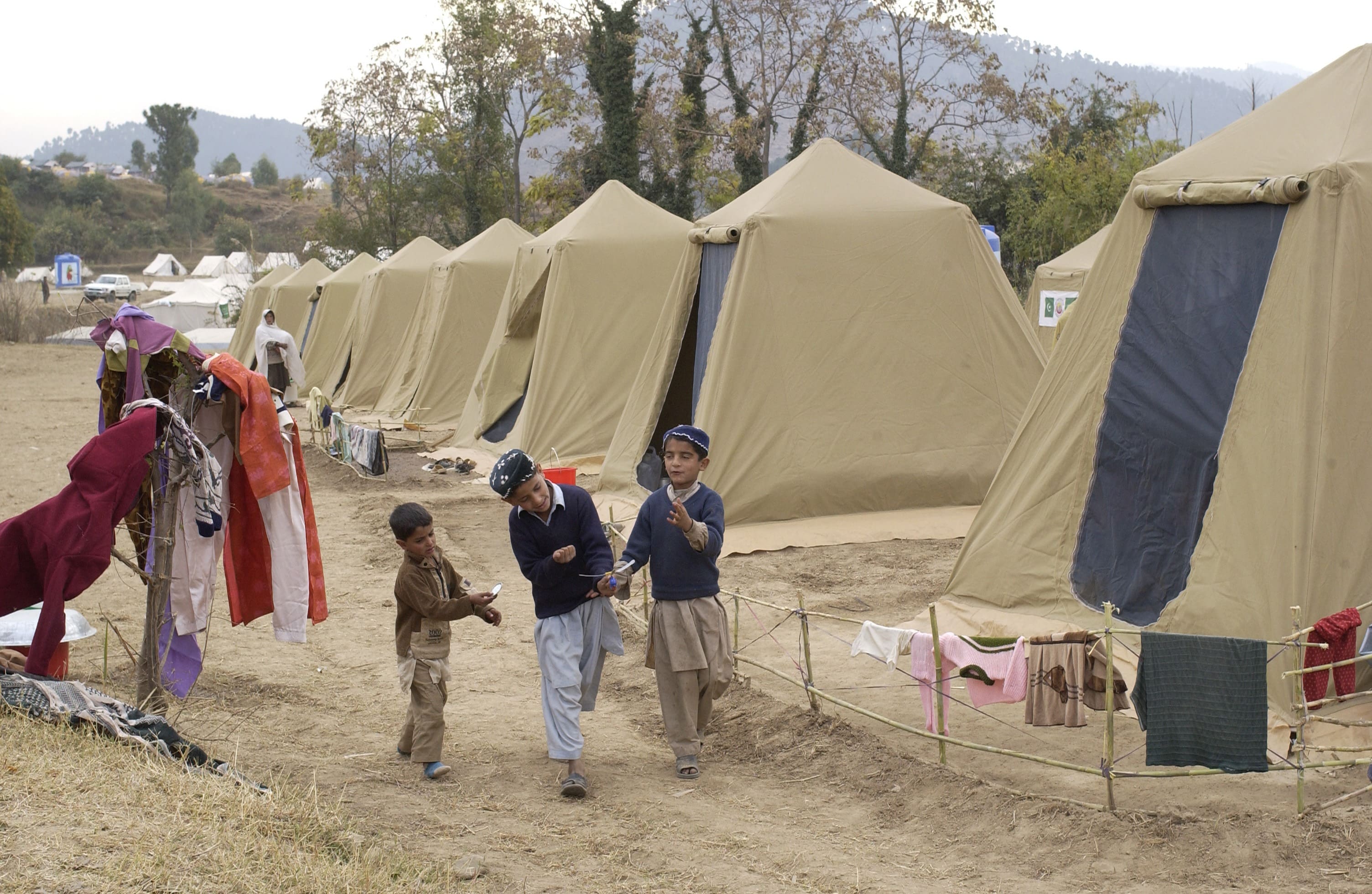
Despite many countries closing their borders and restricting travel during the Covid-19 pandemic, the United Nations (UN) has said that the plight of refugees and asylum-seekers actually worsened in 2020. As of the end of the year, over 82.4 million people worldwide were forcibly displaced, representing over 1% of the global population, according to a report from the UN High Commissioner for Refugees (UNHCR).

While these figures are only provisional and the full impact of the pandemic is still being assessed by officials, the estimates paint a worrying picture. Between 2010 and 2020, the number of people forcibly displaced went from 1 in every 159 humans to 1 in every 95. Last year marks the ninth consecutive year that global forced displacement figures have risen. In fact, over the last nine years, the figure has doubled, having been recorded at below 40 million in 2011.

Nearly half (42%) of all those forcibly displaced were children younger than 18 years old. Between 2018 and 2020, estimates suggest that nearly 1 million children were born as refugees, many of whom might maintain that status for the next several years. However, fewer unaccompanied or separated children filed for asylum in 2020, with only 21,000 doing so, as compared to 25,000 in 2019. Children, alone or not, are considered to be particularly vulnerable to exploitation and trafficking in the displacement process.

Before diving deeper into the figures, it would be useful to quickly look over key terms in the lexicon of migration, both voluntary and involuntary.

Concepts In Migration

According to the International Organization for Migration (IOM), forced migration is “a migratory movement which, although the drivers can be diverse, involves force, compulsion, or coercion.” Internally displaced persons (IDPs) are those “persons or groups of persons who have been forced or obliged to flee or to leave their homes or places of habitual residence, in particular as a result of or in order to avoid the effects of armed conflict, situations of generalized violence, violations of human rights or natural or human-made disasters, and who have not crossed an internationally recognized State border.”

Refugees are defined as those who leave their country of origin out of fears over being persecuted for race, nationality, a specific political opinion, or religion, among a multitude of other factors. They are also unable or unwilling to return to their country due to this fear. Asylum-seekers are those refugees whose claims have not yet been determined, but who are still seeking international protection. Resettlement is the “transfer of refugees from the country in which they have sought protection to another State that has agreed to admit them — as refugees — with permanent residence status.”

While there are many people world over who choose to migrate for personal reasons, including the pursuit of different economic opportunities, there are still millions more who are forcibly displaced as a consequence of conflicts, disasters, climate change, and phenomena like famine.

The World Bank characterizes forced displacement as more than just a humanitarian or moral issue, saying that it is additionally an economic and developmental challenge as well. Displacement severely impacts both the home country and the host country, necessitating, as it does, sufficient resources to safely and humanely resettle those displaced.

The UNHCR’s 2020 Report

Of the 82.4 million forcibly displaced at the end of 2020, 26.4 million were refugees. Of those, 5.7 million were Palestinian refugees under the mandate of the United Nations Relief and Works Agency (UNRWA), while the rest were under the purview of the UNHCR. Of the overall figure, roughly 3.9 million were Venezuelans displaced abroad and 4.1 million were asylum-seekers. A shocking 48 million people were IDPs, up 2.3 million from 2019.

In 2020, 11.2 million people were forced to flee their homelands, which is a slight uptick over 2019’s 11 million figure. This included those fleeing for the first time as well as those who had repeatedly fled, both within and beyond their country’s borders.

Multiple regions reported that new arrivals dropped sharply in 2020 — about 1.5 million fewer than what was expected in a non-pandemic scenario — which seems to indicate that a large number of displaced people were left stranded and particularly vulnerable. 

According to officials, more than 160 countries closed their borders during the worst of the pandemic last year. At least 99 of those did not make an exception for people seeking protection away from their homelands.

The regions most affected by internal displacement included Ethiopia, Sudan, the Sahel countries, and Mozambique in Africa; Yemen and Afghanistan in the Middle East; and Colombia in South America. Internationally, the greatest number of displaced persons came from Syria (6.8 million people), Venezuela (4.9 million), Afghanistan (2.8 million), and South Sudan (2.2 million).

In terms of host countries, Turkey housed the largest number of refugees (just under 4 million, 92% of whom were Syrian), followed by Colombia (over 1.7 million displaced Venezuelans); Germany (almost 1.5 million, 44% of whom were Syrian refugees and asylum-seekers); and Pakistan and Uganda, each with around 1.4 million people.

The UNHCR report also tracked how many displaced people chose to return to their home country, and how many were resettled. In 2020, 3.2 million IDPs returned home, a drop of 40% over 2019 figures. Only 251,000 refugees made their way home, a 21% drop from a year previously. Only 33,800 refugees were naturalized in the country where they sought asylum, and just 34,400 were resettled. This last figure, in particular, is worrying due to its future implications. This is the lowest it’s been in two decades and is a 69% drop over 2019. There are currently around 1.4 million refugees thought to need resettlement.

Next Steps

According to the World Bank, the number of people in situations of extreme poverty is likely to have risen by 119–124 million in 2020, largely as a result of the pandemic. And earlier this month, the UN estimated that the number of children forced into labor in 2019 was higher than it had ever been in the previous 20 years — a situation only predicted to worsen as a result of Covid-19. Among the many effects of Covid-19 on displaced persons, the UNHCR particularly highlights food shortages and insecurity, economic challenges, access to decent healthcare, and a lack of protective services.

On June 20, World Refugee Day, UN Secretary-General António Guterres said that the pandemic had not only obliterated the livelihoods of refugees, but had also led to them facing increased “stigmatization and vilification.” This is despite many of them serving as frontline workers in their host countries. Mr. Guterres, who was the head of the UNHCR for a decade, added that displaced peoples had also been “exposed disproportionately” to the coronavirus.

Both the UNHCR and Mr. Guterres called for increased cooperation and coordination on a global and national scale in order to better handle the growing crisis forced displacement.

However, the report did note a ray of hope amidst the rising certainty that the number of forcefully displaced people will cross 100 million shortly. Under the new administration, the U.S. government has acceded to accepting up to 62,500 more refugees for resettlement in 2021, and up to 125,000 more in 2022. Colombia said in February this year that it would grant temporary protection to more than 1 million Venezuelans. The agency is hopeful that other countries will follow suit.

To read the full UN report, please click here.

Juneteenth Celebrations Marred By Gun Violence Across The Nation

By a Biometrica staffer

On Saturday, June 19, celebrations were underway across the country to commemorate Juneteenth, the date that marks the unofficial end of slavery. Events over the weekend ranged from festivals and celebrations, to rallies and memorials. But it also became yet another example of how common episodes of gun violence are becoming in the United States, with at least a few Juneteenth celebrations marred by shootings, in addition to other unrelated incidents of gun violence, too.

In Clover, South Carolina, multiple shootings at a Juneteenth celebration occurred just before 11:30 p.m. on Sunday, June 20, near the intersection of Oakridge Road and Bellaire Circle, WCNC reported. Two of the three victims were transported to a hospital in Gaston County by their own vehicles and another was transported to Atrium Health Center in Charlotte by helicopter, the article added. Several cars were also shot at during the incident. The York County Sheriff’s Office described the suspects’s car as a dark-colored four-door Chevrolet Malibu with a Georgia license plate.

On Saturday evening, a 22-year-old was killed and five others were injured at a shooting in Oakland, California, near the city’s Juneteenth celebration. It wasn’t immediately clear if the violence was connected with the event, according to the police, ABC News reported. The unidentified 22-year-old male was pronounced dead at a hospital. The other five victims — four males aged 16 to 27, and a woman in her 20s — were hospitalized in stable condition, according to the Oakland Police Department.

The Oakland shooting took place shortly before 6:30 p.m., roughly a mile north of the Lake Merritt Amphitheater, where hundreds of people had gathered throughout the day to observe Juneteenth. “Tonight a joyous occasion at our Lake Merritt was marred by a senseless act of gun violence,” Oakland Mayor Libby Schaaf said, according to ABC News.

In Aurora, Colorado, five people were shot in a shopping mall parking lot. When officers arrived on the scene, they found a large crowd and an adult male amongst them, suffering from an apparent gunshot wound. Officers began CPR on the victim until he was taken to the hospital, but he died a short while later, CBS Denver reported. There are conflicting reports of whether this was connected to Juneteenth, with some witnesses telling investigators that there was a related celebration in an unnamed unit of the shopping mall. Others, however, said the celebration was not connected to the newly declared federal holiday. There were allegedly up to 114 rounds fired in this incident, ABC News says.

There were also some unconnected acts of gun violence that took place over the weekend. Early on Saturday, a mass shooting in Baton Rouge, Louisiana, left two people dead and four injured. The incident took place at around 2:00 a.m. in a parking lot. It appears to have started off as an argument between unidentified individuals as a group of partygoers began to leave a concert from a nearby venue, police said. During the argument, multiple people began shooting and a total of six victims were struck, CNN reported. In Philadelphia, a violence-filled weekend left more than a dozen hurt and three dead. Philadelphia police investigated at least five shooting incidents across the city on Sunday, 6ABC reported.

It has not even been two weeks since law enforcement officers told CNN in interviews that they were worried because this year’s surge in gun violence appears to have started well before the habitual summer spike in crimes. Americans have woken up on quite a few Mondays, of late, to news of a violence-ridden weekend.

Despite the various shootings, the very first year that Juneteenth was celebrated in the U.S. as a federal holiday appeared to be joyous. Of the events that took place over the weekend, a Juneteenth celebration in Cape May, New Jersey doubled as the opening day of the new Harriet Tubman Museum.

What is Juneteenth? Back in 1863 during the American Civil War, President Abraham Lincoln issued the Emancipation Proclamation, which declared that the over three million enslaved people living in the Confederate states were free. But it would be two years before news that they were free would reach the last men and women yet to be freed.

The origins of Juneteenth go back to June 19, 1865, when Maj. Gen. Gordon Granger of the Union Army arrived in Galveston, Texas, to announce that enslaved people were now free. The former slaves immediately began to celebrate with prayer, feasting, song, and dance, history says. One year later, on June 19, the first official Juneteenth celebrations took place in Texas. The holiday has gone on to be a cause for celebration and remembrance, as well as a call to action, NPR says in its photo report on how Americans celebrated Juneteenth over the weekend.

On Thursday, June 17, President Joe Biden signed into law a bill that makes Juneteenth a national holiday, called the Juneteenth National Independence Day. It becomes the first federal holiday established since Martin Luther King Jr. Day was made official in 1983.

Moving Fraud: Red Flags And Tips For Moving Homes Securely

By a Biometrica staffer

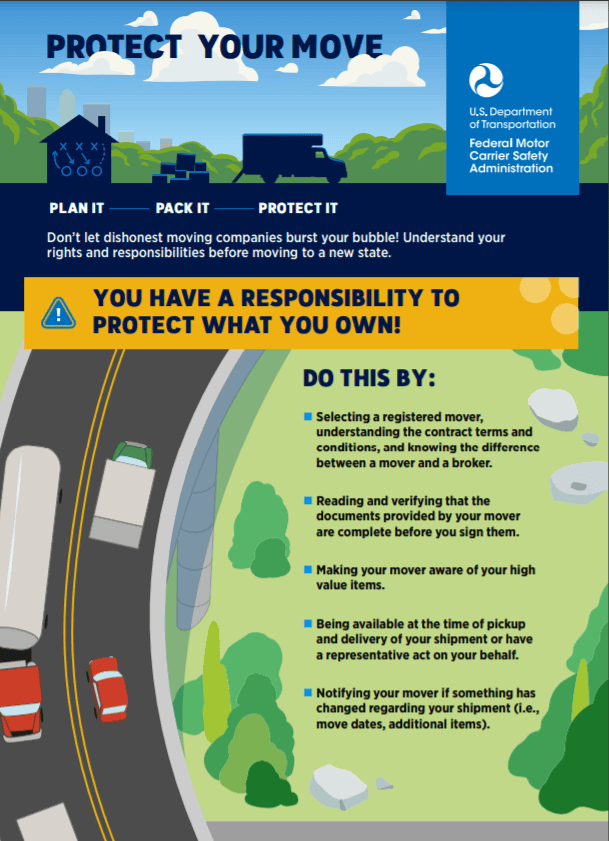
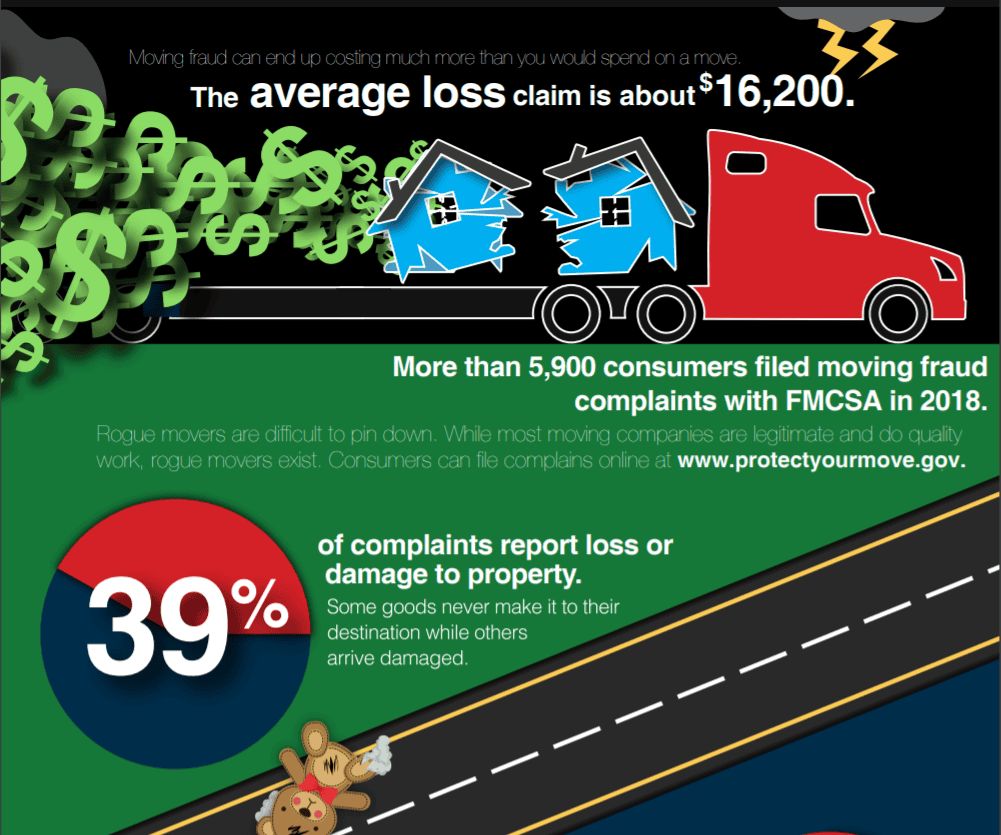
For those who want to make easy, illegal money, any kind of enterprise can present itself as a potential opportunity. With more than 35 million Americans moving homes each year, the moving industry is a ripe target for criminals to exploit. Moving homes can be stressful even under normal circumstances. Add in the chaos of dealing with someone who’s fraudulently taken away your life’s memories and is holding on to them until you pay an exorbitant amount, and it can become an immensely frustrating experience, not to mention an unnecessary financial expense. So, how do you protect yourself?

There are several signs you can watch out for to avoid becoming a moving fraud statistic. There is recourse at the federal level for those who have fallen prey to these kind of scamsters. There’s also a typical modus operandi for these rogue movers. Interstate moving, of course, is where there’s extra room for fraudsters to pull off scams. We take you through the red flags and tips in today’s piece, based on the Federal Motor Carrier Safety Administration’s (FMCSA) resources and guidelines.

What’s the typical modus operandi of a moving scam? Usually, it involves a mover who does not even visit your home, nor review the goods that you want moved, but gives you a quote over the internet or phone. Normally, the estimates they quote will be really low. Remember, if it’s much lower than you expected, it may just be too good to be true as some people have discovered once the goods have been loaded on to the trucks. That’s when these rogue movers will demand more money before they deliver and/or unload your belongings. So your goods are effectively held hostage while the scammers force you to pay more if you want your possessions back. In most cases, the amount you end up paying is significantly higher than you had originally agreed on.

It is the FMCSA that administers commercial regulations governing the interstate transportation of household goods. Before choosing a moving company, it is recommended that consumers familiarize themselves with the FMCSA’s list of red flags. The organization also has a handy checklist that consumers can use to plan their move carefully. If you are planning to move, you can also check to see if any complaints have been registered against the moving company you are planning to use on the FMCSA’s National Consumer Complaint Database, or their local Better Business Bureau.

Image Source: Screengrab from the FMCSA website

Moving Scam Red Flags

According to the FMCSA, here are some signs that you could be falling for a moving scam:

  • The moving company doesn’t offer or agree to an on­site inspection. The estimate is given over the internet or the phone, i.e., unseen. These estimates often sound too good to be true. They usually are.
  • The company demands cash or a large deposit before the move.
  • They ask you to sign blank or incomplete documents.
  • They do not provide a written estimate (can be binding or non-binding).
  • The mover doesn’t provide you with a copy of the Your Rights and Responsibilities When You Move booklet and a copy of FMCSA’s Ready to Move brochure, which movers are required by Federal regulations to supply to their customers in the planning stages of interstate moves.
  • The company’s website has no local address and no information about their registration or insurance.
  • The mover claims all goods are covered by their insurance.
  • When you call the mover, the telephone is answered with a generic, “Movers” or, “Moving company,” rather than the company’s name.
  • Offices and warehouse are in poor condition or nonexistent.
  • The mover says they will determine the charges after loading.
  • On moving day, a rental truck arrives rather than a company­-owned or marked fleet truck.
  • The mover claims, “You’ve got more stuff than estimated!” Should this occur, be sure the mover provides a revised estimate that you both sign listing the additional items and/or services as well as a price that you both have agreed to and signed before they begin packing or loading. They should also provide you a copy of this new estimate.
Images sourced from the FMCSA website

Tips To Safeguard Yourself From Moving Scams

  • As we mentioned earlier, before moving your household goods interstate, movers are required to give you the booklet entitled Your Rights and Responsibilities When You Move. This booklet will help you understand the documents that a mover will ask you to sign, and explains your rights if your household goods are lost or damaged. Movers are also required to give you FMCSA’s Ready to Move brochure, which helps you prepare to move with confidence.
  • Learn to spot the red flags of moving fraud (covered in the section above)
  • Ensure you check if your mover is registered with the FMCSA on the database of registered movers. Alternatively, you can also call the FMCSA at (202) 366-9805 for licensing and (202) 385-2423 for insurance.
  • All interstate household goods movers must be registered with the federal government. Make sure the mover you select has been assigned a U.S. DOT number, is registered with FMCSA and licensed to engage in the interstate transportation of household goods, and has the proper level of insurance. Avoid movers that do not show U.S. DOT numbers and brokers that do not show Motor Carrier (MC) numbers in their advertisements.
  • The mover should provide you with these basic written documents as part of your move: Estimate, Order for Service, Bill of Lading (BOL), Inventory List.
  • The estimate should clearly describe, in writing, all charges for the services the mover will provide. Make sure the estimate is signed by the mover. Do not accept verbal estimates.
  • The order for service is a list of all the services the mover will perform and shows the dates your household goods will be picked up and delivered.
  • The BOL is a contract between you and the mover that acts as a receipt of your belongings. You should be given a partially completed copy of the BOL before the mover leaves the residence at origin.
  • The inventory is the receipt showing each item you shipped and its condition. Be sure you receive a written copy of the inventory after your household goods are loaded, and that you agree with its description of your household goods’ condition.
  • Never sign blank or incomplete documents.
  • Always ensure you understand the type of liability you agree to. For instance, how much is enough coverage for all your goods if anything unexpected happens? Your mover must offer you the option of Full Value Protection, which will provide you with the replacement value of lost or damaged goods. You may also purchase insurance from a third-party insurance company, but before you do that, check if your homeowner’s insurance policy already covers the move.
  • Supervise the loading and unloading of your household goods. If you are not available, appoint a representative to act on your behalf.
  • Keep the FMCSA’s checklist and Moving Fraud Prevention Guide handy.
Video Source: US Department of Transportation

This is the first of a series that we will be doing on moving frauds. Up next in this series: Consumer rights & responsibilities and post-moving help.

Counterfeit And Illegal Pesticides Worth Up To €80M ($94M) Seized During Operation Silver Axe VI

By a Biometrica staffer

On Thursday, June 17, Europol said 1,203 tons of illegal pesticides were taken off the market by it in a joint operation that involved law enforcement authorities from 35 countries. The amount of pesticides seized during the operation was worth up to €80 million (roughly around $94 million) in criminal profits, Europol said.

It was the sixth edition of operation Silver Axe, which specifically targets the trade in counterfeit and illegal pesticides. Pesticides are among the most regulated products in the world. The United States Environmental Protection Agency (EPA), for instance, lists four main factors that it examines during the process of registering a pesticide, which is a scientific, legal and administrative procedure. The factors are:

  • the ingredients of the pesticide;
  • the particular site or crop where it is to be used;
  • the amount, frequency, and timing of its use; and
  • storage and disposal practices.

While conducting the evaluation, the EPA considers a wide variety of potential human health and environmental effects associated with use of the product, including the effects on endangered species and non-target organisms, and the possibility of contamination of surface water or ground water from it. The company that wants to produce the pesticide must provide data from studies that comply with its testing guidelines.

There’s a reason why pesticides is such a heavily regulated industry. “Unregulated substances can be extremely dangerous for the environment and human health. The use of cheaper illegal and substandard products has led to the devastation of fields and other ecosystems, which has caused serious harm to the world’s biggest pollinators: bees,” Europol said in its statement today.

For example, a case during operational activities as part of Silver Axe IV uncovered how the unregulated use of neonicotinoid, contained in a non-approved product, led to the death of bees raised in the area. Although the trees that the product was used on did not have flowers, their leaves extracted sugar, attracting and poisoning the nearby bees. 

The global operation was supported by the European Union Intellectual Property Office (EUIPO), the European Anti-Fraud Office (OLAF), the European Commission’s DG SANTE, the European Crop Protection Association (ECPA) and CropLife Europe. During the operation, law enforcement authorities targeted both online and offline sales of these illicit products.

Operation Silver Axe VI led to:

  • 12 arrests (7 in Italy and 5 in Spain)
  • 763 reported infringements
  • 268 seizures, including 1,203 tons of illegal pesticides in total 
  • Of that total: 100 tons of counterfeit pesticides were seized at seller, manufacturer and logistics companies; while 82 tons of pesticides are suspected of being counterfeited and currently under investigation

“Over the past six years, Operation Silver Axe has brought together an increasing number of law enforcement authorities and partners against those putting our public health and security at risk. The impressive seizure of over 1 000 tonnes of illegal pesticides clearly demonstrate that, together, we can better ensure the safety of EU citizens and protect the environment today and for the future,” Catherine De Bolle, Europol’s Executive Director, said.

The abuse in the trade of illegal pesticides varies from trafficking counterfeit or mislabeled products to irregular imports of banned substances such as chlorpyrifos, which was in particular focus during Operation Silver Axe VI. Although Asia and South Asia are the major source regions for illegal pesticides, Europol said it has noticed an increase in their online sales.

On June 11, 2020, for instance, the EPA ordered Amazon and eBay to stop selling a wide range of pesticide products on their platforms. It said those products were unregistered, misbranded, or restricted-use pesticides, and pesticide devices that make false or misleading claims. Its order also extended to include several products that were marketed with false or misleading claims of efficacy against the novel coronavirus variant that was behind the Covid-19 pandemic.

Illegal pesticide related crimes continue to occur. On May 27, for instance, the Department of Justice (DOJ) said that a woman was convicted for smuggling illegal pesticides into the U.S. from Mexico. The pesticides included 12 bottles of Metaldane and six bottles of Furadan. The active ingredient of Metaldane is methamidophos, and the active ingredient of Furdan is carbofuran. Both methamidophos and carbofuran are cancelled pesticides, which may not be legally imported, sold, distributed or applied in the United States, the DOJ had said. In June, the EPA said it had settled a federal pesticides case with Bellevue-based Kaliber LLC for selling misbranded pesticide devices manufactured by the Chinese company, Aosion.

A total of 3,771 tons of illegal pesticides have been seized since Silver Axe I, the Europol said. “Cooperation between industry and Europol on illicit pesticides is more vital than ever before. In order to deliver on the Farm 2 Fork objectives, we need to ensure there are no counterfeit and illegal pesticides entering the European market. To do this, we need to continue raising awareness for both farmers and the legitimate distribution channel to make sure they reject criminal offerings that jeopardise the sustainable production of food,” said Géraldine Kutas, CropLife Europe’s Director-General.

Video Source: Europol’s YouTube channel

US Marshals’ Efforts To Protect Judiciary Severely Crippled By Staff And Funding Shortages According To Inspector General

By a Biometrica staffer

On Wednesday, June 16, the Justice Department’s Inspector General (IG) released an audit report about the U.S. Marshals (USMS) judicial security activities, concluding that the department “does not have the resources or proactive threat detection capabilities” needed to sufficiently guard protected persons, such as federal judges. The major reasons cited for the inability to meet its obligations is a funding crunch due to agencies competing over the same pool of funds and a related staffing shortage. The report looked at the period between FY 2016 and FY 2020.

The report from the office of IG Michael Horowitz noted that there was a sharp 89% increase in the number of threats and “inappropriate communications” directed at members of the judiciary between 2016 and 2019. The USMS says it has not been able to keep up with a changing threat landscape that now includes online and social media platforms.

https://twitter.com/JusticeOIG/status/1405166892445208578

The USMS, which falls under the jurisdiction of the Justice Department, is one of the oldest existing branches of law enforcement in the country. It is responsible for protecting the Deputy Attorney General, 2,700 sitting judges (including 800 federal judges), the Secretary of Education, U.S. attorneys, and over 30,000 federal prosecutors and court employees across the country, in addition to securing federal court facilities. 

Currently, the agency has about 3,885 authorized deputy marshals and it estimates that it needs about 1,000 more to be able to adequately perform its duties. This represents a shortfall of nearly 25% at the moment.

As a result of the dearth of staff, investigative duties and training are falling to the wayside as deputies struggle with those responsibilities in addition to their full-time job requirements. The protection unit has 43 full-time members of staff, with a further 200 serving in a part-time security role for federal judges. This means that threat investigations are attended to “on a part-time, rotational basis,” the report said.

Another area where the agency is forced to stop short is in implementing key security measures in judges’ homes, due to equipment being outdated.

The department is seeking $33.4 million additional funding and more staff to be able to adequately beef up the judicial security programs. This would impact equipment, training, and help in surveillance and investigating.

The urgency over protecting judges is tied to the fact that one of the fundamentals of democracy is that the judiciary be able to make ruling without fearing “retribution” or “reprisals,” stakeholders say.

According to a report from CBS there were over 4,000 threats to federal judges over the last 5 years, a jump of over 400%. These incidents ranged from hate mail and protests at their homes, to harassment over the phone and even attempted murder. Per the IG, in 2020 alone the USMS responded to 4,261 instances, an 81% rise over the 2,357 instances recorded in 2016. The increase is about 233% since 2008.

The USMS and the protection of the judiciary has been under the microscope since a tragic incident in July 2020, when a disgruntled lawyer posed as a FedEx delivery agent to gain access to New Jersey District Judge Esther Salas’ house. The man shot and killed the judge’s 20-year-old son and severely wounded her husband.

Worryingly, there was evidence that suggested he had been tracking her and monitoring her activities. He also allegedly had a dossier on U.S. Supreme Court Associate Justice Sonia Sotomayor and a list of more than a dozen other potential targets for murder. Three of them were judges.

There are other incidents that have centered the issue as well, drawing attention to it. In 2020 alone, more than 50 federal courthouses were damaged during civil unrest and violence. Over a year ago, a Federal Protective Service guard was killed outside a courthouse in Oakland, California, and in September last year, a court security officer was shot outside a Phoenix, Arizona federal courthouse. 

However, legislative efforts to address this shortfall in funds and personnel have stalled. In December, the Senate chose not to take up a bill that would have allowed action to be taken to remove posts online that exposed judges’ personal information to the public. And the $133 million in funding sought by federal judges to secure their buildings in the aftermath of the January 6 insurrection at the U.S. Capitol has not yet been delivered.

In a statement included in the report, a spokesperson for the USMS said: “The U.S. Marshals are responsible for the protection of the federal judicial process, and we take that responsibility very seriously. Ensuring that the judicial process operates independently and free from harm or intimidation is paramount to the rule of law and the reduction of violent crime.”

Update: A Round-Up Of Changes To Several Pieces Of Pending Legislation

By Charlotte Spencer

Earlier this year we discussed pending legislation in an article titled, “Pending Hate Crime Legislation in Front of Congress,” published April 22, and a February 4 article titled, “More Legal Firepower Proposed in Battle Against Child Abuse.” More has happened with bills discussed in both articles since they were published. Today, we give you an update on this progress.

From Our Pending Hate Crime Legislation Article:

H.R.49 – To designate the National Pulse Memorial

This will establish a national memorial at the location of the Pulse Night Club attack. It will be known as the “National Pulse Memorial.”

Update: Since our first discussion of this bill in April, it passed the House on May 12, and passed the Senate on June 9. On June 12, President Biden issued a statement on the 5th anniversary of the Pulse shooting. In his statement he said that he would be signing this legislation into law. He also generally addressed the issues of gun violence, and violence against the LGBTQ+ community.

S.937 — COVID–19 Hate Crimes Act

This directs the Attorney General to appoint an employee or officer at the Department of Justice whose sole responsibility is to expedite review of hate crimes and reports of such crimes. It also requires the Attorney General to issue guidance for law enforcement on how to establish online reporting of hate crimes and make online reporting available in multiple languages. It also requires establishing guidance on eliminating racially discriminatory language in describing Covid-19. Additionally, it says the DOJ and the Department of Health and Human Services must issue guidance aimed at raising awareness of hate crimes during the Covid-19 pandemic.

Update: This passed the Senate the same day our original article was published. It was signed by the President and became law on May 20.

New Proposed Hate Crime Legislation

S.1939 and H.R.3515  — A bill to facilitate the expedited review of antisemitic hate crimes, and for other purposes.

This was introduced to the House on May 25, and introduced to the Senate on May 27. The House bill has 56 cosponsors and the Senate bill has 24 cosponsors as of the time of writing this.

From Our Proposed Child Abuse Legislation Article:

H.R. 485 – Stronger Child Abuse Prevention and Treatment Act

This would reauthorize the Child Abuse Prevention and Treatment Act (42 U.S.C. § 67). This act covers a lot of subtopics within child welfare including, but not limited to, abuse, neglect, adoption, addiction related issues, child abandonment, and homelessness. It also includes details on research programs, grants, other government programs, and other miscellaneous items.

For more on this act, known as CAPTA for short, click here. For the full text of CAPTA prior to the proposed amendments mentioned below click here.

Update: This passed the House in a 345 to 73 vote on March 16, and moved to the Senate. On March 17 it was read by the Senate and was referred to the Senate Committee on Health, Education, Labor, and Pensions.

Several more bills that would amend CAPTA and create new legislation in the area of child abuse have also been introduced. They will be discussed in a future article.

The information provided in this article should not be considered legal advice or a substitute for legal advice. Biometrica is not a law firm and cannot offer legal advice.

Art Crime: An Introduction To The Multi-Billion Dollar Global Enterprise

By Deepti Govind

“The true art in art theft is not in the stealing, it’s in the selling,” Robert Wittman, who led the FBI’s Art Crime Team, told NBC News after the discovery of two stolen paintings by Dutch master Vincent van Gogh in Italy in 2016. To most of us, art heists feel exciting and glamorous. Bizarrely so, when you think about it, because it is very much a crime, and like any crime, there’s always the possibility that it could turn violent.

But many of us imagine dapper, intelligent art thieves — often drawn from fictitious movie or TV series characters — managing to evade state-of-art security systems, conning anyone they encounter during the course of the crime, and making off with priceless works of art, with barely a crease on their suits or a bead of sweat on their brows. Wittman bursts that bubble in his interview with NBC with a single example: The two Van Goghs we mentioned earlier were stolen by regular ol’ thieves… who used a ladder to get inside the Van Gogh Museum in Amsterdam in 2002 to pull off their heist. They were not top notch professionals. They were just like any other thieves who targeted something priceless and decided to steal it.

Still, art crime is a massive global enterprise and includes theft, fraud, looting, and trafficking. Art thefts alone account for billions of dollars in losses worldwide every year. It is one of the biggest types of crimes committed globally along with drugs and weapons trafficking, and money laundering, said Christopher A. Marinello, who recovers stolen, looted, and missing works of art, to NPR in an interview two weeks ago. And the Covid-19 pandemic did nothing to stop art thieves. On the contrary, with 95% of museums being temporarily shut, security became a challenge for those who had to continue to protect their collections from criminals. For example, a painting by Van Gogh was stolen in an overnight smash-and-grab raid on a shuttered museum east of Amsterdam in March. However, art heists do not necessarily take place at museums and galleries — a significant number take place at the homes of private collectors.

On May 11, INTERPOL said that despite Covid-19 constraints, its 2020 edition of the Pandora operation, which targets the illicit trafficking of cultural goods, has been its most successful one until date. Over 56,400 cultural goods were seized, including archaeological objects, furniture, coins, paintings, musical instruments, and sculptures. More than 300 investigations were opened and 67 individuals arrested. That’s nearly triple the amount of stolen goods seized in 2019. In 2018, it recovered over 18,000 objects and arrested 59 people. Worryingly, among the goods seized in 2020 were several hundred World War II grenades and other explosive devices that are still functional! But that’s a story for another day.

Typically, it’s when thieves need to sell art that they are more likely to be caught by law enforcement. If a thief steals a world famous painting, for instance, they may probably be stuck with it for good because it’s too famous to fence. Wittman says people who commit such crimes are better thieves than businessmen. Marinello, who like Wittman terms the people he deals with common thieves, said to NPR: “The idea that there’s some sort of Dr. No collecting artwork in some underwater layer is just complete fantasy. These guys want cash.”

Even so, there’s no denying that art crime and glamor have become somewhat inextricably linked in public perception, thanks in no small part to Hollywood. Sometimes, though, that perception can be used for good. For instance, the director of the Netflix docuseries “This Is a Robbery: The World’s Biggest Art Heist” says his show is like the world’s biggest wanted poster for the Boston Isabella Stewart Gardner Museum theft in 1990. That heist is definitely also a story for another day! In 2018, the Boston Globe and WBUR’s investigative podcast “Last Seen” debuted and helped publicize the theft, the Smithsonian magazine says in an article. The hope is that someone watching the series somewhere may have new information for law enforcement about the missing piece’s whereabouts.

Anthony Amore, who has been the Director of Security and the Chief Investigator at the Isabella Stewart Gardner Museum since 2005, says art thievery is a “short-sighted crime.” Even so, thieves persist and it is a growing criminal enterprise, as the FBI says, for various reasons. As with the Boston museum heist, many art thieves who go after world renowned paintings may simply be pulling off a crime of opportunity and not really have an established network to “get rid” of the art. There could also be the glamor, some say, associated with stealing something that you know there is only one of in the world.

How do some of the top LEO agencies deal with this “glamorous” crime? Read on for a brief overview of the FBI’s strategy.

The FBI’s Art Crime Team

Although the FBI and other agencies have always investigated art crimes, the Bureau officially established its Art Crime Team in 2004. The reason behind that was a rather serious event: The looting of the Iraq National Museum in Baghdad after the country was invaded. “In March/April 2003, Iraqi cultural institutions and archaeological sites suffered major losses of priceless historical artifacts. Looting from archaeological sites continues on a massive scale,” the FBI says. While a number of stolen artifacts have been returned to the museum since, between 7,000-10,000 remain missing. It’s easy to buy ancient Mesopotamian objects online, but at least some of the post-2003 internet wealth of Mesopotamian treasures is actually stolen goods, The Atlantic said in a 2018 article.

The FBI’s Art Crime Team created in response to the Baghdad museum looting is typically made up of 20 special agents, each responsible for addressing art and cultural property crime cases in an assigned geographic region. It is coordinated through the FBI’s Art Theft Program, located at their headquarters in Washington, D.C. Art Crime Team agents receive specialized training in art and cultural property investigations and assist in art-related investigations worldwide in cooperation with foreign law enforcement officials and FBI legal attaché offices. The U.S. Department of Justice (DOJ) provides special trial attorneys to the Art Crime Team for prosecutorial support. Since its inception, the Art Crime Team has recovered more than 15,000 items valued at over $800 million. 

The Bureau also runs the National Stolen Art File (NSAF), a database of stolen art and cultural property for the use of law enforcement agencies across the world. Stolen objects are submitted for entry to the NSAF by law enforcement agencies globally. When an object is recovered, it is removed from the database. However, not all recoveries are reported to the NSAF. Sometimes, the FBI even offers a reward for information regarding stolen cultural property.

How does the FBI investigate such crimes? As with other criminal cases, if there’s a heist at a museum involving a multi-million dollar painting, for instance, the FBI would go down to the crime scene, collect evidence, interview witnesses, etc. While nearly all the steps it would follow are similar to other criminal cases, what makes art crimes a little different is that the primary focus is to recover the priceless stolen good(s). “In some instances, we might be recovering an original Modigliani or an original da Vinci piece or a Rodin or whatever it might be. I know a lot of my law enforcement colleagues cringe when I say this, but for us, in the art theft program, arresting the bad guys is really secondary,” Special Agent Tim Carpenter said in an interview with The Verge last year.

The FBI also lists out what to do when an art theft has been discovered:

  • Protect the scene of the crime and do not let staff or visitors into the area to disturb evidence.
  • Notify your local police department immediately.
  • Determine the last time the objects were seen and what happened in the area, or to the objects, in that time.
  • Gather documents, descriptions, and images of the missing objects and provide it to the police.
  • Follow-up on police actions and investigations to ensure that everything possible is being done.

Meanwhile, INTERPOL in May launched a new app that aims to make the process of identifying and reporting stolen works as simple as swiping on a smartphone. After downloading the free app — called ID-Art — users can upload images or input keywords to search for information about specific missing objects, the Smithsonian said. INTERPOL also has its own database for such works of art — The Stolen Works of Art Database.

If you have information on a work of art in the NSAF, please use the FBI.gov tip line to report it. 

This is the first in a series of pieces Biometrica plans to do on the world of art crime.

Biden Administration Creates Framework To Abate Swell Of Violent Extremism And Domestic Terrorism

By Aara Ramesh

On Tuesday, June 15, the White House published the first-ever “National Strategy for Countering Domestic Terrorism,” an all-government framework devised to combat what President Joe Biden deemed “the most urgent terrorism threat the United States faces today.”

The National Strategy emerges from President Biden’s efforts on this front since he took office in January. One of his first moves was to ask his national security team to review, over the following 100 days, the government’s efforts to tackle domestic terrorism threats so they could decide on how best to handle them in the future. Earlier this year, in March, the Office of the Director of National Intelligence (DNI) said that domestic terrorism poses an “elevated threat” in 2021, as a result of extremists being emboldened by “new sociopolitical developments.”

Under federal law, “domestic terrorism” is defined as “activities that involve acts dangerous to human life that are a violation of the criminal laws of the United States or of any State; appear to be intended to intimidate or coerce a civilian population, to influence the policy of a government by intimidation or coercion, or to affect the conduct of a government by mass destruction, assassination, or kidnapping; and occur primarily within the territorial jurisdiction of the United States.”

Those consulted before the strategy was devised included members of the government, congressional leadership, state and local authorities and officials, academia, civil society, religious communities, and foreign governments. The resulting strategy lays out ways that various public agencies and other stakeholders can share and interpret information, stymie recruitment and mobilization efforts, disrupt and deter attacks, counter the spread of misinformation, and tackle long-term domestic terrorism threats.

The White House was explicit in saying that the strategy would not impinge upon Americans’ civil rights and liberties, which would remain a “national security imperative.” Instead, President Biden is hoping to strengthen a number of citizens’ dwindling trust in democratic ideals and institutions.

The two threats specifically highlighted as the most dangerous are the increase in hate crimes motivated by race or ethnicity and focused on promoting the superiority of the white race; and violent actions undertaken by anti-government, anti-authority groups and militias.

The strategy will include enhanced processes for screening and vetting high-ranking federal employees, law enforcement officers, and military personnel by the government’s human resources wing, the Department of Justice (DOJ), Department of Defense (DOD), and Department of Homeland Security (DHS).

The onus of carrying out most of the strategy will fall on the DOJ. Accordingly, Attorney General Merrick Garland spoke to members of his department in Washington, D.C., on Tuesday, about how they would go about implementing the strategy.

AG Garland said that the U.S. “must respond to domestic terrorism with the same sense of purpose and dedication” it has shown towards thwarting attacks by foreign terrorists in the aftermath of 9/11. The DOJ’s actions will center on four broad areas: analyzing, preventing, interrupting, and facing head-on various identified catalysts for politically motivated extremism.

In addition, the DOJ will imminently reconvene the Domestic Terrorism Executive Committee that was created in 1995 after the Oklahoma City bombing. The Attorney General highlighted the importance of coordination in that investigation and how critical the committee was to enabling that. He also said he is considering recommending a new criminal statute specifically aimed at those deemed domestic terrorists.

Further, he announced that the U.S. would join the international community and influential tech companies like Facebook, Twitter, and Google in the “Christchurch Call to Action.” The agreement provides guidelines on what stakeholders can do to reduce the spread of violent extremist material online.

To support these efforts, the President’s discretionary budget for the upcoming fiscal year will request an additional $100 million in funding for the DOJ.

The DHS will also play a key role in implementing the strategy, and has designated the threat of domestic extremist violence a “National Priority Area” for the first time, which will allow it to funnel almost $80 million to local partners to help them mitigate this threat. DHS Secretary Alejandro Mayorkas labeled domestic terrorism “the most significant and persistent terrorism-related threat to the homeland today,” and added added that his department would enhance “its analysis of open-source information” in these efforts. He also said that the DHS would continue to provide intelligence to all levels of law enforcement, as well as international and private sector stakeholders working to identify and thwart potential attacks.

In his statement, the Secretary of Defense Lloyd J. Austin III called the initiative a “milestone in our country’s efforts to address a serious and growing security threat.” He pledged his department’s support to implementing the strategy, saying that it would continue to coordinate with federal law enforcement and would “refine” its own policies to address internal problems.

The DOD will ramp up the training it offers to those leaving the military, who are particularly susceptible to intensifying recruitment efforts by extremist right-wing, anti-government militias like the Oath Keepers and the Three Percenters. According to CBS News, at least 51 of those arrested for their role in the Jan. 6 riot at the U.S. Capitol are current or former military members — including one active duty marine — and 12 are current or former law enforcement officers.

The White House, DOJ, DHS, and DOD were all careful to stress that the new strategy will not seek to police or penalize differing ideologies or free speech, with the Attorney General saying that “espousing a hateful ideology” is legal in America. Rather, the idea is to counter threats or actual actions of violence, which are still illegal, while also protecting citizens’ civil liberties and rights.

In addition to the aforementioned DNI report, the Federal Bureau of Investigations (FBI) has noted a significant increase in the number of open domestic terrorism investigations this year. Some of the incidents called out by various officials and personnel on Tuesday, June 16, included the Jan. 6 Capitol riot, which has resulted in over 480 arrests.

Earlier on Tuesday, the FBI warned that believers of the QAnon conspiracy theory — which was deeply involved in the events of Jan. 6 — could yet attack Democratic officials and other political opponents, due to an increasing frustration over the group’s predictions failing to materialize. The DNI also called out partisan disputes over mask mandates during the Covid-19 pandemic.

Other recent racially or politically motivated attacks that were highlighted included the Charleston church shooting (2015), the murder of a peaceful protestor at a white supremacist rally in Charlottesville (2017), the attack on Republican members of Congress at a baseball field (2017), the alarming rise in antisemitic attacks including the Pittsburgh synagogue shooting (2018), and the shooting at a Walmart in El Paso that left a large number of Latinos dead (2019). Just last month, Congress passed an anti-Asian hate crimes bill in the aftermath of a murder spree in Atlanta, Georgia, that led to the deaths of eight people, including six women of Asian descent.

In his address, AG Garland recounted his recent visit to Oklahoma and the site of the Tulsa Race Massacre, the centennial of which was marked just last month. He said that in the aftermath of the events in 1921, the government failed to prosecute the attackers and support the victims. While he admitted that the new national strategy will not be able to stop every violent, extremist plot, AG Garland promised, “We will never again fail, as we did after Tulsa, to pursue justice.”

The National Strategy for Countering Domestic Terrorism can be read in its entirety here.

How Horse Racing In The United States Went From Arguing Over Whose Steed Is Faster To A Billion-Dollar Purse

By Aara Ramesh

The sport of horse racing is a unique one due to its long-standing, storied relationship with wagering. It is one of the few forms of entertainment whose inception and endurance is directly linked to betting on the outcome of bouts. Today it is a multi-billion dollar industry that generates revenues for private enterprises and public entities alike. According to official figures, the total amount bet on horse races in the U.S. in 2020 was $1.093 billion, with the overall purse standing at $869.8 million.

Horse races today are almost exclusively run by three-year-old American thoroughbreds. In the initial years of the sport, the focus was on stamina, rather than speed. After the Civil War and continuing into the present, however, speed became the central core of the events. Most thoroughbreds reach their peak performance at the age of five, but it is rare to find races for horses older than four nowadays.

Before its formalization, horse racing was largely the outcome of a dispute between rich horse owners trying to compete to see who had the faster animal. It was quite a rowdy spectacle, with the owners often riding the horses themselves and attempting to shove each other off the steeds, punching and grabbing at one another, and engaging in not-so-friendly “trash talk.”

Early History & Post Civil War

The concept of modern racing is thought to have begun in the late 1770s in England, when the three classic races (Saint Leger, the Oaks, and the Derby) were established one after the other. Before that, Europeans had brought horse racing over to the colonies. New Market, the first racetrack in North America, was established by the British in 1665 in New York, near what is today Long Island.

With its wide appeal and simple rules, horse racing spread quickly up and down the Atlantic Coast. In its early days, it was the exclusive purview of the rich. In fact, in some places it was legally outlawed as a form of entertainment for the poor. The fledgling country’s first jockey club was established in 1734 in Charleston by rich horse owners and breeders.

In the lead up to the Civil War, horse racing became a microcosm of the larger conflict between the North and the South. Long Island’s Union Race Course set up a race in 1824 between two thoroughbreds, American Eclipse from the North and Sir Henry from the South, with a $24,000 prize on the line. It was a spectacular success. In fact, some consider this to be the country’s first national event.

The Civil War effectively put a halt to horse racing, but the sport picked back up rapidly after the end of the war. In the late 1800s, formalized betting was introduced to the races as another draw for spectators. Most of the early crowds in this era were from the middle and lower classes, mainly people looking for a quick way to make money.

The first race of what would eventually go on to become the American Triple Crown — one of the most prestigious events in horse racing across the world — took place in June 1867. The first Belmont Stakes was run at Jerome Park, though it later moved to Belmont Park and became the third race in the Triple Crown. In May 1873, the first Preakness Stakes was run at the Pimlico Course in Maryland. Later, it would become the second race in the competition. Finally, in 1875, the inaugural edition of the Kentucky Derby was held at the Louisville Jockey Club Course, today known as Churchill Downs. Today, it is arguably the most famous of all the American races and the one that kicks off the Triple Crown. Since 1875, the first year in which all three races were in existence, only 13 horses have won the Triple Crown. The first was in 1919, and the largest gap between wins was a whopping 37 years between Affirmed’s feat in 1978 and American Pharoah’s in 2015.

In February 1894, the Jockey Club was established in New York City. It remains to this day the leading organization in the sport, setting rules and regulations for racing, race courses, and thoroughbred breeding. Since its inception it has maintained “The American Stud Book,” a registry that meticulously records the lineages of every thoroughbred horse imported into North America and the descendants of every horse listed.

In the early decades of the 1900s, however, as the temperance movement started to gather steam, wagering on horse races began to fall out of fashion, with the morality of gambling throwing the future of the sport into doubt. Despite the existence of over 300 race tracks across the country, in 1909, first California and then New York banned betting on horse races. It wouldn’t be until 1933 that the former would legalize it once more.

Post World War I To Present Day

After World War I, Americans started embracing the pari-mutuel betting system, originally introduced in 1908, leading to the sport gaining favor once more. A pari-mutuel model is one in which a common betting pool is established, with the amount shared between those who place bets on the winning horses, with management also getting a cut. 

Between 1933 and 1939, 21 states legalized horse race betting as a way to find revenue in the aftermath of the Great Depression. The years just preceding the outbreak of World War II saw some of the biggest turnouts in the sport’s history. In November 1938, the world-famous Seabiscuit beat War Admiral, with an estimated 40 million listeners tuning in to listen to the race. The following year, 75,000 people attended a race to watch Seabiscuit come back to seize victory at the Santa Anita Handicap, an event with a purse of $100,000. In 1973, the renowned horse Secretariat won the Triple Crown, the first time a horse had done so in 25 years. 

Today, virtually every aspect of the sport is different, except for its ties to gambling. Originally, horse owners would pool their money to form a purse that would be distributed among them at the end of the race, based on the results. Today, purses are usually made up of the stakes fees that owners pay. Generally, the winner takes 60% of the purse, with the second, third, fourth, and fifth place finishers receiving a diminishing portion of the remaining amount.

Horse racing in the U.S. is almost an entirely private enterprise, with tracks and horses privately owned, with a profit motive. Some revenue is generated for the state as well, through taxes on bets. Trainers and jockeys function as independent contractors. Breeding thoroughbreds is an extremely lucrative endeavor, with the population highly controlled. Artificial insemination is strictly prohibited for thoroughbreds and the mating process must actually be witnessed to confirm it was natural. As a result, the breed is highly valuable. 

Unsurprisingly, horse racing has been a hotbed for cheating and corruption. Illegal off-course betting became dominated by organized crime in the 1930s, while race fixing and running ringers were also popular. In the recent past, horses have been subjected to steroid drugs to increase their racing life span in the midst of a packed schedule. The latest development in this is the ongoing saga over whether the latest winner of the Kentucky Derby, Medina Spirit, tested positive for a banned drug or not.

The 2020 betting and purse figures cited at the start of this report reveal that the sport was hit hard by the Covid-19 pandemic. The $1.093 billion bet was a 1% drop off from 2019, when it was $1.013 billion, which itself was 2% lower than it was in 2018. This, however, paled in comparison to the purse. The mere $869.8 million in 2020 was a 25% reduction over 2019’s purse. This is the first time the winnings have fallen below the $1 billion mark since 1999 and the lowest total since 1997.