Tech Support : support@safience.io

Blog

Inside The FTC Report On Manufacturers’s Restrictions On Right To Repair

By a Biometrica staffer

Are consumers being treated fairly if manufacturers of products they’ve bought impose repair restrictions? That’s the question that the Federal Trade Commission (FTC) aims to answer in a comprehensive 56-page report. The conclusion, basically, is that the treatment is not fair. In the report, the FTC evaluates all explanations that companies have given for why they limit the right of Americans to repair products they’ve legally purchased, a post on Extreme Tech says on the report.

“Although manufacturers have offered numerous explanations for their repair restrictions, the majority are not supported by the record. The auto industry has shown that in certain contexts, self-regulation can significantly increase consumers’ repair options. But other industries have not adopted similar self-regulation,” the FTC concludes in its report. Many of the arguments manufacturers make for why citizens shouldn’t be allowed to repair products they legally purchased, are based on problems the manufacturers themselves create, the report says. But manufacturers can choose to make products safer to repair right at the design stage, it adds.

Many consumer products have become harder to fix and maintain. Repairs today often require specialized tools, difficult-to-obtain parts, and access to proprietary diagnostic software. Consumers whose products break then have limited choices. The financial burden of repair restrictions may also be heavier on communities of color and lower income groups, the report says, adding that many Black-owned small businesses are in the repair and maintenance industries, and difficulties facing small businesses can disproportionately affect small businesses owned by people of color.

The MMWA And Anti-Tying Provisions

We’ve given away the conclusion of the report, but there are a lot of nuances to take away it. Let’s start with the Magnuson-Moss Warranty Act (MMWA) of 1975. This is the act that governs warranties on consumer products. “To prevail under Magnuson-Moss, a plaintiff must show there is a valid warranty, the product was presented for repair during the warranty period, and the manufacturer failed to conform the product to the provisions of the warranty within a reasonable amount of time or number of repair attempts,” a post on Lexology says on the Act.

Under the MMWA, the anti-tying provision, Section 102(c) of the MMWA, prohibits a warrantor of a consumer product from conditioning its warranty on the consumer’s using any article or service which is identified by brand name unless the article or service is provided for free or the warrantor obtains a waiver from the Commission. For instance, this provision would bar an automobile manufacturer from voiding a warranty if a consumer has scheduled maintenance performed by someone other than the dealer, or forbid a smartphone manufacturer from voiding a warranty when a consumer has a new battery installed at a kiosk at the mall.

The anti-tying provision prevents manufacturers from using access to warranty coverage as a way of obstructing consumers’ ability to have products maintained or repaired using third-party replacement parts and independent repair shops. Companies may seek a waiver of this prohibition if:
(1) the warrantor satisfies the FTC that the manufacturers’ parts or services are necessary for the product to function, and
(2) the waiver is in public interest
Since 1975, only three waiver requests have been made to the FTC, and all of them were denied.

Tying And Aftermarkets

Tying is the sale by a firm of one product (the tying product) only on the condition that the customer also purchase a second product (the tied product) from the same firm. Manufacturer restrictions on aftermarket parts or services may give rise to a claim of illegal tying. For example, a tying claim might allege that a manufacturer unlawfully tied the availability of replacement parts to the purchase of its repair service. The tie can be explicit (you must buy Product A in order to get Product B), with the manufacturer refusing to sell the products separately, or implied, such as when products are offered only as part of a bundle and not independently.

In antitrust parlance, repair restrictions concern aftermarkets — markets for parts or services that are used after the initial purchase of a product. Those can be anything from a razor or razor blades to software and software updates. A manufacturer’s explanations for aftermarket restrictions are almost always relevant to a court’s assessment of the overall competitive impact of a particular practice, the report says.

For example, manufacturers may assert that restrictions on competition in aftermarkets are necessary for privacy, data security, efficient design, manufacture, distribution, and safety reasons, and are thus procompetitive. Manufacturers may specifically restrict the options of consumers to repair a product, based on certain asserted explanations, such as enhancing efficiency; quality control; protecting intellectual property rights; or preventing injuries, reputational harms, or other negative consequences resulting from improper repairs.

How Can Manufacturers Restrict Repairs?

While the FTC said it has actively enforced the anti-tying provision of MMWA and will continue to do so, it added that it’s time to consider if the provision has kept pace with technological advancements. Even when a warranty does not explicitly require that repairs be performed by the original equipment manufacturer (OEM) using OEM parts, many manufacturers restrict independent repair and repair by consumers. The report says that can be done in the following ways.

Physical restrictions: These limit the ability to open devices or physically remove and replace component parts. Repair advocates have identified different ways that manufactures build physical restrictions into their products. Such restrictions include highly specialized nuts and bolts that require unique screw heads to open a device or machine.

Unavailability of parts, manuals, and diagnostic software/tools: Repairs may be made more difficult or impossible to perform by individuals or independent repairs shops due to their inability to access parts, manuals, and diagnostic software and tools.

Designs that make independent repairs less safe: The primary safety concern of independent repair raised by manufacturers and right to repair advocates relates in particular to the challenges of replacing lithium ion cells.

Steering consumers to manufacturers’ repair networks using telematics system: Many modern vehicles come equipped with telematics that monitor the status of the car and relay that information to a central location. Numerous commenters asserted that these telematics systems serve as a relatively new way of limiting independent repair access and consumer choice in the auto repair industry. As LKQ Corp. and MEMA described in their submissions at a workshop, according to the FTC report, telematics systems, which “provide remote, real-time communications between a vehicle and a remote third party,” are currently only accessible by the vehicle manufacturers.

Application of Patent Rights and enforcement of trademarks: Intellectual property rights foster innovation by protecting significant investments in research and development. Two commenters raised intellectual property laws as lessening competition or creating restrictions in the repair marketplace, the report said.

Software locks, Digital Rights Management, and Technological Protection measures: Software locks, digital rights management (DRM) tools or technological protection measures (TPMs) are access control technologies implemented by OEMs. While manufacturers argue that these measures are necessary to protect proprietary hardware and copyrighted technologies, repair advocates argue such tactics lock independent service organizations (ISOs) and consumers out of basic repairs.

End User License Agreements: Both manufacturers and right to repair advocates acknowledge that many products now consist of physical goods and embedded software that the manufacturer licenses to the consumer under the terms of an End User License Agreement (EULA). “Basically, 100% of manufacturers have restrictions on repair in every one of their [EULAs],” the report said, citing a study done by the Repair Association. For the study, it reviewed the EULAs of 52 products, including mobile phones, enterprise and personal computers, smart TVs, and agricultural equipment. The study found that the EULAs restrict repairs by prohibiting modifications of software for any purpose, prohibiting de-compiling or reverse engineering of software.

On their part, manufacturers typically offer one of the following explanations for repair restrictions:

  • Protecting intellectual property
  • Safety
  • Cybersecurity
  • Liability and reputational harm
  • Consumer demand and design choices to service that demand drive the ability to repair devices
  • Service quality

For a detailed version of these, and to understand what the right to repair advocates say on the timings of repairs, price of repairs, environmental harm, small business and employment, etc we’d urge you to read the FTC report.

“The debate around repair restrictions illustrates the limitations of MMWA’s anti-tying provision in repair markets. While the anti-tying provision gives consumers the right to make repairs on their own or through an independent repair shop without voiding a product’s warranty, repair restrictions have made it difficult for consumers to exercise this right,” the FTC report says, in closing.
Critical Infrastructure Companies And Ransomware Wielding Cyber Criminals

By a Biometrica staffer

Just last month, cybersecurity firm Kaspersky said in a blog that over the last five years, ransomware has evolved from being “a threat to individual computers to posing a serious danger to corporate networks.” Or, to put it in other words, ransomware-wielding cybercriminals would rather go after the big guys with deeper pockets, and hold them to ransom, than attack several small guys. Cybercriminals now appear to be of the opinion that rather than going for volume, they’d have a shot at a bigger payback if they go after targets that offer value: i.e. commercial organizations and government agencies. These attacks may need more planning, but for cybercriminals it also holds the promise of potential rewards in the millions.

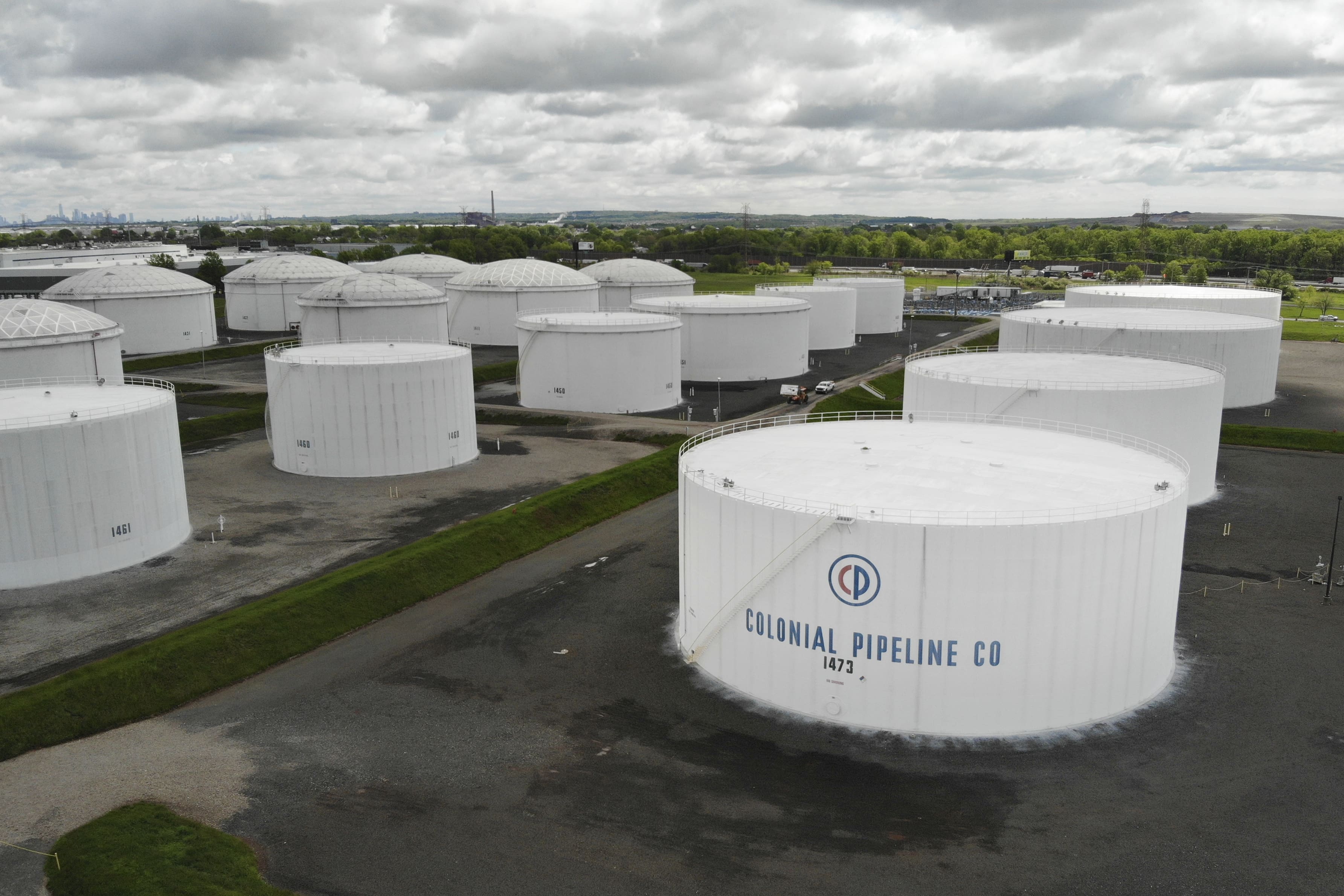
On Friday, May 10, a group of cybercriminals did just that; by going after the company that operates the largest gasoline pipeline in the U.S. Colonial Pipeline supplies roughly 45% of fuel consumed on the East Coast. The company, which transports gasoline, diesel, jet fuel and home heating oil from refineries located on the Gulf Coast through pipelines running from Texas to New Jersey, had to shut its entire network after the attack. To call its pipeline an important one is an understatement. In a Reuters news report on the incident, Amy Myers Jaffe, research professor and managing director of the Climate Policy Lab is quoted as saying: “It’s not a major pipeline. It’s the pipeline.”

  • On Sunday, May 9, the federal transport department issued an emergency declaration to relax regulations for drivers carrying gasoline, diesel, jet fuel and other refined petroleum products in 17 states and the District of Columbia. It lets them work extra or more flexible hours to make up for any fuel shortage related to the pipeline outage, the Guardian reported on Monday, May 10
  • The Biden administration has invoked emergency powers as part of an “all-hands-on-deck” effort to avoid fuel shortages
  • Meanwhile, the cyberattack is also said to have resulted in commodity traders scrambling to secure tankers to deliver fuels by sea rather than pipeline, the Guardian report added

Those are just part of the immediate fallout of the attack on a company that falls under the critical infrastructure space. It remains to be seen whether gasoline supply and prices will be impacted. An outage of one day or two would be minimal, but if it stretches to five or six days, it could cause shortages and price hikes, particularly in an area stretching from central Alabama to the Washington, D.C., region, the Associated Press said in its report citing oil analyst Andy Lipow.

Cyber threats against Industrial Control Systems (ICS) declined in the second half of 2019 (H2 20219) and the first half of 2020 (H1 2020), a Kaspersky report published March 25 2021 said. ICS is a wide term that can cover everything from systems to devices and networks used to either operate, or automate, industrial processes. Threats against ICS have been on the rise once again from the second half of 2020 (H2 2020), the Kaspersky report adds. And the industries that experienced the most significant percent of ICS computers attacked were Oil & Gas, building automation, and engineering.

But, before we go further into specifics of the energy industry and cyber attacks on critical infrastructure firms in general, let’s take a quick look at ransomware.

Ransomware: What Is It?

Here’s a take based on what cybersecurity firm Trend Micro has to say about it. Ransomware is a type of malware that can prevent or limit users from accessing their system, either by locking the system’s screen, or by locking the users’ files until a ransom is paid. More modern ransomware families, collectively categorized as cryptoransomware, encrypt certain file types on infected systems and force users to pay the ransom through certain online payment methods to get a decryption key, says Trend Micro. How do users encounter it? There are many ways. It can be downloaded onto systems when unwitting users visit malicious or compromised websites. It can also arrive as a payload that is either dropped or downloaded by other malware. Some ransomware are delivered as attachments from spammed email, downloaded from malicious pages through malvertisements, or dropped by exploit kits onto vulnerable systems, Trend Micro adds.

What exactly happens if you’ve been hit by a ransomware attack? If it is a regular ransomware attack, then a full-screen image or notification could be displayed on an infected system’s screen, which prevents a victim from using their system. Typically, the notification would also give instructions on how a user can pay the ransom. If it is a cryptoransomware attack, it can encrypt predetermined files, i.e. prevent access to potentially critical or valuable files like documents and spreadsheets. As with ransoms in the physical world, in the virtual world too it is considered “scareware,” as it forces victims to pay a ransom by using intimidation and threats. For more on the evolution of ransomware, we’d recommend this piece.

What Makes Critical Infrastructure Companies Targets?

The Colonial Pipeline cyberattack is one of many ransomware attacks carried out by cybercriminals against critical infrastructure companies around the world in recent times. Here are a few examples, with links to more reading material:

  • In April 2020, DESMI, a Danish company that makes pumps and pumping solutions for marine and industrial applications, including equipment for oil spills, was hit by a ransomware attack. The attackers requested a ransom for data recovery. “A ransom we under no circumstances will pay. We do not support criminals,” Group CEO Henrik Sørensen in a statement on the company’s website. The company’s communication systems, including email, was affected and had to be temporarily disconnected. It was able to recover these systems by April 14. Read more here.
  • During the same period, European energy giant Energias de Portugal (EDP) group, which Info Security magazine said employs over 11,000 staff globally, and made over €3.3 billion in gross operating income in 2018, was also attacked by ransomware. The attackers demanded €10 million, or around $11 million (according to conversion rates from that day), in exchange for not releasing stolen corporate documents. Read more here.
  • In May 2020, Stadler, a Swiss company that makes railway rolling stock, also fell prey to a malware attack that turned into demand for a ransom. After the company refused to give in to demands for a $6 million ransom, stolen internal documents were published online. Read more here.
  • Also in May 2020, Australia based global logistics firm, Toll Group, became the victim of a ransomware attack that led to the suspension of its IT systems. Read more here.

In H1 2019, malicious objects were blocked on 35.8% of ICS computers in the Oil & Gas industry. That percentage has been steadily growing, though, to 36.3% in H2 2019, 37.8% in H1 2020 and to 44% in H2 2020, according to Kaspersky. But what makes critical infrastructure companies vulnerable targets for cybercriminals, particularly those in the Oil & Gas space?

Four years ago, the President’s National Infrastructure Advisory Council (NIAC) was tasked by the National Security Council (NSC) with examining how federal authorities and capabilities can best be applied to address urgent cyber threats to critical infrastructure. “Attackers can inflict damage on physical infrastructure by infiltrating the digital systems that control physical processes, damaging specialized equipment and disrupting vital services without a physical attack. As a nation-state cyber attack on U.S. infrastructure places private companies on the front line, this presents a national security challenge unlike any other,” it said in a report published in August 2017.

When it comes to Oil & Gas, the industry has a widespread and complicated production chain — mining, transportation, refining, distribution — that can be difficult to comprehensively defend, a white paper by Trend Micro published in December 2019 shows. “Risks come from all sides: extreme weather can affect transportation, politics (global and local) can impact production, and physical attacks on infrastructure can actually threaten worker safety and even impact the world’s oil supply. With all these concrete risks, seemingly intangible cyberattacks may seem less urgent.” It’s true that you can’t protect your cyber world if you leave your real world unsecured, but it an interconnected globe, it works the other way around too.

Executives are becoming increasingly concerned about the need for cybersecurity to harden their defenses against hackers as Oil & Gas companies and electric power systems (also critical infrastructure) increasingly turn to digital, cloud-based operational solutions, Jim Magill said in an article for Forbes in March. “In February, the operator of a water-treatment plant in west-central Florida uncovered a potentially dangerous intrusion that had occurred on the plant’s computer system. The hacker or hackers set the levels of sodium hydroxide, a potentially dangerous chemical, to increase by more than 100 times the normal levels. The operator returned the chemical levels to their correct proportions and avoided a potential health disaster,” Magill added in his article.

The average global cost of a data breach was $3.86 million in 2020, but that number was a near-double for energy companies ($6.4 million), a report by by MIT Technology Review said sourcing data from Ponemon Institute/IBM Security. In several cases, as we saw in the examples above, companies refuse to pay the ransom and parley with criminals. But such attacks could still cause reputational damage to individual companies, and be a strain on their resources, not to mention the likelihood of disrupting critical services.

As of Monday, May 10, for instance, Colonial Pipeline was still working on restoring its operations. “Colonial Pipeline continues to dedicate vast resources to restoring pipeline operations quickly and safely. Segments of our pipeline are being brought back online in a stepwise fashion, in compliance with relevant federal regulations and in close consultation with the Department of Energy, which is leading and coordinating the Federal Government’s response. Restoring our network to normal operations is a process that requires the diligent remediation of our systems, and this takes time. In response to the cybersecurity attack on our system, we proactively took certain systems offline to contain the threat, which temporarily halted all pipeline operations, and affected some of our IT systems. To restore service, we must work to ensure that each of these systems can be brought back online safely,” it said in a statement on its website.

A First Since 1968. DOJ Proposes New Regulation To Update Definition Of Firearms

By a Biometrica Staffer

On April 8, speaking from the Rose Garden less than 24 hours after another mass shooting, President Joe Biden announced an initial set of measures to take on what he called “an epidemic” of gun violence. He stated that Department of Justice (DOJ), would, within 30 days, issue two proposed rule changes: The first would be to stop the proliferation of “ghost guns,” the second would make clear that when a device was marketed as a stabilizing brace, it would be subject to the requirements of the National Firearms Act. 

On Friday, May 7, the Department of Justice quietly issued a notice proposing an update to the definitions of the term “firearm” and related parts (of a firearm). According to a statement from the DOJ, the proposed rule would modernize the definition of the “frame or receiver” and help close a regulatory loophole associated with privately assembled firearms increasingly being used and found at crime scenes across the country.

These firearms, the “ghost guns” President Biden referred to, are basically self-assembled firearms with parts that do not include serial numbers. As they’re handmade, they do not require background checks and the acquisition of a ghost gun skirts federal gun laws. When you buy a gun from a licensed dealer, that gun, or more specifically, its receiver, is made by a licensed manufacturer, and is marked. It has a serial number that can be traced, which is invaluable for tracking crimes. 

The intention of the rule is to require that components in gun-assembling kits have serial numbers that would allow them to be traced when found at crime scenes, and for the kits (receivers) to be legally classified as firearms. 

“We are committed to taking commonsense steps to address the epidemic of gun violence that takes the lives of too many people in our communities,” Attorney General Merrick B. Garland stated. “Criminals and others barred from owning a gun should not be able to exploit a loophole to evade background checks and to escape detection by law enforcement. This proposed rule would help keep guns out of the wrong hands and make it easier for law enforcement to trace guns used to commit violent crimes, while protecting the rights of law-abiding Americans. Although this rulemaking will solve only one aspect of the problem, we have an obligation to do our part to keep our families and our neighborhoods safe from gun violence.”

Even if Friday’s announcement was not unexpected, it was significant. To put this in context, according to the DOJ, when it last proposed a rule change of this kind, it was 1968, and the United States was reeling from the aftermath of the assassination of a President, and the back-to-back assassinations of a Presidential candidate and the greatest civil rights icon this country had seen.

After five years of intense debate, beginning after the assassination of President John F. Kennedy in November 1963, and culminating in the gunning down of Martin Luther King, Jr. (April 1968) and Robert F. Kennedy (June 1968), Congress passed the Gun Control Act (GCA) to stop the possession of firearms by prohibited persons and help law enforcement curb increasing crime rates.

The Gun Control Act was itself the first major piece of firearm legislation since the passage of the 1938 Federal Firearms Act, which the GCA repealed but in effect, replaced, as it kept many of the provisions of the 1938 Act. The 1938 Act required gun manufacturers, firearm importers, and any dealers to obtain what’s called a Federal Firearms License or FFL. It also made it so defined individuals, including convicted felons, could not buy firearms, and expanded the definition of “machine gun.”  

The GCA, since amended several times, and the first piece of comprehensive firearms legislation this country enacted — the National Firearms Act (NFA) of 1934 — remain the centerpieces of firearm regulation in this country.   

According to the DOJ’s statement from May 7, in the period between 2016 and 2020, more than 23,000 un-serialized firearms were reported to have been recovered by law enforcement from potential crime scenes — including in connection with 325 homicides or attempted homicides. The proposed rule, once implemented, would help address the proliferation of these un-serialized firearms in three ways:

  • To help keep guns from being sold to convicted felons and other prohibited purchasers, the rule would make clear that retailers must run background checks before selling kits that contain the parts necessary for someone to readily make a gun at home.
  • To help law enforcement trace guns used in a crime, the rule would require that manufacturers include a serial number on the firearm “frame or receiver” in easy-to-build firearm kits.
  • To help reduce the number of “ghost guns” on our streets, the rule would set out requirements for federally licensed firearms dealers to have a serial number added to 3D printed guns or other un-serialized firearms they take into inventory.

Once the proposed rule is published in the Federal Register, the public will have 90 days to submit comments. The Notice of Proposed Rulemaking can be viewed here.

Biometrica has been following the gun debate closely.  

Read more on President Biden’s executive actions here.

Read more on the record Q1 — the highest quarter ever recorded for background checks on individuals wanting to buy guns — here.

Read more on the President’s address to Congress on this here.

Read more on the Indianapolis mass shooting at FedEx here.

Read more on the Orange, CA, mass shooting here.

Read more on the Boulder shooting and its victims here.

Read more on gun violence, opioids and the risk to healthcare professionals here.

Read more on the 9th Circuit ruling on the right to carry in public here.

Read more on proposed background check laws in front of the 117th Congress here.

Read more on our analysis of the 2017 Las Vegas shooting, mass casualty incidents and their investigations, here

404: Signature Not Found

By Kevin King

We’ve come a long way from when we had to sign paper receipts when paying by credit card, and then have a store manager or cashier look over at that receipt and the signature at the back of the card to visually (and vaguely) try and ascertain if they were the same.

Over the past decade in the United States, it has become increasingly unlikely that you would have to sign for a purchase made using a credit card. In the beginning, this (not needing to sign) only occurred when you made an online purchase or other types of Card Not Present transactions, but gradually, many in-store retailers also stopped requiring signatures for low dollar amount purchases. For most, these changes were welcome, as they made regular purchases easier to complete in everyday life by reducing transaction — or point-of-sale — friction.

Now, even in that rare instance when you do sign for things like a big purchase of home improvement supplies or when making a purchase at a U.S. Post Office, it’s likely your signature looks nothing like your “normal” signature because of the size of the receipt or the quality of the electronic signature technology.

Intuitively, it made sense that signatures protected you from fraud; after all, you had to sign the back of a card before you used it, in the place where it said something like “AUTHORIZED SIGNATURE – NOT VALID UNLESS SIGNED.” Additionally, the tech in payment processing terminals communicates directly with the credit card company when you make a purchase; logically, you’d assume that it would send that signature along to help authenticate your purchase. In the real world, however, signing for a purchase is not about your security; instead, signature collection is about who is liable for fraud when it occurs.

How Liability Worked

Originally, credit card companies waited for you to report a card stolen or dispute a transaction on your account before they conducted a fraud investigation. Following a stolen card or disputed transaction report, the merchants were contacted to supply receipts. If a merchant produced the receipt with a signature, then the credit card company was liable for the fraud and removed the charge from the account. If, however, the merchant in question did not have the receipt, then that merchant was liable for the fraud and was required to pay the credit card company back the purchase amount.

The result of this liability scheme was that high volume, low purchase amount retailers, like coffee shops, had to store countless slips of paper with signatures to protect themselves from being liable for relatively rare fraudulent purchases of a few dollars or less. Many then concluded that the overall cost of the fraud was far less than the cost to protect themselves from the fraud, a realization that resulted in the elimination of signatures for small value transactions.

It Was A Wild, Wild Web Out There

In a world not so long ago, credit card fraud used to be significantly more difficult to perform at scale. Card number thefts would require physical access to old receipts through dumpster diving or insider access, or the theft of a wallet. However, the internet has made credit card theft much easier to carry out. Entire retail networks or payment processing networks can be compromised, resulting in the theft of millions of card numbers. These stolen card numbers can often be bought online for a few dollars a piece. As a result, credit card companies became much more aggressive in their fraud prevention.

Remember the time a few years ago when you went to buy something and the cashier at the store would ask you if you wanted to swipe or insert your card? And sometimes, even if you had a card with a chip, they didn’t have the ability to allow your card to be inserted and would ask you to swipe anyway? In 2015, credit card companies began issuing cards with embedded microchips in them to customers, thus shifting liability for fraud occurring at the point-of-sale to sellers that had not switched their processing hardware to include what were called EMV-compliant card readers. 

How did the chip help? At the point-of-sale, the microchip would generate a unique code for the transaction that could not be used for any other purchase. The older, magnetic swipe, on the other hand, basically generated the same information for every transaction, leaving your card more vulnerable to fraud. 

There have been dramatic changes since that time on the fraud protection side. Credit card companies now mine your purchasing history as well as use emerging software algorithms to predict and prevent fraud. And you know what’s fascinating? None of the security protections they use involve using your signature. While it would be nice if we could use a signature as an additional form of fraud protection for credit card purchases, there is no good way of doing this currently.

The Problem With Signatures

Graphology, or the study of the patterns in handwriting that may help identify a person, their personality traits, or their mental state when writing, is generally considered a pseudoscience. While the conclusions drawn from the science are, at best, suspect, we have known for a long time that handwriting changes as we age and can change as the result of major physical, psychological or medical conditions. Alzheimer’s and depression are known to affect handwriting. A 2018 study by researchers at the University of Haifa indicated that changes in handwriting, including shapes of letters, and spacing, could indicate an individual’s state of mind, for instance, if someone was angry or tired.

What might surprise you is how much your own handwriting has simply just changed. These changes likely occurred naturally, but handwriting is as much a personal expression as it is a form of communication. By dedicating time and effort, you can even consciously alter your handwriting long term. Even if you consciously work to keep the same signature, change is inevitable.

The issue of handwriting changes is compounded when low quality, poorly maintained equipment is used to capture a signature. The performance requirements for commodity signature capture hardware are often at odds with the need to capture high quality signatures. Sensitive capture technologies need regular calibration, tend to be more fragile than the less sensitive designs, and are significantly more expensive.

Additionally, the placement and size of capture devices alter the ease of use. For example, systems that use finger input instead of stylus input produce significantly different signatures, because different muscles are used in each activity. All of this means that electronic signature verification is an even more impossible task than even verifying a signature.

The author is head of development and Product Architect with Biometrica.com. You can reach him at marketing@safience.io

MS-13 Gang Member Pleads Guilty To Racketeering Conspiracy Involving Murder, Attempted Murder

By a Biometrica staffer

Moises Alexis Reyes-Canales of Maryland pled guilty on May 6 to charges of conspiracy to participate in a racketeering enterprise that involved the murder of one person and the attempted murder of two others in Annapolis. Reyes-Canales, 23, aka Sicopita, was part of the MS-13 or Mara Salvatrucha criminal gang from March 2016, according to his plea agreement and other court documents, the Department of Justice said in a statement.

The person Reyes-Canales murdered was a suspected rival gang member. As a member of MS-13, Reyes-Canales participated in a racketeering conspiracy that included assaults, murder, attempted murder, robbery, and drug trafficking. He admitted to taking part in the murder of the suspected rival gang member mentioned earlier.

Between January 2016 and February 2017, he and other MS-13 members and associates sold marijuana to raise funds for the gang. The proceeds were used for the purchase of more narcotics and weapons, among other purposes, to send to MS-13 members and associates in other states and in El Salvador.

“This case illustrates that gang organizations are driven by greed and profit no matter the cost to innocent lives or our communities,” said James Mancuso, Special Agent in Charge for the Homeland Security Investigations’ (HSI) Baltimore Field Office. 

Other co-defendants in the case have pled guilty over the years. Six of them, in total, were named by the DOJ in a statement published on March 30, 2018, including Reyes-Canales, in connection with several activities they carried out as members of MS-13.

In December 2019, one of the co-defendants, Marlon Cruz-Flores (aka El Lunatic), then aged 24, was sentenced to 38 years in federal prison, followed by five years of supervised release. His charges were similar to those that Reyes-Canales faces: conspiracy to participate in a racketeering enterprise and for using, carrying, and discharging a firearm during a crime of violence, in connection with his MS-13 gang activities. Manuel Martinez-Aguilar, aka Zomb, was sentenced to 24 years, also for his activities as part of the gang.

Co-defendant Fermin Gomez-Jimenez, 23, pled guilty to conspiracy to participate in a racketeering enterprise and to using, carrying, and discharging a firearm during a crime of violence and is scheduled to be sentenced on May 18. Co-defendant David Diaz-Alvarado, 20, also pled guilty to murder in aid of racketeering in connection with his MS-13 gang activities.

Co-defendant, Juan Carlos Sandoval-Rodriguez, 23, was convicted on Oct. 31, 2019, of murder in aid of racketeering, and conspiracy to commit murder in aid of racketeering after an 11-day jury trial. He faces a mandatory sentence of life in prison at his sentencing, which will be scheduled at a later date.

All of the defendants remain detained, the DOJ said on May 6, Thursday. “The violence perpetrated by Reyes-Canales and his fellow MS-13 members was brutal and tragic and is totally unacceptable,” Acting U.S. Attorney Jonathan F. Lenzner of the District of Maryland said in the DOJ statement.

Reyes-Canales and the government have agreed that he will be sentenced to 35 years in federal prison, if the court accepts his plea terms.

Image Courtesy: FBI

In January 2021, an indictment was unsealed in Central Islip, New York, charging 14 of the world’s highest-ranking MS-13 leaders. Those leaders are known as the Ranfla Nacional, which operated as the Organization’s Board of Directors, and directed MS-13’s violence and criminal activity around the world for almost two decades. Defendant Borromeo Enrique Henriquez, aka Diablito de Hollywood, is widely recognized as the most powerful member of the Ranfla Nacional.

Three of the indicted defendants, Fredy Ivan Jandres-Parada, aka Lucky de Park View and Lacky de Park View, Cesar Humberto Lopez-Larios, aka El Grenas de Stoners and Oso de Stoners, and Hugo Armando Quinteros-Mineros, aka Flaco de Francis, remain at large and should be considered armed and dangerous, the DOJ said in the January statement.

In approximately 2002, the defendants and other MS-13 leaders began establishing a highly organized, hierarchical command and control structure as a means to effectuate their decisions and enforce their orders, even while in prison. They directed acts of violence and murder in El Salvador, the United States, and elsewhere, established military-style training camps for its members and obtained military weapons such as rifles, handguns, grenades, improvised explosive devices (IED) and rocket launchers, the DOJ added in January.

Protection Orders: Does Your State Protect Your Pet In A Domestic Violence Situation?

By Charlotte Spencer

Protective orders, also known as protection orders, are designed to protect people or animals from an ongoing threat. They are often used in domestic violence cases, and can vary a lot by jurisdiction. They are not by any stretch a complete solution, but they are an important tool. They contain actions which the person subject to them is prohibited from doing, and penalties for breaking these prohibitions. Most U.S. states now specifically include animals in the language of their laws that allow for protection orders, but a little under a third of states still do not.

Why Is This Important?

Including pets in protective orders is important for several reasons. First, victims of domestic violence often hesitate to leave an abusive situation for fear that abusers will strike out at their pets. This can cause victims to stay in situations where they will later be hurt or killed. Second, there is a known, and well documented connection between abuse of animals and abuse of people. Third, abusers often attempt to leverage control over victims by threatening to hurt people or animals who the victim is close to. Fourth, this adds to actions which will cause an abuser to be arrested and imprisoned, and thus improves the chances that an abuser will be removed from the environment in which he or she has the opportunity to harm victims.

Federal Law

Under 34 U.S.C. §20127, Federal law puts a system in place to award grants specifically for domestic violence shelters that allow people to bring their pets with them, and under 18 U.S.C. §48, Federal Law prohibits animal abuse, and distribution of animal abuse videos or photos. 18 U.S.C. §2262 deals with interstate violation of a protection order, because interstate violation (violation that crosses state lines) is what the Federal government has jurisdiction over in terms of such crimes. It’s important to note that under this law people can be penalized for breaking such a protective order even if the order was issued by an entity other than the Federal government. This law can be applied to enforce protective orders regardless of whether those orders were issued by jurisdictions that specifically provide for inclusion of pets in orders or not. According to the wording in this law this includes violations against “another person or the pet, service animal, emotional support animal, or horse of that person…”

How Do These Laws Vary By State?

Today 35 states, plus D.C. and Puerto Rico have protection order laws that specifically include animals. Missouri will soon become the 36th state to have such laws in effect. See the section below this one for more on Missouri. These laws vary from state to state, but many contain similar language.

Similarities:

  • Most specify that a judge can grant a petitioner exclusive “care, custody, and control” or “care, possession, and control” of a pet.
  • Most include “any animal owned, possessed, leased, kept or held by either party or a minor child residing in the household.”
  • Most include descriptions of forbidden behavior including taking, concealing, transferring, neglecting, injuring, torturing, and killing animals.

Differences:

Some states contain differences in these laws that highlight conditions unique to that state, or differences in the law-makers’ focus. Here are some notable examples.

  • Whereas most states include a broader definition of pet, Alaska specifically excludes “dogs primarily owned for participation in a generally accepted mushing or pulling contest or practice or animals primarily owned for participation in rodeos or stock contests.”
  • Some states include pets, companion animals, and service animals, but not livestock, farm animals, or wild animals. Other state’s language simply says “any animal.”
  • Most states with such laws directly provide for the protection of animals, whereas a few states count animals as “essential personal items,” “personal property,” or “essential personal effects” and provide for the protection of these categories.
  • Some states’ language addresses behavior against animals in and of itself, while other states’ language addresses behavior against humans using animals as proxies. For example, Arkansas defines harming a spouse’s pet as emotional abuse of the spouse. Colorado includes a crime against an animal “…as a method of coercion, control, punishment, intimidation, or revenge directed against a person with whom the actor is or has been involved in an intimate relationship.”
  • Some states include threatening to harm or kill animals, while other states only address actually harming and killing animals.

Pending Legislation

May 3, 2021 SB 71, which would add Missouri to the states that include pets in their laws concerning protection orders, passed almost unanimously. It will now go to the Governor’s desk for signing. It includes “A temporary order of possession of pets where appropriate.” It also specifically includes “committing or threatening to commit domestic violence, molesting, stalking, sexual assault, or disturbing the peace of the petitioner, including violence against a pet…” This has an effective date of August 28, 2021.

Where Can I Find More Information On This?

For future updates to these laws, or specifics in your state,  you may be interested in Michigan State University’s Animal Legal and Historical Center website. For more on the link between abuse of animals and abuse of people you may be interested in the National Link Coalition’s website.

This article was last updated May 5, 2021. The information provided in this article should not be considered legal advice or a substitute for legal advice. Biometrica is not a law firm and cannot offer legal advice.

31 Suspected Members Of The ‘Ndrangheta Mafia Arrested As Part Of Massive Operation In Italy And Germany

By a Biometrica staffer

If you recall, just over a week ago, we had written a piece on how organized crime groups (OCGs) managed to carve out a $2.6 billion cut in Italy’s strong tourism sector, based on an article by the Organized Crime And Corruption Reporting Project (OCCRP). That article was, in turn, based on a recent report published by Italian think thank Demoskopika. In that report, the think that had said that of that $2.6 billion cut, one organized crime group accounted for nearly $1 billion: the notorious Calabria-based ’Ndrangheta, which Interpol describes as “one of the most extensive and powerful criminal organizations in the world.” 

On May 5, the Europol released a statement on new action taken at the EU level against ’Ndrangheta in Italy and Germany. What was the operation mentioned in the statement all about? Here’s a quick Q&A-style take:

  • What was the operation’s main goal?
    Combating international drug trafficking and money laundering
  • Who conducted the operation?
    Eurojust, Europol, and authorities in Italy and Germany. This investigation is part of the Italian DIA Project ONNET, an EU-financed initiative to tackle mafia-type organized crime groups active in Europe. The project was launched at Europol’s headquarters and targets the mafia-style criminal groups in their entirety, rather than one or more of their specific criminal activities.
  • How many were arrested in total?
    There were 31 suspects arrested in both countries, and they were all allegedly members of the ’Ndrangheta mafia
  • Were there any other suspects who may not have been arrested yet?
    A joint investigation team (JIT) between Italy and Germany has identified 65 other suspects, and their places were searched too during the large-scale action
  • How many officers were involved in the operation?
    The JIT action involved around 800 police officers and tax officials. On the ground, the operation was carried out in Italy by the Anti-Mafia Investigation Directorate (DIA) under the coordination of the Public Prosecutor of Turin and of the National Antimafia Bureau (DNAA). In Germany, the operation was coordinated by the Public Prosecutor’s Office of Konstanz, in cooperation with the Criminal Police of Friedrichshafen and the Economic and Financial Police of Ulm.
  • Have any suspects been arrested before as part of the op?
    The actions on May 5 were a follow-up to Operation Pollino, a Eurojust-Europol operation that led to the arrests of 84 suspects in December 2018 in Italy, Germany, Belgium and Netherlands. In view of the May 5 operation, a European Arrest Warrant has been issued for one of the main and already sentenced Pollino suspects, who was recently taken into custody in Spain and is awaiting surrender to Italy. 
  • Were weapons, cash or drugs etc seized as part of the operations?
    Yes, in total, at least several hundreds of thousands in euros have been seized, as well as weapons, cocaine, two luxury vehicles and jewelry. A full assessment of cash amounts seized is ongoing and bank accounts have been frozen. 

“During a period of at least several years, the OCG is suspected of having organised the trade in cocaine between Italy, the Netherlands, Germany and Spain using encrypted EncroChat and Sky ECC communication tools. A string of building and hospitality companies was allegedly used to launder the proceedings in Italy. The investigations in Germany focus in particular on drug trafficking and potential tax avoidance,” Europol said in the statement.

The ’Ndrangheta’s financial strength is said to be more than that of Deutsche Bank and McDonald’s combined, with an annual turnover of €53bn (£44bn), a study by the Demoskopika in 2013 estimated, according to an article in the Guardian published on April 27. The mafia group is said to be responsible for a sizeable portion of Europe’s cocaine trade. Italy’s largest mafia trial in three decades began in the Calabrian city of Lamezia Terme, news reports said earlier this year. About 900 witnesses are set to testify against more than 350 defendants, including politicians and officials charged with being members of the ’Ndrangheta the Guardian article from April 27 says.

Other agencies too have joined hands in the international fight to bring down the ’Ndrangheta. I-CAN, for instance, is the Interpol’s three year (2020-2023) initiative bringing together select countries for a new level of multilateral police cooperation to fight the mafia group. “The insidious spread of mafia-type crime poses a unique and urgent threat, as strong family ties and corrupt political and business practices allow it to penetrate all areas of economic life. Driven by power and influence, the ’Ndrangheta is involved in a wide range of criminal activities, from drug trafficking and money laundering to extortion and the rigging of public contracts. These enormous illegal profits are then reinvested into regular companies, further strengthening the organization’s hold and polluting the legal economy,” the Interpol website says.

Mafia groups like the ’Ndrangheta typically take control over legitimate businesses so that they can launder money from their illegal enterprises, like trafficking of drugs and arms. Around 4,400 businesses are at risk of mafia infiltration largely for the purpose of money laundering, the OCCRP article from over a week ago said, citing Demoskopika. This problem has only been worsened by the covid-19 pandemic.

Since the covid-19 pandemic began, though, global travel restrictions and repeated border shutdowns have taken a massive toll on tourism sectors across the world, UNWTO said in a statement published on March 31. In Italy, more than 13% of companies in the tourism sector are at risk of default due to the pandemic, the OCCRP article said citing Demoskopika’s Director Raffaele Rio. That would make them even more vulnerable to the aggressive economic infiltration strategies adopted by organized crime groups in the country. For the mafia, control over legitimate sectors and businesses is crucial because as their revenue from illegal streams increases, their need to find legal entities through which they can launder their money also grows. And these organized crime groups are raking in so much money, that after a point, they won’t just acquire individual businesses. They look to buy into entire industries. 

Video Source: Europol’s YouTube channel

From Meth To Crack To Fentanyl: Here’s A Roundup Of Recent Sentencing On Drug Related Crimes

By a Biometrica staffer

In the last week or so of April, sentences were given out to various individuals who had committed drug-related crimes. Biometrica rounds up ten of those for you, based on statements published by the Department of Justice (DOJ) and the Bureau of Alcohol, Tobacco, Firearms and Explosives (ATF).

South Dakota Man Sentenced To 34 Months For Methamphetamine Trafficking

A man from South Dakota who was convicted of Possession with Intent to Distribute a Controlled Substance was sentenced to 34 months in federal prison, followed by three years of supervised release, on April 19. Samuel Swift Bird, 30, was also asked to pay a $500 fine, a special assessment to the Federal Crime Victims fund in the amount of $100, and forfeiture of three firearms and ammunition. On August 30, 2019, at a motel in Eagle Butte, Swift Bird knowingly and intentionally possessed five grams of methamphetamine with intent to distribute.  He also possessed a handgun and over $6,000 in U.S. currency. He was indicted by a federal grand jury on September 9, 2020, and pled guilty on February 1, 2021.

Read more here.

Last Defendant In A Las Vegas Drugs, Firearms Conspiracy Gets 13 Year Sentence

A man from Las Vegas was sentenced on April 21 to 13 years in federal prison for selling methamphetamine and firearms. Ever Antonio Alvarado-Coronado, 29, conspired with co-defendants Daniel Luis Bowlin, Marquis Dion Patrick-Howard, and Dennis Green to distribute over 15 pounds of methamphetamine and to sell nine firearms in Las Vegas. Alvarado-Coronado, who has three prior narcotics convictions and was deported to Mexico in January 2014, engaged in this conspiracy after unlawfully reentering the United States. He pled guilty to one count of conspiracy to distribute a controlled substance. Three other co-defendants in the case had already pled guilty.

Read more here.

Florida Man Gets More Than 10 Years In Prison For Selling Methamphetamine

James Carnley, 58, of Brooksville was sentenced to 10 years and 10 months in federal prison for selling methamphetamine and possessing firearms in furtherance of his drug trafficking offense. The court also ordered Carnley to forfeit three firearms, hundreds of rounds of ammunition, and $812, which had all been used by Carnley to facilitate his drug activities. He pled guilty on March 6, 2020. According to evidence, he had been selling ounce and kilogram quantities of methamphetamine out of his mobile home in Pasco County for years. When he was arrested, at that point he had been selling about one kilogram of methamphetamine per week.

Read more here.

High-Ranking Street Gang Member In Tennessee Gets Over 8 Years In Prison For Drug Trafficking, Firearm Violations

Albert “GEE GEE” Green, 25, was sentenced to 97 months in federal prison as a convicted felon in possession of a firearm and possession of a firearm in the furtherance of a drug trafficking crime. When Green was arrested while trying to escape from law enforcement at a local gas station, they found in his car a Ruger 9mm caliber pistol loaded with one live round in the chamber and approximately seven live rounds in the magazine under the driver’s seat, and 56 white pills identified as 2mg Alprazolam located in the glove compartment. Green also had $4,762.00 in cash in his left front pocket, and a purple bandana tied to his jeans indicating his membership in the Grape Street Crips Gang. At the time of his arrest, Green was on state probation for sale of cocaine.

Alprazolam, or Xanax, falls under the benzodiazepines category, which are prescription sedatives commonly prescribed for anxiety or to help with insomnia. In 2019, 16 percent of overdose deaths involving opioids also involved benzodiazepines, the National Institute on Drug Abuse says on its website.

Read more on Green’s case here.

Wisconsin Man Sentenced To 6 Years For Methamphetamine Trafficking

Keefer Goodman, 29, of Madison was sentenced to  72 months in federal prison for possessing with intent to distribute 50 grams or more of methamphetamine. His prison term will be followed by four years of supervised release. When officers searched his car on July 21, 2020, while responding to a two-vehicle crash (of which Goodman’s car was one), they found found a loaded Ruger 9mm handgun on the front passenger seat. They also found  269.3 grams of methamphetamine, 7.3 grams of cocaine, 35.6 grams of marijuana, a pouch of baggies, a scale, and two switchblade knives. He was previously convicted of a felony and was prohibited from possessing a firearm. 

Read more here.

New Jersey Man Admits To Drug Conspiracy And Distribution Of Crack

A man from Essex County, New Jersey admitted to distributing and conspiring with others to distribute more than 28 grams of cocaine base in Stephen Crane Village. Nasir Williams, 24, pled guilty to an information charging him with one count each of conspiracy to distribute and possess with intent to distribute 28 grams or more of cocaine case and distribution of 28 grams or more of cocaine base. Stephen Crane Village is a public housing complex in Newark, on the border with Belleville, New Jersey. From at least February 2019 through February 2020, law enforcement officers investigated individuals that controlled an open-air drug market that operated there.

Read more here.

Wisconsin Woman Gets 7.5 Years For Distributing Methamphetamine

Diana Xiong, 39, was sentenced to 90 months in federal prison for distribution of methamphetamine. This prison term will be followed by 4 years of supervised release. The charges in the case come after an investigation conducted by law enforcement officers in the summer of 2020. Xiong sold methamphetamine to a confidential informant in Menomonie, Wisconsin, on two occasions. She also sold the same confidential informant a firearm, although she is prohibited from possessing any because she is a convicted felon. At sentencing, Chief U.S. District Judge James D. Peterson explained that a substantial sentence was warranted because of Xiong’s consistent and disturbing pattern of drug distribution, which she continued even after serving state sentences related to distributing methamphetamine. 

Read more here.

Ten Members Of New Jersey-based UpTop Street Gang Charged For Drug Trafficking Conspiracy

Ten people have been charged for their roles as members and associates of “UpTop,” a Paterson, New Jersey-based street gang involved in the distribution of drugs, including heroin, fentanyl, and cocaine base. The count of conspiracy charged in the complaint carries a maximum penalty of 40 years in prison and a fine of at least $5 million, with a mandatory minimum prison sentence of five years. The people charged are: Corey Boyd, 23; Leo Edwards, 27; Kwame Ellis, 30; Sean Morgan, 21; Brent Staton, 20; Kassan Drakeford, 31; Devin Kyle, 21; Edwin Diaz, 19; and Anthony Herring, 38, all of Paterson; and Stefan Cameron, 25, of Hackensack, New Jersey. The UpTop street gang operates primarily in the Fourth Ward of Paterson. Its members sell heroin that is frequently mixed with fentanyl, a potent, synthetic opioid that is approximately 50 times stronger than heroin.

Read more here.

Twelve Members, Associates Of New Jersey-based Harlem World/12th Avenue Street Gang Charged In Drug Trafficking Conspiracy

Twelve people have been charged for their roles as members and associates of “Harlem World/12th Avenue,” a Paterson, New Jersey-based street gang involved in the distribution of drugs, including cocaine base, heroin, and fentanyl. Those charged include: Michael Booker, 38; Kenron Boyd, 28; Ronald Hammond, 53; Damir Horne-Casper, 28; Marcell Jackson, 26; Roger Jacobs, 25; Damond King, 31; Naquis Martin, 24; Korri Muckle, 40; Troy Taylor, 35; and Shamir Thompson, 26, all of Paterson, New Jersey; and Tahj Smith, 20, of Haledon, New Jersey. This gang operates primarily around 12th Avenue and East 23rd Street in Paterson. Members of this gang distribute decks of heroin that are almost always stamped or labeled with various “brand names” in colored ink, to allow dealers and purchasers alike to differentiate and market batches of heroin. For example, on various occasions, glassine envelopes were stamped “Coca Cola,” “Larry Bird,” “Kobe Bryant,” “Paid in Full,” “Best Buy,” and “K.O.,” and have since October 2020 been linked to over 10 fatal overdoses.

Read more here.

Community Matters: We Are Your Police Officers. You Matter & So Do We

By Mark Pooley

June 1, 2018 was a day I’ll never forget. That was the day I received my cancer diagnosis for something called multiple myeloma, an uncommon kind of blood cancer in which a group of cancerous plasma cells eat away at your bone marrow. In my case, the multiple myeloma caused me to have 10 vertebral compression fractures, basically breaking my back. I was unable to walk, unable to shower or dress myself. My wonderful wife did all that for me before I relearned how to walk and function.

At that point, however, I was definitely unable to do my job. I had been an officer with the Tempe Police Department in Arizona for 15 years, and last year, at the age of 43, two painful, stressful years after that initial cancer diagnosis, I suddenly found myself at a crossroads, walking away from the life I loved.

Why am I writing this piece? Because I’d like to tell you a story, one that is mine, but also one that probably belongs to countless law enforcement officers that go into work every day across this great nation, just hoping to get back to their homes and families at the end of the day.

I grew up a bit of an anomaly — and while labels have never been my thing, or my family’s, the reason I mention my background is because it played a role, I think, in defining the police officer I became and the person I hope I am.

On my father’s side I’m half Navajo and half Hopi. If anyone is familiar with the history of indigenous people in what became the United States, you’d understand why that in itself is unusual — the Hopi and the Navajo had been in conflict for more than a century. Then you add in the fact that my paternal grandparents joined the Church of Jesus Christ of Latter-day Saints, so I’m Native American and LDS. But that’s not all. My mother is from Hawaii and is of half-Japanese and half-Polish origin. So, I suppose you can say that we’re an all-American blended family in our own special way.

My mom and dad met at Brigham Young University, fell in love some 53 years ago, and have stayed that way through his entrepreneurship and life as a marriage and family counselor, and the equally emotional highs and lows of her career as a social worker and CPS officer. They’ve been together through the best of times and the worst of times, including the loss of a child, my younger sister Gessica, who was a detective on the Salt River Police Department’s crimes against children unit for many years. She was just 39 when she died.

I grew up one of six close-knit siblings. My eldest sister Susan works with my dad at NAFFA, the Native American Fatherhood & Families Association. Karra is an elementary school teacher, I’m No. 3. Michael, my only brother, and one I’m very proud of, is an Assistant Chief of Police at the City of Tempe. Gessica was next. Amy, our youngest, followed in my mother’s footsteps to focus on Child Protective Services and is now Executive Director with NAFFA.

Mike is the reason I became a police officer. I am two years older, but after graduating from BYU, I’d set my sights on law school. I missed the application deadline, however, and decided to work with the Salt River Pima Maricopa Indian Community for a year, so I could apply the next year to law school. Mike, meanwhile, broke with tradition and went to ASU, and joined the police academy while still in college. He knew what he wanted straight up. I didn’t. He called me while at the academy and said he thought I should sign up too. We eventually graduated within months of each other.

It Wasn’t Love At First Sight

Looking back, I have to confess I didn’t really like police officers when I was younger, because I had been pulled over multiple times. But I had married early, and my wife was pregnant. I had heard that the City of Tempe had great health insurance. So, I signed up for the police academy because I would have access to health insurance for my wife and yet to be born baby girl, after that call from my brother. It was as simple as that.

I graduated in November 2001 from the Arizona Law Enforcement Academy (ALEA). As new law enforcement officers, we graduated into a very different world from the one we were in when we entered the academy because of the events of Sept. 11, 2001. Anyone old enough to remember that day also remembers where they were on the day the world changed. We were at the shooting range, having firearms training, when our sergeant called us over, and told the group that the Twin Towers had been attacked.

Having never been to New York, I didn’t really know what the Twin Towers were or understand their significance or symbolism, but a friend standing next to me, a former NYPD veteran of 15+ years, did. He had just moved to Arizona with his family, and was going through the recertification process at the academy to qualify as an Arizona police officer. He would later find out, over the next several days, that several of his friends at the NYPD, and other first responders he knew, had died during that day of unimaginable horror.

But Then, It Became A Calling

Just so you know, despite all of this, I was initially a police officer on the street for just a year-and-a-half after graduating from the academy. Why? I received an opportunity to become a tribal prosecutor on the local Indian reservation. I didn’t have to go to law school to become a tribal prosecutor, but as I’d mentioned above, law had been my original plan. And I jumped at that opportunity. But then something happened. Over the ensuing three years I spent prosecuting my cases and examining local tribal issues, I began to miss my brief stint in city law enforcement. I suppose once a cop, always a cop. So, in 2005, I went back to the City of Tempe and became an officer again, but this time for all the right reasons.

It wasn’t a decision I made alone, or lightly. My wife, Elizabeth, who had been with me since my BYU days, and my elder daughter, Yesenia, who was then four, were both part of this decision. My younger daughter, Yasmin, had just been born that summer, and my son, Mathias, was yet to come. The reason I mention them all is that you cannot be in law enforcement and be able to focus on your job without the unstinting support of your family. If you’re a police officer, you’re missing birthdays, anniversaries, games, holidays, and pretty much most momentous events in your children’s lives. You have to tell them that we’ll celebrate whenever possible, and they have to understand. I’m glad mine always has. Being an officer isn’t a one person job, it’s a family calling.

It was good for me to leave but better for me to come back stronger, more sure of myself, ready to be a police officer in my heart and mind, where it mattered.

Life As An Officer

Over the next 15 years, much like others in law enforcement, I worked in different assignments. I started off as a beat officer, and three years later, I became a detective in the TPD’s robbery night squad. We were called the robbery squad, but much like any department with fewer resources than the major cities, we all chipped in for everything, especially at night. We focused on robberies, but I worked home invasions, violent crimes, street jumps. I was there for a little over two years and was then assigned to what was pretty much a dream assignment, especially in the aftermath of 9/11 — to the Joint Terrorism Task Force (JTTF), with the local FBI in Phoenix.

I was there three-and-a-half years, and I loved that job. I probably shouldn’t have moved on, but I left because I had the opportunity to do another dream assignment, this time in TPD with Homicide. I was there a little over a year and then got promoted to Sergeant.

Why am I telling you all this? Because I’m trying to paint a picture of what being a police officer is about, beyond the overwhelmingly negative headlines. We are much like other people: We make career decisions, choices, some good, some not so good, and get to live with those choices. The only real difference between us and pretty much everyone in every single profession, except military personnel in war zones, is that in no other profession do you go into work every day, knowing someone may want to kill you, and knowing that that someone may possibly succeed.

Anyway, I was in patrol for two years, that’s sort of what you have to do after becoming a sergeant. From there, I was promoted to what was called the Professional Standards bureau at the TPD, basically, I moved to Internal Affairs.

If you watch the movies and the dozens’ of cop shows on television, you’re probably familiar with what Internal Affairs does. In most cases, the TV shows give the impression that officers who investigate other officers are “the rat squad,” or they’re universally hated. Not true. I basically investigated officers that violated policy and they understood that I was doing my job, much as they would do theirs. I must confess that there is nothing harder than investigating your friends and colleagues. I would never ever do it again. But did they hold it against me? No. Unlike public perception, for the most, police officers learn to compartmentalize. We must, in order to be able to keep our mental health intact and to do our jobs.

The Good, The Bad & The Sad

Do I believe there are bad officers? Absolutely. There are bad, even terrible persons in every profession, and law enforcement is no exception. From where I stand, the problem isn’t in the people, though, it’s in the screening process. There are people who come into the job who should never have been there in the first place. But there are more than 18,000 law enforcement agencies in the United States and more than 700,000 full-time officers of different stripes. Most of them go into work every day to do good, to be a force for the good.

Those that don’t, and yes, they do exist, were either probably already people who should never have been officers, or people who couldn’t cope with the stress the job brings, at an emotional, mental and psychological level. But that’s exactly why we have rigorous screening procedures in place, because entering this field puts people in a position of authority.

If you’re already inclined to misuse authority, it is likely that power might amplify your worst side. When you get hired as an officer, typically, you are polygraphed, have a psychological evaluation, drug evaluation, a thorough background check in which everyone you know and their neighbor is questioned, a physical test, and a mental health test. But testing standards are different in different places, so I’d suggest that if we want to look at re-examining our systems, we begin with auditing existing screening procedures.

So, what makes an officer a good one? Again, at the heart of it all, how you were brought up and what shaped you as a person plays a part. In my case, I’d like to think it was family. When my brother, sister and I became officers of the law, my father sat each of us down and told us three rules. The first rule was to try and come home to your family every night. Rule No. 2 was to remember that as an officer of the law, you represented justice. You treated the person fairly. There should be no bias or prejudice. And No. 3 was the most important, when you made contact with anyone, you ensured you maintained their dignity by treating them with kindness.

Be Respectful, And Get It Back Manifold

Here’s an example of that. When I was a sergeant, I once stopped by a local Burger King for a meal. A homeless man stood outside. He saw me approach and immediately said, “Officer, I don’t want any problems, stay away from me.” I remarked that I only wanted to know if he wanted a meal, as I was getting myself one. He seemed perplexed and then accompanied me inside and asked me if he could order what he liked. I said sure, he could. He ordered a combo meal, and then said he had a sick girlfriend who was sleeping under a bush, and could he order a combo for her too. I agreed, and he quickly added an Oreo Pie to her meal. It made me smile. We introduced ourselves and went our separate ways.

Two weeks later, we got a call on radio about an injured woman, hurt after her head had been crushed between grills at a storage locker facility. I got there to find two officers pulling back a man from attacking the fire and ambulance teams. There was a woman on a stretcher, hurt but also combative. Both appeared intoxicated. As I approached, the man suddenly shouted, “Hey, Sergeant Pooley.” I suddenly realized it was my homeless man from two weeks ago and he was scared and stressed. I called out to him by name.

Let’s call him Jack. He turned to me and said, “These guys are hurting her, Sgt. Pooley, they’re hurting her.” I responded, “They aren’t hurting her, Jack, they’re my friends.” He turned to her and said, “Sgt. Pooley’s here.” She knew who I was; thank goodness for Oreo Pies! She said “Hi, Sgt. Pooley, how are you?” I said I was doing well and asked her if she could lay down calmly and let my friends help her, and she assented.

As I told my young colleagues later, we were able to de-escalate because at the heart of it, we’re a community, but we could only be one if we tried to get to know each other and treated each other with dignity.

A month later, someone on my squad, a female police officer, helped a stranded man in a beat-up truck push his vehicle to the nearest gas station and paid for his gas. I told her and everyone else then to consider that a teaching moment, because I hoped he would remember her kindness and pay it forward at some point, and also remember law enforcement can be human. And kind.

Sgt Mark Pooley (Retd.) is a former law enforcement officer of 15 years with the Tempe Police Department, who retired from law enforcement in 2020 after a debilitating cancer diagnosis. He now works with the Native American Fatherhood & Families Association (NAFFA) and is focused on using his investigative skills to work on Missing & Murdered Indigenous Persons (MMIP) cases. This is the first of his columns for Biometrica.

Casino Compliance: How Is The Bank Secrecy Act Relevant To Casinos And Why Does It Matter?

By a Biometrica Staffer

Every now and then, on Tuesdays, we’ll delve into the rather arcane world of casino regulations and compliance, look at some of the more frequently asked questions that apparently come up with the Financial Crimes Enforcement Network (FinCEN), and attempt to get to the gist of their answers, so you don’t have to. For instance, two weeks ago, we looked at Suspicious Activity Reports (SARs) filed by casinos in Q1 2021, to determine if the world of American gaming was trending back to business.

This time, we thought we’d look at the basics of what you need to know when you’re dealing with the BSA. First, though, if you’re wondering what the BSA is, it’s the Bank Secrecy Act.

Yes, but what exactly is the BSA all about?

In 1970, the United States Congress passed the Currency and Foreign Transactions Reporting Act, now called the Bank Secrecy Act. It required financial institutions in the U.S. to help government agencies identify and prevent money laundering, with a specific focus on the recording and reporting of cash purchases of things like bank notes, checks, demand drafts etcetera (collectively referred to as negotiable instruments) of more than $10,000 (as a daily aggregate amount). Institutions were also required to report any suspicious activity that might be indicative of money laundering, tax evasion, or other criminal transactions or events.

Got it, but how does it all work?

The FinCEN administers the BSA, which requires depository institutions and other industries vulnerable to money laundering to take several precautions against financial crime. This includes filing and reporting certain data about financial transactions that might possibly indicate money laundering. In fiscal year 2019, more than 20 million BSA reports were filed by more than 97,000 U.S. financial institutions, providing potentially useful information to agencies focused on detecting and preventing money laundering, other financial crimes, and terrorism. According to FinCEN, just filing these reports is a major deterrent to money laundering, if they’re accessible to law enforcement, counter-terrorism agencies, financial regulators, and the intelligence community.

What does this have to do with casinos? They’re not banks.

No, but they deal in financial transactions. Remember Casino, the movie? It was based on a fictionalized account of the time the Italian mob, or more specifically, the Chicago Outfit, skimmed money from a bunch of Las Vegas casinos. Businessman and gangster Al Capone, who was finally jailed in 1931 — not for running illegal gambling rackets or prostitution rings or murder, but for tax evasion, incidentally — once led the Chicago Outfit. There’s perhaps a lesson there. In any case, several, if not most, casinos are considered non-bank financial institutions (NBFIs) under law.

Ok. But what are NBFIs?

Essentially NBFIs are institutions that aren’t banks or don’t have a banking license but do offer financial services or conduct financial transactions. The Federal Financial Institutions Examination Council (FFIEC) has a more complete definition here.

Are all casinos NBFIs?

Well, no. Most are, though.

What do you mean by saying “most” casinos are considered NBFIs?

According to the IRS, casinos and card clubs licensed to do business as casinos or card clubs, which have Gross Annual Gaming Revenues (GAGR) of more than $1,000,000, are considered financial institutions subject to the requirements of the BSA, which is codified in part in what is known as Title 31 of the United States Code (USC). Under this, some financial institutions, and individuals (defined by the Secretary of the Treasury), are required to keep records and file reports on certain kinds of financial transactions. Which means they have to follow all reporting procedures under what’s called Title 31, or face the consequences of failure to report suspicious activity or a pattern of suspicious activity.

Are two separately licensed, but jointly owned tribal gaming operations, one of which is a bingo hall and the other offering casino games, both treated as casinos under the BSA regulations?

No. Here’s what the FinCEN has to say about this. If a tribal government issues two separate licenses, one for a tribal gaming operation that only offers traditional bingo, and one for a tribal gaming operation that offers casino games, then the one offering traditional bingo is not treated as a casino under BSA regulations, while the latter is treated as a casino. Joint ownership is not relevant to the determination. However, If the bingo hall engages in any of the activities described in 31 C.F.R. § 1010.100, then the bingo hall would qualify as a “money services business” under that provision and a “financial institution” under 31 C.F.R. § 1010.100 (subpart t).

What is a money services business (MSB)?

The term “money services business” includes any person (where the person could be an individual, a corporation, a partnership, a trust or estate, a joint stock company, an association, a syndicate, joint venture, or other unincorporated organization or group, an Indian Tribe — as that term is defined in the Indian Gaming Regulatory Act), and all entities cognizable as legal personalities doing business, whether or not on a regular basis or as an organized business concern, in one or more of the following capacities:

  • Currency dealer or exchanger. 
  • Check casher. 
  • Issuer of traveler’s checks, money orders or stored value. 
  • Seller or redeemer of traveler’s checks, money orders or stored value. 
  • Money transmitter.
  • U.S. Postal Service.

An activity threshold of greater than $1,000 per person per day in one or more transactions applies to the definitions of: currency dealer or exchanger; check casher; issuer of traveler’s checks, money orders or stored value; and seller or redeemer of travelers’ checks, money orders or stored value. The threshold applies separately to each activity — if the threshold is not met for the specific activity, the person engaged in that activity is not an MSB based on that activity. However, there is no activity threshold applied to the definition of “money transmitter.” Therefore, a person that engages as a business involved in the transfer of funds is an MSB as a money transmitter, regardless of the amount of money transmission activity. Each MSB is considered a financial institution.

Just a quick note here. As mentioned above, a casino or a card club that is duly licensed or authorized to do business as such and has gross annual gaming revenue more than $1 million, is subject to the requirements applicable to casinos and card clubs, even if a casino or card club does its own check cashing. A casino or a card club is not required to comply with rules specific to MSBs.

Next time: Red flags for casinos when it comes to money laundering and terrorist financing.