Thirty years ago, in 1991, Louisiana became the fourth state to approve riverboat gaming, an event of particular significance to me, as I was hired as employee No. 2 in Baton Rouge, joining Casino Rouge as Vice President of Finance. Thinking back on my long gaming, hotel and resort career, I realized just how many changes had taken place over the past three decades.
Previously, in 1989, Iowa’s Senate, on its third attempt, had finally managed to pass a bill legalizing riverboat gambling, thus making it the first state to do so, while Illinois’s Riverboat Gaming Act was passed in 1990. Technically, while Missouri had made it No. 3 earlier in 1991, the events of Missouri were especially noteworthy because it ultimately took multiple legislative events, a court battle, and three more years before the state fully legalized casino gaming and riverboats could begin operations.
What was really fascinating about all of this was that Nevada had legalized commercial gaming way back in 1931 through what was known as the “Wide Open” gambling bill. Sixty years on, however, gaming was still only really legal at the state level in Nevada, New Jersey (which was essentially Atlantic City), and Mississippi.
New Jersey had legalized gambling through the second statewide referendum on gaming, which passed on Nov. 2, 1976. Lawmakers used the redevelopment of Atlantic City as the catalyst for change, and formalized matters through the passage of the New Jersey Casino Control Act in 1977. Mississippi had passed the Mississippi Gaming Control Act in 1990, authorizing dockside casino gaming along the Mississippi River and the Gold Coast.
On a side note, South Dakota had legalized gaming in a single city, Deadwood, in 1989, with just poker, blackjack, and slot machines permitted, and Colorado had followed suit in 1991, legalizing limited gambling only in the historic mining towns of Black Hawk, Central City, and Cripple Creek, and imposing a betting limit of five dollars. It would be 2009 before that limit was increased to $100.
It was also interesting that in both states, South Dakota and Colorado, the excuse for gaming legislation was the preservation of a historic legacy. According to Deadwood.com, “Deadwood’s joint gaming and historic preservation venture was on the 1988 ballot and passed with 65% of the state’s population in favor of the required constitutional amendment. Its passage and implementation in 1989 made Deadwood the third legal gaming destination in the United States (after Nevada and Atlantic City). Deadwood celebrated its 30th anniversary of gaming at high noon on November 1, 2019.”
A Far Cry From A Generation Ago
On Oct. 15 1976, the President’s “Commission on the Review of the National Policy Toward Gambling” produced a rambling, final 200-page report, based on three years of research and hearings. It found that for the period 1974 to 1976, $17.7 billion was wagered legally every year by 14.1 million people. And we’re talking just about Nevada at that point.
Fast forward to the American Gaming Association’s (AGA) State of the States 2020 report, and we see 465 commercial casinos, 524 tribal casinos and 277 card rooms in operation — gambling in some form across 44 states. According to the AGA, in 2019, “Overall the gaming industry — including tribal operators and gaming suppliers — remains a major contributor to the wider U.S. economy, generating approximately $261 billion in total economic activity, including an estimated $52 billion worth of revenue to outside contractors and small businesses, while supporting an estimated 1.8 million jobs.” That is some serious money!
The year 2020, however, brought the Covid-19 pandemic disaster and, in mid-March, a gubernatorial order in Nevada that saw every casino and gaming operation in the state required to close. The Las Vegas Strip became a virtual ghost town for a period of time. Thirteen months on, as of April 5, 2021, 52 casinos that have not yet re-opened countrywide. You can see the live map here from the AGA Casino Tracker for more details.
Devastating Impact
The economic impact of the pandemic has been hard for casino workers and operations, with job losses, casino owners facing dramatic revenue losses, and general city, county and state economic sales and revenue impacted by losses from gaming taxes. A report in CNBC in May 2020 spoke about how the previous month, April 2020, was then the worst month of job losses in modern history, with the leisure and hospitality industry, which includes casinos, collectively losing 47% of all industry jobs.
According to the AGA, commercial gaming revenue dropped 31.3% to $30 billion in 2020, the lowest level since 2003, with 2020 marking the first market contraction for the U.S. gaming industry since 2014 and the lowest gaming revenue total since 2003. This was despite the fact that gaming’s performance in 2020 was lifted by legal sports betting garnering an all-time high of $1.5 billion in revenue, up 69% year-over-year, and iGaming revenue nearly tripling to almost $1.6 billion.
Yet, commercial casinos lost 27% of total operating days. According to Reuters, employment in the leisure and hospitality industry in December 2020 was down 23% from pre-pandemic levels in February last year.
Looking to the near future, I think 2021 will be a dig out year with a new base foundation, which will also depend on our having a near Covid-19 free country by the end of 2021. Hopefully, leading into 2022, this will mean being fully back to normal. For Las Vegas, that would also mean group and convention businesses would have to have returned to pre-pandemic levels, and casino revenues would have to have seen consistent monthly growth.
I hope that will happen, for it’s been hard on our state. I am very fortunate to live on a ranch north of Las Vegas, right at the entrance to the world-renowned Death Valley National Park. It’s beautiful, but it’s also a constant, stark reminder of the impact of Covid-19 on Nevada’s tourism industry. According to the Nevada Resort Association, “Nevada’s tourism economy accounts for one out of every three jobs in the state, supports $20 billion in wages and salaries each year and generates $75 billion of economic production annually — roughly 45 percent of the state’s aggregate output.”
And the lack of tourism has hit us hard. A January 2021 Bureau of Labor Statistics report on Metropolitan Area Employment and Unemployment stated, “Over the year, nonfarm employment declined in 50 metropolitan areas with a 2010 Census population of 1 million or more, while employment was essentially unchanged in 1 [one]. The largest over-the-year percentage decreases in employment in these large metropolitan areas occurred in Las Vegas-Henderson-Paradise, NV (-14.1 percent) …”
There are signs that the tourists who disappeared in the summer of 2020 from our shores will partially return in 2021, and 2022 will see a “back to normal” visitation pattern. Here in Nevada, we live in eternal hope.
Finally, one cannot close out the present without a thought about the passing early this year of Mr. Sheldon Adelson, a giant of the casino industry. He was a visionary and a pioneer of modern casino gaming who was instrumental in enhancing the Las Vegas Strip with his world-renowned Las Vegas Venetian Resort and the Sands Expo and Convention Center. Last month, came the news that Las Vegas Sands Corp. had sold its iconic Vegas properties in order to concentrate on its Asia operations. I have to think this is the end of an era. Or for Vegas, perhaps, the dawning of a new age.
The writer is a casino and gaming industry veteran and Biometrica’s CFO. This is the first of an occasional column on the state of the casino industry. You can reach him by writing to marketing@safience.io
Iowa was the first state to legalize riverboat casinos. You can read Biometrica’s story on gaming in Iowa and the story of the riverboat casinos, here.
The Nevada Gaming Commission has said that casinos seeking to operate at higher than 50% capacity — which will be allowed from May 1 — need to take steps that encourage their workers to take the Covid-19 vaccine.
This was announced in a joint statement of the Nevada Gaming Control Board and Nevada Gaming Commission on April 2.
The memo said operators’s requests for higher capacity limits “will only be taken in cases where licensees have taken measurable and material steps” to vaccinate their workforce.
“Hospitality workers, many of which are front-of-house personnel interacting with visitors from around the globe, are critically positioned to help mitigate the spread of Covid-19 both within the industry, and the community as a whole,” the memo said.
The memo reminded licensees that “any license or approval granted by the Commission or Board is a revocable privilege, not a right.”
It added that action would be taken against those that placed short-term gain in violation of current Emergency Directives or Board Health and Safety Standards above the well-being of its workforce.
“Both the Board and Commission urge licensees to be proactive in arranging for vaccination opportunities for their workforces, and to provide effective communication so that all employees that wish to avail themselves of such opportunities may do so,” the memo said.
The memo listed positive measures already taken by licensees and urged that these be continued. This included paid time off for staff for vaccination appointments and arranging transport to vaccination centres.
MGM Resorts International and Caesars Entertainment, the biggest Las Vegas casino companies, are inoculating staff at on-site clinics. Cosmopolitan and Wynn Resorts are doing the same and Station Casinos will open six on-site clinics on April 6.
“We’re committed to doing all that we can to help get as many people vaccinated as quickly as possible by removing barriers to access and bringing vaccination clinics directly to our employees and their families,” MGM said in a statement.
On May 1, Nevada will transition into the next phase of the Governor’s Roadmap to Recovery, when, pursuant to Emergency Declaration 041, responsibility for a number of COVID-19 mitigation measures will transfer to local governments.
A day after Easter, we take a look at data on arson- and explosive-related incidents across houses of worship in the U.S. in 2019. Although the report, published by the ATF, includes accidental and natural fires, we specifically examine those that were set up with the intention of inflicting damage on religious establishments, which have often been the main target of such crimes over the ages.
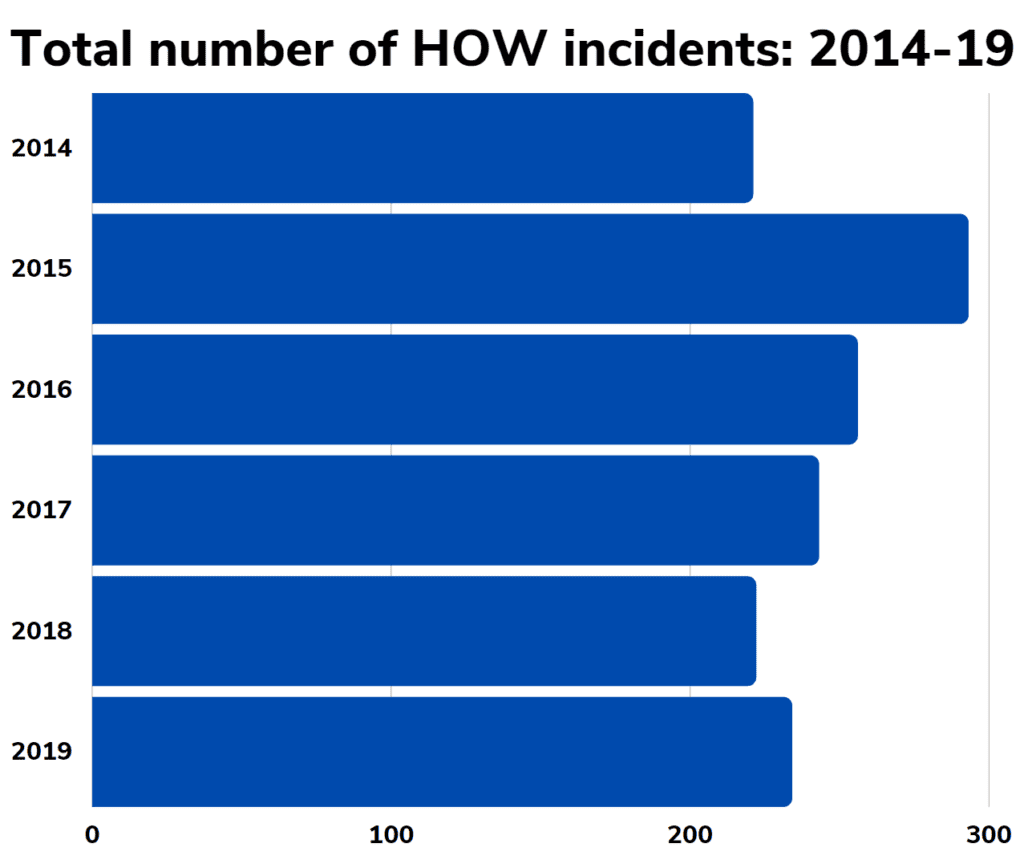
There were a total of 234 House of Worship-related (or HOW-related) incidents that were investigated by local, state, and federal agencies in 2019. That represents an increase of more than 5% in the overall incidents associated with HOWs, when compared with 2018, according to a report published by the Bureau of Alcohol, Tobacco, Firearms and Explosives (ATF).
But it was a similar decrease (i.e. of over 5%) when compared with the average number of incidents over the previous five calendar years (2014–18). Of the total incidents reported in 2019, only 10 involved either bombings, or bomb threats or hoaxes, while the rest involved a fire-related occurrence.
Data Source: Report on HOW incidents in the U.S. in 2019 by the USBDC
But before we go further into the data, we need to define the kind of properties that fall under HOW, what categories of incidents are looked at, and who publishes this data.
We’ll answer the last question first: The HOW incidents report is an annual statistical product generated by the United States Bomb Data Center (USBDC). This report gives a detailed statistical analysis of HOW incidents in the U.S. that have been reported in the Bomb Arson Tracking System (BATS) over the past 5 years. BATS is a comprehensive Web-based arson and explosives incident repository, case management and reporting system.
According to the report, HOW is defined as a religious-affiliated property and includes rectories, offices, schools, funeral parlors, etc. It may also include private property, like vehicles owned by persons working or attending a church service.
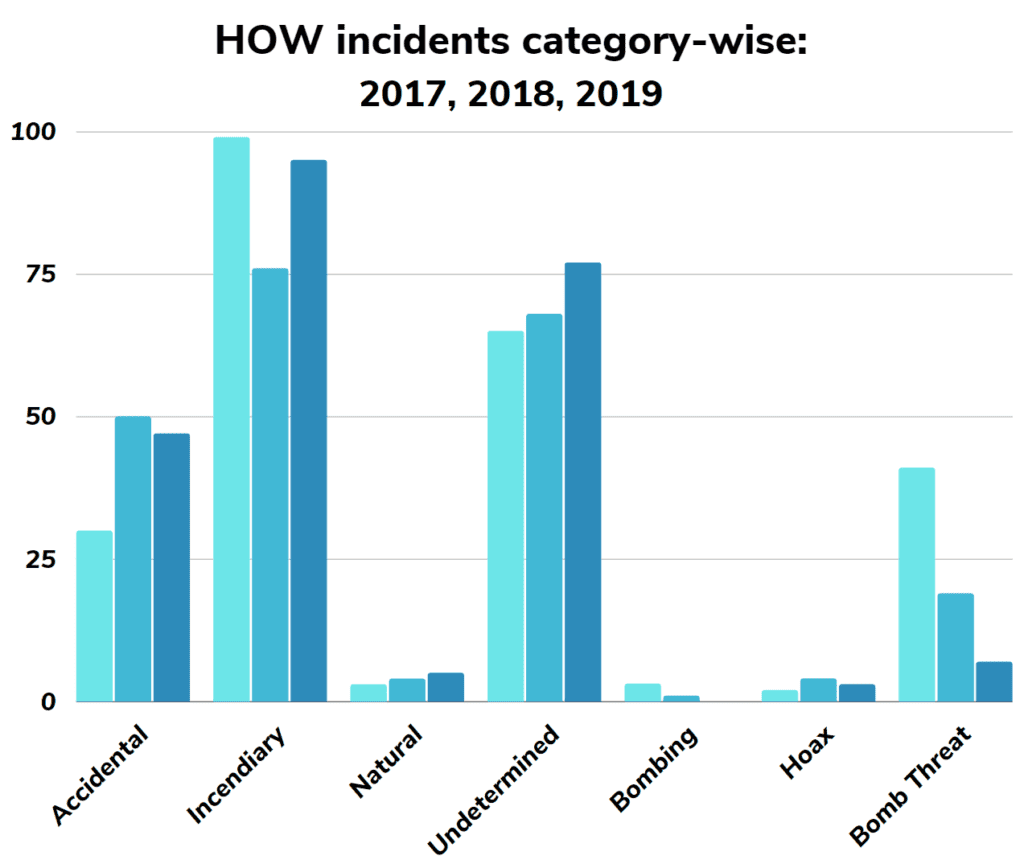
The report classifies “incidents” into seven categories: Accidental, incendiary, natural, undetermined, bombing, hoax, and bomb threat.
In 2019, there was a “noteworthy increase in incendiary fires,” the report says, adding that HOW fire-related incidents resulted in over $21.5 million in damages, along with three injuries and no deaths.
Data Source: Report on HOW incidents in the U.S. in 2019 by the USBDC
Bombing, Explosives Related HOW Incidents
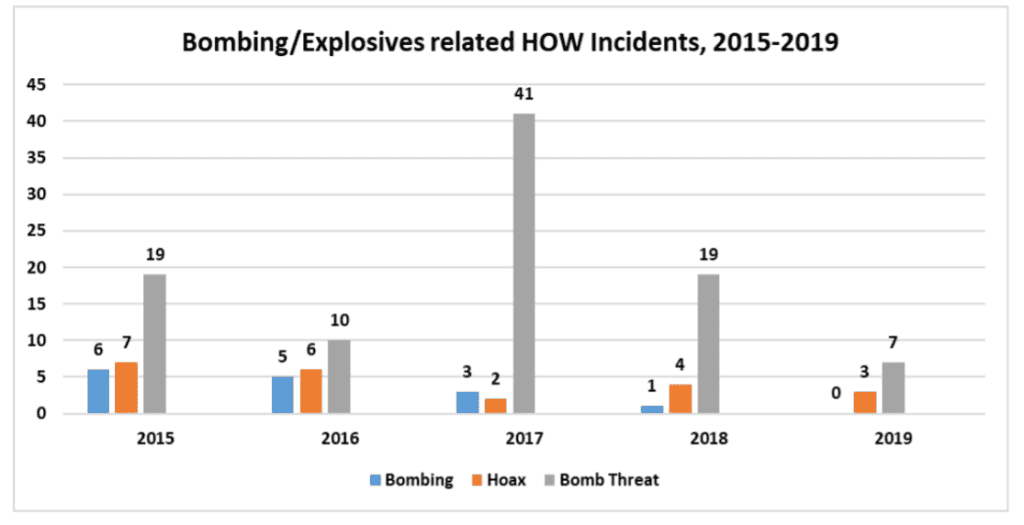
For 2019, the number of bombing/explosive related incidents reported was a 58% decline from that of 2018, and a 17% decline when compared with the average number reported across the previous five calendar years (2014-18).
Within bombing/explosive related incidents, there were zero reports in BATS of actual bombings targeting a HOW in 2019. This compares with one incident reported in 2018, and an average of four incidents reported across the previous five calendar years of 2014-18.
There were also three bombing/explosives related hoaxes reported in BATS in 2019, all of which targeted the Christian denomination, and seven incidents of a bombing/explosives threat. Hoax reports were down 25% from 2018, while threat reports declined 63% during the same period, the report says.
Of the seven bomb or bombing threats directed at HOWs in 2019, 57% were directed at the Christian denomination. The Catholic denomination was identified as the principal victim of HOW incendiary fires in 9 of the 95 reported incidents.
Image Source: Screengrab from the HOW incidents report published by the USBDC
Characteristics Of Incendiary Fires Targeting HOWs
Of the 95 incendiary fire-related incidents reported in BATS for 2019, 28 were listed as involving an accelerant. An accelerant, in fire protection terminology, refers to any substance or mixture that speeds up the development and escalation of fire. When it is spoken about in the context of arson, it also includes those that are typically used to cause explosions.
Among the rest of the 95 incendiary fire incidents reported, 46 involved available combustibles, and 8 involved an incendiary device. There were also 13 incidents where the subtypes were listed as unknown, or left blank by the user in BATS.
Image Source: Screengrab from the HOW incidents report published by the USBDC
According to the report, a review found that the time of day does not really matter when it comes to incendiary fires. There’s a “minimal difference between the hours of daylight and darkness,” to commit such crimes, it says.
Analysis in the report also found that 33% of all incendiary fires targeting HOWs happened on the weekend, and that Friday had the highest number of reported incidents on a weekday. A high number of incendiary fires also appear to have occurred in spring (i.e. between March and May), the report adds.
While there were reports of three people being injured in fires that occurred at HOWs in 2019, there were no deaths associated with such incidents that was reported in BATS.
Image Source: Screengrab from the HOW incidents report published by the USBDC
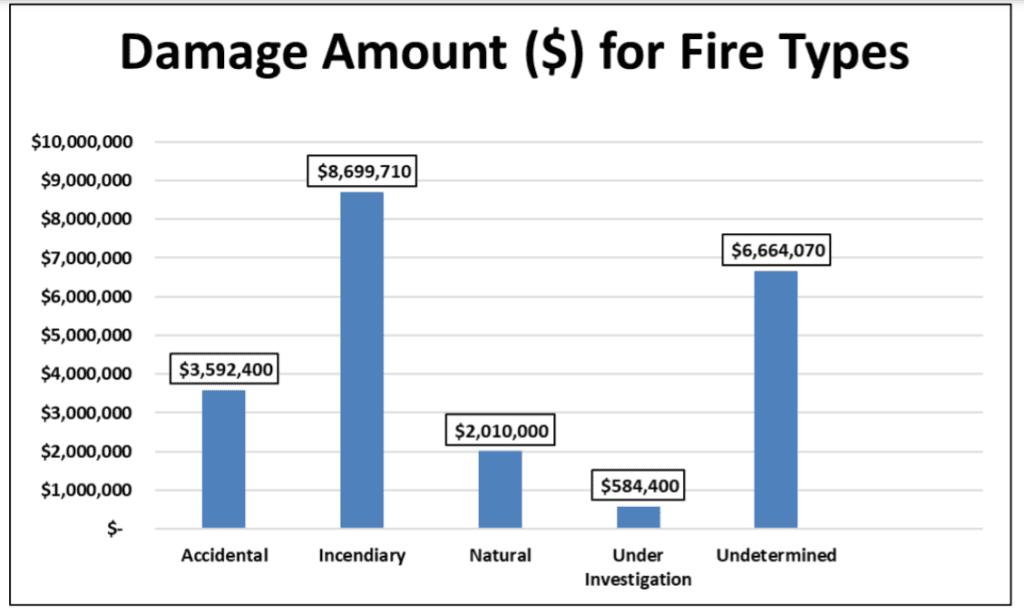
Damages associated with the 224 HOW-related fire incidents reported in BATS totaled more than $21 million for 2019.
Fires listed as incendiary led in terms of type of fire, with more than $8 million in damages. The three main motivations cited for incendiary fires reported were vandalism, revenge and crime concealment. Importantly, there were zero reports of extremism being cited as the motivation behind incendiary fires at HOWs in 2019.
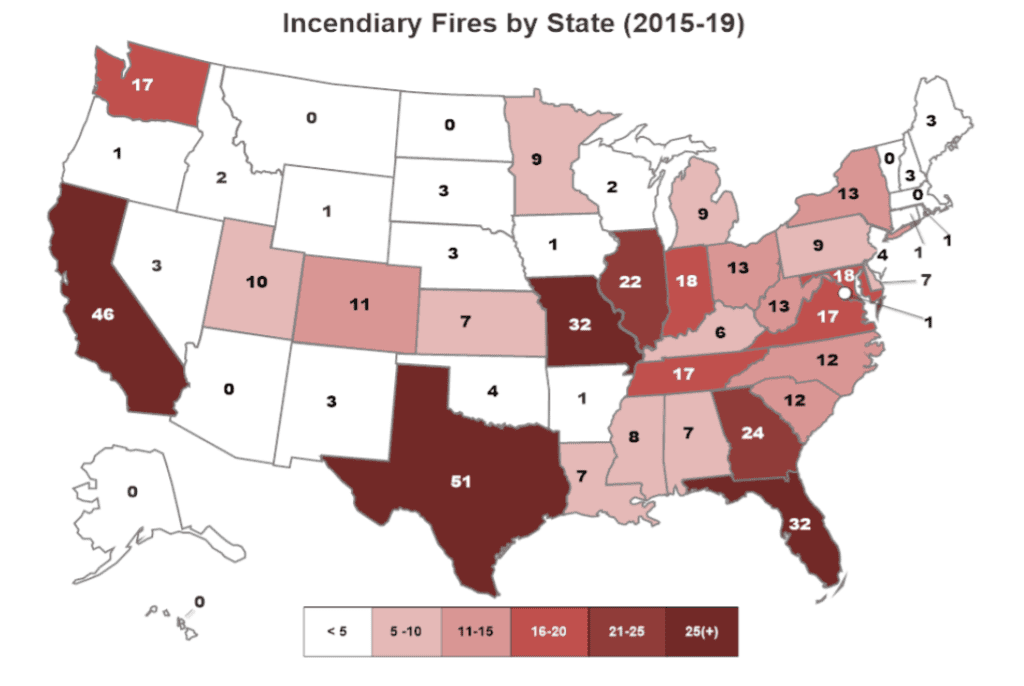
A breakdown of state-wise location for the 484 incendiary HOW fires reported during 2015–19 revealed the highest number of incidents were reported in Texas (51), followed by California (46), along with Florida and Missouri (each with 32), the report says.
Image Source: Screengrab from the HOW incidents report published by the USBDC
A substantial surge in March, a month which had several mass shootings as the United States began returning to business as usual, resulted in the FBI conducting more background checks for individuals wanting to buy firearms in the first quarter of 2021 than over corresponding periods in the five previous years.
The FBI ran more than 12.45 million background checks in the period between Jan. 1 and March 31, 2021, significantly more than the 9.24 million checks run over the same period in 2020 and almost double the 6.86 million background checks run through the National Instant Criminal Background Check System (NICS), in Q1 of 2019. The first quarter of 2018 saw 7.13 million checks through the NICS, while there were 6.71 million in 2017 and 7.68 million in 2016.
The 4,691,738 background checks run between March 1 and 31 — exactly a year after the beginning of the coronavirus pandemic threw life into a tailspin — is also a record in its own. We looked at NICS data back to December 1998, the first month for which the permanent provisions of background check requirements under what’s called the Brady Act kicked in, and March 2021 appears to be the highest ever month on record for firearm background checks run through the NICS. The only other month that crossed 4 million was January 2021, which saw 4,317,804 background checks run.
According to the Bureau of Alcohol, Tobacco, Firearms and Explosives (ATF), the NICS was created because of requirements under the Brady Handgun Violence Prevention Act of 1993 (Brady Act). The Brady Act was enacted in 1993 to provide a method for blocking transfers of firearms to prohibited persons. It required criminal history background checks by the FBI and state agencies on anyone who attempts to purchase a firearm from a licensed dealer. It basically necessitated a national namecheck system for licensed gun shop owners, pawn shop dealers, and other gun retailers who registered as Federal Firearms Licensees (FFLs). FFLs utilize the NICS to determine whether a person can legally buy or own a firearm.
What’s even more interesting is that despite these somewhat staggering numbers reflecting an American obsession with firearms, they don’t really reflect the whole picture. These numbers are only for background checks initiated through the FBI-operated NICS, and not the actual number of firearms purchased in the United States in any given period. All purchases do not go through the NICS, that really depends on different state laws and purchase options.
As Brady United points out, there are loopholes. “Today, one in five gun sales are conducted without a background check — through gun shows, private sales, and over the internet in online sales,” a report called “Gun Laws, Loopholes, and Violence,” states.
So, How Does This Entire Process Work?
If you want to purchase a firearm from a licensed dealer, you need to fill out a 4473 Form, also called a Firearms Transaction record. As a first step, an FFL initiates a NICS check by contacting either the FBI or a point of contact (POC) agency designated by the state government in question. According to the FBI, the NICS Section provides full service to FFLs in:
30 states,
five U.S. territories, and
the District of Columbia.
The NICS Section conducts long gun background checks in seven states. The remaining 13 states conduct their own firearm background checks through the NICS. Twenty-five states issue ATF-qualified alternate permits that may substitute for a NICS background check. Before issuing or renewing an alternate permit, which is only valid for a specified time, the state has to complete a NICS background check. A person with an active qualified permit is not required to have another NICS background check.
The FBI and the POC agencies always check three major federal systems: the National Crime Information Center (NCIC), the Interstate Identification Index (III), and the NICS Index. If the transferee is not a citizen of the United States, the NICS will query Bureau of Immigration and Customs Enforcement (ICE) records. A POC may also check additional state records, depending on the state in question’s requirements. A check may include contacting an agency that maintains a record that the FBI or POC cannot access directly.
A Quick Explainer: The Different Background Checking Systems
Interstate Identification Index (III): The III maintains subject criminal history records.
National Crime Information Center (NCIC): The NCIC contains data on persons who are the subjects of protection orders or active criminal warrants, immigration violators, and others.
NICS Indices: The NICS Indices, a database created specifically for the NICS, contain information contributed by local, state federal and tribal agencies pertaining to persons prohibited from possessing or receiving a firearm pursuant to state and/or federal law. Typically, the records maintained in the NICS Indices are not available via the III or the NCIC.
ICE: The relevant databases of the ICE are searched by NICS for non-US citizens attempting to receive firearms in the United States.
After a search of available federal and state records, the checking agency responds with a notice that says one of the following to the FFL:
The transfer of a firearm may proceed.
It may not proceed.
It has to be delayed pending further review of an applicant’s record.
If a further review of a record indicates that the transfer would not violate federal or state law, the checking agency notifies the licensee that the transfer may proceed. If the licensee does not receive a response within three business days, a transfer may proceed at the licensee’s discretion but do look at the Q&A below for more clarity. A person who is not allowed to proceed may appeal to the FBI or POC and submit information to correct the record on which the denial was based.
What Can Disqualify You From Buying A Gun?
According to a 2008 study for the Department of Justice (DOJ), “NICS checking agencies most often block the transfer of a firearm or a permit to a person whose records indicate a felony indictment or conviction, a fugitive warrant, unlawful drug use or addiction, a mental defective adjudication or an involuntary commitment to a mental institution, illegal or non-immigrant alien status, a domestic violence restraining order, or a misdemeanor domestic violence conviction. These and other prohibitors are stated in the Gun Control Act (GCA), 18 U.S.C. 922. A NICS denial may also be based on a state law prohibition.”
According to the FBI, you cannot buy a gun if you fulfill any of the criteria below: 1. If you were convicted of a crime that carried a sentence of more than one year, or a misdemeanor that carried a sentence of over two years. 2. If you are a fugitive or an addict, are diagnosed mentally ill or reside in the US illegally. 3. If you have been discharged dishonorably from the military or have a restraining order against you in place. 4. If you have been convicted of domestic violence or if have renounced US citizenship.
However, while these are all federal statutes, they have to be read in conjunction with state laws, which vary substantially.
Is it easier to buy a gun in the U.S. than anywhere else?
On the face of it, it appears that the process of buying a gun may be shorter in the U.S. than in most other countries. This New York Times report looked at the ease of buying guns in 16 different countries.
In Japan, for example, you need to take a class and pass a written exam that is only held thrice a year.
In New Zealand, you have to provide character references, among other things, and then wait for approval for a license, which could take months.
In South Africa, the process also takes months, beginning with firearm safety training and passing a written test and practical assessment. This is followed by providing references, being fingerprinted and waiting on a federal license.
In Canada, you are required to prove that you practice at an approved shooting club or range or show that you are a gun collector. You are then required to take a written and practical test, apply for a permit and wait 28 days before processing begins.
The difference, though, is that most other countries do not have a constitutional right to keep and bear arms. According to reports, Americans reportedly own almost half of all firearms purchased by civilians globally, while on a per capita basis, the United States has far more guns than any other nation. What’s also interesting is that the only country with similar procedures to the US is Yemen, which has the second highest gun ownership rate in the world. In Yemen, apparently all you need to do to buy a gun legally, is go to a licensed dealer and register it with authorities.
Yemen, incidentally, ranks in the top five of the most dangerous countries in the world, according to the 2020 Global Peace Index report, released annually by the Institute for Economics & Peace. The Index looks at 23 different indicators across 163 countries, including political terror, deaths from internal conflict, and murder rates. Yemen also has the world’s worst humanitarian crisis, according to the United Nations.
On April 1, 15 days after she assumed office as the 54th United States Secretary of the Interior, Secretary Deb Haaland announced the formation of a new Missing & Murdered Unit (MMU) within the Bureau of Indian Affairs Office of Justice Services (BIA-OJS). The objective of the MMU is to provide leadership and direction for cross-departmental and interagency work involving missing and murdered American Indians and Alaska Natives.
“Violence against Indigenous peoples is a crisis that has been underfunded for decades,” said Secretary Haaland, who became the first Native American to serve as a Cabinet Secretary on March 16. “Far too often, murders and missing persons cases in Indian country go unsolved and unaddressed, leaving families and communities devastated. The new MMU unit will provide the resources and leadership to prioritize these cases and coordinate resources to hold people accountable, keep our communities safe, and provide closure for families.”
A Department of the Interior (DOI) news release stated that approximately 1,500 American Indian and Alaska Native missing persons have been entered into the National Crime Information Center (NCIC) throughout the U.S., and approximately 2,700 cases of murder and non-negligent homicide offenses have been reported to the FBI’s Uniform Crime Reporting (UCR) Program.
The release added that Thursday’s announcement was looking to build on the work begun by the establishment of Operation Lady Justice (OLJ). Operation Lady Justice was a two-year task force established on Nov. 26, 2019, by Executive Order (EO) 13898, with a concentration on two areas: Missing persons cases and cases of murder related specifically to American Indians and Alaska Natives.
On Feb. 1, 2021, the Department of Justice (DOJ) published the first of two issues of their Department of Justice Journal of Federal Law and Practice focused on missing or murdered American Indians and Alaska Natives. This was part of a collaboration between the DOJ’s Missing and Murdered Indigenous Persons (MMIP) Initiative and the Presidential Task Force on Missing and Murdered American Indians and Alaska Natives (OLJ).
According to statistics from the DOJ’s National Institute of Justice (NIJ), more than two in five American Indian and Alaska Native female victims reported being physically injured, and almost half reported needing services, including medical care and legal services, which more than a third (38%) were unable to access. In the U.S. and Canada, an average of 40% of the women who were victims of sex trafficking identified as American Indian or Alaskan Native. Homicide is reportedly No. 3 on the list of causes of death of American Indian and Alaska Native women between 10 and 24, and the fifth leading cause of death for indigenous women between 25 and 34 years.
You can read more about Operation Lady Justice, and our in-depth analysis of the data on Missing And Murdered Indigenous Persons here.
The evening of Wednesday, March 31, became another horrific American statistic, as four people, including a child, were gunned down in an office complex in Orange, California, about 30 miles southeast of Los Angeles. Lt. Jennifer Amat, a spokeswoman for the Orange Police Department, said that officers had responded to the area of 202 West Lincoln Avenue near Glassell Street after reports of shots fired around 5:30pm.
This is the third mass shooting in the United States in as many weeks, with 22 lives being claimed in 16 days. The first incident happened in Atlanta, Ga., on March 16 and the second in Boulder, Co., on March 22. There was also a shooting on Friday, March 26, in Virginia Beach, in which two people were killed and eight injured, but as mass shootings in the United States are typically defined as incidents when at least four people have died, excluding the shooter, that incident wasn’t defined as a mass casualty event.
While there isn’t much information as yet about the shooter in the California event, a Facebook live video, ostensibly from a bystander and posted by Newsweek, showed a man, believed to have been the gunman, being dragged out by police. He was injured and is being treated at an area hospital.
Local law enforcement held a news conference late on Thursday morning, and stated that the shooter was a 44-year-old man, who they named as Aminadab Gasiola Gonzalez. They stated he had business and personal relationship with the victims. In all three other shootings mentioned here, the suspects have been young men: A 21-year-old white man in the Atlanta shooting, another 21-year-old, of Arab origin, in the Boulder event, and three black men, 22, 20, and 18, in Virginia Beach.
Few Details As Yet In Orange Shooting
“I can tell you that we haven’t had an incident like this in the city of Orange since 1997,” Lt. Amat said. “It’s just such a tragedy for the victims, their families, our community and our police department.”
At least two victims hospitalized as a result of gunshot wounds were in critical condition in hospital.
California Rep. Katie Porter said she and her team are monitoring the situation. “I’m deeply saddened by reports of a mass shooting in Orange County, and I’m continuing to keep victims and their loved ones in my thoughts as we continue to learn more,” Porter said on Twitter.
California Gov. Gavin Newsom also tweeted his condolences.
Horrifying and heartbreaking. Our hearts are with the families impacted by this terrible tragedy tonight. https://t.co/nw3On2RJH2
It has been a traumatic March for the United States. While 10 people were shot in the Virginia Beach incident, one was injured in police action, Police Chief Paul Neudigate said.
In Boulder, a gunman opened fire at a King Soopers outlet on March 22, killing 10, including police officer Eric Talley, who responded to the incident. Boulder is about 25 miles northwest of Denver.
On March 18, at eight people were left dead after a gunman went on a rampage targeting spas in in Atlanta. Six of the victims were women of Asian descent.
Last week, on March 22, 67-year-old Gregory Paul Ulrich made a virtual 10-minute appearance in front of a Minnesota judge, who ordered what’s called a “Rule 20 evaluation” to determine if Ulrich was mentally competent to stand trial.
On Feb. 9, Mr. Ulrich had opened fire on workers at Allina Health’s Buffalo Crossroads clinic in Minnesota, killing 37-year-old medical assistant Lindsay Overbay, a mother of two, and injuring four other people. Mr. Ulrich was a known offender, at least to law enforcement. In October 2018, according to reports, Mr. Ulrich had threatened to carry out a mass shooting at the clinic in Buffalo, a small city about 40 miles northwest of Minneapolis.
In the course of his February rampage, he had also placed pipe-bombs at the clinic. It was part of a larger trend in recent years of increased threats and attacks on healthcare workers, which has coincided with the rise of the opioid epidemic.
An investigator indicated that dependence on opioid medication was the “driving force” behind the Buffalo, Mn., incident.
According to investigators, Mr. Ulrich had a substantive opioid problem. In an unsealed application for a search warrant, Wright County Deputy Patrick Bailey reportedly stated that authorities had discovered a plastic bag containing six oxycodone pills while conducting a search of his hotel room. Bailey also reportedly described a video in which Mr. Ulrich mentioned taking more than 30 pills at a time.
A report in Minnesota Public Radio News (MPR News) quoted Bailey as writing this in the warrant application: “Ulrich has a dependency on opioid-style pain medications and was upset that his legal supply had been stopped.” The report added that Bailey cited a 2018 petition for a “harassment restraining order from Dr. Andrew Burgdorf that documents Ulrich’s history of opioid use.” The search warrant and affidavit confirmed that authorities believe this addiction to have been the motivating factor, according to documents obtained by KARE-11.
Mr. Ulrich was apparently prescribed opioid pain medication following back surgery in 2016 at a Minneapolis hospital. He was later hospitalized for an opioid overdose, and according to MPR News, medical professionals declined to prescribe more medication after “Ulrich made statements about mixing the opioids with alcohol.”
He was apparently well known to the police, having racked up several DWI arrests in the past several years. According to a report in the New York Post, he had at least 43 interactions with the police over the years. It was clear that he had a problem.
As Wright County Sheriff Sean Deringer stated at a press conference later on Feb. 9: “We have had several calls for service regarding Mr. Ulrich dating back to 2003 — both the Buffalo Police Department and the Wright County Sheriff’s Office, so he’s no stranger to law enforcement…”
Mr. Ulrich was apparently motivated, at least in part, by anger at the treatment of his back pain, according to court documents and a video message he left on his phone. As stated at a subsequent press conference on Feb. 11, and in the complaint against him, “A preliminary examination of the defendant’s cell phone recovered from the clinic revealed a recording made by the defendant consisting of a rambling video message that alluded to an incident at the clinic.”
He had also previously been in trouble for breaking a restraining order that clinic workers had against him. The details of Mr. Ulrich’s medical care and complaints during his previous time at the clinic are not publicly available due to strict laws regarding patient privacy, but multiple people in his life have reiterated that opioid abuse was an issue for him.
According to the Bureau of Labor Statistics, 20,790 workers in the private industry experienced trauma from nonfatal workplace violence just in 2018. Of those victims who experienced trauma from workplace violence:
71% were female
64% were aged 25 to 54
An incredible 73% worked in the healthcare and social assistance industry
20% required 31 or more days away from work to recover, and 21% involved 3 to 5 days away from work
According to a December 2020 article in the American Journal of Managed Care (AJMC), “Currently, only 26 of 50 US states have any law to protect health care workers from assault, and the laws in the majority of these states protect only a small sector of the health care field. For example, penalties in Louisiana apply only to emergency department workers and those in Kansas apply only to mental health employees. In many states, the right to refuse treatment of abusive patients is allowed by law; however, under the Emergency Medical Treatment and Labor Act of 1986, emergency departments must treat all patients who present for care, regardless of abusive actions.”
Allina Health’s Buffalo Crossroads clinic is not an emergency room, but these statistics illustrate how dangerous the medical profession can be. This most recent attack demonstrates the risk that two different epidemics in our society, the opioid epidemic and mass shootings, can sometimes come together in the same incident. To make matters worse, health professionals face this increased threat at a time that they are also facing off against Covid-19.
According to the CDC, more than 70,000 Americans have died from a drug-involved overdose in 2019, including illicit drugs and prescription opioids.
National Overdose Deaths Involving Any Opioid — Number Among All Ages, by Gender, 1999-2019.
Recent attempts to crack down on opioid abuse have been long overdue, but may lead to more conflict in the short term, before helping the problem in the long term. Health professionals are often the people who frustrated patients lash out at as a result of the fact that they are the ones who these patients are face to face with. After years of lack of sufficient oversight, pill mills, manufacturers, and negligent pharmacies and prescribers are finally starting to face lawsuits and criminal charges.
At times this leaves health professionals, who have done nothing wrong, to face the wrath of patients who find doctor shopping — for someone willing to write a prescription — more difficult than they used to. In other cases, patients who are either intoxicated or in withdrawal can simply be more volatile and combative as a result. Though more rare, some also experience symptoms such as hallucinations due to opioid abuse, which can also lead to dangerous conflicts. Although a consistent crack down on over-prescribing will probably help the problem in the long run, it seems more is needed, legally and from a workplace safety perspective, to protect health professionals in the short run. Increased security seems in order given the shocking statistics regarding the violence that those in the health industry face.
Ongoing Litigation
As for this specific case, Ulrich is still working his way through the legal system. On March 22, as mentioned above, he appeared before the court (in a virtual hearing due to the Covid-19 pandemic). In addition to the defense attorney being granted a request for a Rule 20 mental competency evaluation, the prosecutor was granted his request for a DNA sample from Ulrich, along with a request to keep the victims’ information confidential.
All things being equal, it is clear that Ulrich will end up either in prison or in a treatment facility at this point, even though the legal case is still ongoing, because of how much evidence there is against him. A transcript of a conversation between Ulrich and a 911 operator that took place during his rampage recently became public. In it he freely admits that the bombs are his, saying “That was just another, uh, one of my last bombs.” He also clearly identifies himself on the call, and tells the operator that he has four bombs, a gun, and a knife. You can view press releases on this case as it proceeds on the Wright County’s official website.
This article is part of a larger series that Biometrica will be doing to take an in depth look at the public safety implications of the opioid epidemic. Follow us for more on this topic.
The writer is a lawyer and a coder, and a member of the Arizona Bar.If you have feedback on this article, please write to us at marketing@safience.io.
Tony Hernández, a former Honduran Congressman, was sentenced to life in prison and ordered to forfeit $138.5 million for distributing 185 tons of cocaine, and related firearms and false statements offenses.
Over a 15-year-period, Hernández played a leadership role in a violent, state-sponsored drug trafficking conspiracy, the Justice Department said. Hernández manufactured and distributed at least 185,000 kilograms of cocaine that was imported into the United States.
Hernández is a former Honduran congressman and the brother of Juan Orlando Hernández, the current president of Honduras. He was convicted on Oct. 18, 2019, following a jury trial before U.S. District Judge P. Kevin Castel, who also imposed the sentence on March 30.
Manhattan U.S. Attorney Audrey Strauss said: “Former Honduran congressman Juan Antonio Hernández Alvarado was involved in all stages of the trafficking through Honduras of multi-ton loads of cocaine destined for the U.S. Hernández bribed law enforcement officials to protect drug shipments, arranged for heavily armed security for cocaine shipments, and brokered large bribes from major drug traffickers to powerful political figures, including the former and current presidents of Honduras. Hernández was complicit in at least two murders. Today, Tony Hernández was rightly sentenced to life in prison.”
Hernández commanded heavily armed members of the Honduran military and Honduran National Police. He sold machineguns and ammunition to drug traffickers, some of which he obtained from the Honduran military.
He also controlled cocaine laboratories in Colombia and Honduras and secured millions of dollars of drug proceeds for Honduras’s National Party campaigns in connection with presidential elections in 2009, 2013, and 2017.
His drug trafficking career started in 2004 when he began providing sensitive law enforcement and military information to major Honduran drug traffickers Victor Hugo Diaz Morales and Hector Emilio Fernandez Rosa.
The information he provided included details of operations of the Honduran Navy, efforts by the United States to train Honduran Air Force pilots to fly at night to conduct anti-narcotics operations; military radar capabilities so that cocaine plane shipments could avoid detection and interdiction efforts by certain Honduran National Police officials.
In this process, Hernández helped Rosa and Morales distribute nearly 140 tons of cocaine.
By 2008, Hernández’s narcotics trafficking had expanded, and he was also manufacturing his own cocaine in a laboratory he controlled near El Aceitico, Colombia.
Hernández told his co-conspirators that some of the cocaine manufactured at his laboratory was stamped with his initials “TH,” and a photograph of a kilogram of “TH” stamped cocaine was intercepted during the course of the investigation.
Testimony at trial established that Hernández and Ardon Soriano, a former Honduran drug trafficker and mayor, secured protection from investigation, arrest, and extradition through massive bribes paid to high-ranking politicians, including, Porfirio “Pepe” Lobo Sosa and Juan Orlando Hernández.
Once or twice a month in 2010, Hernández sent Soriano cocaine shipments consisting of approximately 300 kilograms; and once a month in 2011 and 2012 shipments ranging in size from 700 to 1,600 kilograms.
In 2013, Hernández was campaigning to become a congressman and Juan Orlando Hernández was campaigning to become president. Around this time, according to testimony at trial, Juan Orlando Hernández solicited $1.6 million in drug proceeds from Soriano to support himself and National Party campaigns.
Also during the 2013 campaign, Hernández accepted $1 million from former Sinaloa Cartel leader Joaquín Archivaldo Guzmán Loera, also known as “Chapo,” to support Juan Orlando Hernández’s presidential campaign.
In November 2013, Hernández was elected to the Honduran congress and Juan Orlando Hernández was elected president.
Between 2015 and 2017, per trial testimony, Hernández and Juan Orlando Hernández continued to secure large sums of drug proceeds for National Party campaigns in exchange for protecting drug traffickers.
In 2018, Hernández continued to engage in large cocaine shipments with Nery López Sanabria, another significant Honduran drug trafficker.
Honduran authorities arrested and detained López Sanabria in connection with a traffic incident and recovered, among other things, several drug ledgers in a secret compartment of his car.
One of the ledgers was labeled “Hard Work” 2018, and reflected a 650-kilogram cocaine shipment with Hernández.
Here is a staggering estimate: 75% of victims of child sexual abuse material are reportedly under the age of 12, 63% under the age of eight. Children are more likely to be abused by someone they have a relationship with, either virtual or real. It is essential for parents and educators to recognize this, understand this, and manage it age appropriately for the children in their orbit.
By Austin Berrier
With 27 years of law enforcement experience and more than a decade investigating and combating the online sexual abuse of children, I am often asked for advice, tips and techniques by parents, educators, and even some children. What apps are dangerous? What do offenders look and act like? How do I prevent my child from being kidnapped and trafficked by international child traffickers? Over time, I came to realize that most people (perhaps thankfully) have little to no real knowledge of the true nature of the online sexual exploitation of children (OSEC) or child sexual abuse material (CSAM). While lack of exposure to these topics hopefully signifies a life not impacted by this horror, it often leaves families vulnerable. Before we can protect our children, however, we must first be educated on the subject.
Let me first say this is not a treatise on morals, politics, religion, society, opinion, or any other buzz word of choice, those are exceptionally personal topics and are not what I am trying to educate readers about. Nonetheless, understanding the power of the sex drive at a basic level is crucial to understanding OSEC and CSAM. We learn in basic biology that living organisms reproduce to continue the species. This is done generally either asexually or sexually. As this is a fundamental function of living organisms from the most primitive one cell organism to the most advanced, it only stands to reason that the more “primitive” or “ancient” parts of the brain are likely involved. Some quick online research reveals that the mid- and hind- brain are connected to many autonomic and basic functions of life. The hypothalamus, the amygdala and other structures control hormones, autonomic responses, and even alert us to changes in our environment detected by our senses. At this point you are likely asking yourself why you are receiving a biology lesson from a law enforcement official, and the answer is simple, perspective. As parents, children, stakeholders or simply members of society, we must first understand how basic the drive to reproduce is to our biology before we can hope to understand how it can be used to victimize children.
Once we can understand that the reproductive drive is a basic function of living organisms, we can begin to dissect how it impacts children and may lead to victimization. From a fairly young age children may express that they have a “boyfriend” or “girlfriend.” While as a parent I would argue this is not in any way sexual in nature, it does illustrate that this fundamental part of biology begins to exert influence far before children are emotionally, socially and intellectually developed enough to understand what is happening. Nonetheless it does not take long for this “innocent attraction” to turn into curiosity about sexuality, a child’s own body, or the body of others. Several studies quoted by the National Institute of Health reveal just how young children begin having sexual thoughts. One study suggested approximately 25% of 11-12-year-old children report “thinking a lot about sex” and 16% of 9-11-year-old children as having the same thoughts.
Understanding Puberty And Sexual Development
The next topic for discussion is puberty. A 2019 article by Psychology Today mentions several studies that are quite revealing. The onset of puberty today is generally 10-11 for girls and 11-12 for boys, however puberty is not considered precocious, or early, until 8 for girls and 9 for boys. As a parent, I was quite dismayed when I first read this, as these ages seem exceptionally young. However, when I take a realistic look at my own children (and my own childhood), I realize this is very accurate. Puberty often begins when children still have early school night bedtimes, are still watching cartoons, and still trust and believe most everything adults tell them.
These statistics and numbers are not meant in any way to be a “scare tactic” but to point out that at an early (and easily influenced) age, children are curious, which leaves them susceptible to predation by offenders. This natural curiosity combined with the first hints of hormones, attraction and physical development far outpaces most children’s intellectual and emotional maturity as well as their ability to comprehend the consequences of their actions. Any parent will tell you that most children can’t think or plan past the end of the school day, let alone what the consequences of their actions for weeks, months, or even years to come. In fact, a 2000 neuroscience study of the adolescent brain specifically states that the two most observed behavioral changes in children entering puberty and adolescence are (1) increased novelty seeking, and (2) increased risk taking. A 2013 article from the National Institute of Health states that the development of the prefrontal cortex (home of cognitive analysis, abstract thought, and moderation of socially acceptable behavior) is not complete until the age of 25.
A simple comparison of Piaget’s Stages of Cognitive Development and childhood physical sexual development quickly reveal that a child’s physical sexual development advances at a faster pace than their ability to understand the consequences of this development. In other words, a child is susceptible to sexual grooming or manipulation due to physical development before they are fully capable of understanding the consequences of their actions.
OSEC And CSAM
The next educational factor for parents and children is to have an honest, and age appropriate, understanding of OSEC and CSAM. In my experience, most of polite society has one of two views regarding OSEC and CSAM. One view is that OSEC and CSAM is merely innocent photos such as the toddler bathtub photo or something akin to the old Coppertone Baby advertisements, or perhaps children being merely curious like “playing doctor.” The other view is that OSEC and CSAM crimes only involve the “guy in the creepy van” or international kidnapping rings whisking children away into a seedy underworld of mafia and criminal syndicate activity. While both of these are possible and do occasionally occur, in my nearly 30 years of law enforcement the truth is much less complex and yet more terrifying; that children are more likely to be abused by loved ones, family members, or trusted adults.
The statistics on OSEC/CSAM victim-offender relationships vary but some of the data sourced from the NGO Thorn include two staggering statistics:
90% of contact victims “know” their offender – “know” is a relative term, but stranger abuse is rare.
75%+ of CSAM victims are under 12, 63%+ were under 8.
These statistics only scratch the surface of the OSEC/CSAM issue, but they deconstruct some myths. Children are more likely to be abused by someone they have a relationship with, either virtual or real, and OSEC/CSAM is certainly not harmless experimentation, curiosity, or innocent nudes. I find it staggering that more than half the victims observed are in the third grade or younger, and I certainly can attest to the veracity of these numbers, I’ve seen the unfortunate evidence firsthand.
When we see these numbers it begs the question why known perpetrators vs. unknown? The simple answer is access. A person looking to victimize a child must have access to a child. Some may argue that a kidnapper or trafficker has access merely by snatching a child but ask yourself if this would be the “best” way for someone to victimize a child. On those occasions when a child goes missing or is kidnapped, the full weight of society is brought to bear. Massive media attention, an enormous law enforcement effort, public outcry, and assistance. It generally is only a matter of time before those crimes are resolved. In my experience the more common, and unfortunately realistic scenario, is the perpetrator desires long-term, regular access to the victim for an extended period, for repeated abuse. A more common scenario is one in which the child victim has been groomed, manipulated, and coerced into a “relationship” like an abusive domestic relationship or marriage. The victim may be taught the abusive acts are a game or perhaps normal behavior. The child may be threatened physically, or with exposure and humiliation. Sometimes a victim is even coerced or extorted into victimizing other children or recruiting new targets for the offender.
A scenario that is becoming more common is one in which the victim and the perpetrator never meet, let alone ever occupy the same room. With the explosion of social media, live-streaming apps, cheap mobile data and reasonably priced internet capable mobile-devices, victims are more likely to be victimized from afar. Perpetrators use the same grooming or extortion techniques, but the victim creates the CSAM themselves, either fully aware they are being victimized or innocently believing they are in a relationship or perhaps conversing with another child. While this concept of “self-produced” CSAM is only a few years old and statistics are difficult to find, my personal investigative experience is that easily 25% to 40% percent of the current, traded CSAM is self-produced. This self-produced CSAM often takes place in the victim’s bedroom, bathroom or when home alone. I have even seen CSAM in which the victim’s parents can be seen or heard in the background, the child being victimized literally in front of their unknowing parent or loved one.
Now that we have a basic understanding of how and why victimization occurs, we need to have the difficult discussion of what OSEC/CSAM truly is. Legal definitions change slightly from state to state, or with Federal Statutes. A simplistic definition would include concepts such as “lewd and lascivious display of genitalia” of a minor or person under 18. Often statutes will include language about penetrative- and non-penetrative sex acts. While both descriptive and clinical in verbiage for legal reasons, statutory language is woefully inadequate when educating the public, parents, or children. When discussing OSEC/CSAM with individuals unfamiliar with the topic I simply tell them to imagine the most explicit or degrading adult/legal pornography and replace one or more of the “participants” with a child, toddler or infant. OSEC/CSAM represents the most traumatic event in the victim’s young life. The content is more accurately described as crime scene photos as the images or videos are documenting a violent sex crime against a child, who by legal definition cannot consent to what is being done to them. This is a difficult image to process, but in doing so, parents, children, and society have a more realistic understanding of the issue.
There Is No Magic Bullet, But There Are Some Things Parents Can Do
Finally, we can circle back around to how children can be protected. Unfortunately, there is no simple answer or “magic bullet.” Monitoring apps, parental snooping, law enforcement efforts, or scare tactics have minimal impact alone. Generally, by time law enforcement or parents learn of apps or technology being used by children or where they are being targeted, it is already too late. Additionally, I have yet to learn of a monitoring app that a tech savvy child hasn’t circumnavigated. Finally, as adults or parents, I think we all know how effective scare tactics are. In other words, trying to regulate a child’s exposure is not necessarily the best option. While setting reasonable guidelines, rules and access is part of a plan, I feel that making a child a “hard target” is the best option.
After many years of OSEC/CSAM investigations I have noticed a few characteristics of both children and their parents where a child has been victimized. I need to be clear that there is no scientific process, double-blind study or even a Ouija Board involved, merely many years spent wallowing in this problem. My biggest take-away is that emotionally healthy and confident children sharing a loving relationship with engaged parents are less likely to become victims. Not immune, but less likely. As a parent and an investigator, I feel comfortable saying that children need structure, support, mentoring, guidance and love from engaged parents or guardians. I imagine there are countless scientific studies regarding this. I also know, as a parent and investigator, that if children aren’t receiving what they need at home or from their family, they will find it elsewhere. Think of your own life or upbringing, perhaps an emotionally distant parent led you to seek affirmation or support elsewhere. Hopefully that other source was a healthy one. As a child of the 70s and 80s I recall the concept of “latch-key” children and images of children home alone, struggling with their homework or to make meals for younger siblings. In today’s world with ubiquitous mobile devices, families, children, parents or loved ones can be emotionally and socially distant while sitting on the same sofa. It is not for me to advise readers how to raise confidant children, but I would suggest a strong start is for mom and dad to “unplug” and spend more quality time with your children. Children model behavior, if they see their parents losing themselves online, how long until they follow suit?
Next, have a realistic knowledge of what an internet capable, mobile device truly is. Your child’s mobile device is literally capable of voice and video chat with nearly every human on the planet and even the International Space Station. It can produce and edit high quality video exceeding what even Hollywood could produce a decade ago. The new smart phone you gave your 9-year-old daughter allows her to search, save, and hide from you the most disturbing content you can think of. And you just gave it to her with little to no guidance and allowed her to take it into the bathroom, shower, or under her blankets at bedtime and you wonder how or why things happen. Have realistic guidelines and expectations of what your child may be doing online when you are present, and more importantly, when you are not.
As you’ve read this you probably realized I didn’t provide hard answers, tricks, or techniques, and you’re correct, there is no simple answer. You probably feel you have more questions than when you started reading this and that is precisely my intention. The goal is for you the reader to have a realistic understanding of the issues and then to critically analyze your specific circumstances. Do some independent research, talk to other parents, talk to your kids!
Disengage the internet and re-engage those personal connections!
If you would like to further educate yourself on these issues, I recommend the following sites:
https://www.missingkids.org/home – National Center for Missing and Exploited Children – A good source for general data, reporting, etc.
https://www.ecpat.org/resources/ – ECPAT International – An excellent source for data driven research and advocacy with information regarding the safeguarding of children on a global scale.
About the author: Austin Berrier began his law enforcement career in 1993. Since then, he has served in military policing in the United States Marine Corps, municipal policing in Virginia and since 2003, as a Special Agent in Federal Law Enforcement. Austin has presented and spoken on issues regarding OSEC/CSAM both nationally and internationally for nearly a decade and has been involved with child protection for more than twelve years.
Pope Francis has said that laws must reflect “the equality of all members of the church,” indicating that further reforms of the Vatican City penal code were likely, especially to deal with financial crimes.
In a March 27 meeting with judges, prosecutors, investigators and other members of the Vatican’s state tribunal, the pope stressed on international cooperation in investigations with a view to facilitate an accurate exchange of information in a timely manner.
The pope recommended doing away with “privileges that go back in time and are no longer in keeping with the responsibility of each for building up of the church,” Catholic News Service reported.
This comes on the back of a London judge overturning a court order that had frozen the assets of a financier being investigated by the Vatican for extortion, fraud and money laundering.
That case was over the Vatican’s purchase of a of multimillion-dollar property in London’s Chelsea neighborhood.
The judge, in his 42-page judgment, said in the third week of March that the Vatican’s application contained “material non-disclosures and misrepresentations” that were, “in some instances, egregious,” when they asked that the assets of Gianluigi Torzi be frozen. Luigi brokered the sale of the property.
Pope Francis said that the changes brought about over the past eight years in the Vatican’s criminal code would be more effective “to the degree that they are accompanied by further penal reforms, especially for combatting and repressing financial crimes, and by the intensification of other activities aimed at making international cooperation between the investigative organs of the Vatican and analogous institutions of other nations simpler and speedier.”
While calling for the Catholic church to conduct its business in an exemplary manner, Pope Francis said that laws in place alone were not enough. He said that everyone involved needed to be “inspired by the founding principles of ecclesial life and, at the same time, takes into account the parameters and good practices in force on the international level.”
Italy’s prime minister, Mario Draghi, joined members of the tribunal for both the Mass and the audience with the pope. Draghi took office in February.
A week ago, Pope Francis had called upon people to fight back against organized crime, such as the mafia. This came after Interpol warned in December that organized crime was targeting the Covid-19 vaccine.
“Mafias are present in various parts of the world and, taking advantage of the pandemic, they are enriching themselves through corruption,” Francis was quoted as saying in his weekly Sunday address by Reuters.
Italian police had warned that criminal organizations were using the pandemic to lean on families in financial trouble, offering loans and food in an attempt to eventually co-opt them into their criminal enterprise.
“These structures of sin, mafia structures, are against the gospel and mistake idolatry for faith,” Pope Francis said. “Let us remember all the victims and renew our commitment against mafias,” he remarked, referring to the 2014 incident in the town of Oppido Martima where a procession carrying the statue of the Madonna was diverted to a mob boss’s home and tilted as if to kneel in a sign of respect.