Michael Martin and Bobby Dayle Boney, members of the Aryan Circle pleaded guilty to the violent assault of a man in Oct. 2016.
Martin, also known as Aryan Prodigy, is from Austin, Texas, while Doyle, from Sulphur Springs in the same state, committed the assault as a part of gang activities, a Justice Department (DOJ) release said.
This case is part of a larger investigation into the AC gang under Operation Noble Virtue, which targeted the gang’s leadership and resulted in prosecutions and convictions in six different jurisdictions to date.
In October 2020, the DOJ unsealed indictments of as many as 24 members of the gang. At the time, Operation Noble Virtue had already resulted in 17 federal convictions. One of the indictments in the Eastern District of Texas that was unsealed then, charged six alleged AC members and associates with a racketeering conspiracy that included acts involving murder, five alleged AC members with assault resulting in serious bodily injury in aid of racketeering, and two alleged AC members with kidnapping and conspiracy to commit kidnapping in aid of racketeering. Among those charged then were alleged current and former high-ranking gang leaders.
The AC is a violent, white supremacist organization that originated in the Texas Department of Corrections and operates in federal prisons across the country, as well as outside prisons in states including Texas, Arkansas, Louisiana, and Missouri.
It was founded by Mark “Cowboy” Gaspard in 1985 as a splinter group to the Aryan Brotherhood of Texas.
In the 1980s, when the Aryan Brotherhood moved away from crime towards religion, the Aryan Circle broke away, to continue their criminal status and activities. A second reason for the split was to promote their white supremacist agenda and oppose black and Hispanic gangs in prison.
In Houston, the gang’s infamous crime spree is said to have begun in 2007 when a member shot and killed two teenagers and fled to Louisiana where he shot dead two police officers before being killed in response.
The AC enforces its rules and promotes discipline among its members, prospects, and associates through murder, attempted murder, assault, and threats. Members, and oftentimes associates, are required to follow the orders of higher-ranking members without question, the DOJ said.
Martin and Boney had been members of the gang since the early 2000s and both sported tattoos affirming their affiliation to the Aryan Circle.
Both served in the leadership of the gang, with Martin being an upper board member, making him one of the five highest-ranking leaders in the gang. Boney held the rank of vice president, which meant that he gave orders to members and disciplined members who were not following the gang’s directives.
In 2016, the Aryan Circle leadership learnt that a member of their gang wanted to switch affiliation, or “patch over,” to a different gang. Martin ordered AC members to attack the former member in order to “X” him, or remove him from the gang, because it violated the AC’s rules to join another organization.
AC members, including Martin and Boney, held a “church,” or meeting, at a member’s home in the Tyler, Texas, area where they planned the logistics of the assault.
On Oct. 2, 2016, Martin, Boney, and other members met at a park near Tyler to carry out the assault.
On Martin’s order, Boney and another member violently beat the victim, including kicking the victim in the head while he was on the ground. This attack resulted in the victim seeking medical care.
A sentencing date was yet to be set for Martin and Boney.
According to the Anti-Defamation League (ADL), the Aryan Circle is the second-largest white supremacist prison gang in Texas and one of the largest such gangs in the United States. Its most common tattoo, known as a “shield” or “patch,” consists of a square oriented to form a diamond shape. Inside the diamond is typically a swastika and the initials AC; it is also common to include SS lightning bolts. Because of this symbol, Aryan Circle members often refer to their gang as “The Diamond” and may use phrases such as “let that Diamond shine!”
The SS Bolts are a common white supremacist/neo-Nazi symbol derived from Schutzstaffel (SS) of Nazi Germany. The SS, led by Heinrich Himmler, maintained the police state of Nazi Germany. Its members ranged from agents of the Gestapo to soldiers of the Waffen (armed) SS to guards at concentration and death camps.
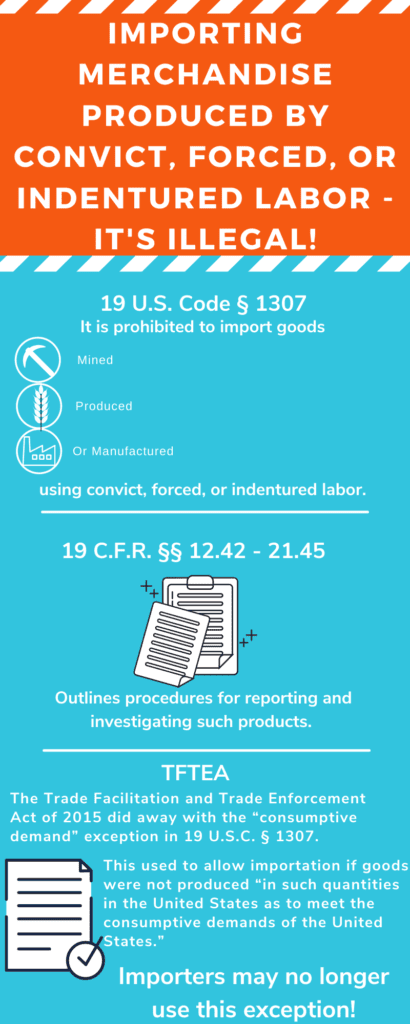
Most know that importing merchandise produced by forced labor is wrong, but did you know that it’s also illegal?
What Does The Law Say?
As a result of the Tariff Act of 1930, encoded at 19 U.S.C. 1307, it is illegal to import goods mined, produced, or manufactured using convict, forced, or indentured labor. This law was recently strengthened when the Trade Facilitation and Trade Enforcement Act of 2015 closed a loophole known as the “consumptive demand” exception.
This means that importers may no longer get around this restriction even when goods are not produced “in such quantities in the United States as to meet the consumptive demands of the United States.” In other words, they are still going to have to find a different source for these goods produced without convict, forced, or indentured labor even if it is in higher demand than what the current U.S. production can satisfy. They can still import such goods, just not from a supply chain that uses convict, forced, or indentured labor.
Who Polices Such Imports And What Are They Looking For?
U.S. Customs and Border Protection (CBP) is the main organization in charge of policing such imports. Punishment for breaking this law includes confiscation of goods and large fines, not to mention the ensuing public relations nightmare and boycotts that often occur after a company is caught breaking this law. CBP busts and bans of such imports over that past year include seafood from Taiwan; stevia, garments, human hair, cotton, computer parts, and tomatoes from China; tobacco from Malawi; rubber gloves and palm oil from Malaysia; gold from the Democratic Republic of Congo; diamonds from Zimbabwe; and bone black (a type of charcoal) from Brazil. This list is constantly being updated as CBP finds more offending products.
Of particular concern recently has been products coming from the Xinjiang region of China where the Uyghur (alternately spelled Uighur) population has been systematically rounded up and placed into forced labor camps. Several countries have expressed concern that China appears to be conducting a genocide against the Uyghur population. CBP and ICE, with the U.S. Department of State, and the U.S. Department of the Treasury’s Office of Foreign Assets Control (OFAC), issued the following Xinjiang Supply Chain Business Advisory on July 1, 2020:
“The U.S. Department of State, the U.S. Department of the Treasury, the U.S. Department of Commerce, and the U.S. Department of Homeland Security (DHS) are issuing this advisory to highlight the harsh repression in Xinjiang. Businesses, individuals, and other persons, including but not limited to academic institutions, research service providers, and investors (hereafter “businesses and individuals”), that choose to operate in Xinjiang or engage with entities that use labor from Xinjiang elsewhere in China should be aware of reputational, economic, and, in certain instances, legal, risks associated with certain types of involvement with entities that engage in human rights abuses, which could include Withhold Release Orders (WROs), civil or criminal investigations, and export controls.”
CBP polices this, so the most important thing you can do to protect yourself is to get on the same page as CBP. You can learn about CBP interpretation and enforcement of the law here. You can also view current advisories, news, regions of concern, products of concern, frequently asked questions, and other resources. When in doubt, reach out to them directly about what you are considering importing before you make any legal or financial commitments. They expect importers to have done their due diligence. Their Responsible Business Practices Fact Sheet, which can be extremely helpful, highlights the importance of having a comprehensive supply chain profile, written code of conduct, and robust internal control processes. Their Supply Chain Due Diligence Fact Sheet can also be very helpful.
It’s also important to make sure that you aren’t running afoul of any other laws in the process of importing products. This article covers only the ban on forced labor produced goods. CBP also polices, amongst other things, imports that violate trade bans and sanctions not related to forced labor, and imports of various different dangerous and illegal substances.
What Should You Do If You Suspect A Violation Of This Law?
You may have reason to believe that a competitor is cheating the system, or that a supplier is being dishonest with you about the source of goods and whether they were produced using forced labor. CBP regulations state that “any person who has reason to believe that merchandise produced by forced labor is being, or is likely to be, imported into the United States may communicate his belief to any Port Director or the Commissioner of CBP (19 C.F.R. § 12.42).” You can report this by going to their e-Allegations page or by calling 1-800-BE-ALERT.
The writer is a lawyer and a coder, and a member of the Arizona bar.
The Arizona House passed Bill HB 2889 that will ensure convicted child offenders would not have the option of probation, parole or work release. This means that an individual serving a 10-20 year sentence, would not have the chance of an early release.
Further, individuals convicted of producing or distributing pornography of a child 12 years of age or younger would serve life without parole, as well as someone convicted of sex trafficking. An exception would be a case of statutory rape where an 18- or 19-year-old had sex with someone under the age of consent.
This comes on the back of the Save Our Children campaign, and the hashtag that was front of mind through most of 2020. The Bill passed the house 51-1 with Rep. Pamela Powers Austin being the lone dissenter. Her objection was primarily to the wider problem of justice not being equal for all races in the U.S.
“Justice is not blind or color blind in the United States and so mandatory sentencing is a part of the problem,” Rep. Austin was quoted as saying by 3TV/CBS 5. “If we had a fairer justice system, then the population in prison would look more like the population of the country and that’s not the case.”
Rep. Leo Biasiucci, the Republican from Lake Havasu City who sponsored HB 2889, was emphatic in underscoring the need for the bill. “You’ve ruined people’s lives. There should be no getting out early for anything,” he said.
The Bill will go to Senate in the coming weeks.
The Centers for Disease Control and Prevention (CDC) estimates that 1 in 4 girls and 1 in 13 boys would have experienced sexual abuse at some point in their childhood. According to the agency, 91% of child sexual abuse is caused by someone the victims or their families know.
After updates to Arizona laws, it was observed that more and more victims were were speaking out and seeking legal redress. In 2020, hundreds of lawsuits were filed seeking redressal or protection azcentral reported.
The CDC describes child sexual abuse as “a significant but preventable public health problem” and estimated that “total lifetime economic burden of child sexual abuse in the United States in 2015 was estimated to be at least $9.3 billion,” while warning that the true cost could be much higher.
But, it was not only children who were affected. A RAINN report said that an American was sexually assaulted every 73 seconds. Further, in the period spanning 2009-2013, Child Protective Services agencies found strong evidence that at least 63,000 children were sexually assaulted each year.
A majority of child victims are between 12-17 years old. Of victims under the age of 18, 34% of victims of sexual assault and rape are under age 12, and 66% of victims of sexual assault and rape are between ages 12-17.
Jan. 6 2021: It’s a day that’s been forged into the memory of an entire nation. A day that ended up bearing witness to an act of domestic terrorism the likes of which stunned the entire world. Hundreds of individuals, mostly supporters of former President Donald Trump, converged on the Capitol, home to both the U.S. Senate and the House of Representatives, with an aim to overturn his election defeat. They unlawfully entered and occupied the symbol of American democracy, forced Congress to temporarily postpone a session to certify then President-elect Joe Biden’s victory, and committed various other alleged criminal violations, such as destruction of property, assaulting law enforcement personnel, targeting members of the media for assault, and other unlawful conduct.
On March 2 and March 3, the FBI released two statements examining the attacks, the events leading up to that day, and the investigative process thereafter. Today, we carry excerpts from both statements, one by FBI Director Christopher Wray, and the second by the Bureau’s Assistant Director of the Counterterrorism Division, Jill Sanborn. Both stressed a couple of points in their statements to the U.S. Senate: That it isn’t possible to examine the attack on the Capitol without looking at the overall domestic threat picture leading up to that day, i.e., the attacks were part of what they view as a steep rise in domestic terror threats.
According to the FBI, in 2020, the “greatest terrorism threat to the homeland” was not from known terrorist groups overseas, but from lone actors or small cells made up of individuals that had, typically, been radicalized online. These individuals looked to attack soft targets with easily accessible weapons. Within this scenario, the FBI threat assessment pinpoints two sets of persons: homegrown violent extremists and domestic violent extremists. Assistant Director Sanborn described the difference between the two as this: “Individuals who commit violent criminal acts in furtherance of ideological goals stemming from domestic influences — some of which include racial or ethnic bias, or strong anti-government or anti-authority sentiments — are described as DVEs, whereas HVEs are individuals inspired primarily by achieving global jihad, but not receiving individualized direction from Foreign Terrorist Organizations (FTOs).”
Here are edited excerpts from both statements.
Statement By Christopher Wray, Director, FBI
Statement for the Record before the Senate Judiciary Committee
Washington, D.C.
March 2, 2021
Oversight of the Federal Bureau of Investigation: The January 6 Insurrection, Domestic Terrorism, and Other Threats
… I am honored to be here, representing the men and women of the FBI. Our people—nearly 37,000 of them—are the heart of the Bureau. I am proud of their service and their commitment to our mission. Every day, they tackle their jobs with perseverance, professionalism, and integrity—sometimes at the greatest of costs.
Just last month, two of our agents made the ultimate sacrifice in the line of duty. Special Agents Dan Alfin and Laura Schwartzenberger left home to carry out the mission they signed up for—to keep the American people safe. They were executing a federal court-ordered search warrant in a violent crimes against children investigation in Sunrise, Florida, when they were shot and killed. Three other agents were also wounded that day. We’ll be forever grateful for their commitment and their dedication, for their last full measure of devotion to the people they served and defended. We will always honor their sacrifice …
Our country has faced unimaginable challenges this past year. Yet, through it all, whether it was coming to the aid of our partners during the Capitol siege and committing all of our resources to ensuring that those involved in that brutal assault on our democracy are brought to justice, the proliferation of terroristic hate moving at the speed of social media, abhorrent hate crimes, COVID-19 related fraud and misinformation, the increasing threat of cyber intrusions and state-sponsored economic espionage, malign foreign influence and interference, the scourge of opioid trafficking and abuse, or human trafficking and crimes against children, the women and men of the FBI have unwaveringly stood at the ready and taken it upon themselves to tackle any and all challenges thrown their way.
The list of diverse threats we face underscores the complexity and breadth of the FBI’s mission: to protect the American people and uphold the Constitution of the United States. I am pleased to have received your invitation to appear today and am looking forward to engaging in a thorough, robust, and frank discussion regarding some of the most critical matters facing our organization and the nation as a whole.
Capitol Violence
First and foremost, I want to assure you, your staff, and the American people that the FBI has deployed every single tool at our disposal and our full arsenal of investigative resources to aggressively pursue those involved in the heinous violence and criminal activity that occurred on January 6, 2021. We are working closely with our federal, state, and local law enforcement partners, as well as private sector partners, to identify those responsible for the violence and destruction of property at the U.S. Capitol building who showed blatant and appalling disregard for our institutions of government and the orderly administration of the democratic process.
Our agents, analysts, and professional staff have been working non-stop with federal prosecutors to gather and preserve evidence, share intelligence, and identify and bring charges against those who participated in the siege of the U.S. Capitol. As we have said consistently, we do not and will not tolerate violent extremists who use the guise of First Amendment-protected activity to wreak havoc and incite violence. Thus far, our investigators have identified hundreds of individuals involved in the siege of the Capitol Complex and already charged well over 300 of them. Many of those identifications are the result of the over 200,000 digital media tips we have received from the public. Members of the public who have any information related to the siege should continue to provide tips, information, and videos of illegal activity at tips.fbi.gov or by calling 1-800-CALL-FBI.
Overall, the FBI assesses that the January 6 siege of the Capitol Complex demonstrates a willingness by some to use violence against the government in furtherance of their political and social goals. This ideologically motivated violence underscores the symbolic nature of the National Capital Region and the willingness of domestic violent extremists to travel to events in this area and violently engage law enforcement and their perceived adversaries. The American people should rest assured that we will continue to work to hold accountable those individuals who participated in the violent breach of the Capitol on January 6, and any others who attempt to use violence and destruction to intimidate, coerce, or influence the American people or affect the conduct of our government.
Top Terrorism Threats
As has been stated multiple times in the past, preventing terrorist attacks, in all forms, remains the FBI’s top priority. The nature of the threat posed by terrorism—both international terrorism (IT) and domestic terrorism (DT)—continues to evolve.
The most significant threat to our homeland is posed by lone actors who often radicalize online and seek out soft targets to attack with easily accessible weapons. We see these individualized threats manifested within both domestic violent extremists (DVEs) and homegrown violent extremists (HVEs). Although they have different ideologies, they both typically radicalize and mobilize to violence on their own and are both located primarily in the United States. Individuals who commit violent criminal acts in furtherance of ideological goals stemming from domestic influences—some of which include racial or ethnic bias, or strong anti-government or anti-authority sentiments—are described as DVEs, whereas HVEs are individuals inspired primarily by achieving global jihad, but not receiving individualized direction from Foreign Terrorist Organizations (FTOs) …
The top threat we face from DVEs continues to be those we identify as racially or ethnically motivated violent extremists (RMVEs), specifically those who advocate for the superiority of the white race, and who were the primary source of ideologically motivated lethal incidents of violence in 2018 and 2019. It is important to note that we have recently seen an increase in lethal DVE attacks perpetrated by anti-government or anti-authority violent extremists, specifically militia violent extremists and anarchist violent extremists. Anti-government or anti-authority violent extremists were responsible for three of the four lethal DVE attacks in 2020. Also, in 2020, we saw the first lethal attack committed by an anarchist violent extremist in over 20 years.
Consistent with our mission, the FBI does not investigate First Amendment-protected speech or association, peaceful protests, or political activity. The FBI holds sacred the rights of individuals to peacefully exercise their First Amendment freedoms. Non-violent protests are signs of a healthy democracy, not an ailing one.
The FBI assesses HVEs as the greatest, most immediate international threat to the Homeland. As I have described, HVEs are United States-based individuals, located in and radicalized primarily in the U.S., who are not receiving individualized direction from global jihad-inspired FTOs, but are inspired largely by the Islamic State of Iraq and ash-Sham (ISIS) and al Qaeda to commit violence. An HVE’s lack of a direct connection with an FTO, ability to rapidly mobilize without detection, and use of encrypted communications pose significant challenges to our ability to proactively identify and disrupt them.
The FBI remains concerned that foreign terrorist organizations, such as ISIS and al Qaeda, intend to carry out or inspire large-scale attacks in the U.S. Despite their loss of physical territory in Iraq and Syria, ISIS remains relentless in its campaign of violence against the United States and our partners, both here at home and overseas … Al Qaeda maintains its desire for large-scale, spectacular attacks. Because continued pressure has degraded some of the group’s senior leadership, in the near term, al Qaeda is more likely to continue to focus on building its international affiliates and supporting small-scale, readily achievable attacks in regions such as East and West Africa …
Lawful Access
The problems caused by law enforcement agencies’ inability to access electronic evidence continue to grow. Increasingly, commercial device manufacturers have employed encryption in such a manner that only the device users can access the content of the devices. This is commonly referred to as “user-only-access” device encryption. Similarly, more and more communications service providers are designing their platforms and apps such that only the parties to the communication can access the content. This is generally known as “end-to-end” encryption. The proliferation of end-to-end and user-only-access encryption is a serious issue that increasingly limits law enforcement’s ability, even after obtaining a lawful warrant or court order, to access critical evidence and information needed to disrupt threats, protect the public, and bring perpetrators to justice.
The FBI remains a strong advocate for the wide and consistent use of responsibly managed encryption, encryption that providers can decrypt and provide to law enforcement when served with a legal order. Protecting data and privacy in a digitally connected world is a top priority for the FBI and the U.S. government, and we believe that promoting encryption is a vital part of that mission. But we have seen that the broad application of end-to-end and user-only-access encryption adds negligible security advantages. It does have a negative effect on law enforcement’s ability to protect the public. What we mean when we talk about lawful access is putting providers who manage encrypted data in a position to decrypt it and provide it to us in response to legal process. We are not asking for, and do not want, any “backdoor,” that is, for encryption to be weakened or compromised so that it can be defeated from the outside by law enforcement or anyone else. Unfortunately, too much of the debate over lawful access has revolved around discussions of this “backdoor” straw man instead of what we really want and need.
We are deeply concerned with the threat end-to-end and user-only-access encryption pose to our ability to fulfill the FBI’s duty of protecting the American people from every manner of federal crime, from cyber-attacks and violence against children to drug trafficking and organized crime. We believe Americans deserve security in every walk of life—in their data, their streets, their businesses, and their communities …
In one instance, while planning and right up until the eve of the December 6, 2019 shooting at Naval Air Station Pensacola that killed three U.S. sailors and severely wounded eight other Americans, deceased terrorist Mohammed Saeed Al-Shamrani communicated undetected with overseas al Qaeda terrorists using an end-to-end encrypted app. Then, after the attack, user-only-access encryption prevented the FBI from accessing information contained in his phones for several months. As a result, during the critical time period immediately following the shooting and despite obtaining search warrants for the deceased killer’s devices, the FBI could not access the information on those phones to identify co-conspirators, or determine whether they may have been plotting additional attacks … Subjects of our investigation into the January 6 Capitol siege used end-to-end encrypted communications as well.
We face the same problem in protecting children against violent sexual exploitation … For example, while Facebook Messenger and Apple iMessage each boast over one billion users, in 2020, the National Center for Missing and Exploited Children (NCMEC) received over 20 million tips from Facebook, compared to 265 tips from Apple, according to NCMEC data and publicly available information. Apple’s use of end-to-end encryption, which blinds it to child sexual abuse material being transmitted through its services, likely plays a role in the disparities in reporting between the two companies. We do not know how many children are being harmed across the country as a result of this under-reporting, by Apple and other end-to-end providers.
Cyber
In 2020, nation-state and criminal cyber actors took advantage of people and networks made more vulnerable by the sudden shift of our personal and professional lives online due to the COVID-19 pandemic, targeting those searching for personal protective equipment, worried about stimulus checks, and conducting vaccine research.
Throughout the last year, the FBI has seen a wider-than-ever range of cyber actors threaten Americans’ safety, security, and confidence in our digitally connected world. Cyber-criminal syndicates and nation-states keep innovating ways to compromise our networks and maximize the reach and impact of their operations, such as by selling malware as a service or by targeting vendors as a way to access scores of victims by hacking just one provider …
In the last year alone, we have seen, and have publicly called out, China, North Korea, and Russia for using cyber operations to target U.S. COVID-19 vaccines and research. We have seen the far-reaching disruptive impact a serious supply-chain compromise can have through the SolarWinds intrusions, which we believe was conducted by an Advanced Persistent Threat actor, likely Russian in origin. We have seen China working to obtain controlled defense technology and developing the ability to use cyber means to complement any future real-world conflict. We have seen Iran use cyber means to try to sow divisions and undermine our elections, targeting voters before the November election and threatening election officials after.
As dangerous as nation-states are, we do not have the luxury of focusing on them alone. In the past year, we also have seen cyber criminals target hospitals, medical centers, and educational institutions for theft or ransomware. Such attacks on medical centers have led to the interruption of computer networks and systems that put patients’ lives at an increased risk at a time when America faces its most dire public health crisis in generations.
We are also seeing dark web vendors who sell capabilities in exchange for cryptocurrency increase the difficulty of stopping what would once have been less dangerous offenders. What was once a ring of unsophisticated criminals now has the tools to paralyze entire hospitals, police departments, and businesses with ransomware. It is not that individual hackers alone have necessarily become much more sophisticated, but, unlike previously, they are able to rent sophisticated capabilities.
We have to make it harder and more painful for hackers and criminals to do what they are doing. That is why I announced a new FBI cyber strategy last year, using the FBI’s role as the lead federal agency with law enforcement and intelligence responsibilities to not only pursue our own actions, but to work seamlessly with our domestic and international partners to defend their networks, attribute malicious activity, sanction bad behavior, and take the fight to our adversaries overseas. We must impose consequences on cyber adversaries and use our collective law enforcement and intelligence capabilities to do so through joint and enabled operations sequenced for maximum impact. And we must continue to work with the Department of State and other key agencies to ensure that our foreign partners are able and willing to cooperate in our efforts to bring the perpetrators of cybercrime to justice.
An example of this approach is the international takedown in January 2021 of the Emotet botnet, which enabled a network of cyber criminals to cause hundreds of millions of dollars in damages to government, educational, and corporate networks. The FBI used sophisticated techniques, our unique legal authorities, and, most importantly, our worldwide partnerships to significantly disrupt the malware. We imposed upwards of 1,100 consequences on cyber adversaries last year, including arrests, criminal charges, convictions, dismantlements, and disruptions, and enabled many more actions through our dedicated partnerships with the private sector, foreign partners, and at the federal, state, and local level.
Foreign Influence
Our nation is confronting multifaceted foreign threats seeking to both influence our national policies and public opinion, and cause harm to our national dialogue. The FBI and our interagency partners remain concerned about, and focused on, the covert and overt influence measures used by certain adversaries in their attempts to sway U.S. voters’ preferences and perspectives, shift U.S. policies, increase discord in the United States, and undermine the American people’s confidence in our democratic processes …
The FBI is the lead federal agency responsible for investigating foreign influence operations. In the fall of 2017, we established the Foreign Influence Task Force (FITF) to identify and counteract malign foreign influence operations targeting the United States. The FITF is led by the Counterintelligence Division and is comprised of agents, analysts, and professional staff from the Counterintelligence, Cyber, Counterterrorism, and Criminal Investigative Divisions. It is specifically charged with identifying and combating foreign influence operations targeting democratic institutions and values inside the United States. In all instances, the FITF strives to protect democratic institutions; develop a common operating picture; raise adversaries’ costs; and reduce their overall asymmetric advantage …
Following the 2018 midterm elections, we reviewed the threat and the effectiveness of our coordination and outreach. As a result of this review, we further expanded the scope of the FITF. Previously, our efforts to combat malign foreign influence focused solely on the threat posed by Russia. Utilizing lessons learned over the last year and half, the FITF is widening its aperture to confront malign foreign operations of China, Iran, and other global adversaries. To address this expanding focus and wider set of adversaries and influence efforts, we have also added resources to maintain permanent “surge” capability on election and foreign influence threats.
Finally, the strength of any organization is its people. The threats we face as a nation have never been greater or more diverse and the expectations placed on the FBI have never been higher. Our fellow citizens look to the FBI to protect the United States from all of those threats, and the men and women of the FBI continue to meet and exceed those expectations, every day. I want to thank them for their dedicated service.
Statement by Jill Sanborn, Assistant Director, Counterterrorism Division, FBI
Statement for the Record before the Homeland Security and Governmental Affairs Committee and Rules and Administration Committee
Washington, D.C.
March 3, 2021
Examining the January 6 Attack on the U.S. Capitol
The violence and destruction of property at the U.S. Capitol building on January 6 showed a blatant and appalling disregard for our institutions of government and the orderly administration of the democratic process. The FBI does not tolerate violent extremists who use the guise of First Amendment-protected activity to engage in violent criminal activity. The destruction of property and violent assaults on law enforcement officers betray the values of our democracy.
On a more personal note, I want to acknowledge the men and women who put their lives on the line to protect members of Congress and others present inside the U.S. Capitol complex on January 6. The men and women of the FBI, and our partners, are working non-stop with federal prosecutors to bring charges against those who participated in the siege of the U.S. Capitol. Those of us in public service, to include members of Congress and the U.S. Capitol Police, all take the same oath to protect and defend the Constitution. We feel strongly about the horrible events that transpired on the January 6.
FBI Efforts Leading up to January 6, 2021
It is not possible to examine the January 6 attack on the U.S. Capitol without an understanding of the overall terrorism threat picture leading up to that day. In 2020, the FBI assessed the greatest terrorism threat to the homeland was from lone actors or small cells who typically radicalize online and look to attack soft targets with easily accessible weapons; we remain confident in that assessment today. The FBI sees two distinct sets of individuals within this threat: homegrown violent extremists and domestic violent extremists. Both sets of individuals seek to engage in violent, criminal acts, but homegrown violent extremists are inspired by, or associated with, designated foreign terrorist organizations, while domestic violent extremists are motivated by domestic influences, such as long-standing DVE drivers to include racism, anti-Semitism, perceived government or law enforcement overreach, sociopolitical conditions, and personal grievances.
Throughout 2020, the FBI authored approximately 12 intelligence products for our federal, state, local, tribal, and territorial law enforcement partners disseminating trends we saw in threat reporting and criminal activity involving domestic violent extremism. Over the last year, we observed activity that led us to assess there was potential for increased violent extremist activity at lawful protests taking place in communities across the United States. As such, in June 2020, we, with our partners at the Department of Homeland Security (DHS), issued two separate Joint Intelligence Bulletins highlighting the potential for increased violent extremist activity at such demonstrations and noting that likely targets would include law enforcement and government personnel.
More recently, in late August 2020, we published an analytical report informing our partners that domestic violent extremists with partisan political grievances likely posed an increased threat related to the 2020 election. In that product, we noted that domestic violent extremist responses to the election outcome might not occur until after the election and could be based on potential or anticipated policy changes. In December 2020, we participated in a DHS Intelligence In-Depth product, which advised our partners the threat posed by the diverse domestic violent extremist landscape would probably persist due to enduring grievances.
In the weeks and months leading up to electoral certification, the FBI collected and shared intelligence; coordinated and communicated among federal, state, and local law enforcement partners; and positioned federal resources for potential deployment. Through these measures, the FBI worked in close coordination with the U.S. Capitol Police, the Metropolitan Police Department of Washington D.C., and other law enforcement partners leading up to the Joint Session of Congress and the planned demonstrations scheduled for January 6, 2021. The FBI and our federal, state, and local partners collected and shared intelligence and relevant public safety-related information in preparation for the various planned events.
FBI’s Response to Events on January 6, 2021
Throughout the course of the day on January 6, 2021, the FBI was in constant communication with federal, state, and local partners, including through the FBI WFO Command Post and the National Crisis Coordination Center at FBI Headquarters. Prior to the breach of the U.S. Capitol, FBI special agents, including bomb technicians, responded to assist the U.S. Capitol Police with securing two nearby locations where potential explosive devices had been found. While the FBI and the U.S. Capitol Police were responding to, and rendering safe, the devices, it became clear that some individuals had breached security barricades and were entering the U.S. Capitol Complex. In response to requests from the U.S. Capitol Police, the FBI immediately deployed additional assistance.
FBI tactical teams partnered with other responding law enforcement agencies to gain control of the area and offer protection to Congressional members and staff. One of the FBI tactical teams coordinated with the U.S. Capitol Police and the U.S. Secret Service to provide additional protection to a U.S. Secret Service protectee still in the building. FBI special agents on SWAT teams were deployed to secure nearby Congressional office buildings. The FBI Hostage Rescue Team deployed, FBI Evidence Response Teams arrived to collect evidence, and other FBI special agents provided perimeter security around the U.S. Capitol and the areas where the explosive devices were found.
Beginning on the evening of January 6, the FBI surged substantial resources to help ensure the safety and security of the U.S. Capitol Complex, members of Congress and their staff, and the public. Since then, the FBI has deployed our full investigative resources and is working closely with our federal, state, local, tribal, and territorial partners to aggressively pursue those involved in criminal activity during the events of January 6, 2021. FBI special agents, intelligence analysts, and professional staff have been hard at work gathering evidence, sharing intelligence, and working with federal prosecutors to bring charges against the individuals involved.
We have active tip lines and web resources for members of the public to provide information that will assist in identifying individuals who were involved in the violence and criminal activity. These resources also allow the public to submit any images, videos, or other multimedia files related to possible violations of federal law. The FBI has received more than 200,000 digital media tips and more than 30,000 tips through our National Threat Operations Center, which continues to receive tips from the public and generate actionable leads for our investigators. The FBI has opened hundreds of subject investigations with regards to acts of terrorism, rioting, assault on a federal officer, and property crimes violations.
Looking forward, the FBI assesses there is an elevated threat of violence from domestic violent extremists, and some of these actors have been emboldened in the aftermath of the breach of the U.S. Capitol. We expect racially or ethnically motivated violent extremists, anti- government or anti-authority violent extremists, and other domestic violent extremists citing partisan political grievances will very likely pose the greatest domestic terrorism threats in 2021 and likely into 2022. The FBI urges federal, state, local, tribal, and territorial government counterterrorism and law enforcement officials and private sector security partners to remain vigilant in light of the persistent threat posed by domestic violent extremists and their unpredictable target selection in order to effectively detect, prevent, preempt, or respond to incidents and terrorist attacks in the United States.
Governor Ned Lamont and Mohegan Tribe Chairman James Gessner Jr. announced an agreement on March 2 that would allow the State of Connecticut to modernize gaming options available to state residents, including allowing for sports wagering and online gaming.
According to a release from the office of the Governor Lamont, the agreement will generate tens of millions of dollars in new revenue for the state, while keeping Connecticut competitive with gaming changes currently being offered or considered in neighboring states.
Key components of the agreement include a 20% tax rate on new online gaming, or “iGaming,” offerings, and a 13.75% tax rate on sports wagering.
“This agreement represents months of hard work and dedication to getting a deal that’s best for the residents of Connecticut and moves our state forward when it comes to the future of gaming,” Governor Lamont said. “We are incredibly fortunate to have such a devoted partner in these efforts like the Mohegan Tribe, as they have been open to negotiation, honest discussion, and a positive path forward that is beneficial for both their tribe and the State of Connecticut.”
Connecticut Lottery will have the right to operate 15 retail sports betting locations, as well as operate an online sports betting skin. It will also have the right to sub-license some of those locations to the state-licensed pari-mutuel operator and undertake new retail sports betting venues in Hartford and Bridgeport.
The license agreement would be for an initial period of 10 years with a provision for a five-year extension.
“The Mohegan Tribe is proud to have reached this agreement with Governor Lamont and the State of Connecticut,” Chairman Gessner said. “This path will allow Connecticut to generate tax revenues from sports and online gaming that are competitive with other states, and help keep Connecticut with those states when it comes to growing our economy and benefiting the state budget. We’re thankful to Governor Lamont and his team, and we look forward to continued work with the General Assembly as this process continues.”
Mohegan Gaming and Entertainment (MGE) develops and operates integrated global resorts in the United States and overseas. It also has interests in sport, owning and running the Connecticut Suns WNBA team, and New England Black Wolves team in the National Lacrosse League.
As a sovereign nation, the Mohegan Tribe independently determines its own fate and governs its own people and affairs, and this includes providing for their people and working within their governmental, legal and cultural systems to preserve their independence.
Over the years, the United States and Connecticut governments have also defined their relationships to the Mohegan Tribal Nation.
While this does not change or challenge the independence of the Mohegan Tribal Nation, it provides a blueprint for the interaction of other political entities and governmental agencies with the tribe.
Article I Section 8 of the Constitution guarantees sovereign rights to federally recognized Indian nations. This sovereignty of American Indian tribes was also upheld by the U.S. Supreme Court in decisions made in the 1800s.
There is a form of abuse that is still not illegal in most of the United States, not because anyone decided it should be legal, but because of a lack of awareness. It often accompanies other forms of abuse, and can be more difficult to spot and prosecute than other forms of abuse. It’s called coercive control, and it’s finally gaining some notice from lawmakers.
What is coercive control?
There are a variety of definitions out there for coercive control, but they all boil down to the same thing. Coercive control is a method of controlling another person against that person’s will, through methods such as isolation, deprivation, monitoring, financial control, threats, and other means. Coercive control can sometimes fit a similar behavior pattern to stalking, although coercive control is often done to a significant other, or family member who the perpetrator is still living with. Cambridge Dictionary defines it as, “control of another person’s behavior by using force or threats, or by causing fear.”
What are the laws against it?
California
Coercive control is illegal in California as a result of SB1141. It defines coercive control as, “a pattern of behavior that in purpose or effect unreasonably interferes with a person’s free will and personal liberty.”
It lists as examples:
(1) Isolating the other party from friends, relatives, or other sources of support.
(2) Depriving the other party of basic necessities.
(3) Controlling, regulating, or monitoring the other party’s movements, communications, daily behavior, finances, economic resources, or access to services.
(4) Compelling the other party by force, threat of force, or intimidation, including threats based on actual or suspected immigration status, to engage in conduct from which the other party has a right to abstain, or to abstain from conduct in which the other party has a right to engage.
Hawaii
Coercive control is illegal in Hawaii as a result of HB2425. It defines coercive control as, “a pattern of threatening, humiliating, or intimidating actions, which may include assaults, or other abuse that is used to harm, punish, or frighten an individual. Coercive control includes a pattern of behavior that seeks to take away the individual’s liberty or freedom and strip away the individual’s sense of self, including bodily integrity and human rights, whereby the coercive control is designed to make an individual dependent by isolating them from support, exploiting them, depriving them of independence, and regulating their everyday behavior …”
It lists as examples:
(1) Isolating the individual from friends and family;
(2) Controlling how much money is accessible to the individual and how it is spent;
(3) Monitoring the individual’s activities, communications, and movements;
(4) Name-calling, degradation, and demeaning the individual frequently;
(5) Threatening to harm or kill the individual or a child or relative of the individual;
(6) Threatening to publish information or make reports to the police or the authorities;
(7) Damaging property or household goods; and
(8) Forcing the individual to take part in criminal activity or child abuse.”
Other States
Other states have proposed legislation, but nothing that has passed yet. Some states have incorporated teaching about coercive control in programs they were already running to address domestic violence. There are also a few laws against coercive control in other parts of the world. To look for proposed legislation in your area check out this useful bill tracker provided by America’s Conference to End Coercive Control.
What more is needed?
At this time there is still no federal law against coercive control in the United States. In addition, most states and local jurisdictions do not yet have laws on the books concerning coercive control either. Strong federal and state law is needed to completely address this problem.
The writer is a lawyer and a coder, and a member of the Arizona bar.
Google is putting businesses first, helping their revenue increase, by adding real money gambling applications to the Google Play Store. Android users rejoice.
By Michael P. Johnson
The Covid-19 pandemic struck the casino industry hard during the past year. As with other industries, it took everyone by surprise, hitting them where it hurt the most. People’s employment disappeared. So did their self-confidence and morale. Many had no work to speak of, and had no place to go. The industry shut its doors on both patrons and employees — some for two months, some for much longer.
After reopening, most had restrictions in place. Patrons had to wear masks and practice social distancing. Some casinos went smoke-free and shut their food outlets down. There were issues because some patrons failed to abide by specific rules put into place, so some folks stayed home. Between the closures and the restrictions, and some patrons staying home, the entire industry lost money.
There were limits on just how many people could enter a casino. Depending on your location, the number of patrons allowed in the casino was only a percentage of what it had been before Covid-19. For instance, just this month, Nevada’s governor loosened the capacity restrictions for casinos to 35% from 25%. It’s been rough for the Las Vegas Strip casinos during January 2021. They’ve made only 56% of what they made last year at this time. According to Casino.org, the Strip’s revenue was down 38% for slots and 50% for table games. Blackjack fell 53% while baccarat lost the most at 74%.
Covid-19 has destroyed a lot of in-person gambling methods. But what can be done to alleviate some of the financial pressure the casino industry faces during these difficult times? Would it make sense that bettors would want to use an internet-only option? Simply put, many people don’t want to be around others during this time. They don’t want to be around those who are coughing and hacking, even if they do have masks on their faces. It makes them nervous. So, they’d rather stay home and have fun making money on their phones.
A statement dated Jan. 28by Google explained, “We’re updating our Real-Money Gambling, Games, and Contests policy so more developers around the world can build sustainable businesses, and in a way that helps keep consumers safe.”
According to Google’s policy center, “We allow real-money gambling apps, ads related to real-money gambling, and daily fantasy sports apps that meet certain requirements.” The gambling apps will be available on the Google Play Store in Australia, Belgium, Canada, Colombia, Denmark, Finland, Germany, Japan, Mexico, New Zealand, Norway, Romania, Spain, Sweden, and the United States. In the United States, four states will be able to apply to Google to get their online casino gaming apps onto the Play Store: New Jersey, Nevada, Pennsylvania, and Delaware.
The application process will take time and is extensive. For instance, the rules state the casino must be licensed in the proper jurisdiction, and they must take extreme measures to disallow underage gambling. The restrictions can be seen as complicated. Most countries only allow lotteries if the government runs them, but some, like the UK, don’t have that restriction.
What’s allowed in the US varies on a state-by-state basis. Anyone looking to release a gambling app will have to learn the legalities due to the laws and regulations permitting specific online gambling types in the US.
App and its app listing must clearly display information about responsible gambling.
Before the new policy was put into place, only four countries could offer betting on the Google Play Store: U.K., France, Ireland, and Brazil. Each country will now have its limitations on what kind of online gambling is legal. Some countries allow online casinos, sports betting, lotteries, and daily fantasy sports, and some are more restrictive.
Sports betting apps, which have been big on the iOS Apple Store for years, now get a chance to become even more significant with their addition to the Google Play Store. DraftKings confirmed the change to Online Poker Report in a statement: “As sports betting and iGaming continues to expand across the United States, we are excited that DraftKings Sportsbook and Casino apps will soon be available to download for Android users via Google Play.”
Before real money gambling apps were available for download on the Google Play Store, Android users would have to sideload the app straight from the company’s website. Sideloading isn’t tricky by any means and was always doable; however, many do not like sideloading because they have to change security settings on the Android phone they are using. It can then pose a problem.
So, in other words, people who own Android phones will now have the option to safely download their favorite real-money gambling app from the Google Play Store. And now there’s an upside for the casino industry, which has been dealt a bad blow since the pandemic. Google has helped businesses get a chance to gain more revenue through their Android customers.
About the writer: Michael P. Johnson is a technology writer from the Greater Memphis Area. Mr. Johnson has almost two decades of experience in the casino industry, utilizing tech daily.You can read more about his work on his website, or reach him at michael@mpjwritesfreelance.com. You can also write to us: marketing@safience.io
Josep Maria Bartomeu, former president of Barcelona Football Club in Spain, was arrested as part of a Catalan Police investigation into the alleged misuse of funds, and corruption.
Also arrested were Jaume Masferrer, Bartomeu’s assistant, Óscar Grau, the club’s chief executive, and Román Gómez Ponti, the head of legal services, The Guardian newspaper reported. Police also raided Camp Nou, the club’s club’s headquarters, to seize documents related to the investigation.
Soon after the arrests were made, Barcelona issued a statement offering full cooperation to authorities. “Regarding the entry and search by the Catalan Police force this morning at the Camp Nou offices by order of the Instructing Court number 13 in Barcelona, which is in charge of the case relating to the contacting of monitoring services on social networks, FC Barcelona have offered up their full collaboration to the legal and police authorities to help make clear facts which are subject to investigation,” the club said. “The information and documentation requested by the judicial police force relate strictly to the facts relative to this case. FC Barcelona express its utmost respect for the judicial process in place and for the principle of presumed innocence for the people affected within the remit of this investigation.”
The arrests are part of an investigation into the appointment of social media company I3, which is alleged to have set up websites, social media handles that wrote stories defending the president while discrediting opposition figures, former players and some current players.
It is alleged that Barcelona overpaid I3, something that was not detected as the transfers were made in multiple smaller amounts that did not require authorization from from the board or oversight from financial controllers.
In all payments of approximately $1.3 million were made to I3 in 2017-18. Each time, payments were smaller than $240,000, as any payment over this amount would have triggered internal monitoring mechanisms at the club.
An audit by PricewaterhouseCoopers cleared the club of wrongdoing and I3 insisted that the websites and social media accounts accused of discrediting certain individuals had nothing to do with them.
However investigating magistrate Ariadna Gil continued to look into the matter, and on March 1, officers from the Mossos d’Escuadra’s Economic Offences Unit were at the stadium, club officials confirmed.
This is the second time documents have been seized from the club’s premises, but the first time that arrests were made. Bartomeu, who resign as president of the club in Oct. 2020, was arrested at his home.
The club is set for presidential elections on March 7, with Joan Laporta, Víctor Font and Toni Freixa competing to run the club.
Barcelona who are more than $960 million in debt, are facing crisis on various fronts. Soon after the adverse story broke, six board members resigned.
A few months after this, compliance officer, Noemi Romero who headed up an internal investigation into the matter was fired, leading to the appointment of Pricewaterhouse Coopers.
Even after the PwC report found no evidence of wrongdoing, investigations continued as doubts were raised over the manner in which payments for the services by I3 were made, indicating a failure to follow protocol.
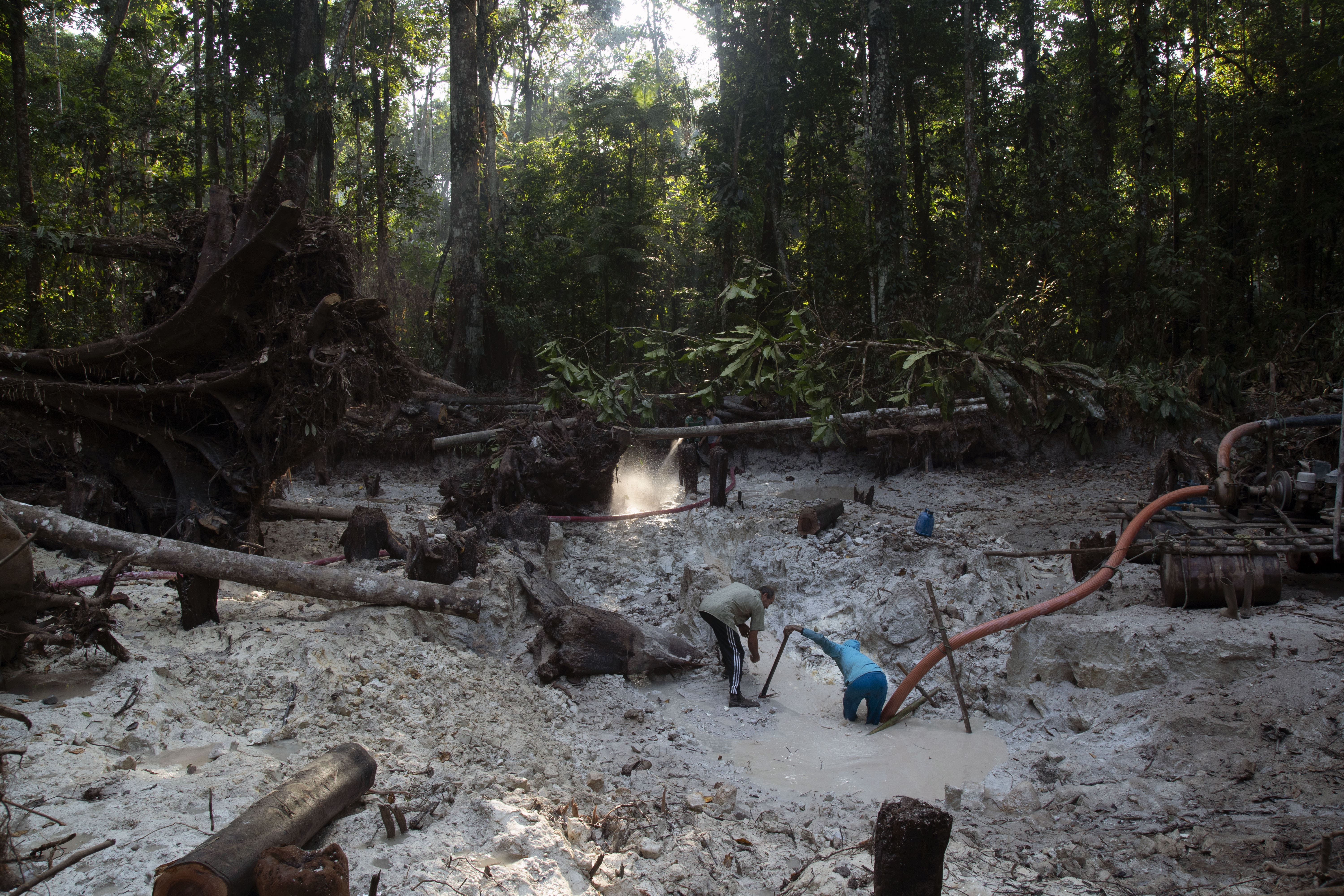
There are several drivers of global forest or tree — cover loss. Illegal activities aimed at capitalizing on growing human needs is a significant one. Illegal wild animal trade is often cited as one of the most lucrative black-market businesses in the world after narcotics, human trafficking and weapons. The United Nations’ World Wildlife Day theme for 2021 is “Forests and Livelihoods: Sustaining People and Planet.” Some of the most pristine forests that remain today are those managed by indigenous people the world over. But more often than not, these are the very people who face the biggest brunt of everything from development activities within forests — whether legal or illegal — to climate change to wildlife crime. We take a broad look at the criminal side of the wilderness that’s exacerbating environmental & societal issues, and hurting indigenous populations, set against a backdrop of shrinking forest cover.
By Deepti Govind
The illegal wild animal trade is worth between $5 billion and $20 billion a year, according to the Global Environment Facility, an international partnership among governments, civil society, and the private sector to support conservation. This is often ranked as the world’s fourth most lucrative black market business after narcotics, human trafficking, and the weapons trade. And it goes hand-in-hand with other kinds of wildlife crime, including illegal logging.
Worth almost $152 billion a year, the illegal timber industry accounts for up to 90% of tropical deforestation in some countries and attracts the world’s biggest organized crime groups, Interpol said in a statement in December 2020. Of that, the world’s most widely traded illegal wild product is rosewood, which increases 700 times in value between the criminal logger and end buyer.
Durable, fragrant rosewood, used to make furniture and musical instruments, is the world’s most trafficked wild product by value and volume, according to a National Geographic report on the world’s battle to protect rosewood — the world’s most trafficked wild commodity. Rosewood is trafficked even more than ivory, rhino horn, and pangolin scales combined!
“Forests and woodlands have an important environmental role and provide essential services for hundreds of millions of people. They sustain the resources so many communities around the world rely on for their livelihoods, as well as the broader food security, climate regulation and economic stability for the entire world. Celebrating these livelihoods and seeking to learn from those who live directly from and within forests will allow us not only to highlight the critical importance of forests for humanity and for the planet, but also to discuss how we can make our relationship with them and all the wildlife species they harbor more sustainable,” the Convention on International Trade in Endangered Species of Wild Fauna and Flora’s (CITES) Secretary-General Ivonne Higuero said in a press release on 2021’s Wildlife Day theme.
But before we even begin to learn from these communities, we first need to be aware of how deeply affected they are by wildlife and environmental crimes committed around the world. Many of them lose their homes, and their only known way of living when forests are intruded upon — either legally or illegally — for development. The good thing is, across the world policymakers and relevant groups have been increasingly recognizing the contributions of indigenous people toward conservationists’ goals of protecting biodiversity, wild places, and ecosystem functions. It has been a dominant trend, in fact, over the past 20 years, according to an article in Mongabay. Historically, though, indigenous people tended to be marginalized, undervalued or even criminalized in some cases.
Brazil, home to the greatest rainforest in the world, has had its share of issues when it comes to the impact of deforestation on indigenous people. Last year, the Xikrin people of the northern Amazon decided to take matters into their own hands when their homes were threatened by everything from fire to deforestation and invasion, the Guardian reported in August 2019. Armed with rifles and wooden batons, groups of Xikrin warriors swept through their extensive territory in the state of Pará back then. And whenever they encountered fire-scarred land, illegal clearances and habitations, they went from hut to hut, ejecting the invaders and confiscating chainsaws and other tools.
By law, that ought to have been the task of the federal police but the elders of the indigenous community felt there was scant hope the government — led by President Jair Bolsonaro — would enforce their rights. The 1,651,000-hectare Trincheira Bacajá indigenous territory was officially recognized by the government in 2000. Nobody but the 1,100 members of the Xikrin community has the right to live on it. The land-grabbers first started to creep into the area in June 2018, using a rough road that had been cut into the forest by illegal loggers. The Xikrin filed complaints to official agencies several times, but to no avail, the Guardian article added.
Even today, nearly two years after the Xikrin people’s ousting of invaders, Brazil’s indigenous people continue to lead their own individual battles against environmental crime as the government still appears unwilling to interfere. As recently as Feb. 26, BBC discovered that parts of Brazil’s Amazon rainforest are being illegally sold on Facebook! It includes national forests and land reserved for indigenous people, and some of the ads are for plots the size of 1,000 football pitches. Facebook said it was “ready to work with local authorities”, but indicated it would not take independent action of its own to halt the trade, BBC reported. Meanwhile, campaigners have claimed the country’s government is unwilling to halt the sales. “The land invaders feel very empowered to the point that they are not ashamed of going on Facebook to make illegal land deals,” said Ivaneide Bandeira, head of environmental NGO Kanindé, the BBC report said.
But there are several other examples across the world of environmental crimes displacing indigenous people. In other parts of South America, the drug trade is sending fear down the spines of indigenous communities from Peru to Colombia and Ecuador. For more than five decades, indigenous communities in the northern Philippines have pushed back against the planned construction of hydropower dams on the Chico River system, a Mongabay article says. The Chico and its 12 main tributaries are the lifeblood of indigenous communities in the Cordillera region of the northern Philippines. And even here, it’s these communities that are taking up for nature.
When conflict and climate change come together, it forms a toxic combination that drives people away from their homes, said a post on ReliefWeb, a humanitarian information service provided by the UN Office for the Coordination of Humanitarian Affairs (OCHA). Of the 20.4 million refugees under UNHCR’s mandate at the end of 2018, a third were located in the world’s least developed countries, which are often highly vulnerable to the adverse effects of climate change, or which suffer from a scarcity of resources and infrastructure, the ReliefWeb post added.
People affected by armed conflict are disproportionately impacted by climate shocks and environmental degradation. This includes the 66 million people the International Committee of the Red Cross (ICRC) estimates are currently living outside of regular governance systems, in areas controlled by non-state armed groups, ReliefWeb said in a press release on Feb. 27.
One soccer pitch’s worth of tree cover is lost every second, according to a Bloomberg article, which stimulates the number of soccer pitches lost since a reader lands on the article’s page. The article is based on 2019 tree cover loss data from Global Forest Watch. The world is not on track to meet the UN Strategic Plan for Forests target of increasing forest area by 3% worldwide by 2030, the UN’s Food and Agriculture Organization (FAO) said in its The State of the World’s Forests 2020 report.
The Amazon rainforest will collapse and largely become a dry, shrubby plain by 2064, a new study published in December 2020 for Environment: Science and Policy for Sustainable Development concluded. Models predict once 30-50% deforestation is reached in the south, this will decrease the amount of rain by up to 40 percent in the west, also changing the environment there from tropical forest to open forest and savanna, Science Alert reported, based on the December 2020 study.
That’s why the theme of the United Nations World Wildlife Day this year is “Forests and Livelihoods: Sustaining People and Planet.” It aims at highlighting the central role of forests, forest species and ecosystems in sustaining the livelihoods of hundreds of millions of people globally, and particularly of indigenous and local communities with historic ties to forested and forest-adjacent areas. Roughly 28% of the world’s land surface is currently managed by indigenous peoples, including some of the most ecologically intact forests on the planet.
On Feb. 23, UN Secretary-General António Guterres also addressed climate-related security risks to international peace and security in his remarks to the Security Council. Here’s an excerpt of some key points he made:
“In Afghanistan, for example, where 40% of the workforce is engaged in farming, reduced harvests push people into poverty and food insecurity, leaving them susceptible to recruitment by criminal gangs and armed groups. Across West Africa and the Sahel, more than 50 million people depend on rearing livestock for survival. Changes in grazing patterns have contributed to growing violence and conflict between pastoralists and farmers. In Darfur, low rainfall and recurrent droughts are increasing food insecurity and competition for resources and we are seeing the result. The consequences are particularly devastating for women and girls, who are forced to walk farther to collect water, putting them at greater risk of sexual and gender-based violence. Vulnerability to climate risks is also correlated with income inequality. In other words, the poorest suffer most. Unless we protect those most exposed and susceptible to climate-related impacts, we can expect them to become even more marginalized, and their grievances to be reinforced.”
In closing, we leave you with this video that narrates the inspiring tale of a single man who managed to plant a forest larger than Central Park NYC, by himself; and the hope that it inspires everyone – not just indigenous peoples – to do whatever they can, small or big, to protect and conserve nature.
Alexis Peguero also known as “King Lexi” and “King Looney,” the former second-in-command of the Boston-based Devon Street Kings Chapter of the Massachusetts Almighty Latin King and Queen Nation (“Latin Kings”) was sentenced on Feb. 25 on racketeering charges.
Judge Rya W. Zobel sentenced him to 21 months in prison and three years of supervised release. In August 2020, Peguero pled guilty to conspiracy to conduct enterprise affairs through a pattern of racketeering activity, more commonly referred to as RICO conspiracy, according to a Justice Department release.
The Latin Kings, comprising thousands of members across the United States, are a violent criminal enterprise that adheres to a national manifesto, employs an internal judiciary and uses a sophisticated system of communication to maintain the hierarchy of the organization.
As alleged in court documents, the gang uses drug distribution to generate revenue, and engages in violence against witnesses and rival gangs to further its influence and to protect its turf.
Peguero, who is only 29, served as the “Cacique” or second in command of the Devon Street Chapter — named for its origin in Devon Street, Boston and also called the DK5 Chapter of the Latin Kings — provided information, structure, funds and other resources to further the Latin Kings goals and directives in the state.
Court documents allege that Peguero produced various music videos touting his allegiance to the Latin Kings, distributed controlled substances and threatened rival gang members.
During the investigation, meetings were covertly recorded where Peguero and members of the Devon Street Kings discussed the business of the racketeering enterprise.
In addition, Peguero was present during meetings where members were beaten and violence against rival gangs was discussed and decided upon.
Peguero, who was one of 62 alleged gang members indicted in December 2019, faces 20 years in prison. Authorities said that there were 11 chapters of the gang in Massachusetts with more than 400 active members, making them this the largest gang in operation in the state.
“It’s a big hit precisely because we are able to take out all of the leadership,” U.S. Attorney Andrew Lelling was quoted as saying by CBS Boston when he described the five-year investigation by the FBI and the state Department of Correction dubbed “Operation Throne Down.” “It will be extremely difficult for the gang to regroup in the region.”