Tech Support : support@safience.io

Blog

In The Wild, Wild West – And East – Of Healthcare Fraud, These Strike Forces Are On A Mission

On Feb. 24, the Department of Justice’s Fraud Section released its 2020 “Year In Review.” Sixty-two of the 167 individuals charged last year by the Health Care Fraud Unit were medical professionals, 13 of whom faced charges for illegal opioid prescriptions. Together, they were allegedly responsible for $3.77 billion in fraudulent losses. Today, we look at what healthcare fraud in the United States looks like, and at the teams working to take down illegal health-related operations.

By a Biometrica staffer

On Feb. 25, a federal grand jury in Kentucky returned an indictment against a medical doctor from Dayton, Ohio, and a chiropractor from Union, Kentucky, for their alleged involvement in conspiracies to illegally distribute opioids and commit health care fraud. According to court documents and the Department of Justice (DOJ), Dr. William Lawrence Siefert, 67, and Timothy Ehn, 48, coordinated their reportedly illegal prescribing and health care fraud conspiracies through Northern Kentucky Center for Pain Relief, a pain clinic in Florence, Kentucky. Siefert, was employed by the clinic, while Ehn, the chiropractor, was also the clinic’s owner.

Siefert and Ehn allegedly offered drug-seeking patients who should not have received opioids easy access to these dangerous controlled substances, then billed Medicaid for millions of dollars in medically unnecessary urinalysis testing related to these patients. The indictment alleges that Siefert and Ehn’s alleged illegal opioid prescribing conspiracy was a contributing factor in the opioid overdose deaths of at least six former clinic patients.

The men were each charged with one count of conspiracy to unlawfully distribute controlled substances and one count of conspiracy to commit health care fraud. Siefert was also charged with three counts of health care fraud and 11 counts of illegal distribution of controlled substances, including oxycodone, hydrocodone, and clonazepam, and Ehn was charged with eight counts of health care fraud.
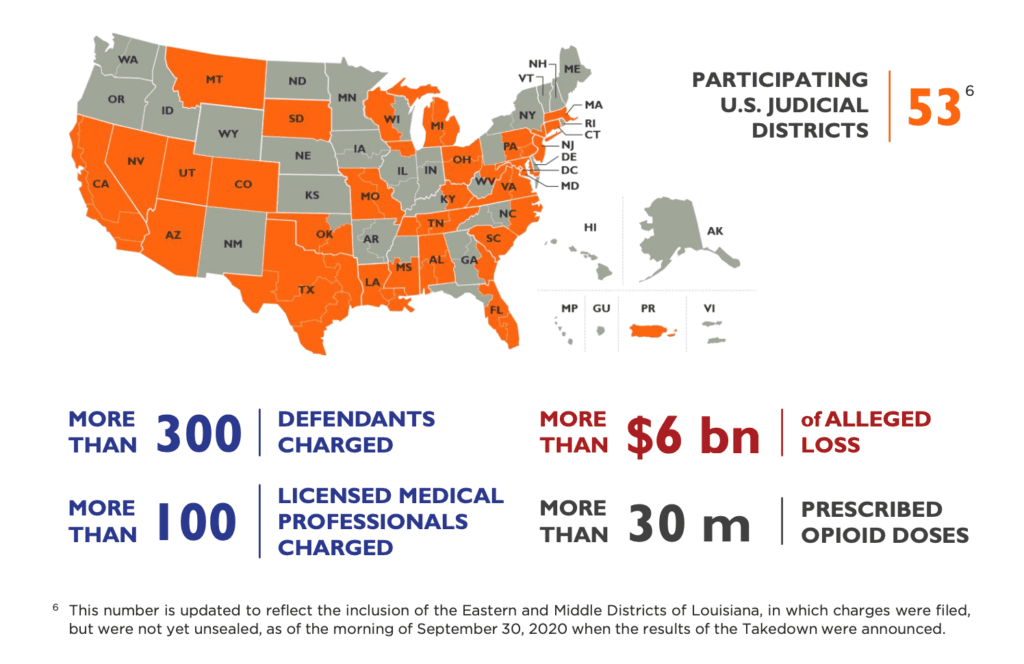
Image Courtesy: DOJ's Fraud Section Year In Review Report
Image Courtesy: DOJ’s Fraud Section Year In Review Report

Siefert and Ehn’s allegedly fraudulent practices have not been in isolation. On Feb. 24, the DOJ’s Fraud Section released its 2020 “Year In Review” report. The division has three litigating units, the Foreign Corrupt Practices Act Unit, the Market Integrity and Major Frauds Unit, and the Health Care Fraud (HCF) Unit, but for the purposes of this piece, our focus is on the third division, which is primarily focused on the prosecution of complex health care fraud and cases involving the illegal prescription, distribution, and diversion of opioids.

In 2020, the HCF charged 167 individuals allegedly responsible for $3.77 billion in fraud loss, while 144 were convicted for healthcare related fraud. Sixty-two of those charged were medical professionals, 13 for illegal opioid prescriptions. But just barely two months in and 2021 has already seen a spate of arrests, indictments and sentences handed out against health care providers of different stripes across the country.

On Feb. 18, a Southern California hospice administrator was sentenced to 30 months in prison for his role in a multimillion-dollar hospice fraud scheme. Eighty-year-old Antonio Olivera admitted that from 2011 to 2018, while acting as administrator for Mhiramarc Management LLC, a hospice located in Downey, California, he and others paid illegal kickbacks to patient recruiters for the referral of hospice beneficiaries to Mhiramarc. The co-conspirators caused Mhiramarc to submit approximately $28 million in claims to Medicare, resulting in a $17M+ payout to the company. Three co-conspirators have pled guilty and are awaiting sentencing.

On Feb. 12, two Texans from Katy were charged for their alleged participation in a drug distribution conspiracy perpetrated over the Darknet. Kevin Ombisi, 31, and Eric Russell Jr., 35, who were both arrested on Feb. 11, allegedly used a marketplace on the Darknet and the encrypted messaging service, Wickr, to sell pills made to resemble Adderall. The pills actually contained methamphetamine.

Image Courtesy: DOJ 
Photo of a Covid-19 positive test
Image Courtesy: DOJ

On Feb. 10, a Michigan woman, Amina Abbas, became the first person in the U.S. to face criminal charges for the intentional misuse of funds intended to provide relief to health care providers and maintain the access to medical care during the Covid-19 pandemic. Abbas owned a home healthcare provider company called 1 on 1 Home Health, which she closed in early 2020 after Medicare issued an overpayment demand for $1,619,967.08 because 1 on 1 had allegedly submitted claims for patients who did not qualify for home health services. According to the indictment, 1 on 1, which did not operate during the pandemic, received approximately $37,656.95 designated for the medical treatment and care of COVID-19 patients. Abbas allegedly misappropriated the funds by issuing checks to her family members for personal use.

On Feb. 8, a 73-year-old Ohio physician was sentenced to two years in prison for the unlawful distribution of controlled substances. Dr. Morris Brown, pled guilty on Feb. 21, 2020, after being charged in an April 2019 indictment with four others: Ismail Abuhanieh, 50, of Phoenix, Arizona; Mahmoud Elmiari, 44, of Bellbrook, Ohio; Yohannes Tinsae, 48, of Beavercreek, Ohio; and Mahmoud Rifai, 50, of Detroit, Michigan. All four of Brown’s co-defendants were charged for agreeing to obtain controlled substances by fraud or misrepresentation for Dayton Pharmacy, which leased space in a building owned by Brown. Three of them, Abuhanieh, Elmiari, and Tinsae, have been sentenced pursuant to guilty pleas. Rifai is the subject of an active arrest warrant.

On Feb. 3, Henry McInnis, the 50-year-old CEO of the Merida Group, a Texas-based group of hospice and home health entities, was sentenced to 15 years in prison for falsely telling thousands of patients with long-term incurable diseases they had less than six months to live in order to enroll the patients in hospice programs. He had been convicted in Nov. 2019 of one count each of conspiracy to commit health care fraud, conspiracy to commit money laundering, obstruction of justice, as well as six counts of health care fraud. Rodney Mesquias, the company’s owner, was sentenced to 240 months in prison in December 2020. From 2009 to 2018, McInnis, Mesquias and others submitted more than $150 million in fraudulent claims for hospice and other health care services. McInnis had no medical training and worked previously as an electrician.

Image Courtesy: DOJ’s Fraud Section Year In Review Report

On Jan. 15, a Hattiesburg, Mississippi, businessman was sentenced to 18 years in prison and ordered to pay $287,659,569 in restitution for his role in a multimillion-dollar scheme to defraud TRICARE, by distributing compounded medications that were not medically necessary. TRICARE is the health care benefit program serving U.S. military, veterans, their families and private health care benefit programs. Wade Ashley Walters, 54, a co-owner of numerous compounding pharmacies and pharmaceutical distributors, had pled guilty to one count of conspiracy to commit health care fraud, and one count of conspiracy to commit money laundering. Walters was also ordered to forfeit the $56,565,963 he personally derived from the fraud scheme.

On Jan. 11, Ivan Andre Scott, the 34-year-old owner of an Orlando-area call center, was convicted for a kickback scheme that resulted in the payment of approximately $2.8 million in false and fraudulent claims to Medicare. He was convicted of one count of conspiracy to commit health care fraud, three counts of health care fraud, one count of conspiracy to defraud the United States and pay and receive health care kickbacks, and three counts of receiving kickbacks. According to the DOJ, Scott targeted Medicare beneficiaries with telemarketing phone calls falsely stating Medicare covered expensive cancer screening genetic testing. After beneficiaries agreed to take the test, the evidence showed Scott paid bribes and kickbacks to telemedicine companies to obtain doctor’s orders authorizing the tests.

When most people think of crime and criminal conspiracies, they rarely think of healthcare providers or healthcare fraud. But here’s an interesting stat: Since the time of its creation in October 2018, the Appalachian Regional Prescription Opioid (ARPO) Strike Force, which operates in 10 districts, has charged 91 defendants, including 68 licensed medical professionals, and its casework has targeted the alleged illegal distribution of more than 65 million controlled substance pills involving more than 350,000 prescriptions. These actions have resulted in more than 41 convictions till Dec. 31, 2020.

Additionally, since its own inception in March 2007, the Health Care Fraud Strike Force, which maintains 15 strike forces operating in 24 districts across the U.S., has charged more than 4,200 defendants who have collectively billed the Medicare program for approximately $19 billion.
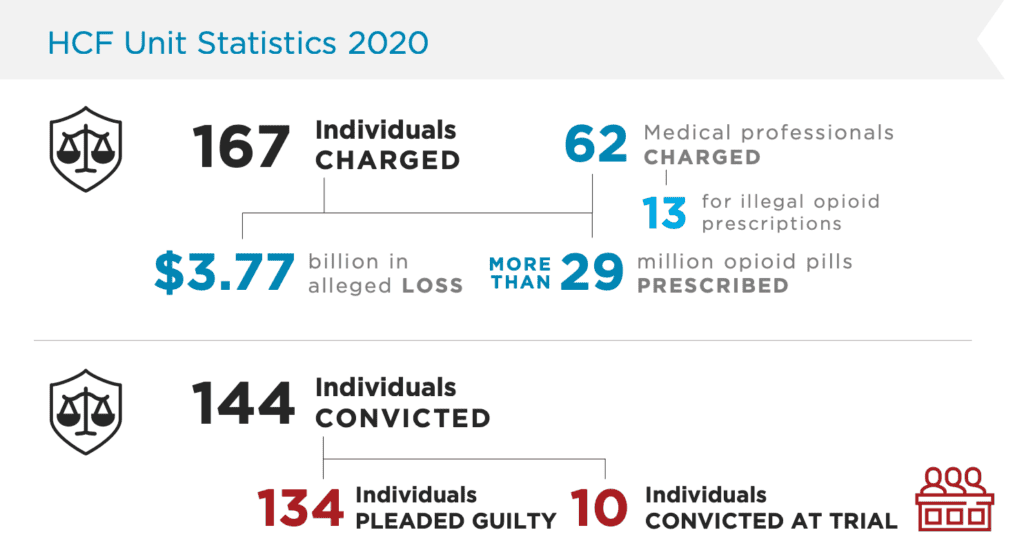
Image Courtesy: DOJ’s Fraud Section Year In Review Report

What Exactly Are These Strike Forces?

According to the DOJ, the Health Care Fraud Strike Force (Strike Force) model consists of interagency teams made up of investigators and prosecutors that focus on the worst offenders engaged in fraudulent activities, including, chiefly, health care fraud, wire fraud, mail fraud, bank fraud, money laundering offenses, violations of the Anti-Kickback Statute, false statements offenses, Title 42 offenses, Title 26 offenses, and Title 21 offenses, in the highest intensity regions.

These investigators use advanced data analysis techniques to identify aberrant billing levels in health care fraud “hot spots” – cities with high levels of billing fraud, in addition to traditional investigative techniques, to target suspicious billing patterns and look for emerging schemes and fraudulent practices that migrate from one community to another. 

The Strike Forces bring together the FBI, the Department of Health and Human Services Office of Inspector General (HHS-OIG), the Centers for Medicare & Medicaid Services (CMS) Center for Program Integrity (CPI), and other agencies (e.g., DEA, IRS-CI, USSS, FDIC-OIG, DOD-OIG, USPIS, DOL-OIG, DCIS), and the HCF Unit’s internal Data Analytics Team, along with the prosecutorial resources of U.S. Attorney’s Offices and state and local law enforcement partners.

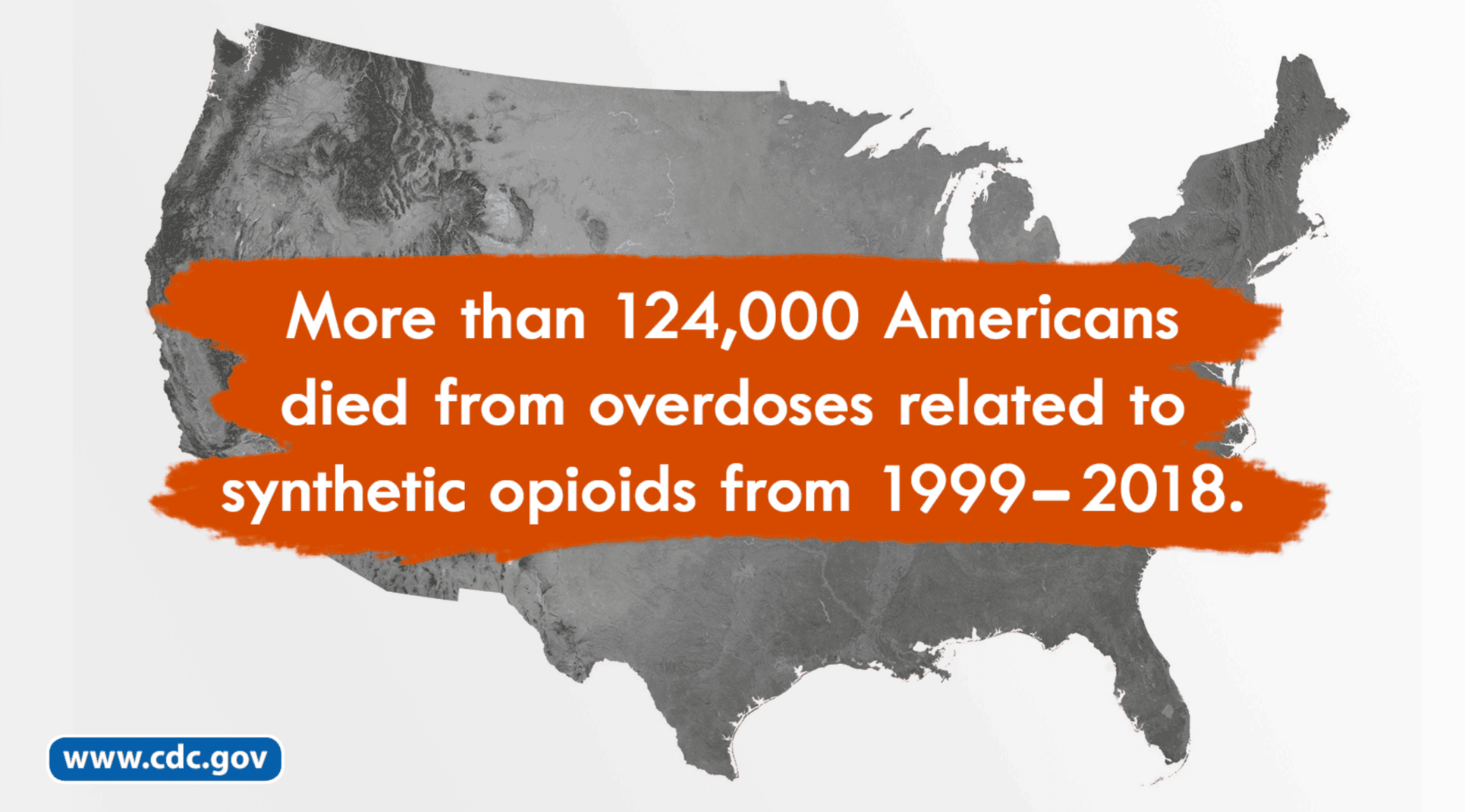
The ARPO Strike Force was set up under the aegis of the DOJ’s Criminal Division and is a collaboration between the DOJ, FBI, HHS-OIG, DEA, and state and local law enforcement to combat health care fraud and the opioid epidemic in parts of the country that have been hardest hit by addiction. Its primary focus is on the prosecution of medical professionals and others involved in the illegal prescription, diversion, and distribution of opioids.
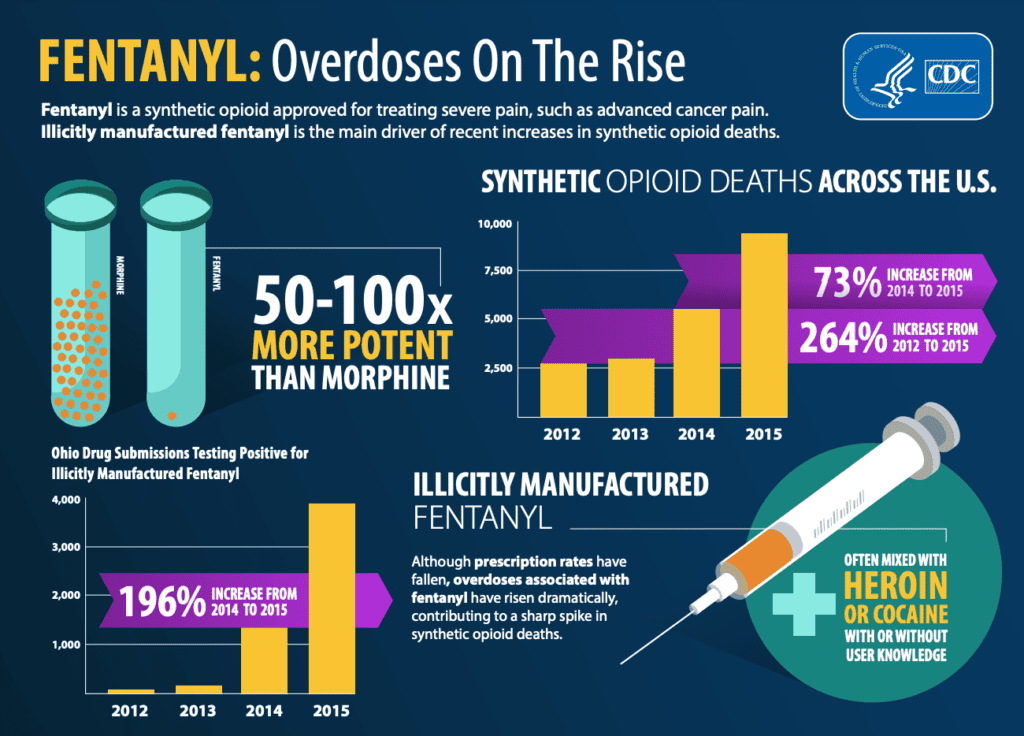
Image Courtesy: CDC

Then we have the DOJ’s latest baby, the National Rapid Response Strike Force (NRRSF), whose mission is to quickly respond to multi-jurisdictional health care fraud cases and priorities. NRRSF prosecutors, based in Washington, D.C. and in some existing Strike Force locations, also coordinate with U.S. Attorneys’ Offices and federal and state law enforcement partners to prosecute these significant multi-jurisdictional and corporate fraud matters.

Also, in September 2020, the Criminal Division announced the “Sober Homes Initiative,” the first coordinated enforcement action in DOJ history focused on fraud schemes in the substance abuse treatment industry. Led by the National Rapid Response, Los Angeles, and Miami Strike Forces, with the participation of the U.S. Attorneys’ Offices for the Central District of California and the Southern District of Florida, the initiative focuses on schemes intended to exploit patients suffering from addiction. To date, according to the Fraud Unit’s Year in Review report, the Sober Homes Initiative has resulted in 13 individuals charged for roles in various schemes to defraud health care programs of more than $934 million.

New Bills Targeting Domestic Violence Proposed In 2021

By Charlotte Spencer

On Feb. 4, we published a story on proposed child protection laws in the United States available here. This week, we are reviewing proposed domestic violence laws other than those that focus specifically on child protection. As of Feb. 25 2021, several bills that touch on the subject of domestic violence have been proposed. Here is a look at the ones most focused on this issue.

S.Amdt.834 To S.Con.Res.5

This is an amendment to S.Con.Res.5, which sets the Congressional budget for the U.S. government for 2021, and sets forth appropriate budget levels for 2022 – 2030. This amendment establishes a deficit neutral reserve fund for improving services and interventions concerning sexual assault, family violence, domestic violence, dating violence, and child abuse. This amendment has bipartisan support.

To view this amendment click here.

H.R.649 – Abby Honold Act

If made law this would authorize the Office of Violence Against Women to improve the handling of crimes by incorporating a trauma informed approach to both response to, and investigations of, crimes. This bill has bipartisan support, and also has a companion piece in the Senate.

For the full text click here.

S. 119 – Abby Honold Act

This is the Senate bill that corresponds to H.R.649. For the full text click here.

S. 120 – Safe Connections Act of 2021

This Senate Bill with bipartisan support is titled “A bill to prevent and respond to the misuse of communications services that facilitates domestic violence and other crimes.” If passed, it would help address changes to technology since original domestic violence laws were written. Specifically, it would address the issue of shared mobile service contracts between abusers and survivors.

For the full text click here.

H.R. 763

This bill also enjoys bipartisan support. If made law, it would amend CAPTA (the Child Abuse Prevention and Treatment Act) to include animal abuse in the national clearinghouse for information relating to child abuse and neglect. This could help improve child safety because child abuse and animal abuse are often committed by the same offenders.

For more on the link between domestic violence and animal abuse click here for the Humane Society’s animal cruelty and human violence FAQ page, or click here for the National Sherriff’s Association page on animal cruelty and domestic violence.

For the full text of H.R. 763 when it becomes available click here.

H.R. 1034

This bill with bipartisan support is focused on helping law enforcement deal with the increase in domestic violence during Covid-19. It would require the Attorney General to issue guidance to law enforcement specifically on this matter.

For the full text of H.R. 1034 when it becomes available click here.

The writer is a lawyer and a coder, and a member of the Arizona bar.

Final Defendant Sentenced in $7B Stanford Ponzi Scheme

By Anand Vasu

Leroy King, 74, of Dickerson Bay, Antigua, the former chief of Antigua’s Financial Services Regulatory Commission (FSRC) was sentenced on Feb. 24 to 10 years in prison for his role in connection with a $7 billion Ponzi scheme involving the Stanford International Bank (SIB). He pleaded guilty to one count of conspiracy to obstruct justice, and one count of obstruction of justice for his role in obstructing the Securities and Exchange Commission (SEC) investigation into SIB, according to a Justice Department press release.

The Stanford Ponzi scheme was the second largest in U.S. history, behind only the Bernie Madoff scandal that broke a few months after.

King, who is a dual citizen of the United States and Antigua, was extradited to the United States in November 2019. Beginning in about 2002, he served as the administrator and CEO of the FSRC, an agency of the Antiguan government. As part of his duties, he was responsible for Antigua’s regulatory oversight of Stanford International Bank Limited’s (SIBL) investment portfolio, including the review of SIBL financial reports and responses to requests by foreign regulators, including the SEC, for information and documents about SIBL’s operations.

In 2005, the SEC began investigating R. Allen Stanford and Stanford Financial Group (SFG) and made official inquiries with the FSRC regarding the value and content of SIBL’s purported investments.

King admitted that Stanford’s cash payments to King totaled approximately $520,963.87 over the course of the conspiracy. Stanford also provided King tickets to both Super Bowl XXXVIII in Houston (2004) and Super Bowl XL in Detroit (2006). In addition, Stanford provided King with repeated flights on private jets Stanford or SFG entities owned.

King later denied the SEC’s request for help, and he wrote that the FSRC “had no authority to act in the manner requested and would itself be in breach of law if it were to accede to your request.” In reality, the FSRC did have this authority and failed to exercise it because of the payments and other benefits Stanford gave to King.

A federal jury found Stanford guilty in June 2012 for his role in orchestrating a 20-year investment fraud scheme in which he misappropriated $7 billion from SIB to finance his personal businesses. He is serving a 110-year prison sentence. Five others were also convicted for their roles in the scheme and received sentences ranging from 3 to 20 years in federal prison

A key difference between the Stanford scheme and the Madoff one was that Stanford’s victims — more than 18000 of them — did not end up recouping the money they lost. Madoff’s victims recovered approximately 75 cents to the dollar on their investments. Investigators could not find roughly 90% of the funds that investors had lost in the Stanford case.

Among other things, Stanford created a cricket tournament, the Stanford Twenty20 Cup, for which he built his own cricket ground in Antigua. The Stanford 20/20 tournament was played in 2016 and 2018 and later an announcement was made that a third event — a five-match series between a West Indies All Stars XI and England — with a total prize money of $20m would be played. This would have been the highest prize offered for a single tournament, at the time, but it fell through.

When news of Stanford’s widespread fraud broke, cricketing authorities in England and the West Indies cut all ties with the promoter.

The sentencing of King brings to an end the legal proceedings in the Stanford case.

Acting Assistant Attorney General Nicholas L. McQuaid of the Justice Department’s Criminal Division and U.S. Attorney Ryan K. Patrick of the Southern District of Texas made the announcement.

The Houston Field Offices of the FBI, IRS-CI, and U.S. Postal Inspection Service investigated the case.

Trial Attorney Brittain Shaw of the Criminal Division’s Fraud Section and Assistant U.S. Attorney John Pearson of the Southern District of Texas prosecuted the case.

Pilgrim’s Pride Corp. Sentenced To A $108 Million Criminal Fine

By Anand Vasu

Pilgrim’s Pride Corporation, better known as Pilgrim’s, one of America’s largest broiler chicken producers, was sentenced to pay $108m in criminal fines after it pleaded guilty to conspiracy to fix prices and rig bids for broiler chicken products, the Department of Justice said in a statement. 

The Colorado-based corporation participated in a conspiracy to suppress and eliminate competition for sales of broiler chicken products from 2012 to 2017, according to the plea agreement.

The corporation was the first to be sentenced to pay a criminal fine in an anti trust investigation conducted by the Justice Department. The fine comes on top of hundreds of millions of dollars Pilgrims’ has already paid out in settlements over the years.

The investigation is ongoing, more fines could be expected and at least 10 individuals from the industry had already been charged, officials said.

“The guilty plea demonstrates our unwavering commitment to prosecuting companies that violate the nation’s antitrust laws, especially when it involves something as central to everyday life as the food we eat,” said Richard Powers, Acting Assistant Attorney General of the Department of Justice’s Antitrust Division. “This guilty plea is a direct result of the tireless efforts of our dedicated career prosecutors and staff, and partners at the FBI, Commerce Office of Inspector General (OIG) and USDA OIG.”

A violation of the Sherman Act carries a maximum penalty of a $100 million fine for corporations. The maximum fine may be increased to twice the gain derived from the crime or twice the loss suffered by the victims of the crime, if either of those amounts is greater than the statutory maximum fine.

The Sherman Antitrust Act, enacted in 1890, outlaws “every contract, combination, or conspiracy in restraint of trade,” and any “monopolization, attempted monopolization, or conspiracy or combination to monopolize.” The act, in combination with Federal Trade Commission Act and the Clayton Act, which came into force in 1914, are the three core federal antitrust laws still in effect.

“This is another example of the FBI’s ongoing work to eliminate bid rigging and price fixing and hold those conducting these activities accountable for their actions,” said Steven M. D’Antuono, Assistant Director in Charge of the FBI Washington Field Office. “These criminal acts cheat American workers and consumers while harming competitive markets. This ongoing investigation has yielded charges against 10 individuals for their efforts to illegally manipulate broiler chicken prices, and the FBI is committed to continuing this important work alongside the Department of Justice and our partners.”

“This investigation demonstrates the government’s resolve to protect the integrity of free and open market competition,” said Peggy E. Gustafson, Inspector General of the Department of Commerce. “When competitor companies conspire to set prices that benefit themselves, American consumers are cheated. We will continue to work with our law enforcement partners to pursue such illegal activity and ensure perpetrators are held accountable.”

The chicken industry at large has been embroiled in a class action lawsuit. Major buyers including Chick-Fil-A and Target Corp. have claimed that poultry companies unfairly fixed prices. Earlier this year Pilgrim’s agreed to pay $75 million to settle with plaintiffs, while Tyson Foods Inc., America’s biggest meatmaker, said it would pay $221.5 million.

This case is the result of an ongoing federal antitrust investigation into price fixing, bid rigging, and other anticompetitive conduct in the broiler chicken industry, which is being conducted by the Antitrust Division with the assistance of the U.S. Department of Commerce OIG, FBI Washington Field Office, and USDA OIG.

Ninety Years On, The FBI Officially Sends SRS Into Sunset

It’s been in the works for five years-going-on-35, but it’s all finally official. On Jan. 1, 2021, the National Incident-Based Reporting Program officially replaced the Summary Reporting System as the UCR’s data standard. We take a look at the history of the Uniform Crime Reporting Program, its reporting components, and at why the system needed change.

By Kadambari Wade

Here’s the not-so-short story. Well before the dawn of any kind of digital data, the U.S. Bureau of Investigation (then the BOI, now the FBI) figured out a paper-based system that would provide a picture of crime in the United States. The Bureau’s Uniform Crime Reporting (UCR) Program was established about 90 years ago, and it began amalgamating crime data contributed by participating law enforcement agencies through what was called the Summary Reporting System (SRS).

While the SRS adapted to the electronic age as best as it could, basic indexing issues and an inflexible, archaic structure made it incompatible with the advent of a data-driven modern age. Here’s an example of that inflexibility, according to a 2017 FBI report. “To simplify the reporting and tabulation of numbers, SRS features a hierarchy rule that ranks the crimes in order of severity and accepts the report of only the most severe crime within a criminal incident. For example, if a criminal incident includes a robbery and a murder, the hierarchy rule dictates that a law enforcement agency reports only the murder.” Essentially, for crime data reporting purposes, that robbery just didn’t exist. Change was obviously needed.

The process of change began 35 years ago but we’ll come to that in a bit. Five years ago, on Dec. 2, 2015, in an effort to upgrade and update the country’s statistics on crime — which form the basis for policy — the FBI’s Criminal Justice Information Services (CJIS) Advisory Policy Board passed a recommendation that all federal, state, county, local, and tribal law enforcement agencies move from SRS to a much more comprehensive system, called the National Incident-Based Reporting System (NIBRS), by 2021.

On Feb. 9, 2016, then FBI Director James Comey signed off on this recommendation, saying, “By transitioning to a NIBRS-only data collection over the next five years, the FBI will have faster access to more robust data that is necessary to show how safe our communities are and to help law enforcement officials and municipal leaders better allocate resources to prevent and combat crime in their jurisdictions.”

Despite some worry over whether keeping that deadline for law enforcement agencies made sense against the backdrop of the coronavirus pandemic, on Jan. 1 this year, the NIBRS (pronounced “ni’-bers”) officially became the standard national crime data collection program. But that doesn’t mean it’s all done and dusted. Contributions by law enforcement agencies to federal crime collection programs in the United States are recommended but not mandated. For instance, the 2019 FBI arrest statistics for the U.S. are based on data received from just 11,788 law enforcement agencies that submitted 12 months of arrest data out of the 18,671 total number of agencies operating in the U.S for that year. Basically, nearly 37% of agencies opted not to submit arrest data to the FBI.

As of Oct. 31, 2020, 43 states were classified as being NIBRS-certified, i.e., these states had records management systems (RMS) that met the FBI’s technical and other requirements for collecting and sending across crime data. At that point in October, 8,742 law enforcement agencies representing 48.9% of the U.S. population were reporting NIBRS data to the UCR Program. By the end of this year, the FBI, perhaps optimistically, anticipates that 75% of law enforcement agencies would have moved over to NIBRS. These agencies are in areas that collectively hold more than 80% of the U.S. population.

What was the Summary Reporting System?

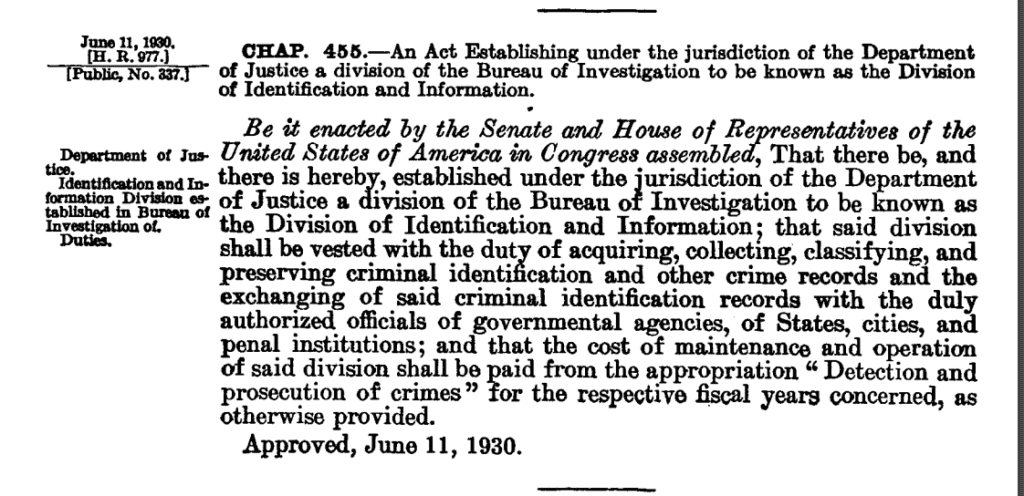
A screenshot of the legislation enacted by Congress on June 11, 1930 to establish the UCR under the aegis of the then Bureau of Investigation.
Image source: United States Congressional Record

It was an original system devised by U.S. chiefs of police almost a century ago to track crime statistics reported by law enforcement. Here is a year 2,000 piece from the CJIS Newsletter (Volume 4, No. 1), which explains it quite precisely. “… The information to be reported [to SRS] is based on a hierarchy system, i.e., when a criminal incident occurs, police report the most serious offense identified within the incident according to the crime hierarchy established by the UCR Program — murder being the most serious, followed by rape, robbery, aggravated assault, burglary, larceny, and motor vehicle theft. In multiple-offense incidents, e.g., a victim is robbed and then murdered, the lesser offense (robbery) is disregarded in the national crime count. (The exception is arson, which is always reported.)”

Through the Summary system, the UCR Program collected crime details about the victim, the offender, and the circumstance only in the case of a homicide. But it was limited in scope. It didn’t collect details on the kind of weapon used in the commission of a crime, unless that crime was specifically one of murder, robbery, or aggravated assault. Importantly, if a weapon was used during a rape, the details on that weapon were not recorded, and critically, rapes were reported only for female victims. Seriously.

For decades, “forcible rape” had been defined by the UCR SRS as “the carnal knowledge of a female, forcibly and against her will.” That definition remained basically unchanged between 1927 and 2012. According to a Department of Justice news release on the subject in 2012, till that point of redefinition, it only included “forcible male penile penetration of a female vagina.” There was no mention of male rape. The new definition of rape, announced on Jan. 6, 2012, was this: “The penetration, no matter how slight, of the vagina or anus with any body part or object, or oral penetration by a sex organ of another person, without the consent of the victim.”

While the Bureau’s change, according to RAINN, the country’s largest anti-sexual violence organization, did not affect any criminal laws, it adjusted the definition for statistical purposes, so that crimes under existing state laws could “now be acknowledged, and counted by, the federal government.” All in all, it really did make sense to update not just the definition of rape, but the system as a whole.

Enter the NIBRS. What exactly is this?

A montage of images from the FBI files, reproduced in the 2000 CJIS newsletter. Image source: FBI/DOJ/CJIS. The handbook can be found here.

The NIBRS, like its predecessor SRS, is a component of the FBI’s UCR Program and is focused on crime statistics in the United States. The NIBRS, curiously perhaps, isn’t particularly new. It was created in the 1980s. But the process of moving the U.S.’s more than 18,000 law enforcement agencies to an IBR (Incident-Based Reporting) system has been a long and often, fraught journey — one that is not yet done.

The NIBRS first made its appearance in 1985 with the publication of an almost 350-page joint report by the FBI and the Bureau of Justice Statistics (BJS), called the “Blueprint for the Future of the Uniform Crime Reporting Program.” The culmination of a three-year-study, the report looked at “bringing crime statistics into the electronic era.” The blueprint called for the development of a more robust, technologically adept crime statistics reporting system, one that would gather more comprehensive data than the SRS. That system became the NIBRS.

Why did the system need change? According to the FBI, they implemented the NIBRS to “improve the overall quality of crime data reported by law enforcement.”

The 1985 blueprint stated, “Many larger departments are computerized, with the potential to maintain a wealth of detail on offenses, arrests, police activity, and manpower. Some state programs have begun to collect data additional to UCR information, including detailed breakdowns of offense types, victim descriptions, and, in some cases, individual case record data and disposition and sentencing information. Other databases have been constructed based on victimization surveys and on the compilation of offender-based records that track cases through the criminal justice system. This development is unquestionably uneven.”

The FBI actually began collecting crime data for the NIBRS 30 years ago, in 1991. Then, inexplicably, for the two decades that followed, they made that NIBRS data available by request on data files but did not publish it till 2011, when it reported data contributed by 5,880 law enforcement agencies, who comprised approximately 32% of all UCR agencies.

NIBRS captures incident-level details about crime, including multiple offenses within the same incident, in addition to data on victims, known offenders, relationships between victims and offenders, arrestees, and property involved in crimes. Unlike data reported through the SRS — which was a cumulative monthly tally of crimes and counted only one offense per incident — NIBRS takes a deep dive into each incident to provide information about the circumstances and context of crimes, such as location, time of day, and whether the incident was cleared.

A Brief History of the Uniform Crime Reporting Program

Portrait of AG William Dewitt Mitchell, courtesy FBI gallery of the Attorneys General of the United States. Artist: John C. Johansen

If you’re like us and are crime and data geeks, reading up on the UCR is a fascinating exercise. And there’s reams of matter. It began in the 1920s, when the International Association of Chiefs of Police (IACP), with an eye on an exponential growth in organized crime against the backdrop of Prohibition, recommended that the United States merge the country’s existing major criminal identification records system in order to make them accessible to all law enforcement. There were two such systems, a federal one at the Leavenworth Federal Penitentiary in Kansas, and the IACP’s records in Chicago. With Congress awarding the funds for the project, in 1924, the Bureau of Investigation (as the FBI was once known) established its Identification Division.

While establishing the division, the top cops at the IACP, working in tandem with the Social Science Research Council (SSRC), also believed there was a need to collect crime statistics nationally. In 1927, the IACP established the Committee on Uniform Crime Records to build a “system for collecting uniform law enforcement statistics for national comparisons.” Headed by Commissioner William P. Rutledge of Detroit, with technical staff funded by the Rockefeller Foundation, the committee developed the system’s reporting rules and forms over the next three years.

As a first step, the committee determined that the number of offenses known to law enforcement, whether or not there was an arrest, would be the most appropriate measure of American criminality. As a next step, it debated and evaluated various crimes on the basis of their seriousness, frequency of occurrence, pervasiveness in all geographic areas of the country, and likelihood of being reported to law enforcement. Based on this, it decided that seven crimes were necessary for comparing crime rates: Aggravated Assault, Burglary, Forcible Rape, Larceny, Motor Vehicle Theft, Murder and Non-Negligent Manslaughter. The eighth Index offense, arson, was added under a Congressional mandate only in 1979.

In 1929, the IACP decided to adopt the system to classify, report, and collect crime statistics, and asked the then Bureau of Investigation to manage the program. And thus, was the Uniform Crime Reporting (UCR) Program born. It kicked off with the publication, in 1929, of Uniform Crime Reporting, a complete manual for police records and statistics. According to the historical background section in the 2004 FBI UCR Handbook, “During that year, law enforcement agencies in 400 cities from 43 states and the territories of Puerto Rico, Alaska, and Hawaii submitted statistics to the IACP,” which subsequently published the first monthly for what was rather imperialistically titled, “Uniform Crime Reports for the United States and Its Possessions.” That first report contained a lone table: “Number of Offenses Known to the Police: January 1930.”

On June 11, 1930, the Seventy-First Congress formally enacted legislation authorizing Attorney General William Dewitt Mitchell to gather information on criminal activity in the United States through the Division of Identification and Information, under the aegis of the then Bureau of Investigation. The Attorney General, in turn, designated the Bureau to serve as the national clearinghouse for the data collected, and the Bureau took on the task of managing the UCR Program in September 1930.

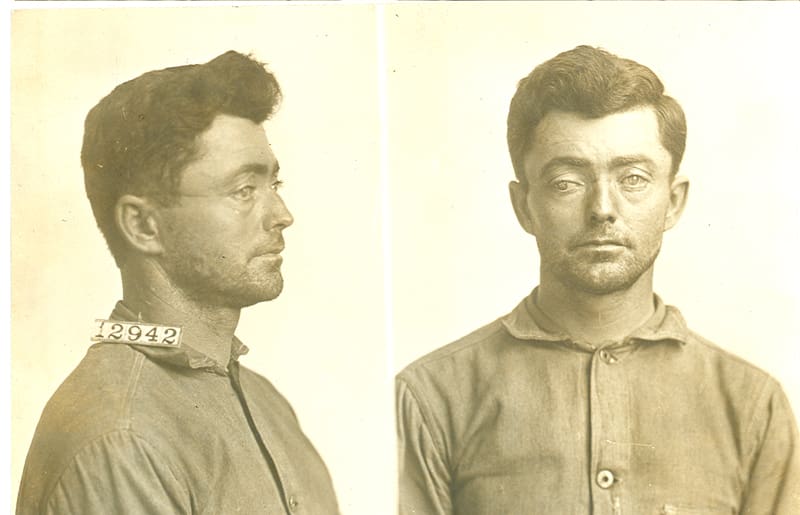
A mug shot from the Leavenworth files: W. P. McLester was sentenced to a pair of six-year concurrent sentences for conspiracy in 1918. He worked six days a week on the Crusher gang for an entire year with only Sundays off.
Image source: Records of the Bureau of Pensions, RG 129.
This image can be found here.

Crime statistics are compiled from UCR data — contributed to by law enforcement agencies across the country — and published annually by the FBI. The UCR Program has four components.

  • The SRS (now being retired) and the NIBRS —- which is basically offense and arrest data.
  • The Law Enforcement Officers Killed and Assaulted (LEOKA) Program.
  • The Hate Crime Statistics Program.
  • The Cargo Theft Reporting Program.

The FBI publishes this annual data in Crime in the United States, Law Enforcement Officers Killed and Assaulted, and Hate Crime Statistics series.

NIBRS Offenses

Group A Offenses

Animal Cruelty

Arson

Assault Offenses

  • Aggravated Assault
  • Simple Assault
  • Intimidation

Bribery

Burglary/Breaking & Entering

Counterfeiting/Forgery

Destruction/Damage/Vandalism of Property

Drug/Narcotic Offenses

  • Drug/Narcotic Violations
  • Drug Equipment Violations

Embezzlement

Extortion/Blackmail

Fraud Offenses

  • False Pretenses/Swindle/Confidence Game
  • Credit Card/Automated Teller Machine Fraud
  • Impersonation
  • Welfare Fraud
  • Wire Fraud
  • Identity Theft
  • Hacking/Computer Invasion

Gambling Offenses

  • Betting/Wagering
  • Operating/Promoting/Assisting Gambling
  • Gambling Equipment Violations
  • Sports Tampering

Homicide Offenses

  • Murder and Nonnegligent Manslaughter
  • Negligent Manslaughter
  • Justifiable Homicide (Not a Crime)

Human Trafficking Offenses

  • Commercial Sex Acts
  • Involuntary Servitude
  • Kidnapping/Abduction

Larceny/Theft Offenses

  • Pocket-picking
  • Purse -snatching
  • Shoplifting
  • Theft From Building
  • Theft From Coin-Operated Machine or Device
  • Theft From Motor Vehicle
  • Theft of Motor Vehicle Parts or Accessories
  • All Other Larceny

Motor Vehicle Theft

Pornography/Obscene Material

Prostitution Offenses

  • Prostitution
  • Assisting or Promoting Prostitution
  • Purchasing Prostitution

Robbery

Sex Offenses

  • Rape
  • Sodomy
  • Sexual Assault With An Object
  • Fondling

Sex Offenses, Nonforcible

  • Incest
  • Statutory Rape

Stolen Property Offenses

Weapon Law Violations

Group B Offenses

Bad Checks

Curfew/Loitering/Vagrancy Violations

Disorderly Conduct

Driving Under the Influence

Drunkenness

Family Offenses, Nonviolent

Liquor Law Violations

Peeping Tom

Trespass of Real Property

All Other Offenses

The Future Is Here: Cashless Gaming Draws Closer

Cashless Systems, Cryptocurrency Patents For Gaming Transactions And The Rise Of Legal Sports Betting and iGaming Revenue Even In An Otherwise Traumatic Year. The U.S. Gaming Industry Is Bound For Change And It’s All Quite Exciting.

By Michael P. Johnson

Everyone knows 2020 was a terrible year in every single way. From a business perspective, the commercial gaming industry got to put some numbers to that last week, when the American Gaming Association (AGA) announced on that commercial gaming revenue in the United States totaled $30 billion in 2020, down more than 31% year-over-year, according to their Commercial Gaming Revenue Tracker. This, incidentally, was the first market contraction for the U.S. gaming industry since 2014, and the lowest gaming revenue total since 2003.

These figures came against the backdrop of other AGA research from last year, which indicated that 59% of past-year casino visitors were less likely to use cash in their everyday lives because of the Covid-19 pandemic. More than half of those visitors (54%) also indicated they would very likely use a digital or contactless payment option when they gambled, if it were available to them.

The pandemic probably only exacerbated what was a known issue for longstanding casino visitors. For years, casino patrons have had to wait in line at ATMs to get some more cash from their bank accounts. They’ve had to stay at their machines long after they’ve pressed the “help” button just so a slot attendant could fix a ticket jam. And all too often, it’s been a frustrating wait.

However, if you’ve ever been that person, your days of waiting on tardy attendants might be done and dusted — if you choose to become “cashless” when you gamble. Why cashless? There’s no cash to manage. No dirty notes to handle. Your money is almost certainly more secure, and you’re safer because no one is hanging around watching you pull money out from a teller machine.

The times, they are a-changin’, and in this pandemic-dominated world where everyone is germophobic, it’s all happening pretty quickly. Eight months ago, in late June 2020, with lockdowns at their peak in a world gone haywire, the Nevada Gaming Commission approved a cluster of amendments recommended earlier that month by the Nevada Gaming Control Board, in a quest to move the gaming world further down the road toward a cashless environment.

Around the same time, the Washington, D.C.-based AGA, the national trade group that represents the $261 billion U.S. casino industry, released its Payments Modernization Policy Principles, which it said was an 18-month, collaborative industry effort with both commercial and tribal organizations, to provide a framework for “regulatory flexibility allowing digital payments on the casino floor.” These principles were:

  1. Equip customers with more tools to wager responsibly.
  2. Give customers payment choice and convenience.
  3. Ensure state laws enable a flexible regulatory approach, capable of keeping pace with evolving forms of digital payments.
  4. Address heightened customer public health concerns.
  5. Provide customers confidence in digital payment security.
  6. Create a uniform regulatory environment for casino operators, suppliers, and regulators.
  7. Empower law enforcement to better identify offenders through digital payment analysis.

The AGA stated that “enabling payment choice” not only improved responsible gaming efforts by giving casino patrons the digital tools to help them monitor their gaming and set limits, but also offered operators, regulators, and law enforcement more transparency while monitoring financial transactions and anti-money laundering initiatives.

Cryptocurrency At Casinos On Its Way?

So, it perhaps made perfect sense when earlier this year, IGT, or International Gaming Technology, Plc, the world’s largest maker of slot machines, received approval from the Nevada Gaming Control Board to use their cashless system at casinos around the same time that they were awarded a patent that potentially moves the world toward the eventual use of bitcoin and other cryptocurrencies for gaming transactions. “IGT secured this patent to bolster its industry-leading patent portfolio in anticipation of any possible future direction in regulated gaming involving cryptocurrency,” company spokesman Phil O’Shaughnessy was quoted as saying by Bloomberg.

According to Patent #US010885740, the patent is for “a system that enables cryptocurrency funds to be transferred between a gaming establishment account associated with a player and an external cryptocurrency account.” Further, it adds, “… the instructions cause the gaming establishment component processor to escrow the amount of cryptocurrency, establish a line of credit based on the escrowed amount of cryptocurrency, and modify a balance of a gaming establishment account based on the line of credit.”

IGT has not yet revealed any plans to integrate cryptocurrency into its technology as of this date. As things stand, players still have to use external sources such as credit and debit cards, bank accounts, and e-Wallets. However, the patent covers a way for casino patrons to pay for their bets with bitcoin, bitcoin cash, and ether.

Apparently, the idea for potentially utilizing cryptocurrency stemmed from the focus on getting a younger clientele to frequent gaming establishments. In 2018, data showed that people between the ages of 60 and 70 were playing more than people between the ages of 21 and 30.  The data also reflected that when a younger person did sit down to gamble, they typically sat for less time than an older gambler.

Things Can Only Get Better

According to the Las Vegas Review-Journal, prior to the June amendments, prior regulations mandated that when funds were transferred digitally, they had to be moved to a device in a casino that would “print out a dollar amount that could be used in slot machines.” “That step has been removed,” said the Review-Journal, “and systems now will be able to move funds from a digital wallet that could be accessed via a smartphone or tablet directly to slots or tables.” They added that several companies were setting up their cashless systems, “including Everi Holdings, Scientific Games, IGT and NRT Technology Corp., which was approved for licensing by commissioners earlier in the meeting.”

All in all, these are exciting times for the gaming industry. While 2020 wasn’t a happy year for the most, it did see the growth of new gaming options, with legal sports betting garnering an all-time high of $1.5 billion in revenue, up 69% year-over-year, and iGaming revenue nearly tripling to almost $1.6 billion.

There is other good news. Since casinos began to reopen in mid-2020, there have been no serious or sustained public health concerns, with 911 out of 998 U.S. casinos having reopened safely. Still, heading down the avenue of cashless betting is smart and logical for an otherwise cash-intensive business. In today’s post-pandemic world, with people rightly concerned about viruses, you should be able to head out for a night of entertainment without having to worry about what disease you may take home just because you went out gambling.

About the writer: Michael P. Johnson is a technology writer from the Greater Memphis Area. Mr. Johnson has almost two decades of experience in the casino industry, utilizing tech daily. You can read more about his work on his website, or reach him at michael@mpjwritesfreelance.com. You can also write to us: marketing@safience.io

Data Monday: Hate Crime In The States

By Deepti Govind

Hate crime in the U.S. reached its highest level in more than a decade in 2019, an FBI report released in November 2020 showed. There were 7,314 hate crime incidents in 2019, up from 7,120 the year before — and the highest since 7,783 in 2008.

“The FBI’s report is another reminder that we have much work to do to address hate in America,” Margaret Huang, the president of the Southern Poverty Law Center (SPLC) said when the FBI’s 2019 data was released, according to AP News.

Cut to 2021, and the nation is still coming to terms with reports over the past month that show hate crimes against the Asian American and Pacific Islander (AAPI) community are on the rise after the covid-19 pandemic struck the world. The New York Police Department (NYPD) saw an eight-fold increase in reported anti-Asian hate crimes compared to the same period in 2019, according a report from the American Bar Association, released on Feb. 17.

While there is no evidence to prove a link between many of these attacks, or that they were motivated solely by anti-Asian bigotry, communities across America are sufficiently concerned. President Joe Biden denounced anti-Asian discrimination in a memorandum published on Jan. 26, shortly after he took office. 

What’s more worrisome is several of the recent incidents involved the elderly, including an 84-year-old man from Thailand who died from his injuries on Jan. 30 in San Francisco, and a 91-year-old who was injured after being violently shoved to the ground in Oakland’s Chinatown area.

As the nation continues to deal with the problem of hate crime, here’s a detailed look at various aspects of it – from the legal definition of a hate crime to the laws that protect victims of hate crime, and some key pieces of statistics on it.

How Is Hate Crime Defined?

Image courtesy: FBI

According to FBI: In the simplest terms, a hate crime must include both “hate” and a “crime.” But there’s more to it than just that.

Take the word hate, for instance. While in regular usage, hate may mean rage, anger, or general dislike, in the context of hate crime it means bias against people or groups with specific characteristics that are defined by the law. And crime here often refers to a violent crime, such as assault, murder, arson, vandalism, or threats to commit such crimes. It may also cover conspiring or asking another person to commit such crimes, even if the crime was never carried out, according to the FBI.

Acts of prejudice that do not involve threats, property damage or violence are called a Bias/Hate Incident according to law enforcement.

Image courtesy: FBI

Federal level – At the federal level, hate crime laws include crimes committed on the basis of the victim’s perceived or actual race, color, religion, national origin, sexual orientation, gender, gender identity, or disability.

State level – Most state hate crime laws include crimes committed on the basis of race, color, and religion; many also include crimes committed on the basis of sexual orientation, gender, gender identity, and disability.

The Department of Justice (DOJ) has a list of examples of various kinds of hate crimes; you can access it here for more understanding on what constitutes a hate crime.

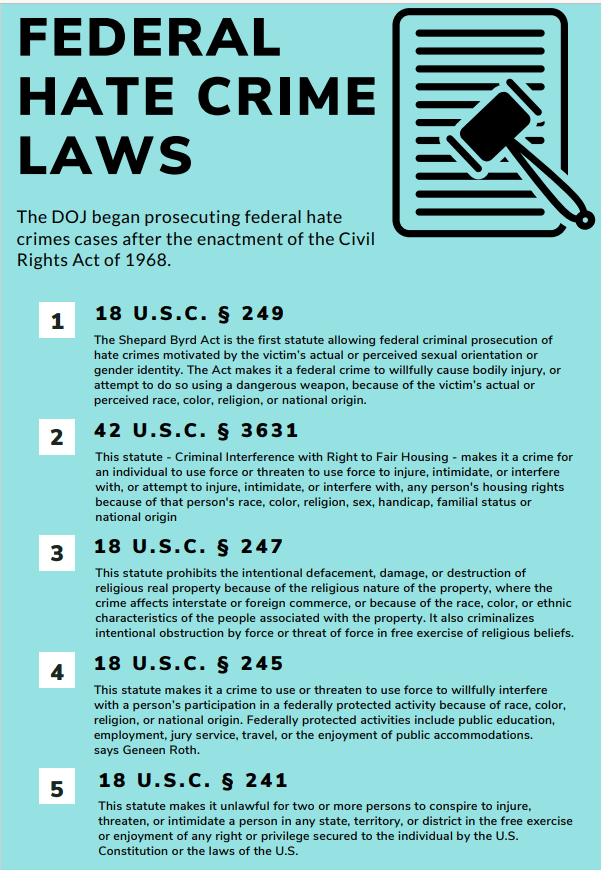
What Federal Laws Protect Victims Of Hate Crimes?

Today, there are five key laws that provide protection for victims of hate crime, according to information from the DOJ. The most recent piece of legislation came in 2009 with the Shepard Byrd Act.

The Matthew Shepard and James Byrd, Jr Hate Crimes Prevention Act was approved by the US Senate as an amendment to the Defense Authorization Act (H.R. 2647) in October 2009. It extended hate crime law to cover gender, disability, sexual orientation and gender identity.

The Act is named after Matthew Shepard and James Byrd Jr., victims of hate crimes. Matthew Shepard was a gay student who was beaten to death in Wyoming in 1998. James Byrd Jr. was an African American man who was murdered by white supremacists in Texas in 1998. A more concise overview of this act can be found here.

State Laws, Codes & Statutes

Hate crime laws in states and territories vary widely across jurisdictions, the DOJ says. But most states and U.S. territories have hate crime statutes, which are enforced by state and local law enforcement in state and local courts.

  • Bias motivations: Different jurisdictions define hate crimes to include different bias motivations.
  • Penalty enhancements: Laws in some jurisdictions increase the sentence for crimes motivated by identified factors. At least 46 states and the District of Columbia have statutes with penalties for bias-motivated crimes.
  • Data collection: Some jurisdictions require collecting data on hate crimes. Data provides better transparency into crimes that are occurring and can help states allocate support and resources to communities in greatest need.

Hate Crime At Record Highs In Recent Years

More than half of all single-bias hate crime incidents reported in 2019 were a result of racial bias, including biases over ethnicity or ancestry, FBI data shows. Hate crimes committed over these factors declined slightly, by just over 2%, in 2019 versus 2018.

However, hate crimes committed over religion – which remained the second-most common factor – was up 7.18% in 2019 compared with the previous year. Those committed over gender identity also soared 17.8% in 2019, although in absolute numbers it stayed smaller than other factors.

Data courtesy: FBI’s 2019 Hate Crime Statistics report

In 2019, the 7,103 single-bias incidents involved 8,552 victims. Apart from those, there were 211 multiple-bias hate crime incidents that involved 260 victims, the FBI data shows. (According to the FBI, a multiple-bias incident is an incident in which one or more offense types are motivated by two or more biases.) Crimes against people accounted for the most number of hate crime offenses reported at 64.4%, while those against property and society stood at 32.8% and 2.8% respectively.

The FBI website says: the term known offender does not imply the suspect’s identity is known; rather, the term indicates some aspect of the suspect was identified, thus distinguishing the suspect from an unknown offender.

Of the 5,443 known offenders for whom ethnicity was reported:

  • 33.1% were Not Hispanic or Latino
  • 10% were Hispanic or Latino
  • 1.9% were in a group of multiple ethnicities
  • 55% ethnicity unknown
Data courtesy: FBI’s 2019 Hate Crime Statistics report

In 2020, the SPLC tracked 838 active hate groups, it said in its annual “Year in Hate and Extremism” report. Though numbers have dropped 11% overall, it said it’s still recording historic highs. In 2015, the numbers jumped from 784 to 892, and they have remained well above 800 for the duration of former president, Donald Trump’s, presidency.

Each year since 1990, the SPLC has published an annual census of hate groups operating within the U.S. “The number is a barometer, albeit only one, of the level of hate activity in the country. The hate map, which depicts the groups’ approximate locations, is the result of a year of monitoring by analysts and researchers and is typically published every January or February. It represents activity by hate groups during the previous year,” it says on its website. The SPLC hate map is definitely worth a look, we’d say.

We leave you with one video and a link to a piece in Time magazine – the video is the one of the horrific, unprovoked assault on 84-year-old Thai man, Vicha Ratanapakdee, who died two days after. The Time magazine piece is of ten Asian Americans reflecting on racism during the pandemic and the need for equality.

Federal Charges Against Stanford University Researcher Expanded

By Anand Vasu

Chen Song, a Stanford University researcher, was charged with visa fraud, obstruction of justice, destruction of documents, and false statements in connection with a scheme to conceal and lie about her status as a member of the People’s Republic of China’s military forces while in the U.S., the Justice Department said in a statement.

It is alleged that Song was secretly a member of China’s military, the People’s Liberation Army while she worked as a researcher at Stanford University. 

U.S. Attorney David L. Anderson for the Northern District of California, said: “When Song feared discovery, she destroyed documents in a failed attempt to conceal her true identity. This prosecution will help to protect elite institutions like Stanford from illicit foreign influences.”

“Members of the Chinese People’s Liberation Army cannot lie on their visa applications and come to the United States to study without expecting the FBI and our partners to catch them,” said Assistant Director Alan E. Kohler Jr. of the FBI’s Counterintelligence Division. “Time and again, the Chinese government prioritizes stealing U.S. research and taking advantage of our universities over obeying international norms.”

According to the indictment, Song, 39, a Chinese national, entered the United States on Dec. 23, 2018, using a J-1 non-immigrant visa to conduct research at Stanford University. Song obtained the J-1 visa, a document “for individuals approved to participate in work-and study-based exchange visitor programs” with an application she submitted in November 2018.

In that application, Song described herself as a neurologist who was coming to the United States to conduct research at Stanford University related to brain disease. 

As part of the application, Song stated that she had served in the Chinese military only from Sept. 1, 2000, through June 30, 2011. She further stated that her employer was Xi Diaoyutai Hospital, located at No. 30 Fucheng Road, Beijing, 100142, and that her highest rank was “STUDENT.”

The indictment alleges that these were lies, and that Song was a member of the People’s Liberation Army (PLA), the Chinese military, when she entered and while she was in the United States, and that the hospital she listed on her visa as her employer was a cover for her true employer, the PLA Air Force General Hospital in Beijing.

Further, according to the superseding indictment, Song lied to FBI agents when interviewed, denying any affiliation with the PLA after 2011, and information associating Song with the PLA or Air Force General Hospital began to disappear from the Internet after the FBI’s investigation of Song was known to her. 

Finally, the superseding indictment alleges that, after Song had been charged by criminal complaint in this case, she selectively deleted relevant emails from that account, including certain emails relevant to her military service, employment, and affiliations.

If convicted, she faces a maximum of up to 10 years in prison and a fine of $250,000 for the visa fraud count; up to 20 years and a fine of $250,000 for each of the obstruction and alteration charges; and up to five years in prison and a fine of $250,000 for the false statements charge.

Spate Of Attacks On Asian Americans Leaves Communities Worried

By Anand Vasu

An 84-year-old man from Thailand died from his injuries on Jan. 30 in San Francisco, after being attacked on his morning walk two days prior. Soon after, on Jan. 31, a 91-year-old was injured after being violently shoved to the ground in Oakland’s Chinatown area. On the afternoon of Feb. 3, a 64-year-old woman was targeted and robbed in San Jose, outside a Vietnamese market, just hours after a 61-year-old Filipino American man received 100 stitches after being slashed in the face on a train from Brooklyn to Harlem on the New York City subway. And on Feb. 16, a 52-year-old woman of Chinese origin needed 10 stitches after a man shoved her to the ground while she was waiting in line outside a store in Queens, also in New York.

There has been a documented rise in a spate of attacks on Asian Americans from coast to coast. While there is no evidence to prove a link between many of these attacks, or that they were motivated solely by anti-Asian bigotry, communities across America are sufficiently concerned.

“There’s something going on across the nation that really sadly reminds us of some of our past experiences as a community,” Manjusha Kulkarni, executive director of the Asian Pacific Policy and Planning Council and a co-founder of Stop AAPI Hate (Asian American Pacific Islander), told CNN. Kulkarni believed the rise in crimes against Asians was a reaction to the Covid-19 pandemic.

Stop AAPI Hate began recording accounts of racism and discrimination against Asian Americans on March 19, 2020, after seeing instances of xenophobia alongside the spread of the pandemic in America.

In that nine month period, which ended with the calendar year, a total of 2,800 first-hand accounts were collected from 47 states and Washington, D.C. A major chunk of these cases, about 70%, were verbal harassment, while shunning or avoidance constituted about 20%. In 9% of incidents, physical assault was involved, while 6% included people of Asian origin being deliberately coughed on or spat on.

Meanwhile, the New York Police Department saw an eight-fold increase in reported anti-Asian hate crimes compared to the same period in 2019, according a report from the American Bar Association, released on Feb. 17.

Data released by the Asian Americans Advancing Justice, an organization established in 1991 to support civil and human rights for Asian Americans, also supports these trends. Between 2017 and 2019 the organization reported fewer than 500 incidents of hate against Asian Americans, in sharp contrast to 3,000 incidents in 2020 alone.

John C. Yang, the organization’s executive director, told CNN he believed the rise of anti-Asian hate in the U.S. was linked partially to former President Donald Trump, who repeatedly referred to Covid-19 as the “China virus” in the initial stages of the pandemic.

An Advancing Justice statement in November 2020, soon after the election, stated: “Since early this year, we have been working to raise awareness about increased racism and discrimination against Asian Americans who are being wrongly blamed for the coronavirus and COVID-19. This discrimination is taking many forms from hostility and suspicion that Asian Americans are carriers of the coronavirus; to verbal abuse, harassment, and even physical violence. Prominent elected officials have been using terms including “Chinese virus,” “Wuhan virus,” “Kung Flu,” and “China plague,” labels that lead to stigma and cause real harm to our community members who are targeted by hate and harassment.”

There was also the assertion that people, in general, responded to the insecurity and fear brought on by the pandemic by scapegoating a section of the population, leaving Asian Americans as soft targets.

High profile Asian Americans have sought to draw attention to the plight of their fellow countrymen and women. Actors Daniel Dae Kim and Daniel Wu shared the video of the 91-year-old man being assaulted, on Twitter, and offered a $25,000 reward to anyone who could provide “information leading to the arrest and conviction.”

https://twitter.com/danieldaekim/status/1357580443403567104

After Oakland police charged a 28-year-old man with the crime, Kim and Wu donated that money to organizations fighting hate crimes against Asian Americans.

With New York being a hotspot for incidents of this kind, the Asian American Bar Association of New York (AABANY) released a report titled: A Rising Tide of Hate and Violence against Asian Americans in New York During COVID-19: Impact, Causes, Solutions,” co-authored with Paul Weiss.

The report says: “Anti-Asian hate incidents increased dramatically in the wake of the 9/11 attacks and then surged after the election of Donald J. Trump. South Asian, Muslim, Sikh, Hindu and Middle Eastern communities all faced recurring cycles of harassment and violence. Since the onset of the pandemic, however, anti-Asian hate incidents now primarily directed at East Asians have skyrocketed according to both official and unofficial reports.”

The report, citing NYPD data, states that in the first quarter of 2020 the percentage of people arrested for hate crimes against Asian Americans was nearly 40%, up from 6% in 2019. In the third quarter, 19 hate crime arrests were made, 20% of which were for anti-Asian crimes, while the NYPD reported a decrease in hate crimes against other groups during the same period.

North Korean Hacker Trio Charged In $1.3B Cyberattack Racket

By Anand Vasu

Three North Korean computer programmers were charged with participating in a wide-ranging criminal conspiracy to conduct a series of destructive cyberattacks, to steal and extort more than $1.3 billion of money and cryptocurrency from financial institutions and companies. 

Jon Chang Hyok, Kim Il and Park Jin Hyok, were also charged with attempting to to create and deploy multiple malicious cryptocurrency applications, and to develop and fraudulently market a blockchain platform, the U.S. Department of Justice said in a statement. 

The trio are members of the Reconnaissance General Bureau (RGB), a military intelligence agency of the Democratic People’s Republic of Korea (DPRK), which engaged in criminal hacking.

Jon, Kim, and Park are charged with one count of conspiracy to commit computer fraud and abuse, which carries a maximum sentence of five years in prison; and one count of conspiracy to commit wire fraud and bank fraud, which carries a maximum sentence of 30 years in prison.

A second case unsealed on Feb. 17 revealed that Ghaleb Alaumary, a Canadian-American citizen has pled guilty in a money laundering scheme and admitted to being a high-level money launderer for multiple criminal schemes, including ATM “cash-out” operations and a cyber-enabled bank heist orchestrated by North Korean hackers. Alaumary pleaded guilty to one count of conspiracy to commit money laundering, which carries a maximum sentence of 20 years in prison.

These North Korean military hacking units are known by multiple names in the cybersecurity community, including Lazarus Group and Advanced Persistent Threat 38 (APT38). 

“As laid out in today’s indictment, North Korea’s operatives, using keyboards rather than guns, stealing digital wallets of cryptocurrency instead of sacks of cash, are the world’s leading bank robbers,” said General John C. Demers, Assistant Attorney of the Justice Department’s National Security Division. “The Department will continue to confront malicious nation state cyber activity with our unique tools and work with our fellow agencies and the family of norms abiding nations to do the same.”

Throughout the investigation, the FBI and the Justice Department provided specific information to victims about how they had been targeted or compromised, as well as information about the tactics, techniques, and procedures (TTPs) used by the hackers with the goals of remediating any intrusion and preventing future intrusions.

That direct sharing of information took place in the United States and in foreign countries, often with the assistance of foreign law enforcement partners. The FBI also collaborated with certain private cybersecurity companies by sharing and analyzing information about the intrusion TTPs used by the members of the conspiracy.

“Today’s unsealed indictment expands upon the FBI’s 2018 charges for the unprecedented cyberattacks conducted by the North Korean regime,” said Paul Abbate, the FBI Deputy Director. “The ongoing targeting, compromise, and cyber-enabled theft by North Korea from global victims was met with the outstanding, persistent investigative efforts of the FBI in close collaboration with U.S. and foreign partners. By arresting facilitators, seizing funds, and charging those responsible for the hacking conspiracy, the FBI continues to impose consequences and hold North Korea accountable for its/their criminal cyber activity.”